The complete evolution of Champions League sponsors From the first ever deal with Philips to the latest one with Nike
In 1991, an extraordinary UEFA congress highlighted the need to reorganise European club competitions, particularly the European Cup. The aim was to strengthen the competition's identity and commercial value, leading to a change of guard the following season with the birth of the Champions League. The rebranding was almost total and was orchestrated by Swiss company Team Marketing AG, which created a centralised system under which every club participating in the 1992/93 edition handed over its commercial licensing rights to UEFA.
The objective was to steer football towards healthy, controlled growth, build financial stability, optimise revenue through its redistribution among national associations and leagues, and guarantee better returns for participating clubs. Until then, clubs had been individually responsible for managing their own television and commercial rights. With this new model, UEFA took over centralised management, guaranteeing fixed payments for each qualifying round and every match won. The brand identity was built around a new name, the Champions League, a recognisable logo, featuring stars arranged in the shape of a football, and an anthem composed by Tony Britten, inspired by Handel's coronation anthem Zadok the Priest.
Since then, a group of multinational corporations have sponsored the tournament, unlike domestic leagues, where a single sponsor usually acts as the competition's official partner. For the inaugural edition of the new Champions League, UEFA selected a small group of sponsors, most of which would go on to become longstanding partners.
The Champions League's First Partners
In 1992, the agreements granted each company four advertising boards around the pitch, logo placement during pre- and post-match interviews, a set number of tickets for every game, as well as television commercials aired during match broadcasts. Among the pioneers of the new competition was Dutch company Philips, which benefited from the pan-European platform to increase its brand visibility at a time when consumer electronics, from televisions and VCRs to hi-fi systems, were experiencing a period of rapid growth. During the Champions League's inaugural season, Philips itself became the protagonist of a clever marketing manoeuvre designed to circumvent UEFA's new regulations. During the group stage, teams were forbidden from displaying commercial sponsors, so PSV Eindhoven, the club founded in 1913 by employees of the technology company, entered the competition under its full name, Philips Sport Vereniging, shortened to Philips SV, with the wording placed above the club crest. This allowed Philips to appear both as an official tournament sponsor and, effectively, on the Dutch team's shirts.
A partnership spanning more than three decades saw Ford serve as an official partner and vehicle supplier to the Champions League from its inception until the 2014 final in Lisbon. On that very occasion, the American carmaker launched one final major initiative, opening online reservations for the first 500 Mustangs available in Europe from kick-off until the final whistle. After promoting some of its most iconic models, the partnership came to an end one year earlier than originally planned, with Ford Europe choosing to concentrate its financial resources on a new product launch phase. In the food sector, the Mars group Mars was the first to join the line-up, promoting its strongest brands over a two-year period, including Snickers, M&M's and Mars itself. The company had already made significant investments in international football, becoming an official FIFA World Cup sponsor from 1990 to 1998. It subsequently continued its involvement in football through ambush marketing campaigns and targeted sponsorships involving national teams, clubs and iconic ambassadors such as José Mourinho, Bukayo Saka and Luka Modrić.
The Sponsors After the First Cycle
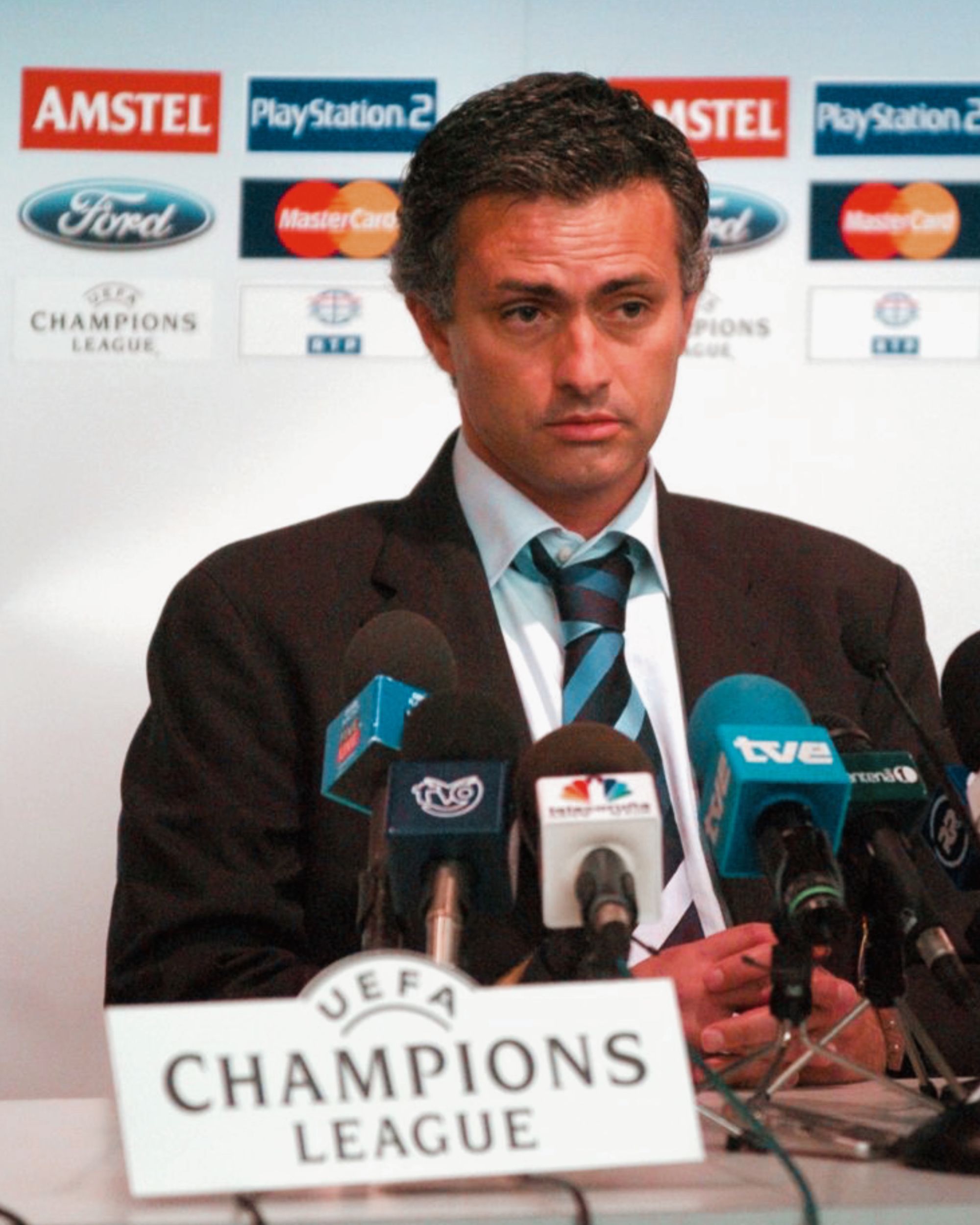
Following the first wave of partners, new players entered the picture in the mid-1990s, as the competition began to establish itself. In the beverage sector, the Heineken group joined the sponsorship line-up for the 1994-95 season with Amstel, which at the time was the second best-selling beer in Europe. The Champions League represented the ideal platform to strengthen the brand's presence in key European markets, a strategy that proved successful until 2005, when the Dutch group decided to replace it with its flagship brand, Heineken. Amstel would return to the UEFA fold between 2015 and 2021, featuring in the commercial spaces surrounding Europa League Thursdays, with Heineken's presence across both competitions ensuring the brand covered the entire European football week.
Japanese company Canon was another major multinational to recognise the value of the Champions League platform, sponsoring the competition between 1995 and 2000 alongside other historic partnerships, including the FIFA World Cup and the UEFA European Championship. Canon supplied UEFA with digital imaging equipment, including DSLR cameras, printers, photocopiers and fax machines used in media centres and stadium administration offices, as well as dedicated technical support stations for accredited pitchside photographers. A year earlier, in 1994, Mastercard made its debut as a sponsor. To this day, it remains the competition's longest-standing partner, with the relationship still ongoing. The bond between Europe's most prestigious club competition and the multinational renowned for its credit cards and payment technologies has become inseparable, with both parties benefiting from the partnership. For years, Mastercard has given children the opportunity to walk onto the pitch alongside the players, created personalised cards featuring tournament graphics and supported social initiatives alongside the UEFA Foundation for Children, among many other projects.
A shorter-lived partnership, running from 1994 to 1997, was the one with Reebok, which sought to challenge the Nike-adidas duopoly but ultimately failed to do so, despite its sponsorship efforts. From 1995 to 2001, Continental used the Champions League as an ideal springboard into the world of football. The German tyre manufacturer later shifted its focus towards national team tournaments, including the 2006 FIFA World Cup on home soil and subsequent editions of both the World Cup and the European Championship. Food multinationals also recognised the competition's potential, with McDonald's and Ferrero becoming prominent partners for several seasons. After a successful four-year spell with the Champions League, McDonald's shifted its focus towards national competitions. Its commitment to the FIFA World Cup officially came to an end in October, while the company is currently involved in French football, where it serves as title sponsor of Ligue 1.
The Italian group, meanwhile, entered football in 1999, promoting Nutella through extensive advertising campaigns over several seasons. Among the highlights of its Champions League partnership was the clothing line offered as a prize in the early 2000s, which we explored in a previous article. Between 1997 and 2003, Motorola served as a partner, initially providing technical equipment before moving into the digital development of the competition, helping relaunch UEFA's website and expand its digital content. That same year, Sony entered the picture with its PlayStation consoles, aiming to tap into the football audience. It has never left, with the partnership leading to several renewals that remain in place today, bringing significant benefits to the electronics brand and extending its presence to other UEFA competitions.
The Choices for the New Millennium
In 2003, Sharp replaced Motorola as the competition's official technology partner for a three-year period, installing its own LCD TV screens in hospitality areas and dedicated spaces throughout the tournament. Meanwhile, Vodafone acquired three-year rights from UEFA to deliver match videos, images and updates directly to its customers' mobile phones, a deal that ran until the 2005/06 season. The agreement was subsequently extended until 2009, during which the telecommunications giant became an official partner and official mobile network provider. Its commitment to the competition was so significant that it also brought an end to its iconic shirt sponsorship of Manchester United.
In 2004, video game publishers made a major entrance into the competition, with Electronic Arts completing the acquisition of UEFA licences and releasing UEFA Champions League 2004/05 and, above all, UEFA Champions League 2006/07, a landmark title that introduced Ultimate Team mode for the first time. From 2008 onwards, Japanese company Konami secured exclusive video game rights for a decade, seeking to challenge EA Sports' dominance through its Pro Evolution Soccer franchise. Its rival eventually regained the rights in 2018, retaining them even after ending its agreement with FIFA.
For the 2006-2009 commercial cycle, UEFA restructured its marketing framework, abandoning the mixed model of main sponsors and official suppliers in favour of a format featuring six equal commercial partners. Over the years, established brands have been joined by new commercial players that have grown in importance, while others have faced abrupt departures and setbacks. The partnership with banking group Unicredit, for instance, lasted from 2009 to 2018, when the new chief executive, Jean Pierre Mustier, decided against renewing the agreement on the very day he took office. The Italian bank was subsequently replaced by Spain's Santander, which signed a three-year deal and shifted its focus away from Formula 1 and Scuderia Ferrari towards football, partnering with the Champions League, LaLiga and the Copa Libertadores.
Taiwanese manufacturer HTC (January 2013-2015 final) signed a sponsorship agreement with the Champions League in January 2013, becoming the competition's official smartphone and tablet supplier and replacing a giant such as Sony. When the deal expired in 2015, however, the partnership was not renewed, following a reduction in the company's advertising investments. This was driven by mounting financial difficulties in the smartphone market, which once again opened the door to other competitors and marked HTC's decline in the mobile sector. Just Eat Takeaway.com, which had entered European football as the Official Food Delivery Platform Partner of UEFA Euro 2020, brought its Champions League partnership to an early end in September 2025 due to cost-cutting measures and shifting corporate priorities, which also led to cuts within its sponsorship team.
Finally, there is the most striking case of all, involving Gazprom. The first Russian company to partner with the competition made its debut in 2012, having already sponsored clubs such as Schalke 04, Zenit St Petersburg and Red Star Belgrade. Its relationship with UEFA remained remarkably strong and effective for ten years, producing what was also one of the tournament's most memorable promotional campaigns. In February 2022, however, the agreement was terminated with immediate effect following the outbreak of the Russian-Ukrainian war, abruptly bringing an end to a partnership that, that same year, was supposed to see the Gazprom Arena in St Petersburg host the final, before it was moved to the Stade de France.
The Most Recent Deals
Over the past decade, numerous new brands have joined the Champions League family, as the competition has opened its doors to new commercial sectors. In 2018, Expedia Group became the competition's official travel partner. In February 2023, ahead of the knockout stages, the partnership was renewed until the end of the 2023/24 season, with a revised commercial structure. Expedia moved away from its traditional role as a global sponsor to take on a dual position as an official supplier and licensee in Europe and a regional partner in the United States, making the most of both markets through different strategies. Since 2021, US-based FedEx, after spending six years sponsoring the Europa League and other UEFA competitions, has linked its sponsorship to logistics and the delivery of the trophy to the host city of the final. The following year, Turkish Airlines became the first airline to sponsor the competition, before being succeeded by Qatar Airways, which signed a deal running until 2030. The airline even completed a sponsorship treble at the 2024 final between Inter and PSG, partnering with both clubs as well as the tournament itself.
In August 2024, Bet365 became the first sports betting operator to sign a global sponsorship agreement with the competition, marking a shift in UEFA's commercial approach towards the regulated betting industry. The deal also sparked debate over television exposure in Italy in light of the Decreto Dignità. Crypto.com, which had initially walked away from a deal worth around half a billion in 2022 due to the difficulties of operating in Europe, finally secured an agreement in August 2024, becoming the competition's First and Exclusive Cryptocurrency Platform Partner until 2027. JD.com, operating as JoyBuy in Europe, is a Chinese e-commerce platform that, from the 2026-27 season, will feature among UEFA's official Enhanced Partners, alongside brands such as EA Sports FC, Topps and OPPO.
In more traditional sectors, Vodafone has also returned to the UEFA fold, becoming an Official Licensed Partner of the men's tournament for the 2025/26 and 2026/27 seasons, as well as an official partner of the women's competitions. The latter have also attracted the attention of food and beverage multinational PepsiCo, owner of brands including Pepsi, Lay's and Gatorade. Its Champions League partnership began in 2015 and has since been extended until 2027. Initiatives include the Kick Off Show at the finals, digital and on-pack campaigns, personalised digital experiences, as well as nutritional and hydration support from Gatorade.
The Historic Shift to Relevent
After more than 35 years, the Champions League is set to enter a new era from next season onwards. Following a tender process managed by UC3, the joint venture between UEFA and the ECA, exclusive negotiations with Relevent began in February 2025, with an agreement for the 2027/28–2032/33 commercial cycle formally announced the following month. The arrival of this new commercial giant marks the end of an era for TEAM, the agency that had managed the competition's marketing since its inception. Some existing contracts will naturally remain in place and are expected to benefit from a significant increase in revenue. This is the case with Hyundai, which has held the role of global automotive partner of the competition since September, with an agreement running at least until 2031. The position had been curiously vacant since 2021, following the end of the deal with Nissan, which had signed the largest sports sponsorship investment in the Japanese brand's history when it replaced Ford. Several historic changes have already been announced.
The most significant of these concerns Nike's appointment as the official ball supplier for the competition, a role previously held by adidas since the 2001/02 season. The American giant, which had already supplied the tournament between 1998 and 2001, will therefore reshape the identity of a competition that had been associated with its German rival for 25 years, challenging its commercial and visual dominance. Chinese multinational Haier will replace compatriot OPPO in the consumer electronics sector, signing a deal with the UEFA Champions League running until 2031, announced last September in Berlin during IFA. Finally, another major sponsorship change was confirmed in the same month, set to take effect next season: Heineken will leave the competition, making way for AB InBev, which has opted to feature its Belgian beer brand Stella Artois until 2033. After 1992, 2027 looks set to become another major turning point for the competition with the famous trophy.
What to read next
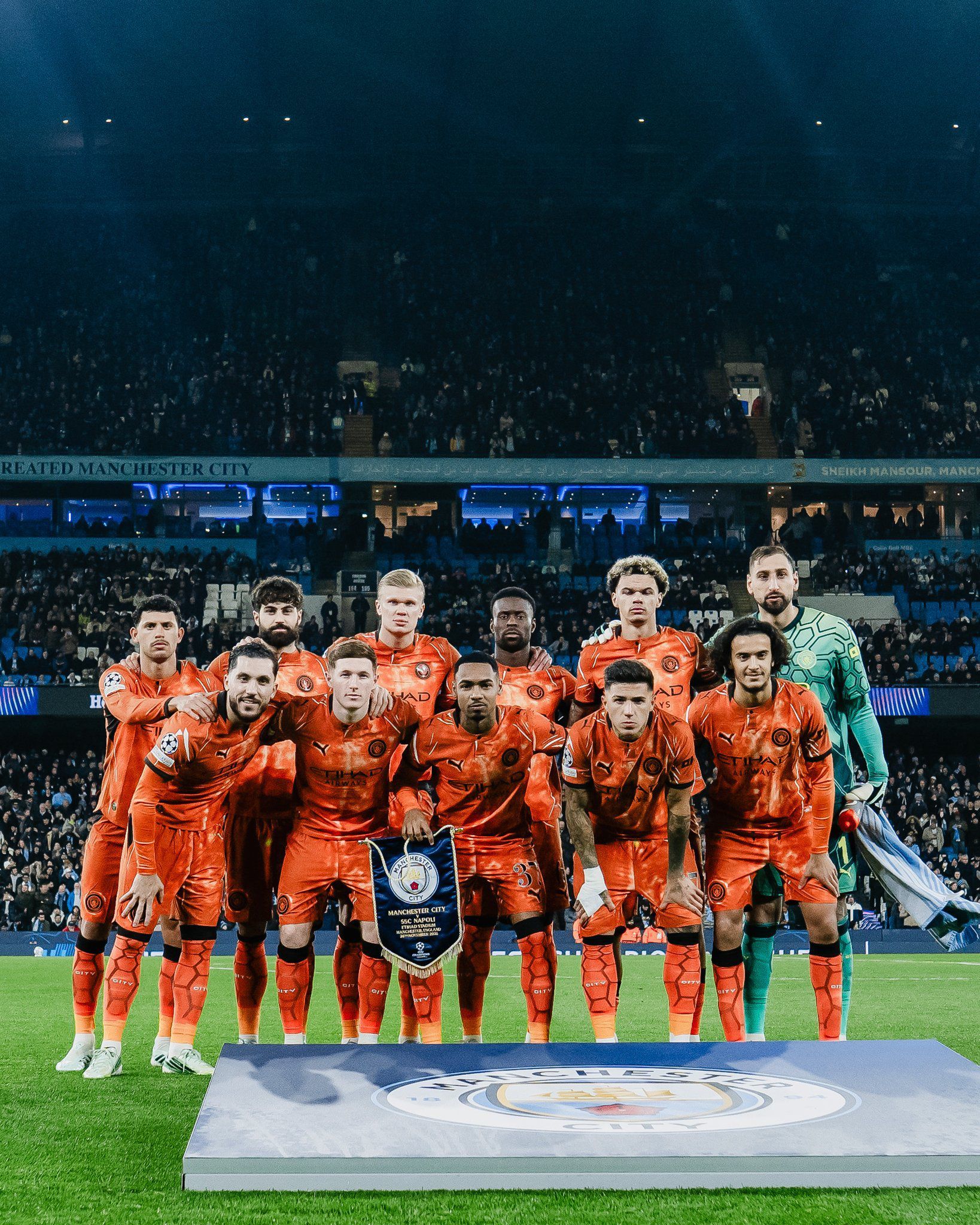
Manchester City take to the pitch with C.P. Company for the first time
The fourth kit created with the Bologna-based brand makes its Champions League debut against Napoli
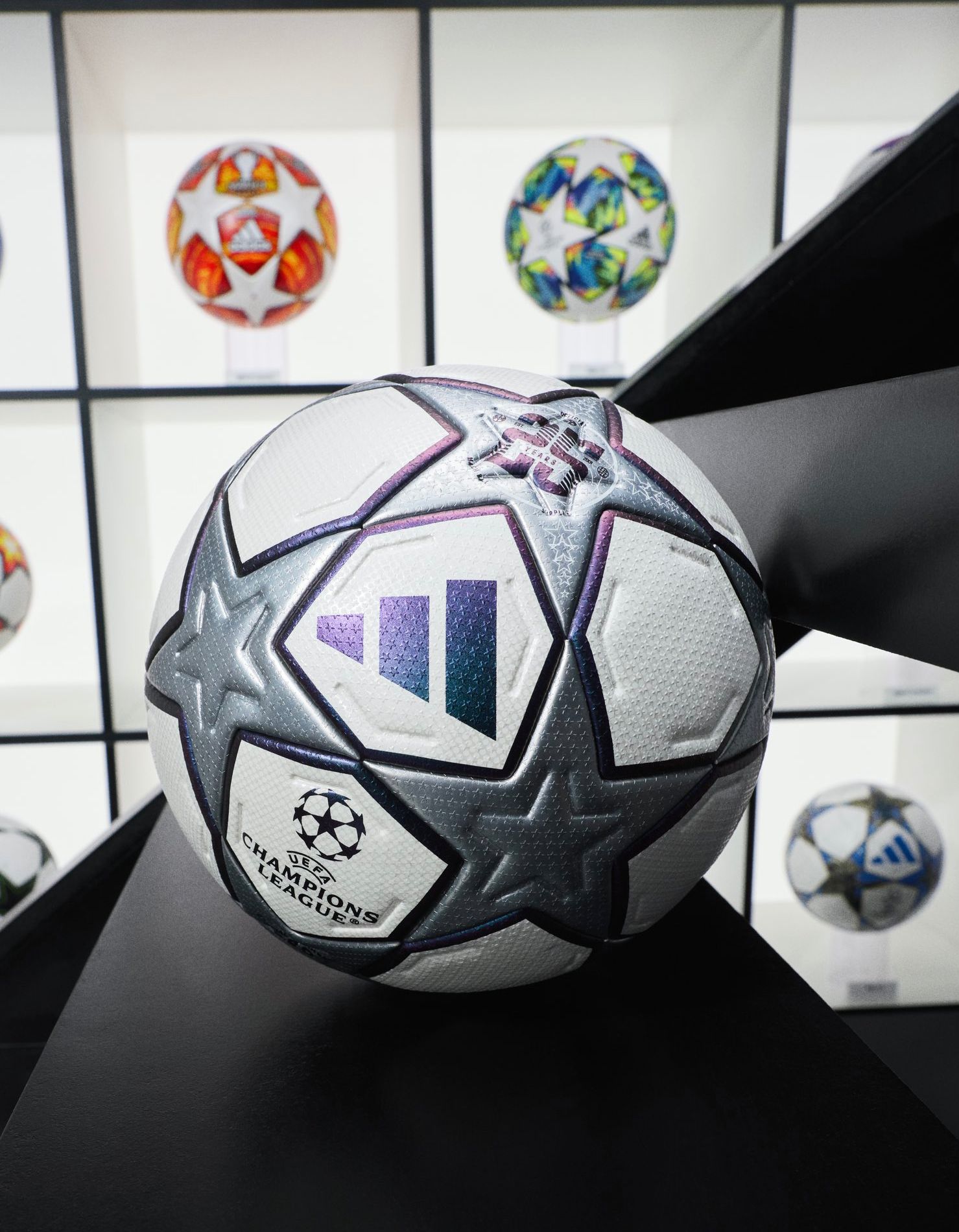
The stars could remain on the official Champions League ball
Despite the switch from adidas to Nike, the historic Starball design does not appear set to disappear from UEFA pitches