



































How football transfer medicals work? Inside the medical examination that can make or break a transfer
We're right in the middle of the summer transfer window. Every day brings a new wave of rumours, negotiations and deals that can reshape everything within a matter of hours: the futures of players, the line-ups of clubs, the balance of entire leagues. Above all, they dictate the mood of supporters, who spend the quiet weeks of August consuming transfer gossip, endlessly scrolling news sites and insiders' social media accounts while waiting for the iconic HERE WE GO with which Fabrizio Romano gives his stamp of approval to the biggest deals nearing completion—or, outside his trademark phrase, the equally reassuring announcement that the "medical has been booked." In the language of the transfer market, "medical booked" is as close to official as it gets: the moment when a story built on speculation finally becomes tangible, with a location, a schedule and a player everyone is ready to follow.
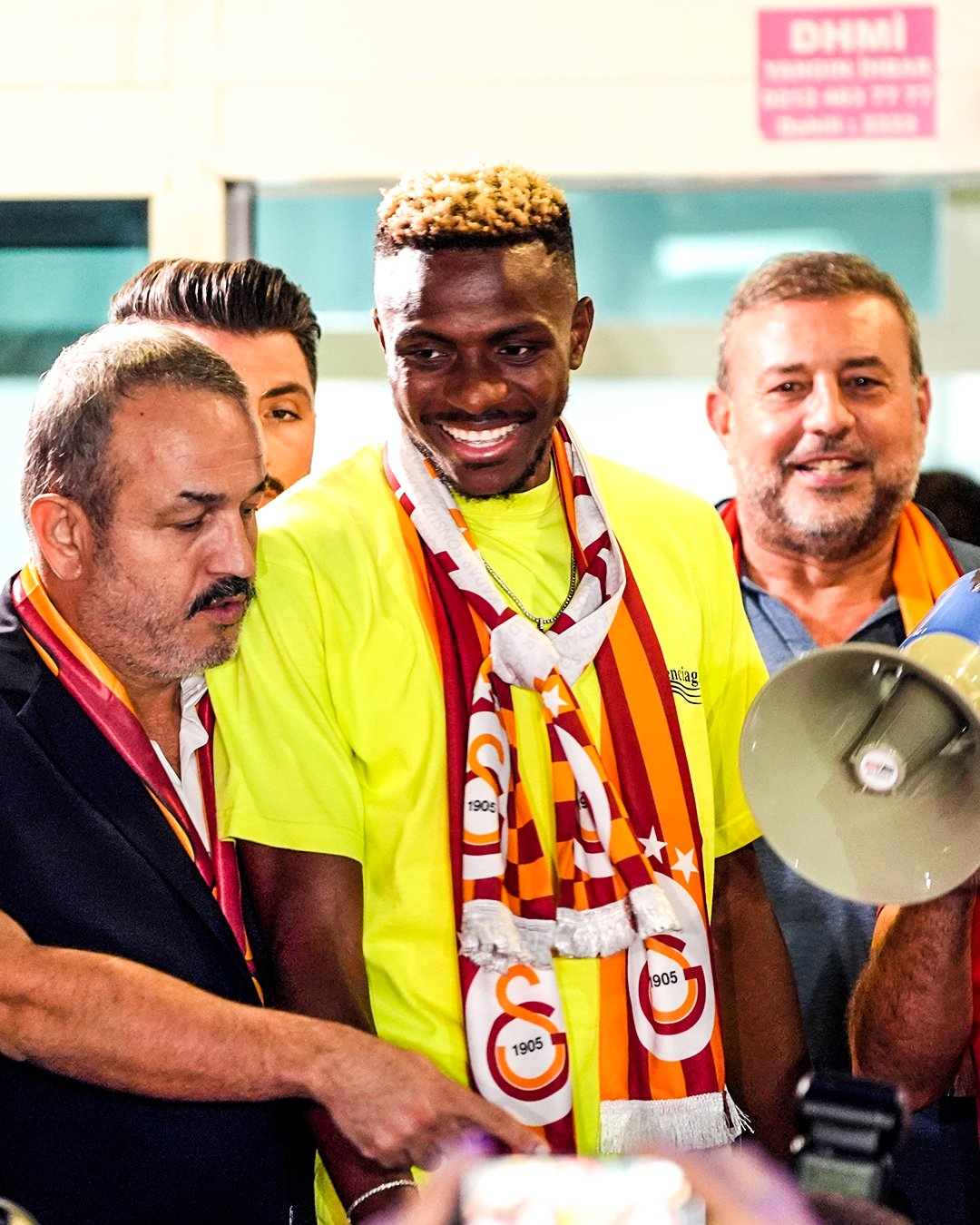
That's when a familiar ritual begins. Sometimes it starts with supporters waiting at the airport, followed by the first flashes of the player stepping into a car, before cameras gather outside the medical centre to capture their arrival and departure. If the club decides to share them, images from inside the facility usually become the final chapter before the contract is signed, the official announcement is released and the unveiling takes place. But not always. By their very nature, medical examinations can also produce bad news, as recently happened with Anan Khalaili and Inter after the player was deemed ineligible under CONI regulations, echoing several similar cases from the past. Situations that often spark controversy, especially when a transfer collapses or falls apart at the very last minute.
Inside a Football Medical
Let's start with what actually happens inside the clinic. A football medical is typically a comprehensive, head-to-toe assessment designed to evaluate the player's overall physical condition, investigate previous injuries or underlying issues, and identify any potential concerns that could affect the next stage of their career. In other words, it's a full-scale risk assessment carried out by a company about to invest in a valuable new asset.
The process begins with the player's medical history. Doctors review past injuries, treatments and surgical procedures, while the player is expected to provide as much relevant information as possible, usually with the support of their agent and, if needed, an interpreter. Next comes the cardiovascular evaluation—electrocardiogram (ECG), echocardiogram and exercise stress test—an area that receives particular attention in Italy. These are followed by laboratory tests, including blood and urine analysis, which help complete the overall picture and determine whether further, more specific examinations are required.
The other major component—considered by sports physicians to be both the most complex to interpret and the most important—is the musculoskeletal and biomechanical assessment. Here, doctors evaluate mobility, strength, posture and coordination, paying particular attention to previously injured areas as well as the parts of the body most heavily involved in the player's role and physical profile. If any concerns emerge, the assessment continues with X-rays, ultrasound scans, MRI imaging or specialist consultations. The entire process can last anywhere from a couple of hours to several days in more complicated cases, ultimately leading to an evaluation that is not a universal pass-or-fail verdict, but rather a risk assessment based on factors such as the player's age, position, style of play, contract length and the club's financial investment.
The Aesthetics of a Medical
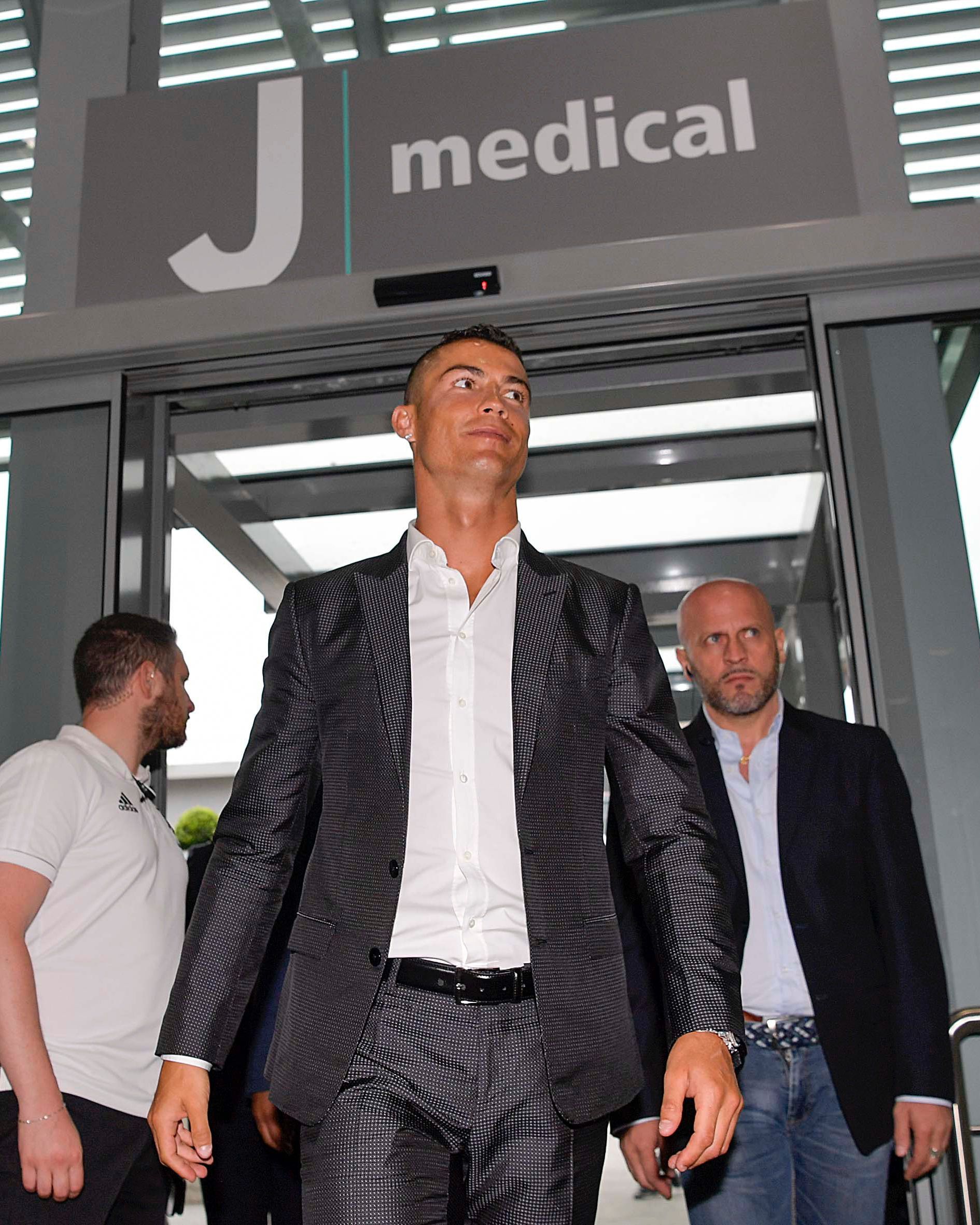
The public rarely gets to see what happens inside the clinic, yet the ritual often begins long before the player walks through its doors. A car with tinted windows pulls up, journalists and photographers are already in position, while supporters crowd around the entrance or line up behind the barriers. For the signings that generate the most excitement, the airport and the medical centre become a preview of the stadium itself, sharing the emotion of the player's first welcome. A perfect example was Cristiano Ronaldo's arrival at J Medical in 2018.
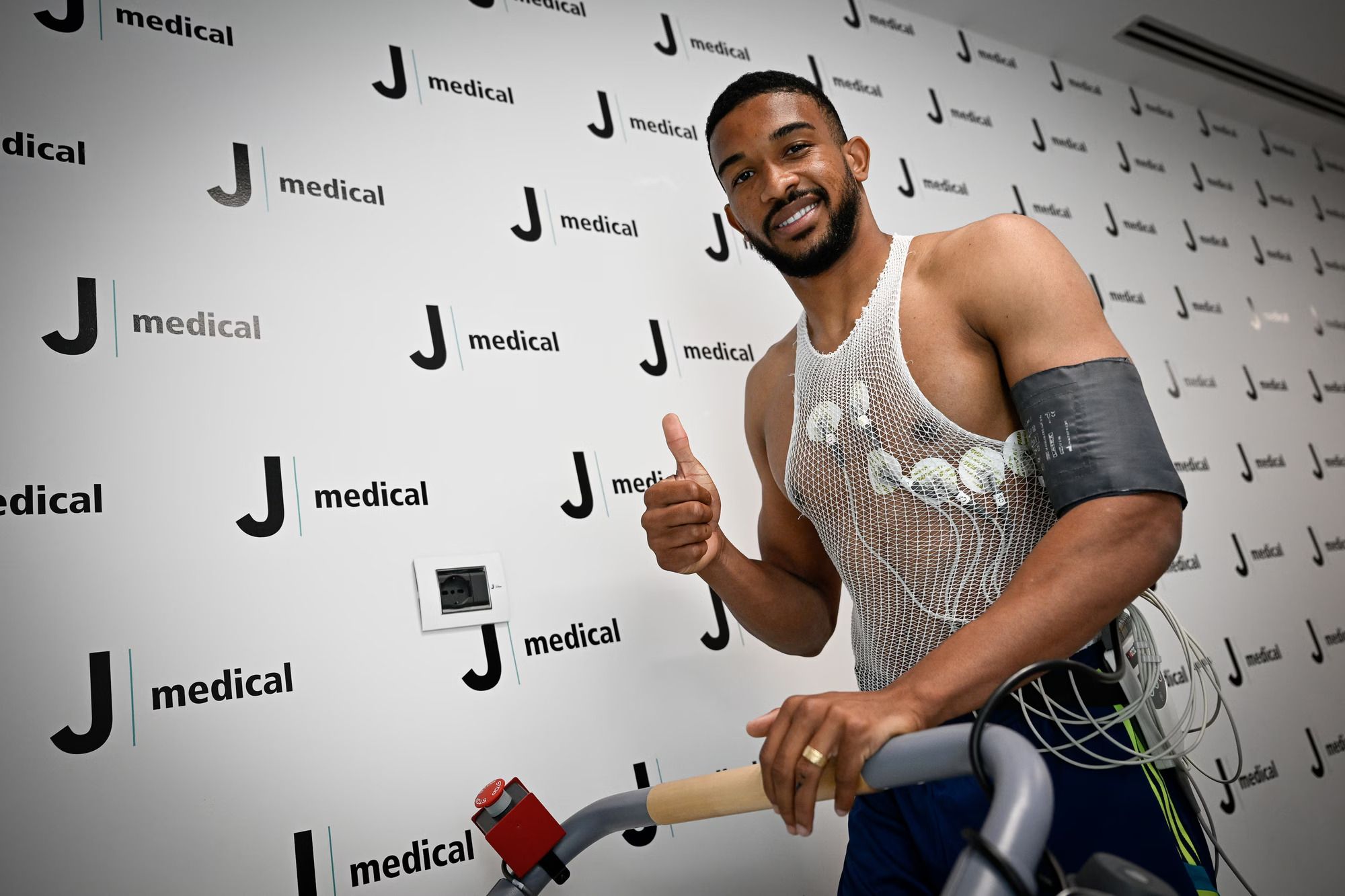
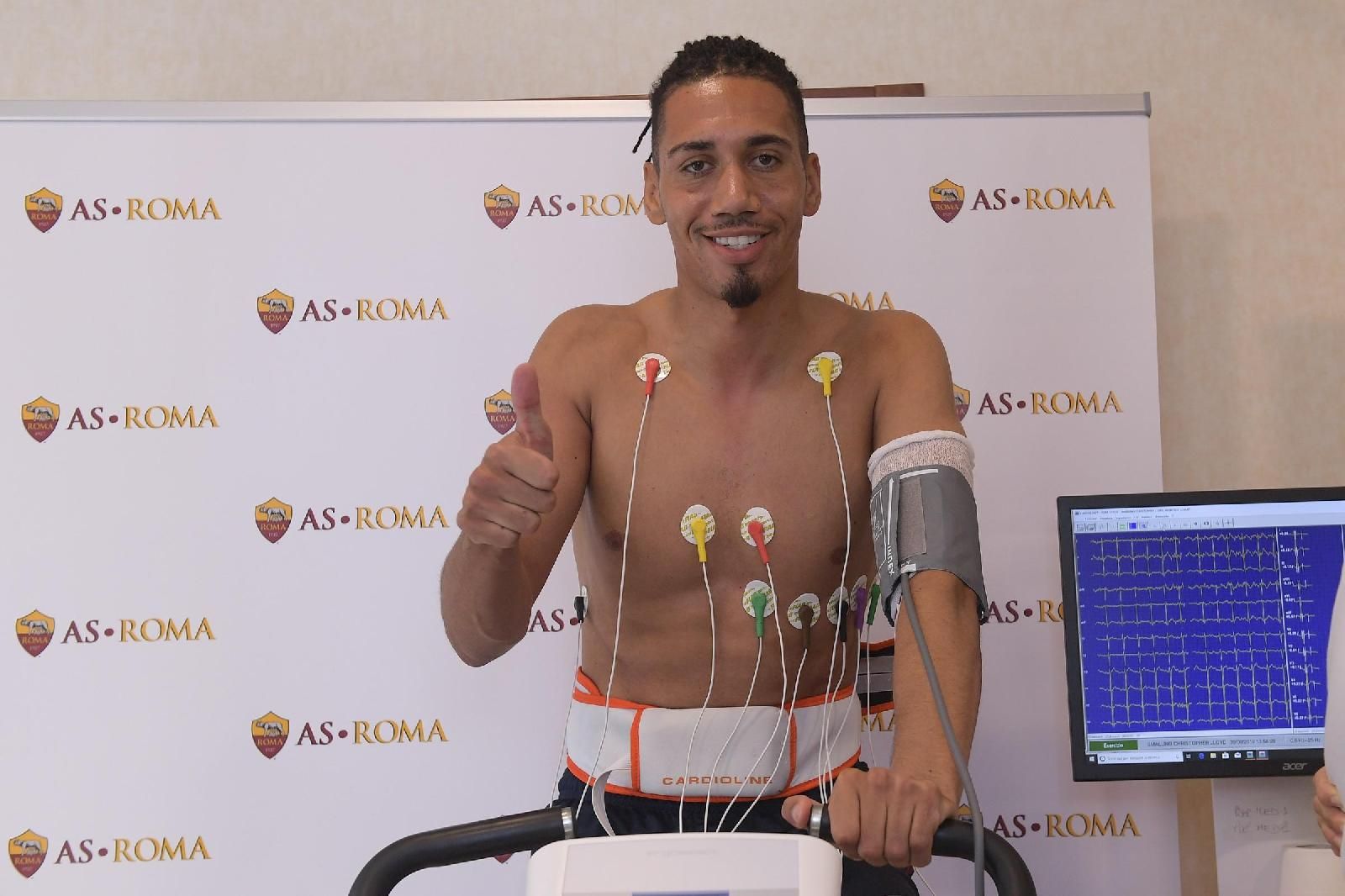
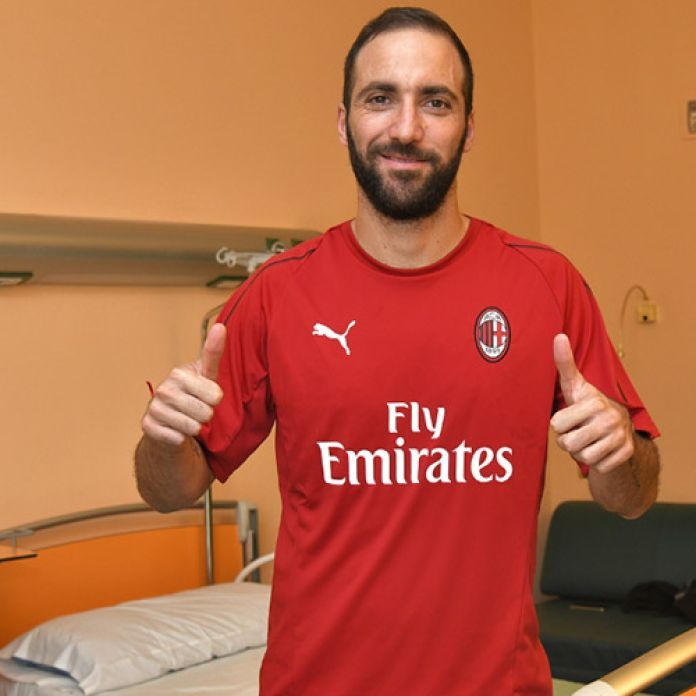
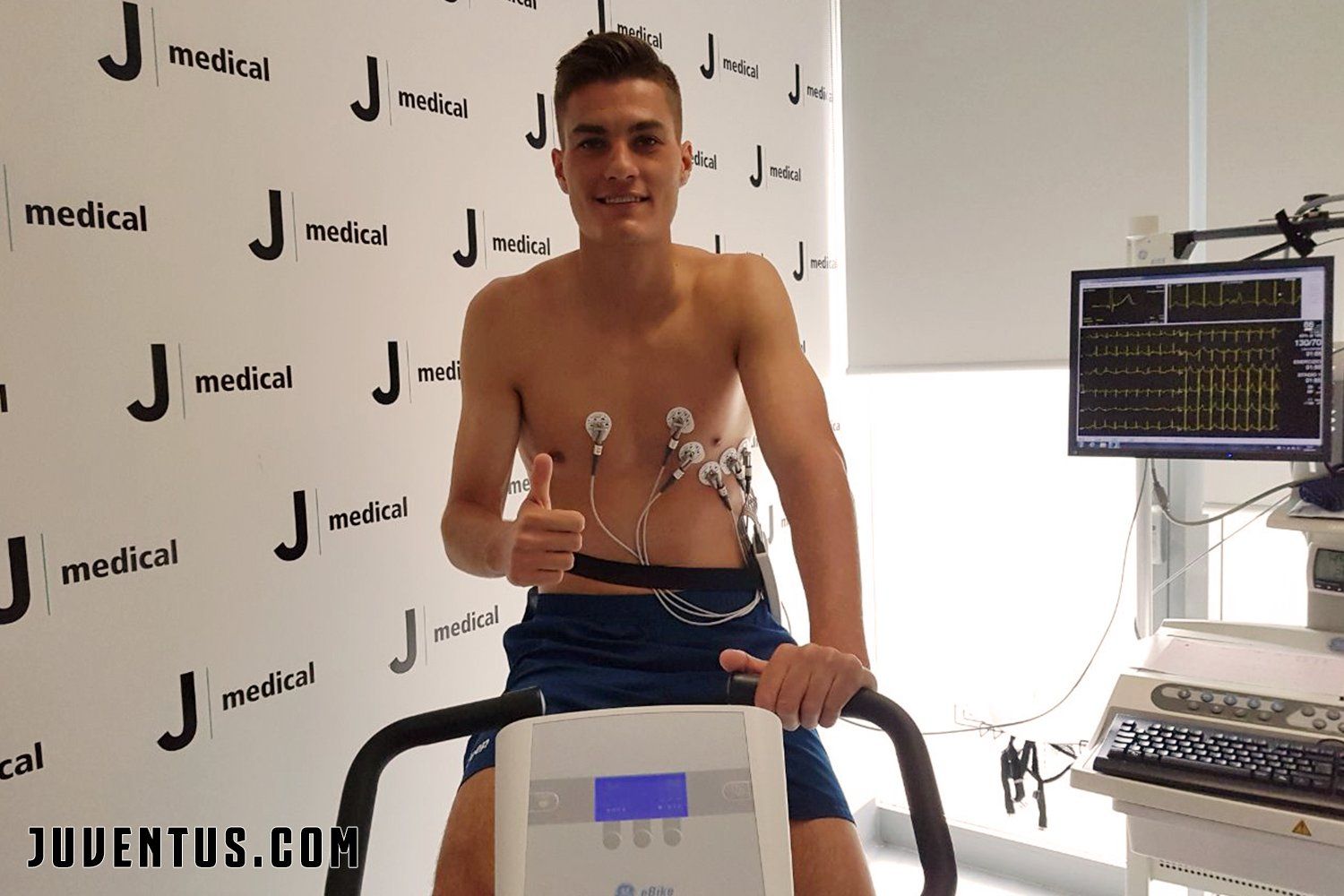
Inside, however, the narrative changes completely. The footballer temporarily sheds their sporting identity and becomes a patient, a body to be examined. This is where the most recognisable visual elements appear: the examination table, the treadmill, the exercise bike, the blood pressure cuff, the suction electrodes attached to the chest, the wires leading to the ECG machine, the breathing mask and the respiratory analyser. And then, of course, the inevitable thumbs-up to the camera: the simplest possible gesture to suggest that everything is going smoothly—or perhaps just an automatic reaction, one footballers instinctively resort to whenever they find themselves outside their natural habitat.
Medical examinations have always been photographed, but their role has evolved dramatically over time. Looking back at older examples—even the most glamorous ones, such as David Beckham's move to Real Madrid—the imagery feels almost journalistic: a doctor in a white coat, a few medical devices and the anonymous white walls of a hospital. In the age of digital communication, however, medicals have become content produced directly by the clubs themselves. No longer just paparazzi shots, but official galleries, reels and behind-the-scenes videos created inside medical facilities dressed in club branding, sponsor logos and corporate colours. Spaces that have become instantly recognisable to football fans: Turin's J Medical, La Madonnina and Humanitas in Milan, Villa Stuart and Paideia in Rome, and many more.
The Narrative
Beyond being a medical examination, for the public a football medical is also a status update. A mandatory checkpoint and the clearest confirmation that a transfer is entering its final stages—the last step before the official announcement. For transfer insiders, it represents another piece of news, sometimes even the one that reveals a deal which had developed entirely under the radar. There have been a handful of exceptions, with signings only disclosed after the medical had already taken place, such as Luuk de Jong's move in the summer of 2025. Porto managed to keep the operation completely secret by registering him at the clinic as a handball player to avoid attracting attention, before unveiling their new signing during a pre-season friendly.
Most of the time, however, the media manages to track these moments down, relying on a small network of sources that follows every step of the process: from bookings—flights, hotels and medical appointments—to movements around the city and, eventually, the clinic itself. From a medical standpoint, almost nobody outside the club ever learns the actual outcome of the examinations. But in most cases, that's beside the point. Knowing that the player is there, in the hands of their new club, is enough. Barring any unexpected health issues, physical concerns or last-minute bureaucratic complications, the deal is as good as done.
When Medicals Change Everything
Not every medical follows the expected script. In some cases, examinations uncover issues that simply cannot be overlooked. That was the case in 1996, when Nwankwo Kanu arrived at Inter and was diagnosed with a serious heart condition. Or in 2008, when Lilian Thuram discovered a cardiac defect during the medicals ahead of his move to Paris Saint-Germain, prompting his retirement from professional football shortly afterwards. Back in 2000, meanwhile, Manchester United postponed Ruud van Nistelrooy's transfer from PSV after concerns emerged over his knee—and the Dutch striker went on to suffer an ACL injury in training soon after.
Sometimes, however, a medical does not provide a definitive answer, and the parties involved end up telling very different versions of the story. Often with considerable tension. One of the best-known examples is Patrik Schick's collapsed move from Sampdoria to Juventus in 2017. After completing his medical at J Medical and following unofficial communications from both clubs, the transfer fell apart because of an alleged heart issue—a diagnosis the striker strongly disputed. A similar case involved Aly Cissokho in the summer of 2009. The French full-back was all but a Milan player before the Rossoneri pulled out after his medical. The club cited a dental problem that could have affected his posture, while Cissokho dismissed the explanation as "an excuse."
More recently, in February 2026, Milan found themselves facing another similar situation with Jean-Philippe Mateta. The transfer was at an advanced stage before pre-signing examinations revealed a knee issue. Crystal Palace acknowledged they were aware of the condition but believed it could be managed without surgery and without significant long-term consequences. Milan, however, judged the level of risk to be too high for an investment worth around €30 million. And there are many more stories like this, often followed by public disagreements and conflicting narratives. Because between the photo inside the clinic with a thumbs-up and the one at club headquarters holding up a new shirt, there is still a brief window in which a medical assessment can completely rewrite the outcome of a transfer.