Estudiantes will wear an in-house kit in the Copa Libertadores final RUGE, the brand that has supplied the Argentine club’s kits for five seasons, was founded by Estudiantes itself
Tomorrow night at the Centenario in Montevideo, Uruguay, the Copa Libertadores final will have a familiar feel. Estudiantes and Palmeiras had already contested South America’s most prestigious title in 1968, on the same pitch, with the Argentines winning the decisive playoff and beginning a cycle that would bring three consecutive Libertadores trophies to La Plata. Fifty-eight years later, Estudiantes return to the stadium dreaming of winning a trophy they last lifted in 2009, and hoping to end Brazil’s run of seven consecutive titles, including Palmeiras’ own back-to-back triumphs in 2020 and 2021.
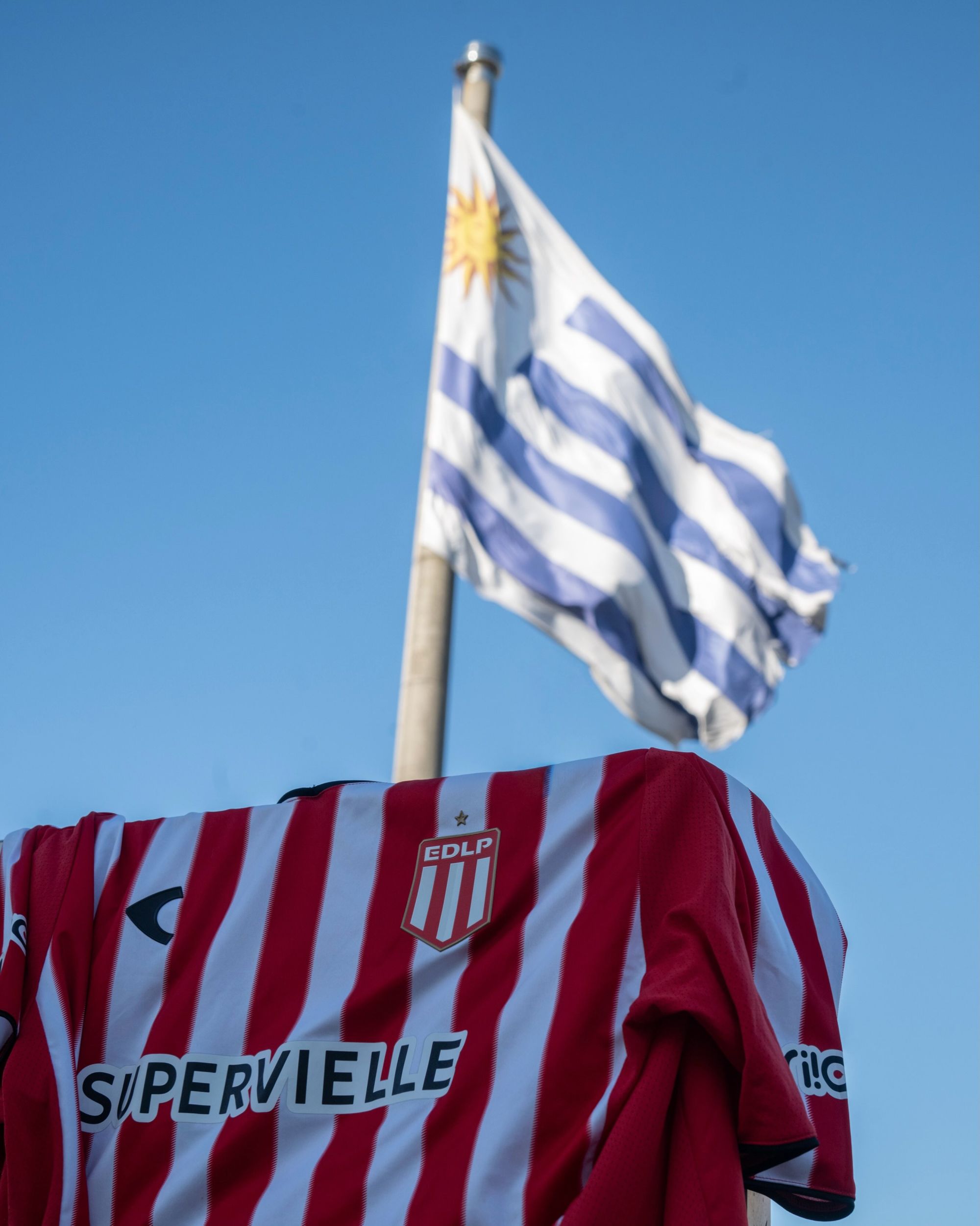
For the occasion, both clubs have unveiled special versions of their respective kits. The Brazilians, who have worn PUMA since 2019, like another eight clubs taking part in the 2026 Libertadores, have introduced a customised green shirt with dedicated sleeve patches and an inscription on the chest. Likewise, the Argentines have unveiled a jersey by RUGE, the brand owned by the club itself.
Estudiantes’ shirt for the final
The shirt Estudiantes will wear tomorrow is based on their first kit of 2026, featuring the traditional vertical red-and-white stripes with serrated edges, a V-neck and black trim. A commemorative inscription on the chest will reference the finalists, stadium and date of the match, while the sleeves feature two special patches: on the right, a black-and-gold design with the competition crest, the words “Montevideo Final 2026” and the motto “La Gloria Eterna”; on the left, a patch celebrating the club’s four titles, won in 1968, 1969, 1970 and 2009.
The original kit also contains a reference to the club’s past. Its description on the official store mentions “references to the shirt worn by the 2006 championship-winning team,” whose 20th anniversary falls this year. That Estudiantes side was coached by Diego Simeone and captained by Juan Sebastián Verón, who returned to Argentina, and to his native La Plata, that season after ten years in Serie A and the Premier League.
The history of RUGE
To understand how Estudiantes came to put their own name on their shirts, we need to go back to June 2021, when the club announced the creation of RUGE. Their partnership with Under Armour was approaching its end, and the club decided to create its own clothing brand, taking control of the development of its kits and supporter collections.
The project was presented by club president Martín Gorostegui and Verón, who was vice-president at the time and now leads the club. The name evokes the roar of the lions, one of Estudiantes’ nicknames, in contrast with their rivals, Gimnasia’s “Wolves”. It was chosen for its brevity, local recognisability and versatility beyond the football pitch. From the outset, the project’s partner was Mateu Sports, a sporting goods company founded in La Plata in 1905, coincidentally the same year as the club.
Estudiantes own the brand and contribute to the creative development of its collections, relying on Mateu Sports, the brand’s partner and licensee, for aspects related to production and commercialisation. This hybrid model allows the club to intervene directly in decisions concerning its red-and-white apparel while drawing on the expertise and distribution network of a specialised company.
The first shirts were officially unveiled on January 23, 2022, at the UNO stadium, officially known as the Estadio Jorge Luis Hirschi, during a friendly between former Estudiantes and Vélez players. Discussing the first model, which drew inspiration from the club’s historical archive, art director Arol Echenique explained that a fundamental starting point was to “bring back the proportion of red in the shirt’s design and make it more prominent than the white.” It was a question of proportions deeply felt by the supporters.
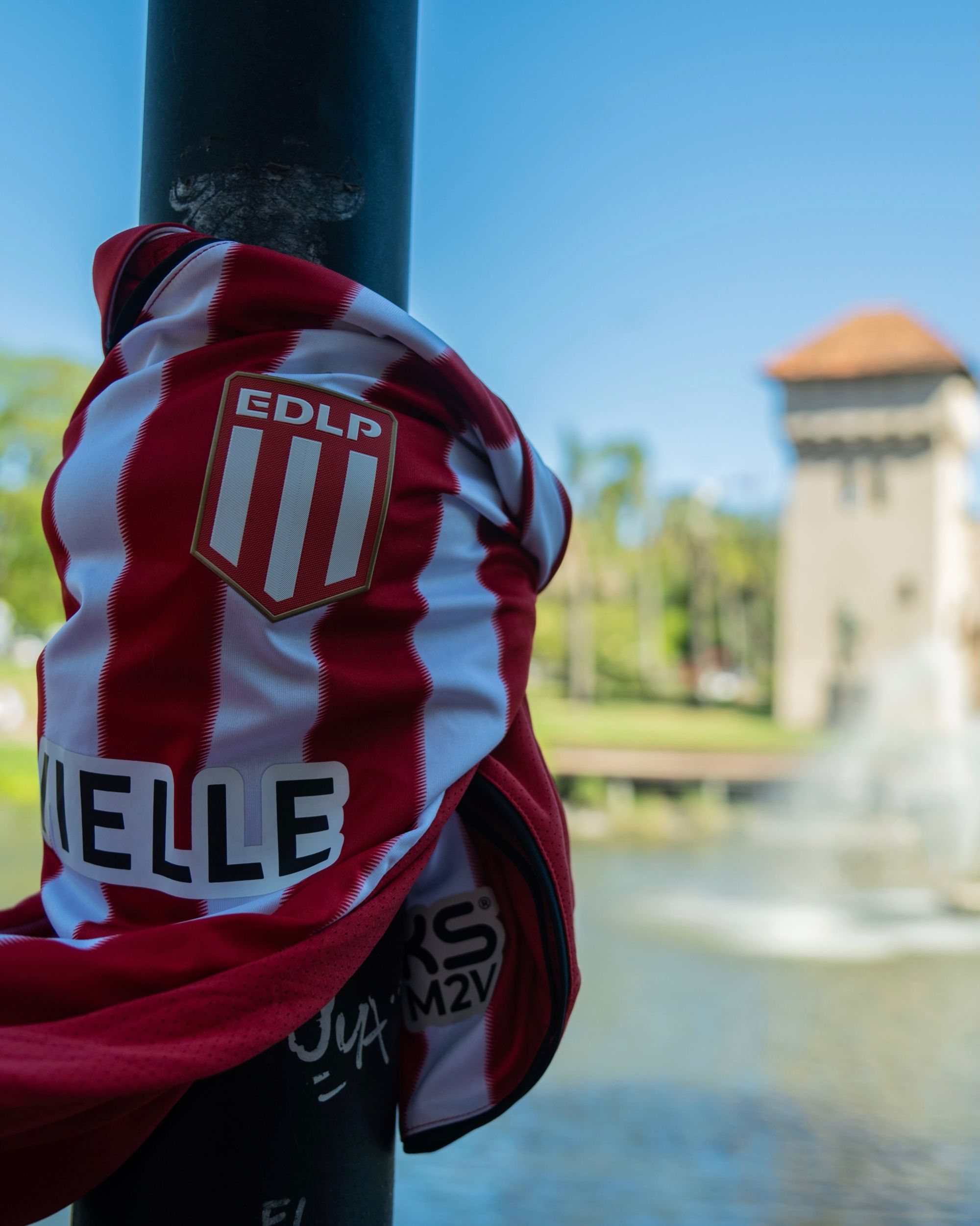
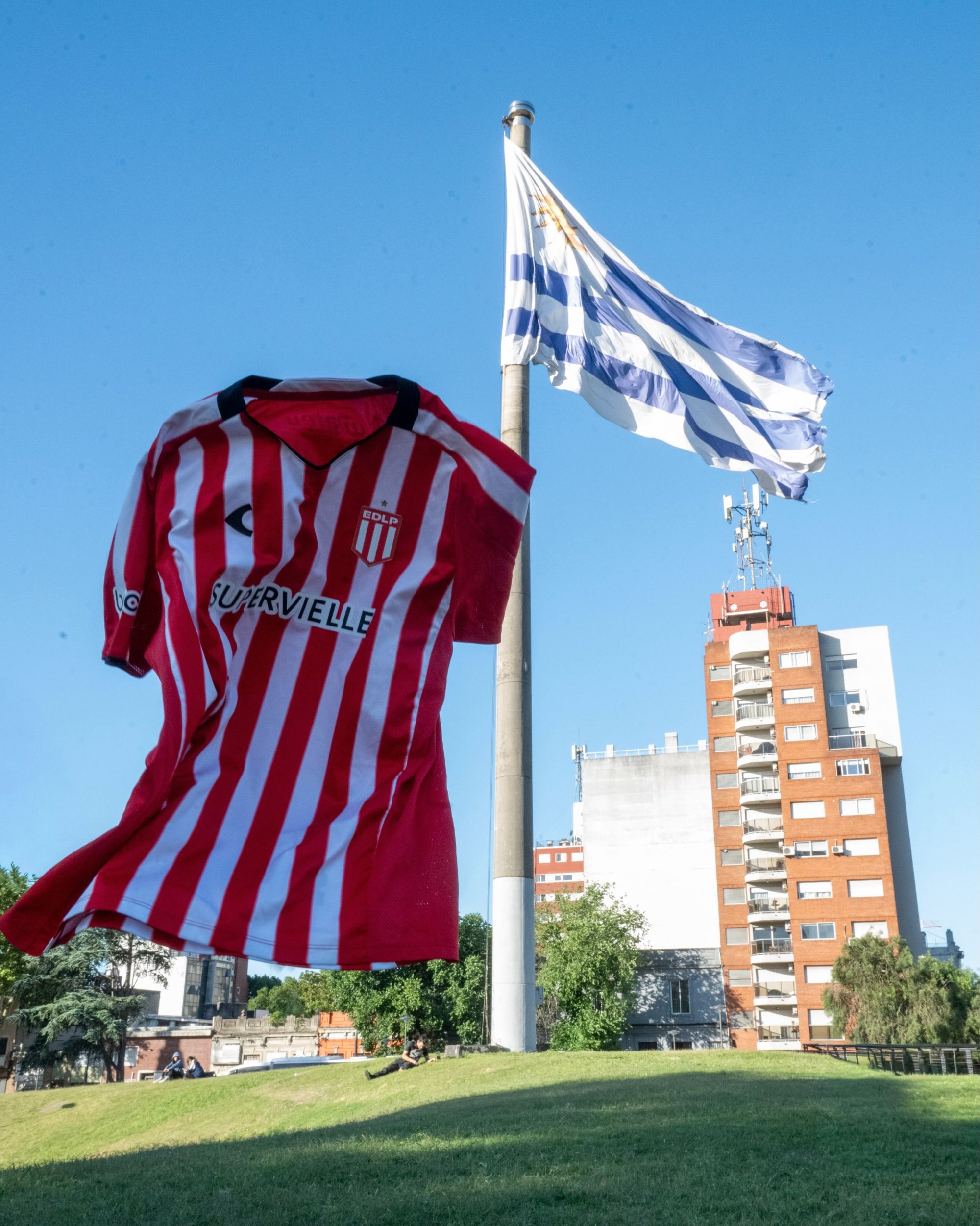
Later collections continued to explore the history of Estudiantes. One example is the 2022 third shirt dedicated to club icon Edgardo Prátola, 20 years after his death. Another is the 2023 tribute to Carlos Bilardo and his connection with the Argentina national team, featuring stripes in two shades of grey, inspired by the jacket worn by the head coach at the 1986 World Cup, and an aesthetic based on the Albiceleste.
Alongside the kits for the men’s and women’s first teams, RUGE has also developed apparel for the youth academy and the other sports within the club, including basketball and volleyball. These are the latest additions to a catalogue that, away from the football pitch, has included a range of supporter and leisurewear since 2022.
Other examples of in-house kits
Estudiantes have therefore chosen a path that remains relatively rare in international football, although it is not entirely unprecedented. The closest comparison in Italy is Lecce, who used their own M908 brand from 2018 to 2026 before moving to adidas. In Germany, St. Pauli used DIIY from 2021 to 2024 before signing with PUMA. Maccabi Tel Aviv, meanwhile, developed their own line for two seasons, 2017/18 and 2018/19, between their partnerships with adidas and FILA.
Across the Atlantic, Brazil is where the in-house kit model has found its widest application. Two recent examples are Fortaleza, who created Leão 1918 ten years ago before later entrusting production and commercial management to Volt, and Ceará, who wore Vozão for seven seasons before moving to Diadora in recent months.
Going back to the 2000s and returning to Europe, two even more familiar names emerge. Athletic Club wore the 100% Athletic brand from 2001 to 2009, while Borussia Dortmund used goool.de, which was controlled through one of the club’s subsidiaries, from 2001 to 2004.
Finally, there have been examples of in-house production that did not involve creating a separate brand. These include Roma in 2013/14, during the season between Kappa and Nike, and Southampton in 2014/15. Napoli have followed a different model with EA7 since 2021/22, collaborating across creative development, production and commercialisation.
Brand ownership, creative processes and production can therefore be combined in a variety of ways. With RUGE, Estudiantes chose to give the project its own name, inspired by the club’s popular red-and-white tradition, and to retain primary control over the creative direction of its matchwear. Tomorrow, for the first time, they will take RUGE onto the biggest stage in South American football, dreaming of returning to the top of the continent, as they did 17 years ago with the Topper logo on their shirts.
What to read next
All the new rules for Serie A football kits
They will come into effect from the 2027/28 season and remain in place until 2030
Roma x DSQUARED2 is 2026's most surprising football fashion collaboration
Tailored suits and casual looks have transformed Roma's aesthetic
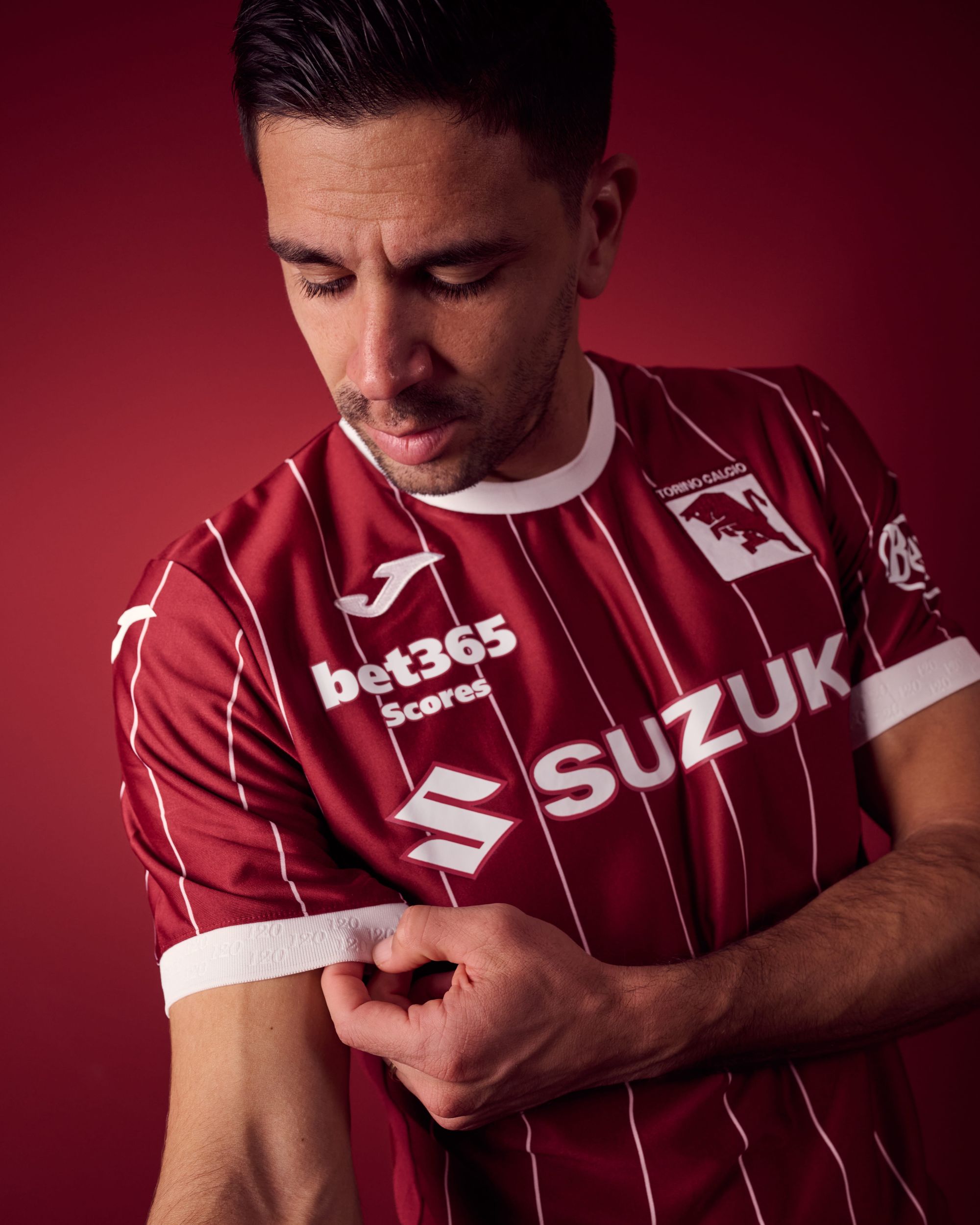
Only 1906 pieces of Torino's new Anniversary Kit have been produced
Designed by Joma to celebrate the club's 120th anniversary, the jersey pays tribute to an aesthetic cherished by the fans