
Larissa Iapichino’s life beyond the spotlight An interview with the world’s top-ranked women’s long jumper
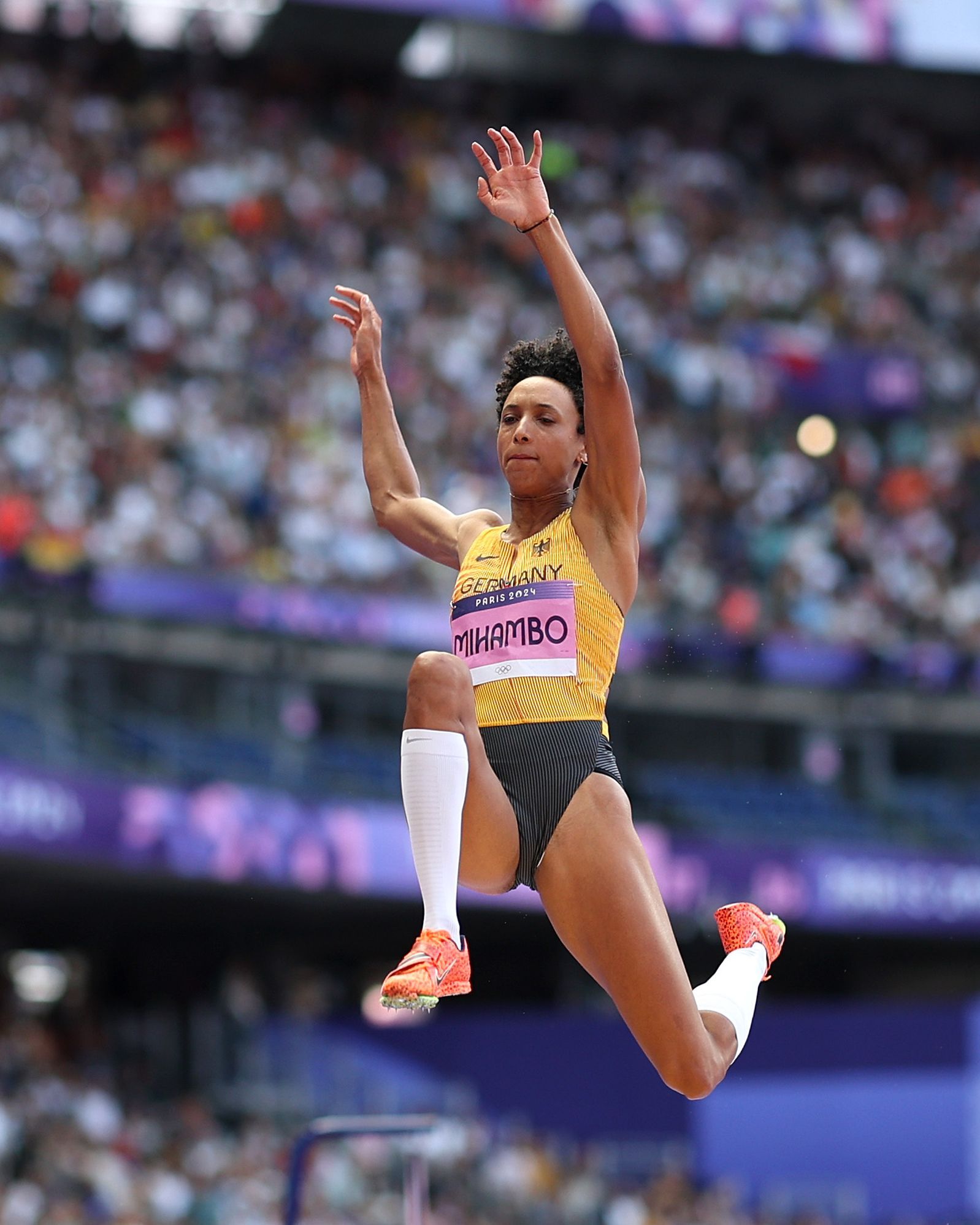
Larissa Iapichino has enjoyed an extraordinary 2026, culminating in an almost perfect summer. After winning silver at the World Indoor Championships, she set a new Italian record in Eugene in July with a jump of 7.12 metres, improving her personal best by six centimetres and surpassing by one centimetre the record set by her mother Fiona May, which had stood since 1998. She then became European champion in Birmingham, finished second in the Diamond League final and won the Ultimate Championship in Budapest two weeks ago. A series of results that, when the rankings are next updated, will take her to the top of the women’s long jump world rankings for the first time.
After a summer like that, even Iapichino finds it difficult to choose one moment to remember. “I’m torn between the European Championships and the Italian record,” she says. “The European Championships were magical, both because of the atmosphere, which already gives you so much in itself, and because of the result. But the Italian record was also an incredible feeling, something historic that I achieved in Eugene, in the United States, at an amazing stadium and one of the true homes of athletics. Those were the two highlights of my season, but I wouldn’t know which one to choose.”
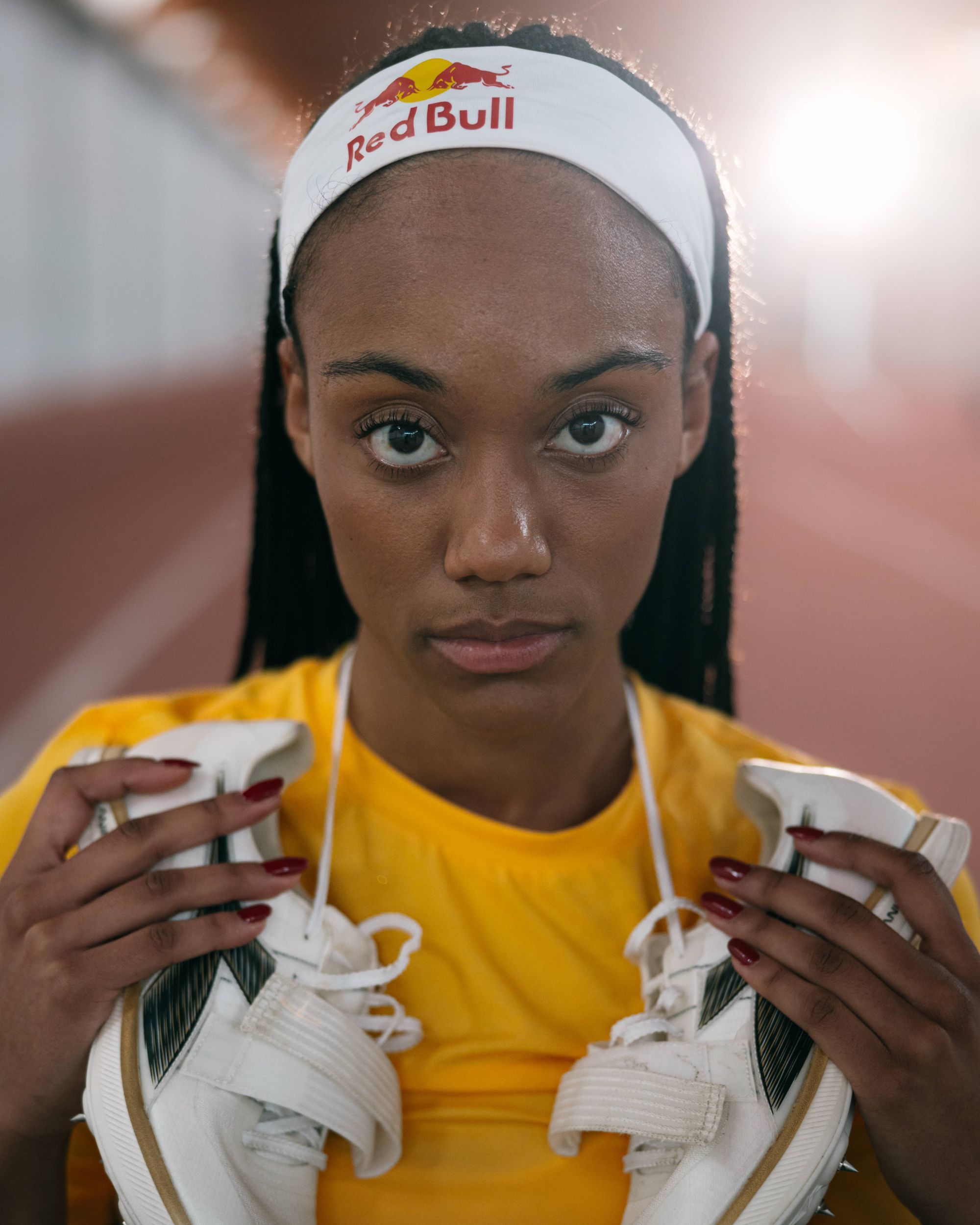
Last week, we met Iapichino at a media session organised by Red Bull, her sponsor since 2020. She introduced us to the side of Larissa we rarely see, away from cameras and the spotlight: a young woman who has grown accustomed to the attention of the public and the media, who is not afraid to speak out and hopes to see athletics continue to grow in Italy, but who still retains her reserved nature, both on and off the runway. Despite the demands of elite sport, she has also continued pursuing a parallel path in law, the field in which she has imagined her future since childhood.
Athletics and law
“I had always wanted to study it,” she says about what has become something of a calling and, over time, a parallel path to athletics. “My uncle is a lawyer, and ever since I was little I told myself that I would become a lawyer when I grew up. I carried that idea with me throughout school. Once I finished, I enrolled at university and have been working through my degree step by step. It obviously cannot take priority over training, because sport is a train that cannot wait and you have to catch it when it arrives. A degree, on the other hand, can be spread out over time, at least in my case, especially because I can support myself comfortably and do not face the same urgency as many other people to graduate and enter the job market.”
Iapichino knows that she is in “a more comfortable, even privileged position compared to many other people studying the same degree.” Yet reaching the sporting heights she has at the age of 24 while continuing her university studies is far from a given. “I put a lot of effort into it and try to take my exams every year, even though I’m behind schedule, which I think is normal. It is already a difficult degree for someone studying full-time, let alone for me, since I cannot dedicate 100% of my time to it. But I set myself a minimum number of exams to take each year and try to stick to it. I combine studying and training every day, and even during competition periods I try to organise myself so that I can always keep my afternoons free, partly to rest and partly to study.”
Sport in Italy
Back on the runway, Iapichino’s breakthrough in 2026 did not come out of nowhere. Not for the long jumper, nor for Italian athletics more broadly, which is currently experiencing a genuine golden age. And “it is not only about the results, even though they are remarkable. There is something more. It is not just the talent that this generation and this national team are showing, but also the values they represent and the great multiculturalism that is so beautiful to see.”
The word we comes up frequently when she speaks, something that may sound surprising from the outside when discussing an individual discipline like the long jump. Iapichino explains that this is something much bigger than herself: it is a way of experiencing athletics that unites Italy’s male and female athletes at this particular moment in time. “An important part of this generation’s success,” even if competition itself remains an individual experience. “Of course, I’m alone on the runway, but beyond the competition there is a deep respect between us. We are all united by the Italian jersey and share the desire to contribute in some way to helping Italy finish as high as possible. It is a beautiful way of experiencing what it means to be Italian, the pride of wearing and representing these colours – and you can feel this healthy spirit even when competing against fellow Italians. It has created this amazing atmosphere, and I think it is important to know that even in solitary sports, there is a large team behind you, a real squad. Being around people who share the same life and sacrifices required to reach this level helps you feel understood, and perhaps a little less alone.”
This sense of loneliness is often discussed in relation to athletes who compete in individual sports and receive media attention only intermittently, usually around major events. Iapichino speaks of “a good balance between moments when it is right to be exposed and others when it is important to have your own space, remain calm and stay away from the spotlight.” At the same time, she hopes the current growth of athletics is only the beginning and that it does not depend too heavily on the results achieved by Italian athletes or on the difficulties currently facing Italian football, which have recently created more space for other sports. “I would like to see these disciplines become a bigger presence in Italian homes. In my ideal world, there is room for every sport: if the Italian football team – and as an Italian fan, I truly hope this happens – starts winning again, I hope other sports will continue to grow anyway. I think it is important to develop a well-rounded sporting culture and learn about many different sports. Of course, everyone has their favourite disciplines, but I think of countries such as Germany or Great Britain, where football remains the most popular sport but there is still strong interest in many other disciplines. We all know that results capture the attention of the casual fan, and rightly so, but it would be great to see a little more curiosity beyond the result itself.”
Sports storytelling
Hoping that interest in athletics continues to grow does not automatically mean Larissa feels at home in the spotlight. Quite the opposite: “I’m someone who competes in a reserved, introverted and quiet way. That’s simply how I am. I’m not particularly outgoing, and I’m not the kind of person who walks in thinking: I’m going to tear it up, put on a show and fire up the crowd. I have absolutely nothing against people who compete like that. In fact, sometimes I think I would like to be that way, but I would look ridiculous. It just isn’t who I am; it wouldn’t feel natural.”
It is in the way this reserved personality is sometimes perceived and portrayed by the public and the media that Iapichino identifies a broader problem. “We live in an increasingly less empathetic society, and I often think it is important to work on rebuilding our empathy for others and learning to put ourselves in other people’s shoes. Journalists, the media and everyone who tells stories about sport have a role in this dynamic and, in a sense, a civic duty.”
For the long jumper, the issue is how casually athletes are often criticised. “For almost every athlete, things sometimes go well and sometimes go terribly, but that happens,” she continues. “Last year, for example, I was devastated by the 2025 World Championships in Tokyo. Now I feel the complete opposite. What I would like people to understand, both in my case and for so many others who live the same life, is that our effort does not depend on the result. It is great when things go well and people praise us, but it is not right to be torn down when things do not go as we hoped. I am my own biggest critic, for example, and I have often already made the same criticism that might come from the media, perhaps even more harshly. There is no need to keep piling on. There are different ways of talking about disappointment, and I think there should be greater sensitivity around this because we are still human beings. Of course, we are public figures and have to accept criticism, but the point is not what is said, but how it is said. Those who cover our achievements, for better or worse, also have a duty to raise public awareness about the way athletes are criticised.”
According to Iapichino, this responsibility does not apply only to the language used to describe disappointment, but also to the images through which female athletes’ bodies and performances are represented. This is why she welcomes the guidelines introduced by the EBU this summer for television networks and media outlets covering women’s athletics. “I think they are important because we often see images that are not necessary either to tell the story of the competition or to show the athlete.” For the Italian long jumper, the crucial distinction concerns who has control over their own image. “If someone wants to show themselves, that should be their decision, not a choice made by someone else that could make them feel uncomfortable. On social media and their own platforms, everyone is free to show whichever sides of themselves they want, in every sense. But when it comes to television footage, which is accessible to everyone, including children, the focus should be on what really matters: how far you jump, how you jump, your technique, the movement and so on.”
The athlete’s aesthetic
In the way she presents herself during competitions, Iapichino always tries to retain something of the 24-year-old she is away from the runway. It starts with her hair, always pulled back into her recognisable bun. “I have to plaster it to my head with gel and tie it back. I always have a headache for the first half-hour, but it has almost become a ritual: it tells me that it is time to compete.” The same applies to her makeup, which is never excessive “because you sweat so much anyway,” but is enough to “keep some of the care I put into getting ready when I go out with my friends.” This sense of aesthetic continuity, however, does not extend to her personality. “When I step onto the runway, I make a switch: I become competitive and aggressive. That is how it has to work for me. I need a certain amount of aggression in the way I approach the competition because it helps me perform. Once it is over, I go back to being my everyday self.”
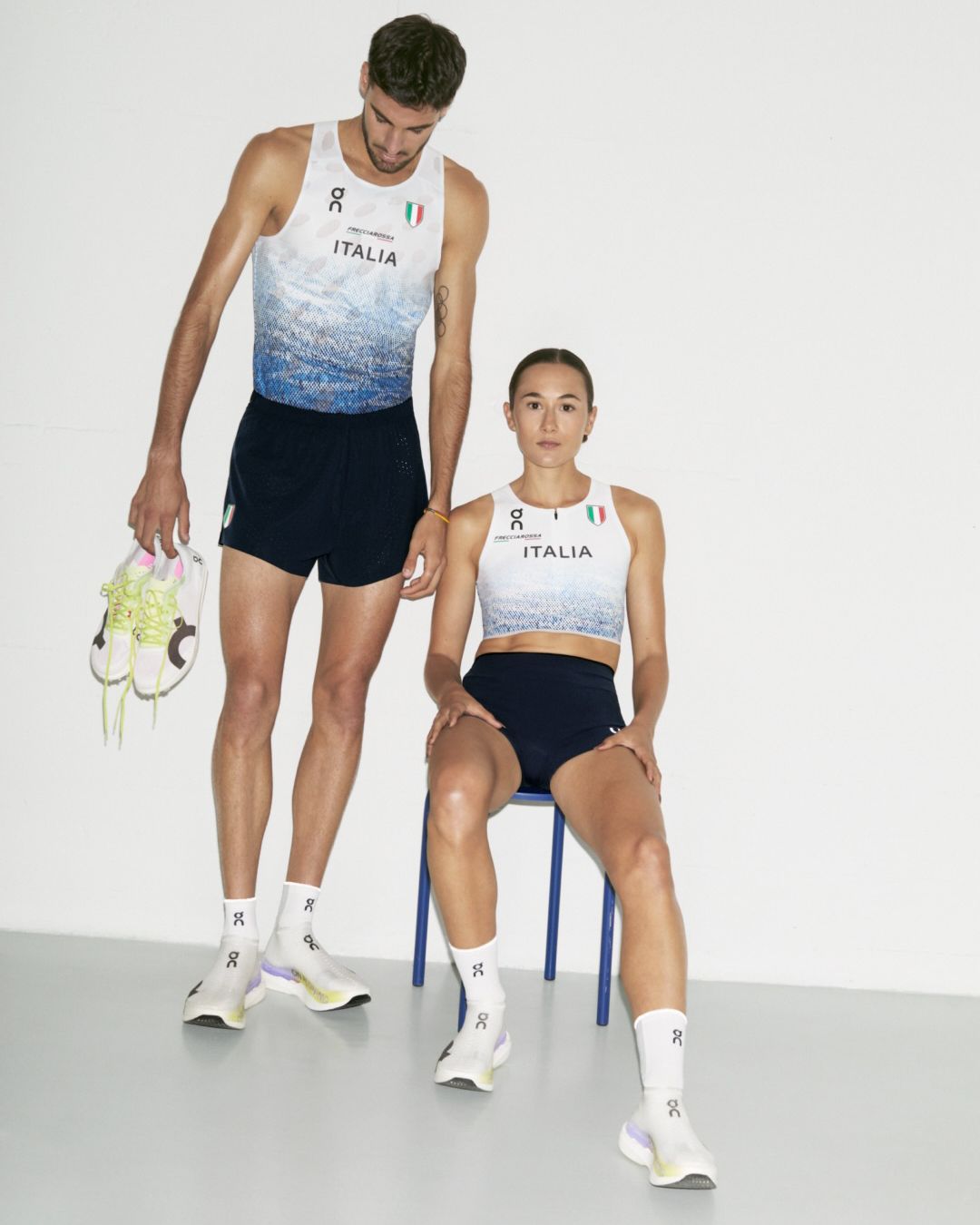
If she had complete freedom over what to wear, Larissa Iapichino “dreams of an entirely black kit, a colour I have missed in recent years, both in my sponsors’ competition kits and, of course, with the national team.” She is particularly fond of the work done by Diadora, her technical sponsor, especially “the willingness to experiment with silhouettes and small details without sacrificing functionality.” Finally, there is also a healthy desire for a little normality. “Athletics always tends to favour bright colours, whereas I would like something closer to what you might wear every day.”