
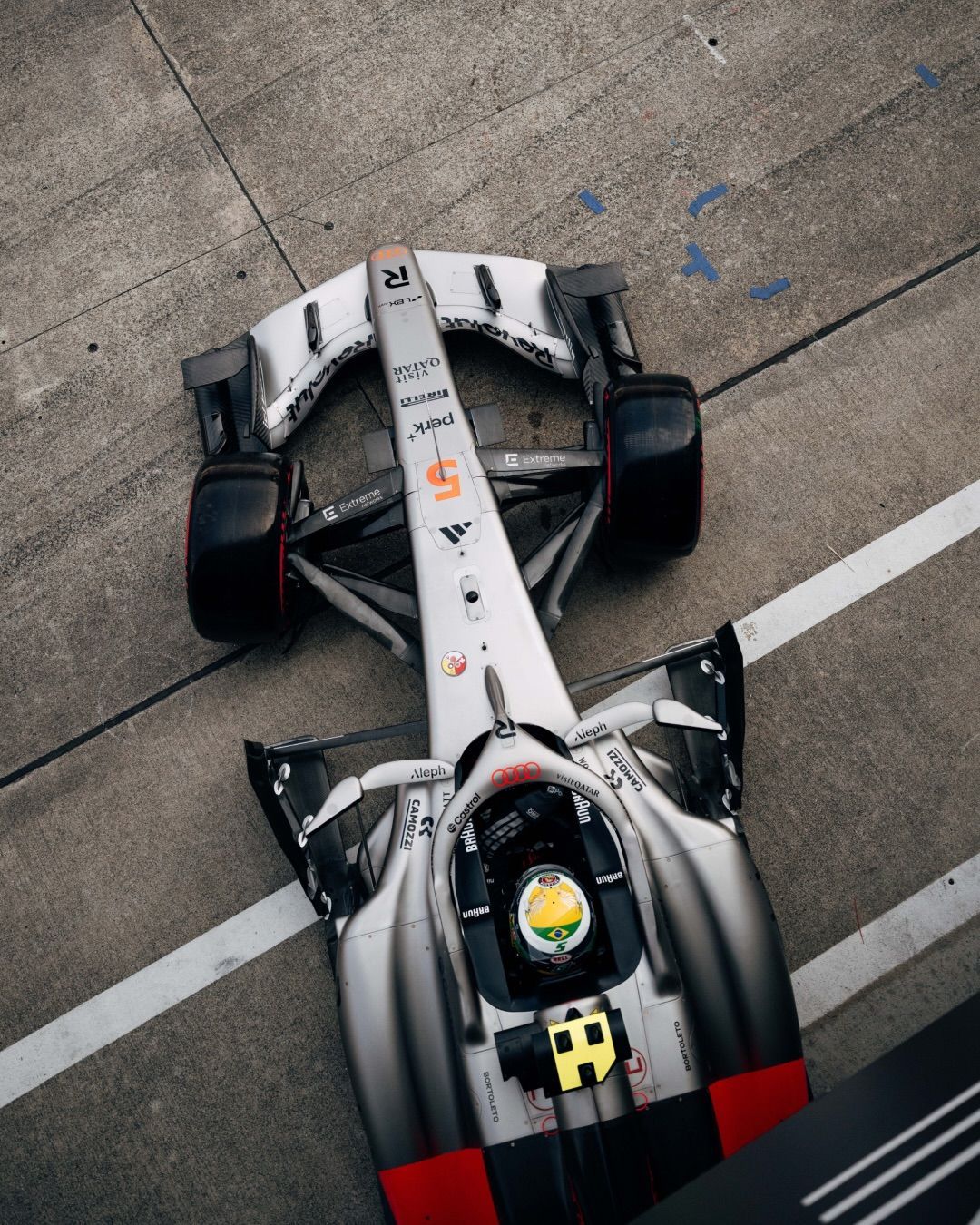
adidas takes its business in Formula 1 very seriously The next step is the partnership with Red Bull
Starting from the 2027 season, adidas will become the technical sponsor of Red Bull, further expanding its presence in Formula 1. This will mark the third team sponsored by the German brand, following its partnership with Mercedes launched in 2025 and its deal with Audi in the 2026 season. In the upcoming season, Red Bull’s apparel will instead be branded with the iconic three stripes. According to estimates by Bild, the agreement is a three-year deal worth a total of €81 million. Red Bull is currently sponsored by Castore, the team’s kit supplier since 2023.
The doubts around Max Verstappen
The most compelling aspect of this collaboration is also its greatest uncertainty. For adidas, signing a deal with Red Bull today means aligning its brand with Max Verstappen. Arguably the most recognizable Formula 1 driver in the world alongside Lewis Hamilton and Charles Leclerc, and certainly the most popular among younger audiences and fans of Drive to Survive—of which he remains a central figure despite giving very few interviews to Netflix across eight seasons. A figure of undeniable authority both in the paddock and on track.
The issue is that there is currently no certainty that Max Verstappen will remain with Red Bull next season—or even stay in Formula 1 at all. For weeks, rumors have been circulating that the Dutch driver is seriously considering activating a clause in his contract to leave at the end of the season. He has not firmly denied these claims, instead repeatedly acknowledging that he has considered the possibility of retirement or taking a sabbatical year.
There is therefore a risk that adidas could see its most valuable asset disappear before the partnership even begins. That said, even if Verstappen is not one of Red Bull’s official drivers next season, it is highly likely that he would still take on an ambassadorial role for the team and continue competing in endurance races under the Red Bull banner—scenarios that would still allow adidas to leverage his image in some capacity.
The new aesthetic of adidas in Formula 1
Regardless of the uncertainties surrounding Verstappen, the partnership between adidas and Red Bull is significant for several reasons. First: while the agreements with Mercedes and Audi may have seemed relatively organic within adidas’ broader vision—given they involved two German teams—the deal with Red Bull signals a long-term strategic shift. It is a clear statement of intent: adidas has entered Formula 1 not just to participate, but to dominate and redefine its aesthetic codes. To achieve this, the brand has chosen to align itself with a team boasting a history of success—14 titles across Constructors’ and Drivers’ Championships—while maintaining an unmistakably nonconformist identity.
This is precisely the core of the partnership: understanding how these two worlds can intersect. adidas is deeply committed to celebrating its heritage, placing it within new contexts while consistently delivering an elegant aesthetic that reflects its legacy. Red Bull, on the other hand, has always worked to avoid being confined within a predefined visual identity. The outcome will depend almost entirely on the ability to merge these two approaches—if the goal is truly to develop official teamwear into a distinctive visual identity that becomes an asset, rather than simply placing a logo on a jersey or cap.
Direct Competition with PUMA and Nike
Another key aspect to consider is how the Red Bull deal represents a strong and direct response from adidas to PUMA. At the start of the 2026 season, PUMA announced its partnership with McLaren, adding it to existing collaborations with Ferrari and Aston Martin, effectively securing a front-row position within the paddock. Following this competitive dynamic, adidas has now reclaimed its position as a leader.
It is also worth noting that Formula 1 is currently one of the few sports where adidas does not face direct competition from Nike. At a time when Nike is acquiring some of adidas’ most important assets—such as the sponsorship of the German national team and the official ball of the Champions League—the absence of the Swoosh allows adidas to establish a strong foothold ahead of Nike’s eventual return to the paddock.
That return feels inevitable. Formula 1 has become far too attractive for major brands to ignore. The timing and nature of Nike’s potential entry will be up to them, but when it happens, they will have to contend with the groundwork laid by adidas to ensure that the intersection of sport and fashion finds its ideal expression in Formula 1.
What to read next

Como's fans unveil the new Third kit for the 2026/27 season
A black jersey with white details and a pixelated design
Everything new in Formula 1 for the United States Grand Prix
Liveries, racing suits, helmets and collections: everything happening around the race in Austin
MCM, Bayern, adidas and “good design”, according to Dirk Schönberger
MCM’s Chief Brand Officer also spoke to us about what he learned during his time at the Three Stripes and the relationship between fashion and women’s football