























How super shoes changed running forever The technology behind the fastest marathons ever run
On April 26, only the 46th edition of the London Marathon took place. It was a record-breaking Sunday, during which Sabastian Sawe covered the 26.2 miles in one hour, fifty-nine minutes and thirty seconds, becoming the first athlete in history to complete a World Athletics-recognised marathon in under two hours. The wait for a second runner to achieve the feat, however, was remarkably short. Making his debut over the 42.195-kilometre distance, Yomif Kejelcha crossed the finish line just over ten seconds later, clocking 1:59:41. To put the uniqueness of this edition into perspective, as if these two milestones were not enough, third-place finisher Jacob Kiplimo beat Kelvin Kiptum’s previous world record, set in Chicago in 2023, by seven seconds with a time of 2:00:28. Meanwhile, in the women’s race, Tigst Assefa lowered her own world record for a marathon run without pacemakers by nine seconds, setting a new mark of 2:15:41.
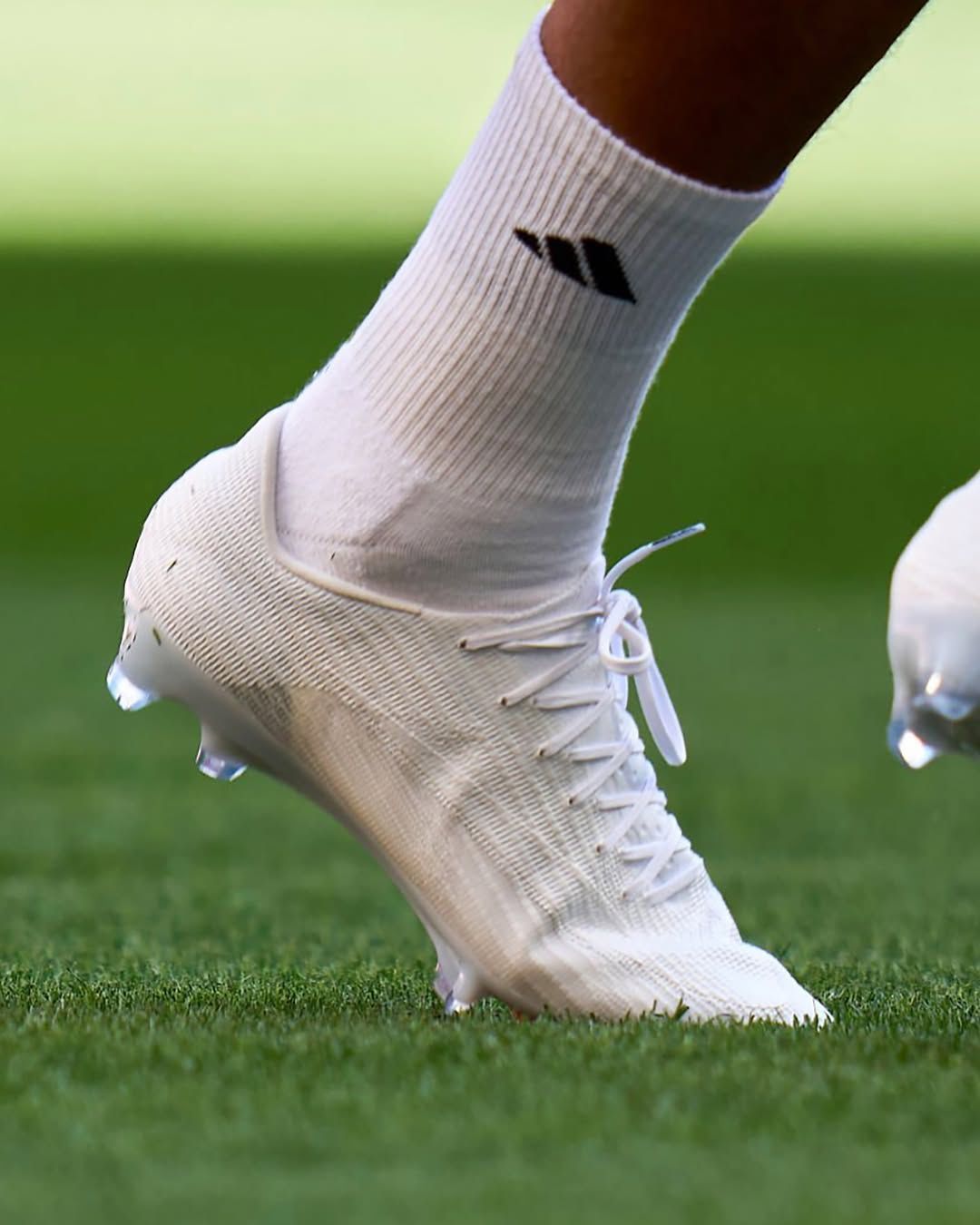
What unites Sawe, Kejelcha and Assefa is not only their record-breaking performances and historic achievements: the world's three best marathon runners, including the only two athletes ever to run under two hours, are all signed by adidas. The midsole on which the champions wrote their finishing times in permanent marker after crossing the line belongs to the Adizero Adios Pro Evo 3, a shoe that falls under the umbrella term of Super Shoes. These too are record-breaking in their own right, as they are the first shoes of their kind to weigh less than 100 grams—97 grams, to be precise—thanks to the removal of the traditional midsole plate in favour of a wraparound carbon technology. It is a major victory for the German sportswear giant over the competition, especially considering that a powerhouse like Nike has spent the past decade developing increasingly competitive prototypes in an attempt to break the two-hour barrier.
Nike's Breaking2 Project
In December 2016, in what looked more like a NASA experiment than a sporting initiative, Nike unveiled Breaking2, a project aimed at completing a marathon in under two hours, a feat widely considered impossible at the time. When the initiative was announced, the men's marathon world record belonged to Dennis Kimetto, who had run 2:02:57 in 2014. Breaking that mark would have required an unprecedented 2.5% improvement in speed over a single race—something never before witnessed in such a short period of time and within a single event. The only precedent offering any encouragement was Paula Radcliffe's performance in 2003, when she lowered the previous world record by two minutes at the London Marathon, just one year after it had been set in Chicago, itself an improvement of 89 seconds over the previous best.
To achieve this milestone, Nike focused on two key elements. The first was an extensive testing programme built around cutting-edge technology and a meticulously planned strategy, from athlete selection to staging the attempt on a controlled race circuit. The brand initially analysed hundreds of its sponsored distance runners, narrowing the field by selecting athletes capable of running a marathon in under 2:05 or a half marathon in under 60 minutes. Further assessments then focused on each athlete's ability to sustain a target pace over shorter distances, eventually leading to the selection of three finalists from the remaining eighteen candidates: Eliud Kipchoge, Lelisa Desisa and Zersenay Tadese. The first two—and Kipchoge in particular—were already among the world's finest marathon runners, while Tadese was chosen for his exceptionally low energy consumption while running. Once the selection process had been completed at Nike's headquarters in Oregon, attention shifted to finding the most favourable venue possible for the official attempt.
From the Monza Trial to the Vienna Breakthrough
A global scouting process led to another round of selection, narrowing the possible venues down to four: the Afsluitdijk dam in the Netherlands, featuring a 20-mile straight stretch; Chicago's McCormick Place, the largest convention centre in North America; Berlin's former Tempelhof Airport; and finally Monza Circuit. The Italian venue ultimately came out on top thanks to a combination of factors, including its ideal altitude to aid breathing, its distance from the more unpredictable coastal climate, minimal elevation changes, and optimal humidity and temperature levels in early May. Above all, however, Nike's analysis concluded that Monza offered the highest probability of delivering perfect conditions on at least one of the three scheduled days—May 6, 7 and 8, 2017.
The dress rehearsal, held over the half marathon distance in March, produced encouraging results while revealing the carefully engineered strategy behind Nike's attempt. A safety car led the group, followed by six pacemakers rotating continuously to stay fresh, arranged in a diamond formation with the three protagonists tucked in behind them. Mounted on the lead vehicle were a pair of watches displaying the elapsed time, current pace and projected finishing time, targets that became increasingly difficult to maintain as strong winds affected the runners. Despite the adverse conditions, Kipchoge completed the half marathon in an astonishing 59:19, with Tadese finishing roughly twenty seconds later. Desisa, meanwhile, crossed the line in just over one hour and two minutes after struggling with a combination of physical issues and equipment problems, including loose-fitting shorts that increased drag in the wind. Even so, the test confirmed that the conditions were in place for the official attempt.
When the official attempt finally arrived in May, Nike came within a single stride—quite literally—of making history. Kipchoge completed the marathon in 2:00:25, shattering every benchmark imaginable but falling just short of the elusive two-hour barrier. Experts pointed to higher-than-expected temperatures and humidity as decisive factors, while Kipchoge himself argued that the absence of spectators during the closed-door event also played a role. History, in a way, proved the Kenyan right. In 2018 he set a new official world record of 2:01:39 at the Berlin Marathon before making another sub-two-hour attempt as part of the Breaking2 project, this time on a specially designed course in Vienna's Prater Park.
The run, remembered as the Ineos 1:59 Challenge, replicated many of the strategies first seen at Monza, once again relying on rotating pacemakers—this time arranged in a modified V formation—while adding cyclists responsible for delivering hydration during the race. Most importantly, however, there was a crowd and no direct competition, helping Kipchoge stop the clock at 1:59:40.2 in what became a landmark success for Nike. The ending, however, was only partially triumphant. World Athletics never officially recognised either the Monza or the Vienna attempt because of the special race conditions and pacing strategies employed to assist the athletes. Not to mention the presence of the first generation of super shoes, still a mysterious and controversial innovation at the time.
Nike's First Super Shoes
For Breaking2, Nike relied on cutting-edge testing methods and technology to identify the ideal athletes and put them in the best possible position to break the record, from tailored nutrition and hydration plans to strategies designed to counter adverse weather conditions. The real talking point, however, was the innovation behind what are now universally known as super shoes. At the time of their debut, they were compared to a catapult capable of propelling runners forward or—much like the technological revolutions once seen in competitive swimming through swimsuits and goggles—to a modern-day Frankenstein's monster. Both the design of the shoes and Nike's methods became the centre of an intense debate.
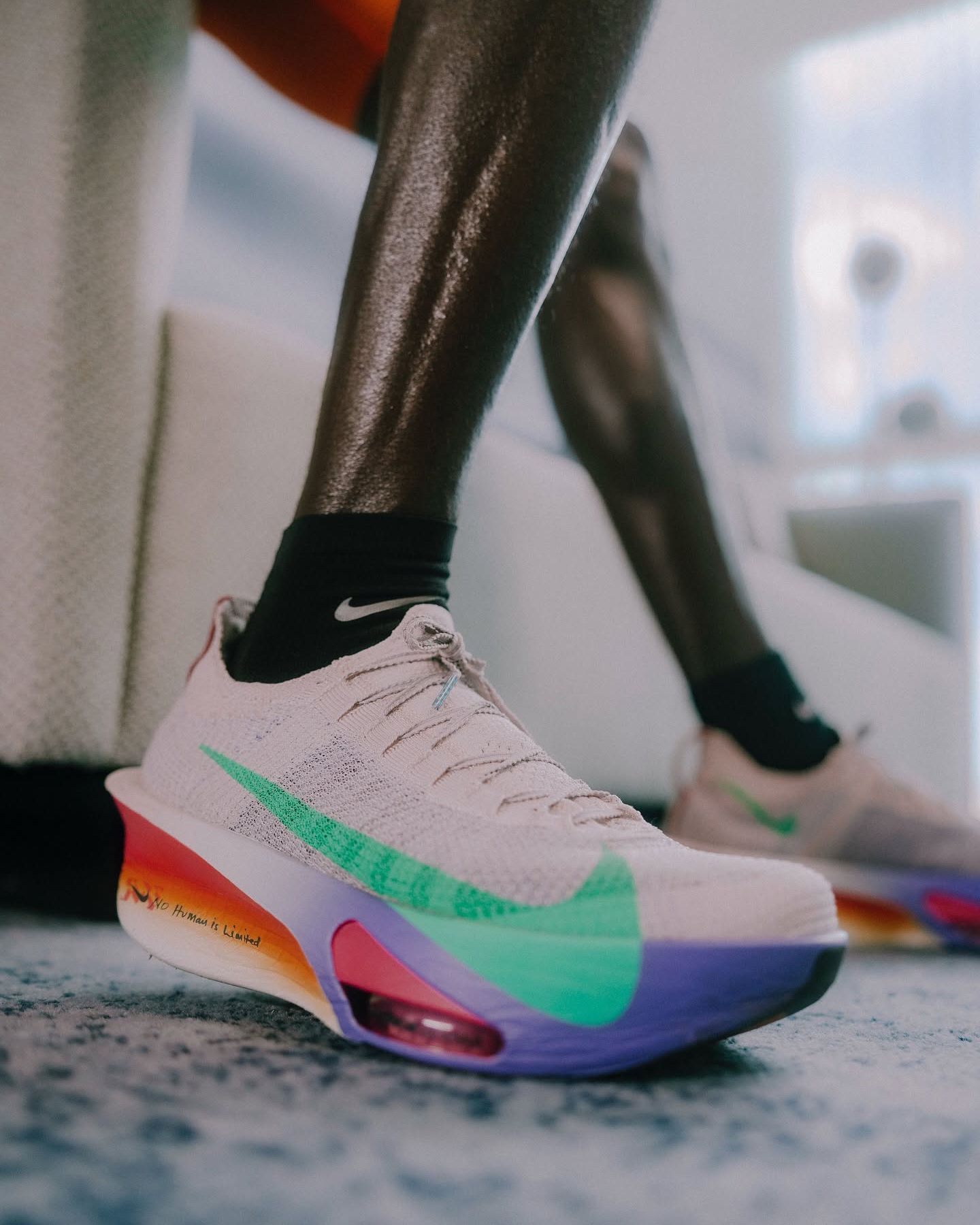
What primarily set Nike's first super shoes apart from every other running shoe was the combination of a proprietary foam with a carbon-fibre plate embedded inside the midsole. The use of carbon fibre itself was not revolutionary. Similar concepts could already be found in road-running shoes dating back to the early 2000s, with adidas often credited as the first brand to adopt the technology on a large scale, although Italian company Fila had previously explored it with the Racer line. What truly changed the game was Nike's proprietary ZoomX foam, produced mainly from Pebax using a closely guarded formula. Exceptionally lightweight yet highly elastic, the material allowed engineers to use much larger quantities of foam, creating an unusually tall midsole while keeping the overall weight remarkably low.
Thanks to this exceptionally thick layer of foam—almost twice as substantial as traditional midsoles—it became possible to integrate the carbon plate while shaping it with far greater freedom. This design enabled the plate to be curved at strategically important points, reducing the load placed on the calf muscles while redirecting energy towards the big toe during toe-off. The benefits of the carbon plate were therefore combined with the cushioning properties of ZoomX, which several studies suggested delivered an energy return of around 85%—roughly 15% higher than adidas' Boost technology at the time. A pronounced heel geometry, a wider forefoot platform, the carbon plate, its distinctive curvature and the highly responsive foam all came together in the shoe that became known as the Zoom Vaporfly.
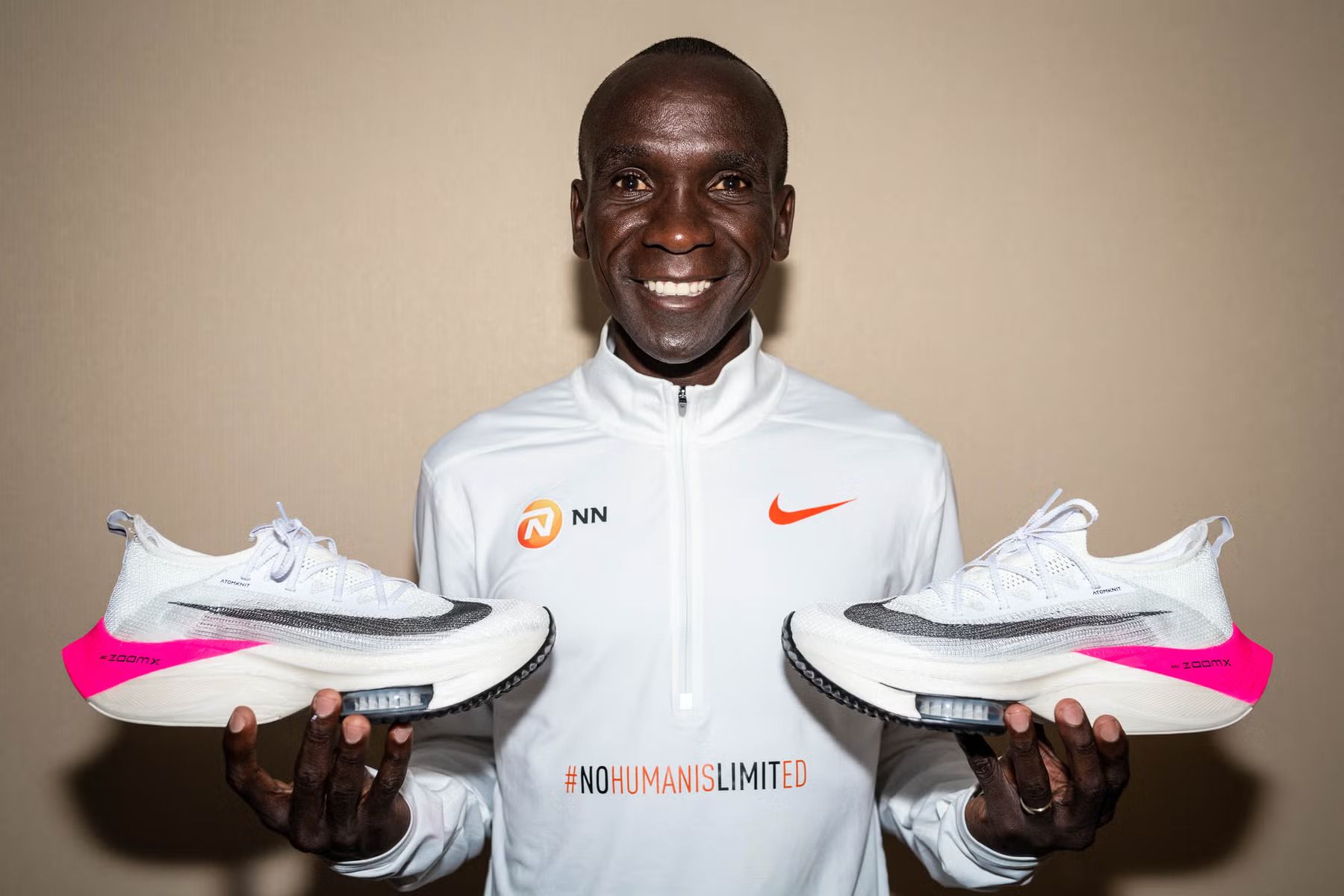
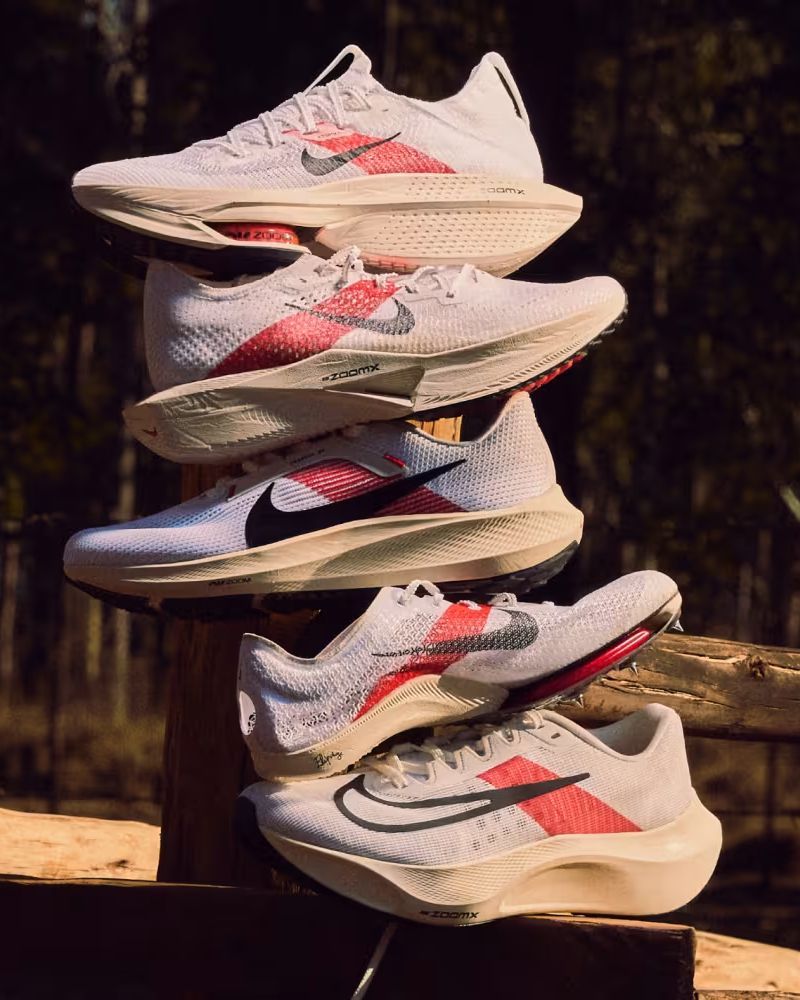
Nike, however, also played its cards cleverly with this product line. The version made commercially available to professional runners, the Vaporfly 4%, was not the same shoe worn by the three athletes involved in the Breaking2 project at Monza, who instead competed in customised models known as the Vaporfly Elite. Likewise, in Vienna, Kipchoge raced in a prototype of the Air Zoom Alphafly Next% that differed from the retail version later released by Nike, representing a further evolution of the Vaporfly platform. More than anything else, this became the main source of controversy, as it widened Nike's competitive advantage over rival brands by keeping its latest technologies out of competitors' hands—or only making modified versions available to consumers at significantly higher prices.
Do Super Shoes Really Work?
The name of the original Vaporfly model, 4%, refers not to speed itself but to running economy. According to Nike's laboratory testing, a professional male athlete wearing the brand's first super shoes would save approximately 4.2% of energy while running, an advantage that could translate into roughly two and a half minutes over the course of a marathon. Evidence supporting these theoretical gains came from a study conducted by the American Physiological Society, which analysed the performances of the top fifty male and top fifty female marathon runners competing in the world's major marathons between 2010 and 2019, comparing their results before and after the introduction of Nike's super shoes.
By 2019—the year in which the highest percentage of elite athletes wore Nike's super shoes, with 66.3% of men and 58.4% of women using them—the average marathon finishing time had dropped below 140 minutes for men and below 160 minutes for women. Across the decade, athletes competing in super shoes consistently recorded significantly better performances: an average improvement of 2.8 minutes, equivalent to a 2% increase in performance, among men, and 4.3 minutes, or a 2.6% improvement, among women.
Even without looking at the data, however, the results speak for themselves. Just a few days after Kipchoge's historic performance in Vienna, Brigid Kosgei set a new women's marathon world record wearing another customised NEXT% prototype, completing the 2019 Chicago Marathon in 2:14:04—almost a minute and a half faster than Paula Radcliffe's record, which had stood for sixteen years. Staying with Nike, before Tigst Assefa claimed the outright world record for adidas, Ruth Chepngetich set what remains the women's world record in a mixed-gender marathon race at the 2024 Chicago Marathon, becoming the first woman to break not only the 2:11 barrier but also the 2:10 mark, finishing in 2:09:56. Likewise, before adidas' breakthrough in April, Kelvin Kiptum established the men's marathon world record wearing the Swoosh.
By September 2019, the five fastest marathon performances ever recorded by men had all been achieved within a span of just thirteen months, each one set while wearing Nike's Vaporfly. That same year, runners wearing the super shoes claimed 31 of the 36 available podium places across the six World Marathon Majors. It was an innovation as revolutionary as it was controversial, prompting rival brands to push for changes to the sport's regulations.
Super Shoes and the Rulebook
It was not the first time that a clear and universally accepted set of regulations proved difficult to establish in road running. During the 2006 and 2007 editions of the Boston Marathon, Spira caused major headaches for USA Track & Field (USATF) by challenging Section 143.3(a), which explicitly prohibited shoes containing devices that could provide athletes with an unfair advantage, such as springs or similar mechanisms. Spira founder Andy Krafsur accused the USATF of targeting the company's shoes, even though the federation had never officially banned the model. In reality, it turned into a highly effective marketing campaign. In 2006, Spira offered a $1 million prize to anyone who could win the Boston Marathon wearing its spring-loaded shoes, while in 2007 the company arranged for two sponsored runners to sprint to the front of the race so they would dominate television coverage during the opening miles—only to fade dramatically later on.
Although this controversy predated the arrival of super shoes, it illustrates how difficult it already was to interpret the regulations consistently before Nike's experiments. The concept of an unfair advantage remained highly subjective, to the point that World Athletics was forced to intervene in 2020 ahead of the Tokyo Olympic Games, following widespread criticism over Nike's exclusive release of the Vaporfly Elite. Under the new regulations, any shoe approved for competition must feature a sole no thicker than 40 millimetres, contain no more than one rigid plate or overlapping plate segments, and—most importantly—must have been commercially available to the general public for at least four months before it can be used in competition. Under these rules, the Alphafly prototype worn by Kipchoge would have been deemed illegal due to both its stack height and its multiple carbon-fibre elements, even if it had been released commercially beforehand. Nike had already anticipated these changes by modifying the design in 2019. The regulations continue to be updated regularly, with the latest revision taking effect on April 20, 2026—just in time to officially validate adidas' historic achievements at the London Marathon without the risk of protests or disputes.