
The New York City Marathon was a global showcase for Xtep Kamohelo Mofolo’s third-place finish put the Chinese brand in front of runners around the world
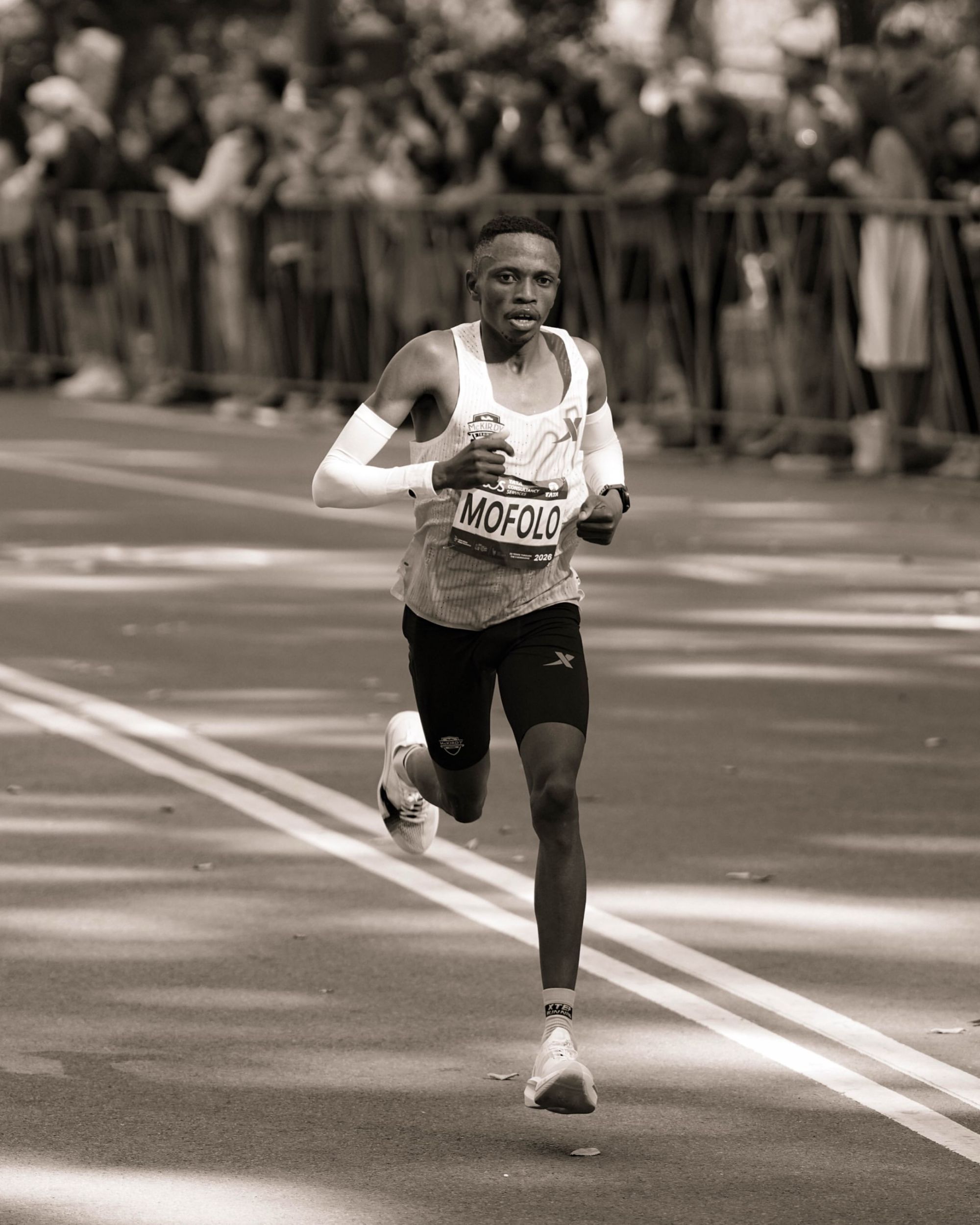
At the 2026 TCS New York City Marathon on November 1, Kamohelo Mofolo claimed a surprising third place, completing the race in 2:06:26 and overtaking defending champion Benson Kipruto in the final metres. The 21-year-old from Lesotho was competing over the distance for only the second time, following his debut in Cape Town in May, and improved his personal best by more than two minutes. On his feet were the Xtep 160X 8.0 Pro, brought onto one of the biggest stages in global running.
Across the men’s and women’s races, five different footwear brands reached the podium in New York. Nike took the top step with Andreas Almgren and an Apex prototype that Phil McCartney, the brand’s Chief Innovation, Design and Product Officer, had recently described as “one of the biggest steps forward we have ever taken in marathon shoes”. Yeman Crippa and On finished second, while the women’s podium also featured adidas with Sheila Chepkirui, Brooks with Jessica McClain and On once again with Hellen Obiri. Five brands for six podium places, including a Chinese name - Xtep - still relatively unfamiliar to European and American runners and fans.
The Xtep 160X 8.0 Pro
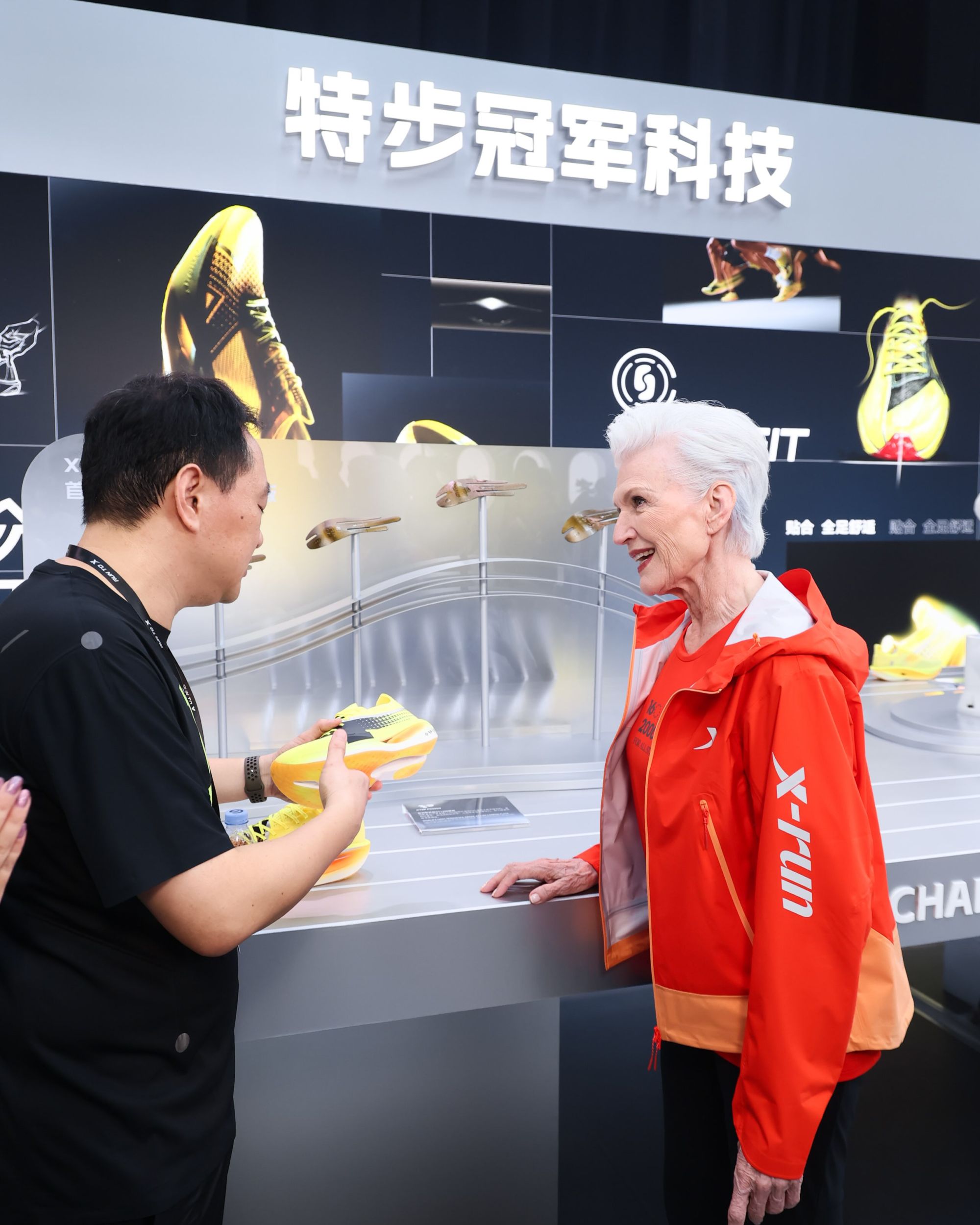
Xtep itself identified the 160X 8.0 Pro as the model worn by Mofolo in New York, through an Instagram post published shortly after the marathon ended. The brand framed his result - “a podium on the world stage!” - as an endorsement of its global growth. The model is listed in Xtep’s commercial catalogue as part of the family unveiled last August, which includes the 160X 8.0, Pro and Ultra.
The model belongs to the same supershoe category as its competitors: lightweight shoes featuring responsive foams and carbon plates, designed primarily for racing. Xtep states that the commercially available Pro weighs approximately 179 grams in a size EU 41, 17% less than the previous generation. Its construction combines a full-length carbon plate, part of the Xtep POWER technology, with a dual-density ACE+ midsole. According to the brand, the design was developed in pursuit of the highest standards of cushioning, stability and responsiveness. The Xtep FIT upper and DURA outsole complete the model. In Xtep’s Chinese catalogue, the shoe is priced at 1,299 yuan, approximately €175 at current exchange rates, while the Norwegian website lists the Pro at 3,699 kroner, approximately €350.
Where does Xtep come from?
Xtep’s story began in 1987 in Jinjiang, Fujian, a province in south-eastern China, with a business manufacturing footwear for international brands. Ding Shui Po subsequently launched his own company, Xtep, founded in 2001 and listed on the Hong Kong Stock Exchange a few years later. Its presence in international sport predates the partnership with Kamohelo Mofolo by around 15 years. In football, it supplied Birmingham City for two seasons, from 2010 to 2012, and Villarreal for five, from 2011 to 2016. It worked with Justin Gatlin in athletics in 2012, while its move into basketball was linked to former NBA player Jeremy Lin in 2019.
Running became central to the company’s transformation, which began in 2015 and included the opening of a laboratory dedicated specifically to running shoes. Research was soon accompanied by partnerships with prominent domestic athletes such as He Jie and Feng Peiyou, as well as sponsorships of races and running clubs. Since 2019, Xtep has also collaborated with the Chinese Athletics Association on the development of an incentive programme for marathon runners. In February 2024, the company said it had distributed more than 10 million yuan, approximately €1.35 million, through the programme in prize money and equipment. Before Mofolo’s result in New York, the brand had already reached the podium of a Major with Tebello Ramakongoana, who finished third in Sydney in 2025 wearing the 160X 5.0 Pro.
The group is controlled by the Ding family and, unsurprisingly in this context, has documented ties to Beijing’s political establishment. Its founder has held positions within the Fujian consultative conference and the athletics federation, while the company’s 2025 financial report records a public grant of almost 23 million yuan, approximately €3.09 million, received in 2018 for a plot of land in Jinjiang. The company’s commercial scale emerges clearly from its latest financial statements, along with its increasing focus on international markets. During the first half of 2026, the Xtep brand generated revenue of approximately 6 billion yuan, just over €800 million: a 2.2% decline compared with the same period in 2025, but with overseas revenue more than doubling thanks to international e-commerce and new openings across Southeast Asia.
China’s new presence in marathon running
To understand the significance of the New York result, Xtep should also be considered alongside other Chinese brands investing in marathon running. Their appearance at major races may feel new to those following the sport from Europe or the United States, even when they are backed by established companies and products that have been on the market for years. This is where high-profile athletes can become valuable assets for an expanding brand - in running as in other sports, including football and tennis - by making its development visible to an audience less familiar with emerging commercial names.
In this respect, Xtep’s journey has several precedents in China. Anta chose Kenenisa Bekele - a name offering an immediate connection with the history of distance running and the marathon - and has worked with him since 2023 on the development of its racing shoe family. Li-Ning, meanwhile, has linked its presence in the discipline to three-time Olympian Suguru Osako, who has raced for the Chinese brand since autumn 2025. The relationship between Xtep and Mofolo follows the same path, attracting mainstream attention in New York through a surprising result. It is one of the ways Chinese companies are claiming space in the world of supershoes.
What to read next

Running is carving out an increasingly prominent place in sportswear
Zalando’s offering shows how running is attracting an increasingly diverse audience and driving demand for an ever wider range of products
Under Armour's biggest ambassador in Italy is a trapper
He's Tony Effe but you can call him tonycocazero