Naomi Osaka is changing the face of Tennis Through fashion, identity and nonconformism
There are different forms of nonconformism. There is the critical kind, usually more political and social, which often develops into activism, but also the more superficial kind, purely aesthetic in value and driven by the desire to ideologically oppose the majority. Then there is Naomi Osaka’s kind of nonconformism: genuine and entirely original. The Japanese tennis player has always used the court as a space to express herself, communicate her messages and define her roots, relying above all on customised pieces born from collaborations with some of the world’s most renowned fashion stylists.
Naomi Osaka and the Allen Iverson tribute
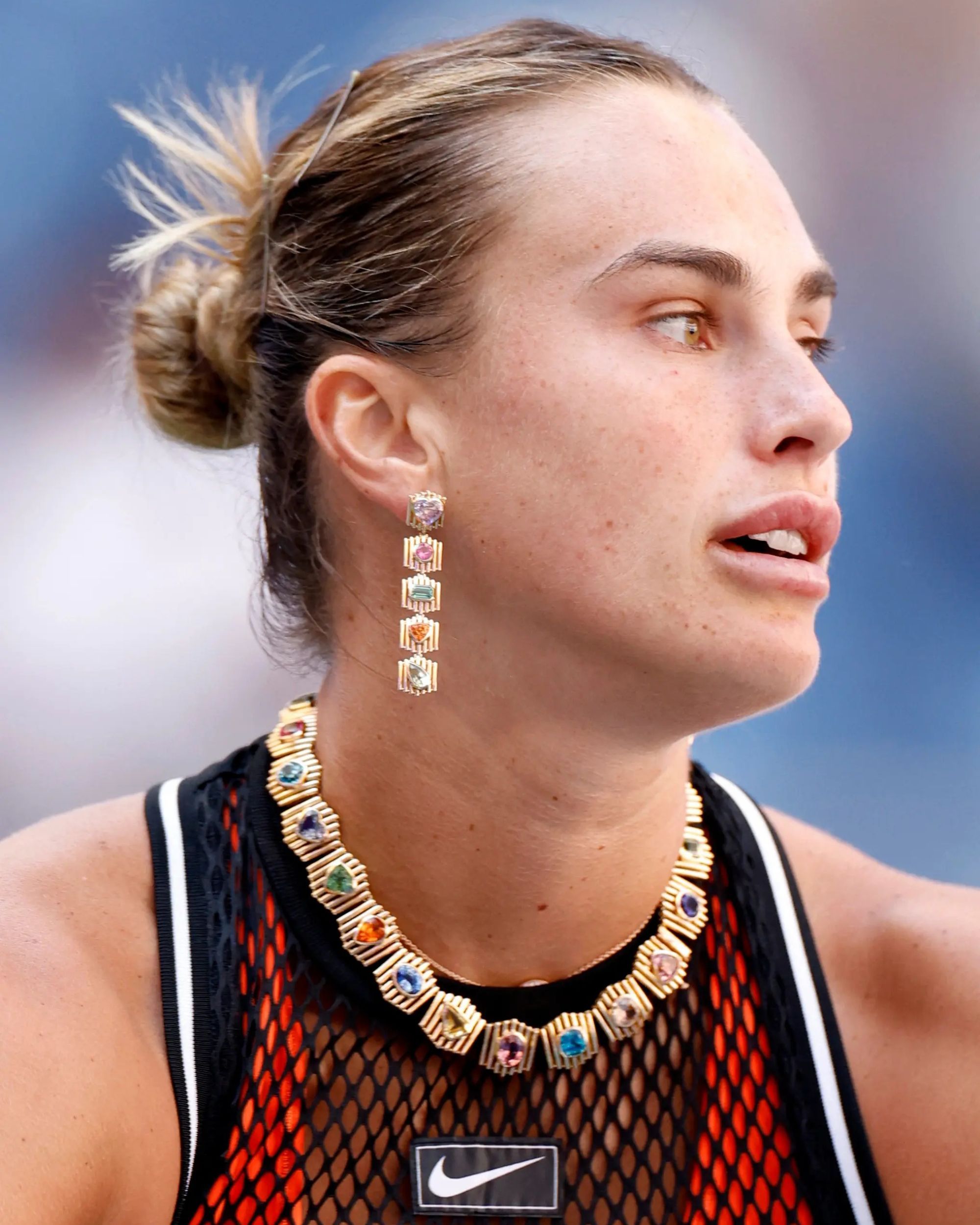
The 2026 US Open is no exception. In New York, Nike opted for a basketball-inspired approach for its leading athletes, riding the wave of the Knicks’ recent NBA success. The mesh overlay worn by Aryna Sabalenka and Carlos Alcaraz’s basketball jersey also pay a chromatic tribute to the local NBA franchise, as does Osaka’s two-piece set, available in white or black, consisting of a basketball-inspired sleeveless tank top and a skirt featuring an inner mesh layer — conceptually connected to the original Radical AirFlow longsleeve she chose not to wear.
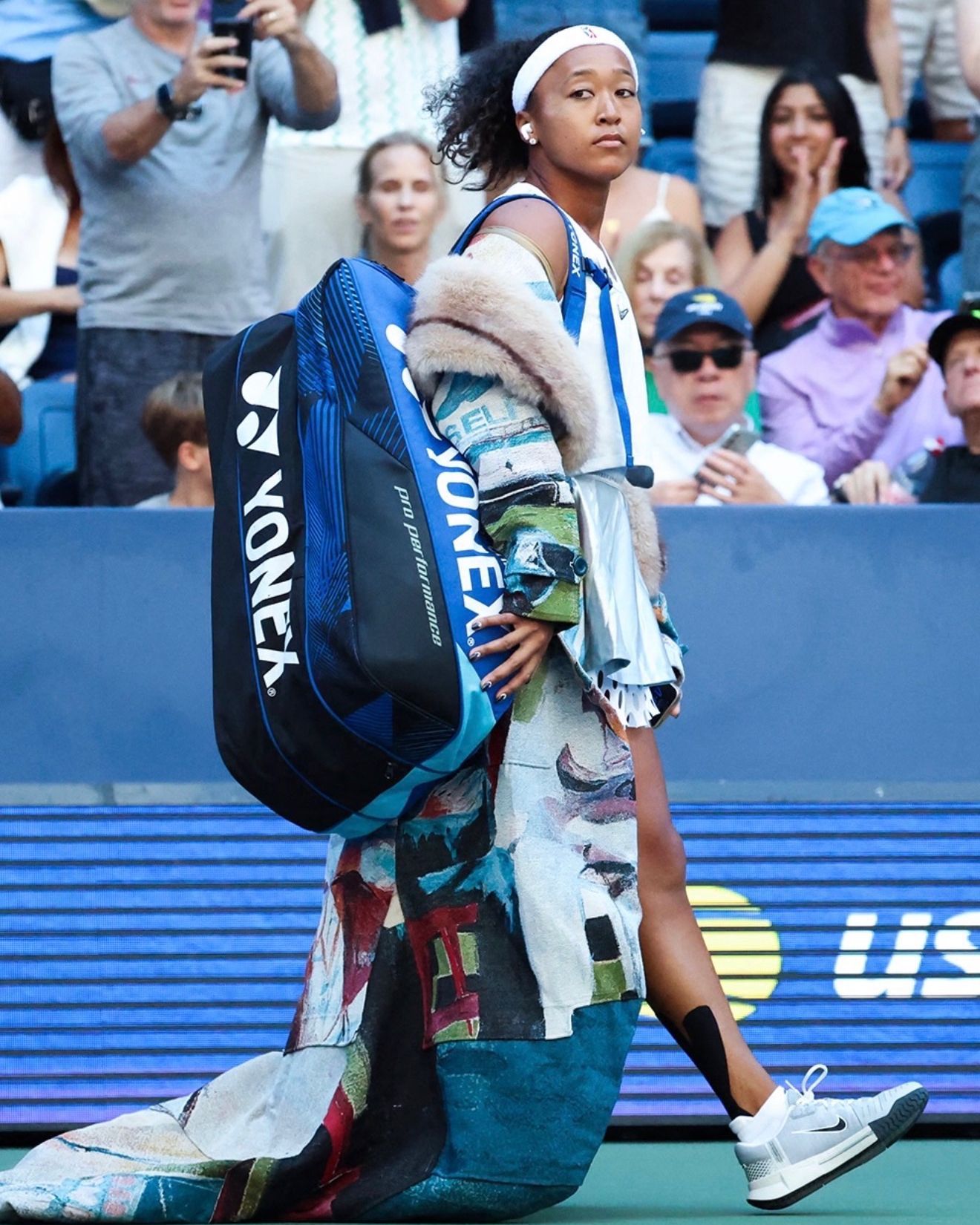
The Japanese player, however, took the basketball inspiration even further, multiplying the reference several times over. During her first entrance onto the court, Osaka wore a true grey tunic with an oversized hood, layered over a white tulle skirt and embellished with newspaper clippings sewn onto the garment, featuring key moments from her career. Once these layers were removed, the work of New York-based label Who Decides War commissioned by stylist Law Roach, her braids tucked beneath the red and black headband, combined with the black version of her Nike outfit, made the tribute to Allen Iverson unmistakable. The NBA legend became synonymous with this look during his time with the Philadelphia 76ers. Iverson himself appreciated the reference, writing on social media that he felt honoured and was a huge fan of Osaka, even saying he could not wait to meet her.
Just before her elimination, the tennis player and Roach also teamed up with KidSuper, the New York-based label founded by designer Colm Dillane, to create an outerwear piece depicting a scene inside a colourful laundromat. Once again, the reference is to Iverson’s style away from the locker room, while the headband is also basketball-inspired, featuring a logo resembling the NBA’s, but with a tennis player serving in place of former basketball player Jerry West’s silhouette.
Iverson and the fight against the establishment
Paying tribute to Allen Iverson is far from an obvious choice. For years, the basketball player was the face of the fight against the establishment in sport, particularly around the turn of the millennium. In 2005, for example, NBA commissioner David Stern introduced a dress code requiring business-casual attire, particularly for suspended or injured players sitting on the bench, with violations punishable by fines worth thousands of dollars. Shorts, T-shirts and short garments in general were banned, as were necklaces, jewellery, glasses and headphones, the latter when worn outside the locker room.
Many saw this as the Allen Iverson rule, as the player had always stood out — and continued to do so despite the fines — for expressing his identity as an individual. But especially as a Black individual, through clothing and a style that also included the iconic cornrows recreated by Osaka, alongside tattoos, jewellery and oversized clothing. The hip-hop and rap nature of his persona made Iverson an icon of his time, as well as a pioneer of the streetwear aesthetic that would become increasingly dominant across the NBA in the years that followed, right through to today. In doing so, it also demonstrated how inappropriate Stern’s rule was — and, viewed retrospectively, how deeply rooted in racial bias it was.
Osaka’s nonconformism
Naomi Osaka shares this dimension with Iverson. Through her clothing, the tennis player has always expressed certain aspects of her personality and cultural heritage, shaped by her Japanese mother and Haitian father, who holds US citizenship. Her recent white kimono at Wimbledon, for example, was an unmistakable tribute to Japan, where she was born and which she has represented internationally, despite growing up in the United States. Yet this form of expression has not only been criticised, but has also shown how difficult it still is to fully embrace within the world of tennis, despite a process of deconstruction that was already set in motion by icons of the sport, most notably Serena Williams.
At the most recent Roland Garros, Osaka was indirectly criticised by Laura Siegemund for turning the pre-match into a fashion show, which the German player claimed distracted both her and the crowd from the tennis itself, highlighting a difference in treatment between more and less famous athletes within a long-standing debate over the management of downtime. During the previous Australian Open, for similar reasons, BBC commentary described the tennis player’s decision to wear an iconic look inspired by the shape of a jellyfish as being in poor taste. It was a particularly eventful edition for Osaka, who was also accused of unsportsmanlike conduct by Sorana Cirstea at the end of a match won by the Japanese player, after she had repeatedly shouted loudly between her opponent’s first and second serves in an attempt to fire herself up. Osaka eventually apologised, but not before giving a provocative response to the microphones immediately after the match, responding sarcastically to Cirstea’s complaints.
Behaviours like these draw from Allen Iverson’s playbook, but Osaka has also taken part in other, broader social and political battles. In 2021, the Japanese player was fined $15,000 in Paris after deciding not to attend the press conference following her first-round victory and announcing her intention to boycott media appearances throughout the tournament. At the heart of the matter were the difficulties she had experienced with anxiety and depression following her 2018 US Open victory, which she only revealed later to explain her behaviour — and her subsequent withdrawal after threats from the French Federation — while also stressing her intention to push for change. Even earlier, in 2020, Osaka won the US Open wearing black masks bearing the names, one different for each round, of victims of racial injustice and police abuse, effectively taking a stand alongside the Black Lives Matter movement.
The 2026 US Open between tennis, fashion and controversy
Within the tennis bubble, where the game is expected to remain at the centre of everything and where athletes, also due to the sport’s aristocratic nature, rarely speak out, Osaka’s approach represents a refined and unique form of genuine nonconformism. As such, however, this nonconformism is not without what could be described as inconsistencies — without necessarily giving the term a negative connotation, precisely because personal creativity does not always follow a set logic.
For example, Osaka joined the criticism surrounding the influencers invited to the tournament by the USTA and, more broadly, the crowd at this US Open, calling for the traditional etiquette of the sport to be respected — one that has always demanded maximum silence and minimal disruption, especially visual. During one of the Japanese player’s matches in Flushing Meadows, the chair umpire repeatedly reprimanded groups of spectators in the stands both for making noise and for using ring lights while points were being played. Videos of people taking flash photographs or filming group content while speaking loudly quickly went viral.
This triggered a domino effect that first led to widespread media criticism of the USTA over the more than one hundred accreditations granted to digital content creators to promote the tournament. Then, in an even more drastic move, Wimbledon’s All England Club announced that it would no longer recognise influencer and creator accreditations, while also banning access to multimedia equipment that could disrupt play.
Osaka’s voice, authoritative as a two-time champion of the tournament and an extremely popular figure in New York, was not the only one. Instead, it joined the calls from other homegrown icons such as Coco Gauff and Jessica Pegula, as well as another highly recognisable figure in Daniil Medvedev. All of them acknowledged the importance of creators in increasing the popularity of both the tournament and the sport, while also calling for tennis etiquette and the strict discipline surrounding the game to be respected. Add to this Aryna Sabalenka’s complaints about the smell of marijuana, caused by the location of the courts within Flushing Meadows-Corona Park — something beyond the organisers’ control, but nevertheless perceived as a shortcoming on their part — and the impression is that chaos reigns supreme at the US Open, with tennis seemingly undergoing a form of cultural decline.
How tennis is changing
The issue can be read in a slightly more complex way. For one thing, the people featured in the viral videos were not officially identified as USTA-accredited creators, a category that had been given strict guidelines in the months leading up to this US Open. Put simply, they appear to be a section of the general audience with little awareness of tennis etiquette, the logical consequence of two interconnected factors: ticket prices are becoming increasingly expensive, inevitably making the event less accessible to ordinary spectators who may be genuinely interested in the sport, and more accessible to those with the financial means but not necessarily the same interest, attending simply to enjoy a show that goes beyond the game itself; this, in turn, is a consequence of tennis’s newfound popularity, which now transcends the sporting dimension and intersects with fashion, fine dining, luxury and more.
Such a level of spectacle surrounding the world of tennis is relatively new and, as such, is perceived negatively by a purist section of the tennis establishment and, above all, by traditionalist institutional bodies. But this spectacularisation is also inevitable precisely because of the celebrities this sport has produced, including Sabalenka and Osaka themselves, the two most-followed players on social media on the WTA Tour and the most influential tennis stars of their generation.
Looking specifically at Osaka’s US Open, for example, beyond the double tribute to Iverson, it is worth mentioning the other outfits she wore when entering the court: in the second round, a Thom Browne jacket embellished with crossed-racket details; in the third round, a hybrid between a jacket and a grey hooded sweatshirt, paired with wide-leg trousers, designed by Monse. A genuine fashion show, aesthetically striking and appealing to neutral spectators, but undoubtedly in line with the very same displays that have already been harshly criticised by the tennis media for failing to conform to a specific code of etiquette. The very etiquette Osaka herself called for, creating a slight contradiction, albeit an unintentional and entirely understandable one. After all, change is often not recognised by those who drive it and only reveals itself in retrospect — an invisible price to pay for becoming an icon.
What to read next
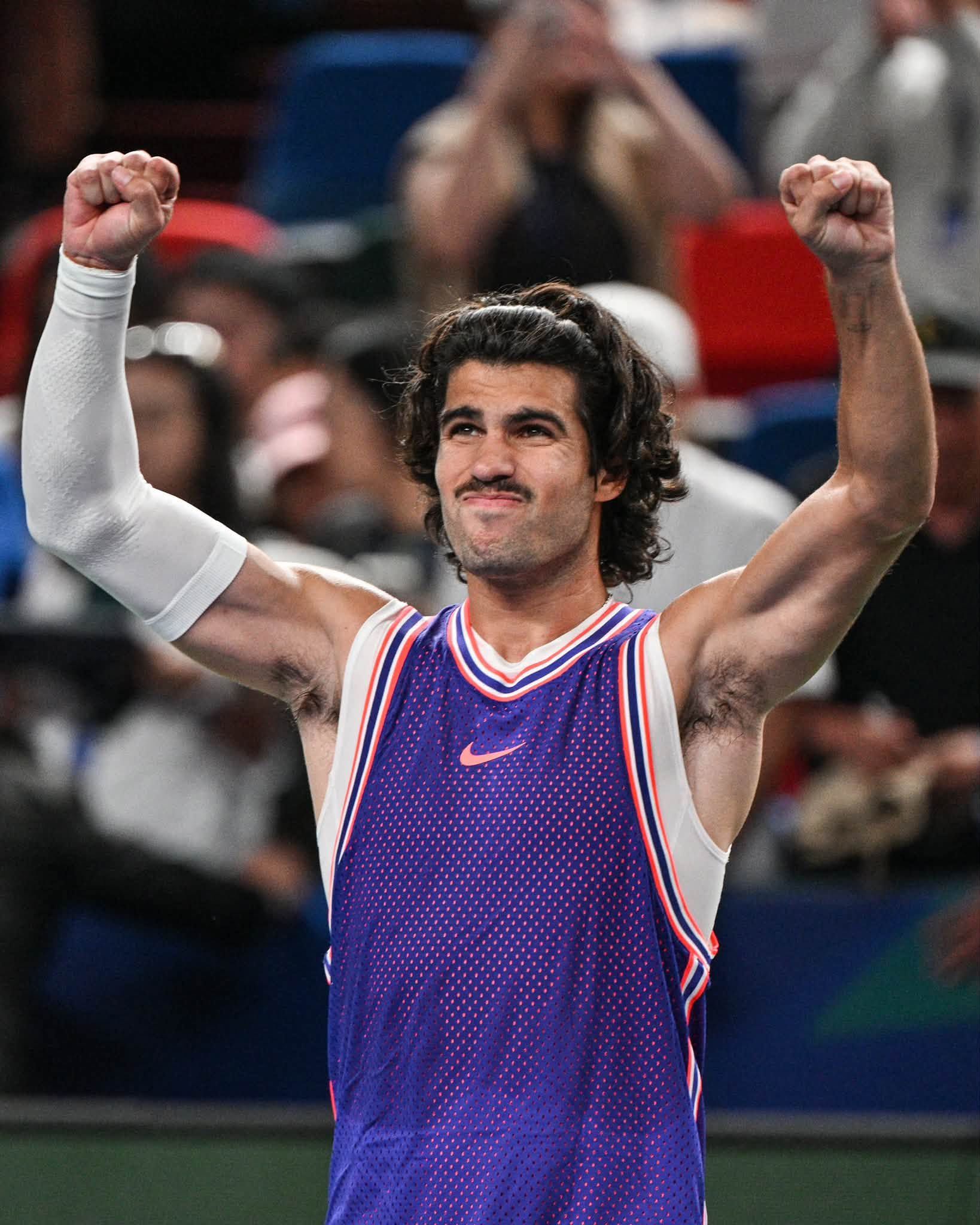
The ATP's plan for the future of tennis
A letter from Andrea Gaudenzi has outlined several changes that could reshape the tour from 2028
Why is everyone in Italy obsessed with Sinner's knee?
A reflection on the media coverage the tennis player has received in recent weeks