










Why is everyone in Italy obsessed with Sinner's knee? A reflection on the media coverage the tennis player has received in recent weeks
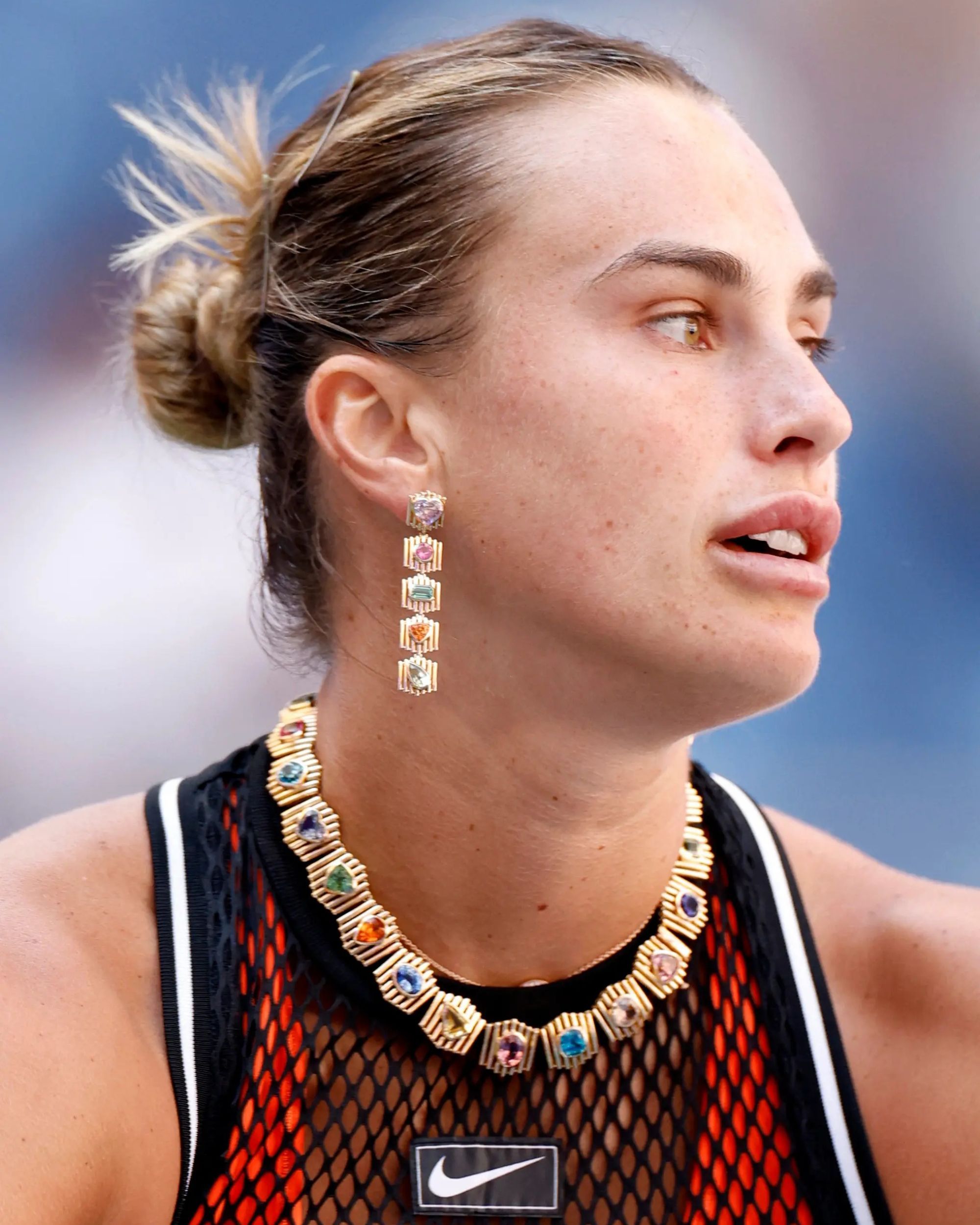
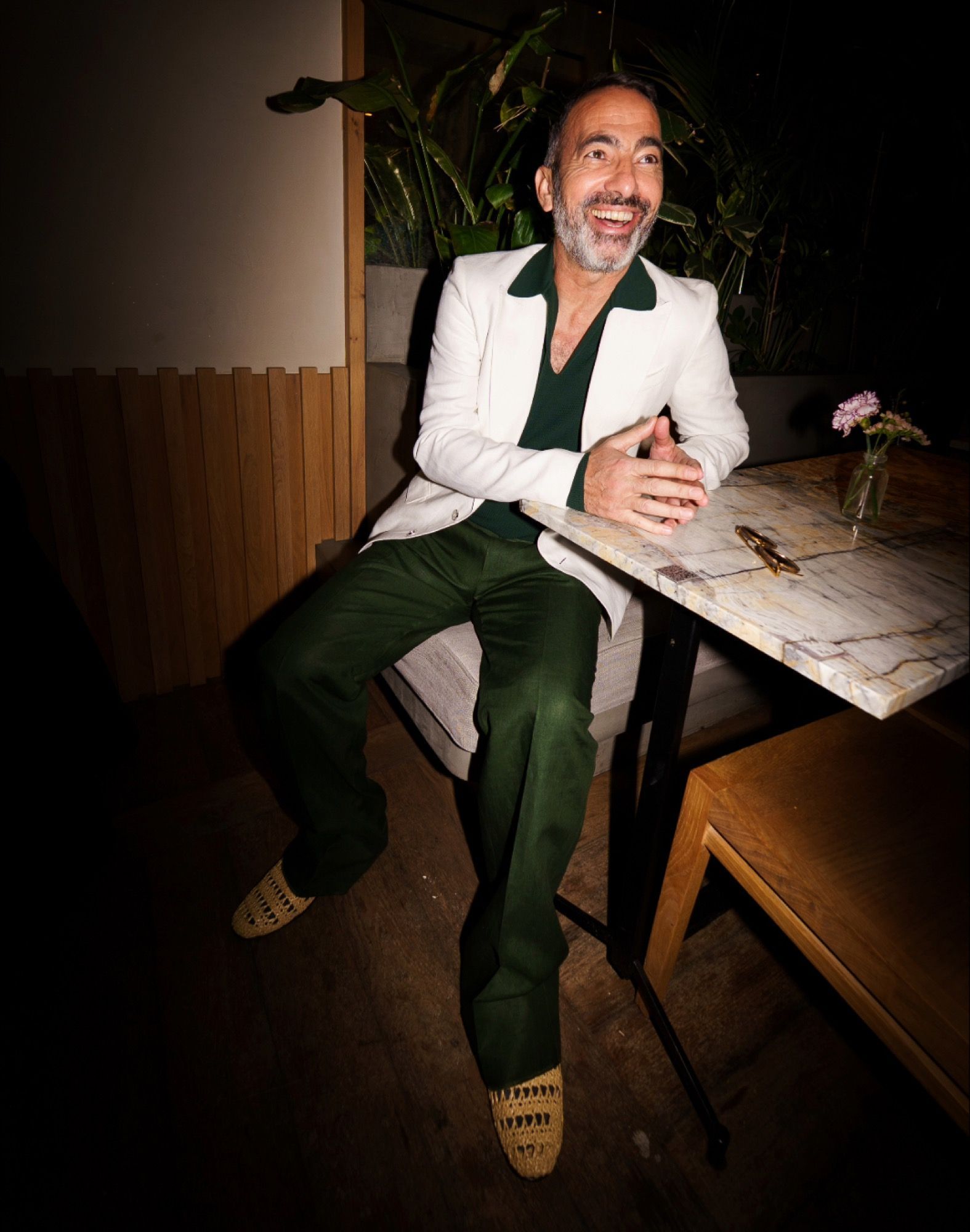
During the latest edition of Milan Fashion Week, Jannik Sinner and Aryna Sabalenka found themselves sitting in the front row at Gucci's Spring Summer 2027 show. The two are connected by a common thread with a dual nature: one rooted in branding, as ambassadors for the Florence-based fashion house, and another more competitive, tied to their performances on court, where both are going through a complicated period. The Belarusian tennis player is experiencing a dip in form that will see her end the year without a single Grand Slam title and without the top spot in the WTA rankings, having been overtaken by Elena Rybakina following the US Open.
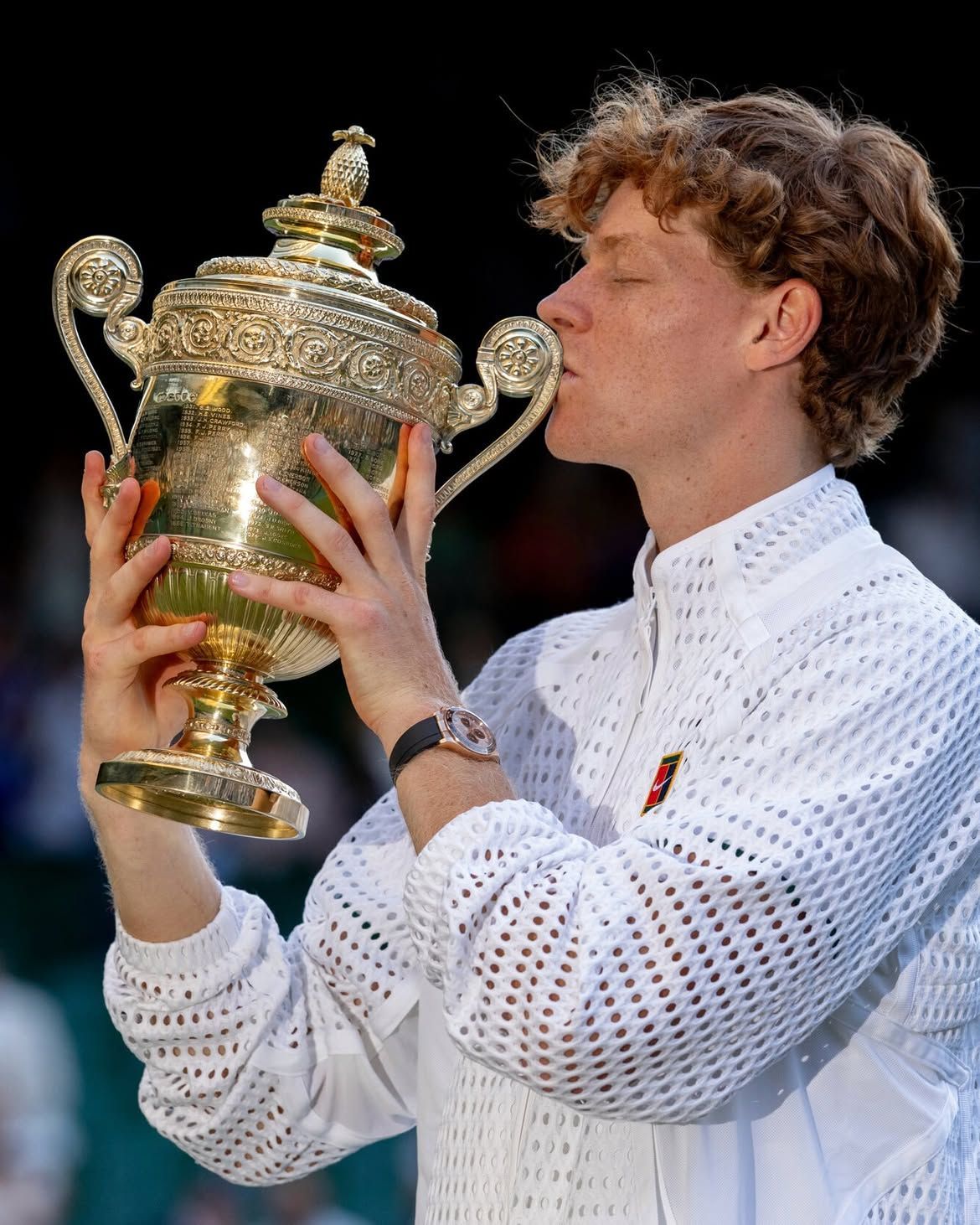
Sinner, meanwhile, has little to complain about when it comes to his results this season, having won five consecutive Masters 1000 titles and his second Wimbledon title. He is, however, dealing with a more elusive issue: a knee injury that has become a media phenomenon in its own right over the past few weeks. His conversation with Anna Wintour, which went viral during Fashion Week, encapsulates the situation perfectly.
A Prolonged Absence
Wintour, in this particular case, is simply behaving like a fan. As early as last September, during another moment of huge media attention at the US Open, the two were shown having an informal conversation alongside Rami Malek, during which Sinner appeared completely at ease answering questions about his performances and receiving heartfelt praise from Vogue's Global Editorial Director for that day's match. In Milan, a year later, Wintour's mix of surprise and veiled disappointment at seeing Sinner there rather than in Beijing was genuine, mirroring the reaction of the entire community that has grown attached to the South Tyrolean tennis player when he announced on his social channels that he would also miss the ATP 500 in the Chinese capital, just a few hours before Fashion Week.
It is the latest chapter in a saga that has been unfolding since Sinner's back-to-back Wimbledon triumph. Since then, he has missed the Masters 1000 events in Montreal and Cincinnati, but most notably the US Open, taking to the court only for practice sessions in mid-August and mid-September, respectively at the Sporting Press Club in Turin ahead of his ultimately cancelled trip to New York, and then in Monte Carlo on the eve of the Chinese swing. The plural here refers not only to Beijing but also to the Shanghai Masters 1000, where Sinner will travel without absolute certainty that he will take part in the tournament, despite some recent optimistic reports from La Stampa. Should he take to the court at the tournament in the coastal megacity, his consecutive absence from official competition would come to an end at 90 days, a stretch that is anything but insignificant.
What Is Sinner's Injury?
To answer questions about Sinner's physical condition, we can once again turn to his conversation with Anna Wintour. In response to the British journalist and editor's surprised remark, the tennis player replied ironically: "I thought I would be in Beijing too." His calmness, however, points to yet another cryptic response surrounding a problem that has now been ongoing for months, but about which very little is actually known.
During his second visit in July to J|Medical in Turin, a state-of-the-art medical facility located in the eastern section of Juventus-owned Allianz Stadium, Sinner was spotted with a plaster on his right knee, the first clue that triggered media scrutiny into what had appeared to be a straightforward period of holiday and recovery. Shortly afterwards, La Gazzetta dello Sport revealed details of a four-hour visit to the Physioclinic medical centre on Via Fontana in Milan, seemingly routine ahead of the North American swing. Two months and two major tournaments missed later, it was clear that the issue was more serious.
The problem is that it is still unclear exactly what it is. The fact that he has at least completed two practice matches over these three months — or even managed to evade Sky journalists during the Monza GP, as Matteo Berrettini joked — would appear to rule out serious or delicate injuries and, consequently, the need for imminent surgery. The hypotheses have mostly centred on extra-articular tendon inflammation and, more recently, iliotibial band syndrome, or runner's knee for those who prefer the simpler name. These remain just theories, however, linked by a common denominator: an overuse-related origin.
In this sense, the attempt to arrive at a speculative diagnosis stems from the need to fill the void left by the absence of an actual diagnosis, which has never been disclosed by the player's channels or his team. Precisely because the reality remains impossible to establish, these deductions — however accurate they may prove in hindsight — simply project external fears and concerns onto a logical framework, such as the excessive demands of the ATP calendar. In doing so, however, the reasoning becomes effectively speculative and lacks any real evidence of a direct correlation.
The Effect of Other Prolonged Absences
Being left in the dark is something nobody likes, especially the media, and even more so an audience that has been experiencing a form of FOMO connected to Jannik Sinner for years. His previous hip problem, suffered in 2024, was nothing too serious, but it required an extremely cautious approach, given how vulnerable the area is for a tennis player — an injury that not so long ago brought Andy Murray's career to an end. At the time, missing the Internazionali d'Italia in Rome, at a moment when he was on the verge of becoming world number one, became a particularly noisy affair.
At the beginning of 2025, meanwhile, the suspension requested by WADA following an unintentional Clostebol contamination kept the then world number one away from the court for another three months, intensifying the feeling of loss, absence and emptiness surrounding what should have been shaping up to be a peak comparable to few others in tennis history. For a spectator, this is not simply the frustration of waiting for something exciting, like standing in line before a concert. First and foremost, it is about time, tournaments and ranking points that the athlete — and, with him, his fans — will never get back, something permanently lost as a result of an imposed absence.
Secondly, and this is the biggest difference compared with waiting in line before an exhibition match, there is no way of knowing what the outcome will look like. Before an event, people are willing to endure hours of boredom and discomfort because they know they are about to experience something positive. Here, however, there is no way of knowing how an athlete will return after an injury or a period away from official competition. Positive anticipation turns negative, the idea of having to go through a transitional period in which performances may suffer becomes difficult to accept, impatience and doubt take over, while the media pressure placed on the player can feel like an attack even to those who support him.
These residual traumas overwhelm huge numbers of supporters, who flood the comments beneath every piece of news published by the media, which in turn have to fill a void and latch onto every kind of rumour, including simple speculation such as theories about the nature of the current injury. The result is a widespread perception that Jannik Sinner is not getting the most out of his current stratospheric form because of external factors, amplifying the resonance of every single physical issue faced by an athlete who, when healthy, almost always finds himself competing from the round of 32 through to the final, combining an almost inhuman level of volume and quality.
Bad Timing and a Threat to the Top Spot
Sinner is currently entered in the ATP 500 in Vienna at the end of October and has not yet officially withdrawn from Shanghai. The real issue, however, lies further ahead, given the packed run of events that defines the end of the season. Once again skipping the Laver Cup, an event he has never taken part in, has already fuelled speculation about possible tensions between the organisation — which also involves Roger Federer — and the Italian player, even though this has always been a strategic decision aimed at prioritising rest, sacrificing a competition that offers neither ranking points nor particularly significant financial rewards. The latter, however, would be on offer at the Six Kings Slam on October 21, which the South Tyrolean could still choose to skip for physical reasons — assuming the event goes ahead at all, given Saudi Arabia's precarious geopolitical situation.
These are essentially the same calculations made in the past when it came to Italy's Davis Cup commitments, which earned him disproportionate criticism and now risk returning like ghosts from the past. Despite his victories in Malaga in 2023 and 2024, Sinner skipped last year's edition in Bologna, where the Azzurri went on to claim a third consecutive title, and he will certainly not take part in this year's Final 8, once again in the Emilia-Romagna capital. Missing yet another Italian event would immediately amplify the media noise, while also fuelling fears that Sinner may not be seen at the Nitto ATP Finals in Turin, where he is expected to arrive as two-time defending champion. His joke to Anna Wintour — "if I don't come back in January, then it's a problem" — went viral partly for this very reason.
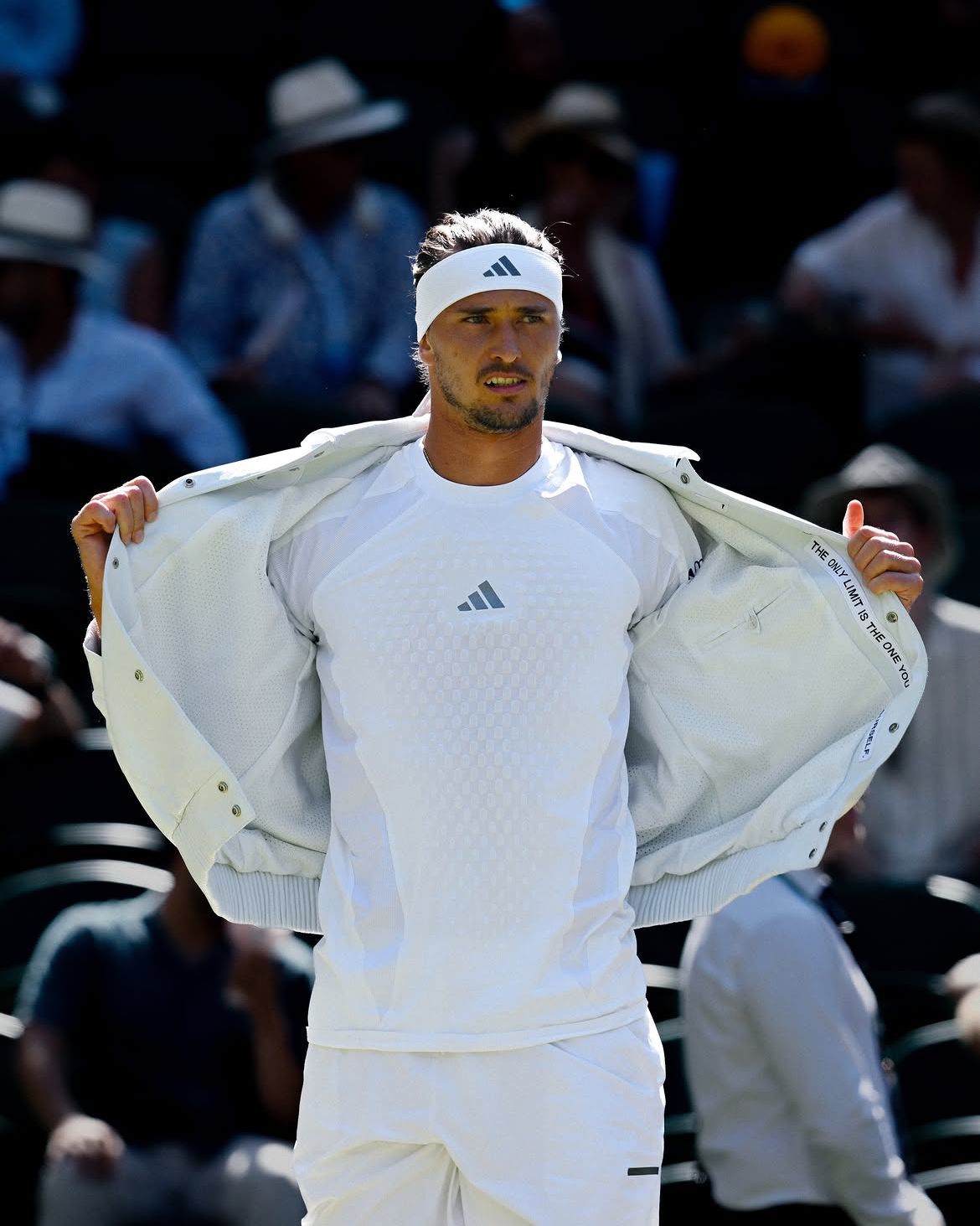
There is no rational evidence to support such fears yet, however, particularly because the actual nature of his injury remains unknown. The only realistic concern is instead the possibility of losing the ATP No. 1 ranking, depending on the results of Alexander Zverev, the latest of which came at the US Open. Since Sinner won the China Open, the ATP 500 in Vienna, the Paris Masters 1000 — which will take place in November — and the Turin Finals last year, he will have more than 3,500 points to defend between now and the end of 2026, with 500 points already guaranteed to come off his total due to his absence from Beijing. His German rival, by contrast, ended 2025 with poor results and has just 1,030 points to defend, meaning a dominant run through the Asian swing could give Zverev further momentum in his challenge for the top spot, despite the current gap of more than 1,300 points still representing a substantial lead.
Why Does Everything Around Sinner Become a Media Story?
This knee has become an obsession largely because of the guarded approach taken by Sinner and his team, a silence that has been simply too loud not to be exploited and manipulated until it reaches the ears of an active, engaged and understandably obsessive fanbase. The issue has not been helped by the fact that the tennis player has been Luciano Spalletti's favourite source of inspiration during press conferences, or that he appeared in social media content alongside the Juventus squad in the build-up to the Serie A season. Nor did it help that Sinner attended this year's Monza Grand Prix as a guest in the paddock, supporting the extraordinary achievement of Andrea Kimi Antonelli. And now, finally, there has been his appearance at Fashion Week.
This clashes somewhat with the outdated mindset of a section of the media and its audience, which ends up blaming the injured player for carrying out virtually any activity except the only one that supposedly matters to him: tennis. It is almost as if having a physical problem required him to put his entire life on hold just to fix it. The same logic feeds criticism over less conventional health-related episodes, such as what happened at the last Roland Garros, which led him to undergo medical examinations at San Raffaele, or earlier episodes such as Cincinnati 2025, Wimbledon 2024 and so on.
These factors contribute to a feeling comparable to FOMO: the sense that we never quite have a Sinner who is one hundred per cent, or at least the solid, seemingly unbreakable Sinner that the mainstream media like to portray after every victory, almost presenting him as a machine whose sole purpose is to destroy the competition. When that condition disappears, when physical, psychological or psychosomatic vulnerabilities emerge, that narrative collapses and the media sphere observing from the outside has to scramble to adjust. The response therefore ranges from an obsessive search for details that might shed light on issues the player wants to keep private, such as the current one, to attempts to preserve this iconography of the infallible athlete, resorting to coping mechanisms to deal with what should instead be the simple acceptance that even an elite athlete is not invulnerable.
Jannik Sinner's Uniqueness
This concept is particularly difficult to accept in tennis, first and foremost because it is an individual sport, where the absence of one player cannot be remedied by a substitute. Secondly, because tennis is going through a historical transition away from the Big Three that is anything but easy for a long-established audience to accept, confronted with a sport that looks very different from the one associated with its supposed golden era. It is a much more explosive, power-driven sport, more physically demanding and more punishing for its players, who have developed physically to bring all these qualities to the court while still being constrained by the finite capabilities of the human body.
Carlos Alcaraz, himself recovering from a wrist injury, regularly speaks about the need to change the calendar, while Novak Djokovic has previously supported the idea that some Grand Slam matches should be shortened to best-of-three sets. And they are not alone. All of these demands clash with one of the defining characteristics of the Big Three: their extraordinary physical durability, particularly that of Roger Federer, who accumulated sixty-five consecutive Grand Slam appearances between 2000 and 2016, and Djokovic himself, who reached a streak of fifty-one appearances at the majors.
The comparison is impossible, precisely because these are different eras and tennis itself has changed so dramatically, even if commentators and industry insiders continue to insist on authoritative comparisons that seem almost necessary to legitimise — or, in some cases, delegitimise — this success in the eyes of the old guard. One consequence is a divide, if not an outright clash, with the new audience, many of whom may have become interested in tennis precisely because of Sinner, particularly within an Italian ecosystem that has never experienced a tennis player — and most likely an athlete — at this level.
It is precisely this uniqueness, capable of generating unprecedented expectations and hype, that pushes every single aspect of Sinner's story — both positive and negative — towards the extreme, turning the phenomenon surrounding Jannik Sinner into a unique and constantly evolving media story, one that affects the communication strategies of entire Italian publications, the economic impact of tennis events in Italy and social interactions across generations. Precisely because of this uniqueness, a simple knee problem can become an obsession for millions of people.