The mystery behind Mbappé's secret-coded football boots On is using secret codes, hidden files and gamification to build hype around Kylian Mbappé's upcoming signature football boots
The seismic shock caused by Nike losing Kylian Mbappé, who subsequently chose to become the face of On, has been nothing short of extraordinary. Yet the strategy adopted by the Swiss company so far has been unusually cryptic, with no major reveals in the spotlight and no information shared with the wider public about what Mbappé's final signature boot will look like – the model that will officially mark On's entry into the world of football.
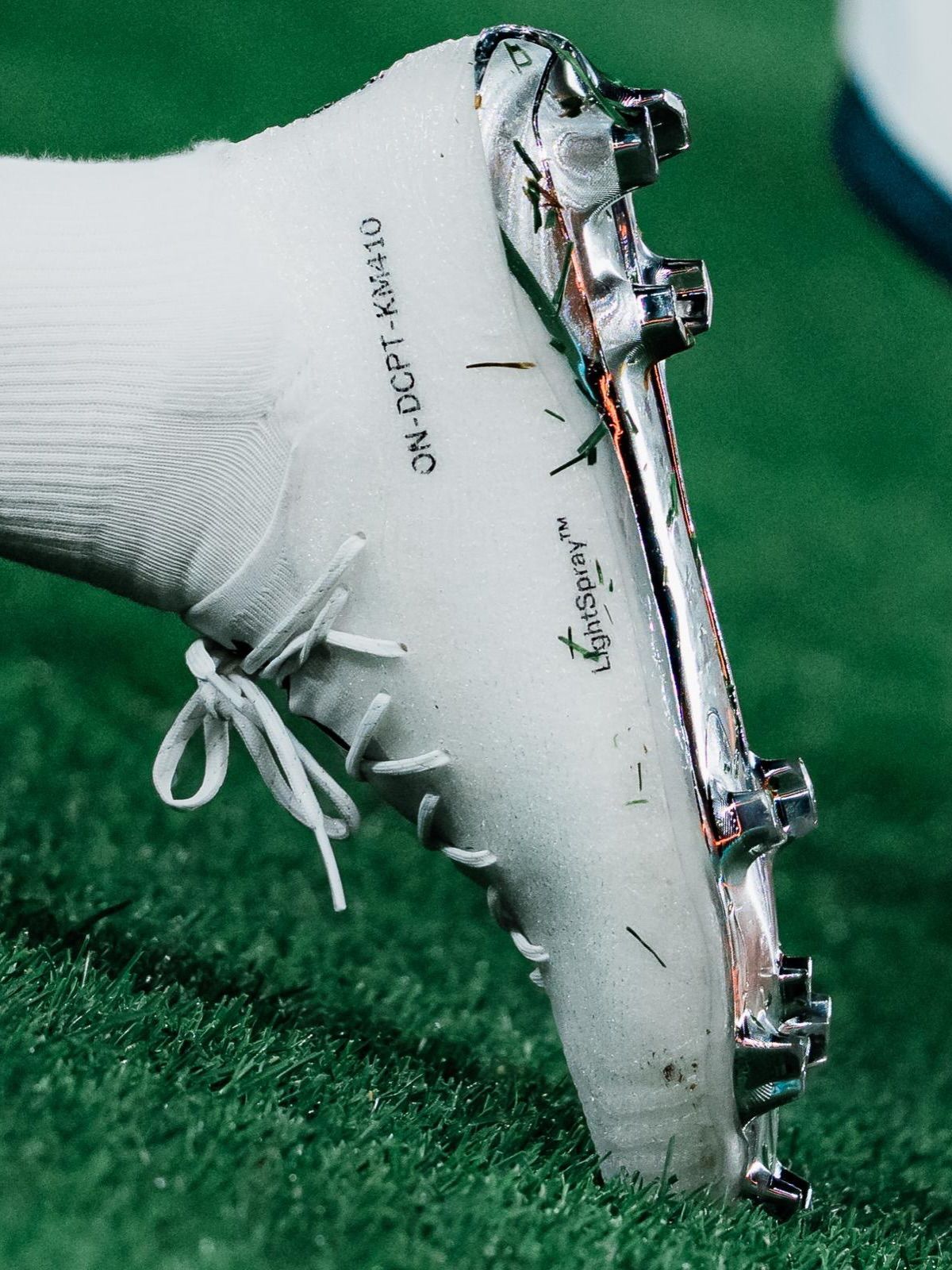
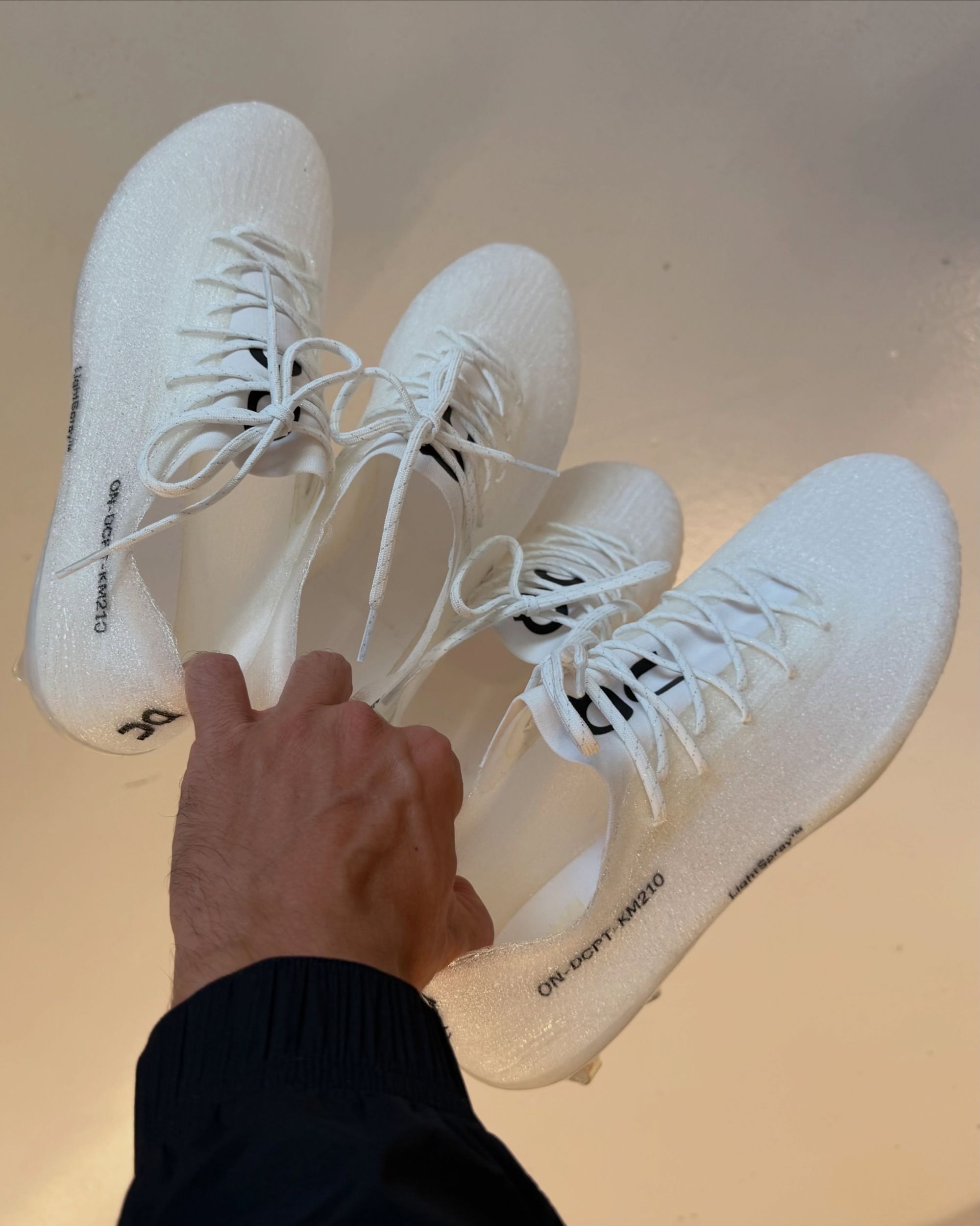
What we have seen so far is, in fact, a series of prototypes. The first were revealed by French star Real Madrid player Mbappé and his compatriot Thierry Henry, On's head of football and one of the brand's key football ambassadors, alongside Swiss player Sydney Schertenleib. Mbappé and Henry wore LightSpray prototypes, respectively named ON-DCPT-KM010 and ON-DCPT-KM210. The former made its debut during the Nations League match between France and Turkey on 25 September, while the latter was spotted at Robert Pirès' testimonial match in Metz in early October. In recent weeks, Mbappé has continued to wear other models, all marked with alphanumeric codes that have caught the world's attention for their unusual design.
What the codes on Mbappé's football boots actually mean
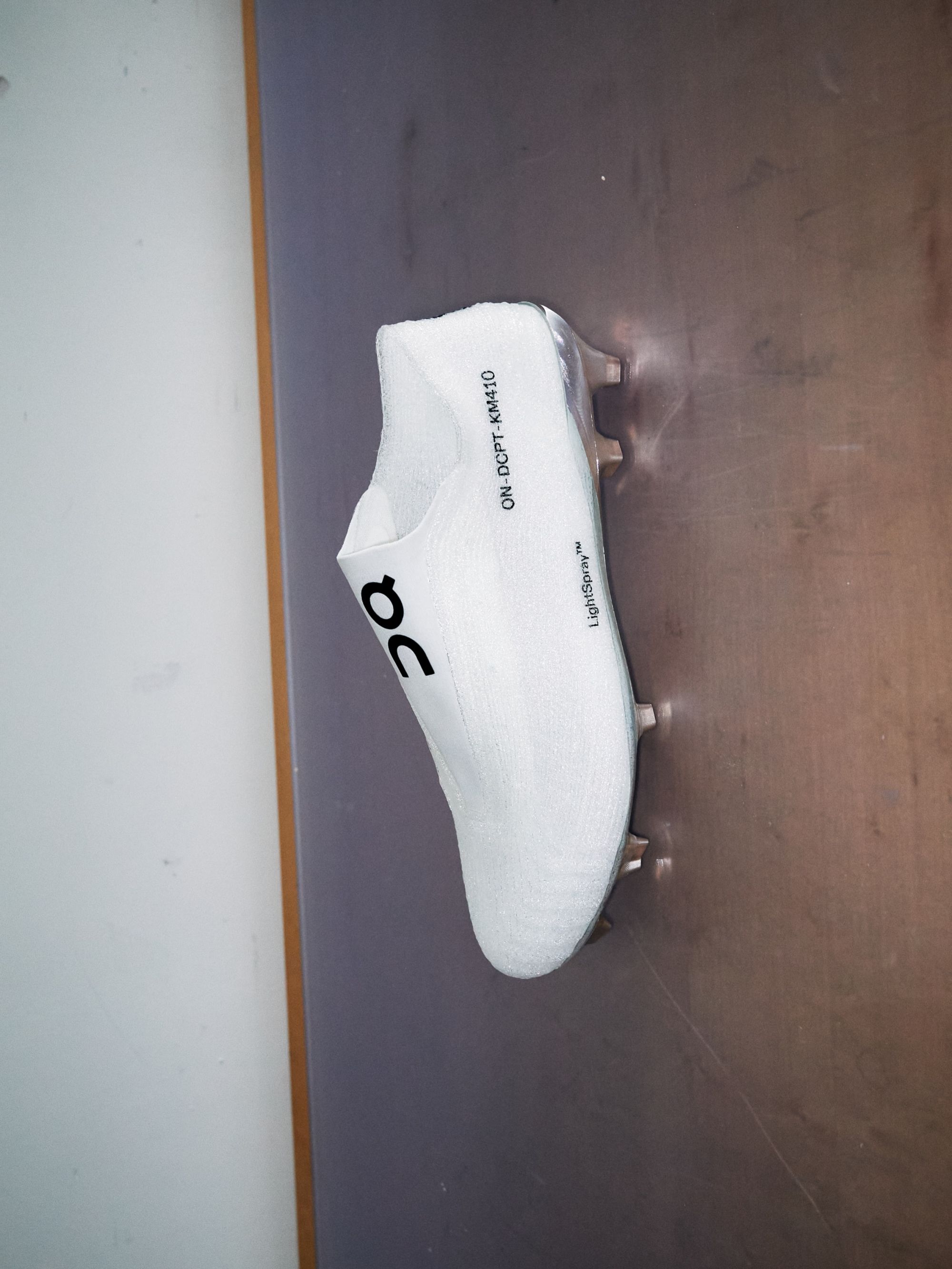
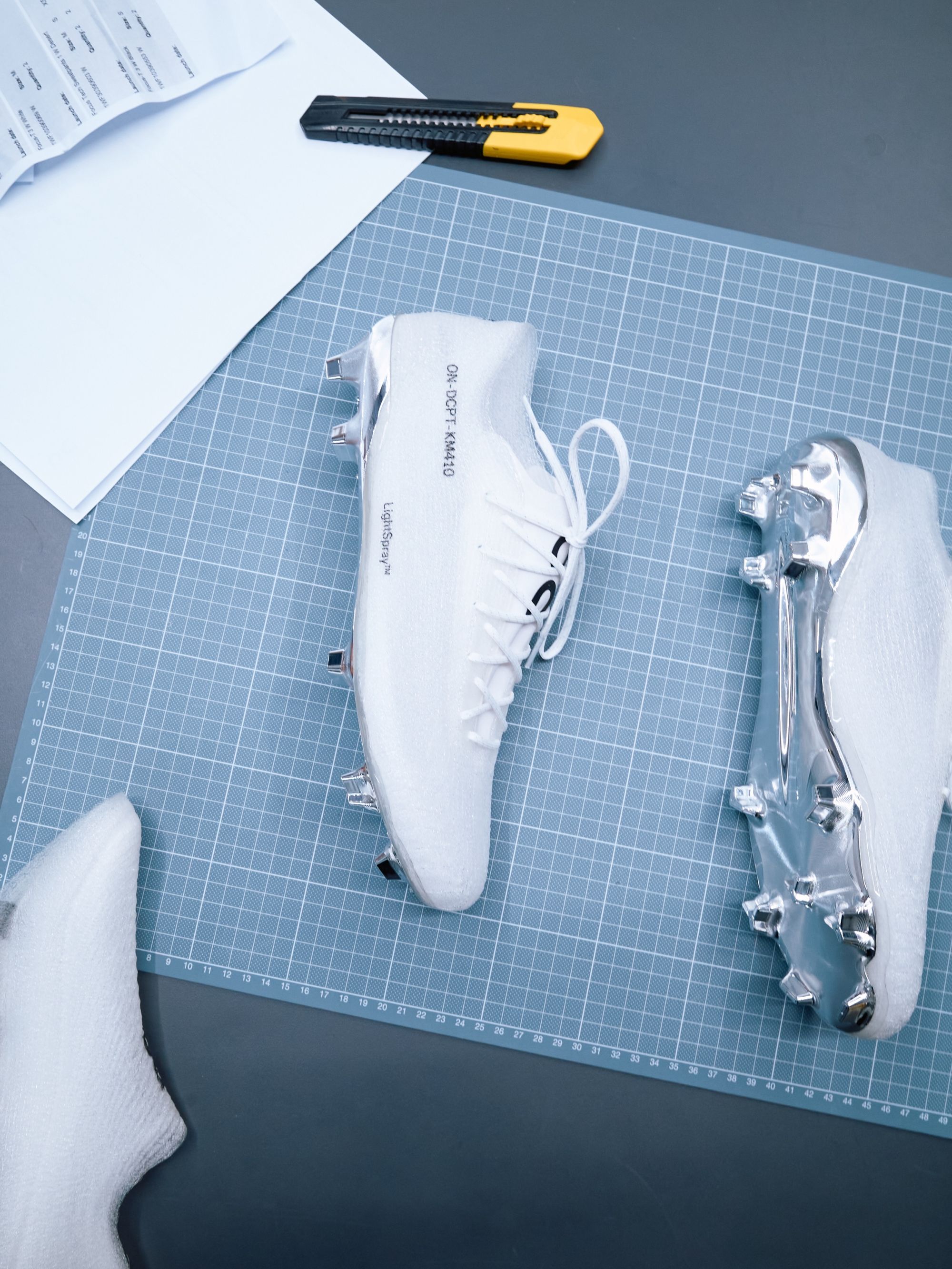
The code – understood as a combination of letters and numbers – is essentially a serial number printed along the edges of the boots to distinguish one prototype from another. Take the ON-DCPT-KM010, for example: On obviously refers to the Swiss brand, while DCPT is short for Deception, the rather fitting name given to this prototype line. KM stands for the player's initials, while the following number identifies the specific development version. Although the boots may look similar, they differ in details such as the presence or absence of laces, sole variations and other technical features. The most intriguing part, however, is the word Deception, which suggests something secret, something yet to be revealed – almost as if the code itself were hiding a deeper meaning. And, in fact, it is: On had to find something more intriguing – and catchy – to build hype around a signing as significant as Mbappé.
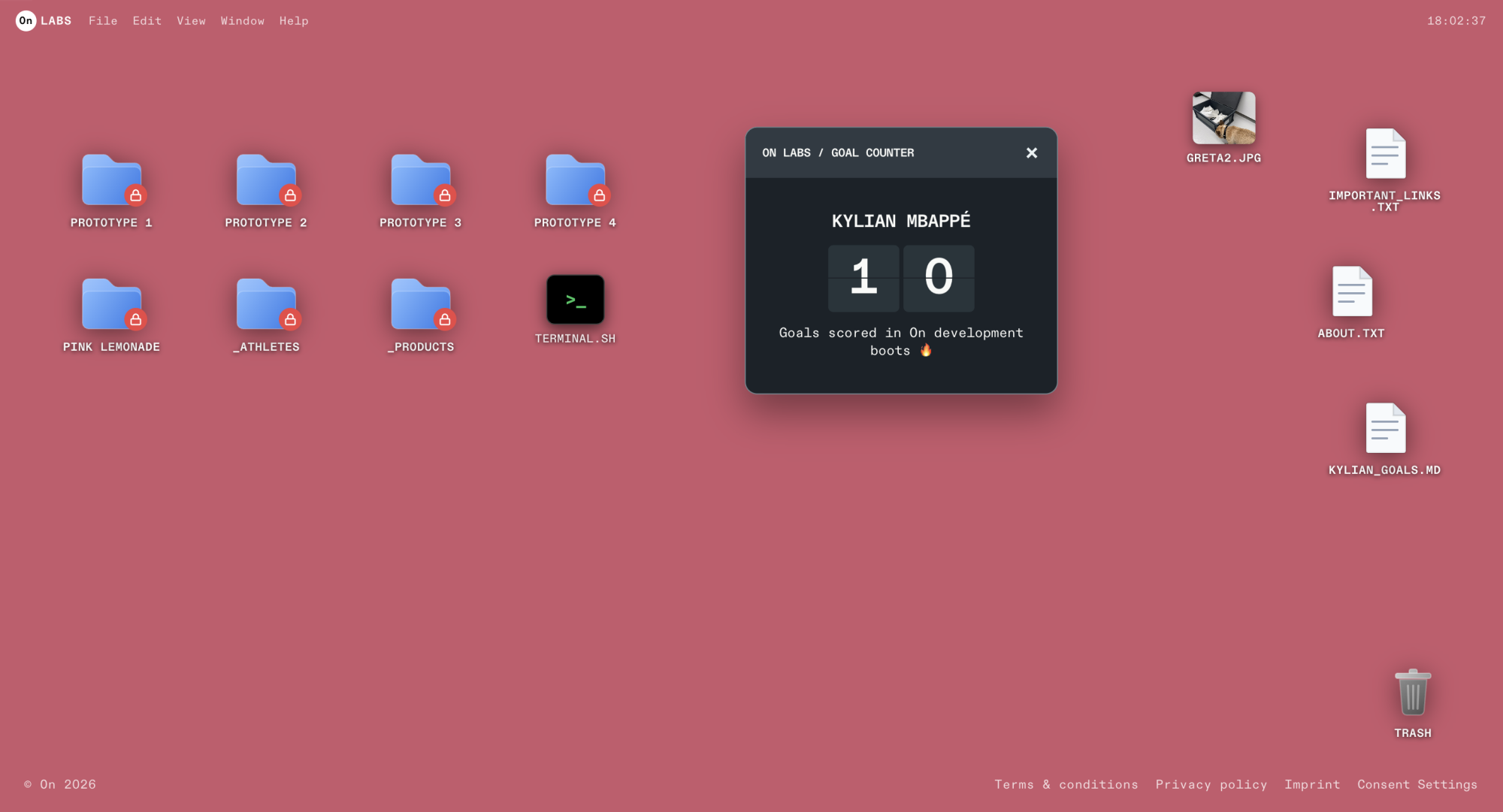
Visiting On Football's website to explore the new line, the first thing that catches the eye is the presence of Mbappé, Henry, Schertenleib and Roger Federer, all pictured inside the company's secret laboratory. Spend a few more seconds on the page, however, and a pop-up appears in the top-right corner, announcing that On Labs would like to share a secret link. Visitors can either accept or decline. Choosing the first option takes you to a macOS-style desktop filled with different files.
Looking around, you will come across a few curious details: a dog named Greta sniffing a basket full of football boots; a file containing a list of important links directing users to On's official Instagram account and the On Football website; another recently added file recording the dates and minutes of Mbappé's goals scored while wearing On boots, connected to the large goal counter in the middle of the desktop; an empty bin; password-protected folders on the left; and another file named ABOUT. The latter is perhaps the most interesting, as it explains that these are the working documents of Phil, an On Lab employee, and that everything is still a work in progress: nothing should be deleted, modified or, above all, shared.
This is where On's strategy comes into play, built entirely around gamification and designed to give visitors an active role in the experience. Clicking on HELP in the top-left corner, for instance, gives access to a Pong-style mini-game, set on a two-dimensional football pitch where players compete against an AI opponent, with the first to reach five points declared the winner. By opening the terminal.sh file – a text-based command interpreter reminiscent of old Unix operating systems – users can also enter a series of commands to generate a football boot made entirely of special characters, which can then be animated and rotated, or launch another iconic arcade game: Snake. But what exactly are the codes for?
How to unlock On's secret football boot prototypes
The gamification experience reaches its peak with the puzzle involving the folders. These are named Prototype (from 1 to 4), alongside a Pink Lemonade variation and two additional folders called _Athletes and _Products. This is where the codes come into play.
The first two folders can be unlocked using the passwords ON-DCPT-KM010 and ON-DCPT-KM210, which appear on Mbappé's and Henry's boots. Once unlocked, the folders reveal a series of behind-the-scenes photos and videos documenting the creation of the prototypes in the laboratory, including detailed footage of the manufacturing process in the first folder. What makes the whole experience even more intriguing is the timing: On kept the subsequent folders locked until Mbappé actually wore the corresponding boots, meaning they could not be unlocked ahead of time simply by following the numerical sequence.
At the moment, all folders except _Athletes and _Products can be accessed. Mbappé has worn the KM310 models in La Liga matches, and, most notably, the KM410 during El Clásico against Barcelona on 25 October, when he scored twice in a victory for Real Madrid. The most eye-catching model, however, is the pink version, named Pink Lemonade in the folder and officially registered as KM710, which Mbappé wore on 7 November against Valencia.
From PUMA to adidas: previous football boot marketing strategies
There is no doubt that On's approach is an original one. Gamification is a growing trend in contemporary communication, increasingly used by brands to keep audiences engaged. In this case, it also represents a clever marketing strategy, offering a behind-the-scenes look at the creation of a football boot rather than relying on a conventional photoshoot.
Using codes with a specific meaning on football boots, however, is not entirely new. One example dates back to 2019, when PUMA launched the Code Breaker Pack as part of its computer-inspired Hacked Pack collection. The limited-edition release consisted of just 1,400 pairs worldwide, featuring a Matrix-style digital rain graphic on the upper, with a series of numbers partially concealed by grey details. PUMA challenged customers to crack the code and uncover the secret message hidden within the design: the coordinates of San Siro Stadium. These could then be used to enter a competition via a QR code on the shoe box, with the chance to win a VIP experience organised by AC Milan.
CAN YOU BREAK THE CODE?
— PUMA Football (@pumafootball) May 2, 2019
Out now at https://t.co/ZVJLxQm6Fp pic.twitter.com/PID8uwgU6a
Nike did something similar, albeit on a smaller scale and without an actual prize, in 2020 with its Neighborhood Pack. The brand added a red stripe to the upper of its boots featuring the postcodes of several cities home to some of the world's most famous stadiums. But for the closest comparison, we need to go even further back, to 2016.
The first truly groundbreaking strategy aimed at making buyers feel unique through the possibilities offered by the digital revolution came from adidas with its Glitch boots. The concept revolved around a two-piece football boot: an inner, laceless shoe with studs, called the Techfit Inner Shoe, and an interchangeable outer layer known as the skin – a term that would later become popular in gaming, particularly through the customisation of characters in Fortnite. The two pieces could be combined to create the finished boot.
What made Glitch truly special, however, was the way it could be purchased. First of all, the boots were available exclusively through the GLITCH app, where users could buy a starter pack containing one sock and two skins of their choice. But the real innovation lay elsewhere: the first participants invited to test the boots each received a unique code, which they could share with three friends to give them exclusive access to the purchase. As more people bought the boots, additional codes were unlocked and could be shared with other friends. In other words, the entire purchasing process revolved around sharing codes – without one, it was impossible to get hold of the pack. The strategy relied on the British football community, and London in particular, as the boots remained available exclusively in the capital for quite some time. As the months went by and interest gradually faded, adidas UK began distributing codes more openly, eventually bringing GLITCH to an end in 2019. Nevertheless, it remains an original and successful example of how to actively involve a community in a product launch.
Could On follow a similar path in the coming months? After all, judging by the folders on Phil's secret desktop, the number of prototypes yet to be revealed seems to have run out, at least as far as Mbappé is concerned. The next step should therefore be the commercial launch of the boots. Unless the brand has more easter eggs in store for users before the official release, expected in 2027, all the signs point towards something special and potentially groundbreaking.
What to read next

Nike to become Champions League ball supplier in 2027/28
It will be for Europa League and Conference League too
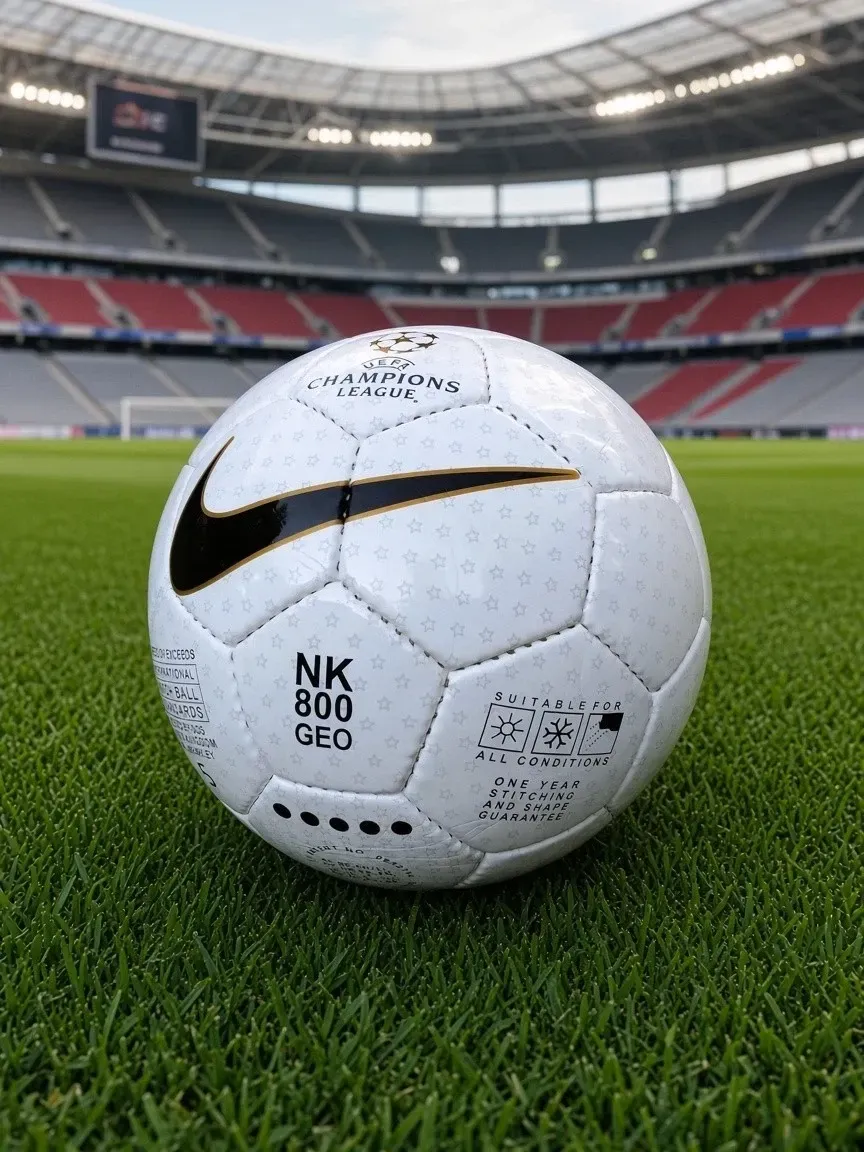
Back in time when Nike made Champions League balls
Before adidas’ 26-year run, the Swoosh took centre stage on European nights. From 2027/28, it will do so again

Portugal has changed number 7 font to honour Cristiano Ronaldo
A creative way to retire his jersey