The story of Napoli’s Diego Armando Maradona stadium And how it can change for Euro 2032
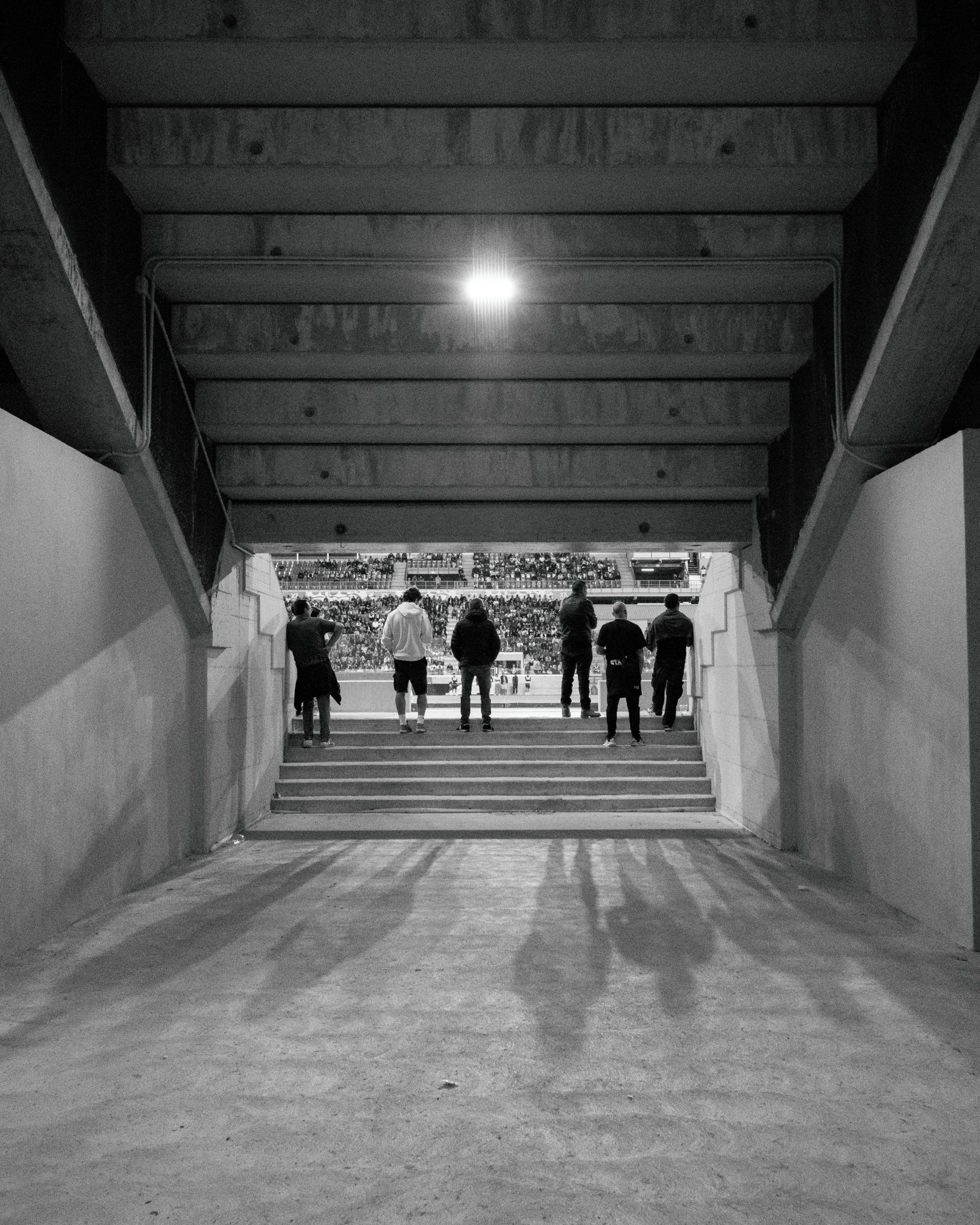
On December 6, 1959, what would become the home of Napoli for almost seventy years was inaugurated under the name Stadio del Sole. Designed by architect Carlo Cocchia in the Brutalist style, the stadium could initially accommodate around 87,500 standing spectators, making it one of the largest venues in Italy. Following several renovations and safety upgrades, the stadium gradually saw its capacity reduced to the current 54,732 seats. The story of what is now the Diego Armando Maradona Stadium has gone through moments of pride and fascination, years marked by structural issues, modernisation projects and failed redevelopment plans, eventually arriving at its current state and the crucial renovation project unveiled last August, with the aim of making it one of the five Italian stadiums selected to host Euro 2032.
The current state of the Maradona
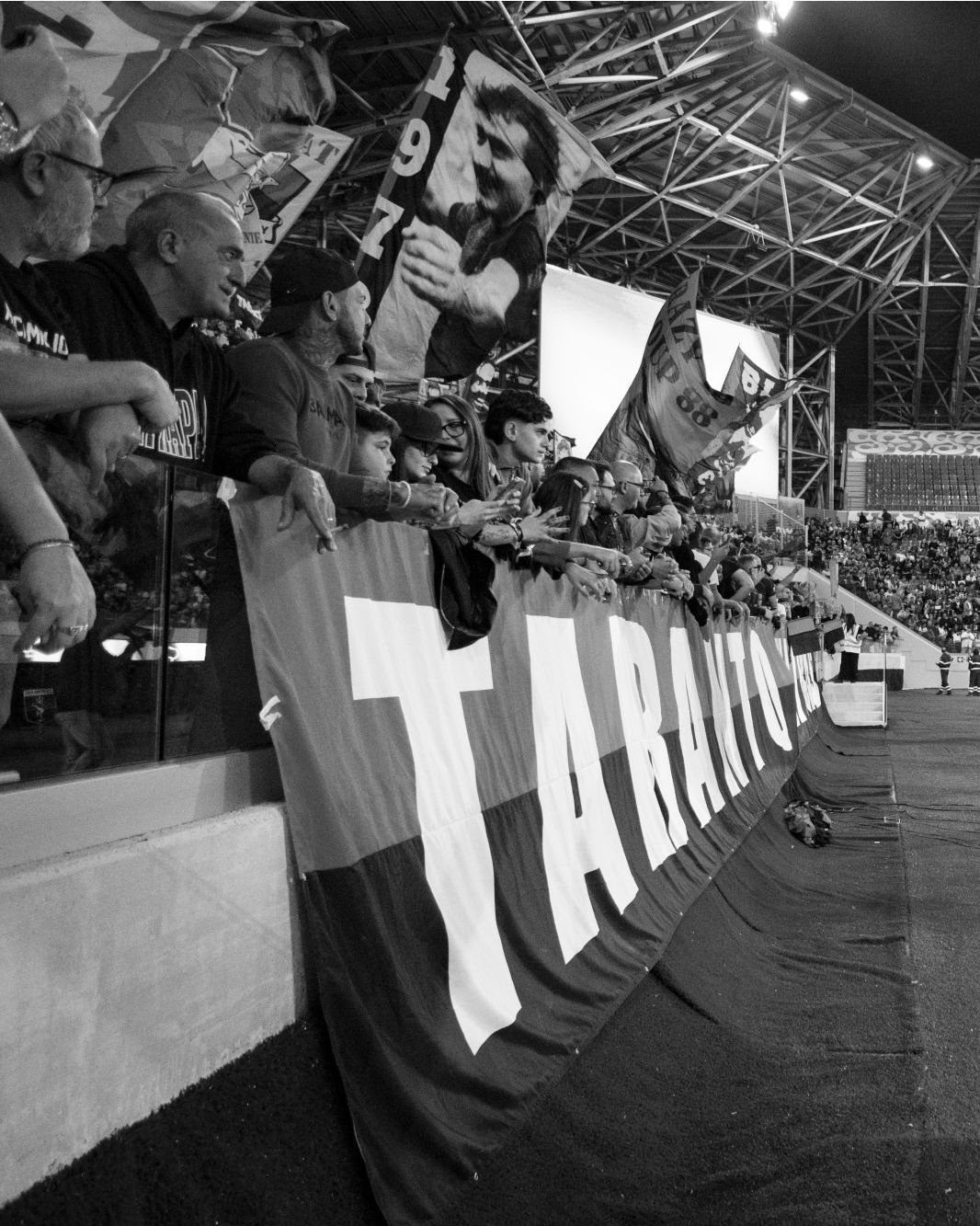
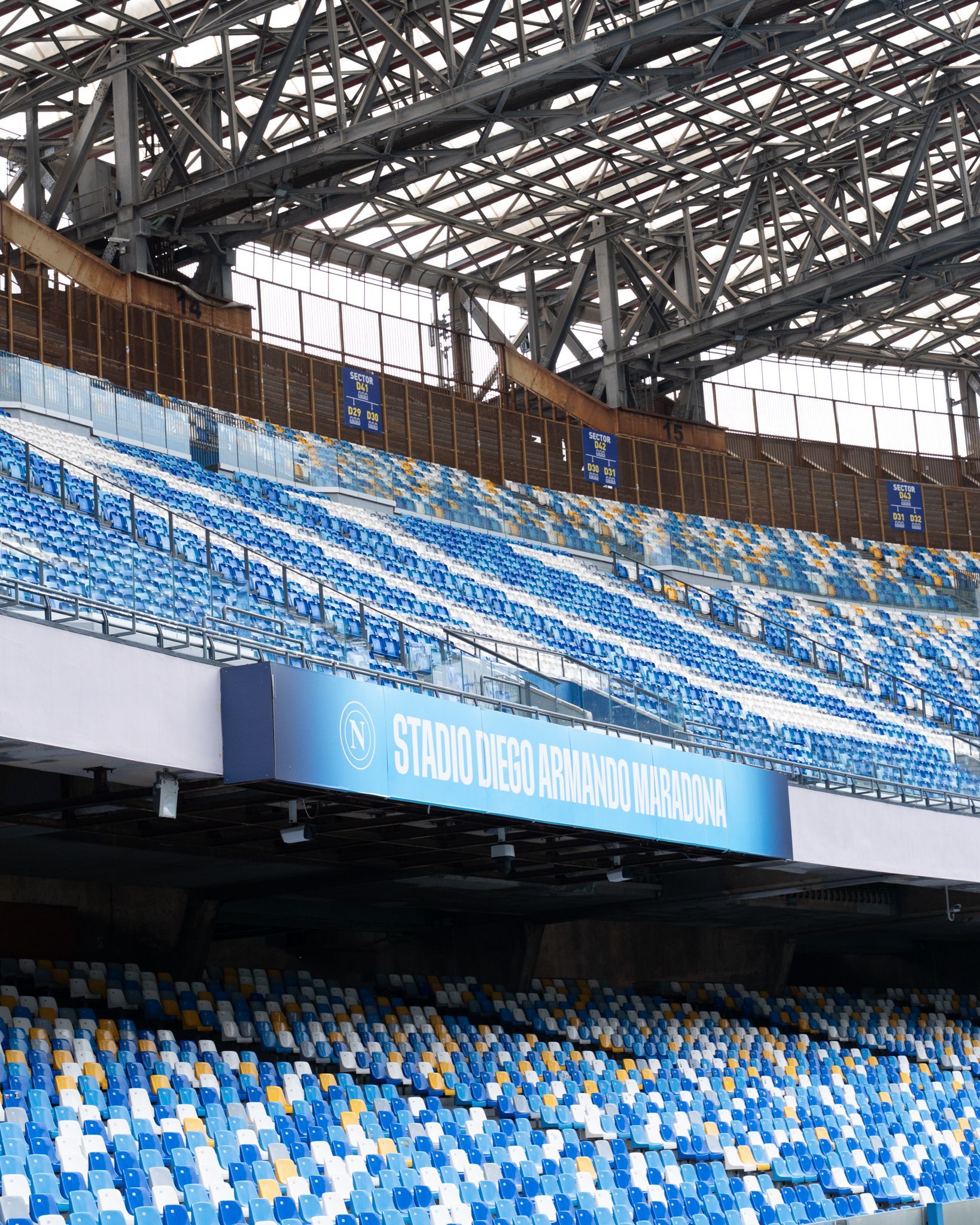
As mentioned, the stadium has officially been named after Diego Armando Maradona since December 5, 2020, just nine days after the death of the Pibe de Oro. The Argentine legend’s name marked a new chapter in the history of what had been known for 57 years as Stadio San Paolo, named after Saint Paul the Apostle, who, according to tradition, arrived in Italy by landing in Fuorigrotta, the western Naples neighbourhood where the stadium is located. The structure itself remains the original oval-shaped design, with a first tier below street level and a larger second tier above it. A third tier was later added, although it has remained inaccessible for years and will be discussed in more detail below. The faded red seats were gradually replaced from the summer of 2019 with shades of blue, light blue, white and yellow, including the word “Napoli” formed across the Distinti stands.
At the request of club president Aurelio De Laurentiis, the dressing rooms were designed by film production designer Tonino Zera, with references to Napoli players and symbols. Positioned between the home and away dressing rooms is a statue of Maradona created by Fonderia Nolana, life-sized and weighing exactly as much as the Argentine legend did during the 1986 World Cup. Luciano Spalletti, in a superstitious ritual, used to touch the statue’s left foot before the team walked onto the pitch, while Antonio Conte would place his hand on the ball or on the statue’s calf. With a bulky and largely redundant athletics track, like so many other Italian stadiums, San Paolo was never considered a model of sporting infrastructure. Instead, it became a sporting cathedral rich in symbolism, but in clear need of renewal.
The redevelopment project
A long-standing divide between local institutions and Napoli presidents over the future of the stadium has never completely disappeared. As early as the 1980s, Corrado Ferlaino, the club’s owner during the Maradona era, reportedly wanted to build a 150,000-capacity superstadium in Casoria. Today, the standoff is between the City of Naples, which is backing the redevelopment of the Maradona, and Aurelio De Laurentiis, who is pushing for a new stadium in Bagnoli. At the beginning of August, Mayor Gaetano Manfredi presented the technical and economic feasibility plan for the comprehensive redevelopment of the Diego Armando Maradona Stadium. All the necessary authorisations have been secured to move forward with the tender process, with the stated goal of making the stadium suitable to host Euro 2032.
The first major change would be an increase in capacity from 54,732 to 63,300 seats, with more than 50,000 of them meeting UEFA requirements. The project also includes dedicated seating for people with disabilities and 36 skyboxes. The underground parking areas, which have been out of use since the 1990 World Cup, would be reopened to serve the new VIP and hospitality areas. The athletics track would also be removed, bringing the stands closer to the pitch and positioning the new first tier around 6–7 metres from the playing field. In terms of sustainability, 5,300 square metres of photovoltaic panels would be installed, alongside a rainwater recovery system designed to convert the collected water into energy. The upper roof would be extended by 15 metres, while the number of supporting pillars would be reduced from the current 28 to 23, significantly limiting structural oscillations. It will also be interesting to see how the exterior façade takes shape: according to the project, it will draw inspiration from the original structure, the club itself and, inevitably, the figure of Diego Armando Maradona.
The broader ambition is to create a sports and cultural hub operating seven days a week, with green areas surrounding the stadium and activities taking place in Fuorigrotta, a strategically located part of Naples with strong transport connections, including direct links from Capodichino Airport and access to three metro lines. The overall investment will amount to €200 million, with €150 million provided by the Campania Region and €50 million by the City of Naples. Work is expected to begin in 2027, with completion scheduled for 2030, barring delays. The redevelopment should not prevent the stadium from continuing to host matches, nor should it require a temporary reduction in capacity, thanks to the expansion of the third tier.
The troubled third tier
Built late, used for only a short period and closed for more than twenty years: that is the story of the third tier of the Diego Armando Maradona Stadium. As part of the major redevelopment planned for Italy ’90, a new upper tier was built directly beneath the roof, which was also constructed for the tournament. Not all of the work was completed in time for the World Cup, meaning that the third tier became one of the projects finished after the event. Its lifespan was extremely short and its use limited, as it was closed soon after opening for safety reasons.
Its structure differs significantly from that of the first two tiers, almost resembling a separate metal body attached to the stadium. It struggled to cope with the vibrations generated during matches by fans celebrating and moving in the stands. The oscillations travelled through the structural supports and extended beyond the stadium itself, eventually causing damage inside some apartments in the surrounding area. The most pragmatic solution was therefore to close the entire tier at the beginning of the 2000s, leaving it inaccessible for more than two decades, with its definitive closure coming in 2005. Last May, however, the Campania Region allocated the first funds for preliminary surveys and safety assessments ahead of its reconstruction, which is included in the plans for the new Maradona.
The stadium selection process for Euro 2032
By July 31, the FIGC had received applications from 13 cities and 16 different stadiums, each accompanied by its own dossier, for the 2032 European Championship jointly hosted by Italy and Turkey. The venues hoping to host one of the biggest international football tournaments include Bari with the San Nicola, Bologna with the Dall’Ara, Cagliari with a new stadium, Florence with the Franchi, Genoa with the Ferraris, Lecce with the Via del Mare, Milan with the current or a new San Siro, Naples, Palermo with the Barbera, Rome with the Olimpico or a new stadium in Pietralata, Salerno with the Arechi, Turin with the Allianz Stadium and Verona with the Bentegodi. The next step will come by October 1, when the federation will submit to UEFA the stadiums selected to move forward in the bidding process.
The final list will be reduced to five host venues, with two additional stadiums kept as reserves. UEFA’s strict criteria require a minimum capacity of 30,000 spectators, high standards of sustainability and accessibility, as well as renovation works scheduled to begin in 2027. At this stage, the only venue that can almost certainly be considered safe, as it already meets all the requirements, is Turin’s Allianz Stadium. The former capital of Italy is joined by the current one, as Rome, despite still facing several uncertainties, cannot realistically be ruled out given its status alone. For all the others, the proposals remain projects that will need to become reality, whether through entirely new venues or major redevelopment works. Time is running out, and ambitions and plans will soon have to turn into concrete results. With its new municipal redevelopment project now on the table, Naples intends to make a strong case for its place among the five.
What to read next

Napoli unveil their new Halloween 2026/27 kit
It's total black and inspired by the Munaciello
Experiencing a matchday at the New Balance Arena
We visited the Bergamo stadium for Atalanta-Venezia
Why is Villarreal's stadium entirely yellow?
The Estadio de la Cerámica is something different