











Palermo reveals ambitious new Barbera project tied to Euro 2032 bid The club teamed up with Populous
Palermo FC has submitted the documentation to the Sicilian regional authorities to begin the administrative process for the construction of the new Stadio Renzo Barbera. A step that had been anticipated for months and one that is central not only to the future of the Rosanero, but also to Palermo’s bid to become one of the host cities for UEFA Euro 2032, which will be co-hosted by Italy and Turkey. The redevelopment project for La Favorita — designed by Populous, the architecture firm that has become increasingly dominant in the world of sports venues — is now awaiting institutional approval and the next stages outlined in the UEFA timeline.
In the vision presented by the club, the stadium is set to undergo a complete transformation, revealing an ambition that goes far beyond a simple restyling. The project combines several dimensions: the need to modernize a historic and iconic stadium that now shows the signs of time; the broader issue of Italian stadium infrastructure ahead of Euro 2032, with all the associated delays and concerns; the growing importance of modern venues — designed for year-round use beyond football — in the contemporary sports landscape; but also the sporting rise of Palermo under the ownership of City Football Group, its increasingly deep integration into city life, and the urban transformation of the area surrounding the Renzo Barbera.
All this comes as Palermo prepares for a crucial moment in its season. In the coming days, the Barbera will host the playoff semifinal against Catanzaro, another key step in the club’s attempt to return to Serie A. And it is difficult to separate the new stadium project from the atmosphere currently surrounding the club at the foot of Monte Pellegrino: the dream of restoring the team to the stage it deserves, to borrow a phrase often used by club president Dario Mirri, grandson of the legendary chairman after whom the stadium is named.
The plans for the new Renzo Barbera
Palermo has presented a complete redefinition of what the Barbera should represent in the coming years. Not merely a football stadium, but a venue capable of hosting major international sporting events, concerts, and entertainment of various kinds. This direction is evident both in the images released by the club and in the way the project itself has been described.
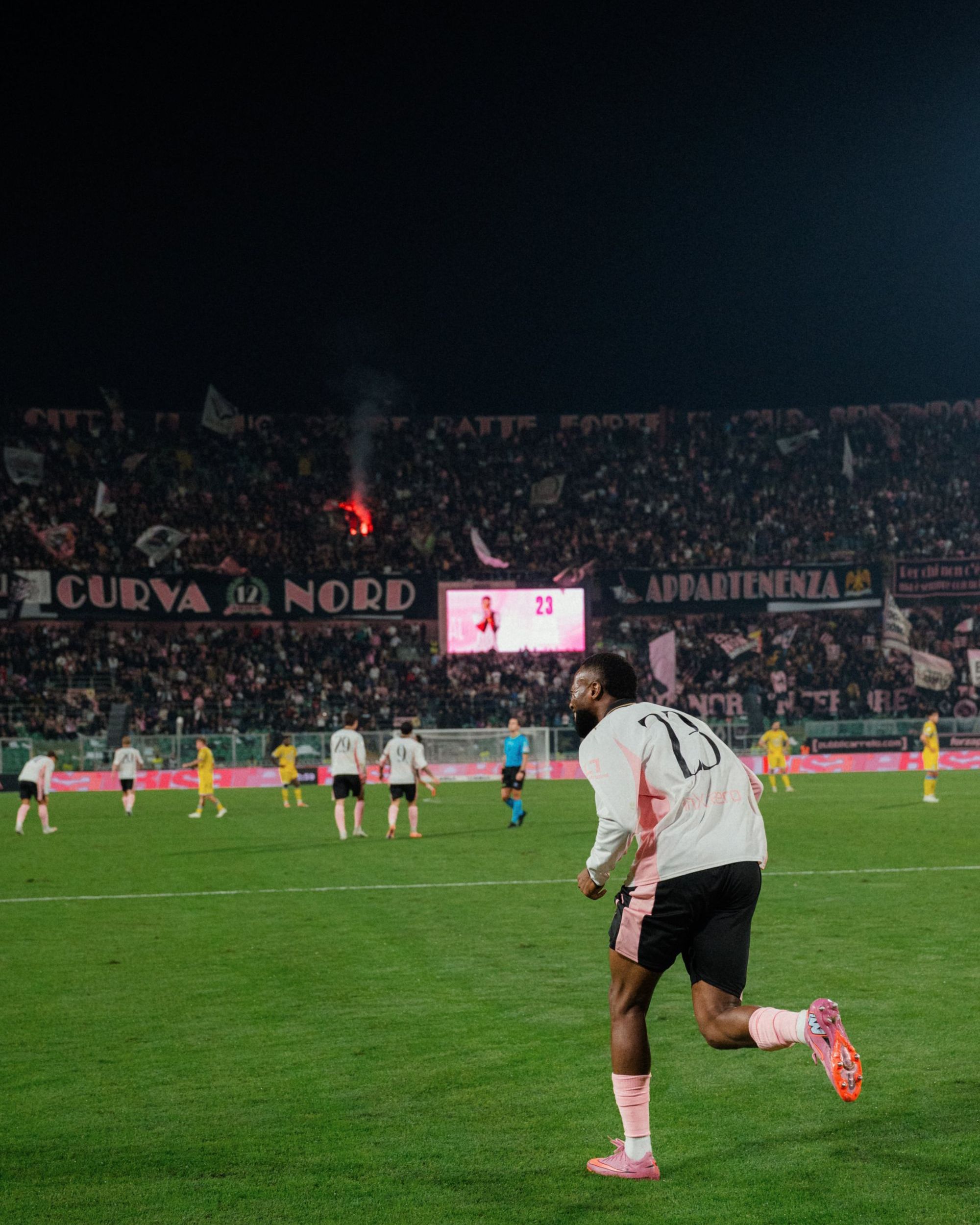
The new Barbera follows the guidelines that have shaped almost every new European stadium in recent years: stands brought closer to the pitch, full roof coverage, greater accessibility, and a significant expansion of hospitality and premium areas. The latter is a particularly familiar concept for City Football Group and is now central to modern football, where stadiums have become essential assets for increasing matchday revenue and improving the fan experience. In terms of attendance, Palermo already starts from a remarkably strong position. Despite years spent outside the top flight, the club’s support has consistently remained that of a major football city. Dario Mirri recently highlighted this point, speaking of an average attendance of more than 28,000 spectators at the Barbera — figures comparable to the upper half of Serie A — generating almost €9 million in ticket revenue while still in Serie B. Numbers that explain why the new stadium continues to be described by the club as something Palermo truly deserves.
In presenting the project, Palermo summarized its vision around five key principles: integration with the city, fan centrality, respect for historical identity, urban sustainability, and the belief that Palermo should possess a stadium worthy of its stature, including demographically. As suggested in the club’s statement, the new Barbera aims to transform the relationship between stadium and city, becoming an open and active space throughout the week, while also regenerating the surrounding area through new public spaces, services, commercial zones, and a closer connection with both the neighborhood and the Parco della Favorita. All this while preserving key identity elements — including the visual relationship with Monte Pellegrino — and maintaining a strong focus on sustainability both during and after construction. Alongside the stadium, the club also plans to build its new headquarters: including a museum, offices, and dedicated spaces for supporters and guests.
The process, however, has only just begun and still includes several steps before final approval can be granted. Following the preliminary conference held in March, Palermo submitted the project to the relevant authorities and is aiming to accelerate procedures before the summer, in line with UEFA’s timeline for Euro 2032. In the coming months, key authorizations and approvals will be required to allow the city to remain in contention as one of Italy’s potential host venues for the tournament. In the meantime, while the new stadium project awaits the inevitable bureaucratic procedures, the Barbera remains at the center of the Rosanero season.
The role of City Football Group in the club’s growth
The new Renzo Barbera cannot be separated from the path the club has taken since joining the City Football Group universe in 2022. A process that was never presented as an immediate sprint toward Serie A, but rather as gradual growth accompanied by progressive investment and a broader transformation of the club’s structure. The new stadium project follows another crucial step in Palermo’s recent development: the Torretta training center, inaugurated in 2024 and regarded as the first true symbol of the CFG era. An infrastructure project that transformed the daily life of the team and elevated the organizational level of the club, with the Barbera now representing the next stage.
Ultimately, this has always been the central theme: building foundations solid enough to bring the club back to Serie A — and then stay there. Dario Mirri recently reiterated this concept, explaining how Serie B is one of the most difficult leagues not only from a technical perspective, but also in economic terms. For this reason, Palermo — remaining faithful to the vision outlined by its ownership from day one — has chosen a path without sudden leaps, accompanying sporting growth with infrastructural, corporate, and financial development.
In the meantime, the scale of the club has grown significantly. In recent years Palermo has continued to increase its investments, visibility, and media profile, attracting players and technical figures from higher divisions while maintaining a fanbase comparable to that of a Serie A club. Not only in the stadium, but also on television and across social media.
Palermo and the bid for Euro 2032
As mentioned, securing a place among the stadiums selected to host Euro 2032 is a declared objective for both the club and the city. And this is where the project intersects with a much broader and more complicated issue concerning Italian football as a whole. For months, the country’s infrastructure problem has returned to the center of discussions surrounding the European Championship, as the process toward selecting the final host stadiums continues amid bureaucratic obstacles, delays, and construction sites that are still far from opening. UEFA president Aleksander Ceferin used harsh words in an interview with La Gazzetta dello Sport, warning that Italy seriously risks losing hosting rights without concrete acceleration.
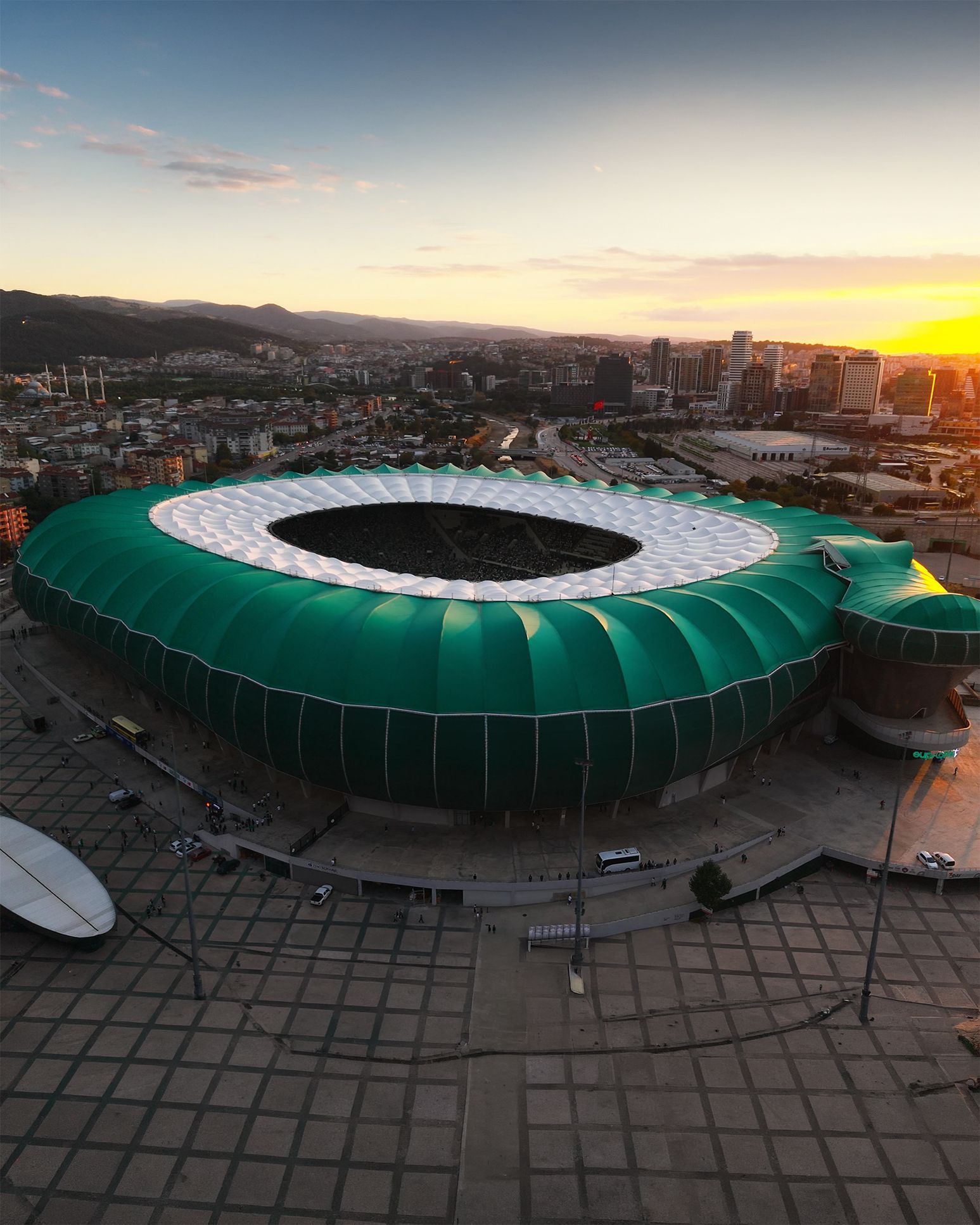
By contrast, comparison with Turkey is particularly unforgiving. Over the last fifteen years, Turkish football has invested heavily in infrastructure, inaugurating a series of modern venues in Istanbul, Trabzon, Bursa, Konya, Gaziantep, and Izmir, alongside additional projects planned for Euro 2032. Italy, meanwhile, continues to move more slowly, weighed down by administrative delays and political tensions. The football world has repeatedly accused politics and institutions of failing to support the process with sufficient urgency, especially compared to preparations for other major events hosted by the country, such as the Milano Cortina 2026 Winter Olympics, the America’s Cup, and the upcoming Mediterranean Games.
The coming months will therefore be decisive. By autumn 2026, the FIGC will have to select the five stadiums chosen for the tournament, and at the moment the only truly ready venue is Juventus’ Allianz Stadium. Everything else remains either under construction or still under discussion. Practically every major Italian city is involved in this race, each facing its own complexities. Some projects are at a more advanced stage, others far more uncertain, and this is precisely why the new Barbera project carries significance that extends well beyond Palermo FC itself. For the city, it represents an opportunity to return to the circuit of major international events more than forty years after the magical nights of Italia ’90, when the Barbera hosted the Netherlands, Egypt, and Ireland.
Populous and the new generation of European stadiums
As previously mentioned, the new Barbera will bear the signature of Populous, one of the world’s most influential sports architecture firms. In recent years, the company has become synonymous with major contemporary stadiums, particularly in football but not exclusively: from NBA arenas to Olympic venues, passing through large-scale projects in Europe, Africa, and the Middle East. In Italy, Populous has become an increasingly familiar presence: from the new AS Roma stadium project to proposals for the post-San Siro era involving Inter and Milan; from Venezia FC’s new stadium within the Bosco dello Sport development to the renovation of Como’s Stadio Sinigaglia. All examples of how stadiums are no longer conceived simply as football venues, but as multifunctional urban hubs.
The same philosophy can be seen across many other Populous projects. From London’s Tottenham Hotspur Stadium to the renovated Wembley, from the Grand Stade Hassan II in Casablanca — set to become the largest football stadium in the world — to projects in Saudi Arabia, NBA arenas such as Cleveland’s, and venues built for major events in China (Macau) and the United Arab Emirates. Altogether, nearly 1,400 venues over the last four decades.
More than individual buildings, Populous primarily works around a contemporary vision of sport: stadiums open all year round, increasingly integrated into urban life, designed to generate experiences, entertainment, and new economic flows. It is a philosophy that has become firmly established in European football in recent years and is now influencing many Italian projects as well, in a context historically behind neighboring countries. For this reason, Palermo’s choice says something that goes beyond the simple construction of a new stadium. Entrusting the project to a firm like Populous means becoming part of a global network of projects and infrastructures that are redefining the relationship between sport, cities, and entertainment. And in this sense, the new Barbera perfectly represents the scale of Palermo’s ambitions in the City Football Group era.