History of art in stadiums A unique combination in an unusual location




The notion of museums and art galleries existing within sports facilities may strike some as odd, especially considering the way the stadium is understood in Europe. The live sporting event is conceived by the majority of people as the only attraction—the one they pay the ticket for. The American view of this is diametrically opposed, with NBA, MLB or NFL games being part of a show and a multidisciplinary experience. Precisely overseas, in the most modern venues, many stadiums host art installations and exhibitions inside them, freely accessible to visitors. Isolated cases, perhaps even more identity-driven among themselves, have also developed in Europe.
Art in American stadiums
The Mercedes-Benz Stadium in Atlanta hosts the Atlanta Falcons' NFL games and Atlanta United's MLS matches. A unique architectural venue, inspired by the Roman Pantheon, the 71,000-seat giant houses an extremely varied art collection, always keeping sport and the city of Atlanta’s historical-cultural interpretation as fixed references. Curated by the Savannah College of Art and Design (SCAD). Between outdoor installations and indoor works there are 180 pieces of art created by 55 different artists from around the world. Among the most relevant works stands out The Falcon by Hungarian artist Gábor Miklós Szőke, the bird symbol of the city’s American football club made of stainless steel and bronze, with a wingspan of 20 meters and a height of 13 meters, under whose wings thousands of spectators pass at every match. At the stadium entrances there is also a Telstar, the first multi-panel soccer ball, weighing 17 tons and created by Studio Roso. There is also the satirical painting On the Line by Jake Messing, where a group of referees throws themselves into the football melee, the mural Atlanta is Beautiful with the city’s most influential figures, and One Voice, an installation made of 8,000 shoelaces.
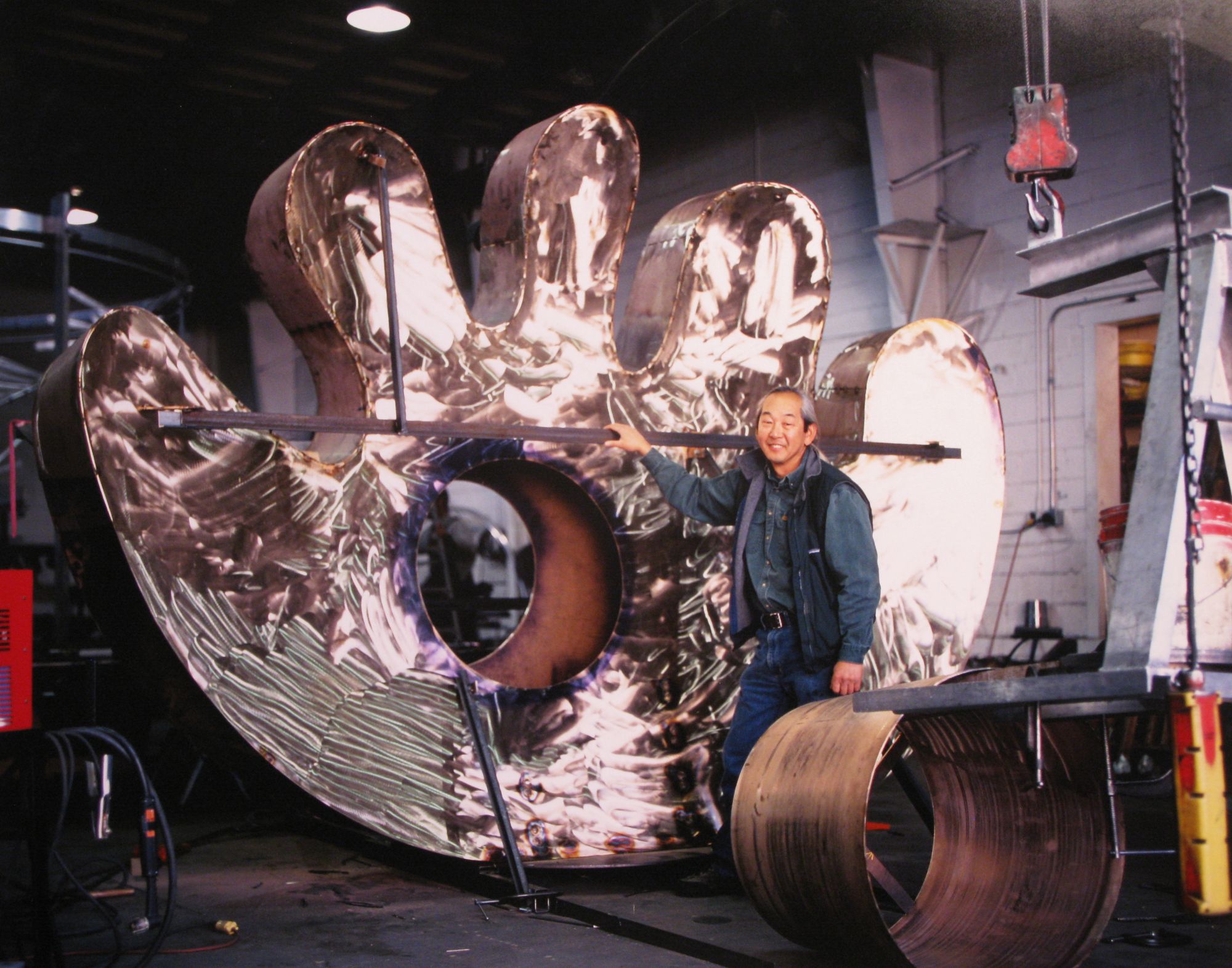
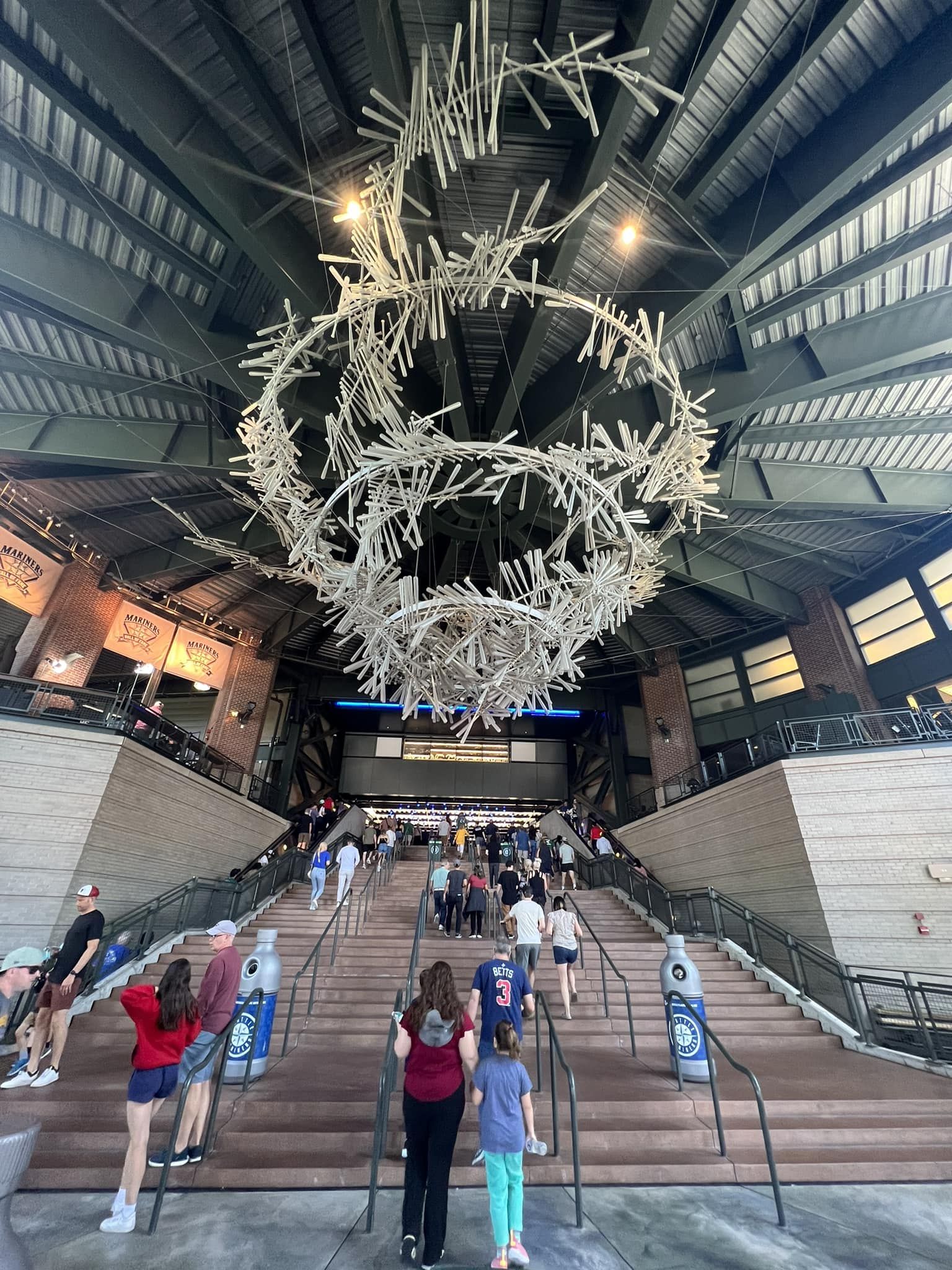
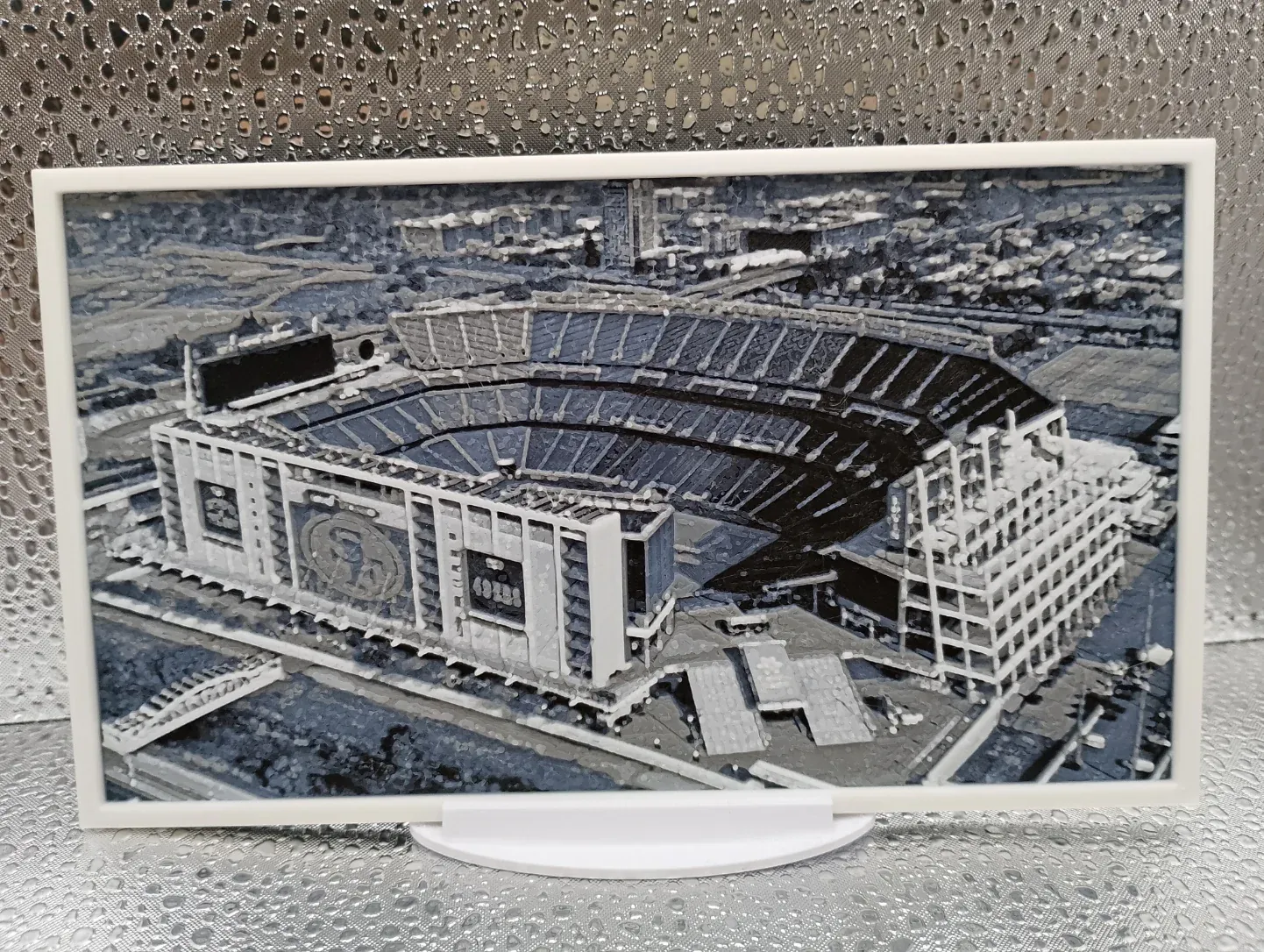
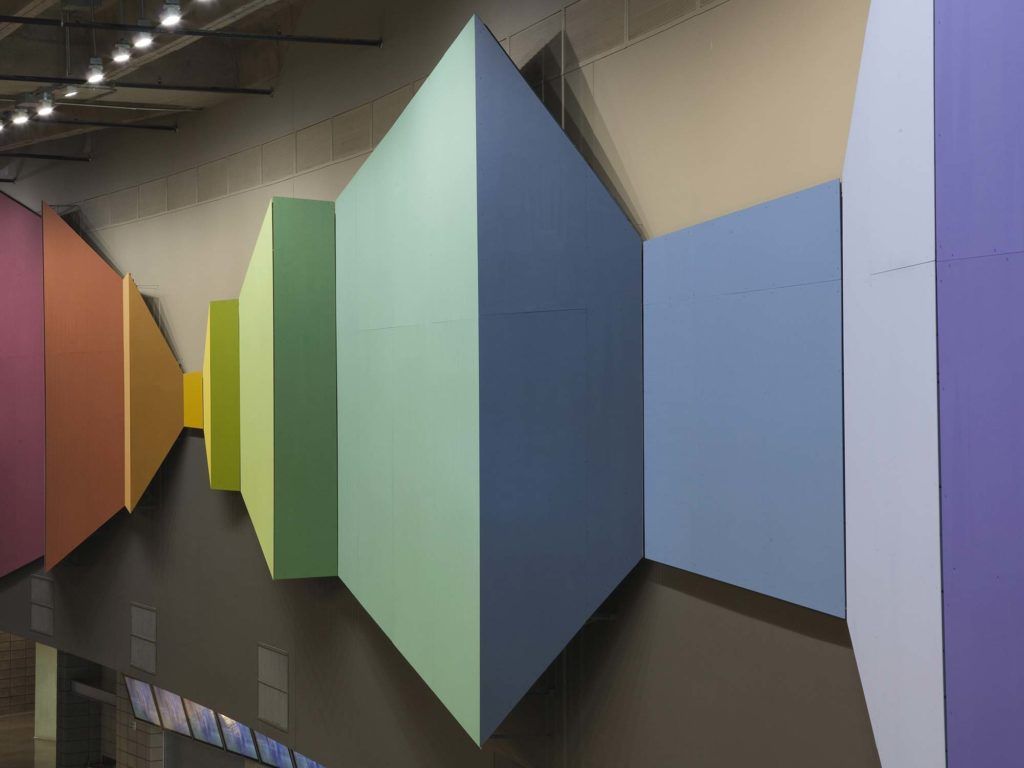
Next is AT&T Stadium in Arlington with something even more curated. For the Texas stadium 20 miles from Dallas, the owners of the Dallas Cowboys, the Jones family, strongly wanted the internal spaces of the facility to host a contemporary art collection. The result is incredible, with around forty monumental works chosen by a dedicated Art Council. Terra (camouflage) by Aitken shows a fragmented steel surface with a kaleidoscopic effect of a thousand reflections, Daniel Buren composes a yellow wall with silkscreened aluminum plates, Teresita Fernandez with her minimal-style Starfield displays a glittering starry cosmos. At Levi’s® Stadium in Santa Clara, home of the San Francisco 49ers since 2014, there is what is defined as the largest art collection inside a stadium. Over 200 works and more than 500 photographs ranging from portraits of great players of the American football team to figures and landscapes typical of the beautiful San Francisco Bay Area. T-Mobile Park, home of the Seattle Mariners baseball team, boasts around fifty works including paintings, prints and photographs. The common thread is of course the sport played here. Among the installations stands out definitely The Tempest, a chandelier made of 1,000 resin baseball bats spiraling, together with Tsutakawa’s MITT, a giant baseball glove cast in bronze.
There is also Allegiant Stadium in Las Vegas, where in 2021 an interesting exhibition was set up linking the Raiders American football team with famous personalities of the iconic Nevada city, allowing visitors to appreciate Elvis Presley dressed as a quarterback and Frank Sinatra in similar attire. Arrowhead Stadium in Kansas City has been considered an avant-garde venue since its inception in 1972. After the renovation carried out in 2010, an Art Collection was added to this architectural masterpiece to enrich the experience of Kansas City Chiefs fans. The result was the creation of 37 works that connect the football team with the most populous city in Missouri. GEODIS Park, the jewel home of Nashville Soccer Club, hosts a futuristic Soundwaves Gallery. The rhythm of the city’s Country music and local natural environments mix in 44 artworks by as many local artists, giving life to the gallery called The He(art) of Nashville.
In Mexico, in the stadium where Chivas Guadalajara play their home matches, a true museum was inaugurated this month. We are talking about the JOVEM Museum, located inside Estadio Akron, which will host the 2026 World Cup along with other structures already mentioned. A state-of-the-art space with interactive and immersive paths, characterized by the light and energy they convey.
The curious European cases
Following the American model in every way, Tottenham Hotspur Stadium could not avoid hosting its own gallery in the US style. The OOF Gallery is an area of contemporary art with a regular rotation of paintings, sculptures and photographs. In the stadium’s Warmington House, the game of football literally becomes art thanks to installations with a recognizable and never banal aesthetic, among leather balls and match kits.
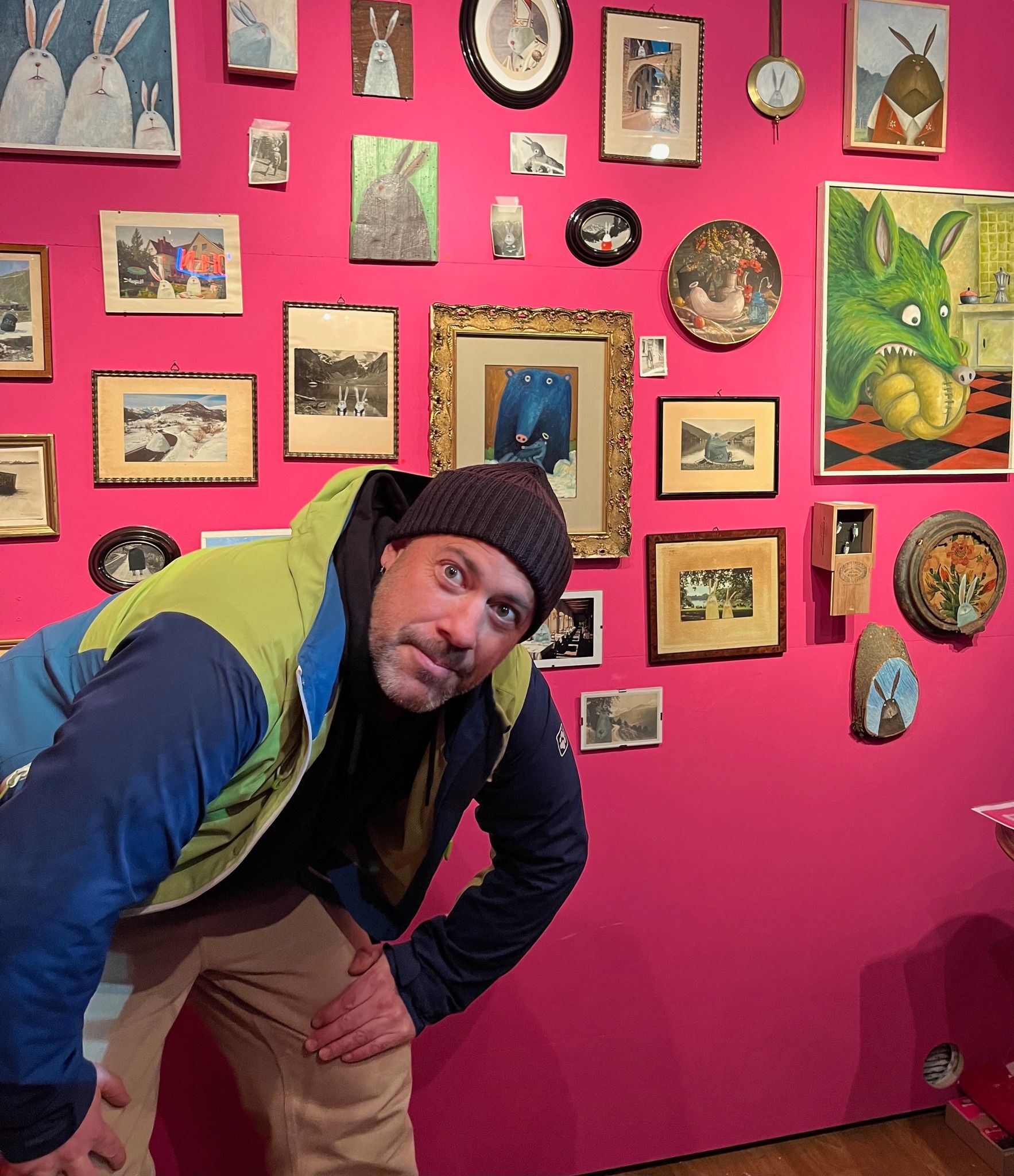
In Winterthur, Switzerland, at the small Stadion Schützenwiese something unique happens. During FC Winterthur’s home matches, the eccentric Salon Erika is opened. It would simply be a container where prosecco is served, but inside it hosts a mini gallery where art and football meet. Exhibitions are cyclical and among the most famous is the one titled Fuck Tactics, a stylized Mario Balotelli in his immortal shirtless celebration, the astronaut Yuri Gagarin heading the ball, and many other beautiful pieces. A playful and friendly combination, a space to enjoy during the match for more than twenty years, protected by the fans themselves as a true club heritage.
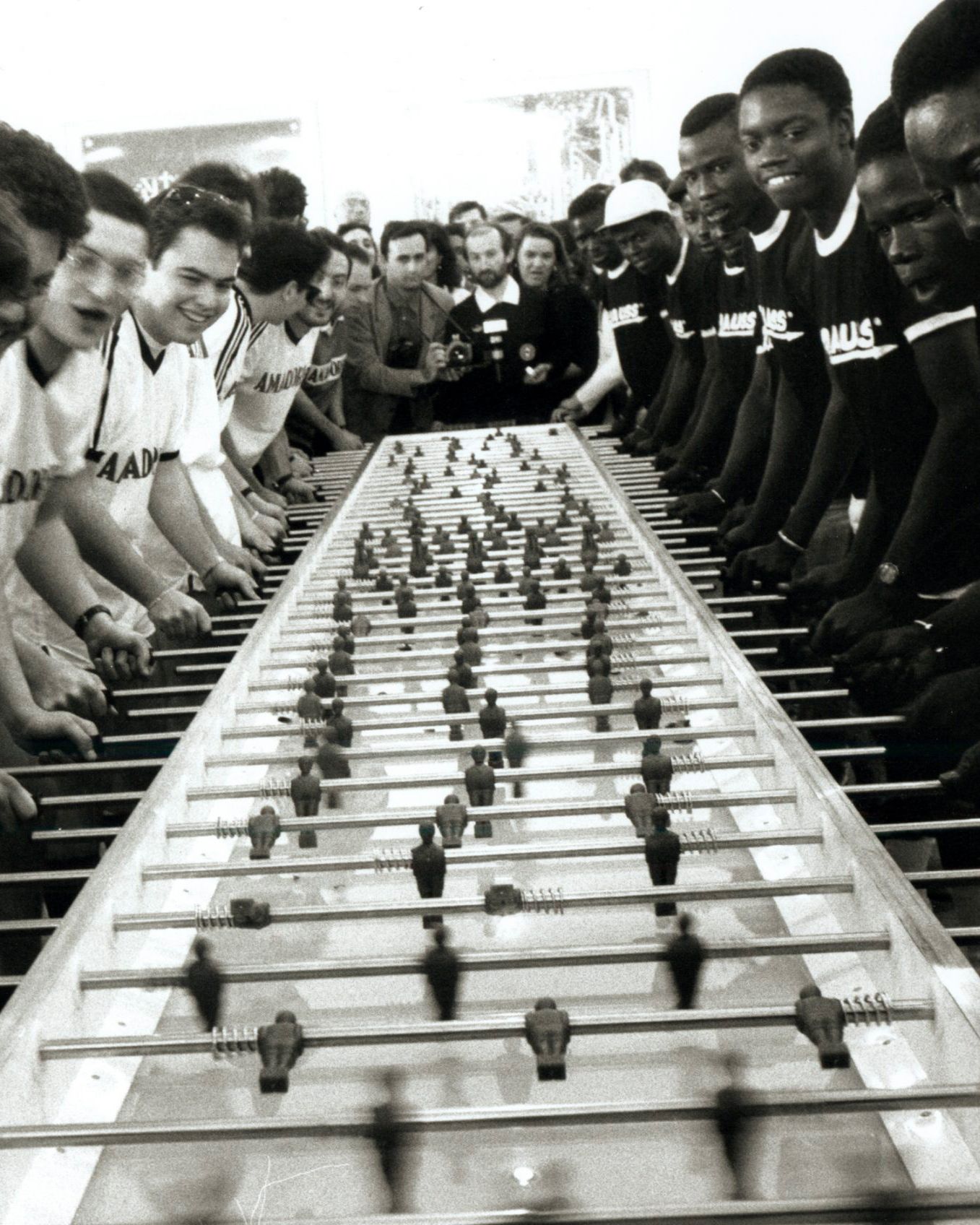
Moving to current events, the Italian club that more than others could be associated with similar initiatives is Como. Right here, from 15 November until 22 March 2026 the exhibition ART IS MY FAVE SPORT is on display. It is a series of installations that develop across the rationalist sports facilities that best represent the lakeside city, from the Aeroclub to the inevitable Stadio Sinigaglia. Precisely in the home of Calcio Como is exhibited what is probably the greatest attraction of the art festival: we are talking about Maurizio Cattelan’s work Stadium, a foosball table for 22 players nearly 7 meters long, which represents the first large sculptural work created by the artist in 1991.
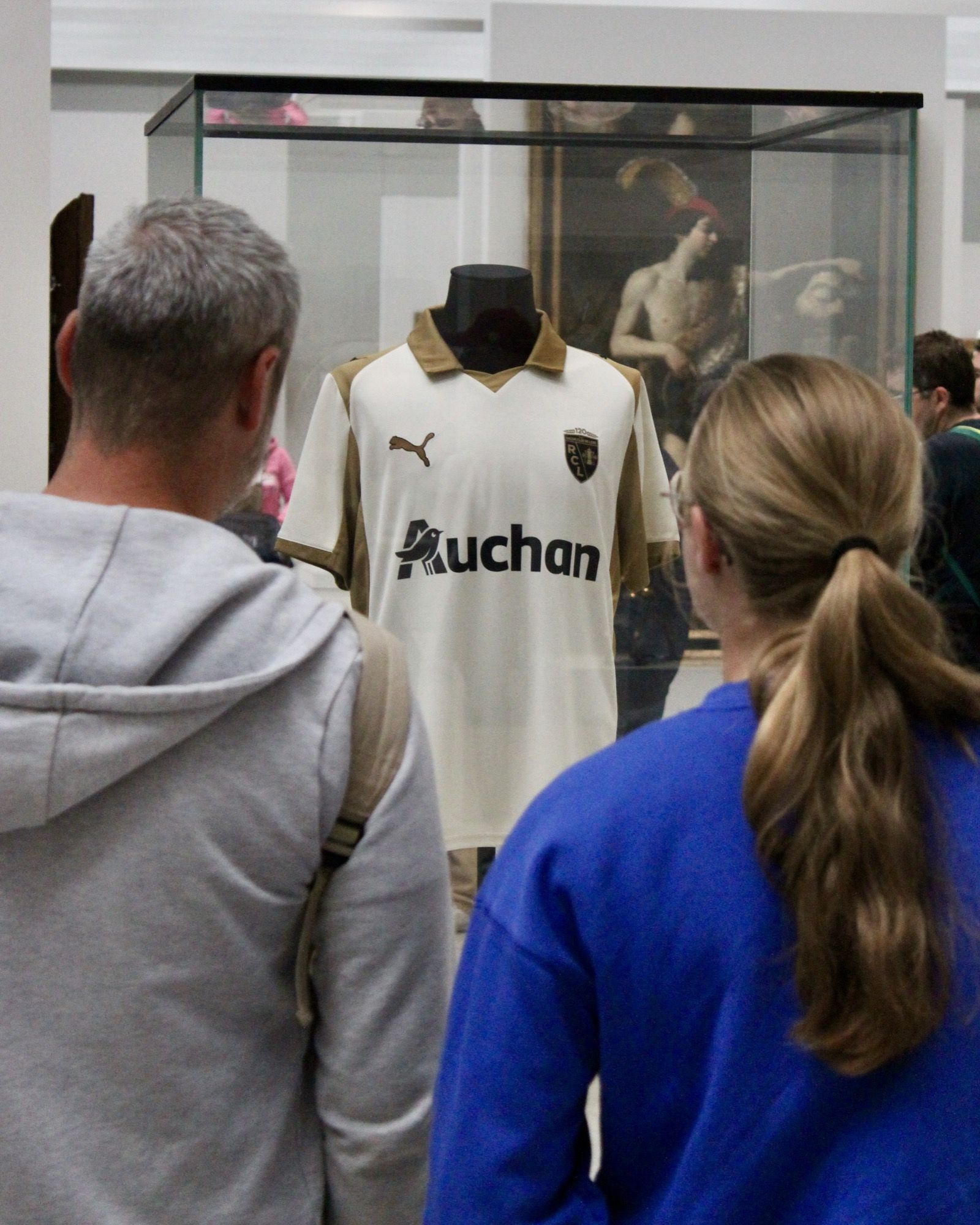
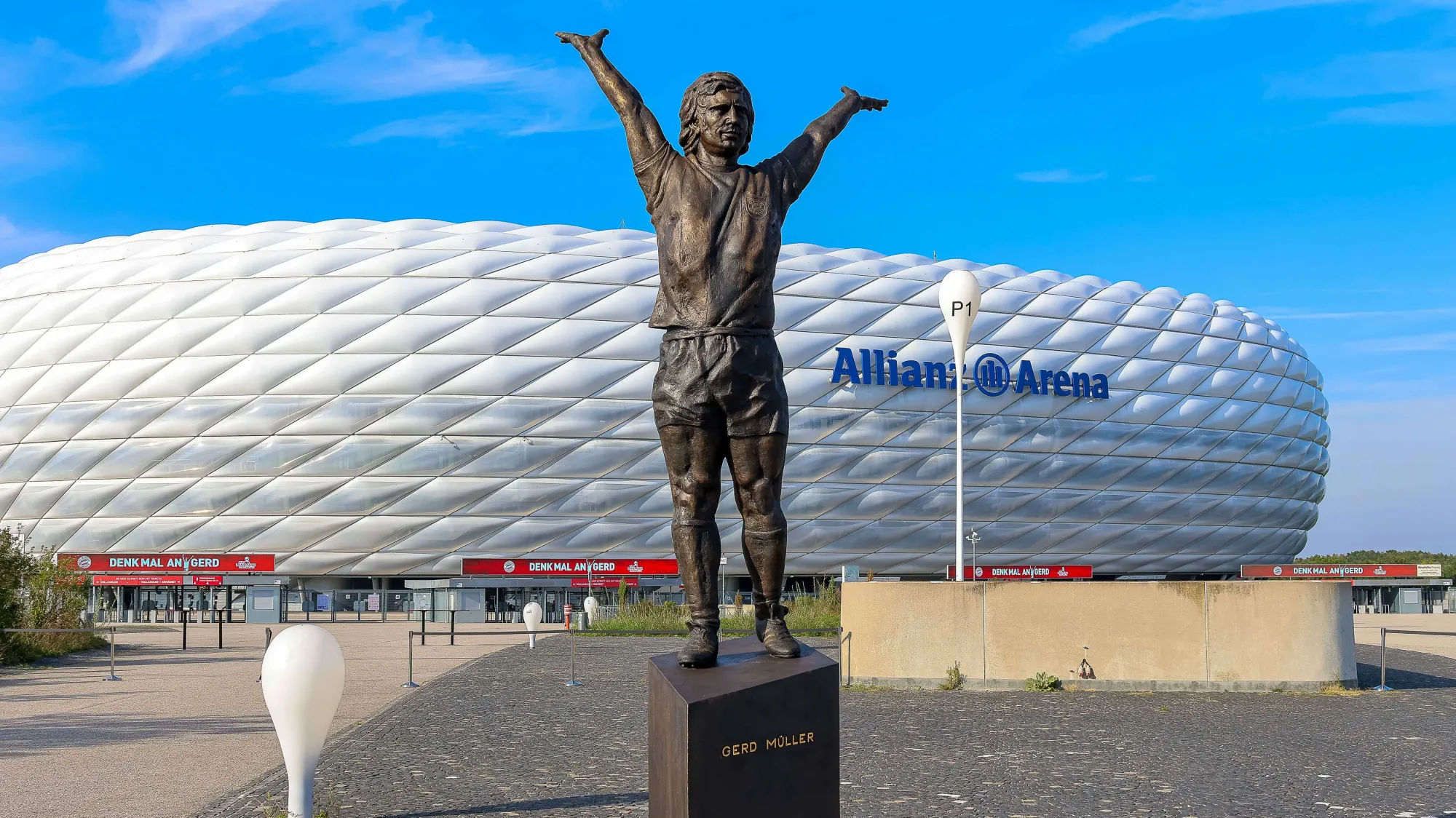
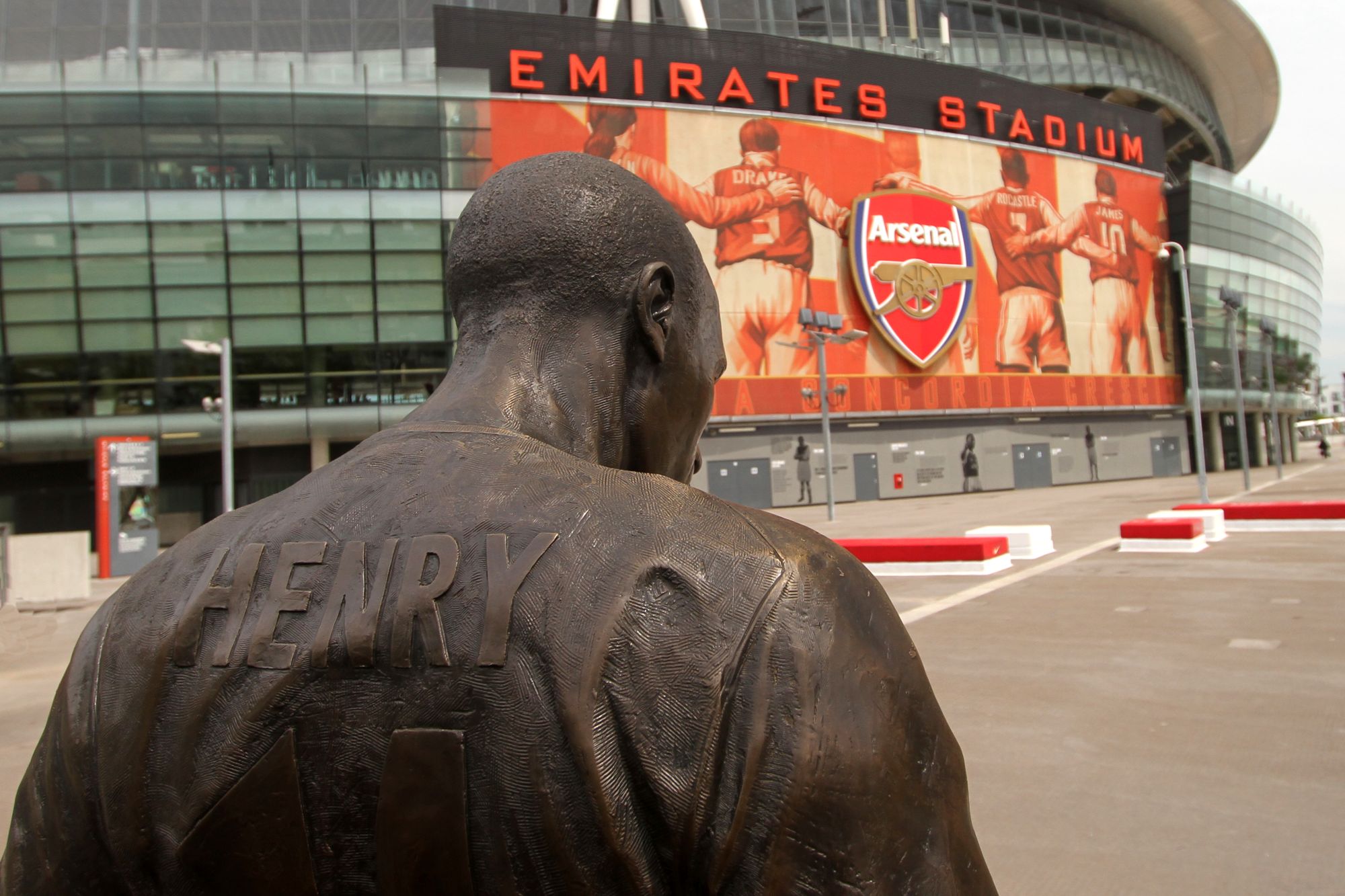
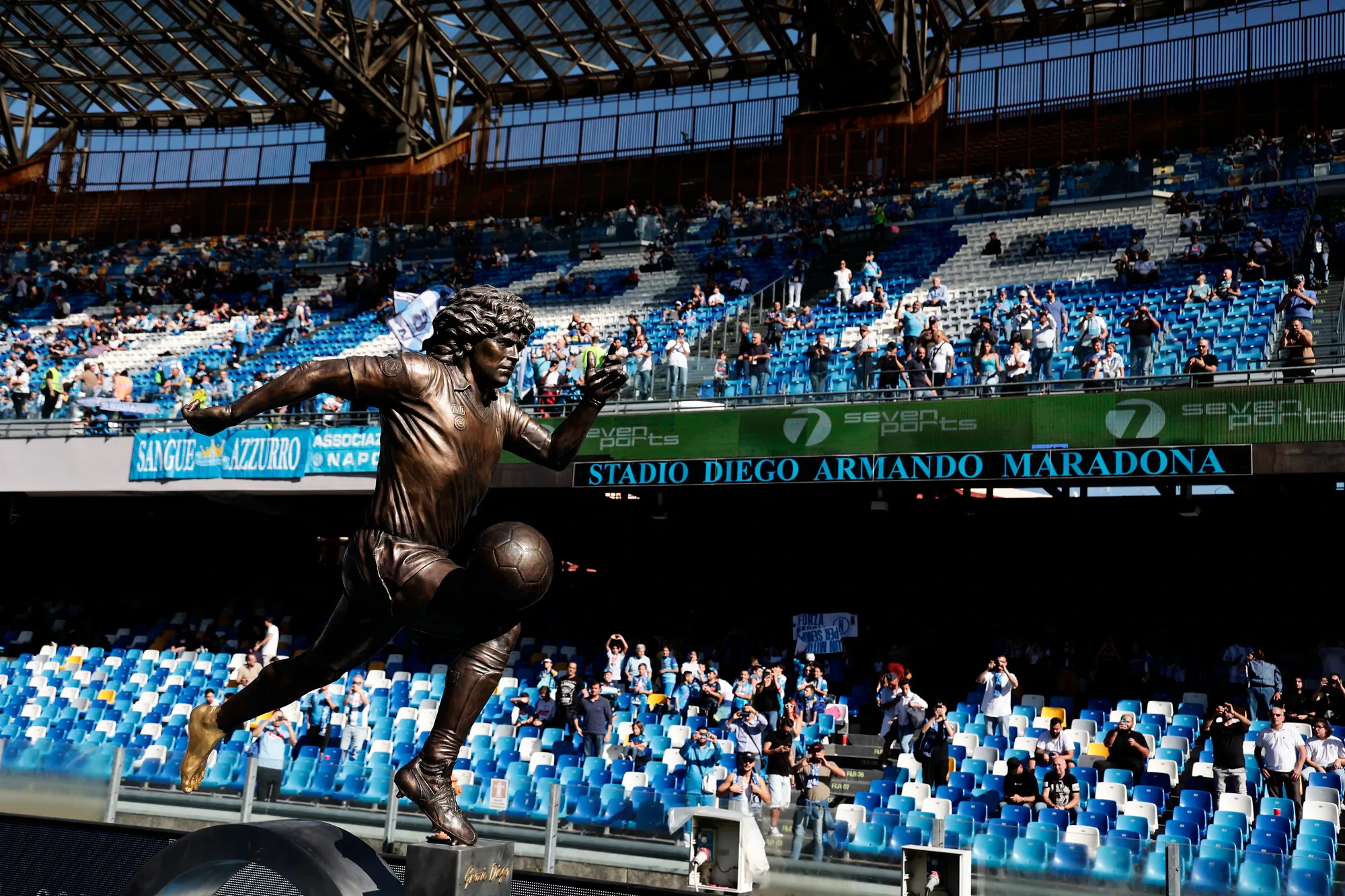
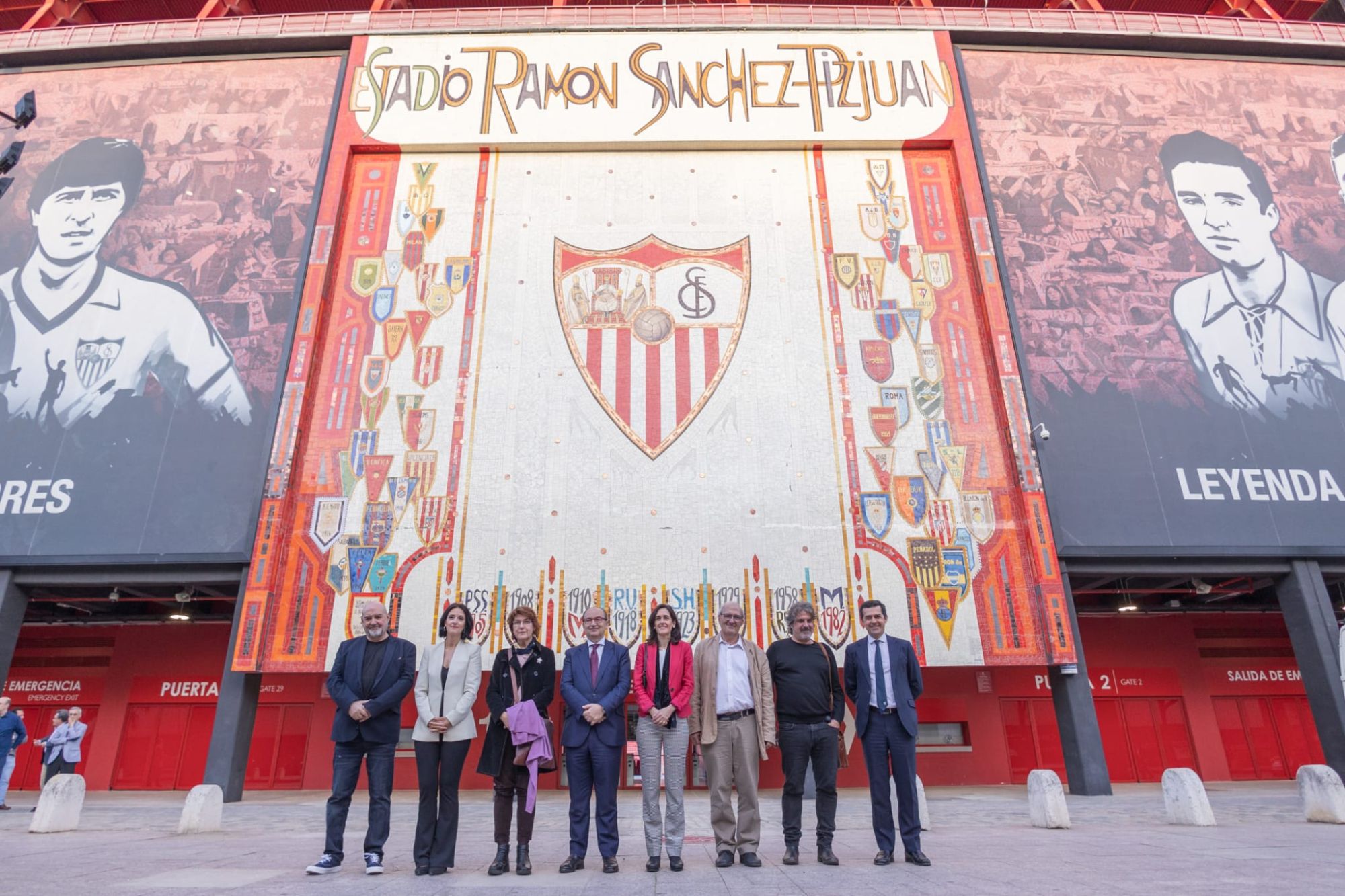
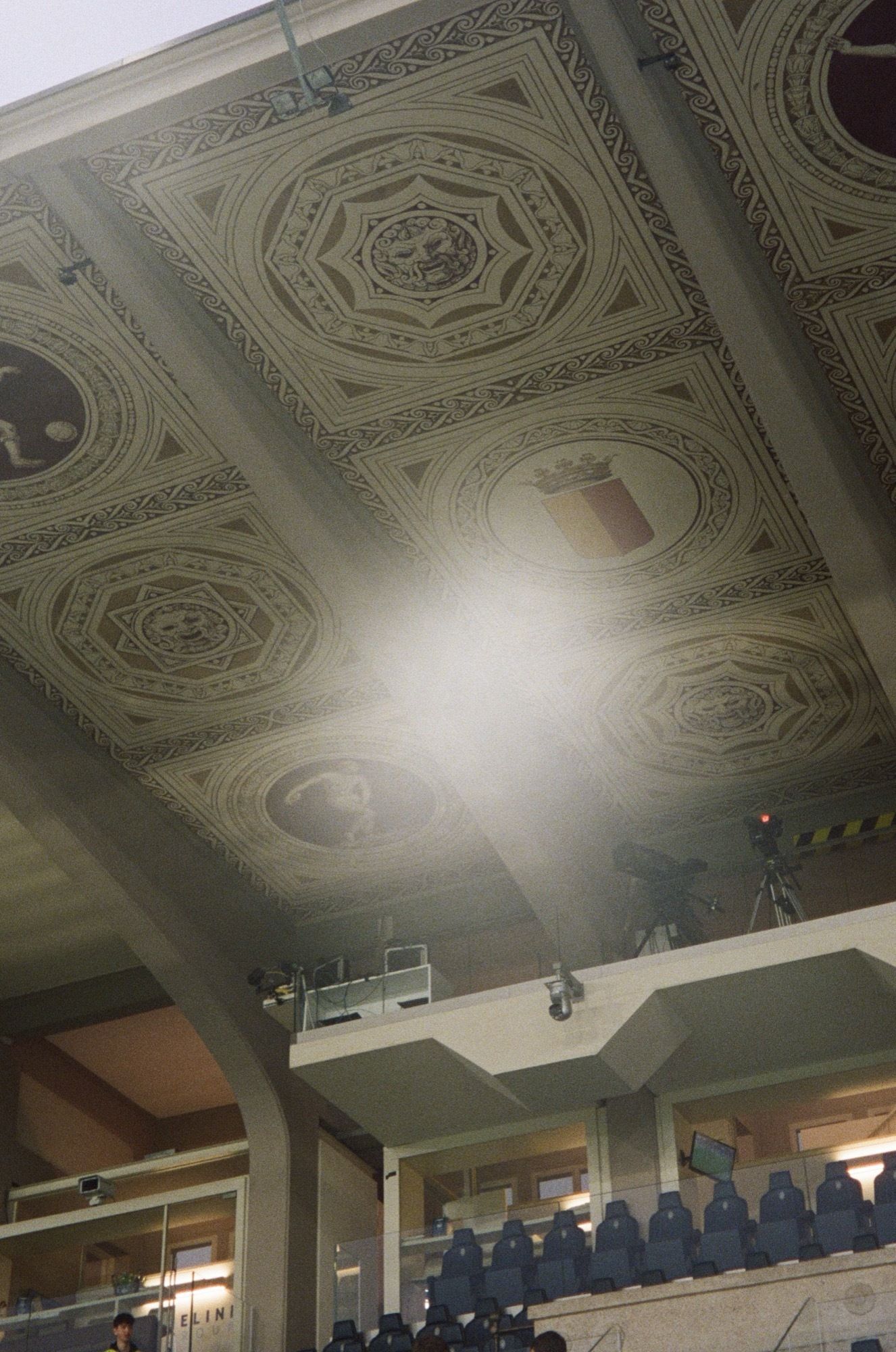
There are also situations in which certain artistic elements integrated into a stadium’s structure over time have become works of art. One example is the mosaic that was created on one of the façades of the Estadio Ramón Sánchez-Pizjuán in Seville, today a heritage of the city. Or, still on the subject of mosaics, on the ceiling of the Main Stand of the New Balance Arena in Bergamo the work made for the stadium’s inauguration in 1928 as a multi-sports facility is still visible. Football and art also intersect in different contexts, such as what happened in Lens last summer where the Louvre was chosen as the venue for the launch of the club’s new third jersey. Finally, there is the current that originates as a sporting tribute but in some cases becomes art: statues. From the one dedicated to Thierry Henry outside the Emirates Stadium to the one honoring Diego Armando Maradona placed in the players’ tunnel of Napoli’s stadium, these football symbols have been able to cross the boundaries of sport to move closer to the world of art.
What to read next

The Champions League was all about elegance last night
Liverpool and PSG debuted their Tommy Hilfiger and Dior looks

Why do Bayern Munich players train with tape on their ears?
Images of the players wearing small plasters on their earlobes have sparked curiosity among fans

Why are Shakhtar Donetsk playing their Champions League games at Stamford Bridge?
They have been forced into footballing exile by Russia’s invasion of Ukraine