The story behind Bournemouth’s red-and-black kit and its connection to AC Milan A tribute that has lasted for over 50 years, now renewed on the European stage
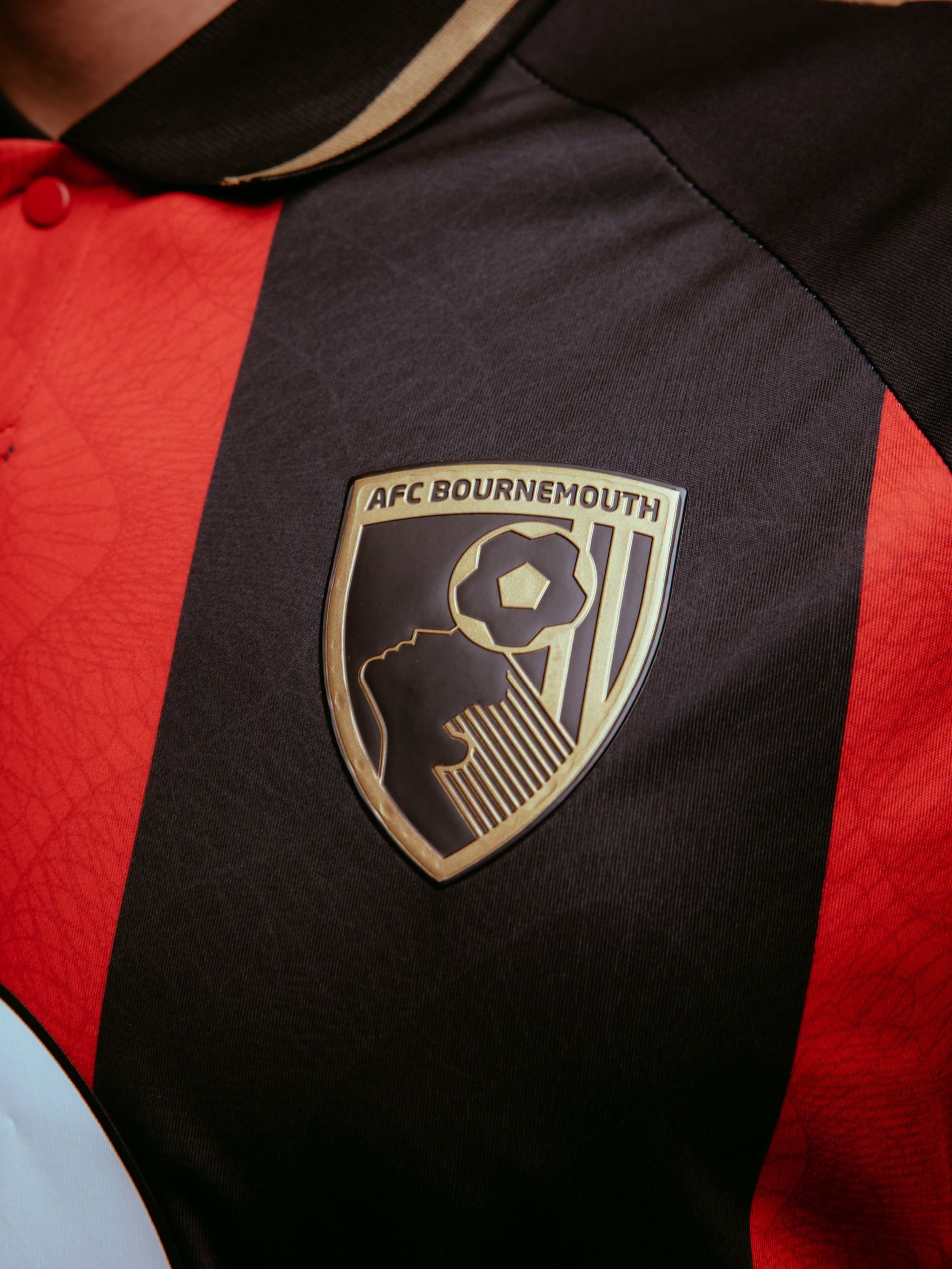
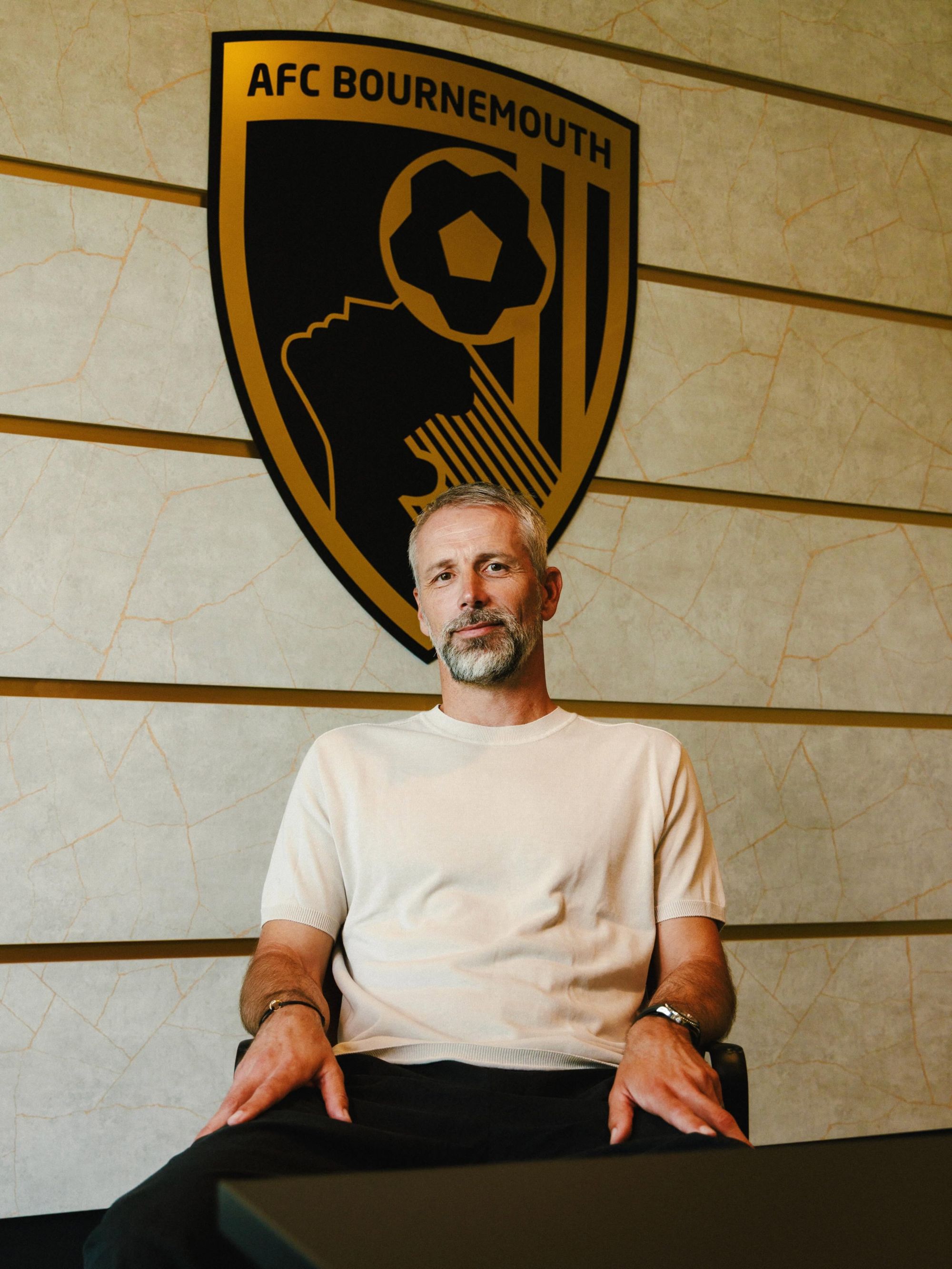
AC Milan’s next opponent in the Europa League is a Premier League side with a story unlike any other, shaped by a series of decisions that have defined the club’s identity. AFC Bournemouth stands out for its name, chosen to place the club at the top of alphabetical lists of English teams; its crest, which features a footballer who spent just five seasons at the club; and its red-and-black kit, a tribute to AC Milan.
Thanks to their recent results, the Cherries have become the pride of a city of fewer than 200,000 people, which until recently was known almost exclusively for its seaside tourism, drawing thousands of holidaymakers from London every summer. On Thursday, as they welcome AC Milan during their first season in European competition, Bournemouth will bring the story full circle at Dean Court, the smallest stadium in the Premier League, against the club they have, in a sense, paid homage to since 1971.
The thinking behind the name
Although there is no exact date associated with its foundation, the club was established in the autumn of 1899 as Boscombe FC, taking the name of what is now Bournemouth’s best-known suburb. The club is based in Dorset, on the south coast of the United Kingdom, where many towns have long served as popular retreats for Londoners. Its admirers have included several celebrated writers: Mary Shelley, who is buried here; J.R.R. Tolkien, who spent the final years of his life in Bournemouth; and Robert Louis Stevenson, who created one of his most famous literary characters here, the pirate Long John Silver.
In 1923, the club changed its name to Bournemouth and Boscombe Athletic Football Club, reflecting its ambition to represent the entire town rather than just one neighbourhood. Finally, in 1971, it adopted its current name in what could be seen as an early marketing move: AFC Bournemouth, with the acronym placed at the beginning to ensure the club appeared first alphabetically in lists of English football clubs, overtaking Arsenal.
The team’s nickname, meanwhile, is The Cherries. This curious moniker had to be approved by the club’s board before it could become official, having first appeared in the local press in the 1920s, when the team was referred to as the Cherry Stripes because of its cherry-red and white striped kit. A second, less widely accepted theory suggests the nickname came from the abundance of cherry trees on the grounds surrounding the stadium, which were owned by the Cooper-Dean family.
Why Bournemouth Wear AC Milan's Red and Black
The first seventy years of AFC Bournemouth’s existence were marked by a succession of different colour schemes. The club initially wore red and white vertical stripes, before switching to all-red jerseys and then red jerseys with white sleeves. The year 1971, best known for the change of name, was also when manager John Bond decided that the club should adopt its current colours, red and black, in homage to AC Milan, with whom Bournemouth also shares its year of foundation. In the two preceding years, the Milanese club had won its first European Cup and the Intercontinental Cup, cementing its legacy and laying the foundations for its status as the world’s most recognisable red-and-black side, with a decisive influence on Bournemouth itself. Black, however, became a secondary colour in the 1974/75 season before disappearing altogether for fifteen years, only returning in 1990 to stay. Since then, the only exception came during two spells, from 2004 to 2006 and from 2008 to 2011, when the club once again opted for a predominantly red shirt with black detailing.
Bournemouth will wear a special kit in the Europa League tonight - and maybe the club has finally listened to its own fans.
— nss sports (@nss_sports_) September 17, 2026
[1/3] pic.twitter.com/hBoj7KXVkV
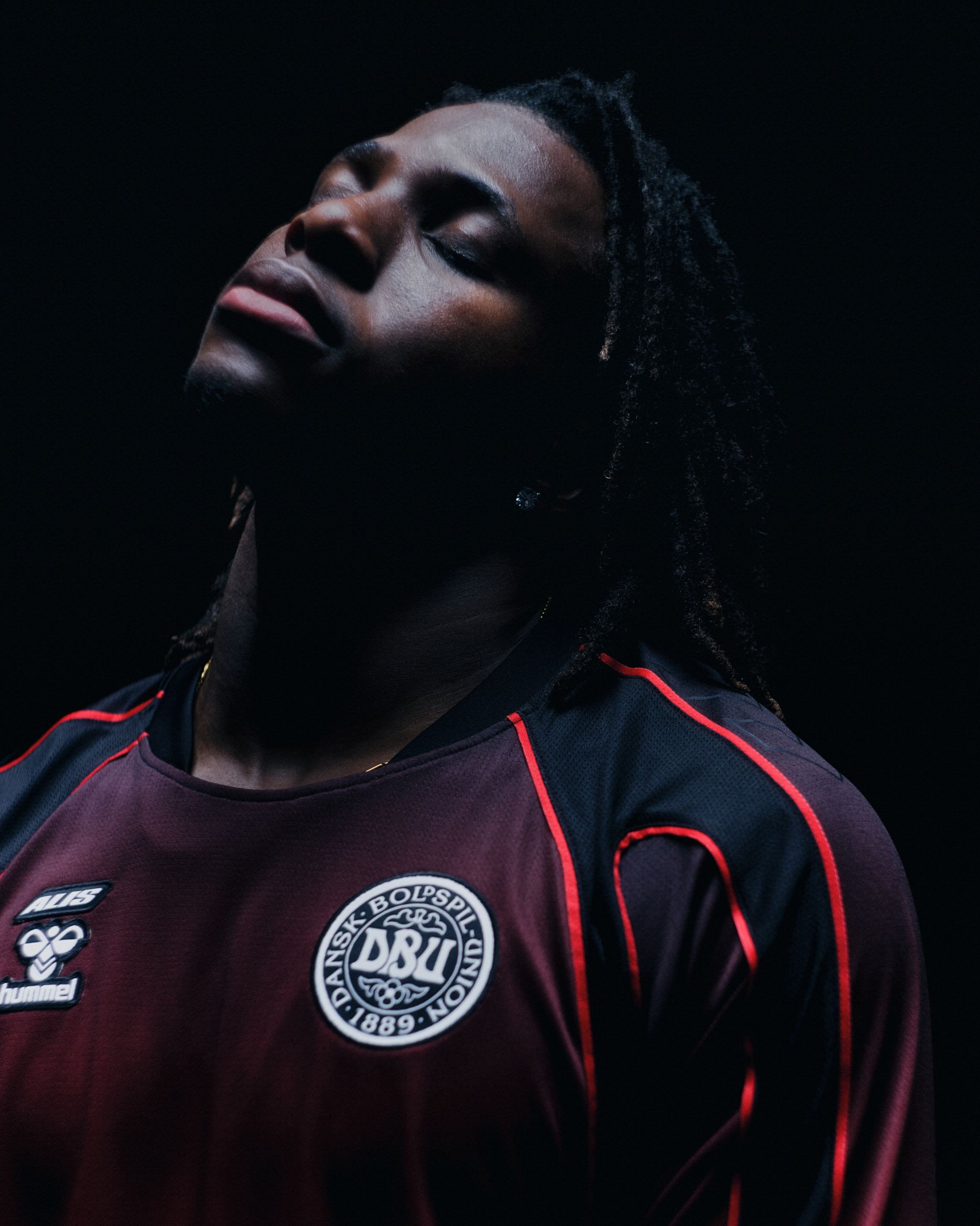
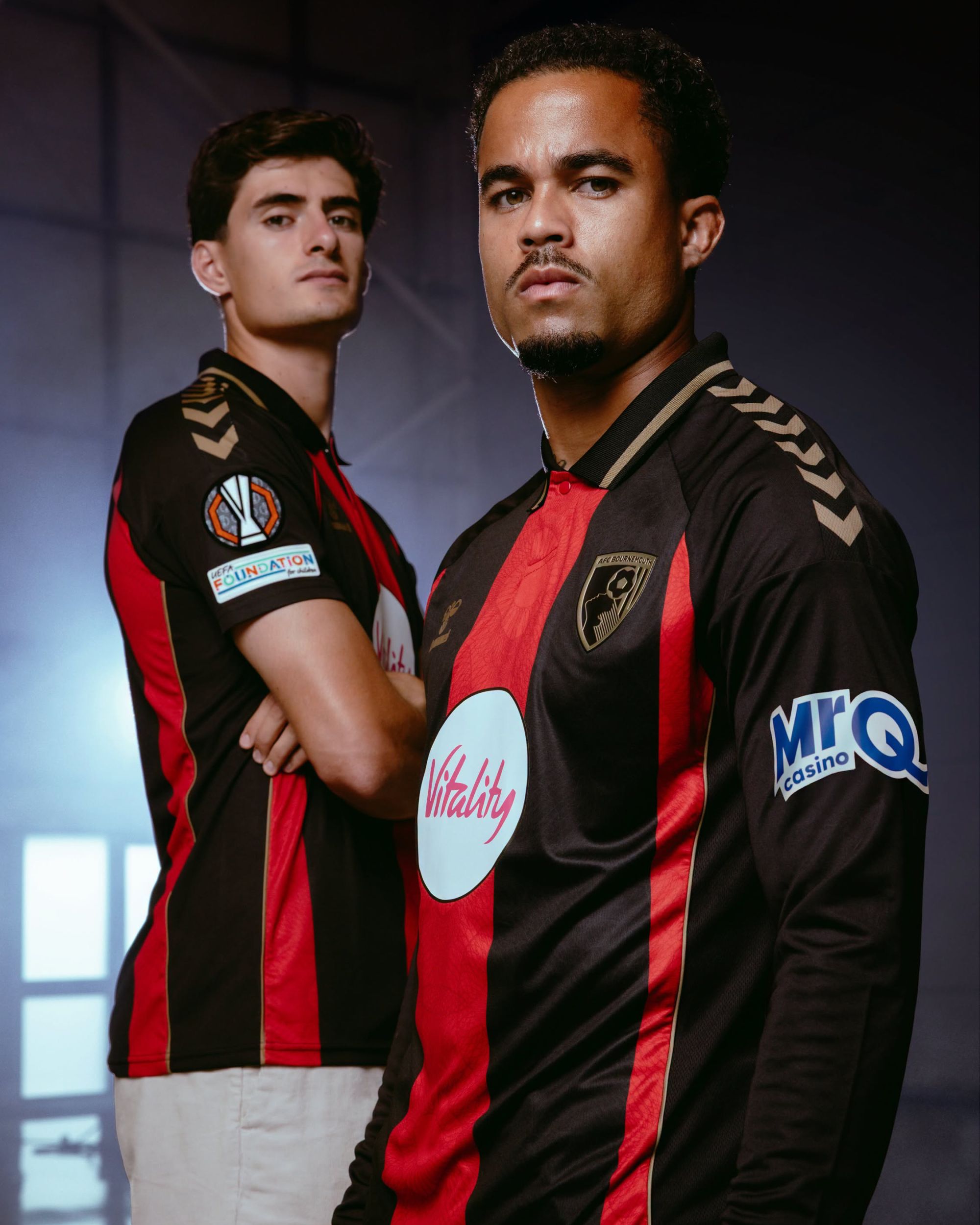
Fan discontent, driven by supporters’ attachment to the red-and-black stripes, ensured that the colour scheme would never be changed again, although the club continued to experiment with different graphic interpretations of the vertical stripes. For the current Premier League season, new kit supplier hummel has introduced a shirt featuring three black stripes and two red ones, incorporating a subtle tone-on-tone pattern inspired by the club’s original 1936 crest across the red sections, alongside gold accents on the shoulders. The Danish supplier, which has signed a five-year deal with Bournemouth, has gone a step further for the club’s first-ever European campaign. The shirt features a central red stripe flanked by two black ones, with a monochrome crest rendered in gold outlines against a black background. Once again, an exclusive pattern has been developed across the cherry-red sections, this time inspired by passport graphics. Finally, the polo collar and black sleeves are finished with elegant gold detailing. In compliance with UEFA regulations, the back of the shirt features a solid black panel for the players’ names and numbers.
The Story Behind Bournemouth's Unusual Crest
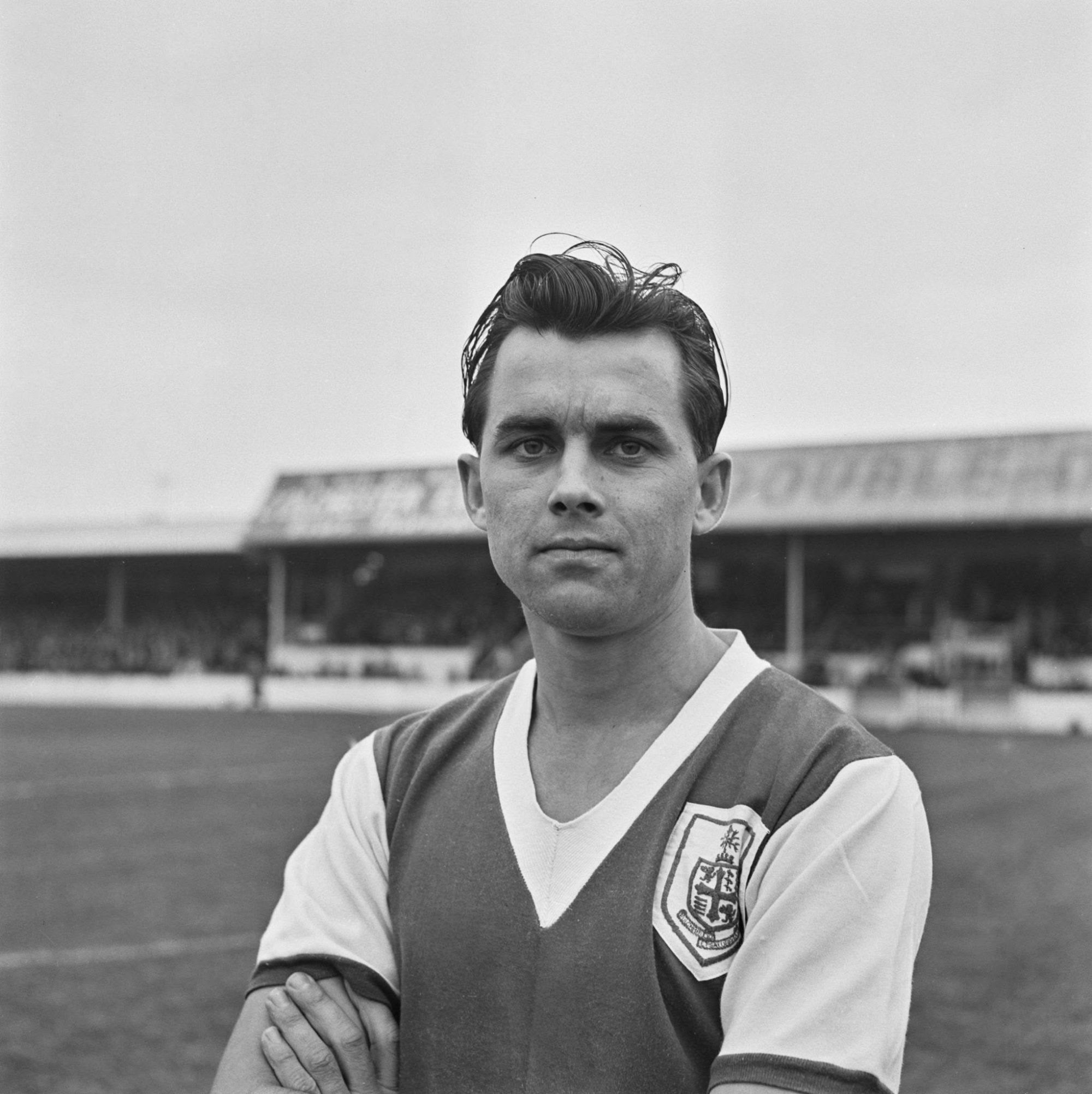
Until the mid-1960s, Bournemouth used the town’s coat of arms as its crest, adapting it for the shirt with red lines on a white background, before switching to the initials BFC in an italic typeface. In 1972, the year after the club’s latest name and colour changes, Bournemouth also unveiled a new crest that remains unique in the world of football. At its centre is the stylised silhouette of a footballer striking a ball, set against a red-and-black striped background, which was also introduced at the time. The player depicted is Dickie Dowsett, one of the club’s most prolific goalscorers, who played for Bournemouth from 1957 to 1962, scoring 79 goals in 169 appearances.
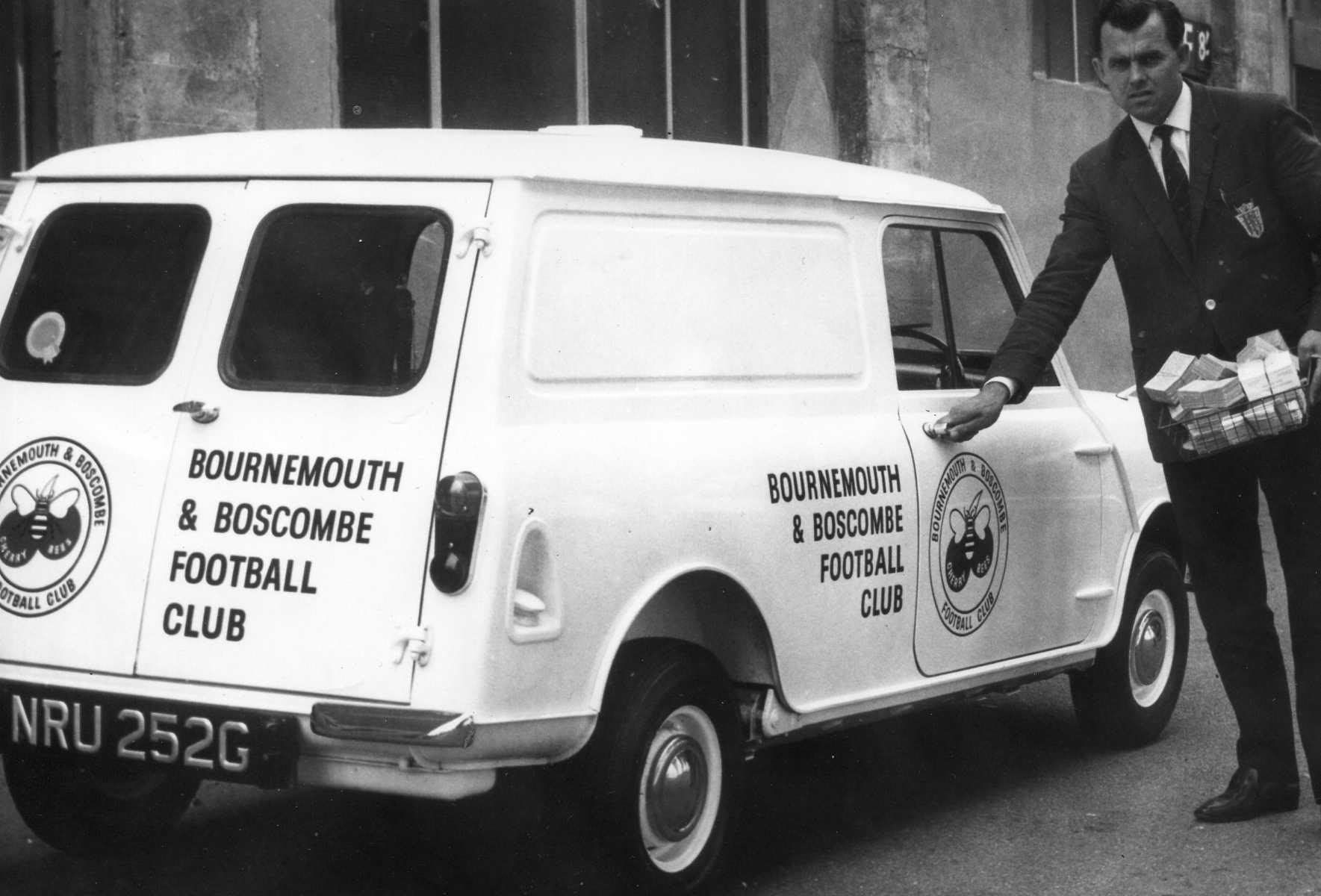
After retiring from football, Dowsett returned to Bournemouth, where he spent 15 years as commercial manager, during a period that saw major changes to the club’s identity. Five versions of the crest preceded its current design, all retaining the same elements described above. Only between 1981 and 1983 did the club opt for a completely different look, adopting a circular logo featuring a football, two cherries and the team’s unmistakable nickname. With a few refinements, this design reappeared on the home shirt during pre-season ahead of the 2024–25 campaign and across the entire third-kit collection for the current season, including the match shirt, various pre-match training pieces and the anthem jacket.
From the Football League to the Europa League
After making their debut in amateur football and spending time in the semi-professional ranks, Bournemouth joined the Football League in 1923, settling in the Third Division for an astonishingly long spell that lasted until 1970. A period of fluctuating fortunes between the Fourth and Third Divisions followed, during which George Best made five appearances for the Cherries in 1983, enjoying one final spell on the pitch before the end of his career. However, it was Harry Redknapp who first transformed the club’s fortunes. After taking over mid-season, he saved Bournemouth from another drop into the Fourth Division and led them to an FA Cup victory over Manchester United. Then, in 1987, he guided the Cherries into the Second Division for the first time, where they would remain for three seasons.
After earning promotion back to the second tier, Bournemouth pulled off a remarkable escape from relegation in the 1994–95 season, despite having collected just nine points by Christmas. The achievement became known as the Great Escape. Two years later, a fundraising campaign led by supporters proved crucial in saving the club from bankruptcy, before a series of ups and downs followed in the years ahead. In the 2008–09 season, a young and promising Eddie Howe masterminded the Cherries’ second Great Escape, keeping them in League Two despite a 17-point deduction imposed for financial irregularities. It marked the beginning of Howe’s tenure, a golden era that culminated in the club’s seemingly improbable promotion to the Premier League in 2015.
After two seasons in the Championship, the Cherries returned to the top flight in 2022. That same year, the American holding company Black Knight Football, owned by Bill Foley’s group, acquired 100% of the club’s shares. The group, which today also holds majority stakes in Lorient, Moreirense and Auckland, invested heavily in the squad and the club’s facilities, including the construction of a new training ground. In the 2023–24 season, Andoni Iraola, the Basque manager who arrived from Rayo Vallecano, transformed the team’s prospects and took it to unprecedented heights. He first set a club record for points in the Premier League, then surpassed it the following season with 56 points, before achieving an extraordinary finish in the most recent campaign: sixth place with 57 points and qualification for the Europa League. Iraola left the club last summer to become Liverpool’s new manager, bringing an end to a dream three-year spell that had transformed Bournemouth’s standing in English football.
Dean Court: Bournemouth's Historic Home
Bournemouth have played at Dean Court since 31 December 1910. The ground takes its name from Mr James E. Cooper Dean JP, a landowner who granted a long-term lease for the use of a vacant plot where the stadium would eventually be built. In the early days, delays in the delivery of the changing rooms meant that players had to get changed at a nearby hotel. Over the decades, capacity grew alongside the club’s popularity, culminating in an attendance record that still stands today: 28,799 spectators on 2 March 1957, for an FA Cup match against reigning English champions Manchester United. In 2001, Dean Court underwent a complete reconstruction, with the ground rotated 90 degrees from its previous orientation and a capacity of 9,600 across three stands. The South Stand was added in 2013.
In April 2025, the club’s ownership announced that it had bought back the stadium, which had been commercially known as the Vitality Stadium for 11 years, and unveiled plans for its redevelopment. This ruled out previous proposals to relocate to a new ground, with the club instead opting for a targeted renovation that will increase capacity from the current 12,357 to around 20,000. On 30 June, work officially began, with the project progressing in stages to minimise disruption to matchday operations and the surrounding neighbourhood. The stadium’s overall structure will remain largely unchanged. Capacity is being increased by reconfiguring the seating in the existing stands and filling in the four open corners with new sections of seating. New hospitality areas and additional parking facilities nearby will also be added.
What to read next
The Champions League was all about elegance last night
Liverpool and PSG debuted their Tommy Hilfiger and Dior looks

Why do Bayern Munich players train with tape on their ears?
Images of the players wearing small plasters on their earlobes have sparked curiosity among fans
Why are Shakhtar Donetsk playing their Champions League games at Stamford Bridge?
They have been forced into footballing exile by Russia’s invasion of Ukraine