Why do Bayern Munich players train with tape on their ears? Images of the players wearing small plasters on their earlobes have sparked curiosity among fans

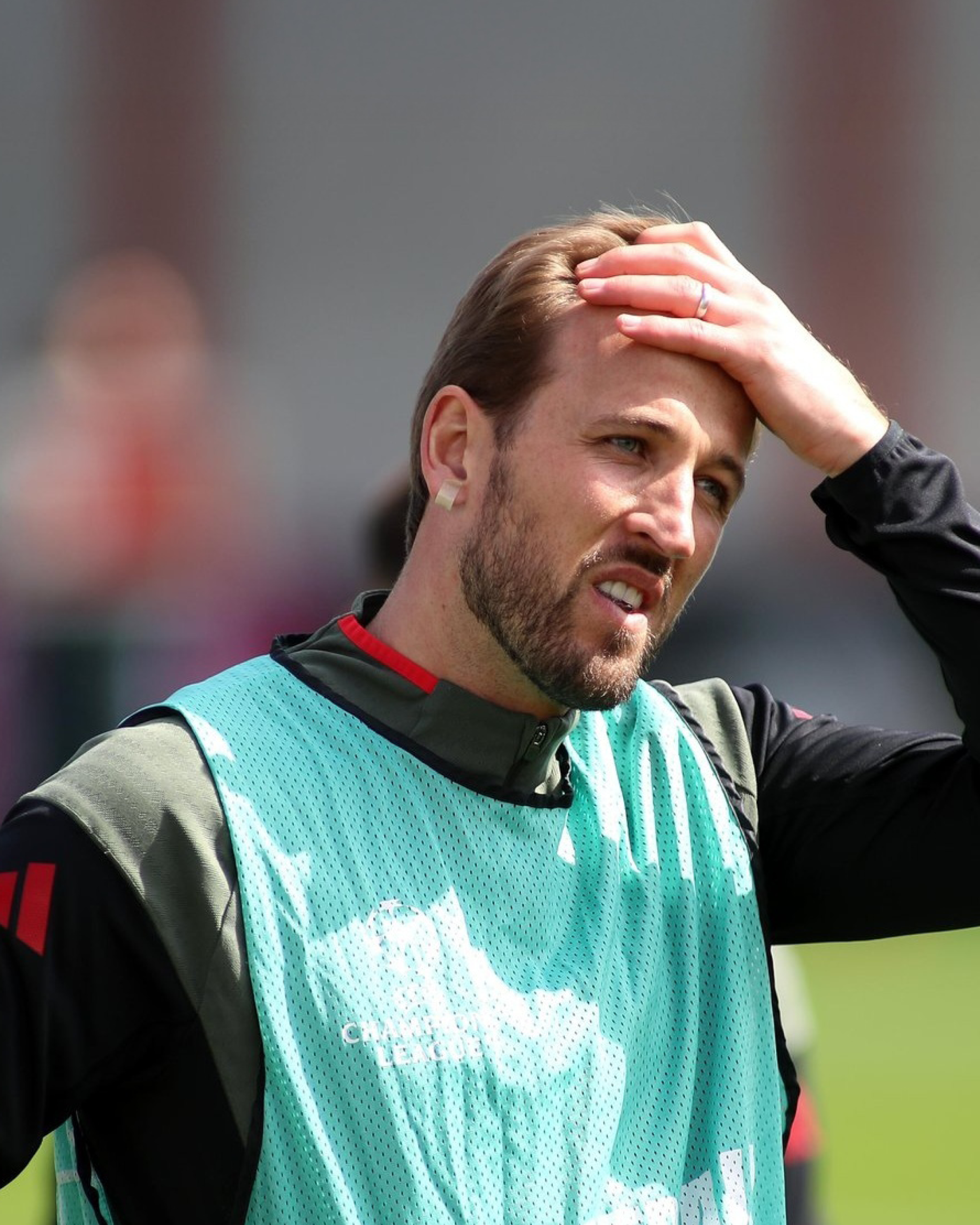
Recently, we have seen more and more images of Bayern Munich players wearing small pieces of tape over their ears during training sessions or warm-ups. The detail has appeared repeatedly in images of Harry Kane, Michael Olise, Jamal Musiala and their teammates, attracting the curiosity of supporters. It is neither an aesthetic choice nor a way of covering earrings, but rather plasters connected to medical tests used to monitor the players’ physical condition. The mystery was cleared up by BILD and L’Équipe, which collected accounts from members of the Bavarian club’s staff.
What are the plasters on their ears for?
The tape covers the small wound left by a blood sample taken from the earlobe, previously collected with a lancet and then analysed using diagnostic equipment. Contrary to what some social media users had suggested, there are no devices beneath the plaster continuously drawing blood or sensors transmitting real-time data.
As explained by Stevan Kervadec, a French sports scientist and fitness coach who works with several European clubs, the earlobe is chosen for practical reasons. It is an easily accessible and relatively insensitive area that allows small amounts of blood to be collected without disrupting sporting activity. Compared with the fingertip, lactate measurements are also less affected by local muscle activity, given the greater strain placed on the shoulders and arms.
The plasters on the earlobe have been linked in particular to lactate and creatine kinase (CK) tests. Lactate is a molecule produced by cellular metabolism, and its concentration helps to assess the body’s response to exertion and determine training intensity. Creatine kinase, meanwhile, is an enzyme whose increased presence in the blood can indicate stress or muscular problems. When interpreted alongside other parameters, these values can therefore help monitor athletes’ condition, personalise workloads and estimate recovery times.
Earlobe tape in sport
Despite the recent attention generated by the appearance of these plasters in pre-match images, the practice of taking blood samples from the ear long predates the arrival of Vincent Kompany on the Bavarian club’s bench two years ago. As early as 2013, TUM (Technische Universität München) documented a collaboration with Bayern in which players alternated between runs at increasing speeds and blood samples taken from the ear. The results were then discussed with the fitness coaches to obtain information about training loads.
There are also examples beyond Bayern. During Euro 2024, three players from the German national team - Thomas Müller, Leroy Sané and Robert Andrich - were photographed with tape covering one ear, and BILD confirmed that the plasters were connected to blood tests used to measure creatine kinase. At Liverpool, meanwhile, the club itself documented lactate tests performed on Virgil van Dijk and Georginio Wijnaldum. Two official galleries published on the Reds’ website during their summer training camps in 2018 and 2019 show blood being taken from the two Dutch players’ ears during breaks between sessions.
The practice is, of course, also used beyond football. In cycling, for example, it is well established: in 2019, Jumbo-Visma, now known as Team Visma-Lease a Bike, explained how it used these tests to guide its riders’ training programmes. Images from recent New York Knicks (NBA) practices have also circulated in the past few hours, showing similar plasters on the ears of Landry Shamet, Miles McBride and Mikal Bridges.
What to read next

The Champions League was all about elegance last night
Liverpool and PSG debuted their Tommy Hilfiger and Dior looks
Why are Shakhtar Donetsk playing their Champions League games at Stamford Bridge?
They have been forced into footballing exile by Russia’s invasion of Ukraine

Why Barcelona will wear its 2025/26 Third kit against PSG?
It's due to UEFA's kit clash rules