The aesthetics of football manager sackings From TV interviews to thank-you posts on social media, and much more: how are managerial sackings portrayed?
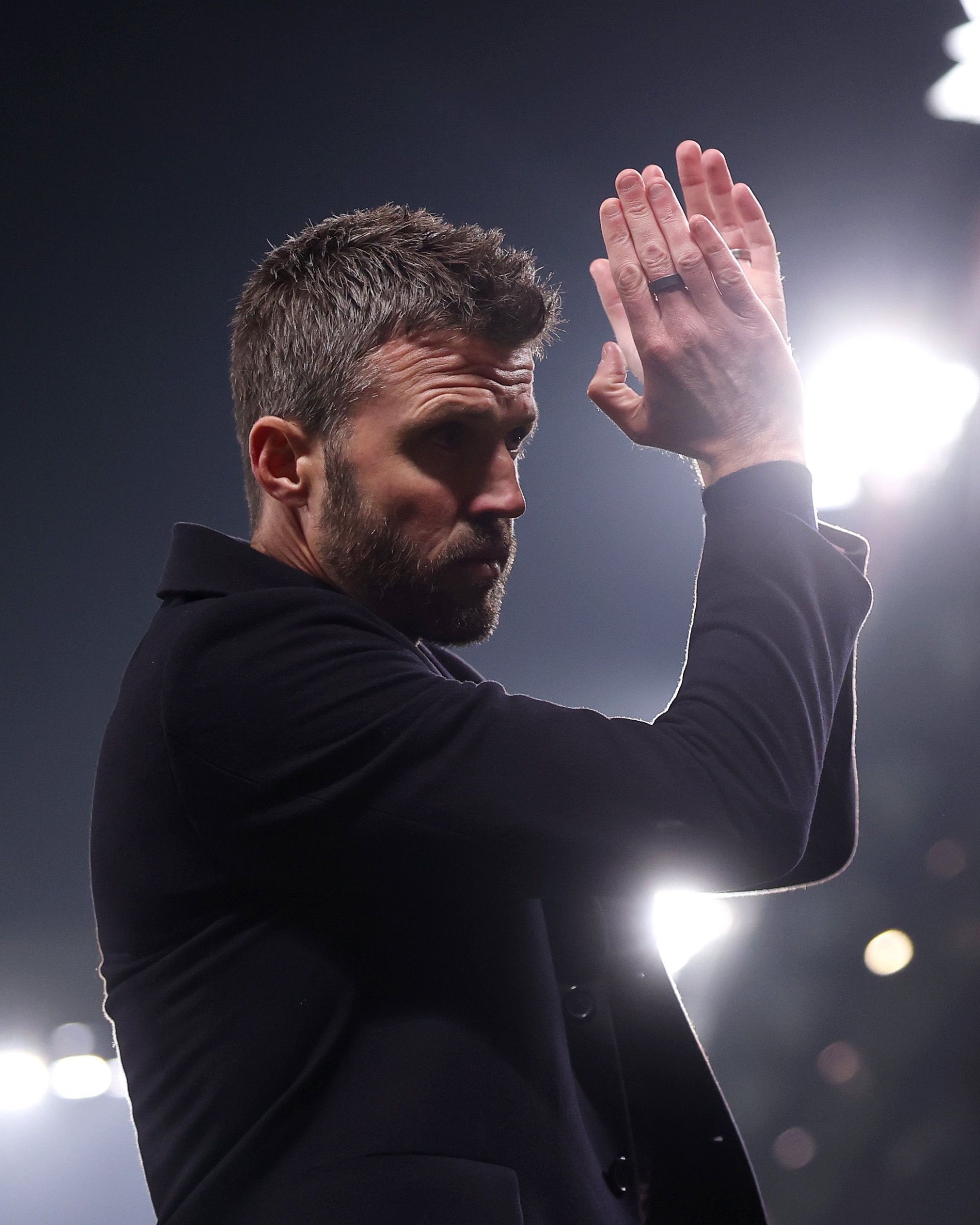
Michael Carrick’s days on the Manchester United bench appear to be numbered, despite the applause he continues to receive from the Old Trafford crowd. After a recent 3-0 defeat to Bournemouth, Red Devils supporters had accompanied him towards the tunnel with chants and applause, before immediately booing the players walking behind him. It was unusual treatment, reserved for a historic figure at the club, while the protests targeted the ownership and directors. Support for the team, in fact, has never completely disappeared either: after the recent 4-4 draw with Aston Villa, Cunha thanked the fans for being there “even when we don’t deserve it”.
Carrick’s dismissal will probably take the form of a grateful farewell: an image very different from the far from unusual sight of departures surrounded by boos, perhaps accompanied by mutual accusations between manager and club. Because not all sackings are the same, especially in the way they are accompanied, announced and preserved in the collective memory. Some managers receive a lengthy thank-you message, while others are dismissed in three lines; some are sacked before overseeing a single competitive match, others with a trophy just added to the cabinet; some reach the point - more or less consensually - where “the conditions are no longer there to continue”, while others claim to have learned about their dismissal through the media or social networks.
Partings with managers have their own established rituals, which usually begin in the media - in an unofficial form - before moving to the clubs’ channels, each with its own language and tone. Most of the time, a team formalises the decision with a cold statement, translated onto social media through a post featuring the club crest and a few words, or a portrait of the manager accompanied by three lines of farewell and best wishes for the future. At other times, especially in the most controversial cases, the public becomes more directly involved in the speculation surrounding the dismissal.
Italy’s obsession with changing managers
However it happens, a managerial sacking is a scene we have historically grown accustomed to in Italy (we will return to this), and this season is no exception. After eleven Serie A matchdays, six clubs have already changed managers, almost as many as the other four major European leagues combined. The latest was Alberto Aquilani, recently dismissed by Sassuolo, while before him Udinese had parted ways with Kosta Runjaic and appointed Paolo Zanetti; in October, Venezia had said goodbye to Giovanni Stroppa and called Davide Nicola, a name that systematically emerges around this time of year whenever a club begins fighting relegation.
Looking further back, there was also the separation between Carlos Cuesta and Parma, for reasons that are still not entirely clear, and before that the more easily explained departure of Domenico Tedesco from Bologna. They were replaced by Alberto Gilardino and - speaking of familiar faces whenever a club changes direction - Raffaele Palladino, respectively. The first split of the season, however, had been between Fabio Grosso and Fiorentina, with the media adding some extra drama to the story (and we will return to this too).
Changing the manager is one of the most familiar responses to a crisis in Italian football - after all, replacing an entire squad during the season is impossible, and the urgency to shuffle the pack often ends up affecting the person at the top of the coaching staff. This has also produced the ritual of the public vote of confidence, with directors standing in front of microphones to deny rumours of an imminent dismissal. In recent weeks, for example, it has happened to Atalanta’s Maurizio Sarri and Juventus’ Luciano Spalletti.
The language of the farewell
Anyone who follows football on social media has learned to spot sackings - which rarely come out of the blue - before even reading the captions. Sometimes it is a portrait, as in the cases of Aquilani and Sassuolo or the one chosen by Udinese for Runjaic’s farewell, accompanied by the words “THANK YOU, COACH”. At other times, only the club crest appears: Bologna announced Tedesco’s departure this way, directing users to a statement containing the entire farewell repertoire: “Bologna FC 1909 announces that Domenico Tedesco has been relieved of his duties as First Team head coach, and sincerely thanks him for carrying out his work with professionalism and expertise. The Club wishes him and his staff the very best in their future careers”.
Managers sometimes turn to the same language. In his farewell to Parma, Carlos Cuesta wrote that “unfortunately, the conditions are no longer there to continue this journey”. Meanwhile, the club reiterated that “following an internal discussion between the club and the manager, it was agreed that the necessary conditions were no longer in place for the parties to continue their professional relationship, particularly regarding the development of the sporting project. The conditions required to continue the work that had begun were no longer present, and this mutually agreed decision was therefore reached”.
In Florence, meanwhile, the details of Grosso’s dismissal ultimately received far more attention than the official announcement. The former Sassuolo manager lasted only three league matches on the Fiorentina bench (the same had already happened to him at Brescia), and according to a reconstruction published by La Gazzetta dello Sport, he described the squad as “uncoachable” during a discussion with sporting director Fabio Paratici, before adding a sentence that spread across the internet within hours: “If you care about me, sack me”. Words that gave the departure a very different tone from the composed post through which it had been announced.
Different kinds of sackings
Then there are statements that abandon diplomacy altogether. Last May, after Milan failed to qualify for the 2026/27 Champions League, RedBird spoke of an “unequivocal failure”, announcing the departure of Massimiliano Allegri and several directors. The collapse against Cagliari on the final matchday found a direct translation in the ownership’s words, with the farewell statement becoming a public rejection of the entire season.
For Allegri, moreover, his second departure from Juventus had reached an even more turbulent conclusion. On May 15, 2024, he had won the Coppa Italia final against Atalanta, but the lasting images from the evening also included him removing his jacket, protesting furiously during the closing minutes, losing control and being sent off. Two days later, Juventus announced his dismissal, explicitly citing his behaviour during and after the final, which was deemed “incompatible with the values of Juventus”. A relationship that had already been marked by tension ended with an explicit condemnation of the manager’s conduct at the Stadio Olimpico.
In December of the same year, Milan gave Paulo Fonseca an even bleaker farewell, played out in front of the cameras before the official announcement had even been published. After the match against Roma, the manager appeared before the television microphones while online reports about his possible successor continued to multiply. He said he had not spoken to the directors and still considered himself Milan’s manager, but a short while later, as he left San Siro, he confirmed his dismissal through the window of his car. “I did everything I could”.
Moving beyond Italy, and staying with managers who discovered they had been dismissed in unusual ways, some will remember the case of Julian Nagelsmann, sacked by Bayern Munich in March 2023. The manager was in Austria while reports of his replacement became public, and his agency claimed that he had learned the news through the media, disputing Oliver Kahn’s version that Nagelsmann had been the first person informed.
In 2025, meanwhile, Tottenham had to find the right words to dismiss Ange Postecoglou two weeks after winning the Europa League. In its June 6 statement, the London club acknowledged his place in its history alongside the managers who had won a European trophy, while also explaining that a seventeenth-place finish in the Premier League - an undeniably disappointing result - had made change necessary.
Historical precedents and old classics
Carlo Ancelotti also left Napoli after a victory in December 2019: the 4-0 win over Genk that had taken the team into the Champions League round of 16. In its dismissal statement, the club made a point of clarifying that “the bonds of friendship, esteem and mutual respect remained intact” between the manager, the club and Aurelio De Laurentiis.
La Societa Sportiva Calcio Napoli ha deciso di revocare l’incarico di responsabile tecnico della prima squadra al signor Carlo Ancelotti. Rimangono intatti i rapporti di amicizia, stima e rispetto reciproco tra la società, il suo presidente Aurelio De Laurentiis e Carlo Ancelotti
— Official SSC Napoli (@sscnapoli) December 10, 2019
Then there are departures so premature that they even precede the official debut. It is impossible not to think of Luigi Del Neri, chosen by Porto in 2004 - before the social media era, when club decisions were still communicated exclusively through statements and news agencies - to succeed José Mourinho, who had just become European champion. The Italian manager was dismissed during preseason, in the middle of the summer: a project that ended before anyone could even see it in a competitive match, with the Portuguese club attributing the decision to unspecified “personal reasons”.
In Italy, when discussing exceptionally quick sackings, Stefano Pioli’s departure from Palermo before the start of the 2011 league season comes to mind, as does Gian Piero Gasperini’s dismissal by Inter in the same year, after only five competitive matches. The Rosanero and Nerazzurri, after all, were owned by two presidents - Maurizio Zamparini and Massimo Moratti - renowned for their limited patience with managers.
In 2011, Zamparini dismissed Delio Rossi after a 7-0 defeat to Udinese and, four matches later, also sacked his replacement, Serse Cosmi, following a 4-0 derby defeat to Catania. He then brought back, because why not, Delio Rossi himself. Years later, speaking to La Repubblica, Zamparini explained that “when I sack them, I’m so fucking angry that all I can think about is getting rid of them”, adding that his nights of reflection were often simply a way of delaying the announcement. “It’s pure strategy: the decisions have already been made and I take some time before announcing them”.
Moratti was also involved in several unusual episodes during his eighteen years as Inter president. The most famous concerns Gigi Simoni, who was dismissed in November 1998 on the same day he received the Panchina d’Oro award. The news reached him by phone while the manager was driving on the motorway, returning home from the ceremony. Years later, Moratti would admit his regret (“I was sorry to dismiss Simoni from one day to the next”.) That season, incidentally, the Nerazzurri went from Simoni to Lucescu, and then to Castellini and Hodgson, reaching the almost impossible total of four managers in a single campaign.
One final honourable mention must go to those who publicly anticipated their own dismissal. After Reggina-Inter on the opening matchday of the 2000/01 season, Marcello Lippi declared during his press conference: “If I were the president, I would sack the manager immediately”. Needless to say, it took Moratti only a couple of days to grant his request.
What to read next

PUMA unveils the new winter ball for Serie A
It's called Winter STELLAR NITRO and it's yellow
Torino vs Lecce - Residency w/ Serie A
We visited the Olimpico Grande Torino for the first time