
The guide to the football derbies returning in 2026/27 Millwall-West Ham is just the cherry on top
A derby is the kind of rivalry, whether local or regional, that football fans immediately circle in red as soon as the fixtures for a new season are released. And when these games return after a few years away, the anticipation and fervour only intensify. In this sense, the 2026/27 season will be defined by timeless derbies once again becoming magnets for attention from across the world, for socio-political tensions played out on a football pitch and for deep-rooted regional rivalries. West Ham-Millwall, Schalke-Dortmund, Celta-Depor, as well as some of the more unlikely names, from the Holy War to the Liquor Derby. Here is an in-depth guide to all the unique fixtures you simply cannot miss.
Austria, Germany and France: the Ländle, Ruhr and Lorraine derbies
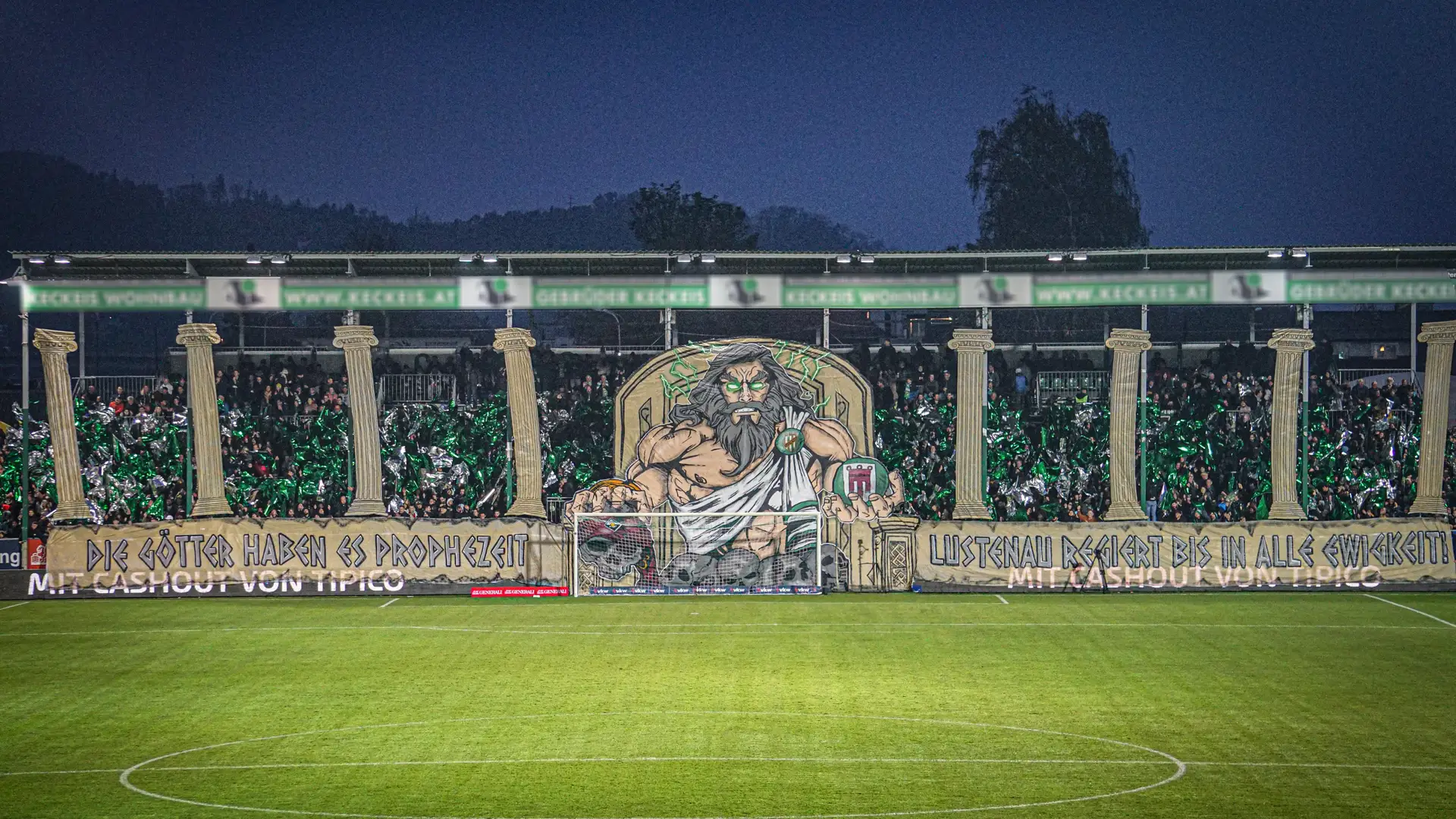
The Ländle derby takes its name from the colloquial term for the region now known as Vorarlberg, located in the westernmost part of Austria, right on the border with Switzerland. The influence of its neighbour is so strong that it has occasionally fuelled political tensions: in 1919, following the collapse of the Austro-Hungarian Empire, the local population voted in a plebiscite in favour of joining the Swiss cantons, although the proposal was never implemented. The rivalry is between two clubs from cities just 10 kilometres apart, both speaking Alemannic dialects, and has intensified over the past two decades.
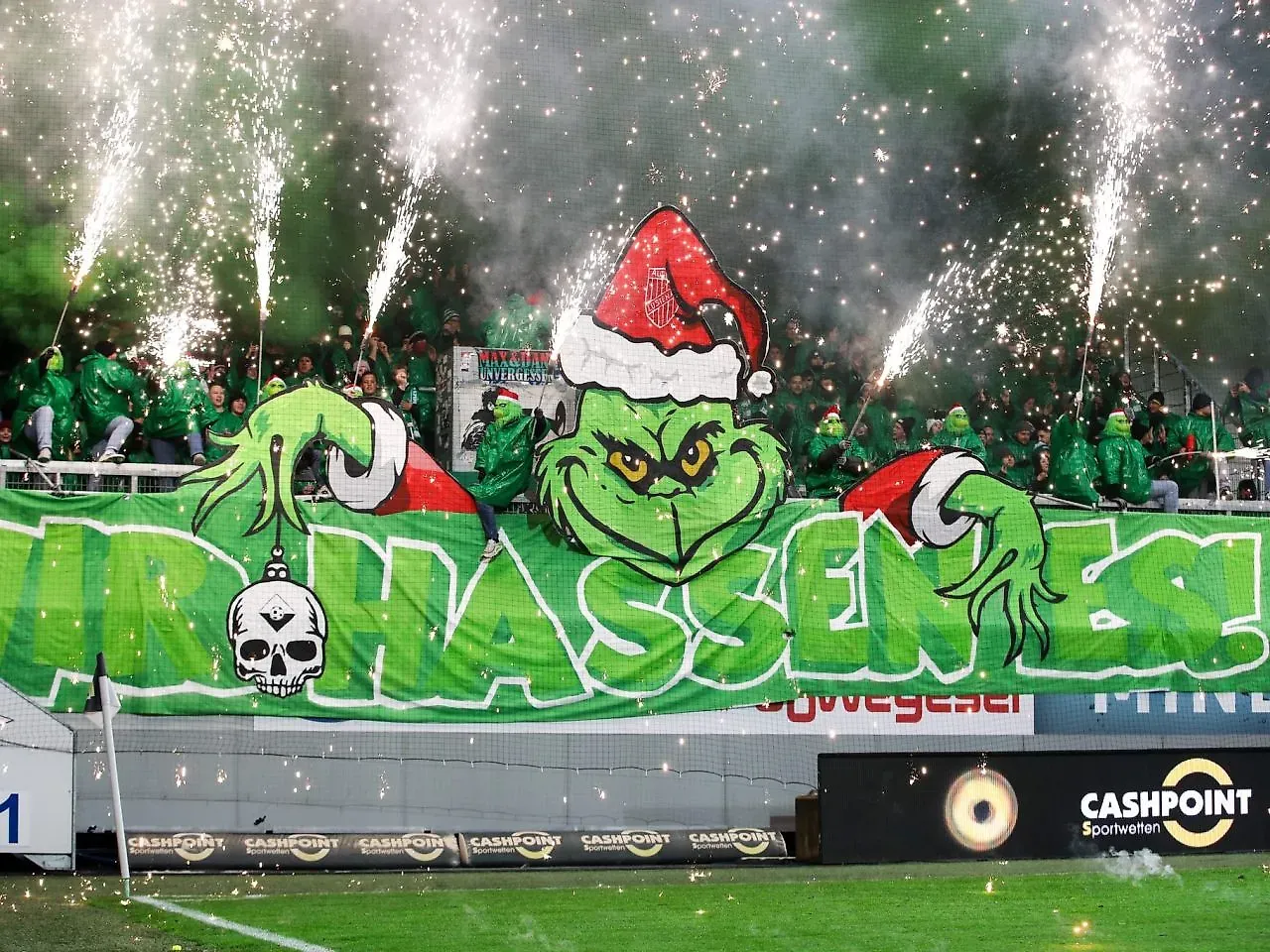
On one side are the green and whites of Austria Lustenau, on the other the black and whites of Altach, who until last season were known as Cashpoint Altach due to a sponsorship deal with a betting company. To prevent the growing hostility from spilling over into the youth ranks, the two clubs launched a joint fair-play initiative a few years ago, urging coaches and parents not to let the rivalry turn a children's game into something more serious. The first meeting of the season takes place this coming weekend, with the two sides, currently occupying the bottom two places in the table, meeting again after just one year apart from the Austrian Bundesliga. A derby whose appeal lies more in its geopolitical background and the spectacle in the stands than in what happens on the pitch.
In the Bundesliga, this fixture is known as the mother of all derbies, which is explanation enough. The Revierderby, or Ruhr Derby, is the defining rivalry of Germany's most industrial region and one of the most famous fixtures in world football. Given the hostility that surrounds it today, it is hard to imagine that in 1934, after Schalke 04 were crowned German champions, the team were greeted with applause at Dortmund railway station. After the Second World War, Borussia Dortmund emerged as the Ruhr's first serious challenger to Schalke, and that is when the rivalry truly began to take shape, with players being bitten by police dogs and championships being lost as a result of these derbies. Beneath the hostility, however, S04 and BVB remain two sides of the same coin, representing working-class cities that became symbols of integration for immigrants arriving from East Prussia and Poland from the mid-19th century onwards. Four seasons after their last meeting, the Royal Blues of Gelsenkirchen and the Yellow and Blacks of Dortmund will once again find themselves under the spotlight in this fiercely contested rivalry.
A rivalry that extends far beyond sport, with roots stretching back to the Middle Ages, between two cities around 50 kilometres apart that have long competed for the title of capital of Lorraine, a historic French region that has often been contested by its German neighbours. While Metz was the region's main centre for centuries, Nancy gained greater importance under Napoleon Bonaparte, as part of a programme of administrative decentralisation designed to reduce the influence of France's larger commercial cities in favour of smaller urban centres. Following the Franco-Prussian War of 1870–71, Metz fell under German rule, while Nancy remained French and welcomed the bourgeois exiles from Metz, becoming the region's new cultural centre. From the reunification that followed the First World War onwards, the rivalry between the two cities became economic, political and, eventually, sporting. Meetings between the burgundy of FC Metz and the red and whites of AS Nancy-Lorraine are steeped in centuries of history, with the two footballing sides now reunited in Ligue 2 for the first time in more than seven years.
Cyprus: the Famagusta and Omonia derbies
Two clubs exiled from their hometown for more than half a century: this is the surreal story of Anorthosis Famagusta and Nea Salamis Famagusta. Both clubs were founded in the city that features in their names, Famagusta, but today are based in Larnaca. This is the result of the invasion and occupation of northern Cyprus by the Turkish government in 1974. Since then, meetings between the two clubs, forced into exile, have always taken place away from home. Their socio-political divide was evident from the outset, with Anorthosis taking conservative positions close to the political right and proudly embracing its Greek Orthodox roots, while Nea Salamis was founded by footballers with openly left-wing political views who had faced opposition from other Cypriot clubs. The latter also maintains ties with the occupied Famagusta community, with several players of Turkish origin having represented Nea Salamis, while in 2005 the club took part in the first friendly between a club from the Greek Cypriot side and one from the Turkish side in 50 years. The two sides meet this Saturday in the top flight, with the derby returning after a season away and Nea Salamis still waiting for a win, having last beaten their rivals 10 years ago.
It is impossible not to mention one of the world's most paradoxical derbies, contested between two clubs that share the same colours and, in a sense, the same supporters. It is the clash between Omonia Nicosia, the most widely supported team on the island, and PAC Omonia 29M, founded by Gate 9, the ultras group of the former. On 29 May 2018, Omonia, facing a financial crisis, moved from fan ownership to Cypriot-American businessman Stavros Papastavrou, with a clear intention to commercialise the club. Gate 9 members no longer felt represented and founded a new club on the very same day, entirely controlled by its supporters. Within a few years, they climbed from the fifth tier to face their parent club for the first time in the 2024/25 season. After 29M's relegation and subsequent promotion, the two sides will meet again for a second consecutive season.
Italy: the Veneto and “Liquor” derbies
It was 2017 when Hellas Verona and Vicenza last faced each other in the Veneto derby, the clash between two of the most historically prestigious clubs in Italy's north-eastern region. In Italian professional football, it is the country's longest-running derby, first played as early as 1906. It is butei against magnagatti, yellow and blue against red and white, the literary city of Romeo and Juliet and the Arena against the hard-working industrial identity of textile factories such as Lanerossi. The next meeting is set for Sunday at the Stadio Bentegodi, with the mayors of the two cities having issued a joint message celebrating the values of sport in this Serie B fixture, in an attempt to prevent the kind of violence that has marred previous encounters.
Another fascinating returning fixture is the Campanian Apennine derby between Avellino, the Wolf of Irpinia, and Benevento, the Witch of Sannio. The stories, more or less authentic, surrounding meetings between the two sides have become an indelible part of their history. In one derby played in 1924 on Palm Sunday, for example, a goal sparked a brawl between the players. One of them, from the Benevento bench, pulled out a revolver and pointed it at the Avellino goalkeeper, only to be stopped by an army captain, who arrested him. Legend also has it that the clubs' colours were chosen following a heated pre-derby debate over which local liqueur was superior: Anthemis, produced in Avellino and green in colour, or Strega, made in Benevento, yellow with red lettering on the label. The argument went so far that, as a matter of local pride, the two clubs adopted these colours for their shirts. And that is how the Liquor Derby got its name.
England: the iconic West Ham vs Millwall rivalry
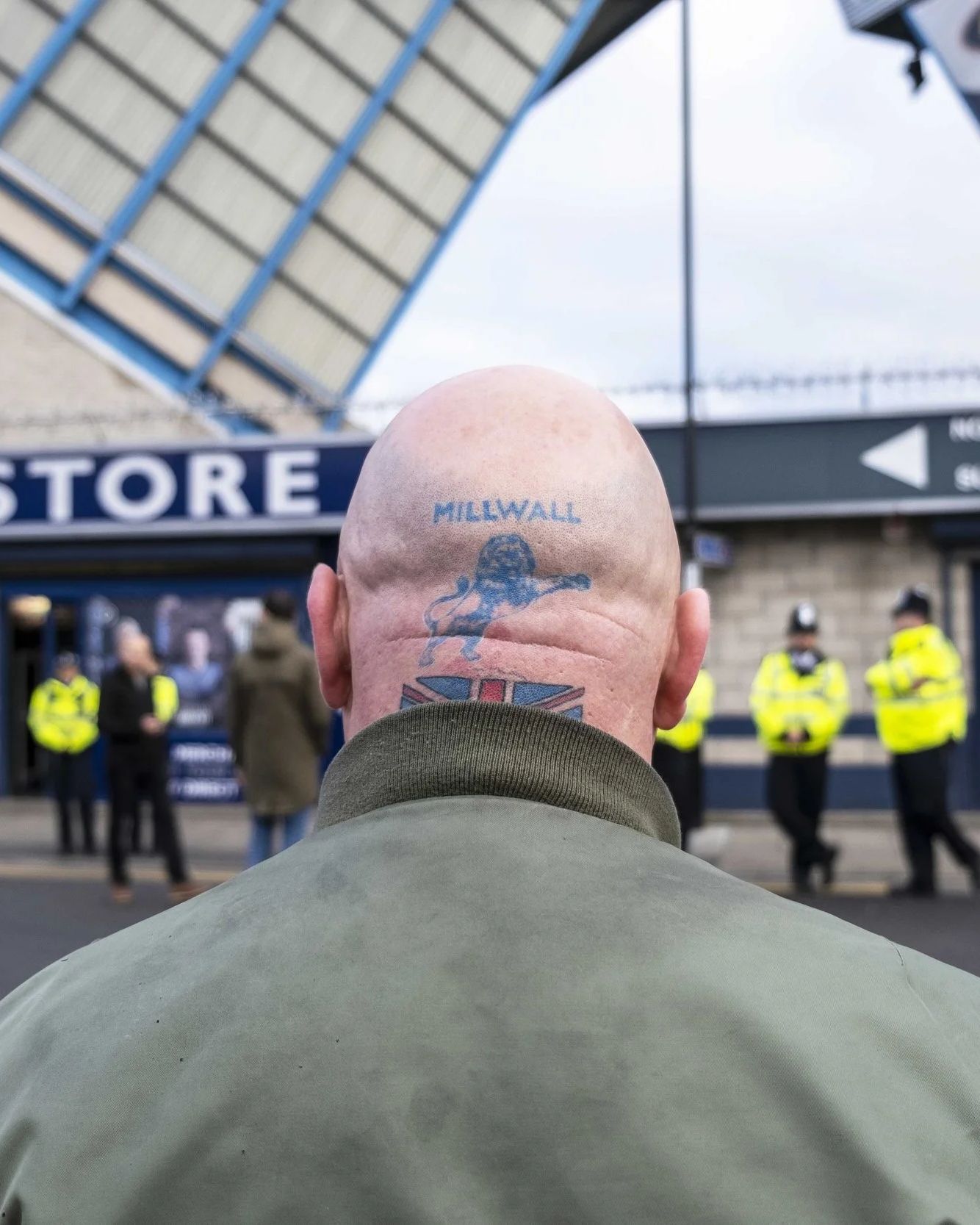
West Ham-Millwall, 14 years later. One was founded by a foreman at London's last major shipbuilding company, the other by tinsmiths working at a food factory on the Isle of Dogs. The hatred between these two sides of the Thames is difficult to match. Two working-class brothers separated at birth, with only one able to claim the throne, to paraphrase Cass Pennant. An emblem of the British hooliganism era, the rivalry descended into decades of uncontrollable violence involving the respective groups, West Ham's Inter City Firm and Millwall's Bushwackers. In 1976, a Millwall supporter died following clashes on the Underground; ten years later, a group of Lions supporters stabbed a young West Ham fan to death.
The Dockers Derby has inspired a long list of literary and cinematic productions, most notably Green Street Hooligans and its sequels, now part of the pantheon of football fan films. Saturday's meeting will be the 100th official chapter of a fixture whose 127-year history has included matches abandoned because of excessive smog and completed four months later, players thrown into metal advertising hoardings, planes flying over the pitch carrying taunting messages, arrests and pitch invasions. Even when the Hammers were still playing at Upton Park, the statue of Bobby Moore was covered whenever Millwall fans travelled to the stadium, in an attempt to prevent it from being vandalised. All of this, and much more, is West Ham-Millwall.
More fascinating Championship derbies
The Championship has plenty more to offer, with three additional returning derbies this season. The first is the East Lancashire derby between Burnley and Blackburn Rovers, also known as the Cotton Mills derby, a reference to the long-standing cotton industry that shaped the two towns, located just 11 miles apart. Over the past three decades, the rivalry has been defined by a series of playful pranks between the supporters: from a Blackburn player's house being painted claret and blue to Rovers fans wearing masks to taunt their rivals after one of their players moved to Bolton, from a Blackburn birthday cake decorated in Burnley colours to the tongue-in-cheek application of a supporter for the vacant managerial position, with relegation within two seasons listed among his objectives. Can the Rovers finally end a wait for victory that stretches back to 2010?
The same distance separates Wolverhampton and West Bromwich, two West Midlands clubs that contest the Black Country Derby, named after one of the areas that pioneered the Industrial Revolution. After regularly meeting in the top flight during the 1950s, Wolves and the Baggies have continued their rivalry at a lower level, with their hooligan cultures also becoming part of the story. The South Wales Derby between Cardiff and Swansea also returns, a rivalry that intensified from the 1980s onwards and became increasingly bitter in the following decade, eventually leading to a four-year mutual ban on away supporters. Politics later added another layer to the rivalry, particularly around the 1997 Welsh devolution referendum: Swansea backed the creation of a regional parliament, which was ultimately approved and, somewhat ironically, built in Cardiff, the main centre of opposition to the proposal.
Belgium and the Netherlands: the South West Flanders and Friesland derbies
The Eredivisie is once again home to one of the Netherlands' most fiercely contested rivalries, known as the Friesland derby. The protagonists are Cambuur from Leeuwarden, the capital of the historic northern province, and Heerenveen, a club from a small municipality that attracts supporters from towns and villages across the province, which is why their rivals mockingly refer to them as farmers. Given the clubs' geographical proximity, and in an attempt to avoid even saying each other's names, supporters refer to their rivals using the acronym DKV, short for Dertig Kilometer Verderop, meaning “thirty kilometres away”.
The rivalry intensified from the 1980s onwards, when Heerenveen strengthened its connection with Friesland through the adoption of the province's colours, anthems and symbols, becoming its main identity marker. Cambuur supporters, by contrast, put provincial pride aside in favour of their city, choosing to identify as Leeuwarders rather than Frisians. In March 2015, persistent rumours that manager Dwight Lodeweges would leave Cambuur for their rivals the following season were eventually confirmed, forcing him to resign early as the anger of supporters, who felt betrayed, reached a boiling point.
A neighbouring country with plenty of similarities. In Belgium, the rivalry known as the Zuid-West-Vlaamse Derby, or Vlasico, is the fiercest in South West Flanders. The two current clubs are exactly a century apart in age: De Kerels (The Boys from Kortrijk) were founded in 1901, although their most recent merger dates back to 1971, while Essevee was established in 2001 through the merger of Zultse and Waregem. Although the rivalry between Kortrijk and Waregem therefore has deep roots, it has gained renewed intensity in recent decades. After three years apart, the two sides met again, with Zulte-Waregem travelling less than 20 kilometres to Kortrijk and leaving with a 2–0 victory on 6 September, scoring both goals in stoppage time. The hosts, currently still without a point after six games, finished the match with nine men, reflecting the tension that surrounds this derby. All eyes now turn to the return fixture.
Poland: Krakow’s Holy War and Lower Silesia
It is known as the Holy War, Święta Wojna in Polish, and that alone gives an idea of just how much meaning is attached to the clash between the two biggest clubs in Krakow (KS Cracovia and Wisła Kraków). The nickname was coined by a Cracovia defender who, before taking to the pitch against Wisła, told his teammates: "Come on, gentlemen, into this holy war". The term was later used in a song celebrating what is arguably the ultimate derby in Poland, between two clubs whose stadiums are less than a kilometre apart. The enduring dispute concerns which is the country's oldest club: both were founded in 1906 and are certainly the two oldest surviving clubs established in Poland, yet no document can definitively prove which came first.
@aktywni_2.0 Jak wam się podobał mecz? Dajcie znać w kom! #football #wislakrakow #footballmatch #krakow #fyp The rivalry is also sadly reflected in the grim number of supporters who have died in connection with the fixture, estimated at between 15 and 20, with eight alone killed during the centenary derby between the two clubs in 2006. Hooligan violence has fortunately appeared to subside somewhat in recent years, and we will see whether that trend continues this season, after four years without a derby. Also worth noting is the Lower Silesian derby between Śląsk Wrocław, the club from Wrocław, the capital of the voivodeship and a side historically associated with the Polish army, and Zagłębie Lubin, from the industrial city of Lubin, whose economy is closely tied to copper mining.
Madeira and the Canary Islands: Island Derbies
The Dérbi da Madeira returns to the Primeira Liga this season, with Marítimo facing Nacional. Founded in the same year, the two clubs have represented Madeira’s different identities and social classes for decades, with their rivalry extending beyond the pitch and into everyday life. Marítimo, in red and green, has historically represented the working class, the so-called “people of the sea” and supporters of republican politics. CD Nacional, in black and white, has traditionally been supported by Madeira’s bourgeois and commercial sectors, and is also the club where Cristiano Ronaldo played in the youth ranks. Until 2021, it was considered a three-way derby, with União da Madeira also involved, before the club sadly disappeared, further reinforcing the island’s two-sided rivalry.
In the Canary Islands, it is once again time for the Canarian derby between Las Palmas, from Gran Canaria, and Tenerife, from the island of the same name. Yellow and blue against white and sky blue, Unión Deportiva against Tete, the Pio-Pio against the Chicharreros — the list of nicknames for these two fiercely distinct clubs goes on. Different in almost every way, they are united by the same Canarian pride, celebrated every time the derby comes around.
Northern Spain and Barcelona’s Neighbourhoods
The Galician derby between the region’s two most renowned clubs, located close to the Portuguese border, Deportivo A Coruña and Celta Vigo, returns to the spotlight after more than eight years. Having faced each other over 200 times, these historic Spanish sides have produced spectacular encounters across the turn of the millennium, competing for cups, league titles and European places. At the origin of O noso derbi, as it is known in Galician, was the move to Deportivo of several players who opposed the merger of two Vigo clubs that gave birth to Celta in 1923. What followed was a legal battle of appeals and counter-appeals, fuelled by a similar episode in the years that followed. Both cities have a distinctly Galician identity, with the two sets of supporters singing the same regional anthem before facing off, while also drinking the same beer, Estrella Galicia, a sponsor of both clubs. Despite being two coastal cities, their stereotypical difference is summed up by the saying: Mientras Vigo trabaja, Coruña se relaja — “while Vigo works, Coruña relaxes” — reflecting the industrial and fishing tradition of one and the cultural, somewhat snobbish reputation of the other.
Still in northern Spain, the Asturian derby between Real Oviedo and Sporting Gijón will return to the Segunda División. The story is similar to the previous rivalry when it comes to the prestige of the two clubs from the Principality of Asturias. Two cities of similar size with opposing socio-economic and political backgrounds: Oviedo is bourgeois and conservative, home to the universities and the administrative capital, while Gijón is working-class, shaped by its relationship with the sea and historically closer to the labour movement.
There is also a north-western derby that, according to many Spaniards, has nothing to envy more popular rivalries: the derbi leonés, contested by Cultural Leonesa and Ponferradina in the province of León. It is essentially a healthy rivalry between the club from the city of León, Cultural, and the provincial side, Deportiva, which is determined to beat the club from the capital. Around 100 kilometres apart, León and Ponferrada spent years developing their own microcosms, with the two cities historically difficult to connect, before also coming together for joint solidarity initiatives. Finally, a derby that has climbed the ranks in recent years is the rivalry between Europa and Sant Andreu. This is a neighbourhood rivalry in the Barcelona plain, where the former represents the barrio of Gràcia while the latter comes from Sant Andreu de Palomar. Both clubs enjoy strong popular support, with their respective fanbases close to the Catalan pro-independence left, whose leadership they compete for.