



































How are other countries preparing their stadiums for football’s biggest tournaments? Italy isn’t the only country racing against time to complete its stadium projects.
Last week, there was plenty of discussion about Italy’s path towards Euro 2032, particularly the stadium question. The selection of the five host venues - starting from just one stadium that is already ready, Turin’s Allianz Stadium - will depend on the country’s ability to turn bids and projects into venues fit for the European Championship. And on the guarantees it can provide to the FIGC and UEFA in the meantime.
We took a look at the current state of the 14 Italian stadiums included in the Euro 2032 bid.
— nss sports (@nss_sports_) October 1, 2026
The only one already completed and compliant with UEFA requirements is Juventus’ Allianz Stadium in Torino, while the others are at very different stages.
A THREAD pic.twitter.com/5etBV3LxAy
Turkey, which will co-host the tournament, is starting from a much more advanced position. But looking around, and broadening the perspective to other international tournaments scheduled for the coming years, some countries find themselves in situations more similar to Italy’s: plenty of renderings, few completed stadiums and a frantic race against time. From East Africa to Saudi Arabia, via Spain, Morocco and Portugal, this is an overview of how the upcoming calendar of major events is affecting construction sites, renovations, investments and urban transformations.
Turkey - Euro 2032
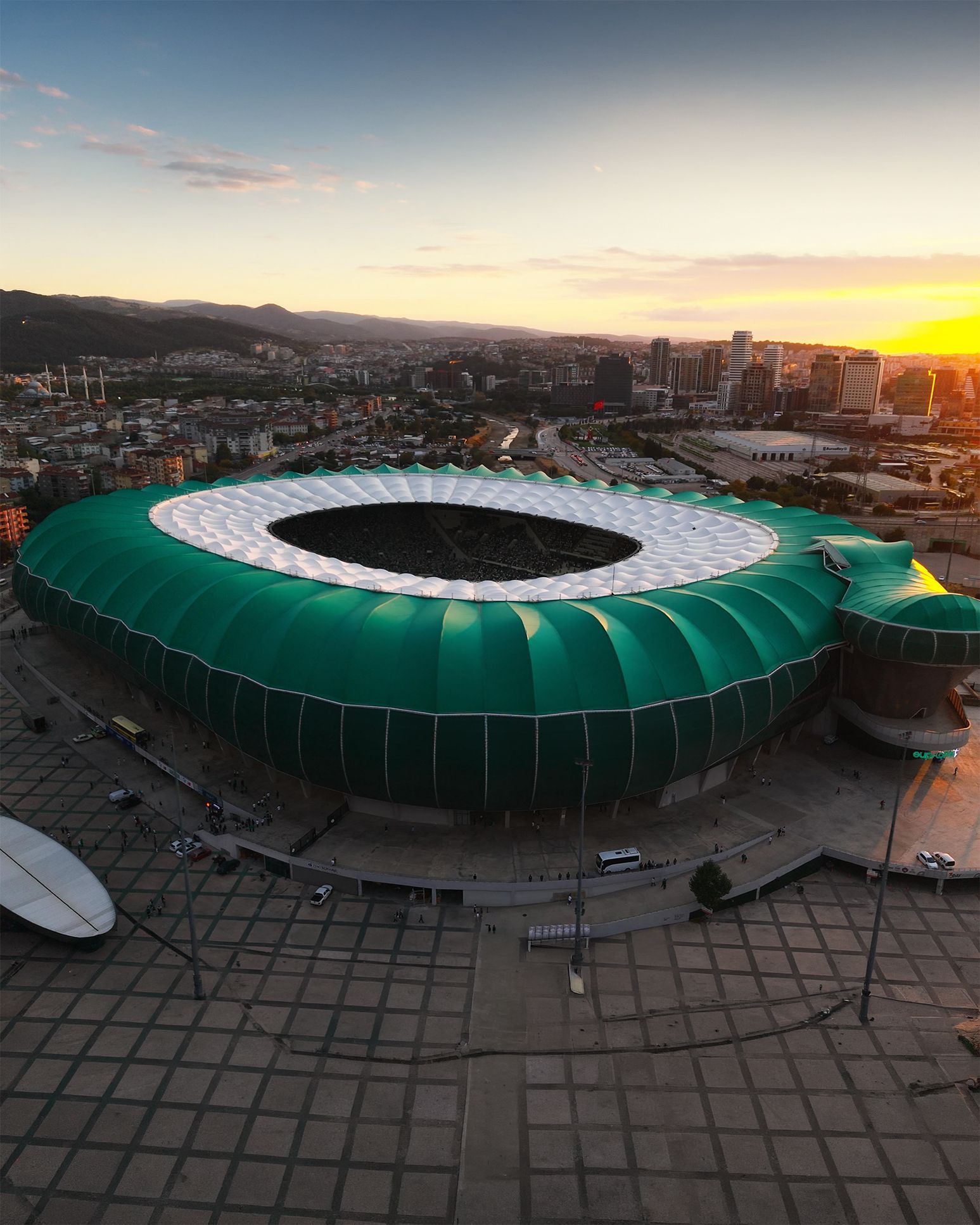
Turkey’s bid is built on a stadium construction programme that began long before the European Championship was awarded, driven by strong political backing and significant public investment, including outside Istanbul. As early as 2016, the Ministry of Sports was talking about “dozens of venues under construction”: a policy that has provided cities such as Bursa - home to the crocodile-shaped stadium where Italy played last week - Konya, Trabzon, Antalya, Gaziantep and Eskisehir with modern facilities. All of them feature in the dossier submitted to UEFA for the tournament, alongside Istanbul’s three stadiums - the Atatürk and the homes of Galatasaray and Fenerbahçe - and the venue in Ankara. In short, the selection of Turkey’s five host stadiums can draw on an infrastructure network that is already largely in place.
The main construction site is in Ankara, where a new 51,000-seat stadium is being built on the site of the old 19 May Stadium by TOKI, Turkey’s Housing Development Administration. By April, the main structure was already described as “95% complete”, with work originally expected to be finished in time for the start of the current season. That timeline has since slipped - the construction site is still active and there is no official opening date - but the project is obviously progressing with a huge amount of time before UEFA’s deadline in the summer of 2031.
Then there is the aforementioned Atatürk Olympic Stadium, which hosted the Champions League finals in 2005 and 2023 and is therefore home to some painful memories for Italian football - or at least for part of it. It is the country’s largest stadium and a candidate to host the final, but it will first undergo further modernisation following the upgrades already carried out - changing rooms, hospitality and VIP areas, lighting, broadcasting infrastructure and a hybrid grass pitch - ahead of the most recent Champions League final.
United Kingdom and Ireland - Euro 2028
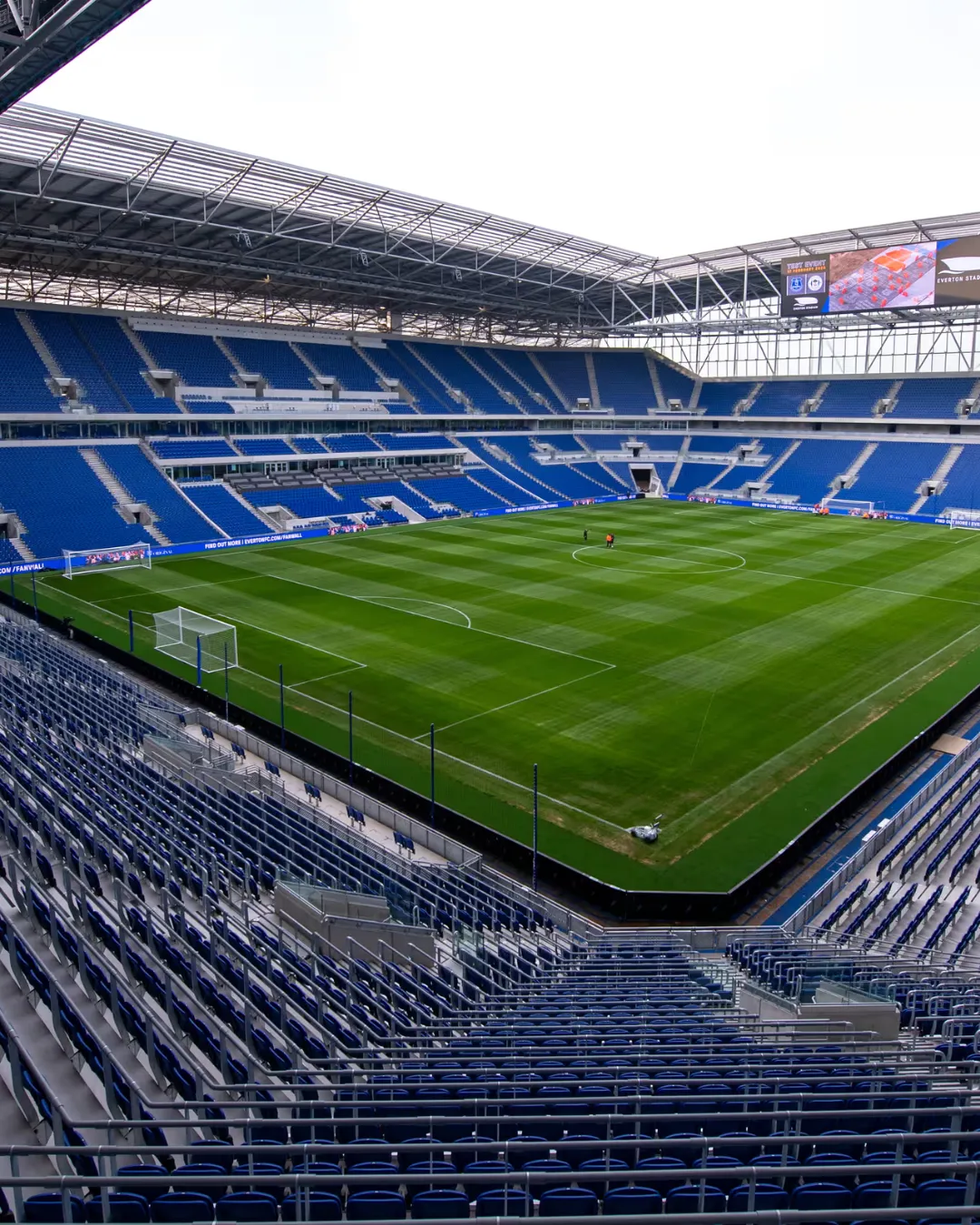
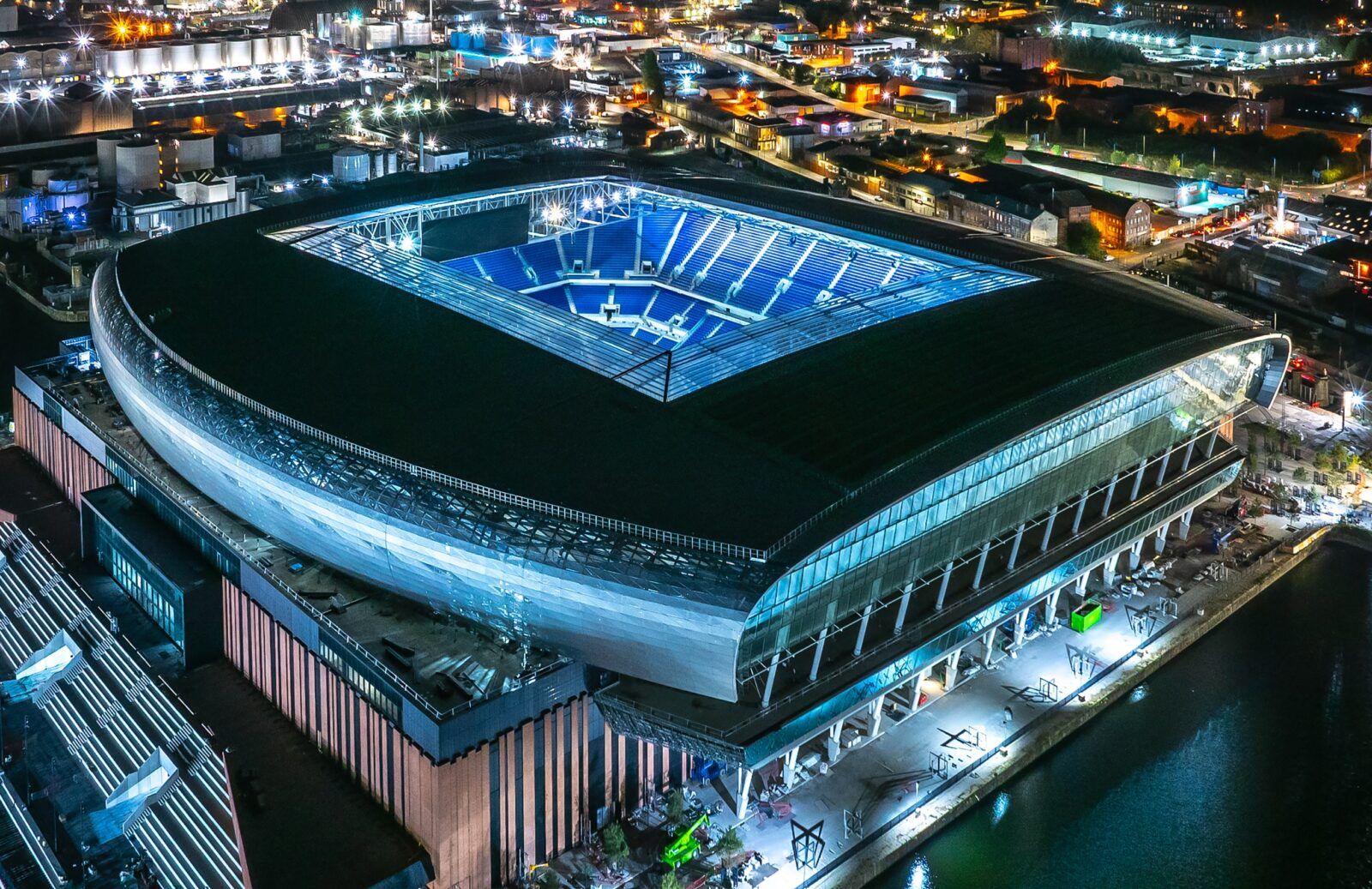
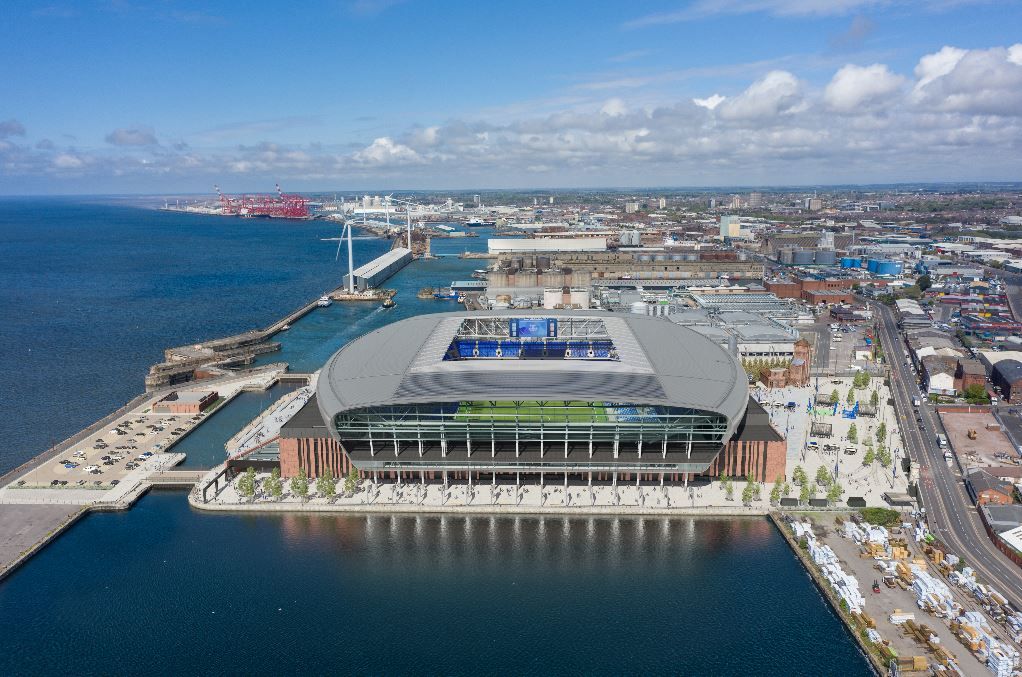
Before the tournament in Italy and Turkey, the European Championship will pass through England, Scotland, Wales and Ireland. Euro 2028 will be played across nine stadiums, including venues already meeting UEFA standards and more recent investment projects. From Wembley and the Tottenham Hotspur Stadium in London, to Hampden Park in Glasgow, the National Stadium of Wales in Cardiff and the Aviva Stadium in Dublin, as well as St James' Park in Newcastle and Everton’s new home on Liverpool’s Merseyside. There is more: in Manchester, the expansion of the Etihad’s North Stand has already increased capacity beyond 60,000 as part of a project that also includes new commercial and hospitality facilities, while the renovation of Villa Park in Birmingham will take its total capacity beyond 50,000.
Finally, there is one project that lost its race against time: Casement Park, the Belfast stadium included in the original dossier that was dropped from the European Championship project after years of delays and a sharp increase in projected costs. In September 2024, the British government refused to fund its reconstruction within the timeframe required for Euro 2028, considering the risk of failing to complete it on time too high. The organising committee therefore revised the tournament schedule, which will be played across nine venues rather than ten.
The travelling 2030 World Cup
Moving from the European Championship to the World Cup, both the scale of the challenge and, in the case of 2030, the geographical distances increase. The centenary edition will involve six countries across three continents: the main tournament will be staged in Spain, Morocco and Portugal, with three commemorative matches also taking place in Argentina, Uruguay and Paraguay.
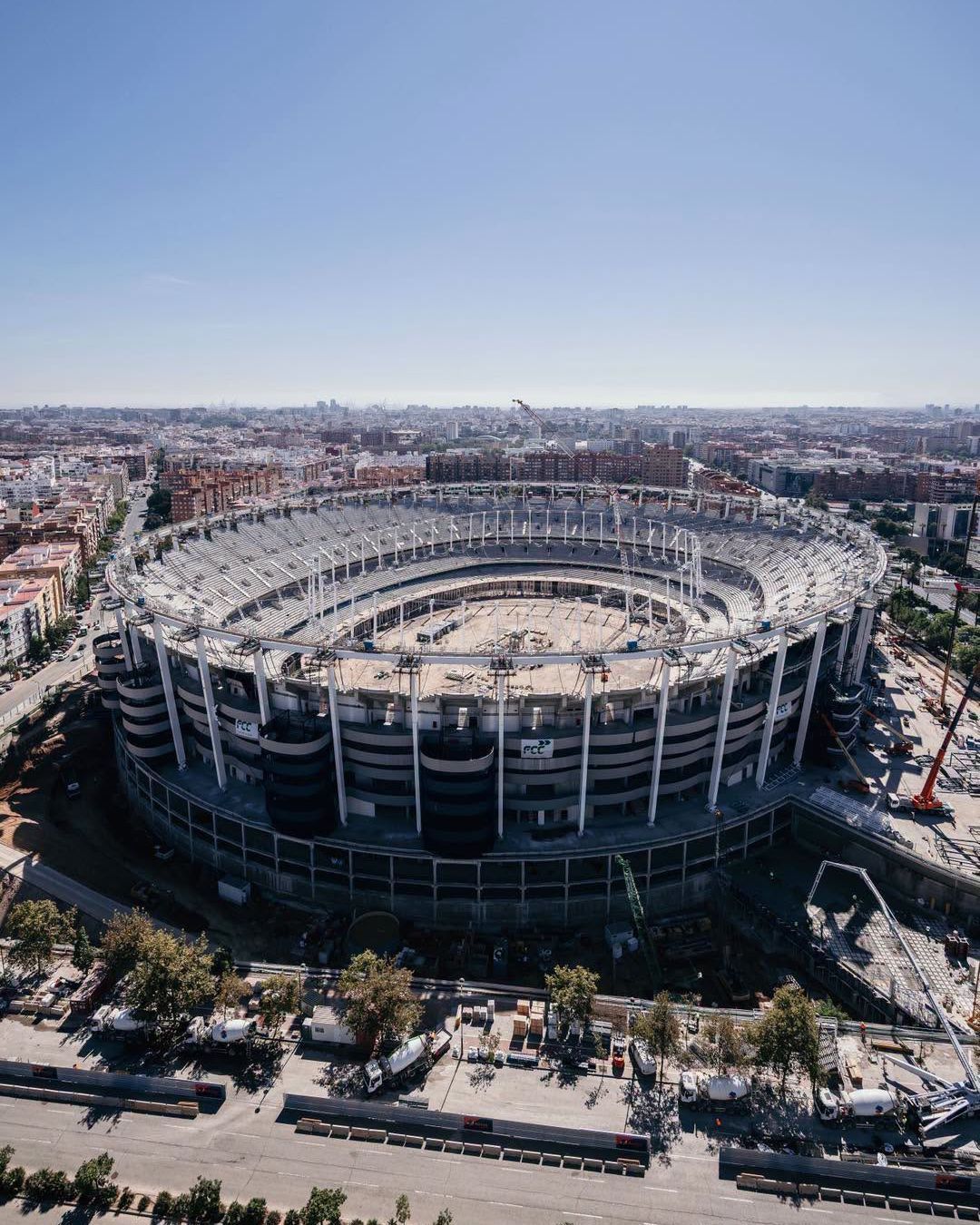
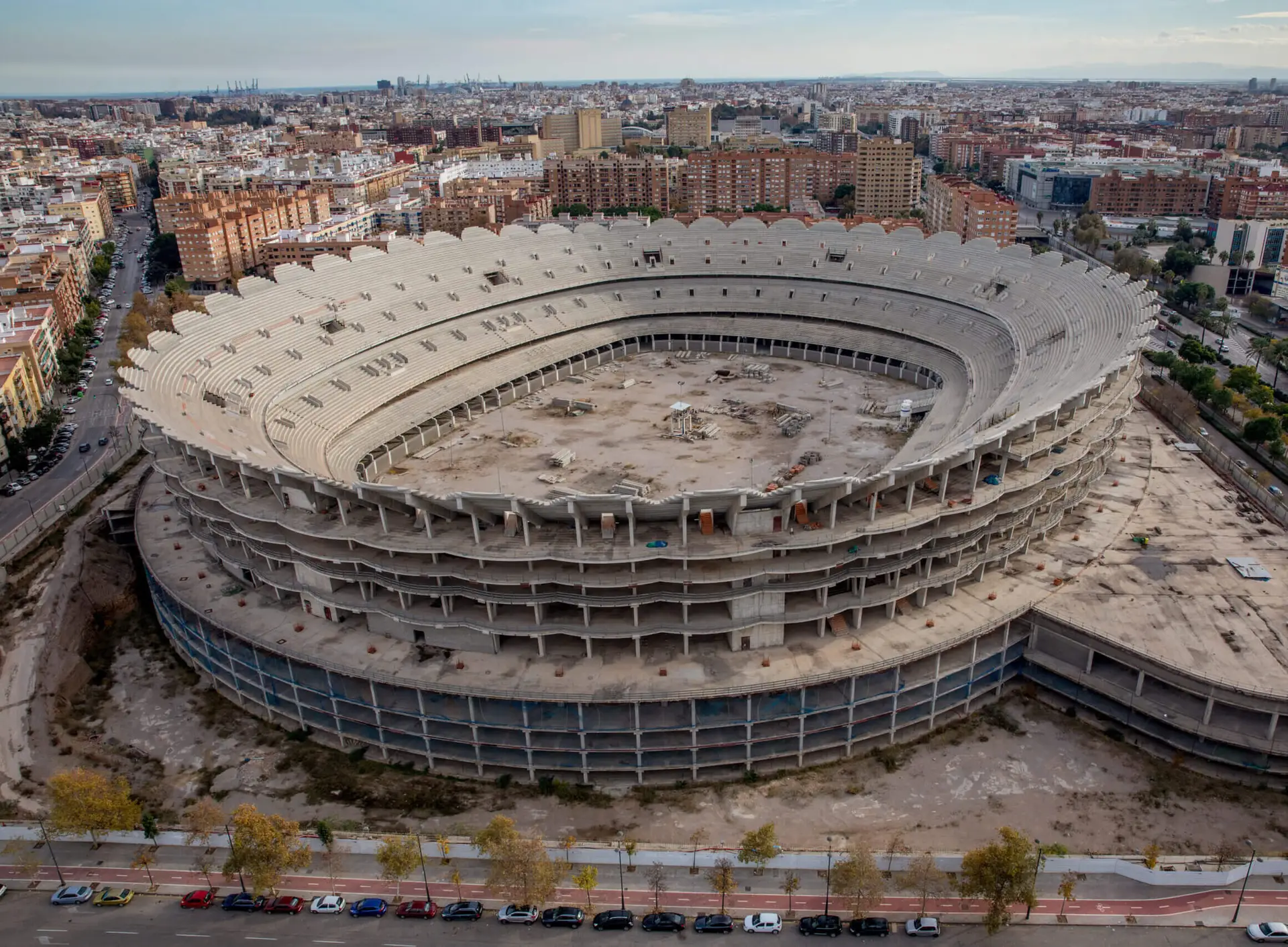
The original dossier included eleven Spanish stadiums, six Moroccan venues and three Portuguese ones, but the host selection is still being updated. In Spain, Malaga and A Coruña have withdrawn, while Valencia and Vigo are trying to join the list. Valencia is relying on the Nou Mestalla, a stadium of around 70,000 seats with an interminable history of interrupted construction work. In Zaragoza, the new 43,000-seat Nueva Romareda is under construction, with the aim of welcoming Real Zaragoza back for the 2027/28 season. Meanwhile, Camp Nou in Barcelona is targeting a capacity of 105,000 through a redevelopment also marked by delays and additional financing, while the renovated Bernabéu in Madrid is the strongest argument behind Spain’s bid to host the final.
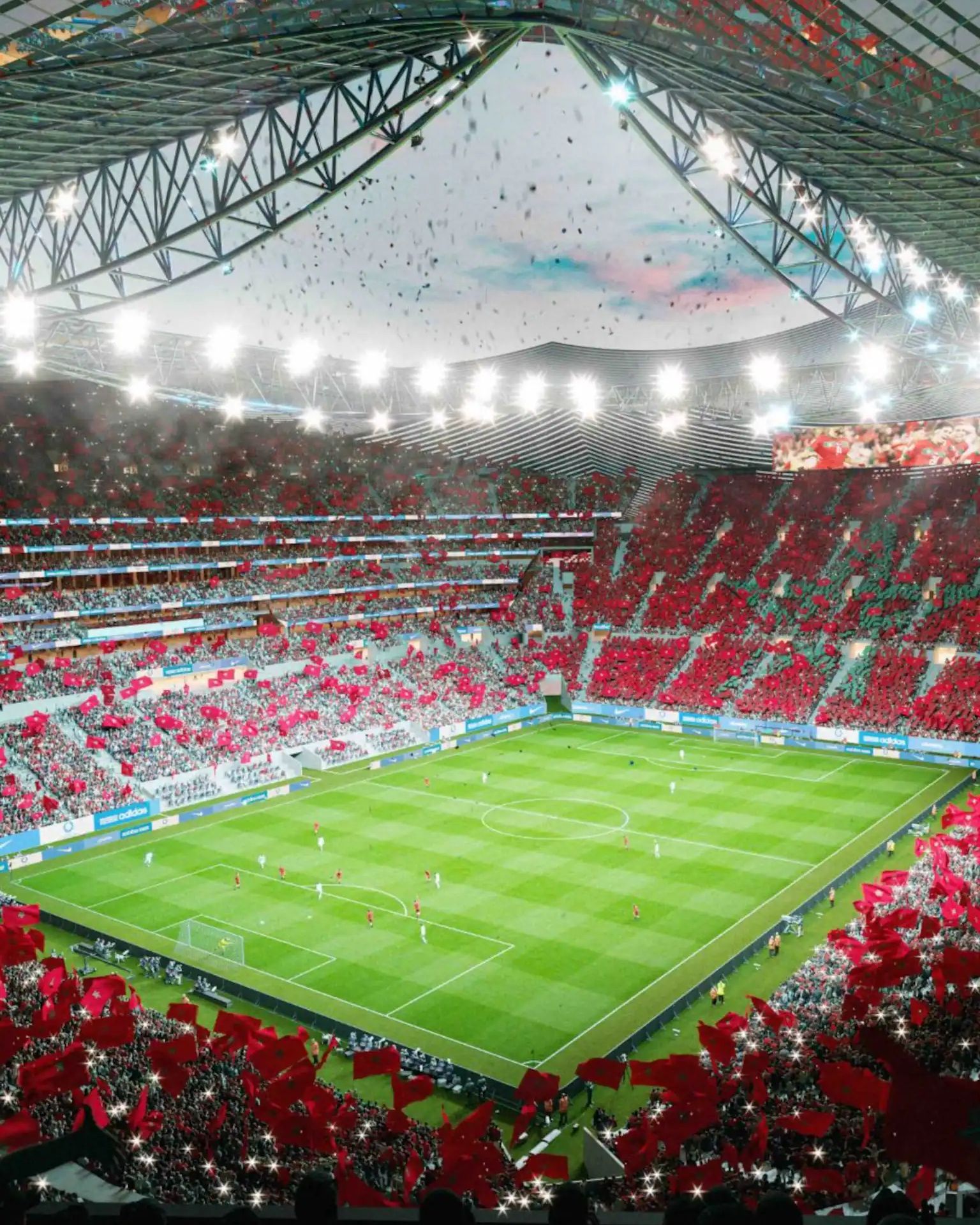
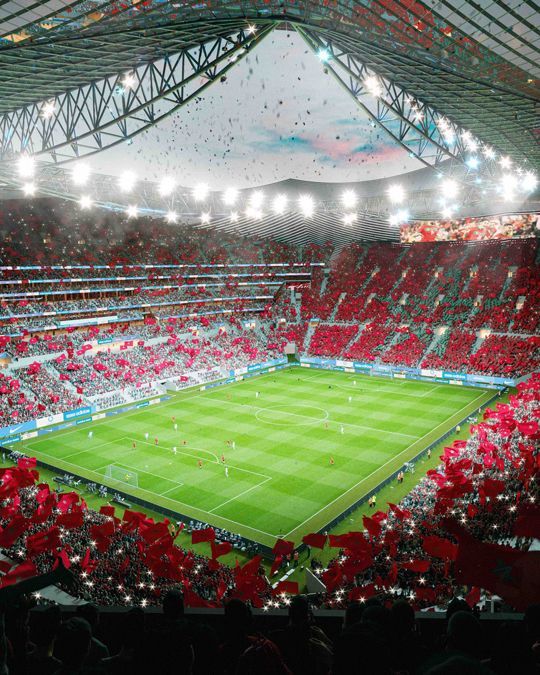
The race to host the final is precisely where Spain faces competition from Morocco, where the Grand Stade Hassan II is being built: a 115,000-seat project designed by Populous and Oualalou+Choi that will give Casablanca the largest football stadium in the world. The country used the 2025 Africa Cup of Nations as a test, with five of the six stadiums planned for the World Cup hosting the continental tournament. The Prince Moulay Abdellah Stadium in Rabat was rebuilt and now holds around 69,500 spectators, while the stadium in Tangier was expanded to 75,000. The venues in Agadir, Marrakech and Fes complete the programme. In the background is a social issue: investment in stadiums, airports and railways has fuelled debate over public spending priorities, which erupted in 2025 in a wave of youth protests summarised by the slogan “fewer stadiums, more hospitals”.
Portugal brings three existing venues: Benfica’s Estádio da Luz and Sporting’s José Alvalade in Lisbon, as well as the Dragão in Porto, all part of the infrastructure built for Euro 2004. The process will mainly involve upgrades and renovations, with no stadiums needing to be built from scratch.
In South America, meanwhile, matches will be played at the Monumental in Buenos Aires and at the planned new stadium in Asunción. The most symbolic and evocative project, however, is the Centenario in Montevideo. For the historic venue of the 1930 final, the Uruguayan federation has presented a renovation project designed to bring it in line with contemporary standards, showing how even a single FIFA World Cup match can represent an opportunity to invest in a stadium.
Saudi Arabia - 2034 World Cup
Four years later, the World Cup will return to the Middle East, where the programme envisages a radical transformation of Saudi Arabia’s football infrastructure that will remind some people - for obvious reasons, and not only geographical ones - of what happened ahead of Qatar 2022. At the time of the bid, the dossier included fifteen stadiums spread across Riyadh, Jeddah, Al Khobar, Abha and NEOM: four venues to be renovated, three new stadiums already under construction and eight projects that existed only on paper.
The heart of the tournament will be Riyadh’s King Salman International Stadium, with a capacity of 92,000 and an expected opening date in 2029. This was the venue initially proposed to FIFA for the opening ceremony and final. At NEOM, meanwhile, the dossier imagines - and can we even picture it? - a stadium on The Line that appears to come from the future, with its pitch suspended 350 metres above ground level. Only time will tell whether any of this will ever see the light of day, and doubts are continuing to grow as time passes.
These projects are all connected to the development of new urban and tourist destinations, placing architecture and sporting events at the heart of Saudi Arabia’s global promotion. The broader framework is well known: the economic transformation promoted by the government through its Vision 2030 programme, with sport, tourism and entertainment positioned as long-term alternatives to revenue from non-renewable energy sources. The first deadline, however, is much closer than 2034: next year, the country will host the 2027 AFC Asian Cup, which will be played across eight stadiums and provide an opportunity to test some of the venues, transport systems and logistics being prepared for the World Cup.
2027 Africa Cup of Nations
Broadening the perspective beyond World Cups and European Championships, one of the tightest races against time - unsurprisingly - involves Kenya, Uganda and Tanzania ahead of the 2027 Africa Cup of Nations, scheduled to take place from June 19 to July 17 next year. It will be the first edition organised by three countries and will bring the tournament back to East Africa after more than half a century. The joint bid is called Pamoja, meaning “together” in Swahili, the same name already used for the 2024 CHAN. The shared organisation links football with regional promotion and cooperation, supported by the many recent investments in stadiums and infrastructure.
In Kenya, the flagship project is the 60,000-seat Talanta Stadium in Nairobi, alongside the redevelopment of the historic Kasarani complex. Uganda is modernising the Mandela National Stadium in the Kampala area, while adding the new Hoima City Stadium and the Akii-Bua Olympic Stadium in Lira, which is still under construction. Tanzania, meanwhile, is relying on the Benjamin Mkapa Stadium in Dar es Salaam and the new venues in Arusha and Zanzibar. To varying degrees, all three countries are facing a significant race against time, despite the 2024 CHAN being intended to provide CAF with guarantees regarding both venues and deadlines.
Brazil - 2027 Women’s World Cup
The final case is Brazil, where the Women’s World Cup will take place next year, mainly using investments previously made for other major sporting events. The tournament will be spread across eight cities - Rio de Janeiro, São Paulo, Brasília, Belo Horizonte, Salvador, Fortaleza, Porto Alegre and Recife - and will rely on eight stadiums already used for the men’s World Cup in 2014, including the Maracanã, the Mineirão and the Arena Corinthians. This legacy is joined, particularly in Rio, by that of the 2016 Olympic Games, which helped drive investment in infrastructure, accommodation and transport.
All of this will therefore return to serve a new event, which naturally requires updates, but without needing to restart with the construction of new stadiums and with the advantage of being able to spread the tournament across cities that are already equipped. It is an interesting perspective that also applies to the countries currently busy with construction projects, including Italy, with one question looming in the background. What other major events will they be able to host once the deadline for which all these new stadiums were built has passed? Part of the value of these investments will depend on the answer.