
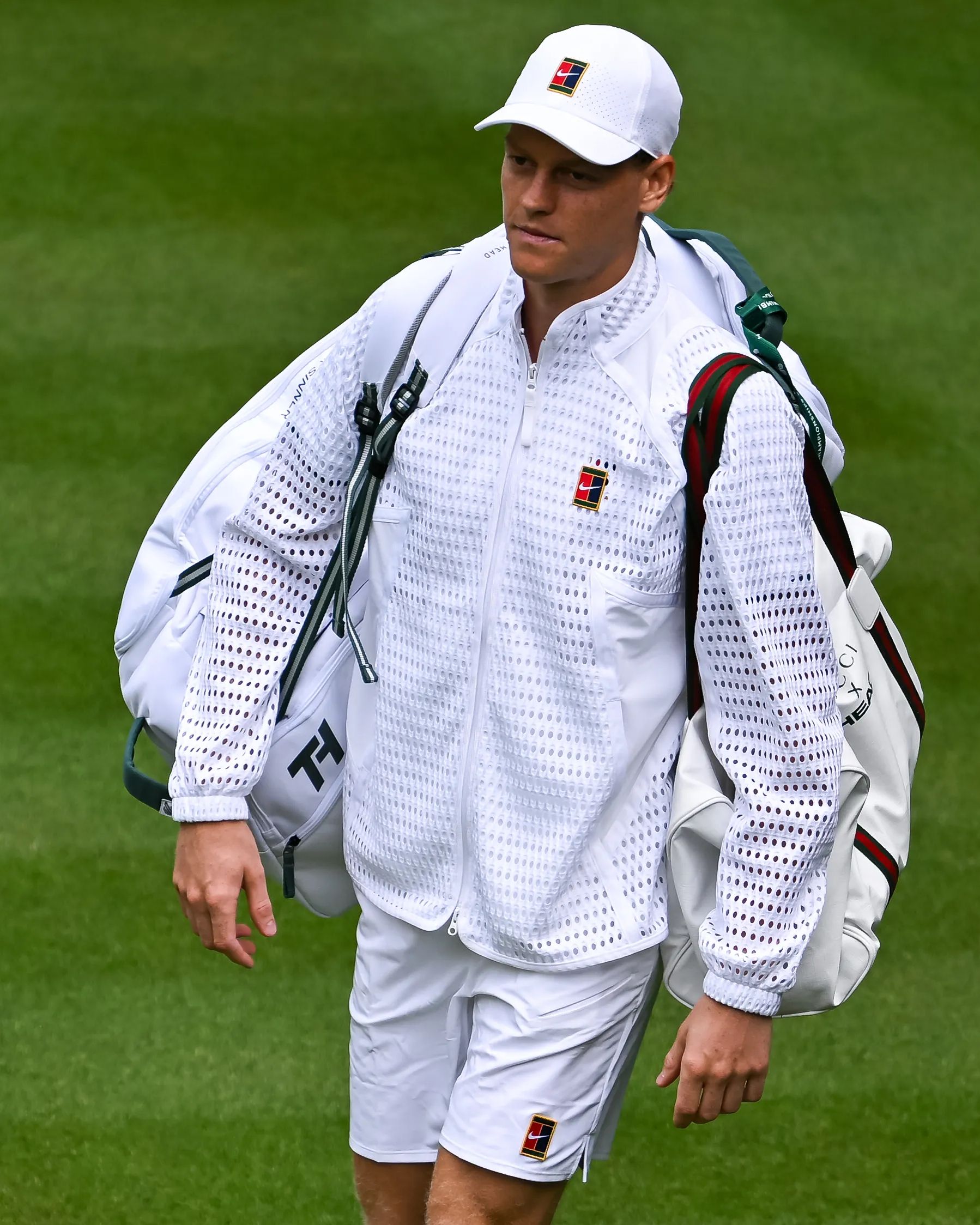
Is there still tennis without Jannik Sinner? What happens now without him?
“Together with the doctors, we decided that I need a course of treatment for my knee, which means that my 2026 season is officially over”, this was the message posted by Jannik Sinner on his social media channels regarding his injury and his future. The news inevitably came as a shock to everyone, from fans to, above all, the Italian Tennis and Padel Federation, which will be working with the ATP and ITF in the coming weeks for the ATP Finals in Turin and the Davis Cup Final 8 in Bologna, respectively. Not exactly ideal timing, and within hours of Sinner's announcement, panic had already started spreading across social media, on several different levels.
How serious is Jannik Sinner's injury?
This is the question that has turned Sinner's right knee into a media obsession since July. The multiple medical examinations in Milan and at J|medical in Turin, the conversation with Anna Wintour during Fashion Week, when he ominously hinted that not returning in January would be “a problem”, and now these successive announcements ruling him out of Beijing, Shanghai and the rest of the year: all milestones in an escalation that has prompted countless opinions.
At the moment, the most widely circulated theory points to iliotibial band syndrome, also known as runner's knee, an overuse injury that does not require surgery but does require specific treatment. In a recent interview with fanpage.it, orthopaedic surgeon and traumatologist Giovanni Di Giacomo explained that the injury is not serious but can be persistent and potentially dangerous in the long term if not treated properly. Rehabilitation is not simply about making pain or inflammation disappear, but understanding the underlying cause of the symptoms and addressing “biomechanics and posture” in order to eliminate the problem altogether.
That, of course, is assuming it is actually iliotibial band syndrome. Neither the player nor his team have ever specified the nature of the injury, meaning that speculation has simply fuelled the rumours surrounding him. The fact that the announcements regarding the Chinese tournaments came separately, while several reports from authoritative sources suggested that a return in Shanghai was still possible, points either to a deliberately cautious communication strategy ahead of the major decision to stop playing until 2027, or to genuine uncertainty over what to do. In recent months, Sinner has carried out on-court tests in Turin and Monte Carlo, suggesting that he felt comfortable on court, but perhaps was not ready to compete.
From the outside, however, this can only create further confusion for those who simply want to see Sinner back on court, including the accredited media. Corriere della Sera, for example, has already started questioning the team for allowing him to train despite his knee injury – the nature of which, let us remember, is still not officially known – while reports of internal tensions have also begun to emerge. Although the line between fact and the projection of one's own emotions onto a prediction that may have some logical connection to the facts has become increasingly blurred, that alone is enough to fuel the sense of vertigo and disorientation that has become so palpable on social media.
The ATP Finals ticket resale
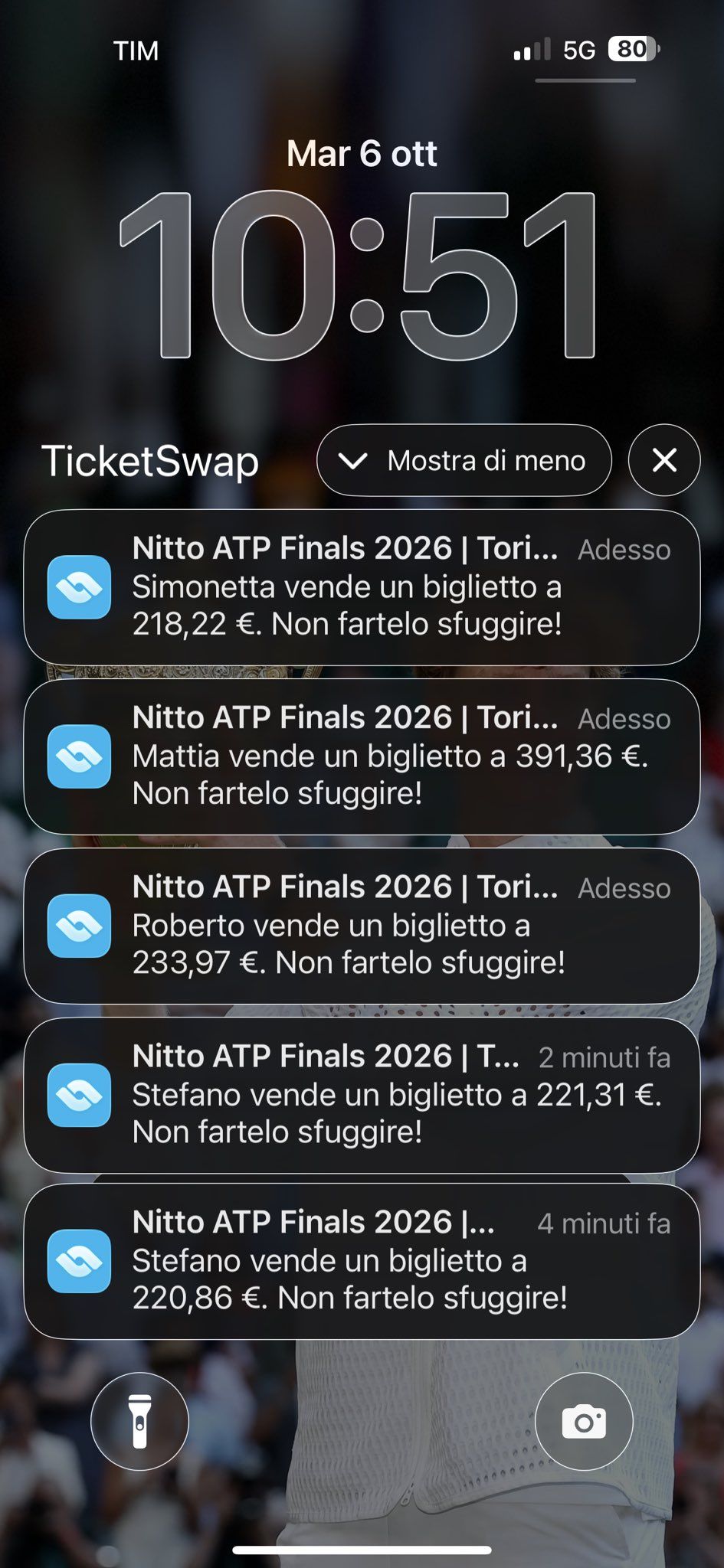
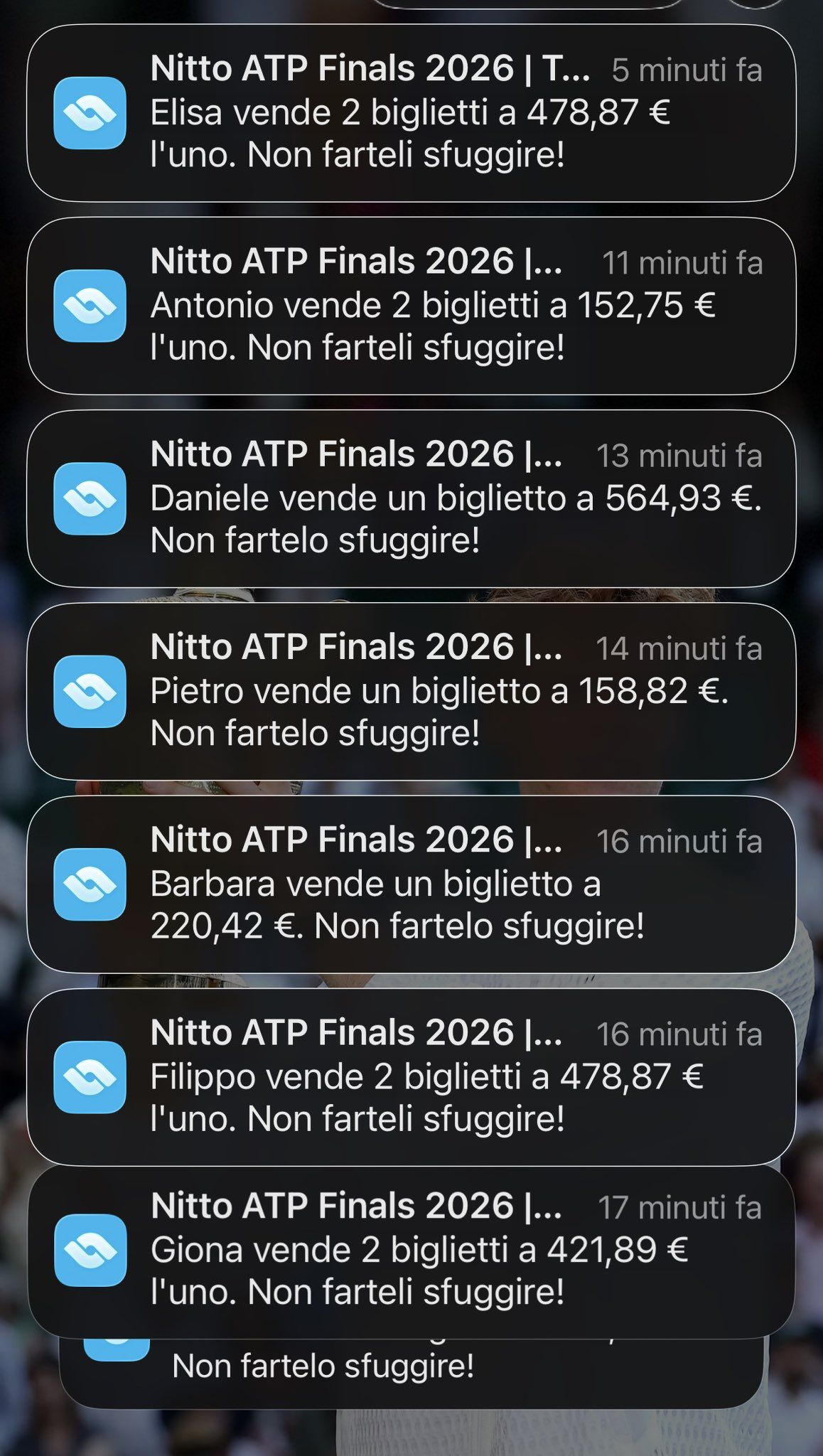
Just hours after Sinner's announcement, screenshots and screen recordings posted by private users on X went viral. Screenshots of notifications from the Ticket Swap app show tickets and packages being resold for between €150 and more than €500, while Biglietti ATP FINALS Torino, a Facebook group, was filled with an endless stream of posts from users looking to sell their seats. A quick check of both the public group and the app confirms that this is indeed the situation ahead of the tournament, which will be held at Turin's Inalpi Arena from November 15 to 22.
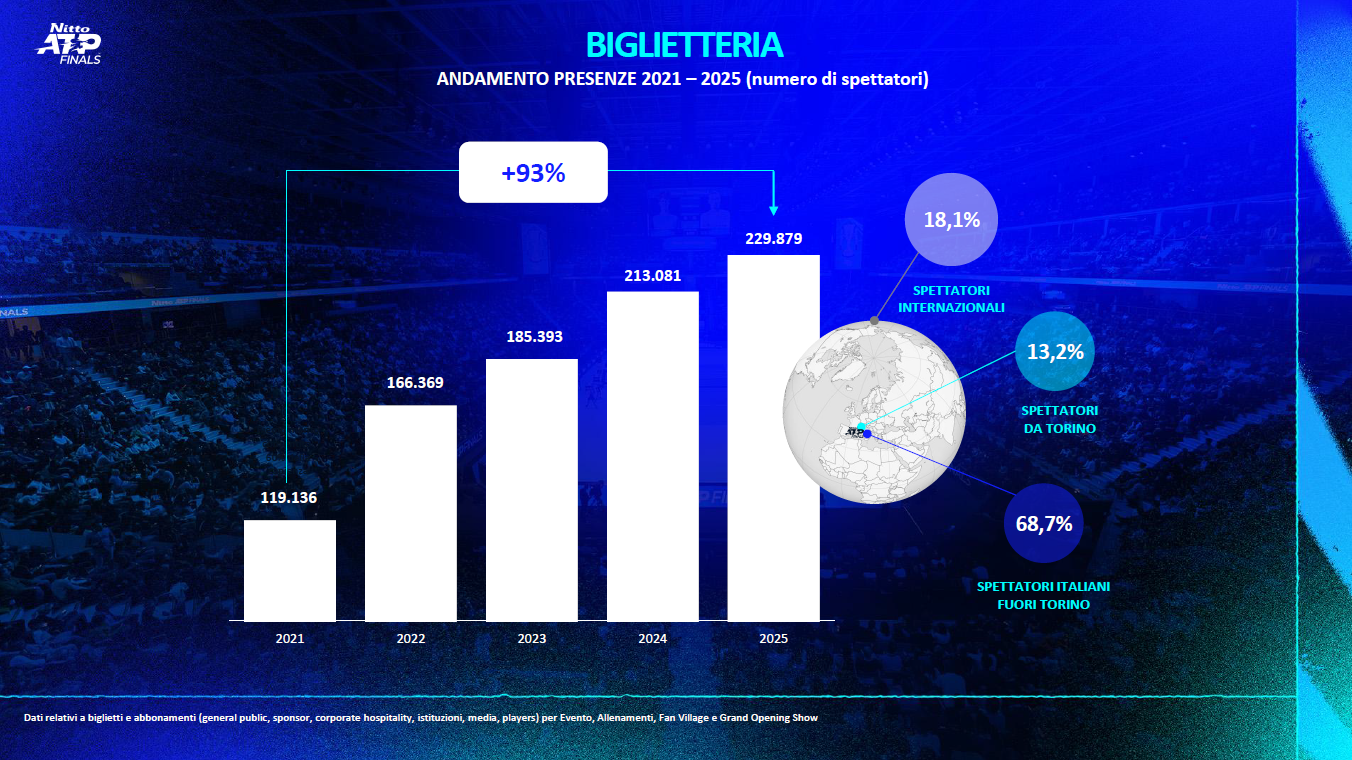
And it could hardly be otherwise. According to figures provided by the FITP after the 2025 edition, ticket sales for the ATP Finals in Turin increased by 93% compared with the first edition held in the city in 2021, with almost 230,000 tickets sold and an overall economic impact of more than €590 million, six times the figure recorded in 2021. In between, something rather simple happened: Jannik Sinner. He won the last two editions back-to-back, setting record audience figures on both occasions.
AIUTO AIUTO AIUTO pic.twitter.com/NKyVXNmWL5
— ex tifoso di Naomi Osaka (@Isai24q) October 6, 2026
And even this year, despite entire ticket packages being desperately put back on the market following the news of his absence, Turin should not suffer major losses, with TicketOne showing an almost complete sell-out on most days – especially for the final, where only a handful of tickets remain, starting at the modest price of €1,029. The only real doubts concern television audiences, which were excellent in previous editions. Those numbers could still benefit from the presence of Flavio Cobolli and a possible Last Dance for Novak Djokovic.
There will certainly be more difficulties filling the SuperTennis Arena at Bologna Fiere, which will host the Davis Cup Final 8 from November 24 to 29. Many tickets have already been sold here too, and the fact that Italy is playing at home is significant, but the growing sense that Sinner would not take part – he already skipped last year's edition, when the Azzurri completed their hat-trick following the two previous editions in Malaga – will undoubtedly affect the final sales, despite the more accessible prices. The fact that the tournament does not award ATP ranking points will not help either.
Sinner will lose the world No. 1 ranking: Zverev's takeover
The disappointment over Sinner's absence and its potential economic impact on the ATP Finals is compounded by the frustration of losing the top spot in the rankings. Following his Wimbledon victory, the Italian player skipped the Masters 1000 events in Montreal and Cincinnati, as well as the US Open, before missing the ATP 500 in Beijing and another Masters 1000 in Shanghai, leaving a significant number of points on the table. That number will grow further in the coming weeks, with more than 3,500 points to defend after his huge success at the end of last year. As a result, Alexander Zverev will mathematically become world No. 1 for the first time in his career – it is only a matter of when, depending on his performances in the upcoming tournaments.
Not an easy pill to swallow for the tennis audience. First of all, the perception of Zverev is also shaped by the events that have surrounded him since 2020, when he was accused of violence by two former partners in separate cases. In particular, the second case, in which the parties reached an out-of-court settlement with the prosecution, meant that Zverev avoided a final conviction, but the case ended without a verdict, leaving a mark on the German player's reputation and image.
He has also never shied away from controversial comments on court. Just a year ago in Shanghai, he complained about the speed of the hard court, accusing the organisers of trying to favour Alcaraz and Sinner. A relatively minor issue compared with the legal cases, but still enough to pour further fuel on the fire of the intense social media feud between Sinner's fans – and Alcaraz's, in many cases – and Zverev. Handing the German the throne of the ATP rankings adds another bitter taste to the already particularly dry mouth of an Italian tennis community that has been extremely restless in recent days.
Sinner is tennis in Italy
While part of the old-school audience may find it debatable that Sinner's absence could have such a major impact on Italian tournaments, the facts point in that direction and follow an irreversible trend, regardless of the recent boom surrounding the ATP Finals. Google Trends is not a perfect tool, but an analysis of the data on searches related to Italy's leading tennis player since 2023, compared with searches for the country's biggest tournaments – or, in the case of the Davis Cup before 2025, competitions involving the Italian team – provides a perfect snapshot of Sinner's influence, which has grown dramatically beyond the event itself.
The Italian Open in Rome, after Sinner's absence in 2024, has been the tournament most affected by his presence over the past two years in terms of popularity. But more broadly, since 2023 – when his success became a constant – Sinner's name has dominated Italian search bars over those of the tournaments themselves whenever the key dates arrive.
Ultimately, you do not need to dig very deep to find a correlation between Jannik Sinner's presence and interest in tennis in Italy, and that is because Jannik Sinner is tennis in Italy. What has developed around him is almost a cult, in a way that resembles the celebrity model found in North American sports. The obvious comparison is the NBA, where Kobe Bryant and Michael Jordan immediately come to mind when it comes to fan loyalty, while LeBron James represents the elevation of the individual player to the point where support shifts towards the athlete rather than the collective interest.
Making the necessary adjustments for an individual sport, the Italian audience is not interested in watching good tennis in the same way LeBron James supporters are not interested in watching good team basketball – or supporting the team itself – because what matters is the player's performance and whether they win. When those things disappear, especially in circumstances as disastrous as those currently surrounding Sinner, the only possible climax is panic.