Will 2026 be the year of vintage football blanks? A deep dive into the archives of sportswear brands
PUMA, Nike, adidas, as well as smaller sportswear brands, all have at least one Teamwear line in their catalogues. This refers to a selection of “blank” kits available for amateur clubs that want to play without a real sponsorship, simply purchasing stock embellished with the logo on the shirt. To give a concrete example, Nike’s Teamwear line offers several pre-set templates, such as Challenge V, Premier II, and Striped Division IV, which anyone can buy and customize with their own branding.
The spread of Teamwear kits
Sometimes even First or Second Division teams use Teamwear kits. These are clubs that belong to a lower tier in the sportswear brands’ hierarchy: the brand does not commit to creating or supplying a bespoke design, limiting itself to offering standard templates. Sticking with Nike, there have been several examples over the past decade in Europe, such as Cluj (a Romanian club with a Nike agreement that only concerns kit distribution, not direct sponsorship). Similarly, Maccabi Haifa with adidas represents a comparable case. There are countless examples of this kind across secondary European leagues or in Second and Third Divisions, such as Benevento with Nike, an arrangement that has continued since the 2021/22 season.
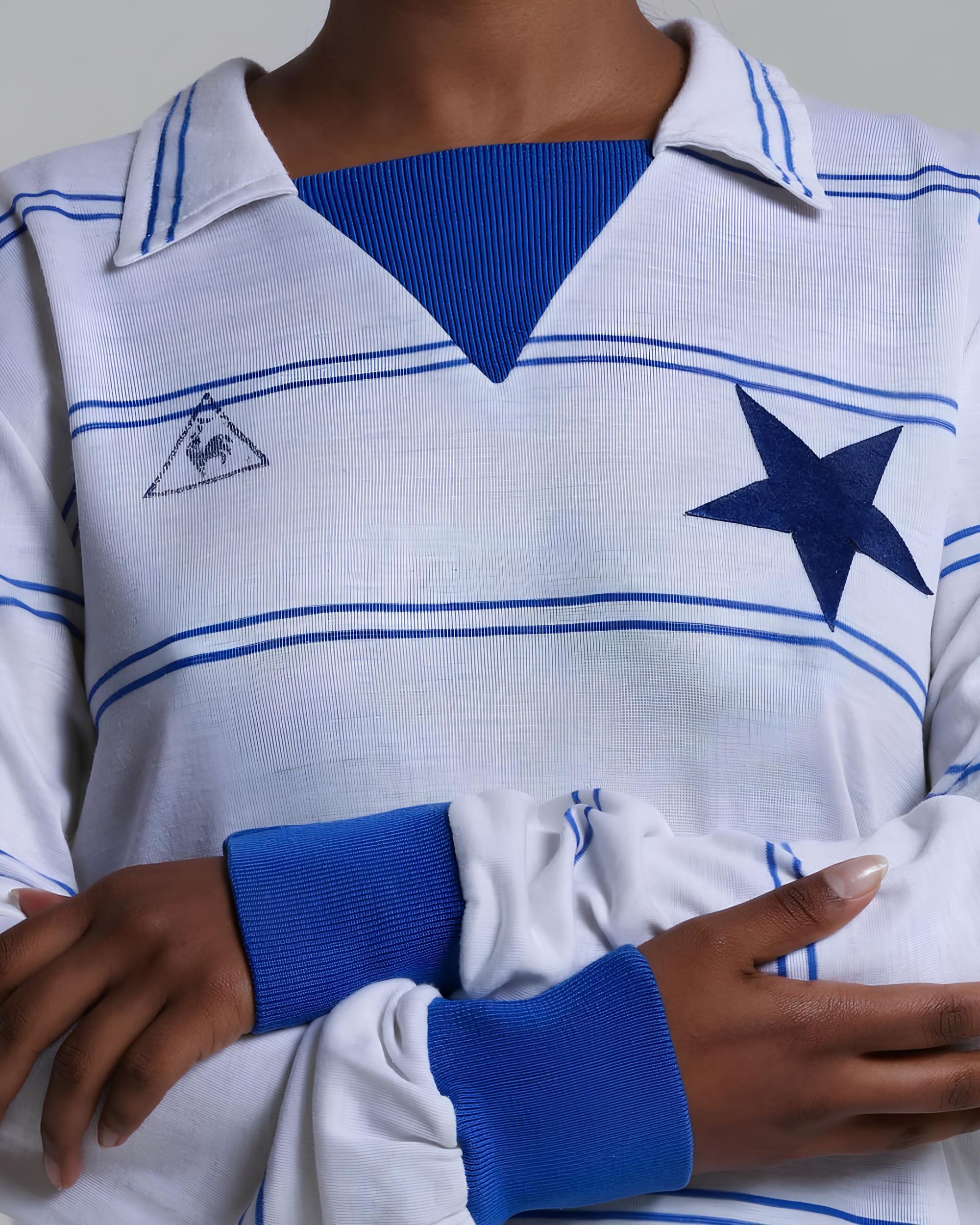
Before the 2000s – and therefore before a flattening in terms of design took place, affecting both match kits and training wear, with the disappearance of bright colors and tones, but above all of that creativity that once expressed itself without restraint on match shirts – Teamwear lines (essentially the so-called vintage blanks) benefited from the aesthetic splendor of the 1980s and 1990s, while at the same time influencing the kit designs of those two decades. Of course, there are still a few unresolved cases: we may never know whether templates were created first and then assigned to teams, or whether, thanks to the fame gained by a design made specifically for a team, it later became a catalogue template for the brand.
Why 2026 will be the year of vintage blanks
The fact remains that, given the disappearance of this type of kit and the fact that some of the most iconic examples from that era are now almost 30 years old, vintage blanks in 2026 and the years to come could potentially become highly coveted objects of desire for football kit collectors. This line of reasoning runs almost parallel to what we discussed in another article, when we talked about how community jerseys could one day turn into collectible items. But why? The answer is simple: community jerseys, just like some vintage blanks decorated solely with amateur club prints, are true one-offs – items never put on sale and produced specifically for sporting events, such as a local tournament or a low-level regional league.
This could be a plausible prediction because, if so, blank football shirts would follow a trajectory similar to that of vintage t-shirts. Many of the most expensive, single-stitch, rare, or simply design-appreciated ones feature graphics tied to charity events, jazz music festivals, motorcycle rallies, and the like. In the same way, garments belonging to the world of workwear – think of the vintage macro-sphere of Dickies and Carhartt – often feature embroidery with the name of the worker who wore them. This could be paralleled with the shirt numbers on vintage blanks: who knows what the players’ surnames were, who the garment belonged to – a veil of mystery that gives these pieces a unique aura.
The best vintage blanks and where their fame comes from
Among the most famous vintage blanks from the 1990s are those made by Uhlsport, ABM, PUMA, Nike, adidas, and Nr, but above all Lotto, probably the most underrated brand of all. Needless to say, among the most sought-after vintage blanks are goalkeeper shirts, distinguished by reinforcement under the elbows, and in this area too Lotto managed to stand out. In addition, vintage blanks are a way to dust off dreams from the past and try to get aesthetically closer to kits that have now become almost impossible to find, such as those worn by Jorge Campos, or by Napoli’s historic goalkeeper Pino Taglialatela, who, when it came to goalkeeper kits, really knew a thing or two.
There is therefore, on the one hand, the ever-present specter of nostalgia, and on the other, the urgency to archive truly unique pieces of their kind, which also represent a safe place – a real comfort zone where one can take refuge from the lack of creativity evident in today’s Teamwear.
But ultimately, to answer the question—where does their fame come from? It is inevitable to mention the work of projects such as systemarosa or Saturdays Football, which, with remarkable foresight, were able to identify early on the untapped potential of vintage blanks, carrying out impeccable research and understanding how these garments work incredibly well, including from a styling perspective.
What to read next
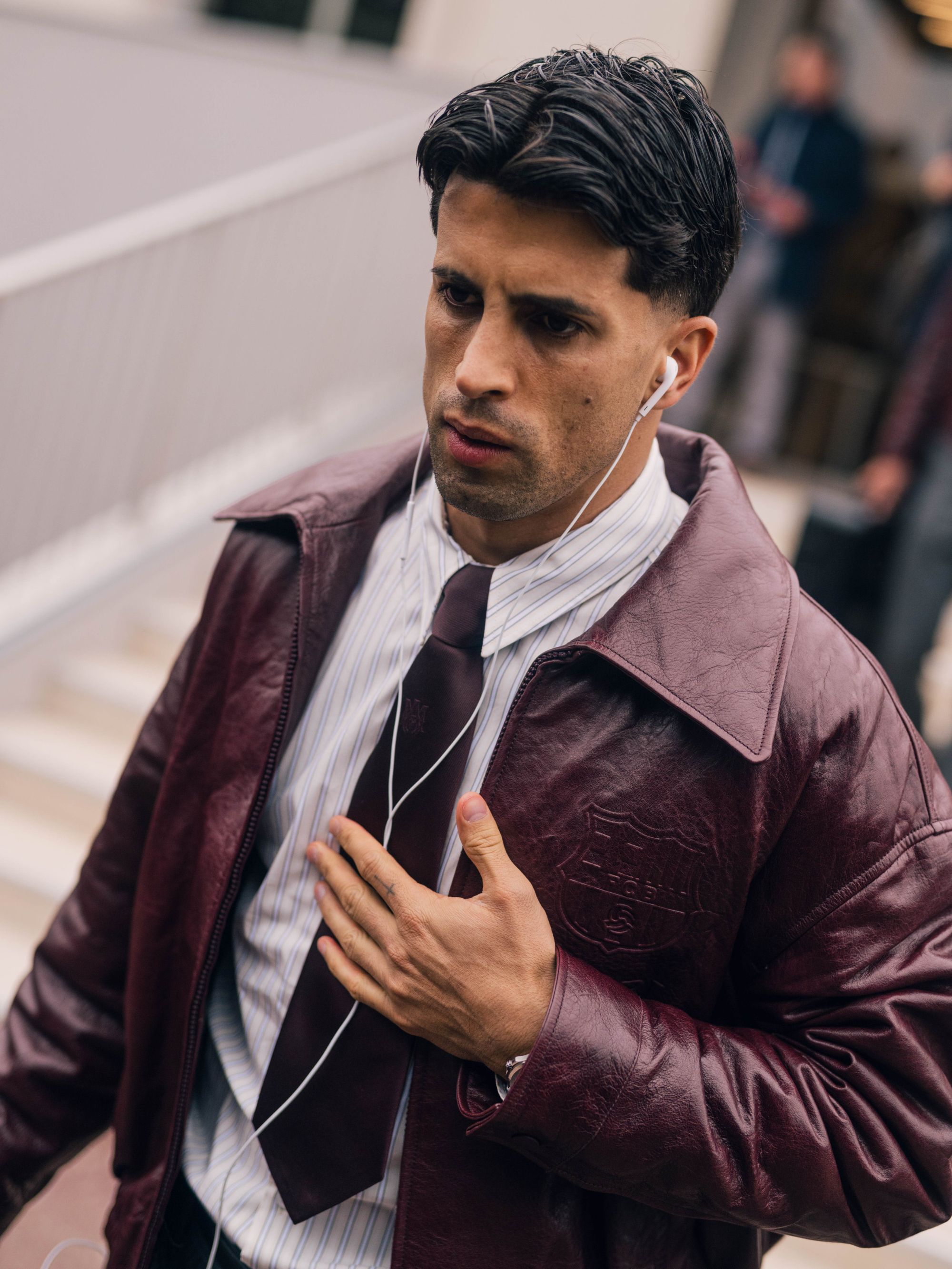
European football has fallen for leather jackets
Every club has its own style, with some interesting new releases arriving in 2027
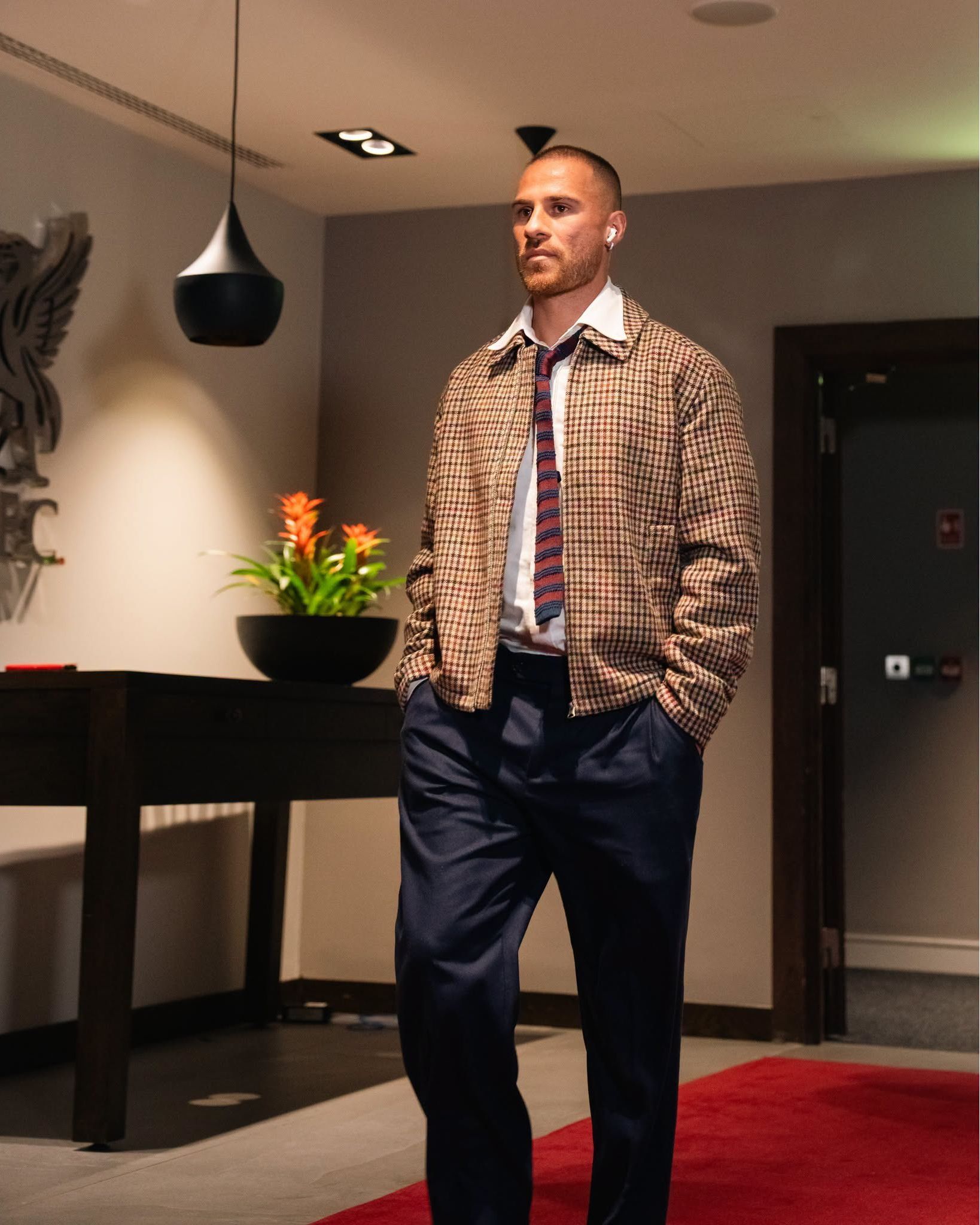
The Champions League was all about elegance last night
Liverpool and PSG debuted their Tommy Hilfiger and Dior looks
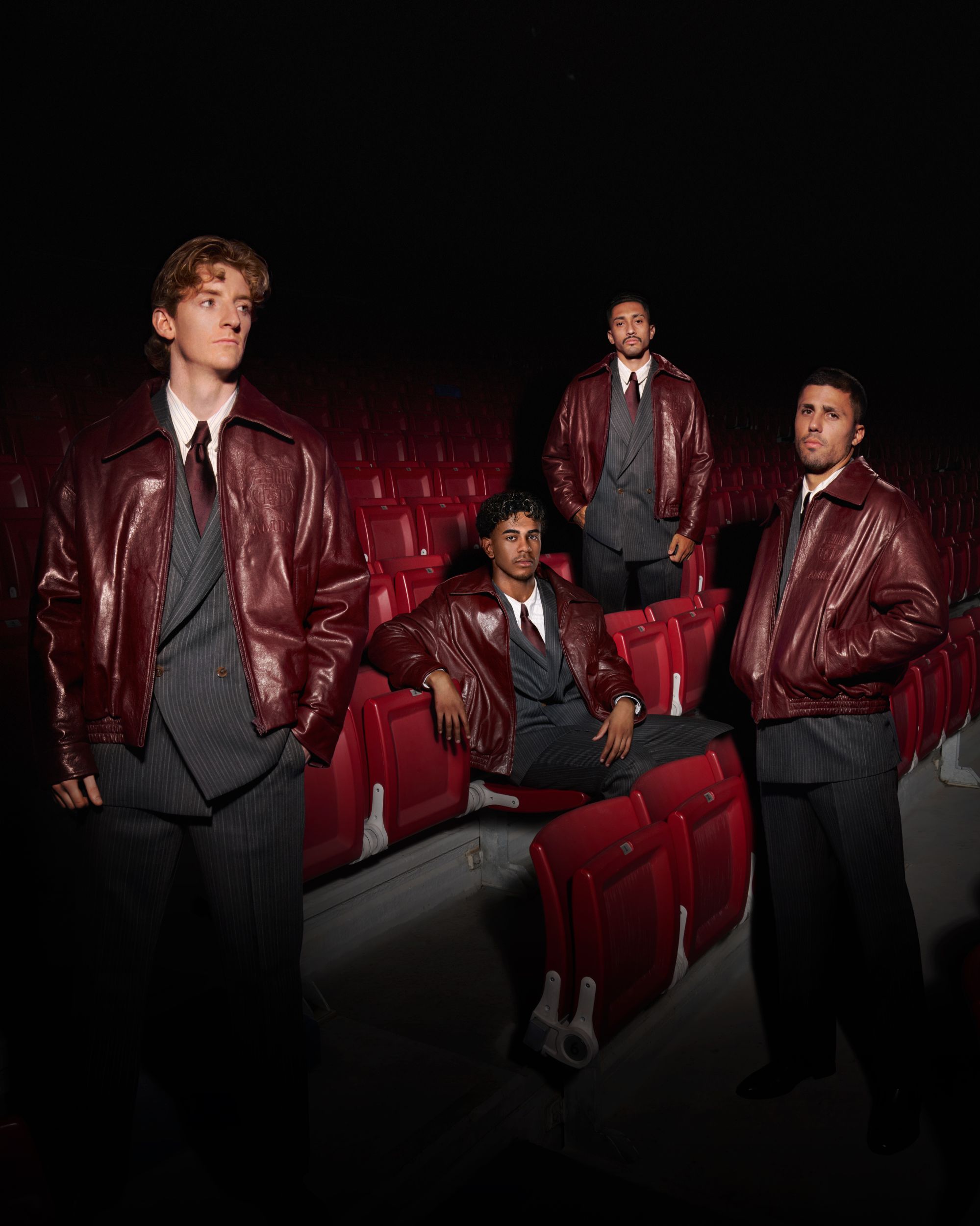
AMIRI has unveiled its new formalwear collection for Barcelona
Tailored suits, leather jackets and details inspired by the club's Blaugrana identity