«We produce what we design» - An interview with Monica and Paola Santini We've been in Bergamo to visit Santini's HQ
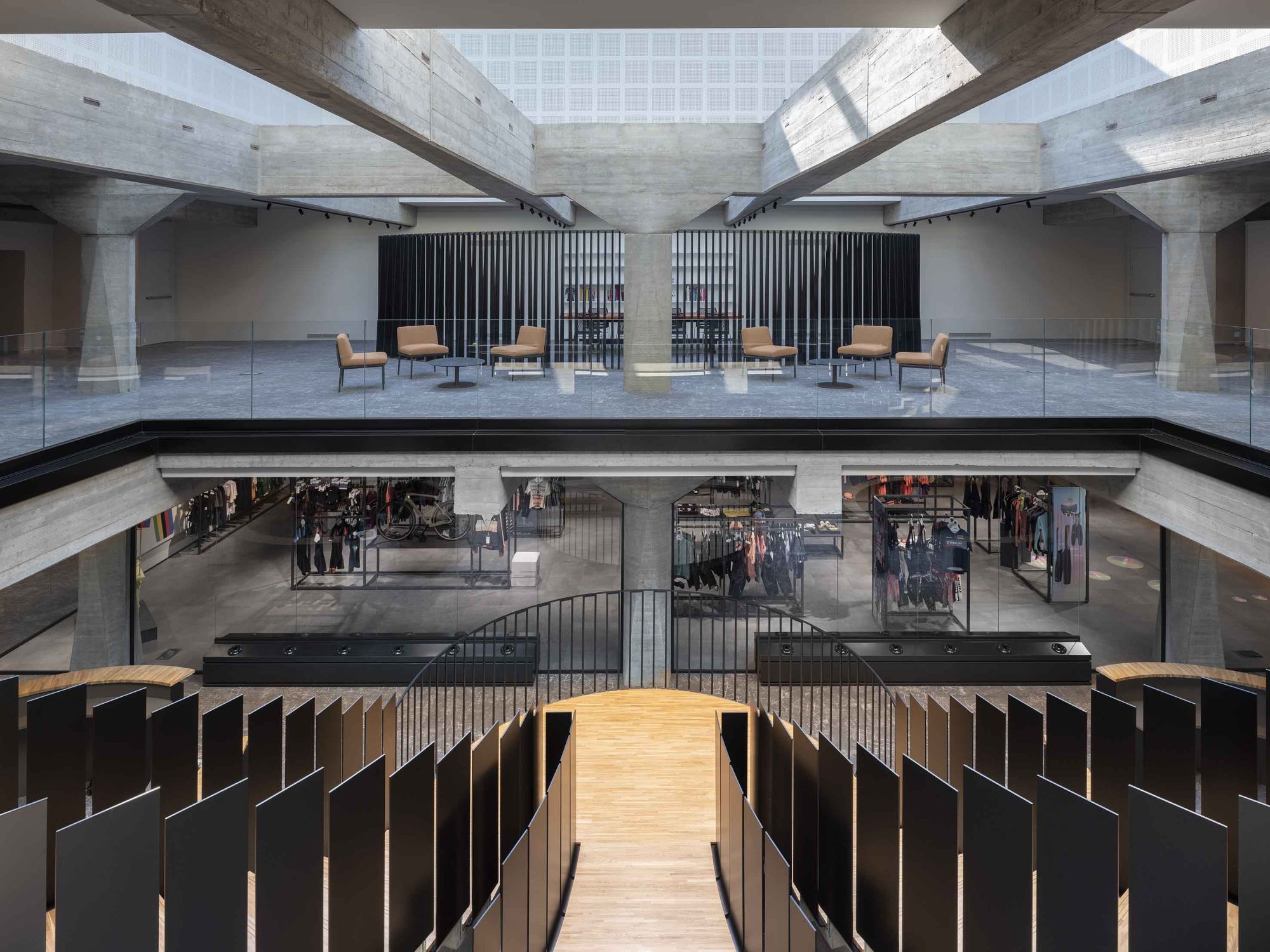
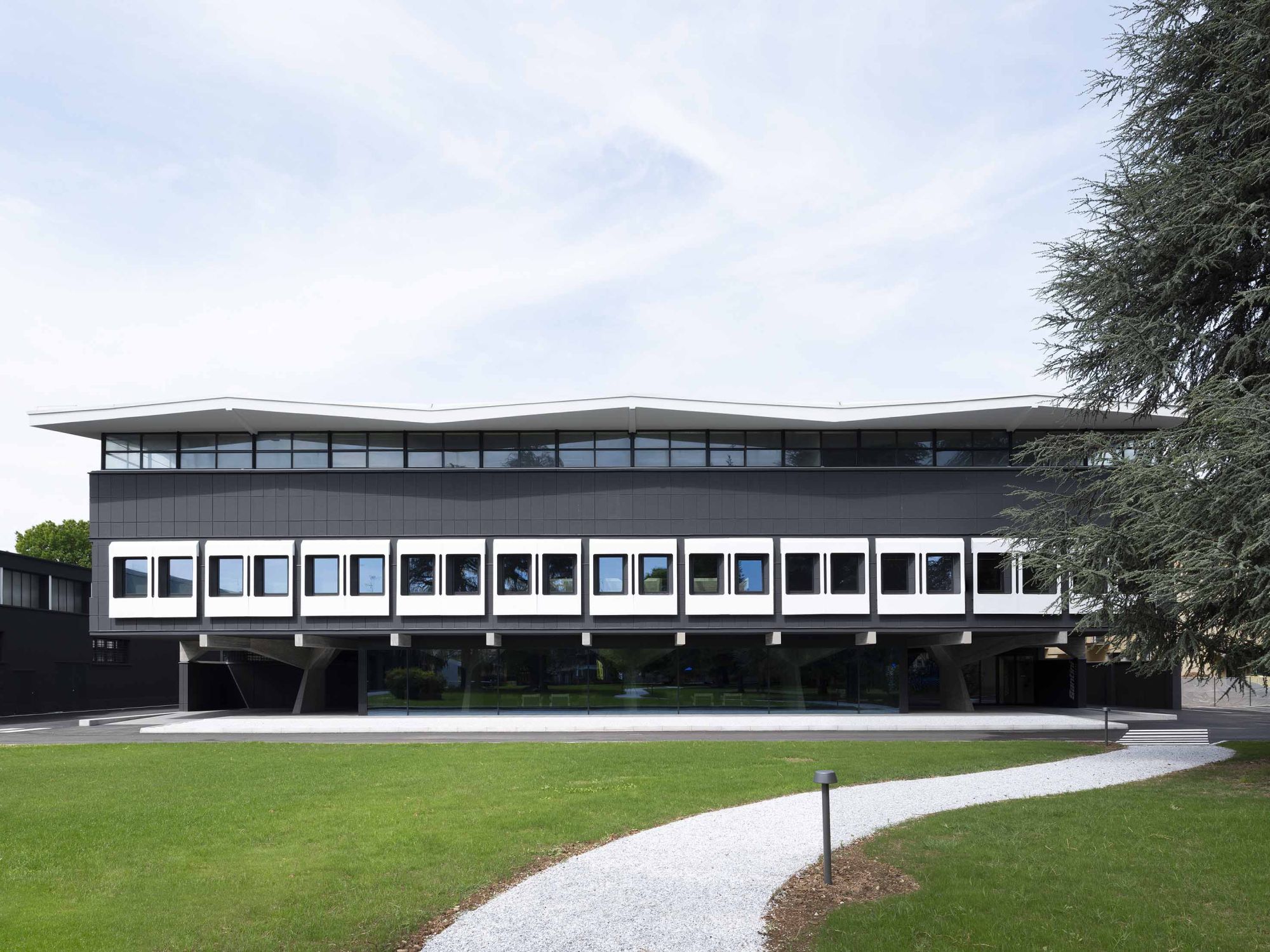
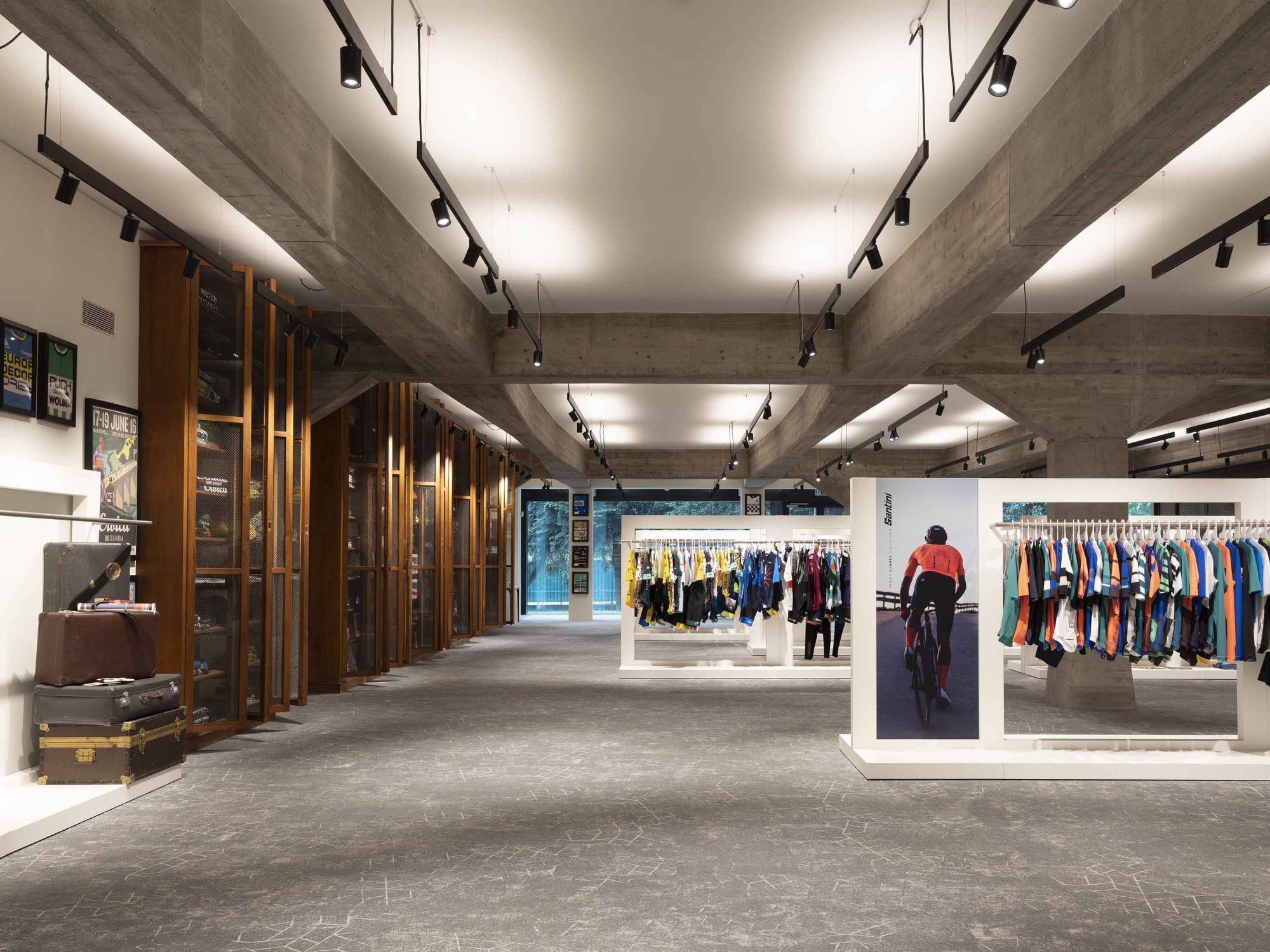
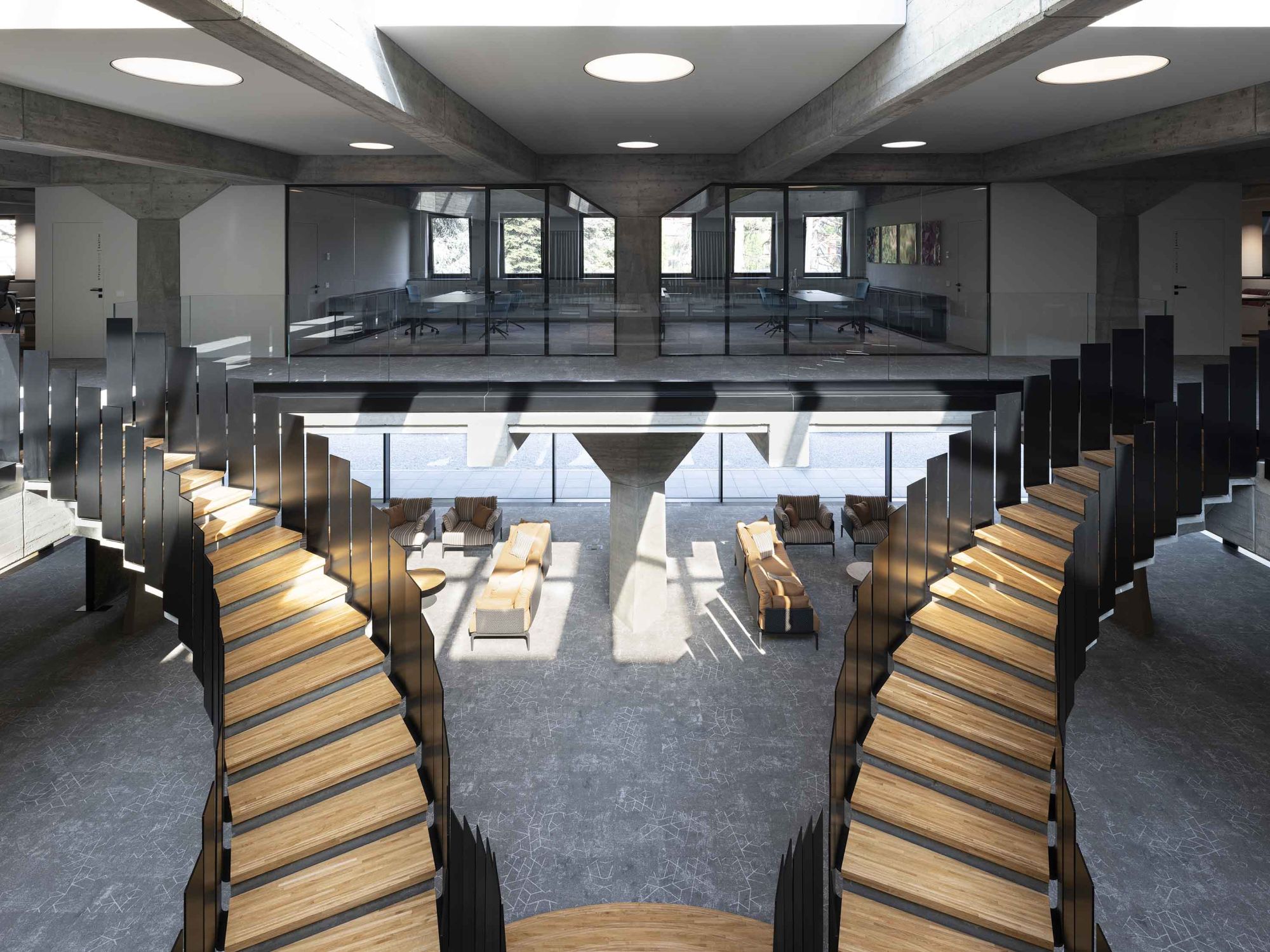
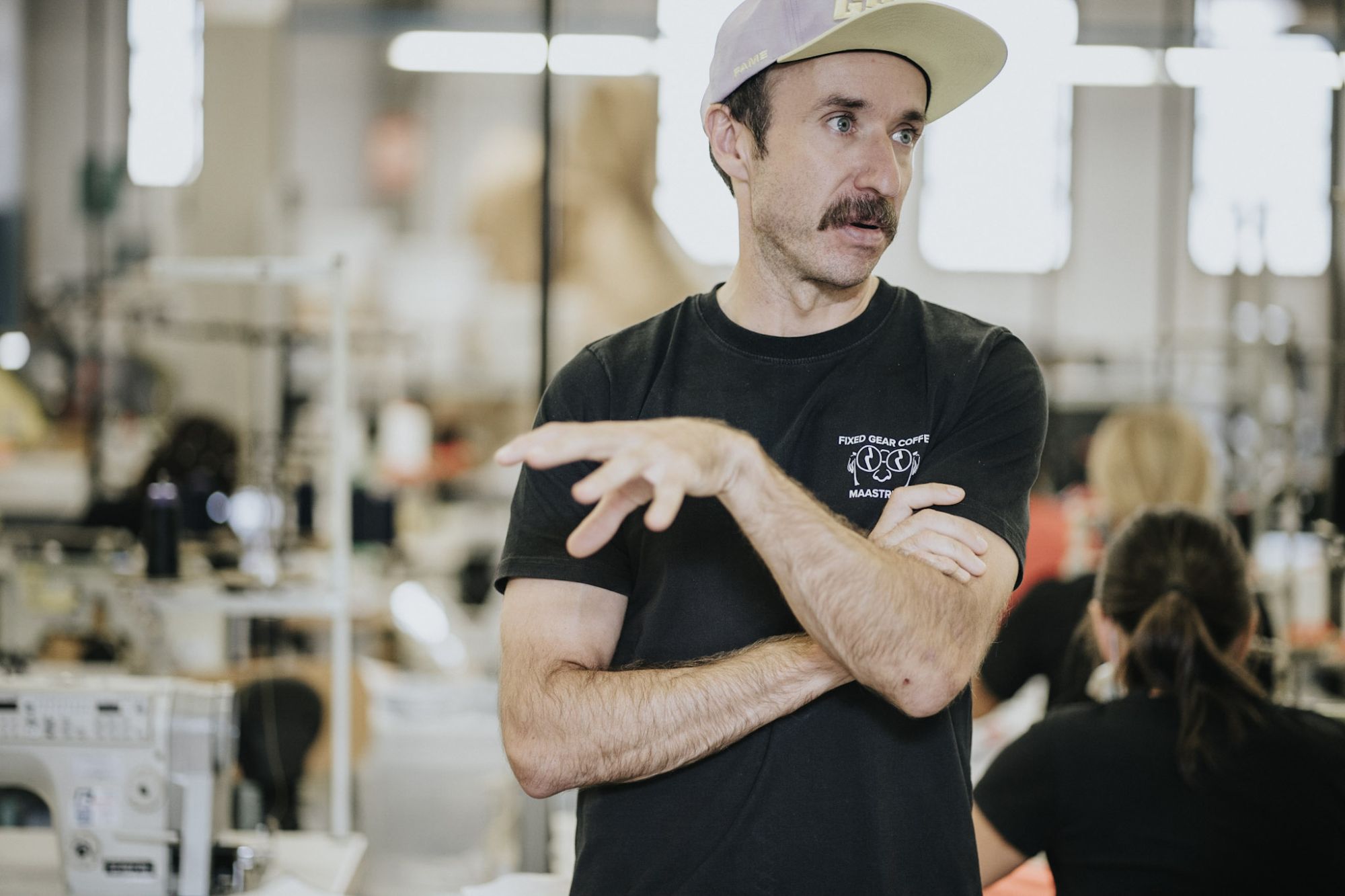
Since 1965 Santini has been synonymous with cycling. And since 1965 cycling has been synonymous with Santini. Born in Bergamo as a family-run business, it has become a global reference for aesthetics, technology and manufacturing, thanks to the vision of Cavalier Pietro Santini. Today the brand is famous worldwide thanks to collaborations with the most well-known riders, the most successful teams and the most prestigious races, while maintaining a strong link to the Bergamo area — a choice driven not only by practicality but by the desire to give something back to the community.
The new headquarters of 24,000 square meters located in the heart of the city, with its brutalist aesthetics, houses the administrative and creative offices, the archive, the store and, above all, the production heart. 150 employees in total who, thanks also to direct coordination and a leaner operational line, work on creating 7,000 pieces every day, all hand-stitched: from the garments worn at the Tour de France to those chosen by amateurs and enthusiasts for their solo or group rides.
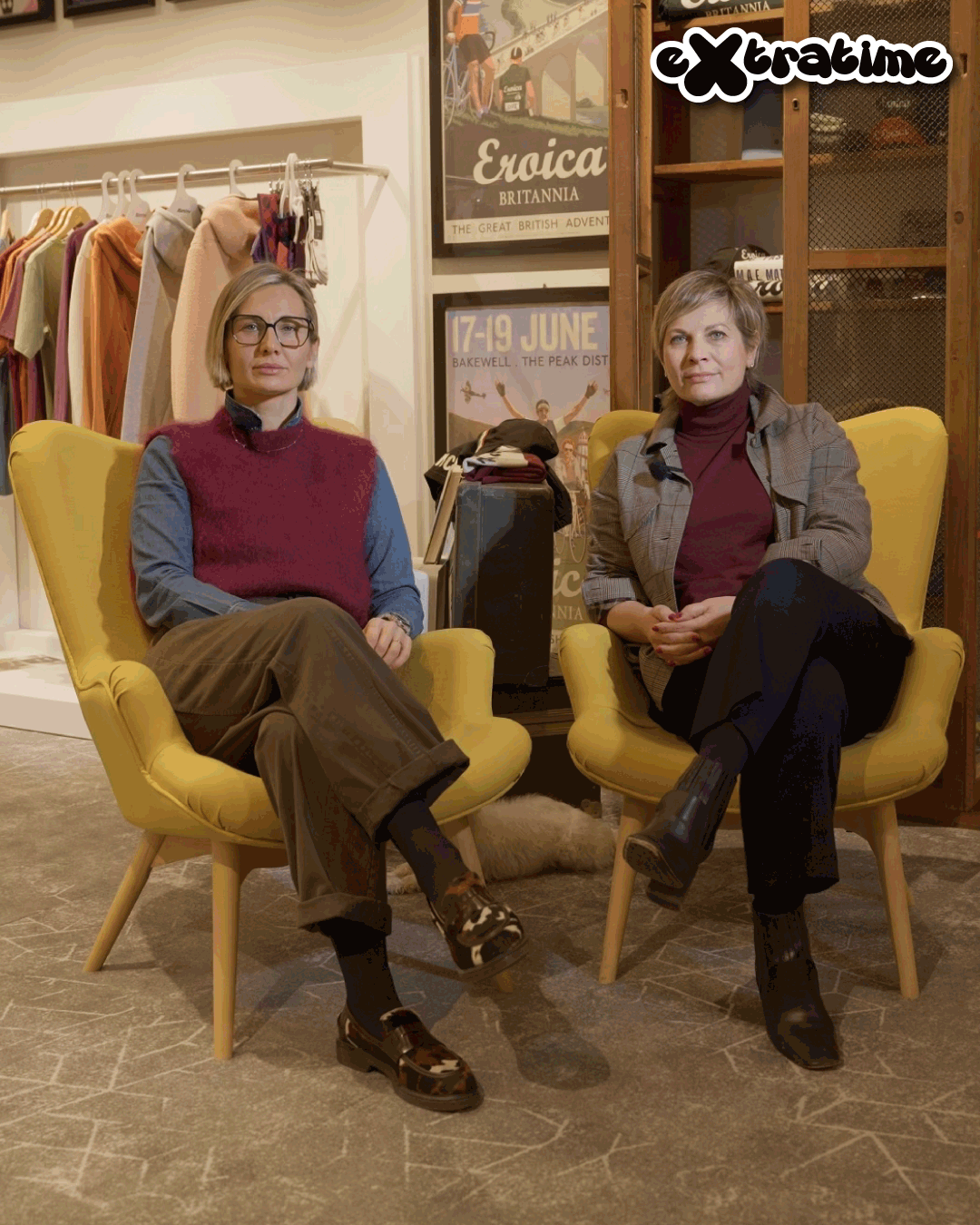
In everything Santini produces there is passion. There is dedication. There is experience. There is expertise. There is the desire to protect tradition and to look forward inspired by innovation. You sense it perfectly while we tour the headquarters in every corner guided by Fergus Niland, creative director of Santini Cycling. You understand it even better from the words of Monica Santini, CEO of Santini Cycling, and Paola Santini, the brand's Marketing Manager.
What is your first memory connected to the company?
Monica Santini: "Certainly my first memory of the company was the factory when I was a child. It was classic that, not knowing where to put me during summer holidays or afternoons, they would have me in the factory and give me small tasks like waxing the wool when we worked with wool or cleaning garments from leftover threads — things like that — and I actually remember many, many happy days with those factory workers who of course had taken me a bit as a mascot."
Paolo Santini: "So, when I think of moments from when I was a child, besides the summer holidays as Monica said, I remember that during school we had the family apartment above the offices and so it was usual that I would arrive home and go through the whole office greeting everyone, then go upstairs, eat, do my homework and eventually go back down when needed or to ask things of mum and dad."
When did you realize cycling would be your path?
MS: "Probably subconsciously we all always had the idea that this family business would be at least part of our lives, certainly — then that it would become our life perhaps came a bit later. I was doing work experiences abroad, I was living in Brazil for a few years and at one point my father called me saying he was approaching the very young age of 60. He said: ‘Tell me what you want to do because if you tell me you don't want to come back to run the company then I have to make other decisions’. That was like a last call and I decided to return to Bergamo and take charge of the company."
PS: "For me it was a bit of a copy and paste of what happened to Monica, with the difference that for me the call came from Monica and not from my father. I was in London when Monica called me one day saying she needed a hand with communication and marketing. That was my job. She said: ‘If you come back, I'm happy to put it in your hands. If not, let me know and we'll make another decision’. I thought about it and since I liked the environment — I have always thought our job was super exciting, in a beautiful field full of passion like sport — I said okay, I'll come back."
Simple question: do you like cycling? Do you practice it?
MS: "A lot, madly. I'm an avid consumer of any cycling race you can find on television and of course I like going to races. I've always liked it and I find it a beautiful sport with incredible core values. A bit old-fashioned, I would say, because of the effort, the sacrifice, the suffering, but it's a sport I love very much."
PS: "I like it a lot too. I think Monica and I complement each other because she is the one who doesn't miss any cycling race anywhere in the world; I much prefer riding the bike to watching races. I miss being unable to go out on the bike more because I'm busy."
Cycling is a predominantly male world: did you encounter obstacles when you joined? Did the surname help you overcome any mistrust?
MS: "More than the surname, it was a bit of the respect people had for my father. Personally I never focused on being a woman rather than a man. It never limited me psychologically. I'm not someone who expects acceptance. I am who I am — if people like me they like me and if they don't, that's fine. I'm fine either way. I believe being part of this world since childhood was very helpful. It's not rare that I found myself as the only woman at a table or the only woman on a team bus. I never worried about that and so perhaps by not worrying I didn't feel much pressure."
PS: "Our father always had an enormous number of women working for him. Apart from the production chain where, for culture and tradition, all the sewing is done by women, even in the offices it was really hard to find many men. Our father always made us live with the awareness that there were no limits of any kind and so perhaps starting from this premise we never even asked ourselves the question. Today we certainly find ourselves with a lot of other women in our field and it's very nice to have that comparison, but personally I have never had major problems being in a more male environment."
Today cycling experiments with an ever more refined, niche aesthetic — how does an international brand like Santini position itself?
PS: "We position ourselves as a brand that stands out from others because first of all we produce what we design, so our entire supply chain from start to finish is followed by us. This gives us a product that is very well thought out but is also the result of a collective effort. We are not a brand that designs and then delegates production to someone else. Certainly, from my point of view, this is something that distinguishes us and allows us to offer flexibility. Not only with professional cyclists, with whom we work daily and it has happened that we produced garments in one day for an athlete or an entire team, but also regarding relationships with shopkeepers. And then there is care for all the technical work, with our entire research and development team, combined with what style is. What we do not want is to be a brand only of style or only of technology and performance."
MS: "We are a brand that grew up with cycling. Our 60 years are on one hand obviously our heritage and so we can say we have been through all the different stages, we have been protagonists of a lot of innovation over these 60 years. On the other hand it also gives us a very deep knowledge of what this sport needs and how we can respond. Our 60 years could in a certain respect be a burden, in the sense that a 60-year-old brand can be seen as an old brand. I believe the work that Paola and I have done has instead turned those 60 years into a value. Our heritage combined with the desire for constant innovation gives us elements that others probably don't have."
Have you ever collaborated with or thought of collaborating with a fashion brand? How does fashion tie into cycling aesthetics?
PS: "We have done several collabs with the fashion world or with other worlds outside cycling. One of the more recent ones is definitely K-Way. Where did it come from? In some cases it comes from the brand itself, in other cases we might look for a type of collab. In the case of K-Way it was their will: they wanted to approach the world of cycling and wanted something centralized on the bike also in their stores. They chose us because they recognized a heritage very close to the K-Way brand which, by the way, was born in 1965 just like us."
MS: "We started doing collabs 30 years ago and surely the fashion world is the more obvious one but we've also collaborated with brands that have a union of interests. The most recent, for example, was with Brooklyn, which had an iconic team in the '70s and with which we made a really beautiful capsule recalling the wool jersey. In this we were chosen because creating wool jerseys is not for everyone and also thanks to our work with Eroica for many years we can still work wool as we did at the beginning. We have a collab with Pirelli that has lasted two years and will continue. In this case, the beauty of being able to enter Pirelli's historical archives — a brand with over 100 years of history — with incredible design content even in their historical advertising was one of the beautiful elements on which we started working. We also strongly believe that collabs can be a great promotional element for our brand in different worlds and also for other brands in the cycling world."
Are there collectors in the cycling world? How does it work?
MS: "There is definitely collecting. Cycling has all that beautiful iconography from the past and obviously being a brand that grew with cycling, we have many pieces. I must say we are also missing many pieces because at the beginning there wasn't that idea of building an archive that could be useful in the future — people only thought about working. Dad didn't have that obsession with keeping things; he sold them. So we miss many pieces that we look for on the market. Our collection is large and I have to say that when we host guests who visit the archive they are always very impressed and would like to take pieces away. On several occasions we have lent items for exhibitions."
PS: "The old managers and former riders usually didn't keep anything; actually it's sometimes easier to find pieces on the web from collectors who resell things and in this way we occasionally find pieces."
MS: "Many times we tried contacting riders but unfortunately it's hard that they kept jerseys. Now there are also several museums, especially in Europe, that may have received various donations over the years from professionals who didn't know what to do with that material and gave it to museums. We've identified some pieces but they haven't sold them to us — we're trying to have them left to us as bequests."
Final question: yellow jersey or rainbow jersey?
MS: "In my heart I have the Rainbow Stripes, maybe because it's the sponsorship we've had for many years and it's the one I remember since I was a child. The World Championship for me is a race I have never missed, even physically attending. Not because it has more or less market value, simply if you ask me personally I would say the rainbow jersey. The World Championship has been around for several years and for this reason we even have the claim/hashtag The Rainbow Factory. From one point of view, if you think about it, it's the only jersey that doesn't carry sponsors. It is the representation of a value, of achieving a goal. And it has such beautiful colors that certainly make it unique and over the years it has given us so many wonderful satisfactions."
PS: "For me too the rainbow jersey — firstly, in the corridor that leads here there is a painting where hands sewing a rainbow jersey are depicted; the painting is titled ‘Sewing dreams and rainbows’ and I think this is the reason. If you think about it, the rainbow jersey is the dream of any child who starts riding a bike. It is the symbol that represents being the best in the world. Besides being objectively a beautiful jersey that many who don't even practice cycling like a lot, it certainly has a very, very deep meaning."
What to read next
«You can’t separate Marek Hamšík and his mohawk» - Interview with Marek Hamšík
A journey into Marekiaro’s mind
«I would have been a football player like Florenzi» - Interview with Flavio Cobolli
A chat about AS Roma, tattoos and fashion