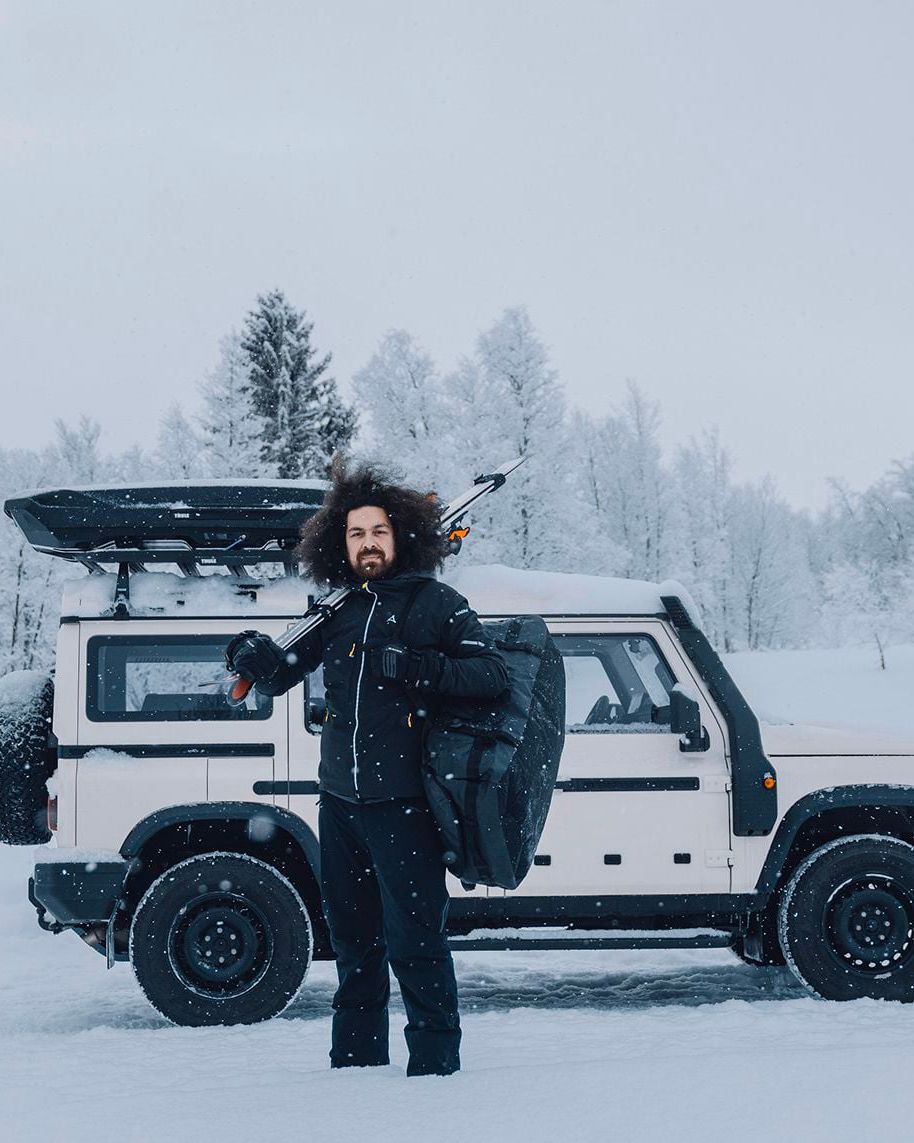
Thule and the contemporary language of the outdoors Sport, travel and freedom
In recent years, the experience of sport has increasingly moved beyond enclosed spaces, and the outdoors is no longer just an occasional escape. The rediscovery—quietly, we might even call it a “trend”—of nature-connected sports is no longer driven solely by the idea of evasion, but has evolved into a cultural language that intersects sport, travel, and everyday life. The mountains; the waves of Portugal or the Canary Islands; snow; the road leading out of the city have become spaces of expression, places where people reconnect with a rhythm increasingly shared by a wide community of enthusiasts. In this landscape, equipment plays a fundamental role, and THULE is not merely a technical brand: it stands as one of the most coherent symbols of this transformation.
THULE’s Scandinavian roots
Founded in Sweden in 1942, Thule was born in a country where the relationship with nature has never been a trend, but a necessity. Growing up among long winters, mountains, and extreme landscapes taught the brand a clear lesson: equipment must always work, adapt to different conditions, and stand the test of time. In essence, there is no such thing as good or bad weather—only the right way to move through it or dress for it. From this philosophy emerges an approach that blends design, safety, and durability, establishing Thule over the years as a global reference for those who see sport and travel as real, unfiltered experiences.
The connection with the mountains and snow is central. Skiing, snowboarding, and winter sports are not merely disciplines, but tools for rediscovering both the landscape and oneself. THULE has played a key role in supporting this evolution, making the journey to the mountains an integral part of the experience. Loading equipment onto the car roof, organizing the trunk, or using bike racks for urban cycling is no longer just about transporting objects—it’s about building freedom of movement, removing friction between the desire to leave and the actual possibility of doing so.
What sets THULE apart is its ability to read sport beyond pure performance. The brand speaks to those who are constantly moving—physically and metaphorically. Its campaigns resonate with people who cycle through the city during the week and head to the mountains on weekends, as well as with those who experience the outdoors with their families, seeking versatile solutions rather than hyper-specialized ones. Adaptability to continuous change—technological and, inevitably, environmental—is one of the defining challenges of our century. With THULE, this adaptability becomes a core value, thanks to products designed to shift function, context, and pace alongside the people who use them.
Functionality as freedom
Functionality, by definition, is never cold or purely technical, but rather a way to simplify life, leaving more space for experience and less for logistics. It’s the idea that visibility is not synonymous with existence, and that thoughtful detail or harmonious function can add value. For the Swedish brand, equipment can even disappear at the moment it’s truly needed, allowing full focus on the sporting gesture, the landscape, and shared time.
In recent years, this vision has expanded further, interweaving sport with design and community. The stories told by Thule through the voices of its many ambassadors speak of balance and a slower pace of time—one that deepens discovery, especially after the adrenaline of a mountain bike descent. Nature as a space for well-being and connection is a profoundly Scandinavian concept that now resonates strongly with a generation attentive to how it moves, travels, and consumes. At a moment when mountains and the outdoors are once again central, THULE represents continuity rather than fashion. The brand does not promise extraordinary adventures; it enables real ones. Knowing how to travel means supporting a free and functional life, wherever it takes place: at the intersection of a big city, between city and nature, or deep within a forest with no intersections at all.
What to read next
How Arc'teryx Academy is redefining the mountain experience
Ahub for climbing, mountaineering and outdoor culture