What’s happening at Estadio de Vallecas? Decay, protests and political tensions surround Rayo Vallecano's historic stadium
The Estadio de Vallecas, Rayo Vallecano's home ground, boasts a history spanning nearly a century, during which it has experienced periods of glory—hosting remarkable sporting achievements—as well as moments of profound hardship, even serving as a detention camp. The beating heart of what is considered Europe’s largest neighborhood, located in the south-eastern area of Madrid, the stadium is an integral part of the district’s identity and inseparably tied to the football club it houses. Today, however, its old-fashioned atmosphere—idolized by lovers of vintage football—is deteriorating amid institutional neglect, forcing Rayo to play a home match away from Vallecas. At the center of this uncontrolled situation stands the club’s own president, Raúl Martín Presa, who is keen to leave the current ground, even at the cost of moving the team out of the neighborhood. In contrast, both government authorities and, above all, the supporters firmly reject any possibility of abandoning the stadium.
The origins of Campo de Vallecas
On January 23, 1930, the stadium’s history officially began under its original name, Puente de Vallecas. The team playing there at the time, however, was not Rayo Vallecano but Racing Club de Madrid, a club from the Chamberí district that chose this site to build its home. Built at a cost of 800,000 pesetas, the move would prove financially disastrous for the club, which fell heavily into debt and was forced to embark on a traditional tour of the Americas—popular at the time—to raise funds. A year later, Athletic Club de Madrid, later renamed Atlético de Madrid, attempted to purchase the ground at half price, but negotiations collapsed and the field was converted into a dirt track circuit.
In 1932, following the bankruptcy of Racing Club de Madrid, the venue was renamed Campo de Vallecas. Atlético played there sporadically in the seasons leading up to the Spanish Civil War. In April 1939, the stadium endured the darkest chapter of its history, becoming one of the 300 concentration camps organized by General Francisco Franco to detain defeated Republicans. For approximately fifteen days, 9,500 prisoners were held there in inhumane conditions, leading to illness and, in some cases, death. After the war, the stadium—damaged like much of Vallecas by Nationalist bombings—was restored, and between 1940 and 1943 Atlético once again made it their home, winning two league titles during that period. In 1944, the club returned to the Metropolitano Stadium, leaving Vallecas in state hands. The ground subsequently lost prominence, hosting amateur tournaments and even baseball games.
The Franco detention camp period
In the 1957/58 season, Campo de Vallecas finally became the permanent home of Rayo Vallecano, who had previously played at other venues in the district. This marked the beginning of an unbreakable bond between club, neighborhood, and stadium. Rayo remained there until 1972, when the old ground was demolished and construction began on a new stadium on the same site. The Nuevo Estadio de Fútbol de Vallecas was inaugurated four years later, on May 10, 1976, and the following season it hosted Rayo’s historic first campaign in the Primera División. Over its 50 years of existence, the stadium—now known as Estadio de Vallecas—has witnessed sporting highs and lows on the pitch, while off it time appears to have stood still, preserving an unmistakable vintage charm.
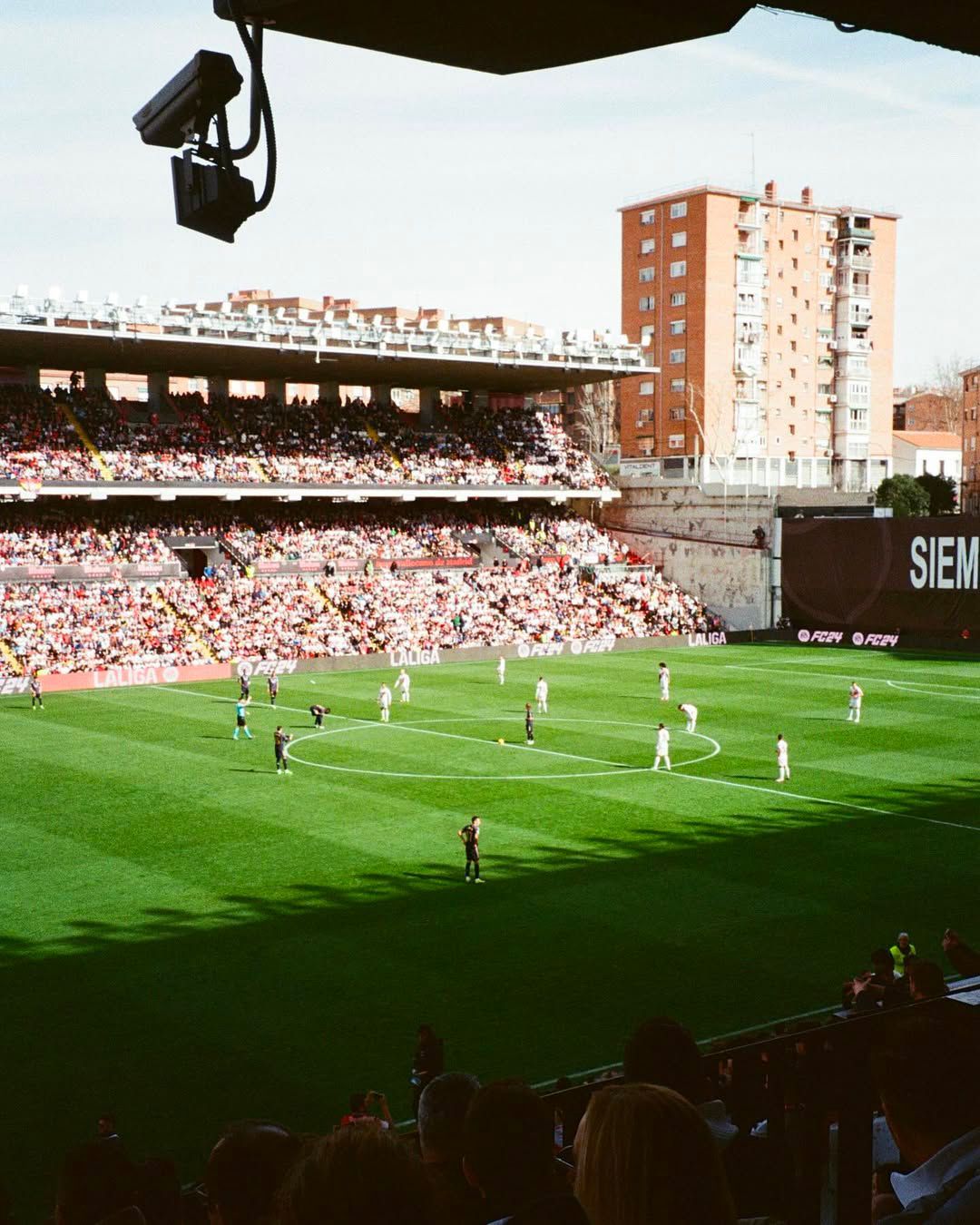
The stadium features two main stands and a popular terrace, while behind one goal stands a high wall that today commemorates the victims of Covid-19, with a row of apartment buildings rising just beyond it, from which residents can watch matches directly. Until 2011, it was the only stadium in Spain’s top divisions to retain a perimeter fence around the pitch, later removed as it no longer met safety regulations. Access to the dressing rooms is through a large gate opening directly onto the street, with home players often walking through the crowd after parking their cars nearby. The interior spaces beneath the stands house the headquarters of Madrid’s table tennis, chess, boxing, and billiards federations. Finally, emblematic of its old-school atmosphere is the ticketing system: there is no online ticket office, only a physical one. To attend a match, fans must queue patiently on the morning sales open, waiting their turn at the booths to secure one of the 14,708 seats.
Fan protests and match postponements
The decidedly amateur feel of the Estadio de Vallecas has long been both mocked and admired by Spanish supporters and teams alike. What has unfolded this season, however, goes beyond aesthetics, raising serious concerns about safety and neglect. Once a source of pride, the stadium has become a cause of embarrassment and frustration for the fanbase due to a series of ongoing structural failings. Alarm bells first rang in August when fears emerged that UEFA might refuse permission for Rayo to host Conference League matches at Vallecas given the condition of the ground. Emergency interventions ultimately averted that risk, safeguarding the return of European competition to Vallecas 25 years after its first appearance.
As LaLiga commenced, logistical issues prevented the accommodation of away supporters, who were reimbursed for their tickets. Vallecas is the only stadium without a properly segregated away section, and until December no dedicated allocation was available, forcing visiting fans to scatter throughout other areas. During the opening match against Barcelona, several peñas organized a silent protest against the club’s leadership.
Neglect has also affected the training center, with players forced to suspend sessions, alongside the abandonment of the women’s team, deteriorating pitch conditions, and poor hygiene in various facilities. Outside, rubbish and glass bottles accumulate; inside, exposed wiring, flooded and unlit bathrooms, and bird droppings have become commonplace. The backdrop is an ongoing conflict between Raúl Martín Presa and Isabel Díaz Ayuso, president of the Community of Madrid and owner of the stadium. Presa advocates building a new stadium—within or outside the neighborhood—while Ayuso favors renovating the existing structure.
Relocation or renovation? The political clash
The situation reached international attention in November during the match against Polish side Lech Poznań, whose social media mocked the state of the dressing rooms, showing a makeshift wall of water crates and mismatched towels. In December, Real Betis became the first Spanish visiting support to be admitted, with the away section absurdly cordoned off by a volleyball net. Throughout the season, both visiting clubs and Rayo head coach Iñigo Pérez have denounced the disgraceful working conditions, particularly the state of the pitch.
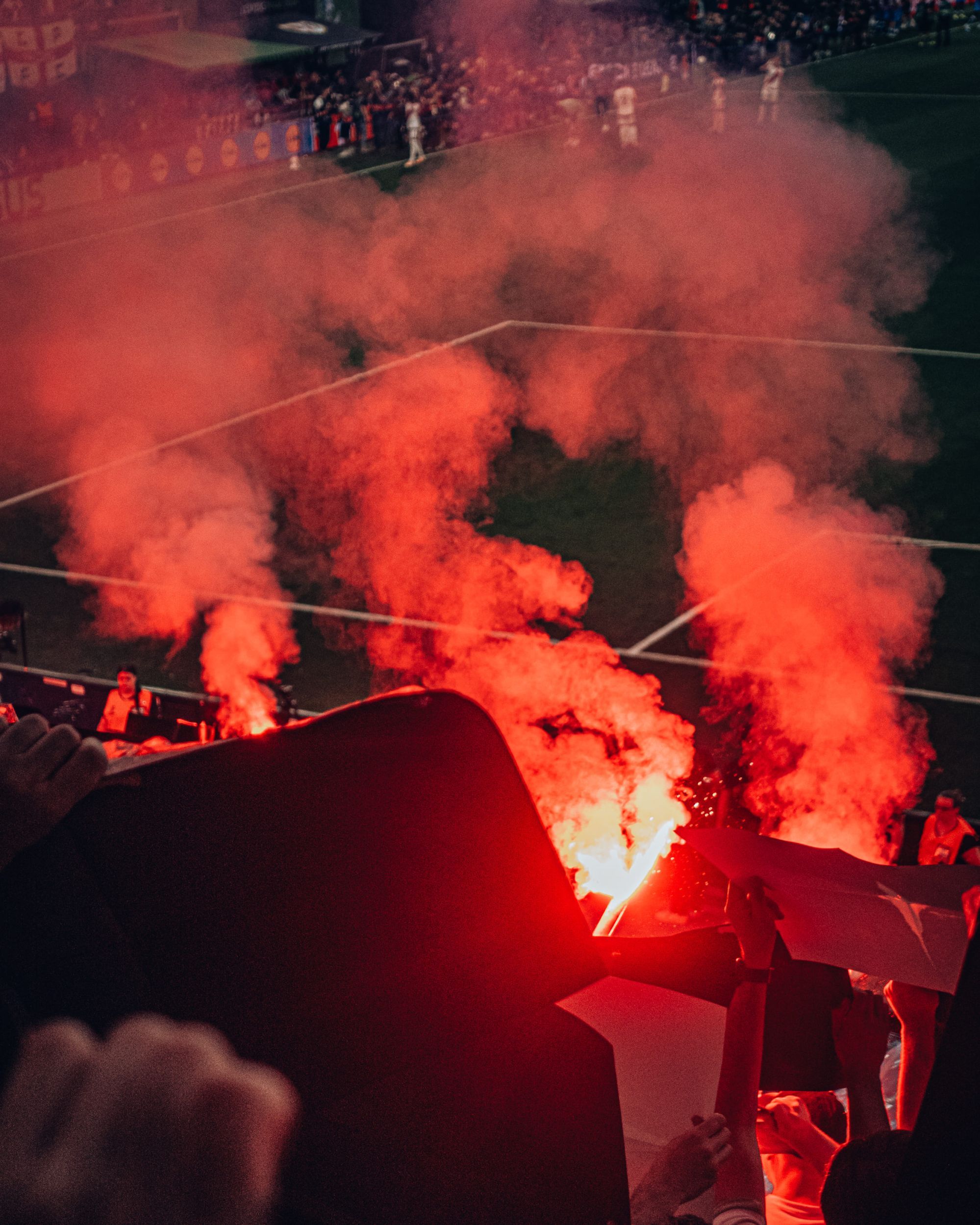
On February 7, matters hit rock bottom: just hours before kickoff, LaLiga announced the postponement of Rayo vs. Real Oviedo due to the poor condition of the playing surface. Hundreds of supporters gathered outside the stadium in protest, braving the rain to voice their anger at Presa. A week later, it was decided that Rayo vs. Atlético would be played at Butarque in Leganés.
Vallecas finally reopened last Saturday against Athletic Club after more than a month in forced exile, with fans raising cards reading “SOS” throughout the stands. It is hard not to suspect that Presa may be deliberately exacerbating the stadium’s dire condition to strengthen his case for relocation, arguing that a move is essential for the club’s survival—despite the steadfast opposition of the Rayo faithful. Meanwhile, the Community of Madrid is pursuing plans to expand the current stadium to 20,000 seats, with a renovation proposal already submitted by the architectural firm AGAS. Despite the return to Vallecas, the stadium’s condition remains precarious, casting uncertainty over each passing week—especially with knockout rounds of the Conference League on the horizon.
What to read next