












































How safe are footballers actually on the pitch? Questions are being asked following Noa Lang's incident
The incident that unfortunately involved Noa Lang during Liverpool-Galatasaray should also bring the spotlight back onto the real safety of footballers on the pitch. From the outside, a fan might assume that the only risks players face are the physical injuries that naturally occur during a match. Reality, however, tells a very different story.
What happened to Noa Lang
During the second leg of the Champions League Round of 16 clash between Liverpool and Galatasaray, Noa Lang crashed into the advertising boards placed just beyond the end line at Anfield. The Dutch winger instinctively used his hands to cushion the impact, but suffered a deep cut to his right thumb, forcing the medical staff to intervene immediately to stop the heavy bleeding. As later confirmed by Galatasaray, Lang underwent surgery, avoiding the risk of amputation. At the moment there are no further official details, with investigations still underway to determine the exact dynamics of the accident and what might have gone wrong.
The Domenico Giampà incident
Lang’s case is obviously an accident — the kind of episode rarely seen on a football pitch — but the severity of its consequences should not turn the narrative into that of an isolated event. One of the most dramatic precedents dates back to 2004, when Domenico Giampà injured his left thigh after colliding with advertising boards during Messina-Lecce, requiring an astonishing 147 stitches to close the wound.
The Old Trafford case
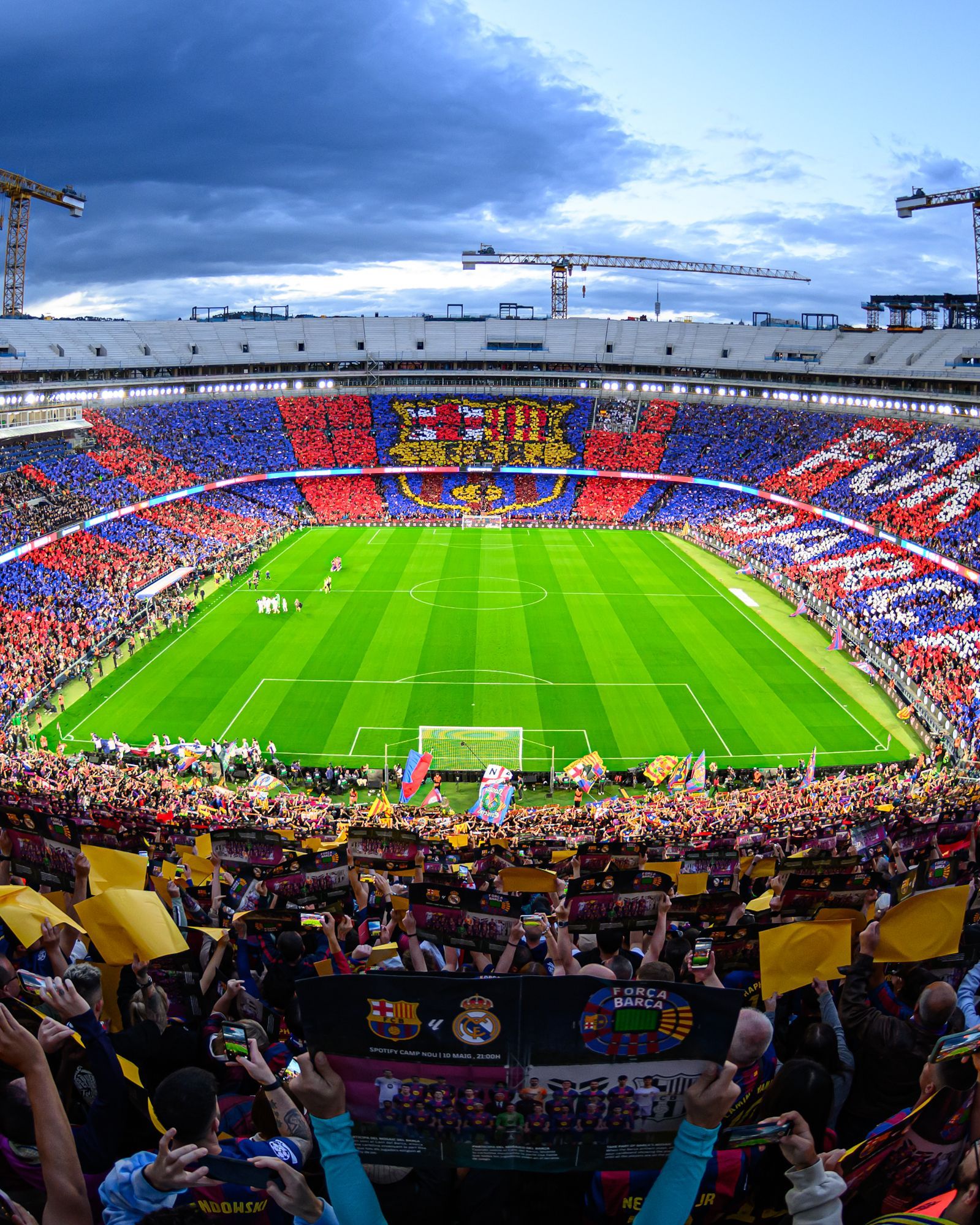
A quick tour of European stadiums easily reveals several critical situations. Marassi, for example, is often celebrated for its English-style architecture, but the flip side is that the dugout trench sits right next to the touchline, and over the years players have occasionally fallen into it while trying to keep the ball in play. Old Trafford also hides its own traps: beyond the end line the pitch slopes downward, leading to a step and a brick walkway, usually covered by a green carpet. This situation can be seen in other English grounds such as Tottenham Hotspur Stadium and Anfield.
There is no such thing as zero risk
These are just two examples among many that show how, for footballers, accidents can always be around the corner. Zero risk, like in any workplace, is almost impossible to achieve — but it would be misleading to assume that footballers are immune from off-the-ball dangers. The placement of advertising boards, as seen in Lang’s case, is one of those factors that should always be taken into account. The comparison with Formula 1 is telling: race cars rely on wide run-off areas when they leave the track, helping them slow down before any impact with barriers. Footballers, on the other hand, often reach the sidelines at full speed while trying to keep the ball in play — only to find an obstacle waiting for them.
What do UEFA regulations say?
According to UEFA regulations, advertising boards must be positioned at least three metres away from the pitch, while the benches must sit at least four metres away. The same federation also indicates five metres as the ideal distance from the field of play for any structure, whether advertising or related to a team’s technical staff. This is not always doable and a clear example is Stamford Bridge. Additionally, regarding LED advertising boards, Article 74 of the Champions League Regulations states: "UEFA surveys each system and power set-up in advance. Systems that meet UEFA’s specifications must also be set up in such a way as to conform with UEFA’s needs. This means one continuous system, at least 246m long and 90cm high, with fully closed corners and no gaps."