






Europe is both a destination and a starting point for Como Is the Champions League coming to the lake?
The element of surprise has disappeared and we have quickly grown used to this new reality: Como is part of Italian football’s elite. The Serie A standings say so, with seven matchdays to go and the Lombardy club sitting in fourth place, behind only Inter, Napoli, and Milan. The pitch has validated it every weekend for the past twelve months. And the transfer market confirms it too, where Como have for years looked down on almost everyone else in terms of spending power, despite a far smaller fanbase and revenue streams than the league’s giants. In a few months’ time, it may be officially confirmed by a UEFA anthem—whether it’s the Champions League or one of its lesser siblings.
European qualification would mark another major checkpoint for Como’s Indonesian ownership. Achieving it so quickly would seal the work and vision of head coach Cesc Fabregas. But it would also mark the beginning of a new chapter: one involving compliance with Financial Fair Play, progress on stadium redevelopment, sustaining the team’s rapid growth, and deepening integration within the social, economic, and tourism fabric of the region. Because while this used to be the story of Como Calcio 1907, it now feels more like that of "Como Calcio—and much more—2019", the year the Hartono brothers arrived with their immense wealth and a vision where football is just the visible tip of a much larger iceberg.
The Hartono vision: more than football
To truly understand this Como, you need to rewind the tape and shift your focus away from the pitch—the most visible part of a much broader project. In 2019, when the club was still in Serie D, it was acquired by Robert Budi Hartono and Michael Bambang Hartono, who passed away on March 19, for what now seems like a negligible fee: around €200,000. With that, one of the world’s largest private fortunes entered Italian football: an empire spanning industry, finance, and e-commerce, estimated by Forbes at around $44 billion.
@nsssports So many celebrities arriving for the match. #como #juve #seriea #thierryhenry suono originale - nss sports
Inevitably, from that moment on, Como changed dimension dramatically. Climbing through the divisions and reaching Serie A in 2024, it has quickly become one of the league’s best teams. This rise has certainly been made possible by the ownership’s investments, but not only that. There is also a coherent vision and organizational structure, with operations led by Mirwan Suwarso and the technical area shaped by Cesc Fabregas as the deus ex machina. He is the architect of a club that thinks and plays like a major European side: young, technical, built on international scouting and talent development. Over the past two years, according to Transfermarkt, Como have tripled the total value of their squad, thanks to both smart transfers and internal growth. This is not a fairytale underdog story—it’s a project designed to establish itself, and clearly finding a way to do so.
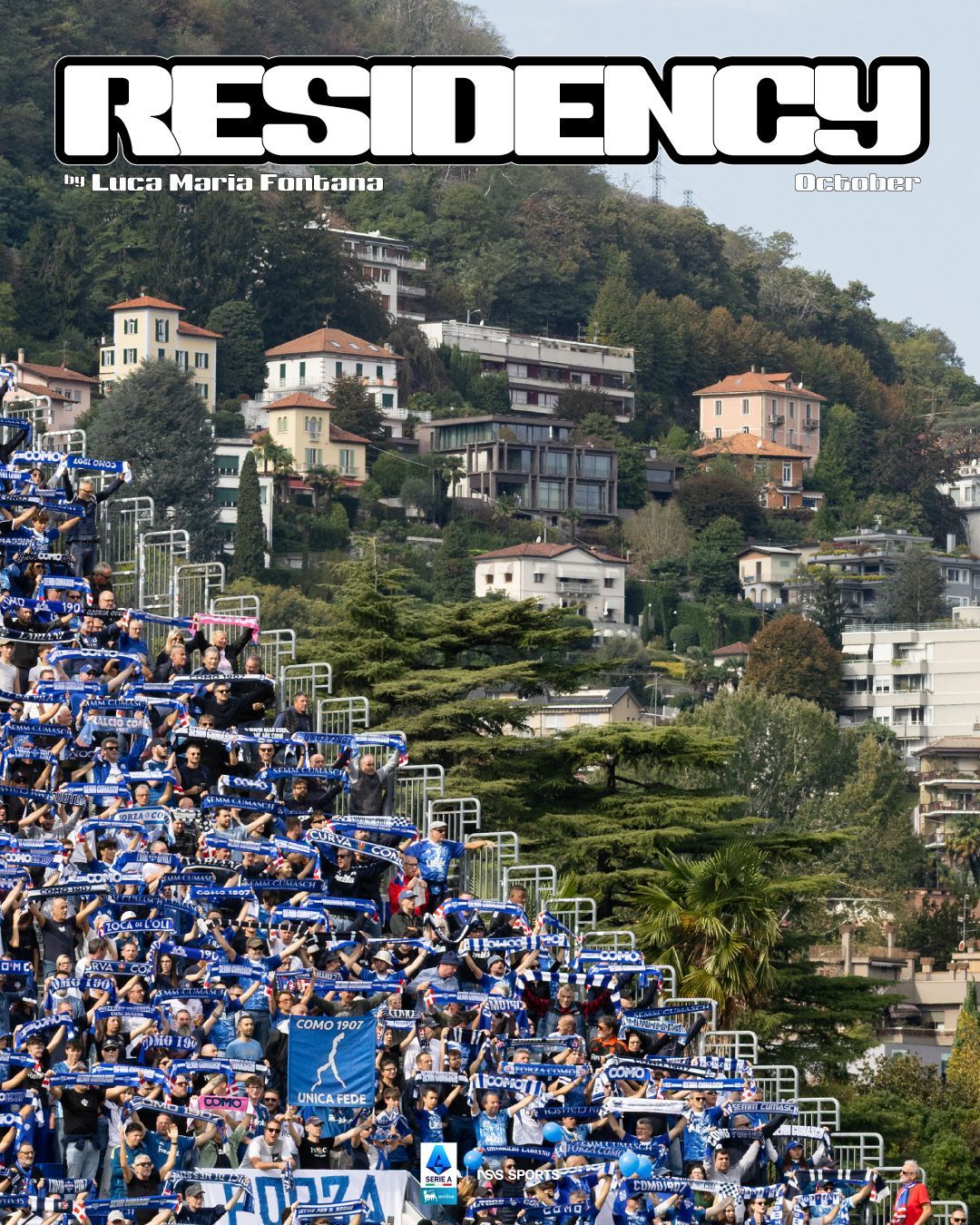
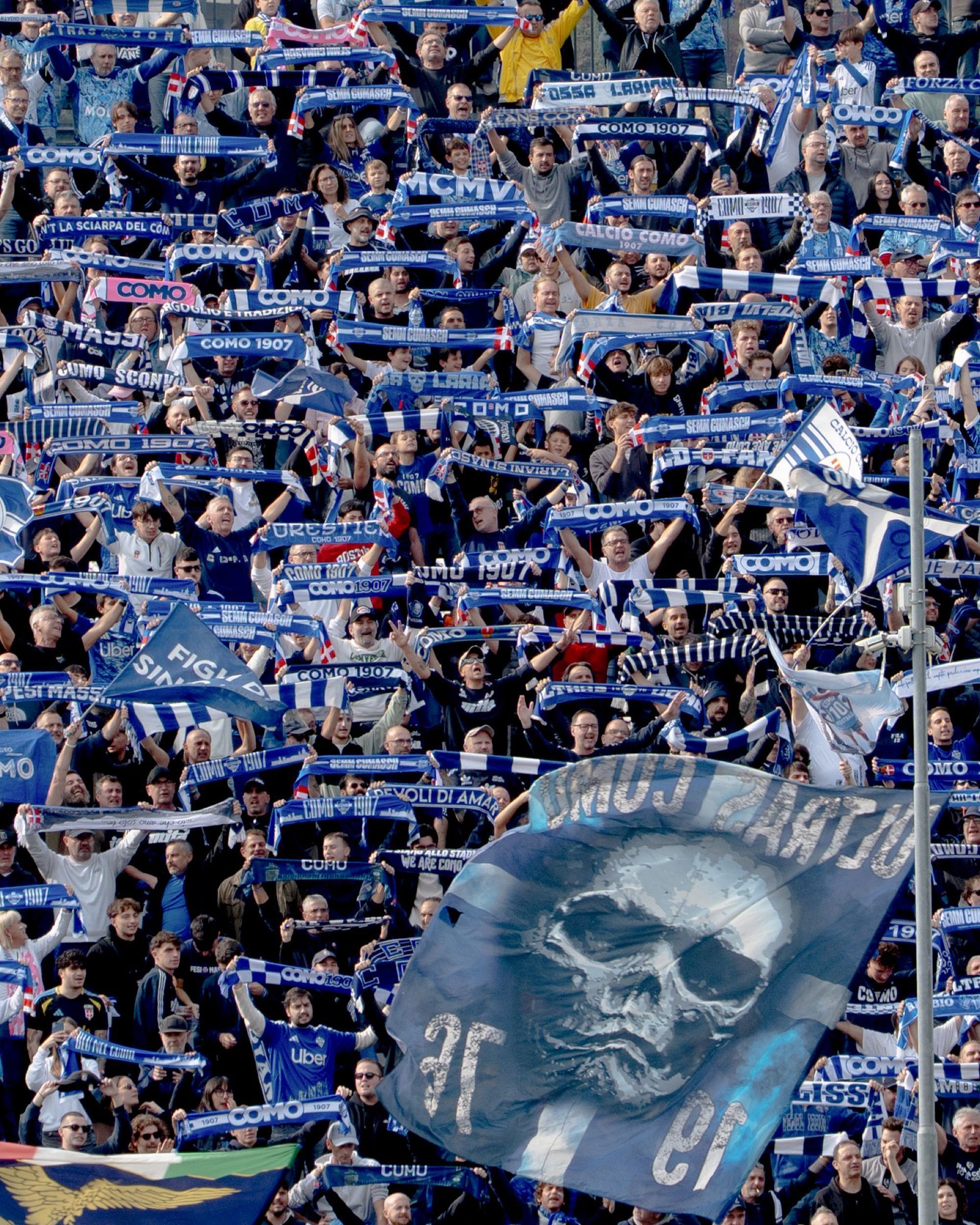
Even in terms of image, Como have rapidly transformed. The Sinigaglia Stadium has become a runway for actors, artists, entrepreneurs, and international jet-set figures, while the club’s communication increasingly resembles that of a lifestyle brand. Not everyone in Como appreciates this shift, despite efforts to maintain local identity through constant references to the city. Football, however, is only one piece of the puzzle. The broader ecosystem spans retail, entertainment, real estate, academies, and more, forming a network designed to function as an integrated platform—where the football team is just one asset, and Lake Como is both the symbolic and commercial core.
The Financial Fair Play challenge
The key question, from a football perspective, is how long Como can sustain this level of spending, and how this phase will evolve into equilibrium. At present, the club’s sporting growth is supported by an unbalanced financial structure. The 2025 financial report—its sixth consecutive loss since the Hartonos arrived—shows over €160 million in costs against roughly €55 million in revenue, a ratio that cannot hold long-term.
As long as operations remain within Italy, this is less of an issue. Regulations allow losses to be covered through capital injections, and ownership—having invested over €300 million—has shown it can sustain such figures. This is how Como has been able to compete immediately with clubs boasting far higher revenues, building a deep squad and maintaining a wage bill comparable to top-tier teams. Entering European competitions, however, changes everything.
UEFA’s Football Earnings Rule and Squad Cost Rule impose strict limits on aggregated losses over three years and the ratio between squad costs and revenue. Currently, Como are well outside both parameters. In recent years, UEFA has often managed similar cases through settlement agreements—gradual adjustment paths allowing clubs to participate while complying with progressive restrictions. This is a realistic short-term scenario for Como, but the long-term challenge lies in generating sustainable revenue.
While the club has spent heavily, it has also created value, investing primarily in young or developing players within a system that has often increased their market worth. There is significant potential for capital gains, and major future sales—combined with UEFA revenues (especially in the Champions League) and commercial expansion—could help rebalance finances. Still, this may not be enough to bridge the gap with established giants. Scouting and player development are not exact sciences, and replicating the current mix of talent incubation and top-level results is far from guaranteed. One key question is what happens when Cesc Fabregas eventually departs—a scenario that seems inevitable sooner or later. Proving that such a model can be sustained indefinitely would be truly remarkable.
The Sinigaglia stadium redevelopment
Finally, if there is one area where Como’s ambitions and contradictions converge, it is the Giuseppe Sinigaglia Stadium. A unique venue for its lakeside location, yet far from modern football standards.
The issue is not capacity—around 12,000 seats, above UEFA minimum requirements—but structure. Opened in 1927, the stadium has several limitations incompatible with European competition standards: temporary stand structures, lack of adequate hospitality, media, and service areas, and more. Should Como qualify for Europe, they would likely have to relocate for the 2026/27 season, potentially to venues such as Udine or Reggio Emilia—an acceptable short-term solution, but far from the club’s vision.
For the ownership, the stadium is not just a football necessity. It represents the intersection of sporting, economic, and identity-driven ambitions: increasing matchday and hospitality revenues, strengthening ties with the local community, and transforming Sinigaglia into more than just a football venue. The redevelopment project, entrusted to Populous—the firm behind, among others, the new Wembley—is aligned with this vision: a multifunctional space open year-round, featuring restaurants, retail areas, services, and hospitality facilities. Designed for both fans and tourists, it reflects the broader experience-driven philosophy of the entire project.
If the redevelopment is seen by local authorities as an opportunity, it has also sparked criticism. Some fear it could disrupt an already delicate balance, increasing tourism pressure—already a debated issue—affecting housing and reshaping one of the city’s most iconic spaces into a commercial hub. The situation is still evolving, both within the club and among institutional stakeholders. What is certain is that Lake Como is not just a backdrop, but the core of the Hartonos’ vision. This is why, despite Sinigaglia’s limitations, relocating has never been seriously considered. If European qualification represents a historic milestone and a financial boost, it will also open new questions—answers that will ultimately define the future of this ambitious project.