
























The new aesthetic of the EuroLeague Final Four Innovation, entertainment and new global strategies

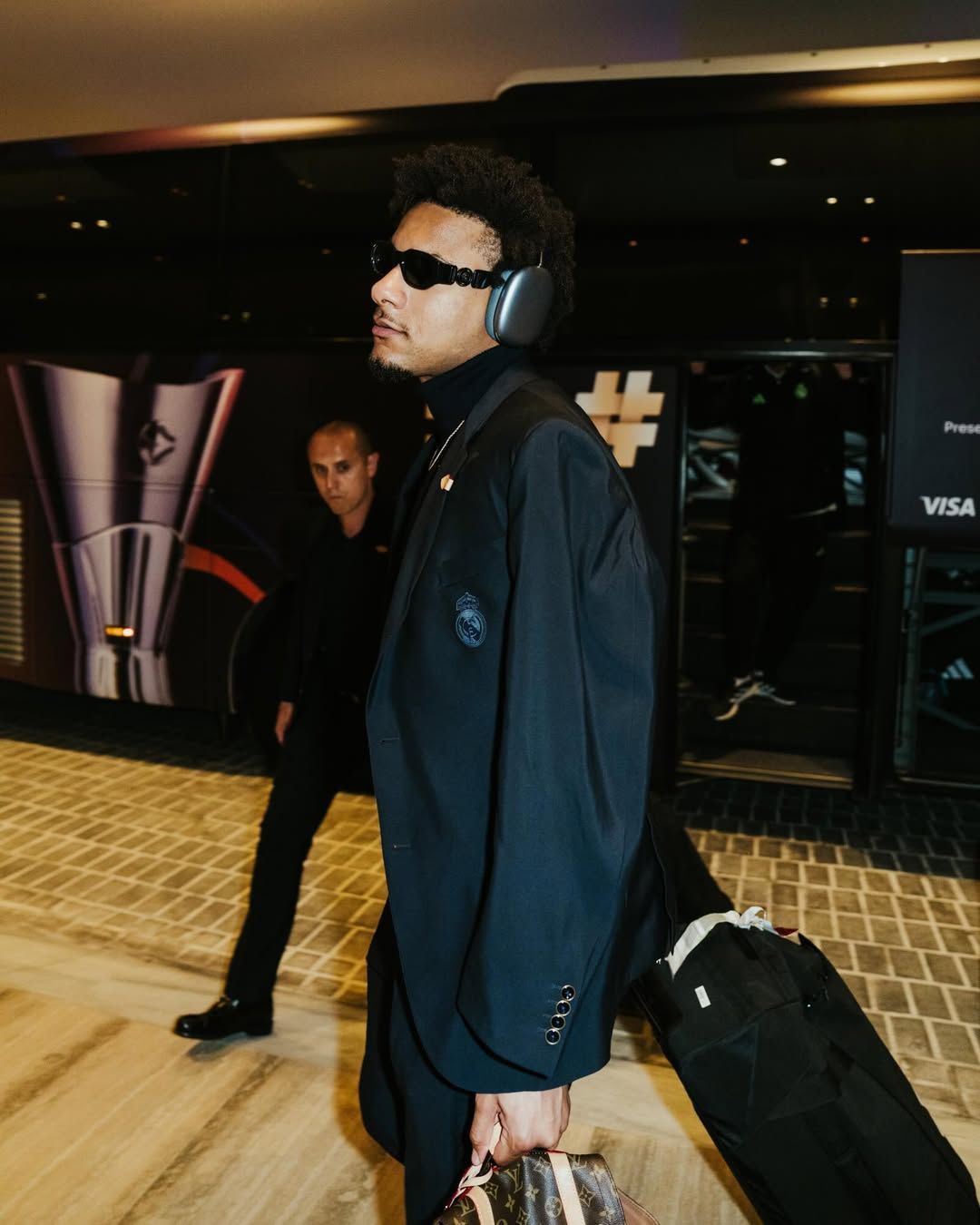
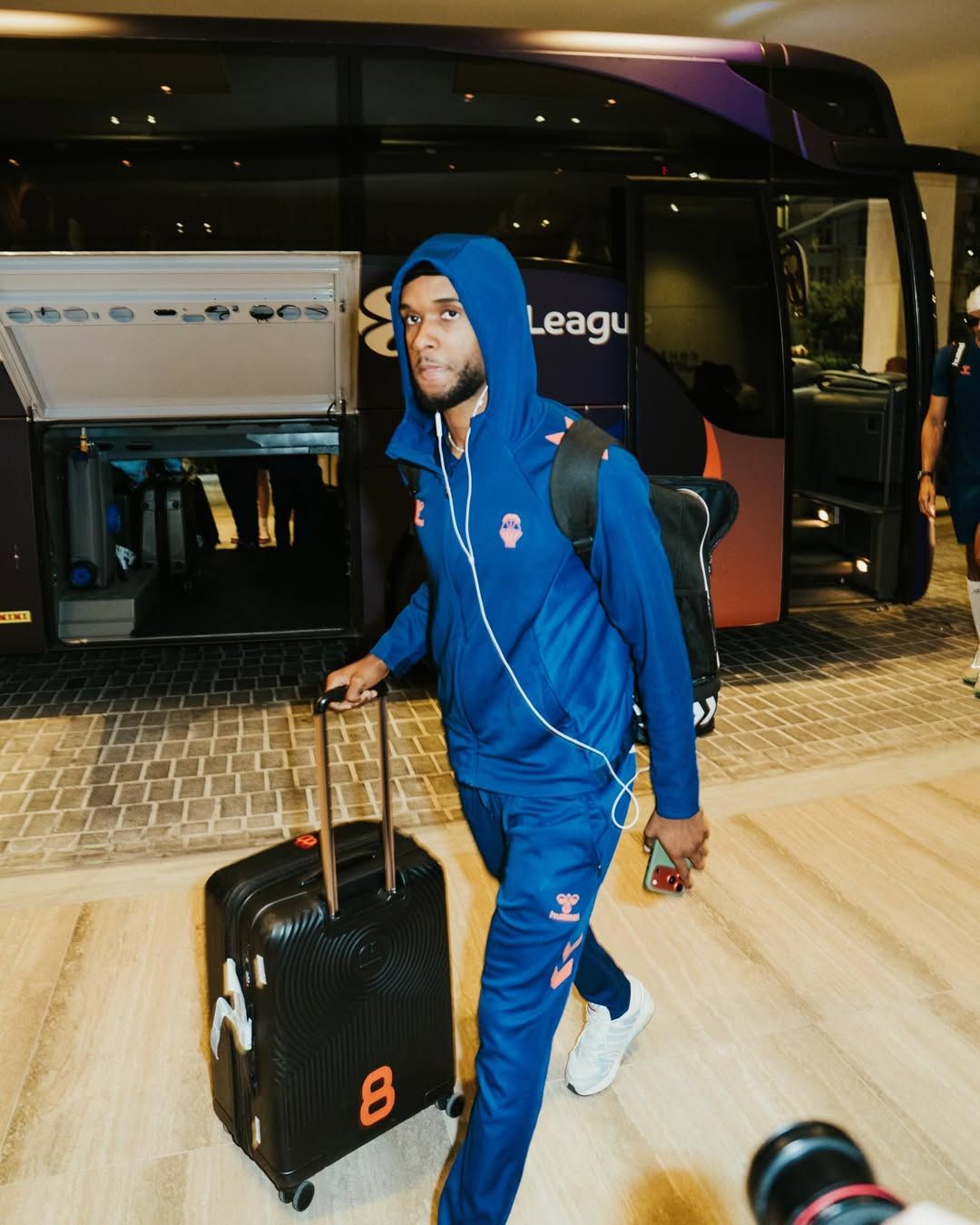

For Europe, preserving its independence in the face of the rise of new global economic powers is becoming increasingly difficult. Sport — and basketball in particular — is no exception. Take the EuroLeague, the premier basketball competition on the continent: a private league that has operated independently from FIBA for nearly a quarter of a century. Its strength lies in tradition, in the social and cultural bond between clubs and their communities. Yet within today’s evolving economic landscape, the EuroLeague has also been forced to adapt to emerging markets.
The Etihad Final Four
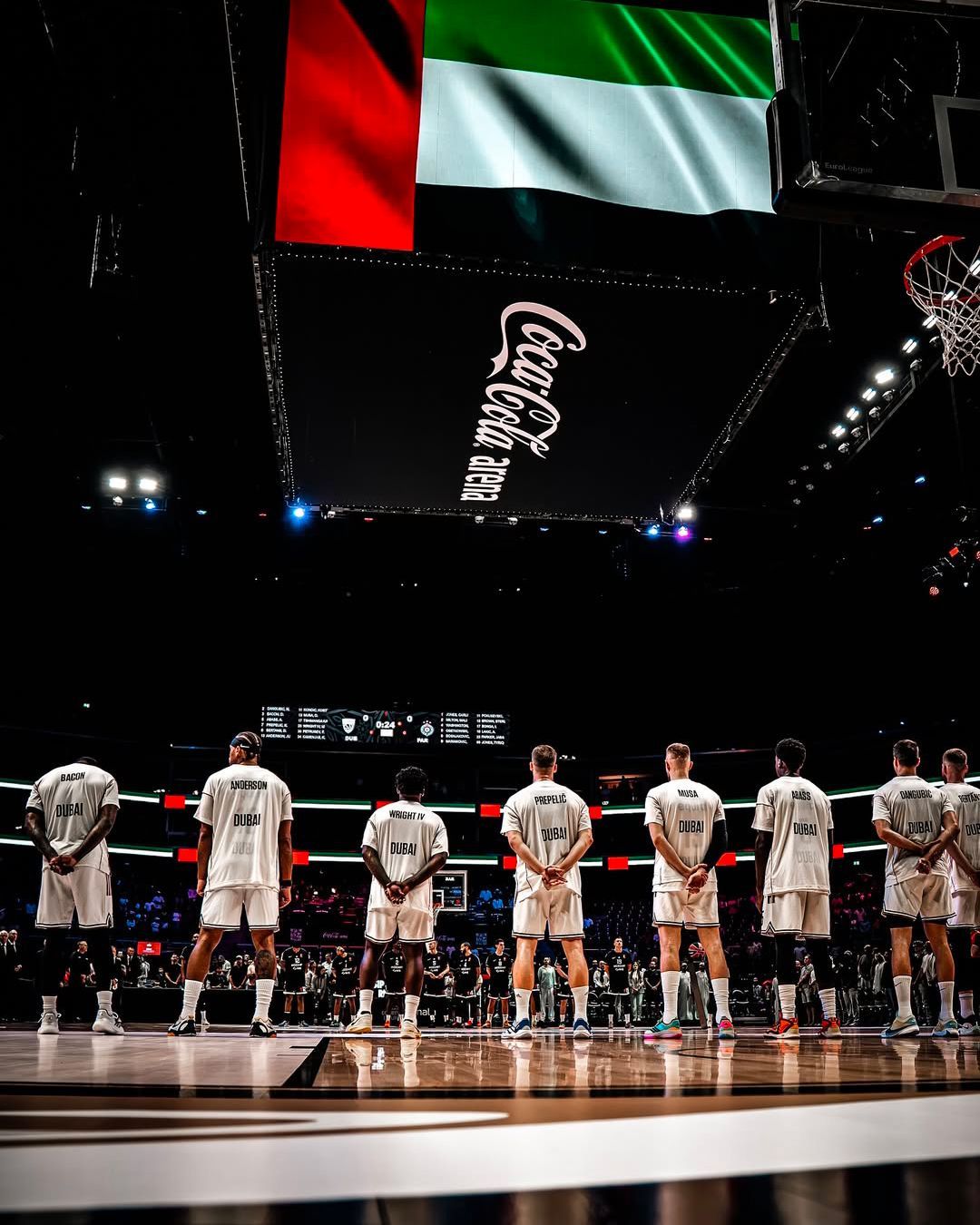
In September 2025, EuroLeague signed a partnership with Etihad Airways, which replaced Turkish Airlines as the competition’s title sponsor, alongside Experience Abu Dhabi, the destination brand of the Abu Dhabi Department of Culture and Tourism. The airline is entirely owned by the sovereign wealth fund ADQ — Abu Dhabi Developmental Holding Company — a cornerstone of the emirate’s Tourism Strategy 2030, aimed at transforming the Gulf city into a global hub for business and, above all, sport. Even the NBA has been staging preseason games there since 2022.
Under the agreement, Etihad Airways became not only the main sponsor of the EuroLeague, but specifically of its climactic event: the Final Four. In 2025, the tournament’s semifinals and final were held at Abu Dhabi’s Etihad Arena, marking the first major step of the partnership, which also culminated in the inclusion of the newly founded Dubai Basketball franchise in the EuroLeague expansion from 18 to 20 teams.
Commercially, the deal made perfect sense. But a competition so deeply rooted in European basketball culture cannot permanently relocate its defining moment too far away from the continent that gives it meaning. That is why the 2026 Final Four, set to take place from May 22 to 24, will return to Athens — arguably the spiritual capital of European basketball.
Where are the EuroLeague Final Four 2026 played?
The race to host the event turned into a fierce commercial battle between Athens and Belgrade. The Greek capital ultimately prevailed with a bid worth €9 million, backed directly by the Greek government through the Ministry of Sport, which hopes to capitalize on the tourism boost generated by the competition. In a city — and a country — where basketball is woven into the cultural fabric, an event of this magnitude carries enormous symbolic weight. At a time when the sport is rapidly shifting toward new markets and new centers of power, choosing one of the historic strongholds of European basketball is anything but accidental. These will be the first Final Four hosted in Athens since 2007, ending a 19-year wait and making the occasion feel even more special — and more deeply connected to the fans.
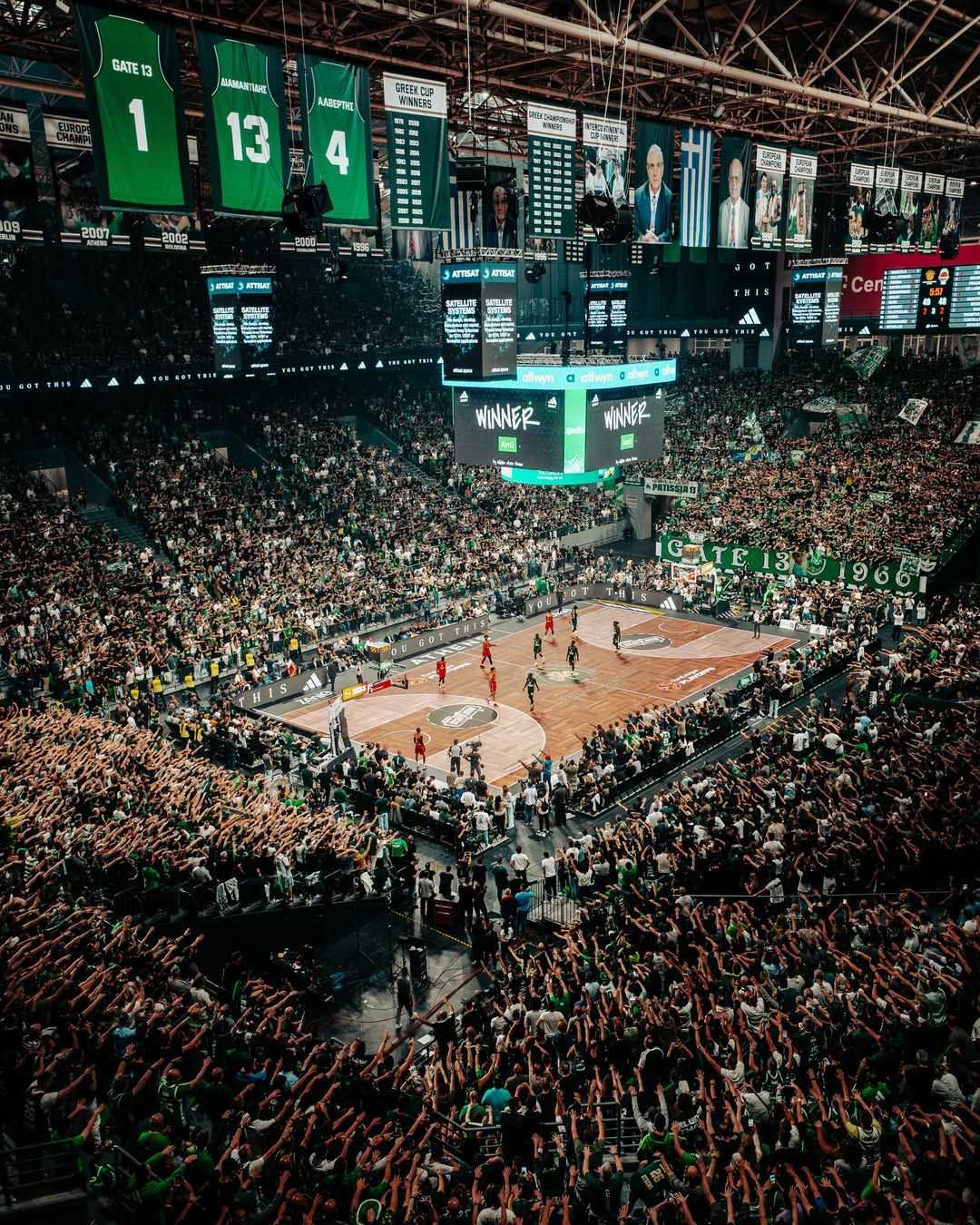
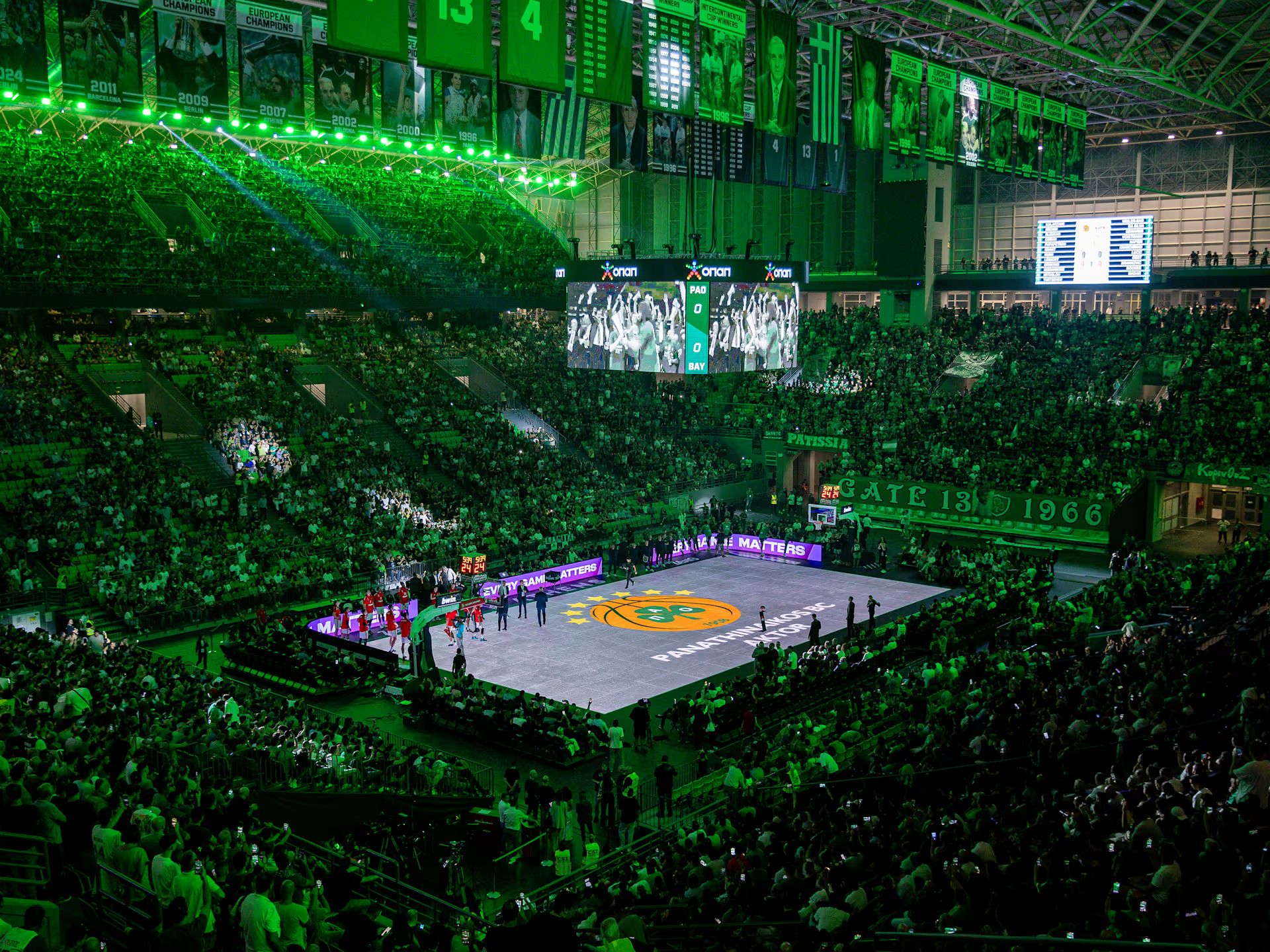
The stage will be the iconic OAKA, renamed Telekom Center in 2025 following a five-year naming rights agreement with the German telecommunications giant. The multifunctional arena seats more than 18,500 spectators and boasts a remarkable legacy. OAKA served as one of the main venues of the Athens 2004 Olympic Games and has hosted some of the most important events in world basketball, including the 1998 FIBA World Championship and the 2007 EuroLeague Final Four. It is also scheduled to host games at EuroBasket 2029. More than just an arena, OAKA is a European institution. The European Commission recently approved a €77 million redevelopment and modernization plan for the complex. Yet it also remains, first and foremost, a local landmark — the home of Panathinaikos, which secured exclusive usage rights to the venue in 2023 for the next 49 years.
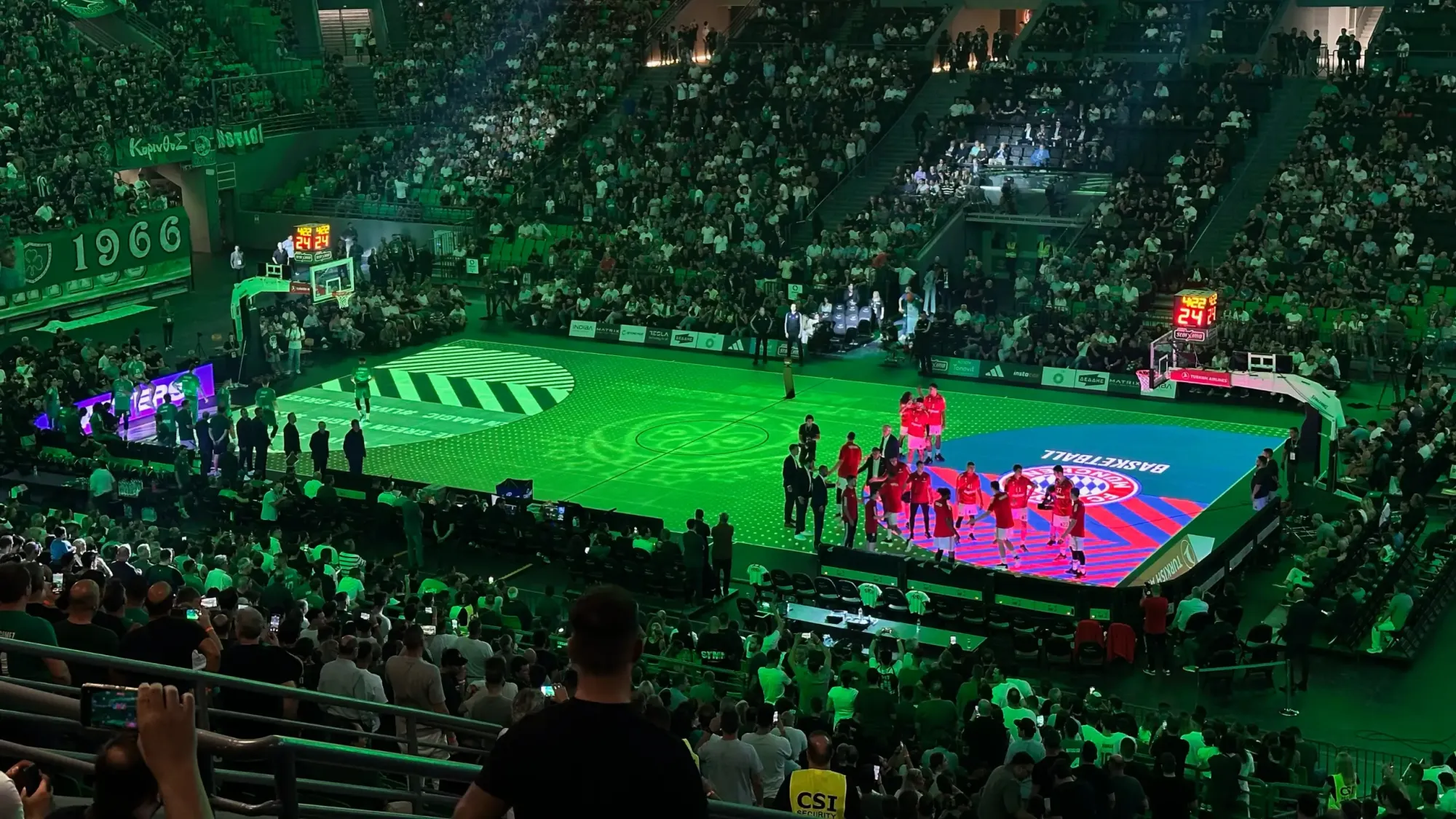
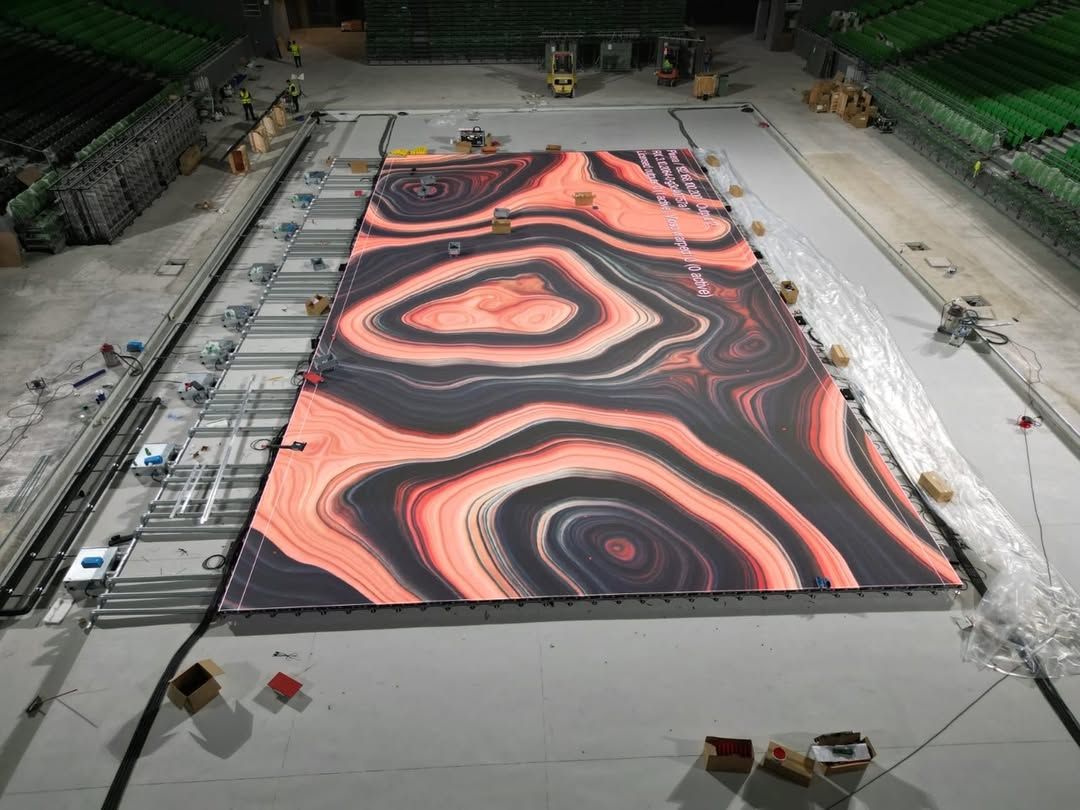
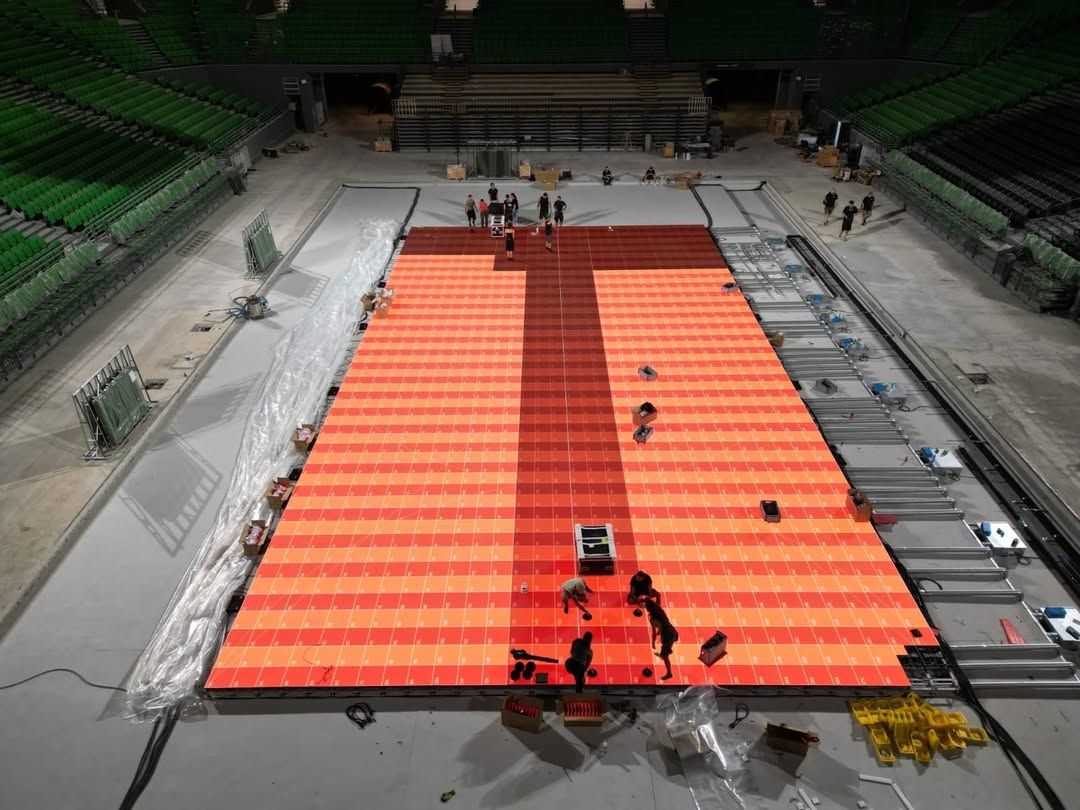
Panathinaikos, EuroLeague champions in 2024, failed to qualify for the Final Four, depriving fans of what would have been a historic derby against fierce rivals Olympiacos of Piraeus. The arena has already undergone major upgrades. Its most revolutionary innovation is the permanent installation of the ASB GlassFloor, a fully LED-integrated glass court. Replacing the traditional wooden parquet, the system transforms the playing surface into a giant interactive screen capable of displaying live statistics, animated sponsorship graphics, and dynamic visual effects throughout the game.
The technology first appeared at club level in 2023 at Munich’s BMW Park during a home game of FC Bayern Basketball. Panathinaikos became the first EuroLeague club to adopt it permanently in 2024. The soul of a venue like OAKA is built upon local tradition and the history of European sport — but one that has shown no hesitation in embracing innovation. That balance perfectly embodies the EuroLeague’s commercial vision and the strategic philosophy behind these Final Four: blending old and new, combining pure basketball with spectacle and entertainment, all through two defining pillars — aesthetics and showmanship.
The new logo of the 2026 Final Four
In the age of visual communication, a brand’s identity is defined first and foremost by its logo. EuroLeague is no different. For these Final Four, the visual direction naturally draws from Greek tradition — especially the classical imagery that turned Greece into the cradle of neoclassical tourism — while also incorporating recognizable elements of the competition itself. The logo is circular, echoing the shape of a basketball, yet its bold contours resemble a shield, an iconic object in Greek literature and mythology, from Achilles’ shield in Homer’s Iliad onward. Here, the shield frames the trophy, envisioned as the transformation of a golden Doric column — one of the three canonical orders of ancient Greek architecture. At the base of the column, on the torus molding, appears the name of sponsor Etihad, while the classic EuroLeague branding sits above the capital.
At the center, the “Final Four” lettering is enclosed within a decorative frame and crowned by four olive branches, a traditional Greek symbol tied to the mythological founding of Athens itself. According to ancient myth, Athena defeated Poseidon in the contest for Attica by gifting the olive tree — a source of food, wood, and oil, as well as a universal emblem of peace. Athena’s triumph mirrors that of the participating teams, who have already emerged victorious from the playoff stage. Behind the centerpiece lies a mosaic-inspired backdrop of concentric circles and intricate ornamental patterns, another nod to ancient Greek artistry. Color plays a crucial role in the composition. Deep navy blue evokes the Mediterranean Sea, contrasting with EuroLeague’s signature orange and enriched by gold accents symbolizing glory — featured in the frame, olive branches, and column alike.
Who will perform at the 2026 Final Four
Inspired by the North American tradition of halftime entertainment at events like the NFL Super Bowl and the NBA All-Star Game, EuroLeague selected Greek DJ and producer ARGY — born Argyris Theofilis in Rhodes — to headline the opening ceremony. One of the leading figures in melodic techno, ARGY rose through the underground electronic scene before evolving toward a more cinematic artistic identity. He is part of the Afterlife label, the globally renowned electronic music collective founded in 2016 by Italian DJs and producers Carmine Conte and Matteo Milleri.
His latest project, NEWORLD II, serves as the sequel to 2024’s New World and is conceived as a futuristic audiovisual experience where music merges with elaborate lighting design and choreography crafted for the global tour. The choice feels deliberate. ARGY’s performances are built on the synergy between sound and visual impact, and the show in Athens will reportedly follow a narrative concept that merges ancient mythology with futuristic aesthetics — tradition with transformation, heritage with EuroLeague’s increasingly multifaceted identity. According to early descriptions, the performance will culminate in a dramatic reveal of the official Final Four logo, symbolically passing the spotlight to the participating teams.
The new Final Four format explaine
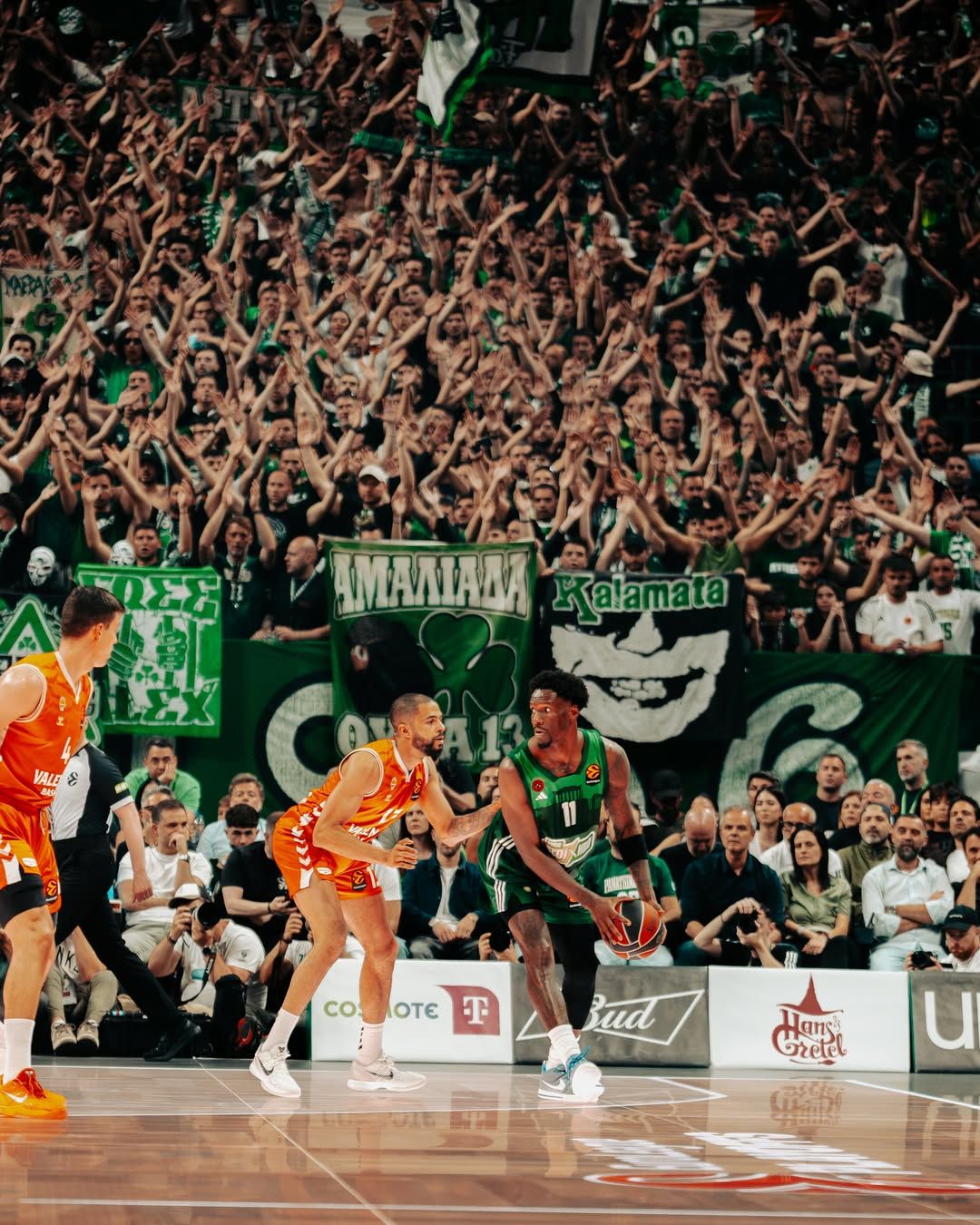
The four teams will compete in single-elimination semifinals on Friday, with the winners advancing to Sunday’s championship game. Olympiacos Piraeus, after finishing first in the regular season and backed by the overwhelming support of the Athens crowd, will face reigning champions Fenerbahçe Beko, the Turkish powerhouse. The other semifinal features an all-Spanish showdown between Real Madrid and Valencia, a matchup carrying added emotional and competitive weight for both sides. For Valencia, these will be the first Final Four appearances in club history, achieved after an astonishing comeback from 0–2 down against defending home favorites Panathinaikos — a series both spectacular and traumatic for the Athens crowd that will now return to the same arena.
One major innovation this year is the removal of the traditional third-place game, historically played before the final on Sunday. Instead, the spotlight will shift to the championship game of the adidas NextGen EuroLeague, the continent’s premier under-18 competition, featuring the winners of the youth tournament’s group stage. The decision largely reflects the wishes of players and fans alike, as the EuroLeague third-place game had long been viewed as meaningless and devoid of prestige. After years of criticism, the league has chosen to align itself with public sentiment — and with examples set by competitions such as the NBA.
EuroLeague, NBA Europe and the future of European basketball
The recurring theme of balancing tradition and change is more relevant than ever for EuroLeague. Beyond its growing ties with the Gulf region, another major commercial challenge is emerging from across the Atlantic, forcing the league into a profound structural rethink. Until now, EuroLeague has operated through a system of long-term licenses periodically renewed by shareholder clubs, alongside occasional wild cards and buy-in entries for additional teams. That model is now on the verge of transformation. With the rise of the NBA Europe project — the potential expansion of the vastly richer and more powerful North American league into the European market — EuroLeague has been pushed to respond internally by proposing a radical shift from licenses to permanent franchise-style memberships.
This revolution is closely linked to the appointment of Chus Bueno as the league’s new CEO. Bueno spent 12 years working within the NBA ecosystem and represents a bridge between two basketball worlds. He has reportedly received strong backing from Real Madrid, one of EuroLeague’s historic giants and a club naturally intrigued by the opportunities tied to the NBA’s European ambitions. Recent developments suggest that cooperation between the two sides may ultimately prove more realistic than a full-scale split — potentially avoiding yet another fracture within European basketball. EuroLeague, after all, remains fully aware of its own value. The proposed franchising model aims to dramatically increase club valuations, projecting an average worth between €40 million and €75 million per franchise, excluding the continent’s financial heavyweights. That would place the league’s overall valuation at approximately €2.5 billion, a figure matched by the capital injection request recently presented to the EuroLeague board.
Events like the Athens Final Four are therefore about far more than basketball alone: they reinforce the authority of the EuroLeague brand and, above all, define its identity. That is why this open-minded approach — rooted in tradition while embracing innovation — feels so strategically important. That is why Athens is set to host the most aesthetic Final Four in EuroLeague history, an event meticulously designed down to the smallest detail in order to strengthen the commercial credibility that European basketball will desperately need in the years ahead.