
Italian football and a penchant for conspiracy theories A reflection on the investigation into Serie A's referee designator Gianluca Rocchi
Sports
April 27th, 2026
April 27th, 2026
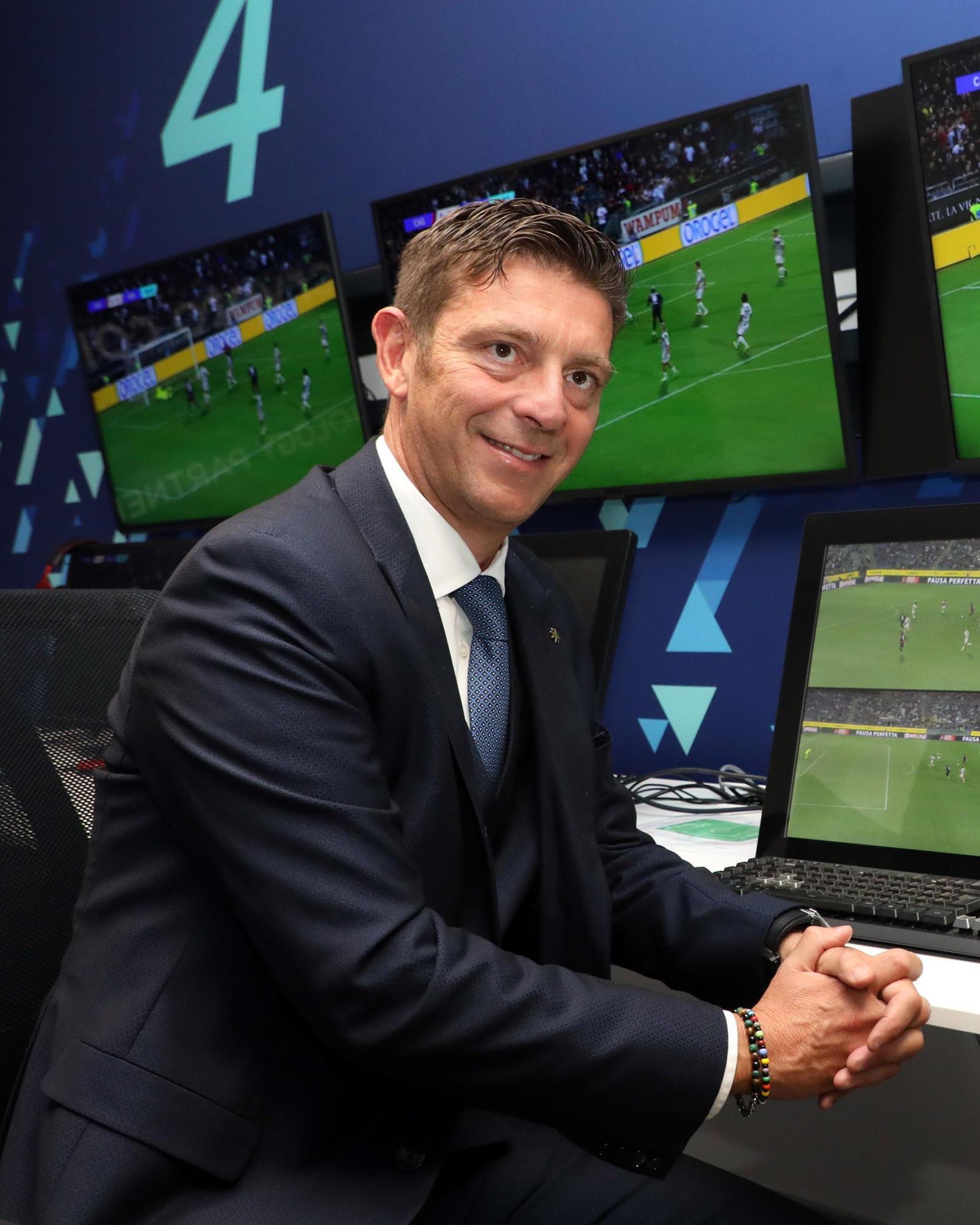
On Saturday, news broke that Gianluca Rocchi, the referee designator for Serie A and Serie B, is under investigation by the Milan Public Prosecutor’s Office for alleged involvement in sports fraud. The accusation against Rocchi is that he influenced the appointment of two referees for as many Inter matches during last season: Bologna–Inter and the second leg of the Coppa Italia semifinal against AC Milan. Furthermore, Rocchi is also under investigation for allegedly influencing a VAR decision; specifically, he is said to have personally intervened to trigger an on-field review during Udinese–Parma by pressuring Daniele Paterna, who was on VAR duty for that match, despite protocol not allowing such interference.
Inter and the "Marotta League" narrative
We are still in the early stages of the investigation. Rocchi has stepped aside along with VAR supervisor Andrea Gervasoni, and he is due to appear before prosecutors on April 30 for questioning. These are the only cases currently under investigation, yet they have been enough to fuel and seemingly validate the conspiracy theories that have long surrounded football. It happened with Calciopoli—the “proof” that Juventus bought referees to win league titles. It is happening again now—the supposed confirmation that the so-called Marotta League, the idea that Italian football is controlled by Inter president Giuseppe Marotta, truly exists.
FIGC decisions and backlash
The behavioral pattern is always the same: the strongest team in the league is never considered successful solely on its own merits, but also because it is believed to exert such overwhelming political pressure that it bends all stakeholders—including referees—to its will. Strengthening this narrative is the fact that the FIGC Federal Prosecutor’s Office, led by Giuseppe Chiné, requested and obtained the dismissal of an investigation into Rocchi in July 2025 regarding the Udinese–Parma incident. The word “Inter” never appears in that decision, yet the mere fact that the case was closed has been enough to spark suspicions of a cover-up—that sporting justice deliberately chose not to act in order to protect Inter and Marotta.
As if that were not enough, there is also a conspiracy theory about the conspiracy theory itself. This is the line of thinking embraced by those who were not surprised by the investigation into Rocchi, but instead wonder whether these matters would ever have become public had Italy qualified for the 2026 World Cup. This alludes to the idea that FIGC president Gabriele Gravina—forced to resign—may have decided, before stepping down in favor of his successor (with Giovanni Malagò widely rumored for the role), to drag down with him all factions that had not supported him. This reconstruction fits neatly into a classic Italian conspiracy framework: the belief that there is always a shadowy power capable of spreading damaging information to activate a smear campaign—the so-called “P2 Lodge method.”
A growing trust crisis in Italian football
Italian football is experiencing one of the darkest moments in its history. Drawing parallels with Calciopoli is pointless, if only because the national team went on to win the World Cup in 2006, whereas the Azzurri are now approaching 12 years without playing a single World Cup match. A drought on the pitch that is the direct consequence of short-sighted leadership, which over the years has eroded every aspect of Italian football: structurally, economically, technically, and in terms of communication.
Before the World Cup playoff against Bosnia, we wrote: “perhaps the time has come to rethink football, to look at it differently from how we have so far, even trying to remove it, at least in part, from political dynamics.” One month has passed since those words, and the word “perhaps” can now be removed. Italian football needs a new vision—and that requires a step forward from fans as well. It means abandoning the reflex to believe in constant conspiracies, in unseen forces working behind the scenes to favor one team today and another tomorrow. If the Milan Prosecutor’s investigation brings to light new evidence, charges, and ultimately convictions, we must show the moral clarity and maturity to interpret the situation in the only possible way: those who have erred have done so by betraying the game and the passion of millions of supporters, regardless of club allegiance.
In recent days, a video of Alberto Angela, speaking on Gianluca Gazzoli’s podcast “Passa Dal BSMT,” has gone viral, in which the researcher encourages listeners never to give up—to always get back up, even when it feels like the end. He also says that every difficult moment can be overcome by tackling one problem at a time. So let’s start here: let’s try to solve this first problem as a way to begin changing Italian football in its darkest hour. Instead of demanding change, let’s begin by changing ourselves as fans—by resisting the urge to assume that a team has been favored by referees based solely on a single controversial incident involving our own club.