It’s still called football The 2026 FIFA World Cup exposed the structural weaknesses of American soccer
This FIFA World Cup on North American soil came to an end with the Spanish national team crowned world champions at the MetLife Stadium in East Rutherford, New Jersey, just a stone's throw from New York City. For the host nations—Mexico, Canada, and last but certainly not least, the United States—the tournament ended much earlier, with elimination in the Round of 16. For the Stars and Stripes in particular, the outcome turned into nothing short of a media disaster.
In Belgium's 4-1 victory over Team USA, Romelu Lukaku—who scored his side's fourth goal—celebrated directly in front of a stunned Seattle crowd before performing, alongside his teammates, a dance strikingly similar to the one made famous by President Donald Trump during his election campaigns. Any lingering doubt over the inspiration behind the celebration disappeared once the squad recreated it in the dressing room to the tune of YMCA by the Village People, the very song Trump adopted throughout his rallies.
The Belgian national team's X account, Belgian Red Devils, only added fuel to the fire by posting two viral tweets in quick succession: the first featuring the final scoreline, the second showcasing Lukaku's celebration. Their captions summed up the humiliation suffered by the United States in just a few words: Overturn this and It's called s̶o̶c̶c̶e̶r̶ FOOTBALL.
The FIFA and Donald Trump controversy
The first jab referred to the overturning of Folarin Balogun's suspension. The USMNT striker, currently under contract with AS Monaco, was unexpectedly cleared to play by FIFA after being sent off in the Round of 32 against Bosnia and Herzegovina. The decision was unprecedented: the last time a World Cup suspension had been completely overturned dated back to 1962. More importantly, however, the controversy quickly took on political dimensions.
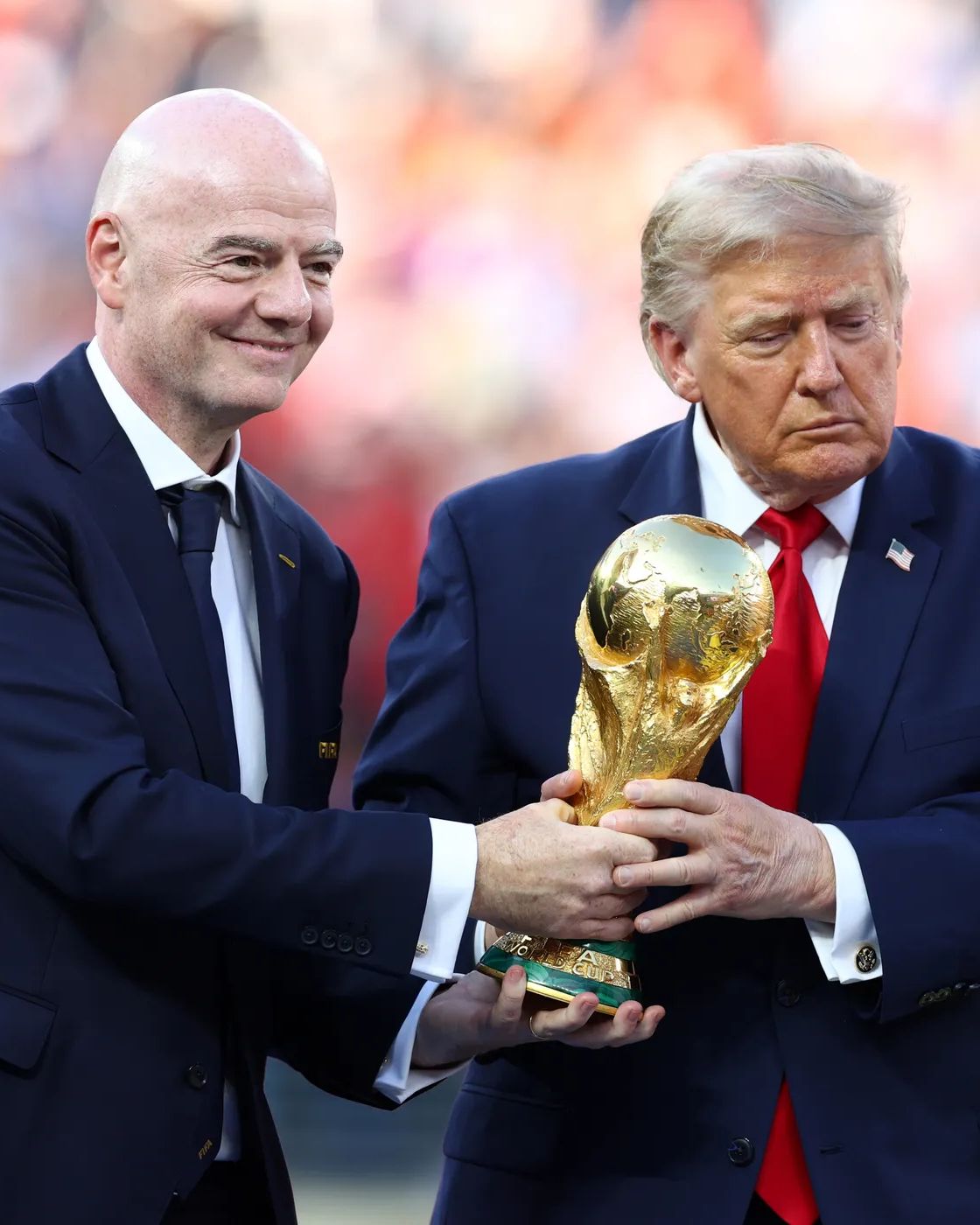
President Donald Trump openly admitted that he had personally contacted FIFA President Gianni Infantino to request a review of Balogun's suspension. Several White House officials were reportedly involved in the process as well. The same White House had welcomed Cristiano Ronaldo in November 2025, shortly before the Portuguese star received a three-match suspension following a red card for elbowing Ireland defender O'Shea during a World Cup qualifier. That suspension would have ruled Ronaldo out beyond Portugal's opening World Cup fixture, yet FIFA ultimately reduced it to a single match by applying Article 27 of its Disciplinary Code.
Article 27 allows FIFA to reduce or even completely revoke disciplinary sanctions under specific circumstances—the same provision that ultimately reinstated Balogun ahead of the match against Belgium. The issue, however, is that the decision was reportedly not made by the full 18-member FIFA Disciplinary Committee, as is customary, but solely by Mohammad Al Kamali, the Committee's chairman. According to an investigation by The Times, the detail was omitted from the official documents and concealed behind Al Kamali's firm refusal to comment when questioned by the BBC. The communication strategy relied on the chairman's authority to act as a single judge, while emphasizing the theoretical legal independence of the Disciplinary Committee from FIFA itself—effectively distancing both Infantino and, by extension, Donald Trump from the decision.
The controversy inevitably generated enormous international attention and sparked criticism from football governing bodies around the world, including UEFA, before Belgium settled the debate where it mattered most: on the pitch. Which brings us to the second message behind the United States' elimination from the World Cup: it's still called football.
Football in the United States
While social media quickly turned to coping mechanisms—joking about Belgium's GDP compared to that of the United States or pointing to American dominance in other sports—the tournament once again proved that financial power alone cannot manufacture a competitive football ecosystem. In reality, the US federal government plays virtually no role in the development of the sport. US Soccer operates independently as a nonprofit organization under the Amateur Sports Act of 1978. In the United States, football essentially has to finance itself.
On paper, that wouldn't necessarily be a problem—if it weren't for a series of structural disadvantages. The first is that, until the early 2000s, even the country's biggest clubs lacked proper youth development systems, missing the very foundations needed to build a sustainable football culture. The second is that this lack of long-term investment, combined with broader socio-economic factors, gradually transformed football into a sport for the privileged, in stark contrast with the European and global model. Initially regarded as a game played by immigrant communities—Italian, South American and others—it slowly evolved into an increasingly exclusive activity, becoming a niche sport from the very first kick of the ball.
This contrasts sharply with the post-pandemic trend. Over the past three years, participation in high school sports has increased significantly across the United States. Football now ranks fourth among boys, behind American football, track and field, and basketball—while sitting ahead of baseball—and second among girls, behind only track and field and volleyball, with a 2.4% increase in participation compared to the previous year. Yet the real problems begin once youth development enters the equation.
The pay-to-play model and private equity
If public funding isn't available, youth development still needs to find a way to survive. In the United States, the solution has long been the pay-to-play model, which requires families to pay registration fees in order for their children to participate in organized sports. Those fees fund coaching staff, facilities, travel expenses and the overall operation of youth clubs. The downside is obvious: the system widens the gap between wealthy and lower-income families. Government data from 2024 shows that, despite record participation numbers and a narrowing gender gap, sports participation actually declined among children from the country's lowest-income households.
Income is only part of the issue. Participation rates also reveal a striking ethnic disparity, with African American and Hispanic children remaining well below the 50% participation threshold, compared to 65.5% among white children. Family structure plays a role as well: there is a participation gap of more than 15 percentage points between children raised by two married parents and those living in single-parent households, for reasons that are unfortunately easy to understand.
In 2024, the average American family spent $1,016 per year on their child's primary sport. That figure, however, says very little about the actual cost of elite football development. Enrolling a teenager in an average Elite Clubs National League (ECNL) program—the most prestigious youth football competition in the United States—typically means paying between $2,100 and $3,200 for a standard package, while academy-level programs range between $3,400 and $3,500 per season for players aged 10 to 18 over a 10.5-month campaign. A business worth roughly $40 billion every year, one that has inevitably attracted the attention of investors, leading private equity firms to acquire entire youth sports organizations.
The problem lies in the business model itself. Rather than simply buying clubs, investment groups pursue vertical integration, taking control of every service surrounding youth sports: travel agencies, merchandising, equipment suppliers and apparel. In this environment, pay-to-play gradually becomes stay-to-play. Tournament organizers often own the booking platforms for partner hotels, inflate accommodation prices, charge parents admission fees to attend events and prohibit spectators from livestreaming matches, forcing families to purchase subscriptions to proprietary streaming services instead. Black Bear TV, operated by the investment group of the same name, has become one of the best-known examples of this model. For many households, the yearly cost of supporting even a single child can easily climb into the tens of thousands of dollars.
The system ultimately capitalizes on one of the greatest anxieties facing American families: the cost of higher education. By promising pathways toward college scholarships, many of these programs effectively lock players into their own ecosystem while eliminating meaningful competition in a market increasingly dominated by a handful of investment groups. Young athletes grow up under constant pressure—not only to perform, but also to keep up with expensive equipment, new kits and football boots—without any guarantee of genuine sporting development. After all, the primary objective of private equity is immediate financial return, not long-term player development. Concern over this cycle, described by government officials as self-perpetuating, has even led to the proposal of a federal bill known as the Let Kids Play Act, designed to regulate and limit private equity's growing influence over youth sports.
The MLS NEXT program
While annual costs running into the tens of thousands of dollars are common among ECNL clubs and private academies, the most talented young players do have another pathway available: MLS NEXT. Launched in 2020, it is Major League Soccer's official youth development platform, bringing together the academies of MLS franchises alongside selected elite non-MLS clubs.
Most of the leading MLS academies are free of charge. Yet even here, the system is divided into different tiers, with many independent programs still costing more than $2,000 per season. These academies cover players from the Under-13 to the Under-19 level, meaning total expenses can once again reach five figures over the course of a player's development. Although MLS NEXT offers more free benefits throughout the season and a growing number of scholarship opportunities, the number of fully funded programs remains far from sufficient to compensate for the structural flaws of the American system.
Earning a place in one of the elite academies is incredibly difficult and remains a privilege reserved for a select few. Meanwhile, fee-paying programs continue expanding by enrolling larger numbers of players at increasingly high costs. Whichever way you look at it, the system leaves little room for talented youngsters whose only disadvantage is being born into a lower-income family. The United States may possess the largest talent pool on the planet, but under these conditions that enormous reservoir is reduced to little more than a narrow stream.
The shortcomings of the NASL and MLS
Beyond this shrinking talent pool, American soccer is still paying the price for the relatively recent birth of its academy system, itself younger than Major League Soccer. American Wedding: 50 Years of Soccer in the United States tells the story of how the sport rose from the ashes following the collapse of the original North American Soccer League (NASL), a competition that ultimately failed after trying to fly too close to the sun. The league pursued rapid expansion without establishing a sustainable financial structure for its clubs, while simultaneously offering astronomical salaries to some of the biggest stars in world football despite lacking the revenues to support them.
By the late 1970s, the New York Cosmos could boast a squad featuring Pelé, Franz Beckenbauer and Giorgio Chinaglia. Around the same time, the NASL also attracted the likes of Johan Cruyff, Eusébio, George Best, Gerd Müller and many others, hoping that global superstars would generate enough attention to make soccer relevant in a country where it remained largely invisible. The strategy ultimately failed, and the league collapsed before reaching its twentieth anniversary.
Major League Soccer, on the other hand, deliberately avoided repeating those mistakes. The league adopted a structure inspired by the major American sports leagues, learning from the NASL's downfall while embracing mechanisms designed to guarantee long-term stability. Like the NBA, MLS operates under a salary cap—albeit a more flexible one than the NFL's hard cap—which limits how much clubs can spend on their squads.
There are, however, notable exceptions. The most famous is the Designated Player Rule, introduced ahead of David Beckham's arrival at LA Galaxy. The rule allows clubs to sign up to three players whose salaries exceed the league's salary cap, with only part of their wages counting against the team's overall payroll. It was specifically created to attract global stars while preserving the league's financial balance.
MLS also features a SuperDraft, mirroring the draft systems found across American professional sports by allowing clubs to recruit the best collegiate talent. Yet this mechanism now coexists with the academy system, which effectively bypasses the draft altogether. The most exclusive tier of MLS NEXT—the free, elite-level academies—exists precisely to develop players who can move directly into the first team through the Homegrown Player Rule. The regulation was introduced to encourage clubs to invest in local youth prospects while allowing them to sign those players to competitive contracts with a reduced impact on the salary cap.
One of the clearest success stories is Alphonso Davies, who joined the Vancouver Whitecaps academy at the age of 14, signed his first professional contract just two years later and was eventually transferred to Bayern Munich for a record-breaking fee.
Although this model is undoubtedly more sustainable than the NASL's, it still rests on foundations that remain fragile at youth level. At the same time, the salary cap—an effective tool in North American sports—has no real equivalent in world football, where clubs compete in a far less restrictive financial environment. As explained in American Wedding, former Toronto FC midfielder Federico Bernardeschi, who shared the dressing room with Lorenzo Insigne and Domenico Criscito during the club's all-Italian era, points to one of MLS's biggest competitive limitations: the enormous quality gap between the league's highest-paid stars and the players at the lower end of the roster. The result is an overall lack of squad depth that makes it difficult to build teams capable of consistently competing with Europe's elite.
Women's soccer is the exception
The structural issues affecting youth development touch every corner of American soccer, but there is one remarkable exception. Of the nine FIFA Women's World Cups held since 1991, the United States has won four, including two of the last three editions. While the men's game has only recently begun building a sustainable development pathway, women's soccer followed an entirely different trajectory.
The turning point came with Title IX, the landmark federal law passed in 1972 that prohibits gender discrimination in educational institutions receiving federal funding, including athletics. The legislation dramatically expanded opportunities for girls to participate in organized sports. Soccer, unlike football, baseball or basketball, was not culturally tied to male participation in the United States at the time, making it one of the disciplines that benefited the most from this transformation.
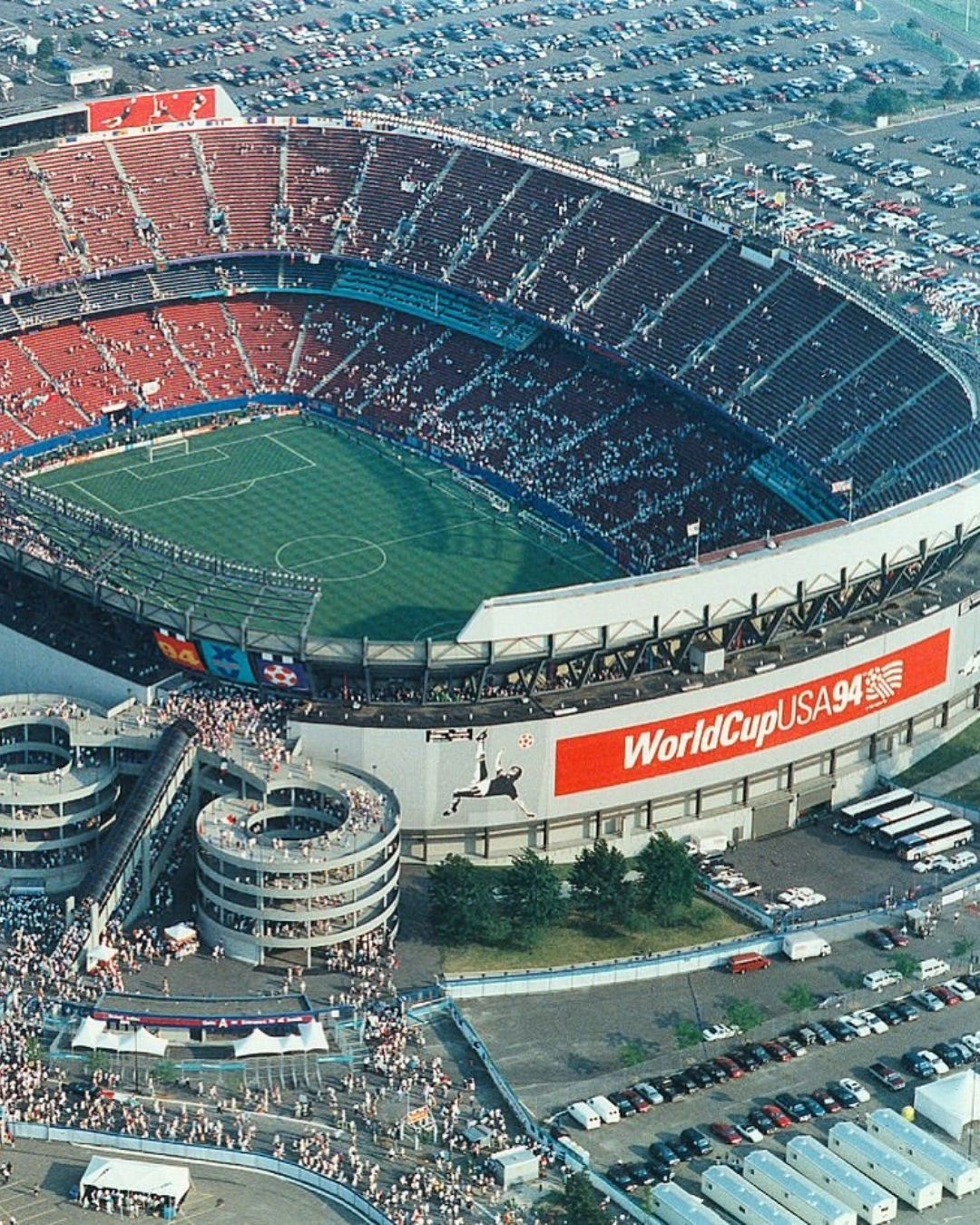
In 1971, only around 700 female high school athletes were enrolled in organized soccer programs. By the time the inaugural FIFA Women's World Cup took place twenty years later, participation had increased by an astonishing 17,000%, surpassing 120,000 teenage players. The momentum only accelerated after the combined impact of USA '94 and the United States' victory at the 1999 FIFA Women's World Cup, leading to another dramatic surge in participation. Today, more than 390,000 girls play high school soccer across the United States.
Such widespread participation over the past five decades has naturally produced a much deeper collegiate system. NCAA Division I now includes more than 350 women's soccer programs—roughly 40% more than the men's game—creating greater access to scholarships as well as to the new revenue opportunities introduced through Name, Image and Likeness (NIL) agreements. Although nearly 73.5% of NIL funding is concentrated in American football and basketball, women's soccer has produced several notable exceptions. In 2021, for example, UCLA's Reilyn Turner became the first college athlete in any sport to sign an NIL deal with Nike.
The United States therefore developed women's soccer decades before much of the rest of the world, where the game remained heavily associated with men and was often still facing institutional discrimination. More importantly, it also developed it decades before building an equivalent men's pathway. That fifty-year head start cannot simply be erased overnight. Nor could the American collegiate model realistically be replicated in the men's game elsewhere in the world, both for socio-economic reasons and because of football's developmental timeline. Across the globe, elite male players generally turn professional during their teenage years, either progressing directly through top academies or moving abroad long before reaching college age.
Legends such as Mia Hamm, Alex Morgan and Megan Rapinoe all came through the college system. By contrast, among the United States men's national team eliminated by Belgium, only goalkeeper Matt Freese and defender Tim Ream had meaningful collegiate careers before turning professional.
Will the World Cup become the turning point?
The privatization of youth sports is slowing the development of soccer—and many other disciplines—across the United States, deepening socio-economic and ethnic inequalities in the process. MLS has introduced several promising ideas, yet many remain constrained by a rigid system. The success of women's soccer cannot simply be replicated on the men's side. The USMNT suffered a heavy defeat against Belgium, whose players mocked President Donald Trump in front of a global audience. But, as countless American social media accounts insisted after the match, the United States still dominates economically... right? At least when it comes to soccer—and particularly this World Cup—not exactly.
FIFA required all three host nations to meet a long list of organizational standards, prompting public investments worth hundreds of millions of dollars. According to US tourism agencies, however, those expenditures failed to generate the expected return throughout June. Visitor numbers remained largely flat compared to the previous year and even declined across key overseas markets, particularly Europe and Asia. The initial projections of more than $30 billion in economic impact relied heavily on international tourism, yet dynamic pricing and the soaring cost of staying in host cities appear to have discouraged many travelling supporters. In the end, FIFA emerged as the competition's biggest financial winner, with estimated revenues of around $9 billion.
Where the World Cup may ultimately leave a lasting legacy is on the socio-cultural level. The phenomenon of watch parties has become a global trend, but in the United States the tournament's biggest impact arguably came through community initiatives held away from the stadiums. Across the host cities, public events brought together lower-income families and immigrant communities that would otherwise have been excluded from the World Cup economy because of prohibitively expensive ticket prices.
The flagship initiative took place in New York City, where Central Park welcomed more than 50,000 spectators for the World Cup Final watch party promoted by Mayor Zohran Mamdani. The mayor also backed other grassroots programs, including Soccer Streets, which temporarily transformed roads outside fifty public schools into pop-up football pitches. It represented a meaningful first step toward building a genuine community football culture, beginning in the place most closely associated with the game itself: the streets.
Institutionally, US Soccer has instead opted for greater centralization, investing nearly $230 million in the new National Training Center in Fayette County, Georgia, just outside Atlanta. The facility will become the permanent home of all twenty-seven national teams, spanning senior, youth and extended national programs. This investment complements the public funding already allocated to upgrading existing infrastructure, with the stated goal of making high-quality facilities more accessible—either free of charge or through affordable booking systems—for local communities.
Once those foundations are in place, the real challenge will begin: filling those pitches with as many young players as possible while addressing the structural flaws that continue to define American soccer. Only by capitalizing on the momentum generated by hosting the FIFA World Cup can the United States hope to transform a month-long global spectacle into a sustainable football legacy.
What to read next

Erling Haaland gained almost 30 million Instagram followers during the 2026 World Cup
It's all about goals, viking row and memes
The ultimate 2026 World Cup Glossary
In ten years' time, we'll still be talking about the hydration break and the Viking row