

























The third-place playoff is the strangest night of the World Cup It's often an entertaining match, and sometimes it has gone down in history
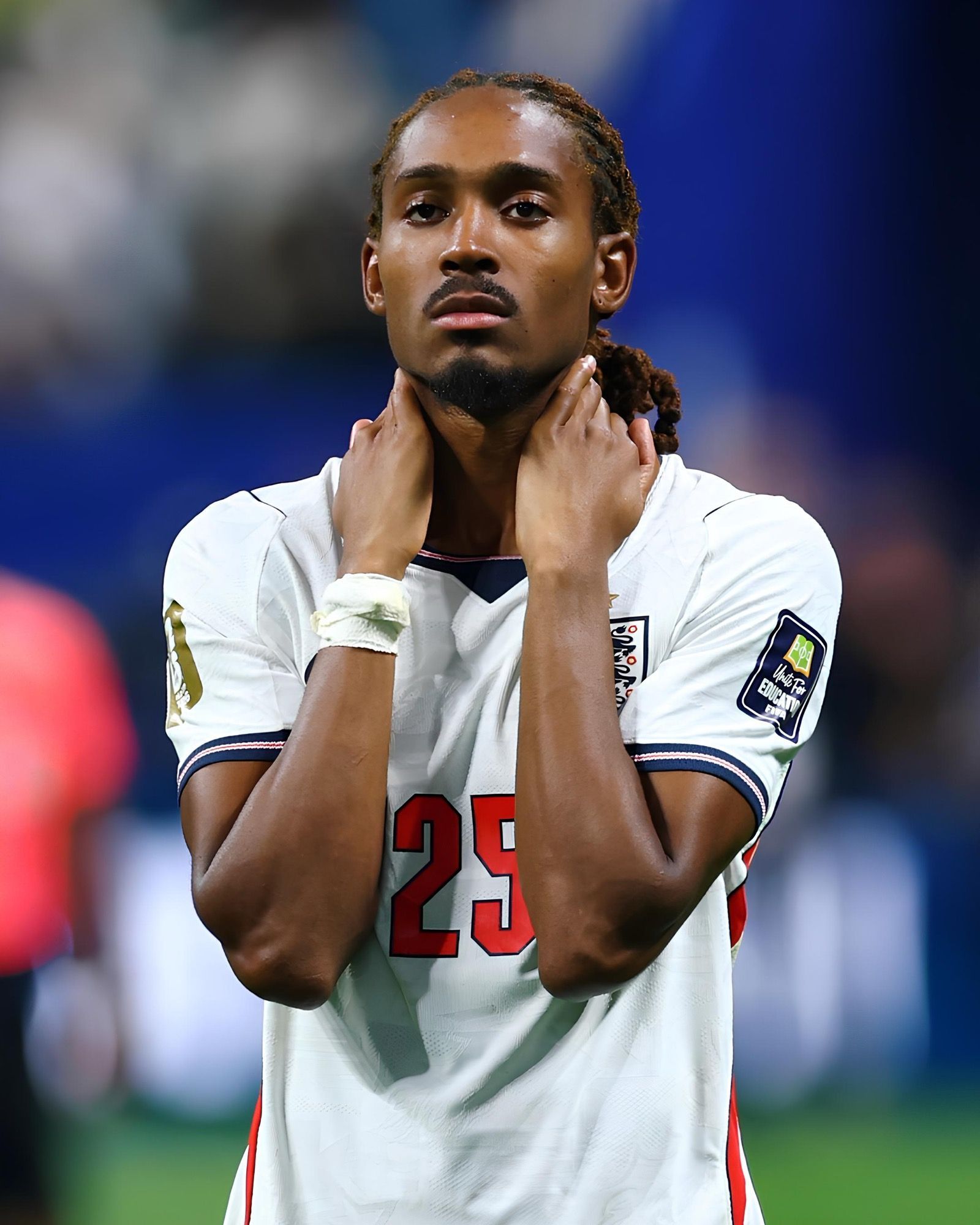
While waiting for the final between Spain and Argentina, the 2026 World Cup still has one penultimate night of football to offer. A few days after their elimination in the semi-finals, and twenty-four hours before the grand finale, France and England will face each other at Miami Stadium to play for third place in this edition. It is not the match they dreamed of playing to close their adventure, nor is it a clash that the public awaits with particular curiosity or pathos, but so far there is no news: the third-place play-off is like this—an evening with a somewhat paradoxical atmosphere, which football would gladly do without, and for which it is sometimes difficult to find a competitive meaning.
For the teams, moreover, it comes when the dream has just vanished, without any prize at stake that can in the least wash away the disappointment—and in some cases, the collective tragedies—they are coming from. UEFA abolished the third-place final after the 1980 European Championship, Louis van Gaal, former head coach of the Netherlands, called it a "match that should not exist", and there is no shortage of colleagues, players, and insiders on the same wavelength. For the vast majority of fans, it is a parenthesis out of step with the natural emotional climax of the World Cup. Yet, for ninety years, the third-place play-off has steadily held its place in the FIFA World Cup format. It awards a medal, prize money, and ranking points, as well as offering one more opportunity to fill a stadium and a media showcase on the eve of the final.
Perhaps there is no match with an identity more difficult to define. Its meaning changes along with the teams playing it and the history they bring into it: for some, it represents nothing more than a missed actual final; for others, the best result ever achieved; for almost all, a challenge to be faced with lightness. And it is also because of this ambiguity that, almost reluctantly, the third-place play-off continues to deliver stories and emotions: records still unbeaten today, mysteries never fully solved, goals galore, and entertaining evenings.
Nobody wants to play it
The case in which the play-off felt most like a punishment dates back to 2014. Four days after the tragic 7-1 defeat suffered against Germany, Brazil had to return to the pitch in front of their home crowd to face the Netherlands. They were a team still in shock, forced to prolong their home World Cup at the exact moment they only wanted to disappear. They lost 0-3, were booed by their own fans, and ended the tournament with ten goals conceded in two matches. Van Gaal's words date back to that occasion, arguing that the problem is not just the lack of value of the match, but also its fairness, given the systematically different rest days. And with the risk of ending a good tournament with two consecutive defeats, heading home with the feeling of having failed.
Brazil in 2014, however, was not the first national team to arrive there with no emotional energy left to spend. It had already happened in 1982, after France—leading 3-1 in extra time against West Germany—lost in Seville in one of the most traumatic semi-finals in memory. Forty-eight hours later, they faced Poland and lost 3-2. "Our hearts were elsewhere," recalls Alain Giresse. "We had pulled the plug, completely." Four years later, France found themselves playing for third place again, this time against Belgium, and Michel Platini did not take the field: physically and mentally exhausted, he asked the coach not to use him and watched the match from the French television booth.
In 2022, Walid Regragui, who led Morocco to the first-ever semi-final for a CAF national team, also called it the "worst game to play." Yet, that fourth place still remains the best result in the history of African football at the World Cup. On the other side, Croatian coach Zlatko Dalić said that the bronze they won had "a golden sheen," a definition with a precedent for Croatia. In 1998, in their debut as an independent nation, third place had been celebrated as a monumental feat.
This is also the point: not all third-place play-offs carry the same weight. The bronze medal holds little interest for those who start with the sole objective of winning, but for national teams that rarely reach that stage, it can represent a major milestone. This happened to Turkey in 2002, who clinched their best-ever World Cup result with that third place after a half-century of absence. And it often happens to host countries, eager to close the tournament by gifting themselves a medal or one last great memory. Chile celebrated their 1962 bronze as a victory, while for South Korea, forty years later, simply reaching that stage—despite losing to Turkey—was enough to turn it into the happy ending of an unrepeatable World Cup.
A record-breaking match
Perhaps because of the detachment with which it is often approached, the third-place match tends to deliver open, enjoyable encounters untangled by rigid tactics. Over the last forty years, it has produced an average of 3.8 goals per game, compared to the 2.7 of its big sister, and in its history, it has never ended 0-0, has never gone to penalties, and only once, France-Belgium in 1986, went to extra time.
The most sensational record, however, dates back to 1958. Just Fontaine arrived at the clash for third place against West Germany with nine goals in five games—already one more than the eight with which Messi and Mbappé, to make a comparison, reached the semi-finals this year. In the Gothenburg play-off, however, Fontaine made his record nearly unreachable, perhaps immortal, scoring four more times and driving France to a 6-3 victory. His thirteen total goals still stand as the record for a single World Cup, despite FIFA progressively adding knockout matches since then. Decades later, Fontaine would have been accused of stat-padding, but fortunately for him, those were different times.
In addition to the Frenchman, the third-place play-off has repeatedly influenced the race for the Golden Boot, even in photo finishes. This happened, among others, to Salvatore Schillaci, who in 1990 converted the penalty for a 2-1 win against England to surpass Tomas Skuhravy; to Davor Suker, who eight years later took the sole title thanks to his goal against the Netherlands; and to Thomas Müller, who in 2010 caught up with David Villa, Wesley Sneijder, and Diego Forlan at five goals, later winning the award due to having the highest number of assists.
Then there is the speed record: a goal that needed just 10.8 seconds from kickoff to find the back of the net. This happened in 2002 to Hakan Sukur, the Turkish forward with a past at Inter Milan, who in that match capitalized on a mistake by the South Korean defense on the very first touch of the ball to find the net after a tournament that had been underwhelming until then. It was his only goal in a World Cup, but also the fastest ever scored in FIFA history: another record that still stands today.
The play-offs that never were
Going back to the origins of the third-place final, one finds a match that is not even clear was actually scheduled. In 1930, at the inaugural World Cup, the United States and Yugoslavia were defeated in the semi-finals by Argentina and Uruguay, but the play-off for the bronze was never played. And there is no definitive answer as to why. Some theories suggest that FIFA wanted to organize the match, but Yugoslavia left Uruguay immediately after the semi-final, furious over the refereeing. What is certain is that for decades, both federations were tied for third place until 1986, when FIFA retroactively reconstructed the standings of all World Cups and awarded third place to the United States based on goal difference.
The other exception occurred twenty years later. The 1950 World Cup remains the only one not to feature a proper final, not even for the gold. The title was decided through a four-team round-robin group and went down in history for the Maracanazo—the sensational victory with which Uruguay shocked Brazil in front of nearly two hundred thousand spectators at the Maracanã. Consequently, third place was also decided by those standings without any play-off, with Sweden finishing ahead of Spain. From 1954 onward, the third-place play-off became a permanent fixture of the World Cup schedule.
Forgotten stories
The first third-place match documented in the record books, however, is the one from 1934. Germany and Austria (3-2) faced each other in Naples, in an Europe crossed by increasingly evident political tensions. The Third Reich had been proclaimed a year earlier, and that day, fans who arrived from Germany with Nazi flags, sent by the Kraft durch Freude organization, also appeared in the stands. Historian Paul Dietschy called it a milestone in the politicization of sport.
A very different memory was left by the aforementioned 2002 play-off. It ended 3-2 between Turkey and South Korea, but the image that remained in the collective memory came after the final whistle, when the two teams did a lap of honor together, hand in hand, saluting the crowd in Daegu. Another demonstration of how the third-place play-off, snubbed by football's aristocracy, can take on a completely different meaning for countries with a less decorated tradition.
Even Germany, in any case, eventually made peace with it. They are the national team that has played the most (5) and won the most (4) third-place finals in World Cup history, and they are also the only ones to have won two consecutive ones, in 2006 and 2010, before ideally completing the journey with their triumph in 2014. Now it is up to France and England to update this history. They would have wanted to be in New York for the final, but they will have to settle for that strange night in Miami, at least trying to head home with a bronze medal.