






































The ultime guide to SkiMo The discipline makes its debut at the Olympic Games
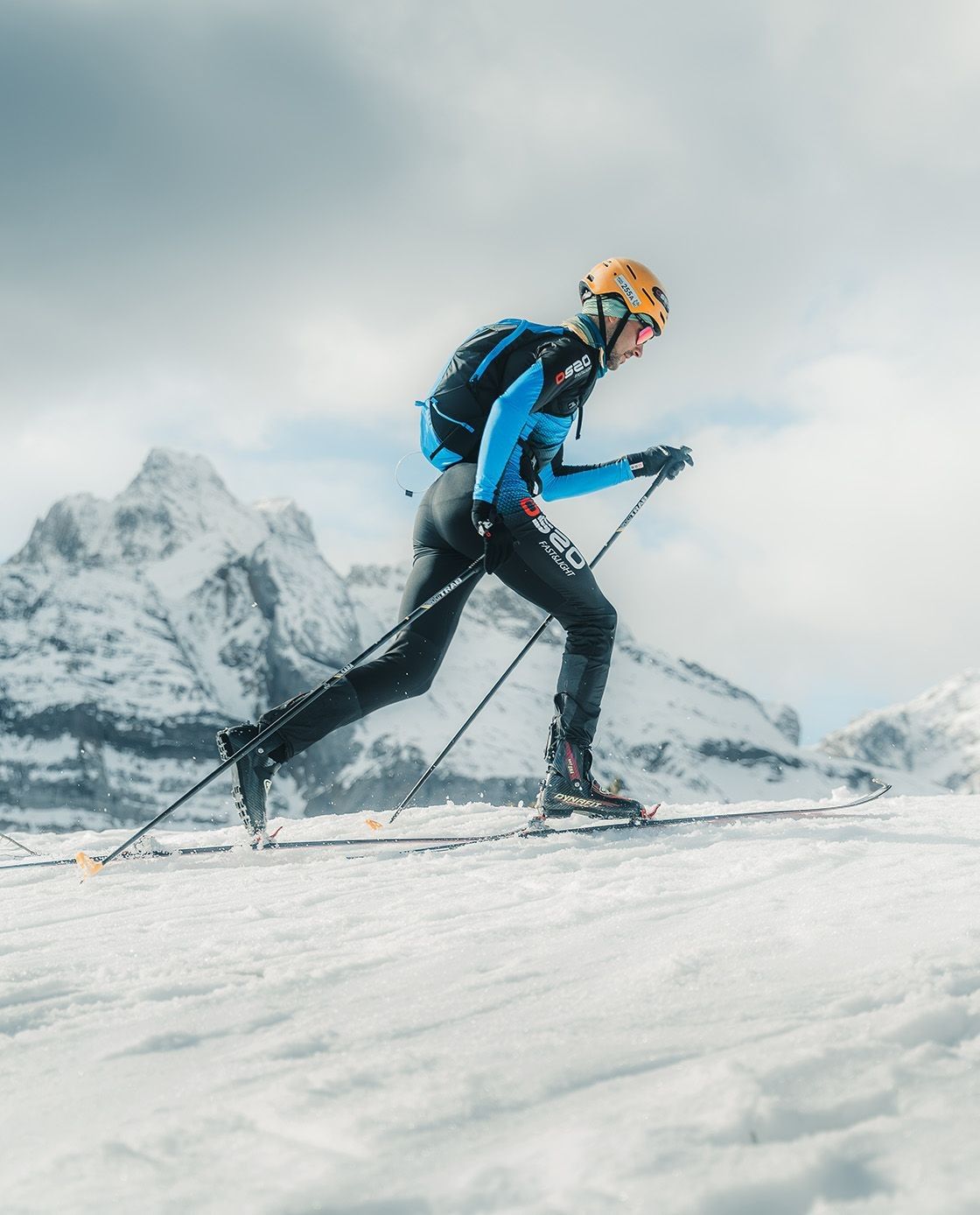
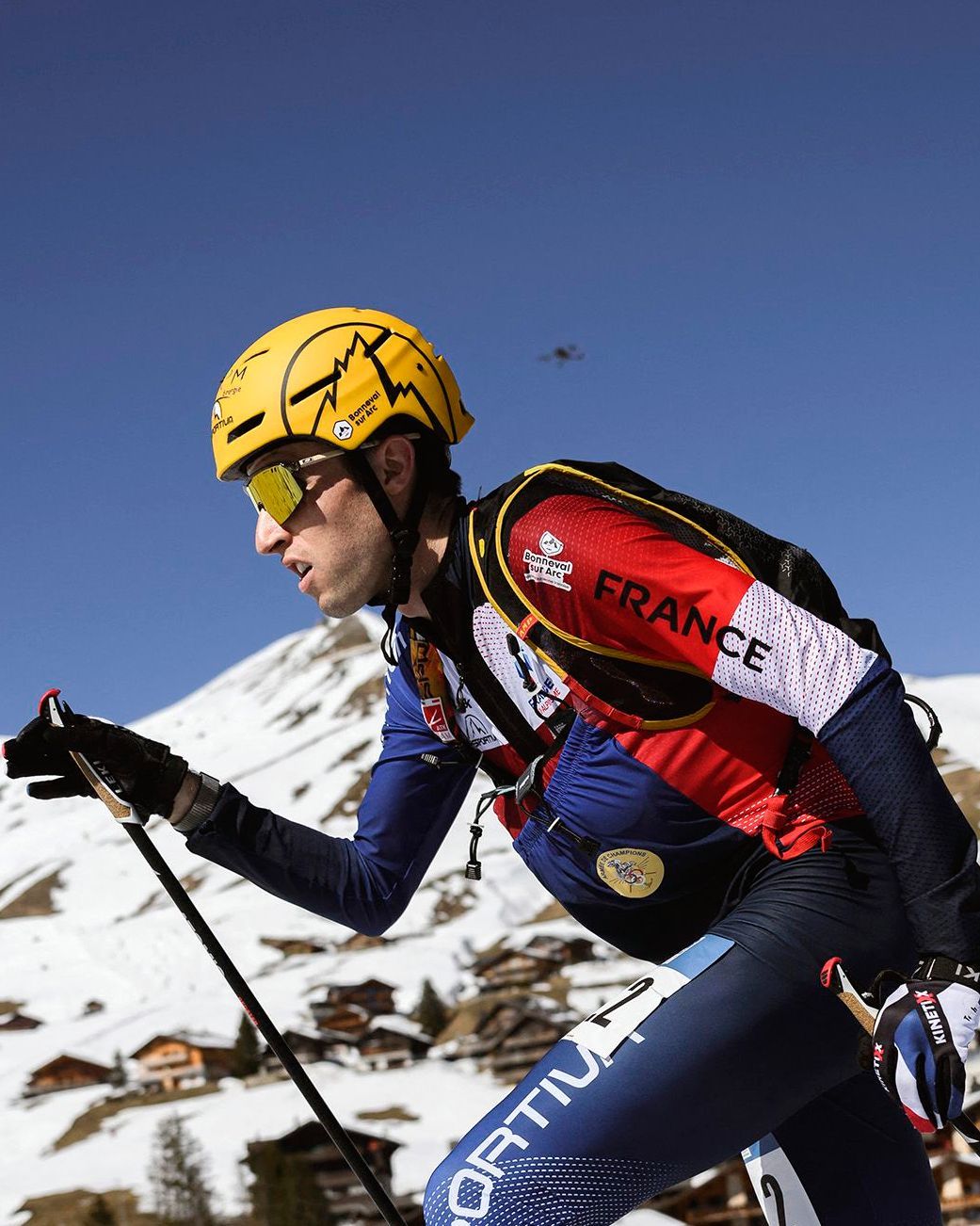
It’s the latest addition among the sports competing at the Winter Olympics in Milano Cortina, making its absolute debut under the five-ring banner. Ski mountaineering—better known as SkiMo—will take center stage in the final days in Bormio. A discipline defined by versatility and responsiveness, where meticulous attention to equipment and material research borders on obsessive. With roots stretching back to the early twentieth century, SkiMo is now carving out its space within the winter sports landscape, ready to welcome a growing community of enthusiasts.
When did SkiMo originate?
Ski mountaineering was born not so much as a sport, but as a functional activity in the mountain environment. Before the first ski resorts were established in the early 1900s, skis were primarily used to ascend snowy slopes. Arctic explorers and wartime soldiers later became pioneers in developing techniques and equipment capable of withstanding the harsh realities of the mountains—an ongoing up-and-down across untracked paths where adapting to ever-changing snow conditions was essential. Once these early techniques were refined, SkiMo’s sporting vocation began to take shape in the aftermath of World War I, evolving around its two defining phases: ascent and descent. The first competitions were organized in the 1930s, and following World War II the sport steadily gained popularity.
Which SkiMo events will take place at Milano Cortina?
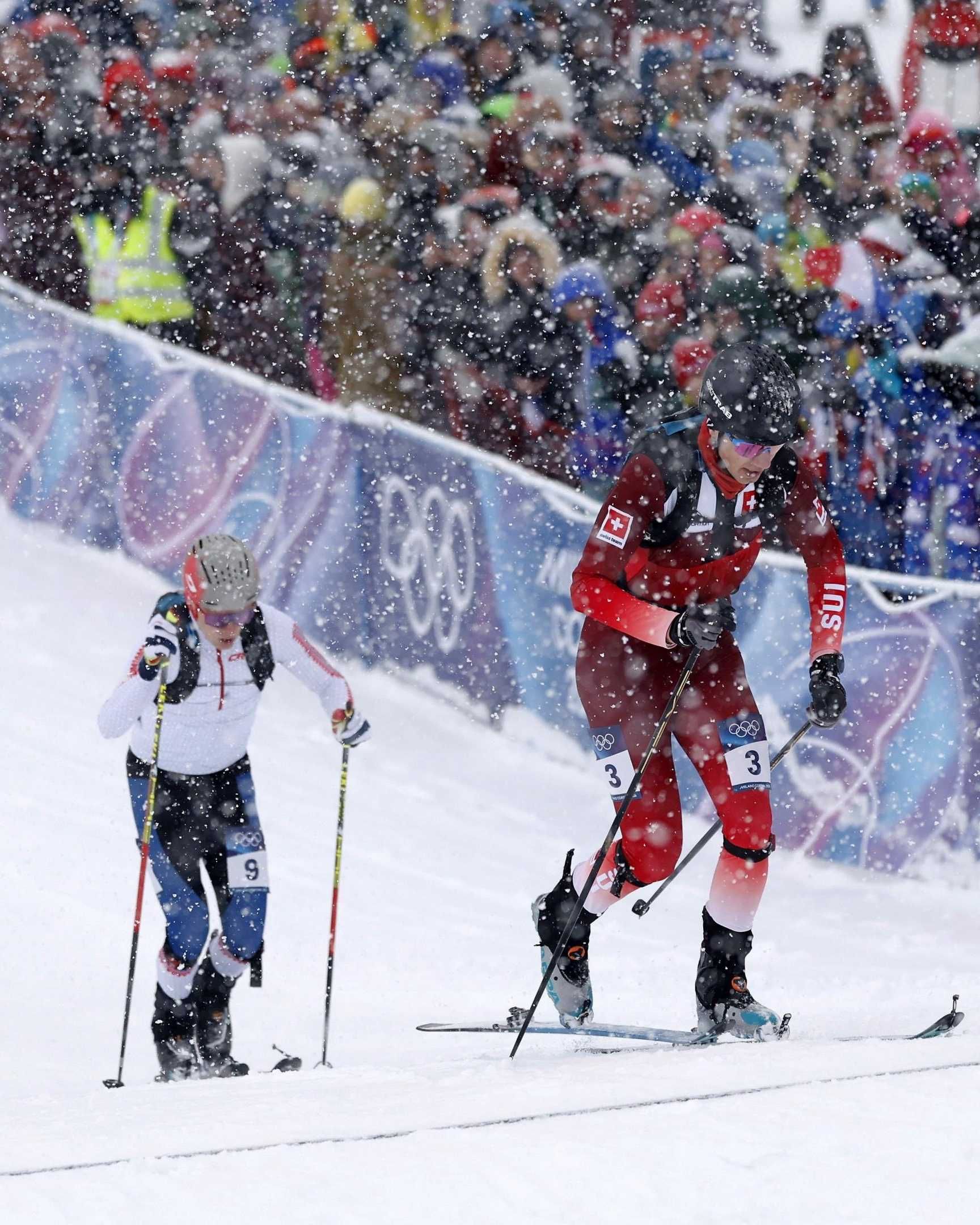
After a long period dominated by alpine skiing, this discipline has experienced a renewed surge of interest in recent years. Part of the credit goes to the sport’s governing body, now known as the International Ski Mountaineering Federation. Founded in 2007 and headquartered in Lausanne, the ISMF took over from previous associations, relaunching the sport, which was officially recognized by the International Olympic Committee in 2016. In Bormio, the Olympic venue, spectators will witness the men’s and women’s sprint races as well as a mixed sprint relay—each lasting around three minutes. The format includes an initial ascent on skis, a mid-section where skis are removed for a boot-pack climb, and a final downhill section back on skis. The course will be artificial and shortened to appeal to a wider audience—a decision that has sparked criticism among athletes, some of whom argue that it distorts the essence of a sport traditionally practiced over long distances and in untouched natural terrain.
What equipment is needed to practice SkiMo?
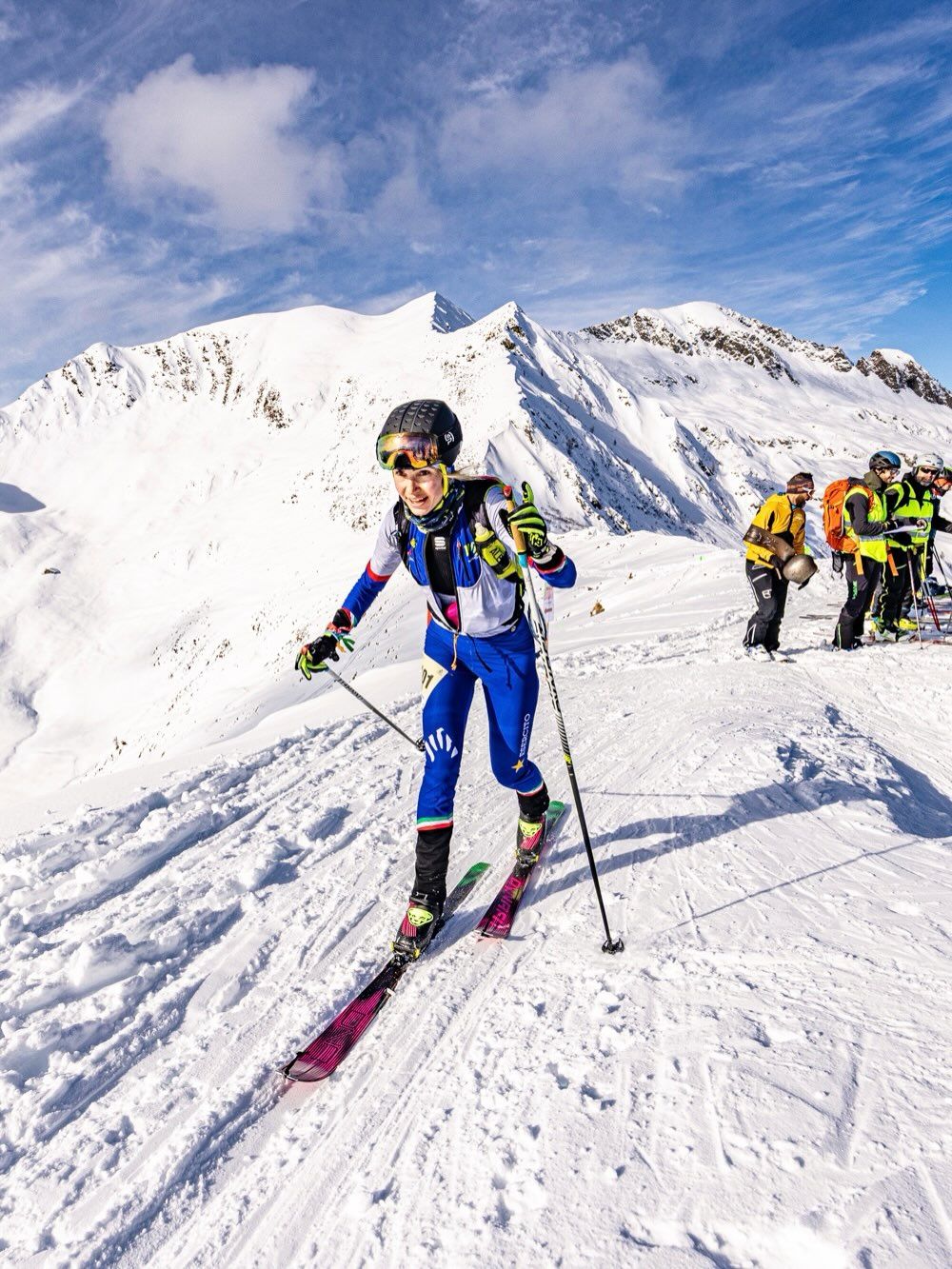
The equipment worn by Olympic athletes is technical and multifunctional, united by a single guiding principle: lightness. Materials are engineered to keep ski mountaineers agile and unburdened, ensuring fluid transitions. The skis are similar in width (60–90 mm) to those used in alpine skiing, while length varies according to the athlete’s height. The difference lies in weight—between 650 and 700 grams—and in the bindings, designed for quick release and heel adjustments, often crafted from aerospace alloys such as titanium and anodized ergal. These skis are ultralight yet durable, featuring a paulownia wood core or hybrid constructions combining aramid and ash wood. The outer layers, both upper and lower laminates, are made of unidirectional carbon fiber.
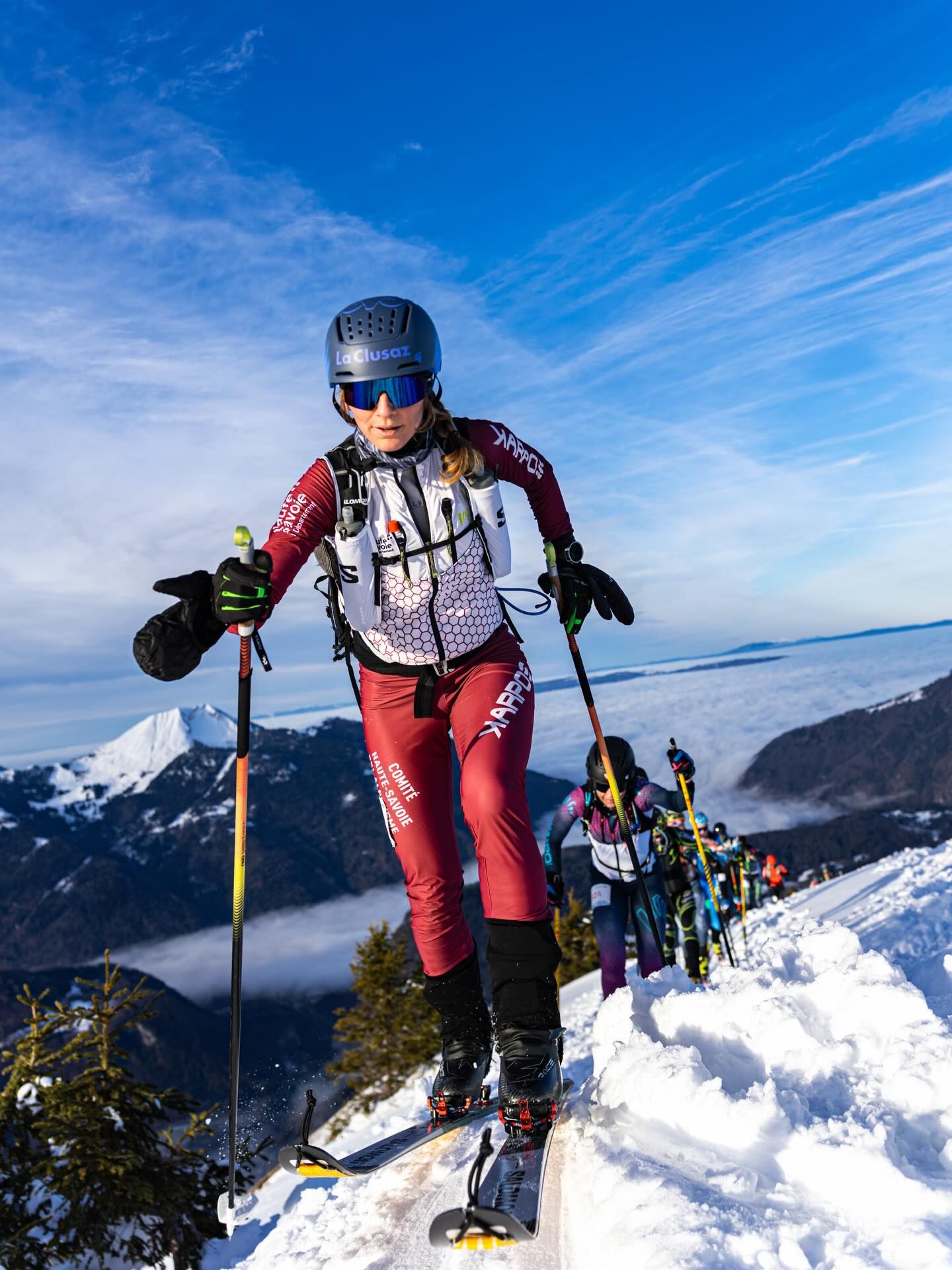
For uphill sections, skins are attached to the bases of the skis to provide grip and prevent sliding. Originally made from natural seal skin—a technique inspired by polar explorers and later adopted by Alpine troops during World War I—these skins have gradually been replaced by synthetic materials offering the same function. Today they are typically made from polyester or mohair wool, with an adhesive strip that secures them to the skis.
Why are backpacks used in SkiMo?
@davejsearle4 Here’s the features I look for in a backcountry / ski mountaineering backpack. This is the Rab Kroma 30l ski bag and it ticks all my boxes! Ice axe carry system that you can take the axe off the bag one handed without taking the bag off. Separate organisation pocket for shovel, probe, 2nd ice axe and skins. This is also where I would stash my ascent plates. Light and strong material, in this case spectra fiber. Seperate goggles stash pocket for my eyewear. Two ways of carrying skis, diagonally and on the side in an A frame for example. A way to stash my helmet. This bag has its own carry system but I like the Smith summit helmet because it has elastic straps on the side to clip the helmet onto the bag. A wide hip belt with a big zip pocket for sunscreen and snacks. Zipped back panel access for getting at my gear when it’s flat on the snow. Also creates a portal for my ski rope. Metal belt buckles are nice as they are more sturdy than plastic. What am I missing? What are your important features? #climbing #ropes #mountainguide #rock #rope #mountains #matterhorn #E-bike #skiing #springskiing #corosvertix2s #backcountry original sound - davejsearle
As mentioned, during the final ascent section the skis are removed and stored in a specialized backpack designed for quick transitions. The pack is asymmetrical to ensure stability and proper ski positioning, secured with loops and hooks. At this stage, the spotlight shifts to the boots, which weigh around 500 grams. Also made of carbon fiber, they feature a lightweight shell and cuff optimized for climbing, yet stiff enough for downhill performance. Vibram rubber soles complete the design, delivering both safety and torsional support.
Other essential items include ski poles, similar to those used in alpine skiing and useful in every phase of the race. Typically measuring 50–55 cm for sprint competitions, they are equipped with baskets, straps, and rigid shafts. Grips may be made of cork, while shafts are crafted from carbon fiber reinforced with Kevlar. For the descent, skis are reattached after removing the skins, which are stored in the backpack. Another key feature is the perforated helmet. Built with In-Mold construction and weighing approximately 300–360 grams, it includes ventilation openings to optimize breathability and thermal regulation. The outer shell is often polycarbonate with an EPS inner liner.
Who are the top athletes in SkiMo?
Thirty-six ski mountaineers will compete across the three sprint events, each hoping to etch their name— for the first time—into the history of the Winter Olympic Games. Among the 14 participating delegations, some athletes could even become breakout stars online. A glance at their social profiles reveals a shared simplicity: they run, cycle, paddle, and nurture a deep love for mountains and nature, far removed from urban chaos. Some create vlogs documenting their sporting adventures, but all remain intensely focused on their discipline. Across the board, there is a clear desire to introduce SkiMo to the world, with pride in belonging to this community and curiosity about how it will be received.
Thibaut Anselmet, a three-time world champion, curates a highly aesthetic profile filled with breathtaking mountain landscapes and wildlife photography, showing a particular fascination with ibex and chamois. Equally enamored with the spectacular scenery where they train are Pablo Giner, Emily Harrop, Margot Ravinel, and Hans-Hinge Klette. Phillip Bellingham, competing in his fourth Olympic Games after participating in other disciplines, enjoys driving an old Fiat Panda around Bormio with a fellow Australian teammate.
Representing Italy are two athletes who found love on the slopes. Michele Boscacci and Alba De Silvestro are a couple both in sport—where they will compete together in the mixed relay—and in life. Lara Hamilton nurtures a passion for DJing, while Spanish ski mountaineers Ana Alonso and Maria Costa Diez share an Instagram profile called “Las Motomamis del SkiMo,” inspired by the attitude coined by Rosalía in her album Motomami. All that remains is to follow the athletes in competition, watching this new Olympic chapter unfold with curious eyes.