


























All the venues of Milano Cortina 2026 A guide to every single venue of the 2026 Winter Olympic and Paralympic Games
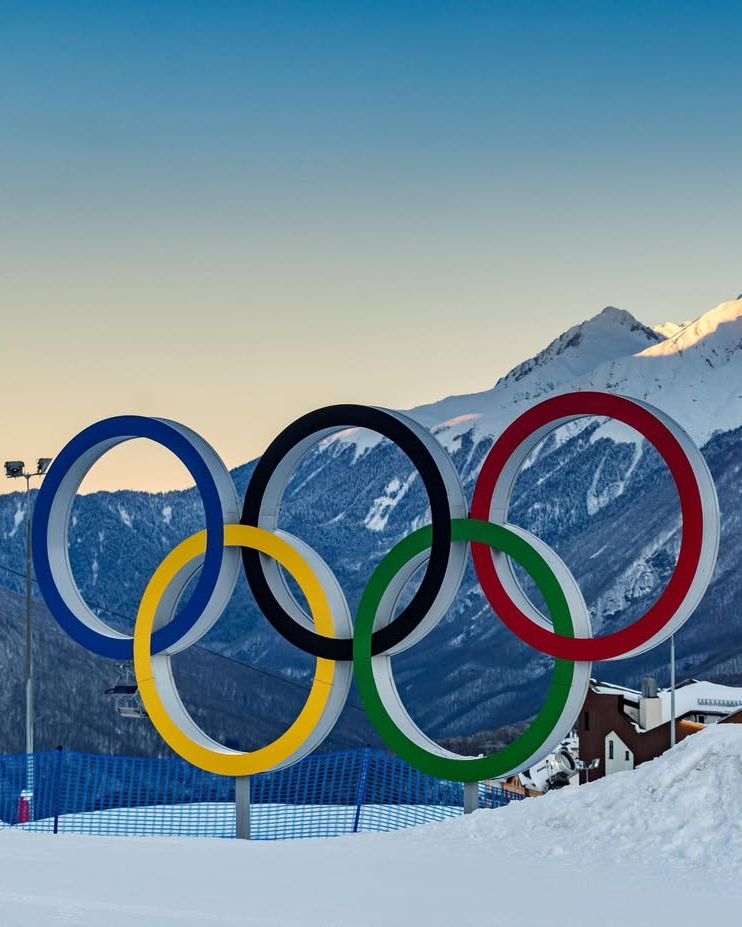
The journey of the Olympic Flame, lit last November 26 in Olympia and fueled to withstand the clash with the winter cold of the entire Italian Peninsula, is about to reach its sixtieth and final stop. A moment — the arrival at San Siro scheduled for February 6 — that will officially mark the beginning of the 25th edition of the Winter Olympic and Paralympic Games, hosted for the first time jointly by two cities, Milan and Cortina d’Ampezzo. The event — previously hosted by Italy at Turin 2006 and even earlier in Cortina itself, which welcomes the Games back exactly seventy years later — will touch numerous venues across Lombardy, Veneto, and Trentino–Alto Adige, even brushing the border with Austria.
An immense area, considering that Milan and Cortina are over 257 kilometers apart as the crow flies, 412 kilometers by road, and that covering the entire route, stopping at every single venue, would require more than twelve hours of travel. This unique distribution has consequently required numerous interventions, some of which are still underway, leaving certain venues as ongoing works in progress. Simico, the Milano Cortina 2026 Infrastructure Company, has made available the Olympic Works Plan, which includes a total of 98 projects — 47 sports facilities and 51 transport infrastructures — for an overall investment of €3.5 billion. According to the latest update from January 2026, of the thirty-one projects strictly linked to the Olympic Event, three still remain to be completed: the upgrade of the Anterselva biathlon stadium, restoration work at the Cortina Sliding Center, and the redevelopment of access points to the Verona Arena. With venues so widely spread out, dozens of disciplines, and closely packed dates, getting oriented is no easy task — which is why the Milano Cortina 2026 website provides the full schedule, live torch tracking, and a guide to all venues.
Milan – Figure skating, short track, ice hockey, speed skating
The San Siro Stadium will provide the backdrop for the main Opening Ceremony of the Winter Olympic Games on February 6, while from the previous day the flame will illuminate both historic and modern locations across Milan, from Piazza del Duomo to CityLife. The show at what has been renamed the Olympic Stadium for the occasion will feature artists such as Andrea Bocelli, Laura Pausini, and Mariah Carey, alongside actors Pierfrancesco Favino and Sabrina Impacciatore. After the event, visitors are encouraged to admire the Olympic Cauldron near the Arco della Pace, which will host a short show every hour on the hour between 5 p.m. and 11 p.m., first from February 7 to 22, and then from March 6 to 15 for the Paralympic Flame.
The guiding principle in preparation for the Games — whether for competition venues or the Olympic Village — has been to strike a balance between renovating existing structures and building new permanent or temporary ones from the ground up. The former category includes the Ice Skating Arena, better known as the Unipol Forum in Assago, the renovated venue for short track and figure skating competitions, with a capacity of 9,700 spectators. Among the new facilities is the Santagiulia Ice Hockey Arena. Located in the district of the same name, it is owned by the private company Eventim but also the result of complementary municipal investments, which drove construction costs up from the initial €180 million to €270 million. It will host ice hockey matches and, with a capacity of 14,000 seats, will be the largest venue in Milan, as well as the crown jewel of the legacy left by a regional renewal project worth €5.33 billion.
Temporary, instead, will be the setup of the Milano Ice Park inside the halls of Rho Fieramilano, which includes the Speed Skating Stadium and the Rho Ice Hockey Arena, dedicated respectively to speed skating and ice hockey. The Olympic Village will also be temporary, occupying 60,000 square meters in the Scalo Romana area. Temporary only in its current function, however, as the 1,700 beds created will later be largely converted into Italy’s largest student housing complex — although only one in four rooms will be available at subsidized rates, with the rest priced at market level, not exactly affordable for everyone.
Cortina – Curling, bobsleigh, skeleton, luge
Seventy years later, the circle is complete. If Milan’s mantra has been redevelopment, Cortina d’Ampezzo has focused on the iconic nature of its landmark venues, at the heart of Italian alpine tradition. The Curling Olympic Stadium, founded in 1955, already served as the stage for the Opening Ceremony of the 1956 Winter Olympics and will once again host the Closing Ceremony of the Paralympic Games on March 15. The Sliding Centre stands on a track for sliding sports dating back to 1923, dedicated to local bobsleigh champion Eugenio Monti, nicknamed the Flying Red, who raced here seventy years ago, winning two silvers — before claiming two bronzes at Innsbruck 1964 and the iconic two golds at Grenoble 1968.
The alpine skiing events at the Alpine Skiing Centre on the Tofane mountain group will instead offer immersion in the landscape of the Eastern Dolomites, whose crown jewel remains the Olympia delle Tofane, one of the fastest and most demanding slopes in the world, already the site of major international competitions in previous years. Cortina will also feature an Olympic Cauldron — for the first time in history split between two locations — in Piazza Dibona, following a evocative return of the Flame through the streets of Cortina, during which historically significant areas such as Vajont were also visited, commemorating the 1963 dam disaster.
Anterselva / Antholz – Biathlon
No offense to Cortina’s peaks, but the true paradise of the event lies atop the mountains of Rasun-Anterselva, in the autonomous province of Bolzano, near the Austrian border. The Biathlon Arena, located at 1,600 meters above sea level, is the world home of biathlon, boasting a 60-kilometer network of trails in the surrounding area and a venue capacity of 19,000 spectators, already present in force at the 2025 Biathlon World Cup and the stars of a true Nordic carnival. Just steps from the lake at the end of the valley, the tranquility of the Vedrette di Ries-Aurina Natural Park surrounding the venue is rivaled only by the traditional silence of spectators during the athletes’ shooting at the 30 firing lanes. A breathtaking location, bathed in sunlight for much of the day — hence its nickname, Sun-tholz.
Bormio – Alpine skiing
On the Stelvio slope, where Dominik Paris has won seven times across downhill and super-G, and where the men’s downhill World Cup is held every year, the Olympic Games will now arrive as well. Stretching over three kilometers and featuring a total vertical drop of 987 meters, the course starts at an altitude of 2,250 meters — the highest of Milano Cortina 2026 — immediately confronting athletes with a 63% gradient, followed by the 30-meter Rocca jump and then the Sertorelli chute, a 300-meter straight where speeds of up to 140 km/h are reached. And so it continues, alternating turns, straights, and diagonals. It’s easy to see why Bormio is considered one of the most challenging courses in Europe, earning it the nickname the La Scala of winter sports.
Livigno – Freestyle skiing and snowboarding
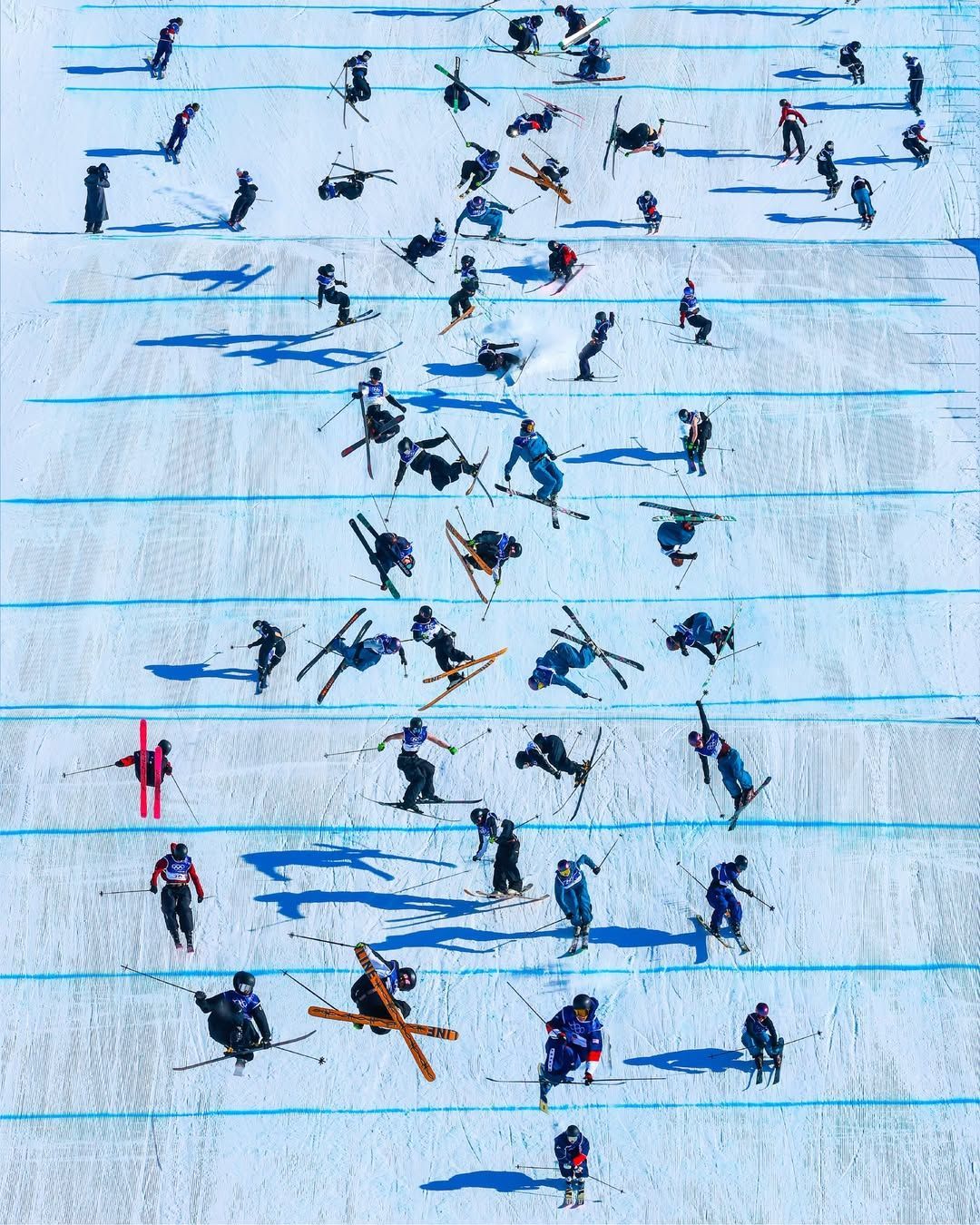
Still in Valtellina, for fans of more extreme winter disciplines such as freestyle skiing and snowboarding, Livigno is the ideal location. On two opposite sides of the resort stand the Aerials & Moguls Park and the Snow Park, two venues recently tested in international competitions and among the most technologically advanced of the Games. The two aerials and moguls courses occupy the right and left sides of the same slope, positioned at its base to allow panoramic viewing from specially designed spectator areas. The same concept applies near the Snow Park, where the finish areas of five disciplines converge into a single zone — a true panopticon for spectators. Nearby will also stand the Big Air ramp, 225 meters long and up to 40 meters high, equipped with floodlights to illuminate the alpine valley at night.
Predazzo and Tesero – Nordic combined, ski jumping, cross-country skiing
Night lighting will also be present on the ski jumping hills at the Ski Jumping Stadium in Predazzo, which covers an area of 3,000 square meters. Thanks to renovation works, the two main hills have been extended, from 104 to 109 meters for the Normal Hill and from 137 to 143 meters for the Large Hill. In addition to ski jumping, the venue will also host Nordic combined events together with its sister venue in Val di Fiemme, Tesero, which features the Cross-Country Skiing Stadium, a massive facility with a capacity of 15,000 spectators and 19 kilometers of trails. This venue will also host Olympic cross-country skiing events and, for the first time in its history, Paralympic competitions — specifically cross-country skiing and biathlon.
Verona – Closing Ceremony
The final destination, the least Nordic yet undoubtedly the most spectacular. Italy’s third-largest Roman amphitheater — behind only the Colosseum in Rome and the Capuan Amphitheater in Santa Maria Capua Vetere — will first serve as the stage for the Closing Ceremony of the Winter Olympic Games, and then for the Opening Ceremony of the Winter Paralympic Games, on February 22 and March 6 respectively. Built in the 1st century AD, the newly dubbed Verona Olympic Arena can host up to 12,000 spectators and will represent Italy’s artistic heritage to the world, enclosing within its ancient yet solid walls a multicultural and inclusive spectacle unlike many others. Quite a change from gladiatorial games.