Soccer in the United States will change enormously with the 2026 World Cup All the possible implications of an event that intertwines politics, sporting tradition, and much more
The 2026 World Cup is just around the corner, closer than we might imagine: 32 years later, such an important football competition returns to the United States, 32 years after the final in Pasadena. The World Cup seems so close, yet we struggle to fully realize it. Perhaps this is because the seasons of players, clubs, and national teams have grown much longer; the new Champions League format includes 8 consecutive matches as a baseline (which become 10 in the case of the playoffs), many national teams still have to complete World Cup qualification in March, and the leagues of the major competitions are still less than a third of the way through. At the beginning of 2026 there will also be the Winter Olympics and, in a few weeks, the Africa Cup of Nations is scheduled to take place.
Just thinking about all these commitments, what worries players and clubs the most is probably the possibility of arriving at the World Cup in good physical condition, avoiding premature injuries that could compromise the ongoing season. At the same time, the numerous fixtures partially distract fans’ attention from an event that presents itself as disruptive and revolutionary for football, both in the United States and in the rest of the world.
But will it really be possible to change football as an idea and in its perception in the United States? The build-up to the World Cup, the World Cup itself, changes in the political landscape, and the initiatives that are emerging in view of this macro-scale event are set to outline many new developments, affecting not only top-level football, but also street soccer, a facet of the game on which the United States seem keen to invest heavily.
Accessibility to street soccer in the United States
"I have to wake up at 6 a.m. to make sure I have a field to play on during the day", explained Sam Kerr, founder of Systemarosa. "We had to struggle to find the location where we play; we used to be on another field and now we are on this one. In our community we are very selective about who we let in. We need reliable people who commit to the cause and truly care about the Chinatown Soccer Club, not those who just show up for a single game and leave", told us Gerhard Stochl, one of the founders of Chinatown Soccer Club, one of New York’s oldest soccer communities, founded in 2002 and based in the heart of Chinatown.
Basically, football and its infrastructure have rarely been "a thing" in New York, let alone in the United States in general. And therefore, the sport has rarely been truly accessible in the full sense of the word. This began to become a problem when football started to grow in popularity and more and more people wanted to discover the sport. Chinatown Soccer Club is a community born from people coming from the skateboarding world; added to this is a strong component of women’s football (to which Sam proudly belongs), and finally also older people of all ages who, until the day before, had never shown any interest in football. A recent example is the New York community Soccer & Croissants, founded by Ella Jayes, which welcomes anyone who wants to try kicking a ball.
The 26 by 26 program
To make up for this lack of infrastructure, which makes it difficult for many people to practice the sport (and which, in general, fails in the mission of discovering street soccer and then bringing people closer to football), the initiative promoted by New York City FC in collaboration with the then mayor of the city, Eric Adams, is particularly noteworthy. The project is called 26 by 26 and aims to install 26 mini soccer pitches throughout the city’s metropolitan area. "Today we are opening the first of 26 new mini soccer pitches across the city as part of the revitalized New York City Soccer Initiative, to help young people connect with soccer in communities that have been neglected for too long. We are making Queens the home of soccer in the United States, and we look forward to welcoming the world to our city for the FIFA World Cup 2026", said Eric Adams on June 2, 2025.
"The opening of a new field at P.S. 211 represents an important step forward in our mission to create safe and inclusive spaces where young New Yorkers can play and grow", added Deputy Mayor Ana J. Almanzar. "In a city as diverse and dynamic as ours, soccer has extraordinary power to unite communities. And thanks to our partners, including NYCFC, these 26 new fields will become vibrant hubs of opportunity, inspiration, and connection across all five boroughs". "The community is at the center of everything New York City FC does, and the New York City Soccer Initiative has been the most impactful community program we have worked on since our founding. We have created the largest urban soccer network in the country, and today’s ribbon-cutting is a moment of great pride as we open the first of the next 26 mini fields in celebration of the FIFA World Cup 2026", said Brad Sims, CEO of New York City FC. "Soccer is a sport that unites and brings together people from every background, and the NYCSI is making it more accessible than ever to New Yorkers. Together we can create healthier, safer, and more connected communities".
The importance of street soccer for the United States
Beyond the aspects highlighted in the previous paragraphs by Eric Adams, Ana J. Almanzar, and Brad Sims, there is an element that cannot be overlooked — or at the very least cannot escape scrutiny. The United States need street soccer because, unlike sports such as basketball, younger generations have never really had the chance to approach football in the streets, also because too many other sports were already being played there. This could represent one of the main reasons for the technical limitations of American players: never having had the opportunity to refine their skills outside the system of classic youth soccer. Unlike in Europe, in the United States most families pay for their children to play in clubs; even before reaching MLS academies, kids can approach football through private clubs following the pay-to-play model.
After a recent trip to New York — the same one in which we gathered the testimonies of Sam Kerr and Gerhard Stochl — several people told us how football, also because of the educational system tied to high schools and universities, has always been considered a white elitist sport: inaccessible, limited, and confined to the school system, and therefore characterized by poor multiculturalism. Lev Rosenbush of the Bowery FC soccer community spoke to us about this issue, and it was also confirmed by the guys from the Wavy Footy community, who added that the 26 by 26 program is meant to welcome all those who will grow fond of the sport and want to play it following the 2026 World Cup.
From Eric Adams to Donald Trump and Zohran Mamdani
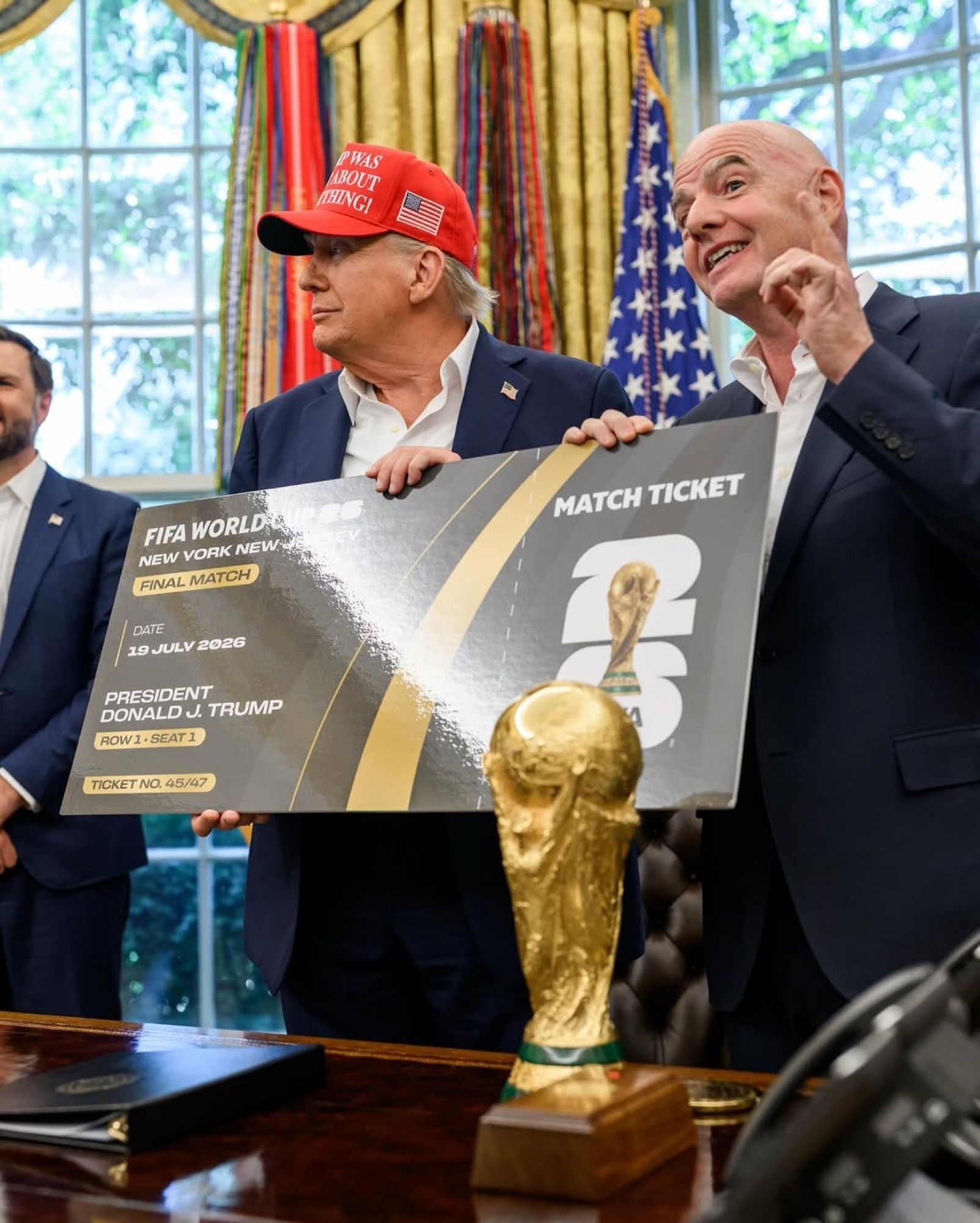
Massive competitions such as a World Cup are obviously a challenge in which politics and interests inevitably play a role, with all the related consequences: just look at the Qatar 2022 World Cup to realize it. Politics is now a fundamental component of football, even in the United States, and it will be even more so as the event approaches. If the 26 by 26 proposal began under New York Mayor Eric Adams, with Donald Trump football began to be considered a tool of soft power, a means to regain popular support and strengthen political influence. It could hardly be otherwise, considering the repeated visits of FIFA President Gianni Infantino to the Oval Office and the controversial discussions that followed, as well as Trump’s suggestion of the possible presence of Vladimir Putin in the United States to attend the event. Even before that, however, the Trump administration’s policies on immigration and tariffs were already relevant, closely affecting the two co-host countries of the tournament, Mexico and Canada.
But that is not all. There are also the many critical issues that emerged from last July’s Club World Cup, held precisely in the United States and described from day one as a dress rehearsal for 2026: a month of football that revealed many unknowns — not least, and not negligible, the issues related to the climate — and few certainties, aside from Trump’s omnipresence, only partially appreciated by the international audience. And yet, according to the promises of the U.S. and FIFA presidents themselves, it is "an event that can lift the global mood", and one for which "we look forward to welcoming the fans".
Then came the election of Democrat Zohran Mamdani — a huge football fan and die-hard supporter of the Gunners, with his exchange just a few hours ago with Héctor Bellerín already iconic — as mayor of the Big Apple. Mamdani promptly attacked FIFA over the dynamic pricing system and, therefore, the exclusivity of ticket prices for the 2026 World Cup matches; it is therefore natural that a rift has formed with Donald Trump and that, especially after the 2026 World Cup, one can expect Mamdani to place even greater importance on football. First and foremost because it is a rather simple way to establish dialogue with his people (and with a multicultural city like New York), but also to dismantle the idea that has persisted to this day of football as an elitist and poorly accessible sport.
With Mamdani and with everything that will come in the post-World Cup period, New York and the United States can ride the wave of several dreams: playing football in more spaces, with less waiting time and more frequently, without paying or without paying too much. And, moreover, hoping that all this accessibility to the sport will encourage self-creation more than the simple "manufacturing" of players (not necessarily successful ones). Thanks to street soccer, the country may thus aspire to a stronger and more authentic generation of talent.
What to read next
The third-place playoff is the strangest night of the World Cup
It's often an entertaining match, and sometimes it has gone down in history
The 2026 FIFA World Cup has become the World Cup of watch parties
From Amman's Roman Theatre to Toronto's kayaks, via Seoul, Gaza and New York
LOEWE is the new travelwear brand of the Spanish national team
An interesting update ahead of the 2026 World Cup