Donald Trump’s shadow over the 2026 FIFA World Cup With the approval of his partner-friend, ‘Johnny’ Infantino
After a World Cup in Russia (2018) and a winter edition in Qatar (2022), and with an expanded, itinerant edition across three continents on the horizon (2030) and another journey to the Persian Gulf (Saudi Arabia 2034), it was by no means easy to legitimize the 2026 edition as a controversial World Cup. FIFA, after all, has forced us over the past decade to recalibrate every standard in this regard, and the upcoming tournament in the United States, Mexico, and Canada initially seemed the most normal of this particular historical moment. But then Donald Trump returned to the White House, the geopolitical scenario—both regional and global—changed drastically, and the next FIFA World Cup edition sank into an abyss of controversies, perplexities, and criticism.
It couldn’t be otherwise, after repeated visits of the global football leader Gianni Infantino to the Oval Office and the questionable statements made on those occasions, as well as after the American president suggested the possible presence of Vladimir Putin in the U.S. to attend the event. But even earlier, after the Trump administration’s immigration and tariff policies, which closely concern the two co-host countries of the tournament, Mexico and Canada.
But that’s not all. There are also the numerous issues highlighted by the Club World Cup last July, held in the United States and touted from day one as a pre-2026 general test; a month of football that revealed many uncertainties—not least the climate-related problems—and few certainties, except for Trump’s omnipresence, which the international audience found only moderately welcome. Yet, according to promises from both the U.S. and FIFA presidents, it is “an event that can lift global spirits”, for which “we look forward to welcoming the fans”.
The Donald & Gianni Bromance
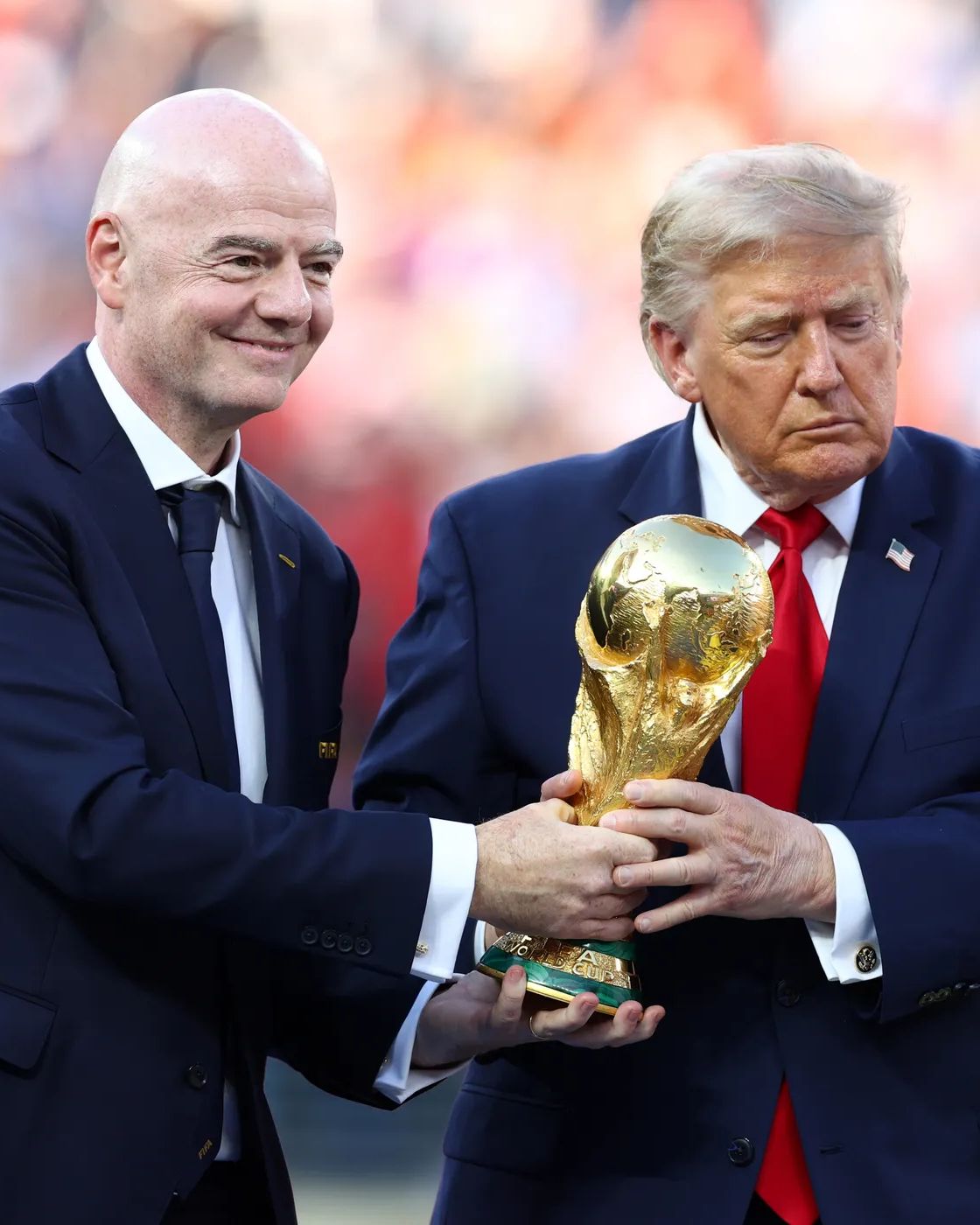
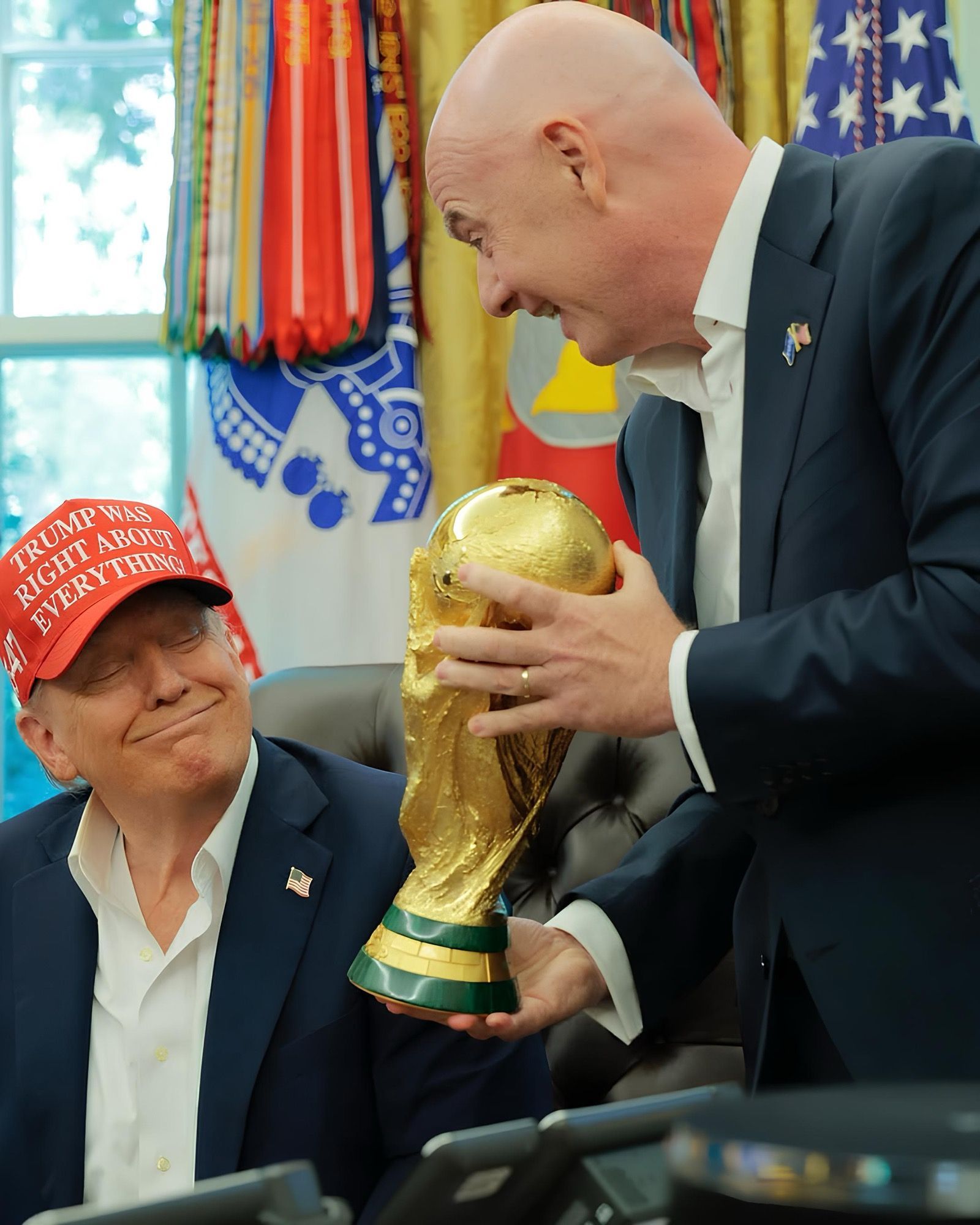
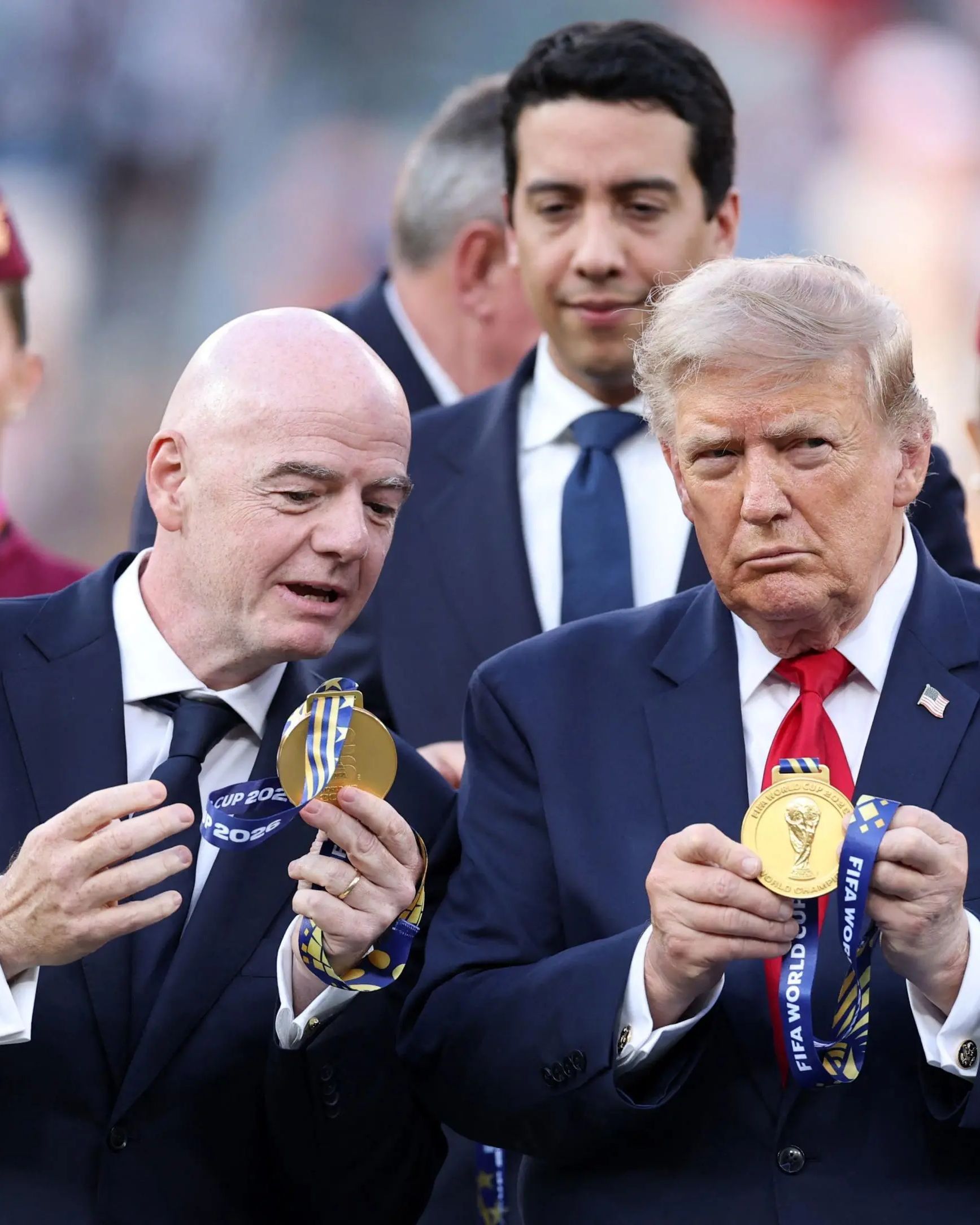
“Usually only the FIFA president, the winning team, and the president of the winning nation can touch it,” Gianni Infantino said on August 23, placing the World Cup trophy in the hands of the Republican leader. “But since you are a winner, you can touch it.” “Can I keep it?” – Trump replied, wearing a hat with the inscription Trump Was Right About Everything. “It would look good on that wall.” The scene took place during one of many visits by the football chief to Washington and was broadcast worldwide within minutes.
In August 2018, in the same walls, Infantino had presented Trump, then in the middle of his first term, with a personalized number 45 jersey (referencing his presidency) and a referee kit, “so he could send someone off.” A perfect setup for showing it off to the journalists present—no migrants nearby, after all—with the usual mix of joking, intimidation, and inappropriateness. In the background that day was the United 2026 (USA-Mexico-Canada) bid and, above all, the government guarantees package requested by FIFA for approval. Non-discriminatory access for athletes, officials, and fans, commitments on security, public order, and human rights, streamlined visa and work permit procedures, and so on. Political guarantees were formally documented by Washington between 2017 and the FIFA Congress vote in June 2018.
With the arrival of the 2025 Club World Cup and the approach of the national version, Infantino and Trump’s interactions intensified. Along with it, the Swiss official’s increasingly evident determination to assert himself as a partner and friend of the White House tenant, as well as a political actor—without any democratic legitimacy—on the international stage. In recent months, FIFA announced the opening of an office in Trump Tower, New York, visited Washington eight times (five of them in the Oval Office), shared information with a task force created by U.S. federal agencies, involved Ivanka Trump in the 2025 Club World Cup draw, and officially moved the 2026 group stage from the Las Vegas Sphere to the Kennedy Center in Washington, D.C.
On a personal level, Infantino shared some of the U.S. president’s messages on his own channels, attended the ceremony for Trump’s return to the White House, thanked him “for all he does for the development of football in the United States”, and publicly invited him to the next World Cup final, with “row 1, seat 1 reserved.” As if an invitation were needed to put Trump at the center of attention. “It will be impossible not to notice him next summer,” wrote Alexander Abnos in The Guardian, “Trump will make sure he is at the center of attention, even in places where he has no interest or where his involvement might be seen as inappropriate: a dynamic Americans know well, more than a decade after Trump’s rise.”
Speaking of unnecessary invitations, during Infantino’s latest visit two weeks ago, Trump once again pulled out a classic media ace. Showing cameras a photo of himself with Vladimir Putin and mentioning the Russian president’s willingness to attend next summer’s World Cup matches. Yet another unsettling vignette reminding us how much the football showcase will be shaped by his personalistic and political direction.
Special guest?
Even the image recently shared by Putin, showing the two presidents side by side at the recent Alaska summit, quickly went viral online and on social media. But how serious and realistic is it? Legally, since February 2022 (the invasion of Ukraine), Putin has been listed on OFAC’s SDN list, which blocks assets and transactions with U.S. persons—not an automatic entry ban, but an obstacle for visa approval and public opinion. Outside U.S. borders, since March 2023, Putin is under an ICC arrest warrant for war crimes and illegal deportation of minors; while the U.S. is not bound by this, Canada and Mexico are.
The football context also doesn’t support the hypothesis. FIFA and UEFA have suspended, until further notice, all Russian clubs and national teams from their tournaments, including 2026 qualifiers. How could the global audience legitimize Putin’s presence while simultaneously excluding athletes who certainly do not bear the same responsibility as him—if any—for what is happening in Ukraine? It should be noted that Israel’s lack of a ban in the same competitions already provides clear evidence of double standards, but Putin in the stands in New York and Miami would be very hard for American and European audiences to accept.
Beyond the feasibility of an invitation, there is the political point: Trump’s allusion to Putin’s possible presence, just days after the Anchorage bilateral summit, confirms the use of the upcoming football mega-event as a diplomatic instrument. A move that shifts the public discourse from how the tournament is organized to who can cross its borders, forcing FIFA to navigate the slippery terrain between long-abandoned sporting neutrality and international geopolitics.
Controversies and pressures
In 2018, as mentioned, guarantees and standards for entry and anti-discrimination policies were put on the table to win the bid. Today, however, the call to respect those same promises comes not from FIFA—which seems to have forgotten everything in favor of the Infantino-Trump relationship—but from NGOs and human rights observers, such as Amnesty, Human Rights Watch, and the Sport & Rights Alliance, who, a year before the event, are demanding a public and mandatory Human Rights Framework for 2026, conflicting with increasingly restrictive U.S. immigration and public order policies. There is a justified concern about selective checks, denied visas, and obstacles for media, activists, and LGBTQ+ visitors.
In parallel, relations with the co-hosts have become tense in recent months. Trump raised tariffs on neighbors with trade war rhetoric, revived the narrative of Canada as the 51st state, and suggested military operations and political interventions in Mexican territory to combat drug cartels.
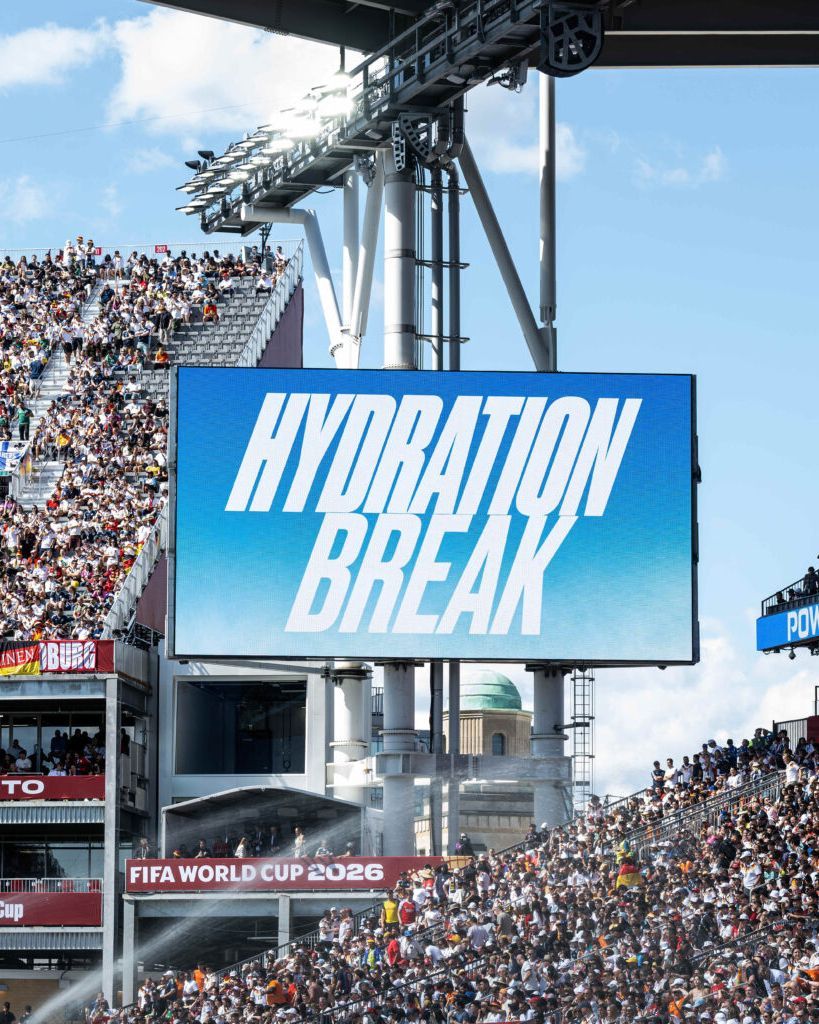
Then there are the issues inherited from Qatar 2022, resurfacing in practical terms. The 2025 trial run showed heatwaves and unexpected stoppages due to extreme weather, and academic studies (Queen’s University Belfast) indicate that ten out of sixteen venues are at very high risk of heat stress in the summer of 2026. Players’ stance, expressed in a FIFPRO open letter, is clear: implement cooling breaks when temperatures exceed 28°C, and postpone any match beyond the 32°C limit.
There is also the labor issue, inherited from Doha and relevant for future World Cup editions. In March, the union BWI accused FIFA of denying access to Estadio Azteca (Mexico City) for an independent inspection, and months of pressure were needed for a site visit on July 9. A first step toward transparency, but also a worrying signal considering the four months between the initial access attempt and actual opening of the site.
Starting in 2024, Saudi Aramco became a FIFA Major Worldwide Partner until 2027, including the 2026 edition and the path toward 2034 in Saudi Arabia. This choice underlines how FIFA’s declared neutrality is increasingly, in reality, a policy of deliberate alliances and handshakes with actors who routinely violate the foundational values of sport: inclusion, hospitality, anti-discrimination, and respect for human, civil, and labor rights. But all things considered, are you ready to have your spirits lifted by Infantino and Trump?
What to read next
Politics took over the closing stages of the United States Grand Prix
Boos for Ted Cruz and criticism over Sophie Cunningham’s appearance overshadowed Kimi Antonelli’s celebration
Why does the Nations League keep changing?
What yet another shake-up of the format will bring
Why UEFA is threatening to boycott future FIFA World Cups
A $20 billion deal is on the table involving Gianni Infantino and Donald Trump