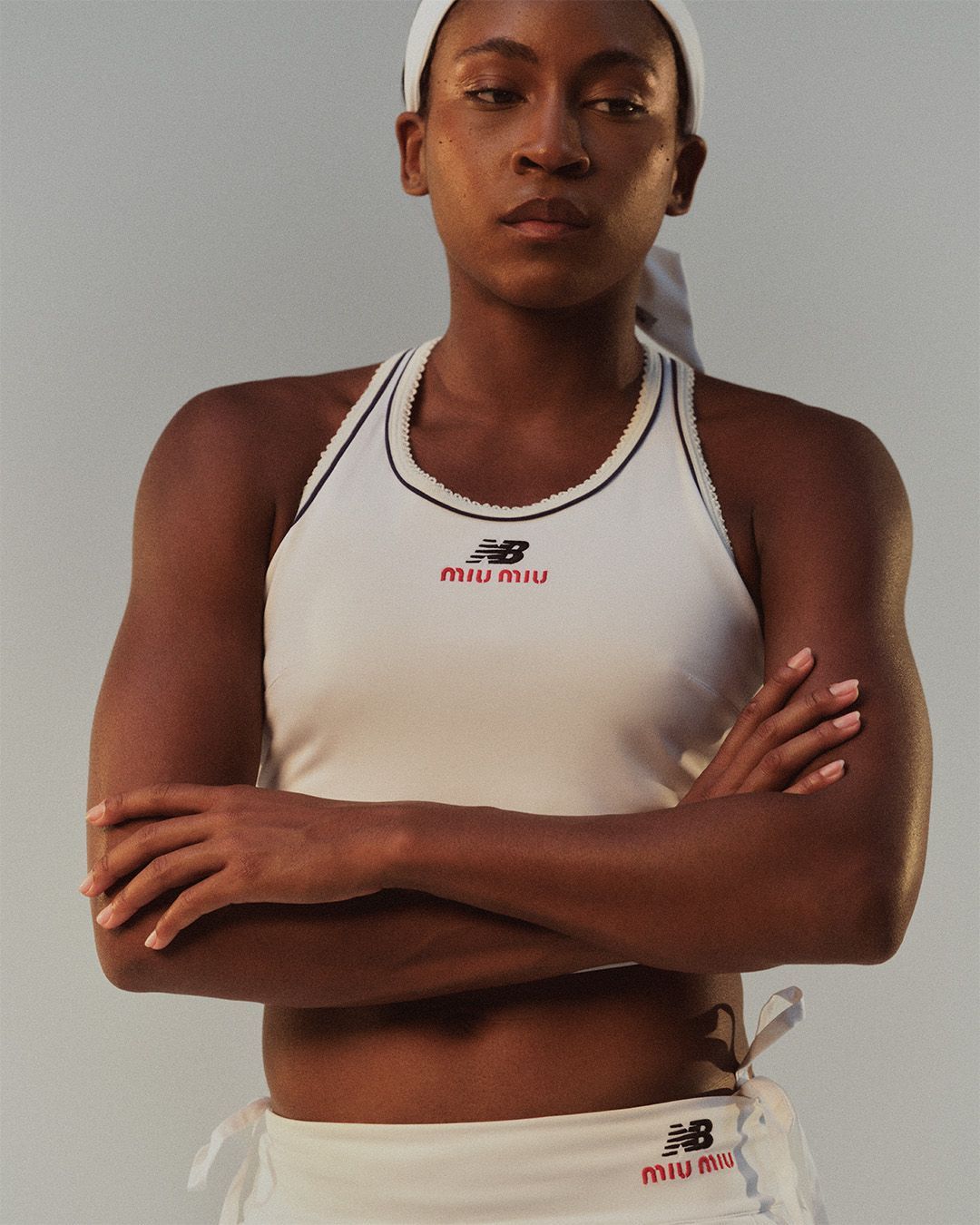



















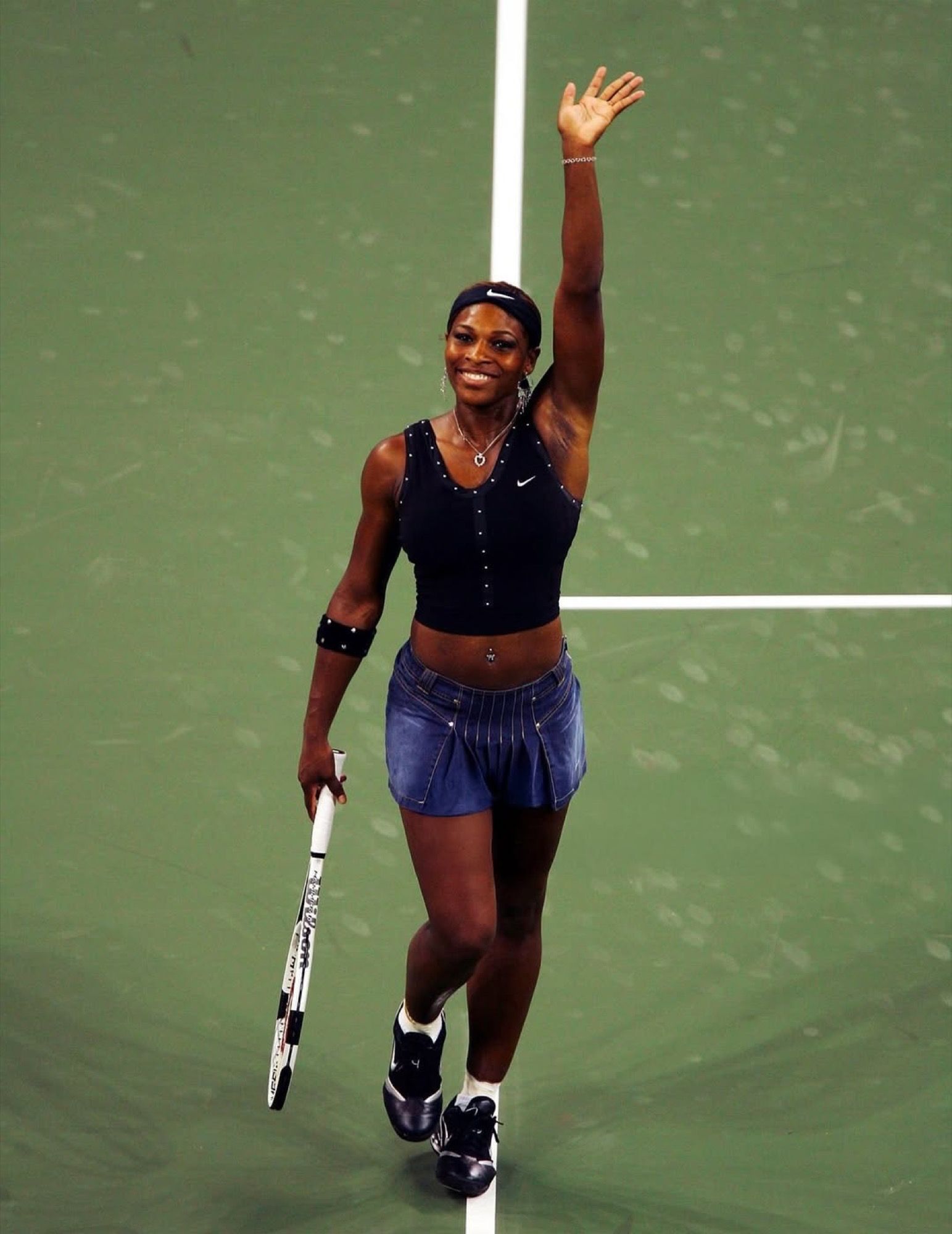
Why has everyone something to say about Serena Williams' body? A body that is the former tennis player’s machine and weapon
Serena Williams has officially announced her return to the court for the grass-court tennis season. Four years after retiring, Williams will return to the court at Queen’s in the doubles, as a prelude to her return to Wimbledon. At the time she decided to retire from tennis, Williams had gone down in history as the most successful female tennis player of the Open Era, with 23 career singles Grand Slam titles and earning the status of GOAT by definition. Because, like no one before and (until now) after her, she managed to combine success on the court with success outside it, where since 2003 she has maintained a partnership with Nike, so lucrative that the brand's largest headquarters in the world was named after her: a building as wide as 140 tennis courts, designed by Skylab and located in Oregon.
One of many milestones she has achieved includes launching several brands under her own name, as well as Serena Ventures, her venture capital firm dedicated to investing in startups founded by socially underrepresented groups, including African American and Latino entrepreneurs, with particular attention to women founders. Her popularity even led her to appear performing a Crip Walk during Kendrick Lamar's performance at the Super Bowl 2025 Halftime Show in New Orleans.
And again at the Super Bowl, but in February 2026 this time in the form of a commercial for Ro, a telemedicine company that partnered with the tennis star to promote GLP-1 medications for weight loss, and in which her husband Alexis Ohanian is a partner. Not the announcement of a comeback many expected, but yet another unique moment in Serena Williams' life, once again making headlines because of what has always been a double-edged sword for her: her own body.
Retirement
Serena Williams officially retired in 2022, announcing her decision ahead of time in August via Vogue America, appearing on the cover wearing a sky-blue Balenciaga dress paired with Bulgari High Jewelry sea-themed earrings. Symbolic imagery: on the shoulders of a statuesque legend rests a career spanning 27 years, as long as the train trailing across the sand of Florida's beaches, held at its end by her firstborn daughter, Olympia, the Omega of her tennis life and the Alpha of a new beginning in her family life.
In her words to the magazine, she revealed she would leave tennis at the upcoming US Open just a month later. She exited in the third round, but not before shocking the world once again by defeating the number-two seed Anett Kontaveit and reminding everyone that it was still her tournament. The peak of a farewell tour as iconic as the final outfit designed in collaboration with Nike and inspired by figure skating: a black bodice like the sky over Flushing Meadows with a V-cut paired with a six-layer skirt (six, like the US Open titles she won, matching Chris Evert's record) embroidered with crystals like stars.
The same stars decorated her sports jacket, with a detachable train, worn when she stepped onto the court before her home crowd, highlighting her NikeCourt Flare 2 sneakers adorned with 400 diamonds from Serena Williams Jewelry, set on the Swoosh and forming her initials along with the words QUEEN and MAMA on the lace aglets. The perfect expression of the dualism that defined the end of her career and her decision to retire, conveyed once again through a stylistic uniqueness that had always defined the tennis champion.
The comeback
The retirement was a personal choice, but above all due to her body, exhausted at 41 after carrying the weight and rehabilitation of countless injuries, sustained through meticulous attention to training and detail, mixing structural gym exercises with running and Pilates for an entire lifetime. Yet the word "retirement" has never been one Serena Williams liked, one she has always seen, by her own admission, as transitional, fluid and evolving, not definitive.
This reluctance to say goodbye is reflected in the headline of that same Vogue cover and confirmed by her quiet registration in the ITIA anti-doping testing pool in October 2025. She passed the required tests, making her eligible for a potential return as early as late February 2026 according to the six months required by WADA protocols. These are the two tennis bodies responsible for safeguarding the integrity of the game, and athletes must go through them before competing again. After this process, Serena Williams is no longer officially listed as a retired athlete.
Although Serena Williams has denied any speculation about a comeback, even for an exhibition, it is a bureaucratic process that would make little sense unless one plans to compete again within a few months, as it is quite invasive. Anyone in the testing pool must report their daily whereabouts to authorities, and tests can occur without warning, even very early in the morning. Not exactly easy, especially considering Serena Williams' past tensions with American anti-doping authorities after returning from her first pregnancy, when she publicly criticized the unusually frequent testing she underwent compared to other players, accusing the agency of discrimination.
New body, new era
Serena Williams' career can be summarized in one word: empowerment. Through her body, the one she herself described as both her weapon and her machine. She won the 2017 Australian Open despite already being two months pregnant, enduring forty-degree heat in Melbourne without flinching and surpassing Steffi Graf's record of 22 Grand Slam titles. Queen on the court and mother off it, a combination she made possible thanks to a unique physical structure that she deliberately maintained, even if it did not conform to the standards expected in women's tennis.
By striking the ball with ferocious power using her Wilson racket, Serena Williams spent years dismantling criticism and prejudice, including the expectation that young female tennis players should fit into a size 40 dress, a standard she openly mocked and never respected, maintaining her muscular build to maximize power without sacrificing explosiveness on the court. The opposite of her sister Venus, also a great champion but with a more slender and conventional physique, yet one who came out of their family rivalry with more losses than wins.
A career that also includes four Olympic gold medals, and one that still could not spare her from body shaming even late in life. A prime example came from former Romanian tennis player Ion Țiriac, who in 2021 told her to retire out of decency due to her weight. Serena responded directly, accusing him of racism and sexism. Justified anger accompanied her throughout her entire career, serving as endless fuel for the engine of that machine she turned into a tennis weapon of mass destruction, winning more than anyone before her.
She established herself as a fierce advocate of body positivity, pushing back for years against a society that attempted to impose an orthodoxy of the female body, one she dismantled as a mere social construct. For this reason, her decision to use GIP/GLP-1 receptor agonist drugs, announced in August 2025 and culminating in the Ro commercial at the latest Super Bowl, sparked significant debate.
The decision came after the birth of her second daughter, Adira, in August 2023. Serena herself, speaking again to Vogue, admitted she struggled more than usual to lose weight despite her regular routine, and decided to start using Zepbound, a drug used to treat type-2 diabetes and severe obesity, combined with specific training to preserve muscle mass. Among the reported benefits was a significant reduction in cholesterol, down 30% compared to 2021, though no documented correlation exists between this effect and the drug, along with weight loss, helping her achieve the two goals she had set: reducing stress on her knees and moving out of a cardiovascular risk category. The use of GLP-1 drugs is increasingly common in American entertainment, with names ranging from Oprah Winfrey to Charles Barkley, though not without side effects.
The social media backlash
The accusation of having contradicted nearly three decades of sacrifice by giving in to what was seen not only as a shortcut, but as a surrender to conformity, was not long in coming. Not without irony, when you think about it. Serena Williams had been told her entire life to lose weight in the name of standards imposed by the world of sport, and now that she has left that world behind, making what she considers the healthiest decision, and the one everyone had tried to force her into for years, the criticism has only intensified.
Yet if it might seem easy to answer these questions by simply saying "her body, her choice," the ethical dimension becomes more complicated due to the choice of medication. Zepbound, the drug used by Serena Williams, contains an active ingredient, tirzepatide, with a dual effect, mimicking the functions of two intestinal hormones, GIP and GLP-1, responsible for insulin release, inhibiting glucagon and providing a sense of satiety. In simple terms, these two hormones act as a natural balance for blood sugar and body weight. With a chemical boost provided by dual-action compounds like tirzepatide, or GLP-1-specific ones like semaglutide, the basis of the more famous Ozempic and Wegovy, regulating hunger mechanisms and accelerating weight loss becomes simpler.
The ethical implications
Side effects are numerous. These drugs are approved by the US Food and Drug Administration but subject to significant restrictions in Europe and Italy. There, Ozempic can only be prescribed as a treatment for type-2 diabetes, while Wegovy and Mounjaro, based on semaglutide and tirzepatide respectively, are approved for obesity treatment and require a prescription. This is because their use can trigger serious eating disorders in patients who do not medically need them for purely aesthetic reasons, while simultaneously depleting supplies for those who do, such as diabetics.
This has not stopped demand from rising sharply following widespread promotion, with a reported increase of +78.7% in Italy alone in 2024, as well as illegal off-market sales fueling the risk of counterfeit products harmful to health, sold without prescription at prices differing from the official list price. This is a particularly sensitive issue in a system like that of the United States, where healthcare is entirely private and borne by the individual: a surge in demand disproportionate to supply has created dangerous shortages for patients with specific medical conditions, driving up prices as a rationing mechanism and making the drug effectively accessible only to an elite portion of the population.
A portion that, since 2025, includes Serena Williams, now part of a system that deepens the already limited access to medicines for lower-income social classes, further complicated by intricate power dynamics between pharmaceutical companies, large corporations and insurers, and opaque figures such as Pharmacy Benefit Managers, who orchestrate the market at will.
The Serena Williams paradox
The premise underlying the entire issue is one: the body is Serena Williams' machine and weapon, in this case too, and it is hers alone to control. Having built an image fully opposed to pre-established aesthetic standards, she has taken a different path, first for health reasons, then for business ones, both legitimate.
Her message, in theory, is not so different from before. It is about championing physical health by leveraging every available tool, integrating traditional training with medical and technological devices. In practice, however, these are tools that define the dominant class. In reality, this approach proves far less accessible to the underrepresented communities she herself has chosen to invest in, operating in a market that is anything but inclusive and widening existing inequalities.
This is the Serena Williams paradox. The fight against conformity by a near-heroic figure, as a woman and above all as a Black woman, ends up losing its meaning in the eyes of those looking up from the bottom of the social ladder, the moment agency over one's own body is exercised from a position of privilege, necessarily at the expense of those who are subordinate to it. Proof that, regardless of the redefinition of social power dynamics, and in this specific case of million-dollar partnerships or record-breaking achievements, there is no way to spare the female body from public scrutiny. Not even Serena Williams.