


Rúben Amorim's appointment marks the beginning of a new era at AC Milan On the pitch and, more importantly, on social media
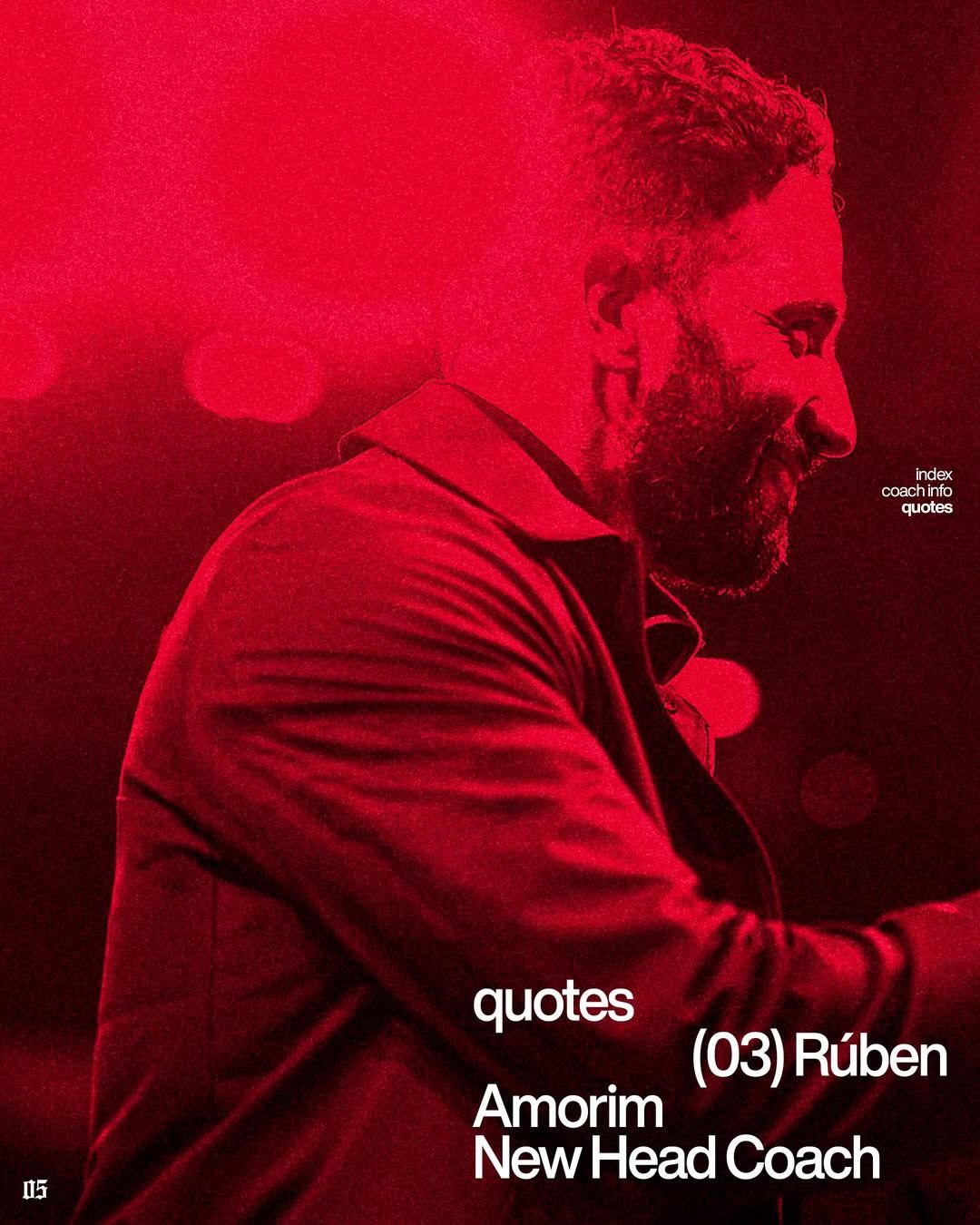
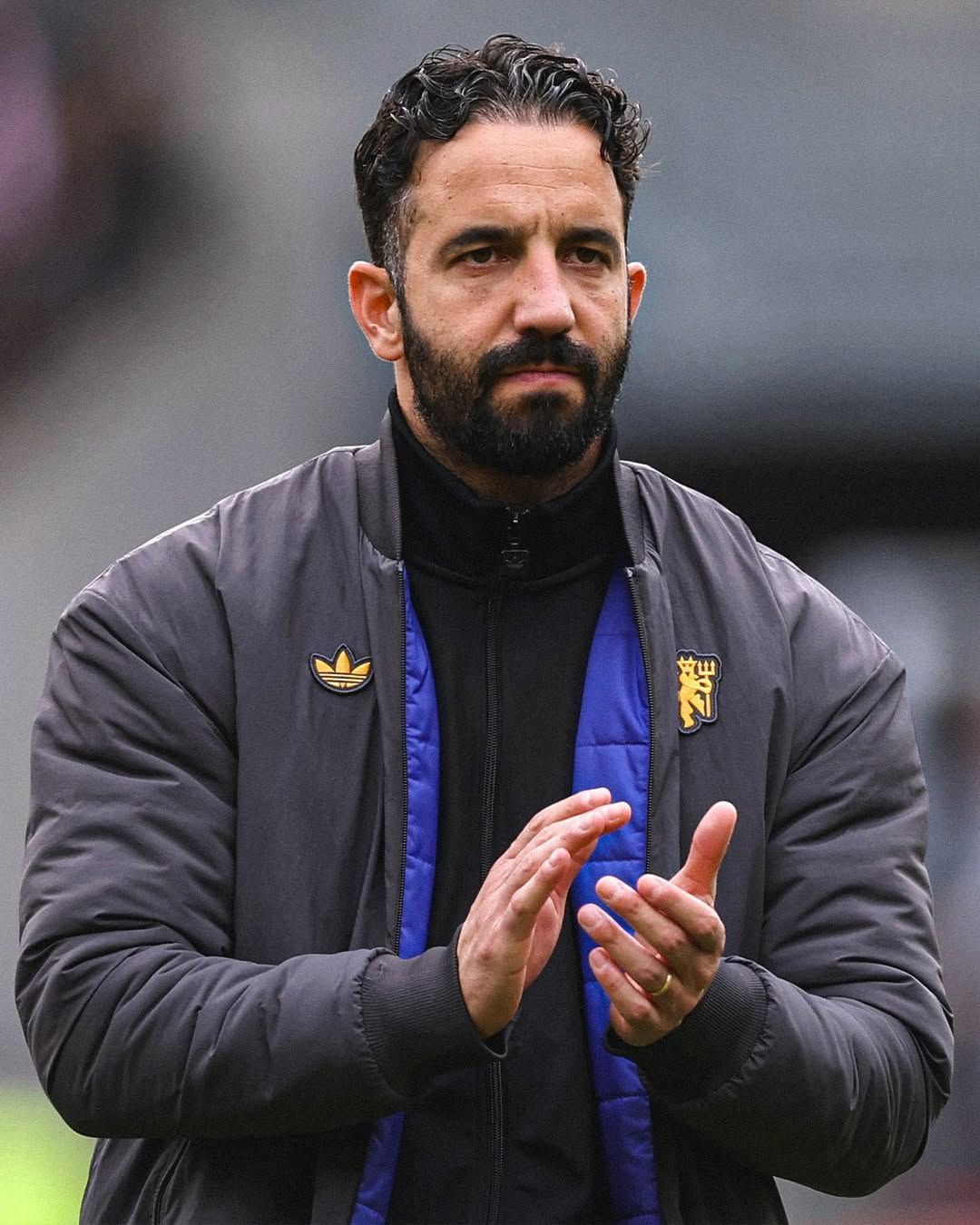
Rúben Amorim is AC Milan’s new head coach: the former Manchester United manager has been officially unveiled after signing a three-year contract that will keep him at the club until 2029. The appointment itself is surprising given Italian football’s traditional reluctance to embrace foreign coaches. What is even more striking, however, is the visual communication strategy Milan used to accompany Amorim’s announcement across its social media channels.
Why Amorim Represents a Strategic Shift for AC Milan
Following a 2-1 defeat against Cagliari on the final day of the 2025/26 Serie A season—a result that cost the Rossoneri qualification for the Champions League—Milan entered a sort of social media blackout. Apart from the inevitable posts celebrating anniversaries of past Champions League triumphs, birthdays of current and former players, and a handful of updates related to the 2026 World Cup and the youth sector, the club’s channels appeared frozen in time. It was as if Milan’s story had stopped on May 24. The only real sign of activity came when the Serie A schedule for the 2026/27 season was released. On that occasion, Milan published two images featuring a red gradient—one dedicated to a flag, the other to the iconic towers of San Siro—alongside the list of fixtures.
“ROSSONERI”: The Social Magazine Introducing Milan’s New Direction
The announcement of Amorim—a 41-year-old Portuguese coach coming off a dismissal from Manchester United during the 2025/26 season, his first genuine setback after successful spells at Braga and Sporting CP built on an attacking style of football centered around a 3-4-2-1 formation—has opened a window onto what appears to be Milan’s new social media identity.
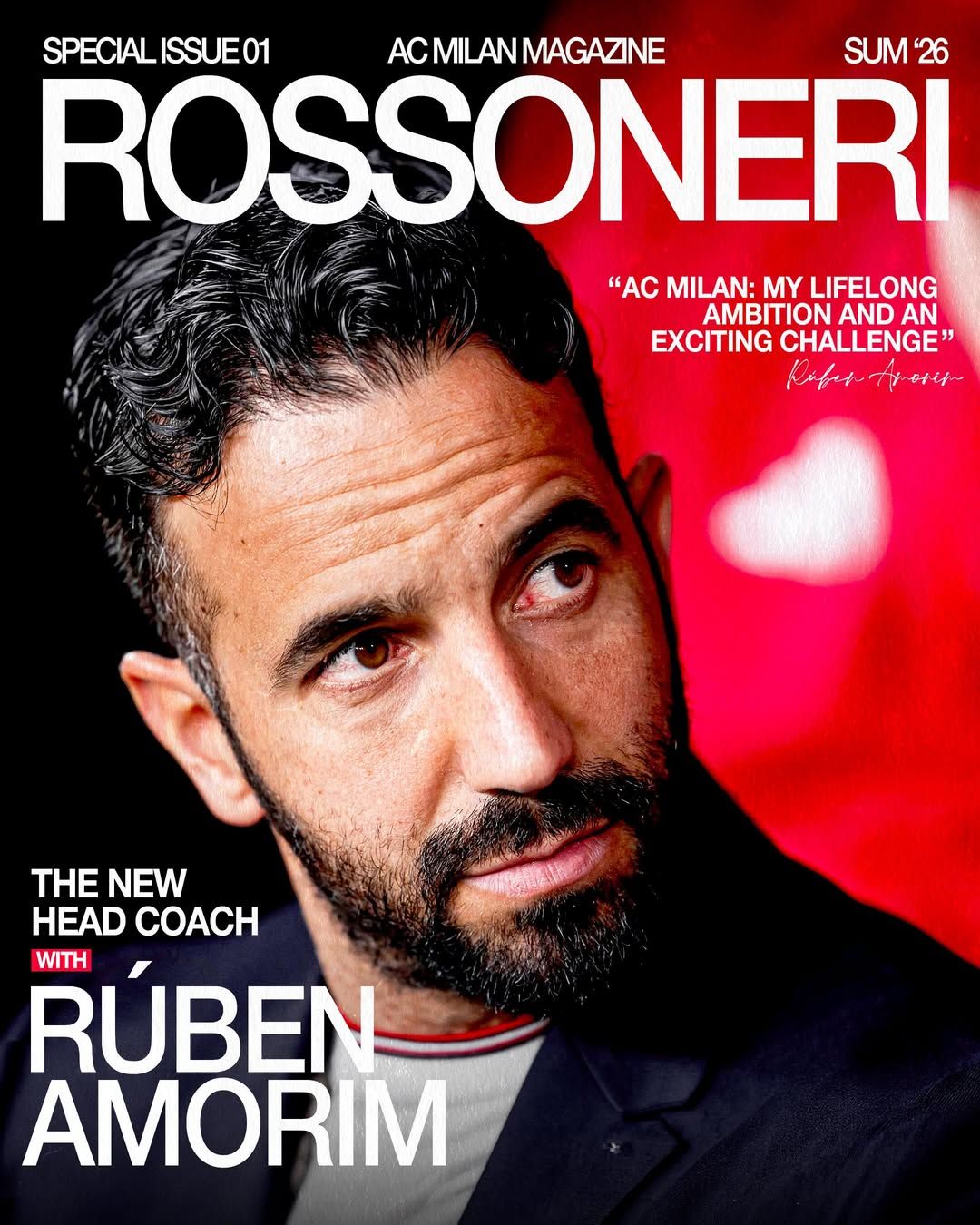
Every transfer window, football clubs develop narrative frameworks designed to elevate the fleeting nature of negotiations and speculation that accompany deals until their official announcement. For the summer 2026 transfer market, Milan has developed an editorial concept: a social media magazine aptly titled “ROSSONERI.”
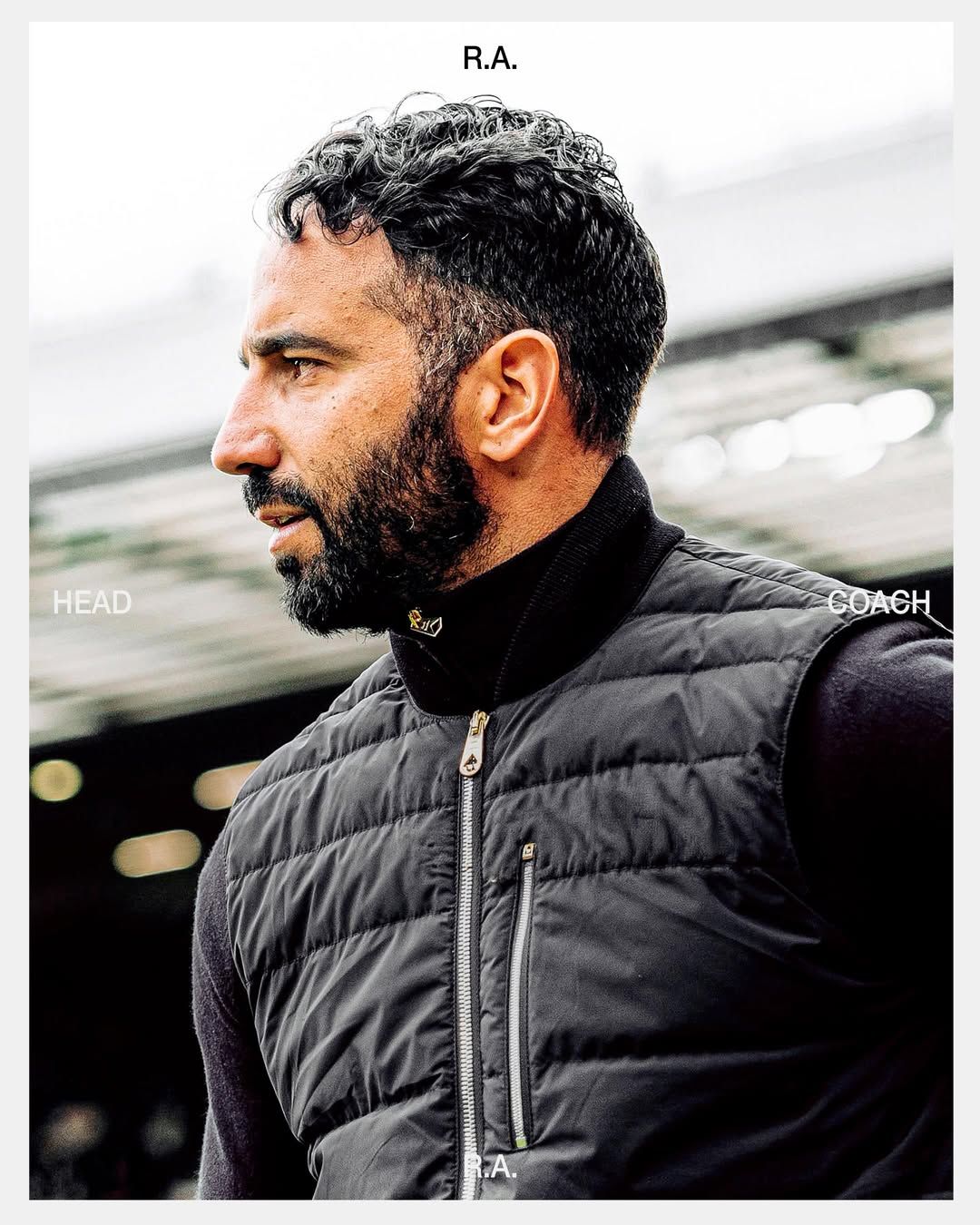
The cover design is clean and deliberate: all typography appears in uppercase, with the title positioned in the upper section alongside the masthead “AC MILAN MAGAZINE,” the issue number “SPECIAL ISSUE 01,” and the seasonal reference “SUM ’26.” The central portion of the cover is occupied by a close-up portrait of Amorim, slightly offset to leave room for a featured quote within an upper text box. At the bottom, the headline “THE NEW HEAD COACH WITH RÚBEN AMORIM” serves as the cover story.
Why the Carousel Feels More Like a Modern Fanzine
Every detail of the design references the world of print magazines. Yet considering the format—in Amorim’s case, an eight-slide Instagram carousel—it may be more accurate to push the concept further and describe it as a fanzine: an independent publication created for a specific niche audience.
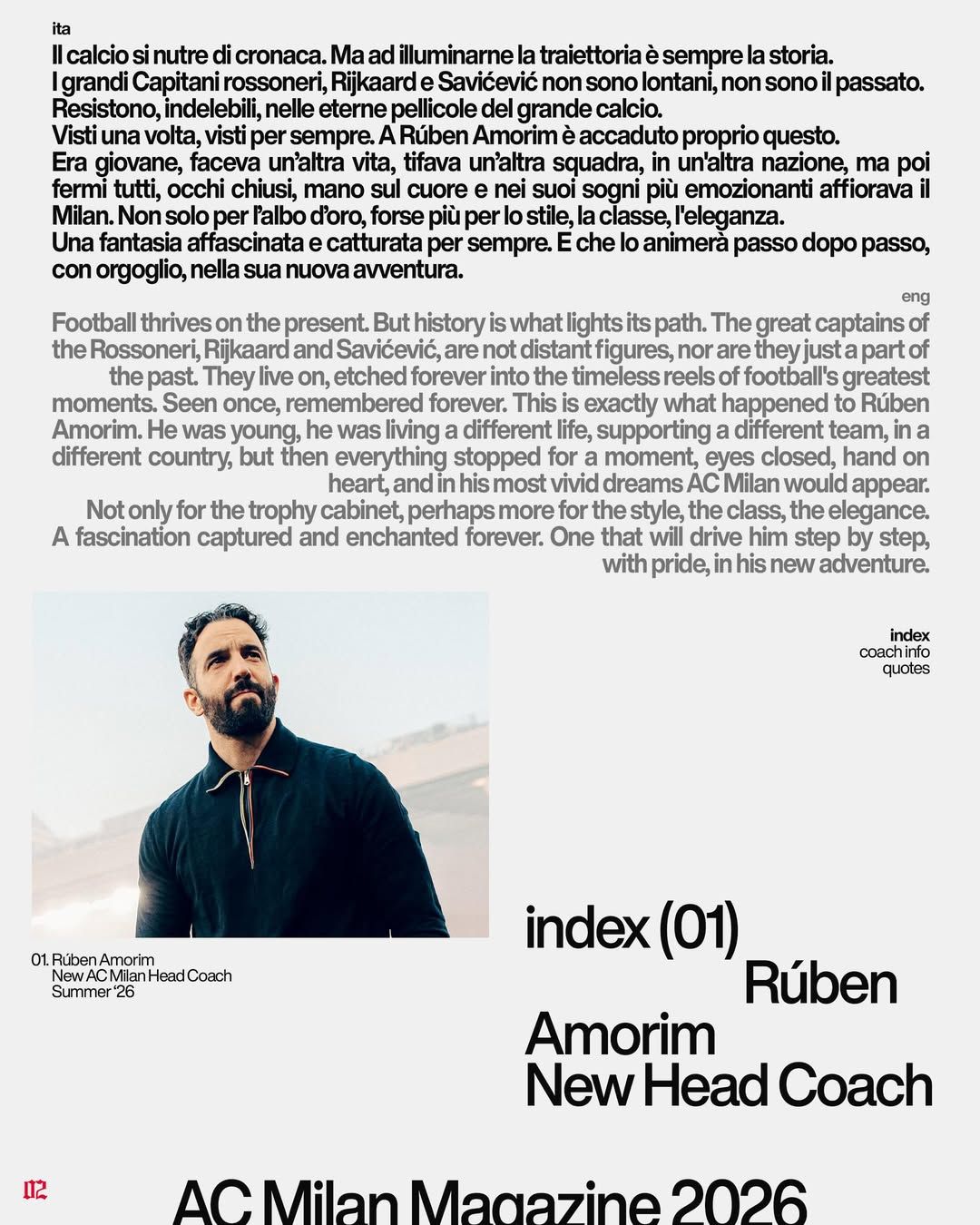
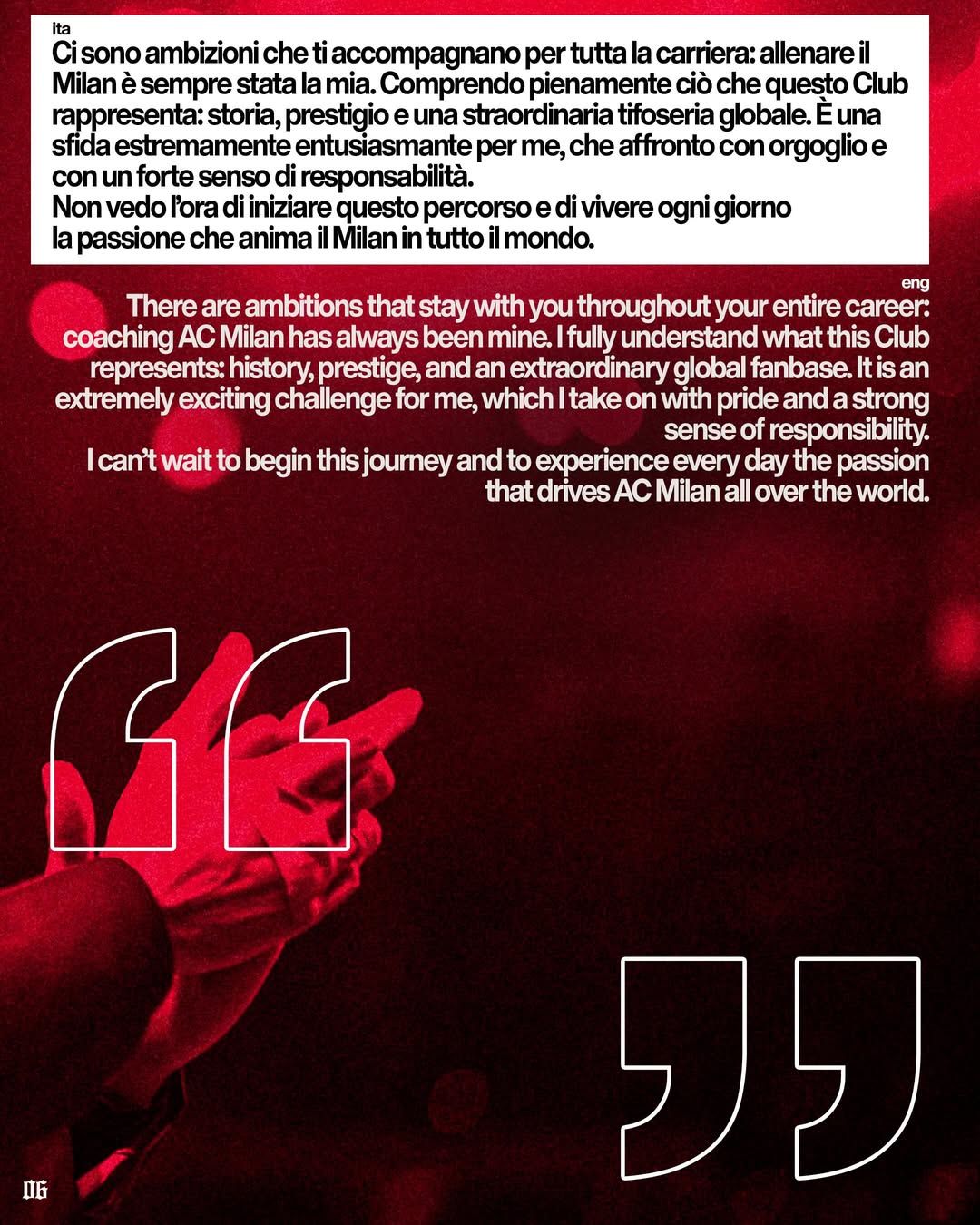
As users scroll through the carousel, the visual language evolves. Following the formal portrait featured on the second slide, a rougher and more raw element is introduced: a slide presenting a short article celebrating Amorim’s career path, with the Italian version displayed in black and the English text rendered in grey, only slightly darker than the background itself.
Here, some of the magazine’s foundational design principles begin to dissolve. The text, for example, is no longer center-justified; instead, it alternates between right and left alignment in a deliberate visual rhythm.
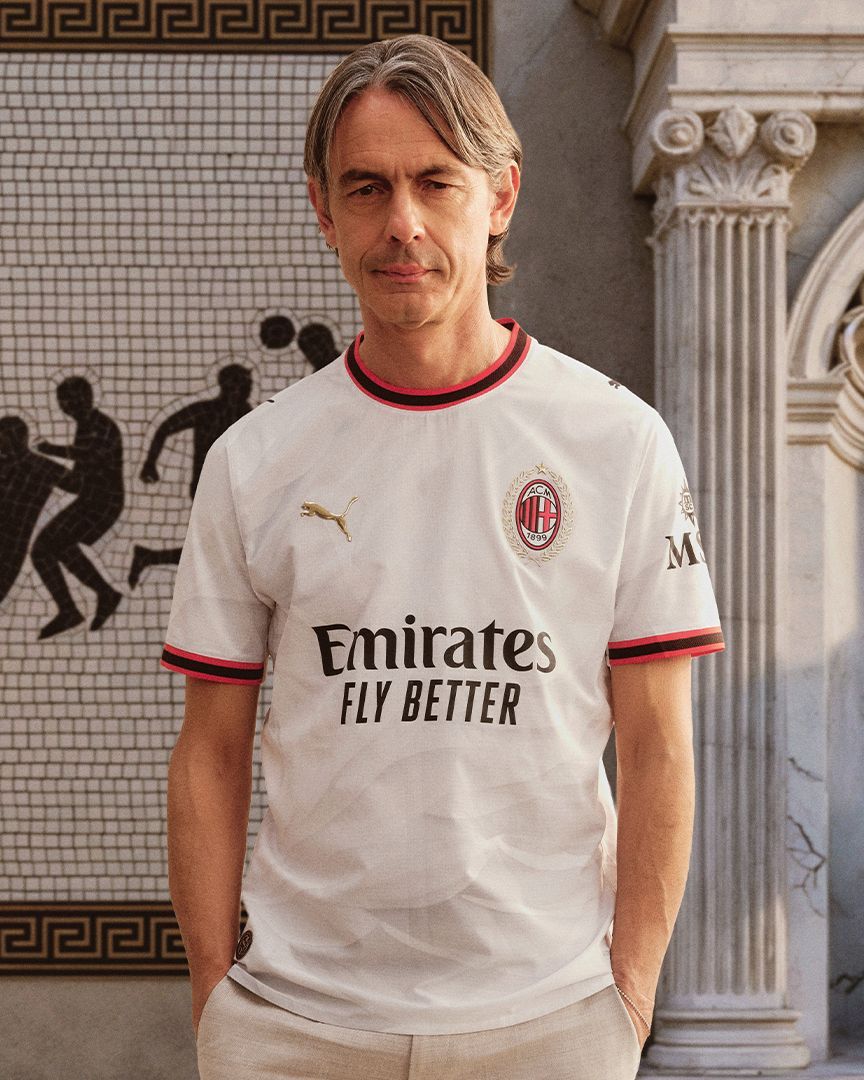
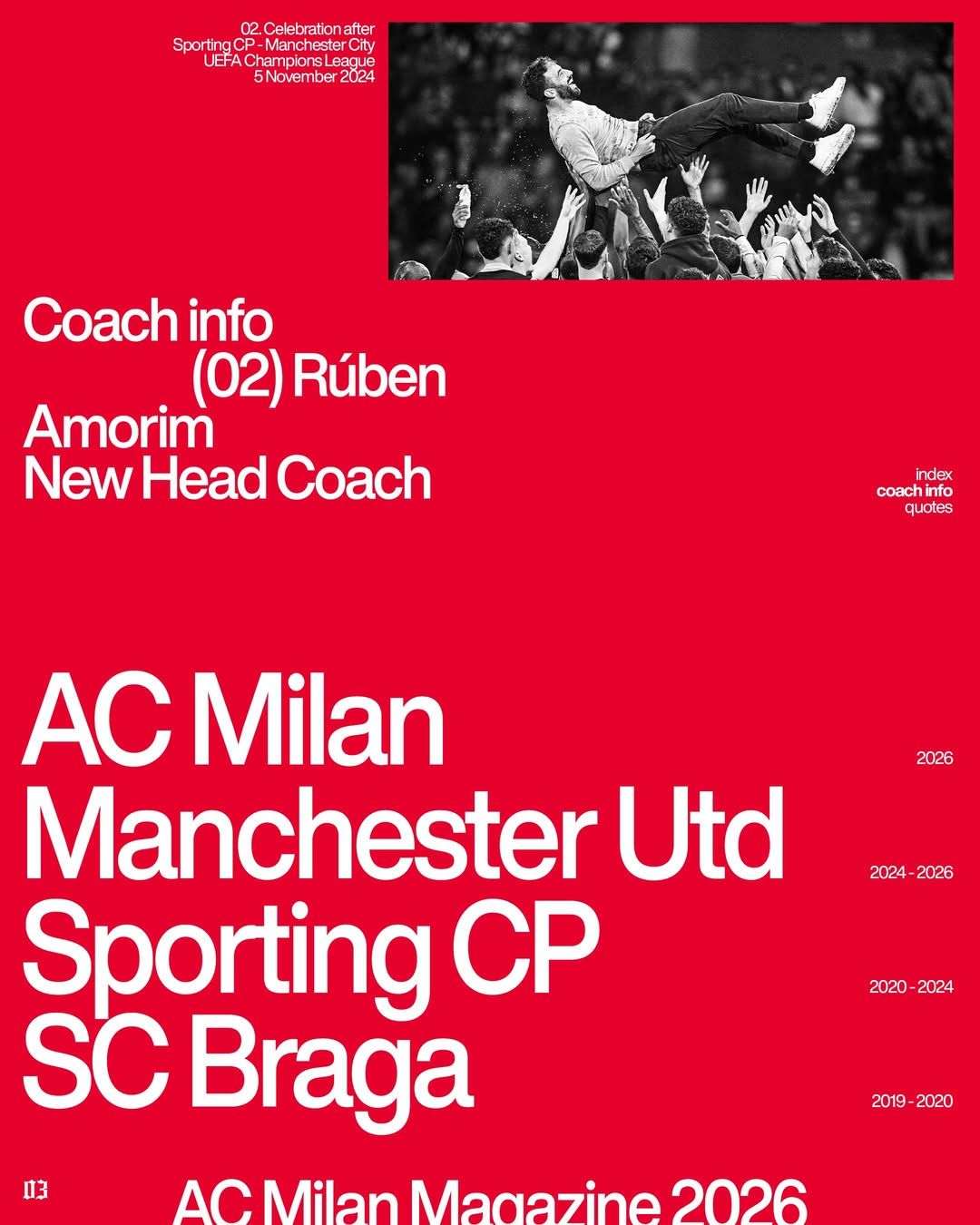
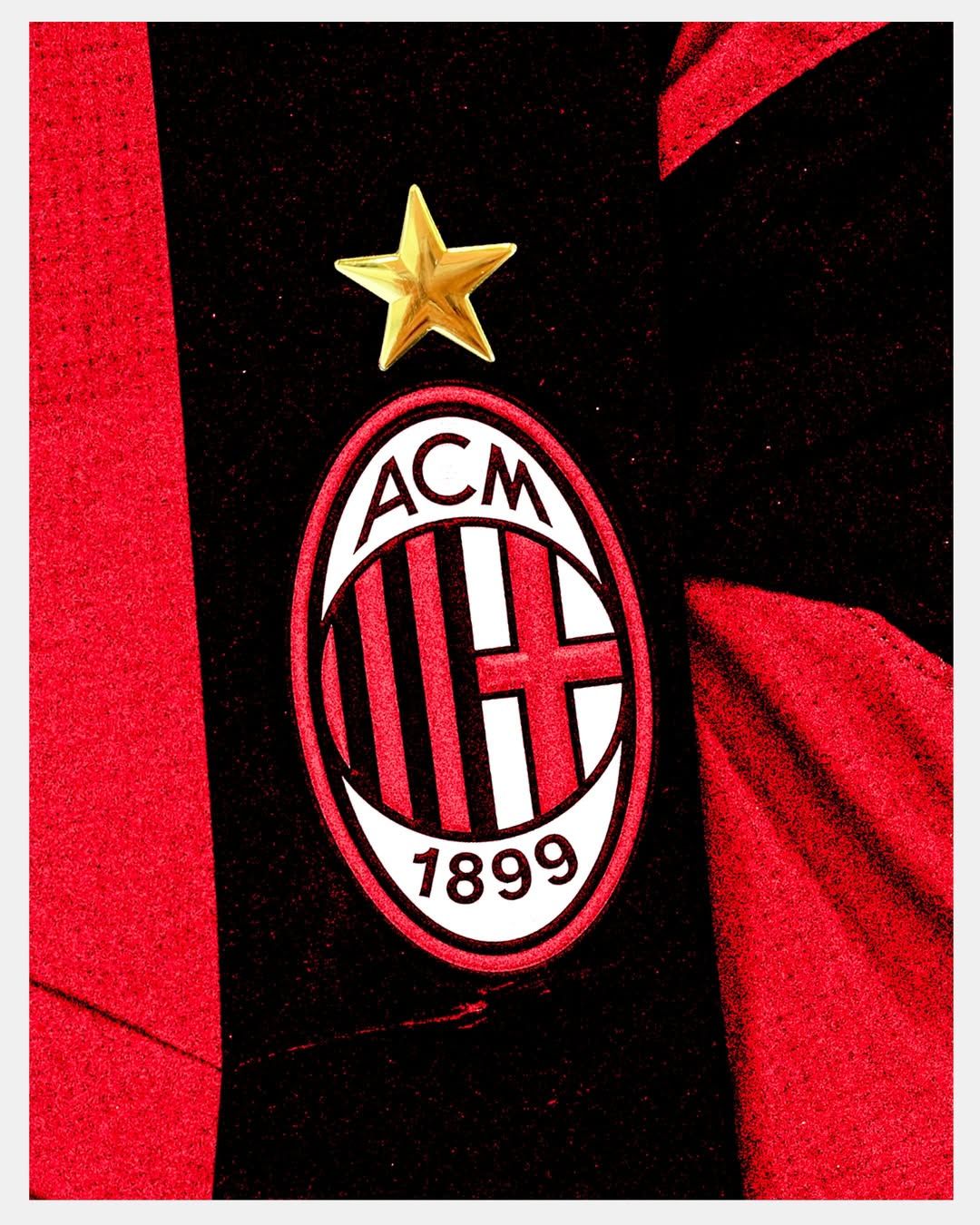
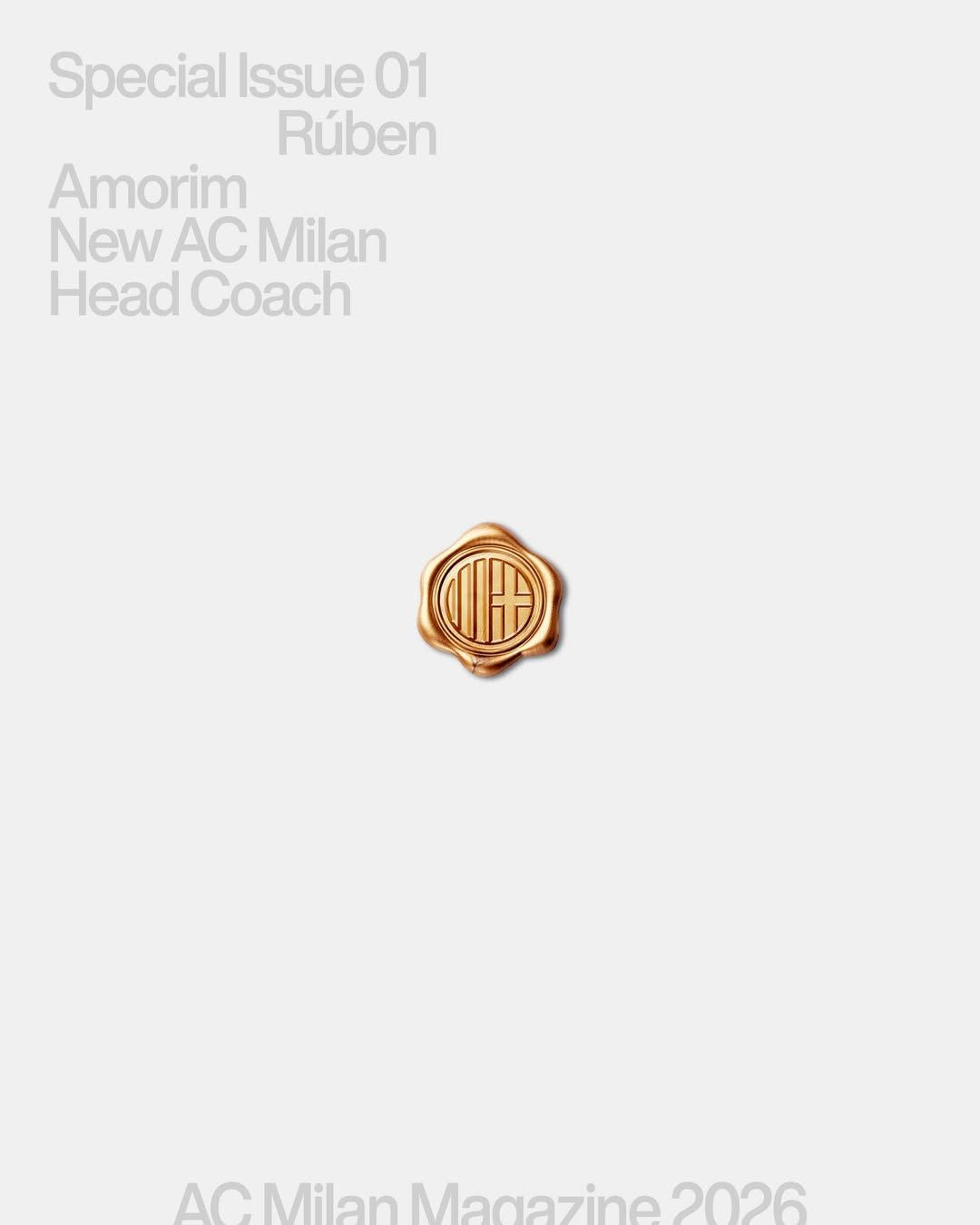
From that point onward, the content transforms into something even more evocative, harnessing the visual power of red in combination with photography, typography, and above all the club crest. One final detail deserves attention: the stamp featured on slide eight, a direct reference to the new Home jersey and specifically to the wax seal motif that, in the vision of Milan and technical sponsor PUMA, safeguards the Rossoneri crest. It is intended as a timeless symbol passed down from generation to generation.
Typography, Layout and Visual Hierarchy
Even the choice of fonts signals a new creative direction. The clean aesthetic of the sans-serif typefaces lends composure and balance to the overall layout, yet subtle artistic flourishes remain visible. One is unavoidable: the accented “ú” in Amorim’s name, a small detail that will likely disappear from much of the national press in the coming days, accustomed as it is to domesticating foreign names.
The second artistic liberty is more subtle, represented by the small decorative stroke that completes the terminal of the letter “r” on the cover. It is a minor flourish, but one intended to evoke elegance and heritage. This ordered and carefully curated composition is further amplified by a design choice that may initially seem counterintuitive but ultimately reconnects the project to the idea of a fanzine: page numbers rendered in a Gothic style, a nod to the concept of the “Devils,” Milan’s historic nickname.
Milan’s New Visual Identity Beyond Matchday
Whether Amorim will prove to be the right man for Milan is, to borrow one of football’s oldest clichés, something that will be decided on the pitch. What already appears to be the right decision, however, is the direction the club has chosen for its social media communication. It is a visual identity that reflects Milan’s heritage while fitting into a broader European landscape in which clubs invest considerable effort into building distinctive and recognizable brands.
Supporters, after all, spend most of their time on their phones—and consequently on social media. The golden rule remains less is more, yet outside of matchdays it is far from easy to generate meaningful engagement within a global fan community. At the foundation of any successful communication strategy there must always be a strong conceptual framework, ensuring that content is driven by ideas rather than by circumstance. The principle applies on the pitch just as much as it does on social media.