How motorsport influenced Massimo Osti And how Massimo Osti influenced motorsports
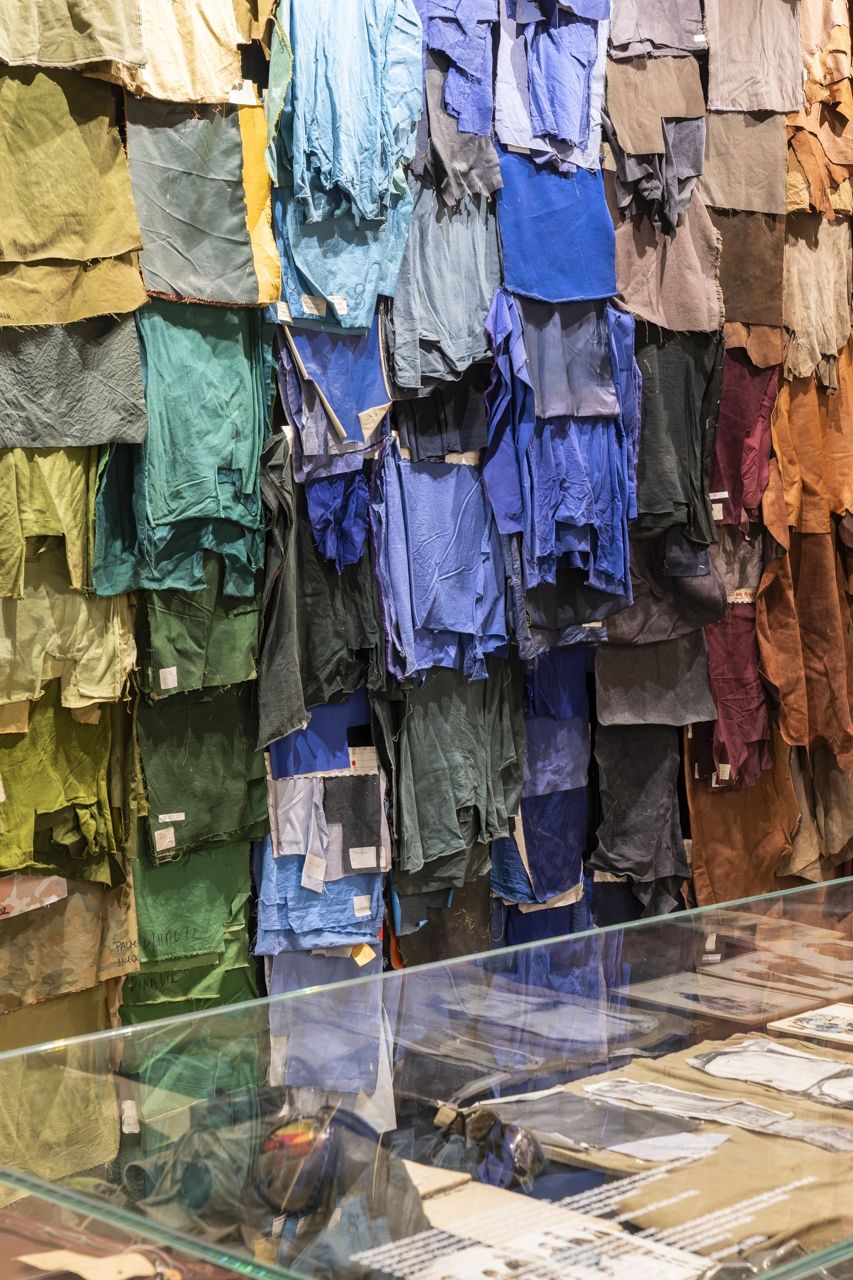
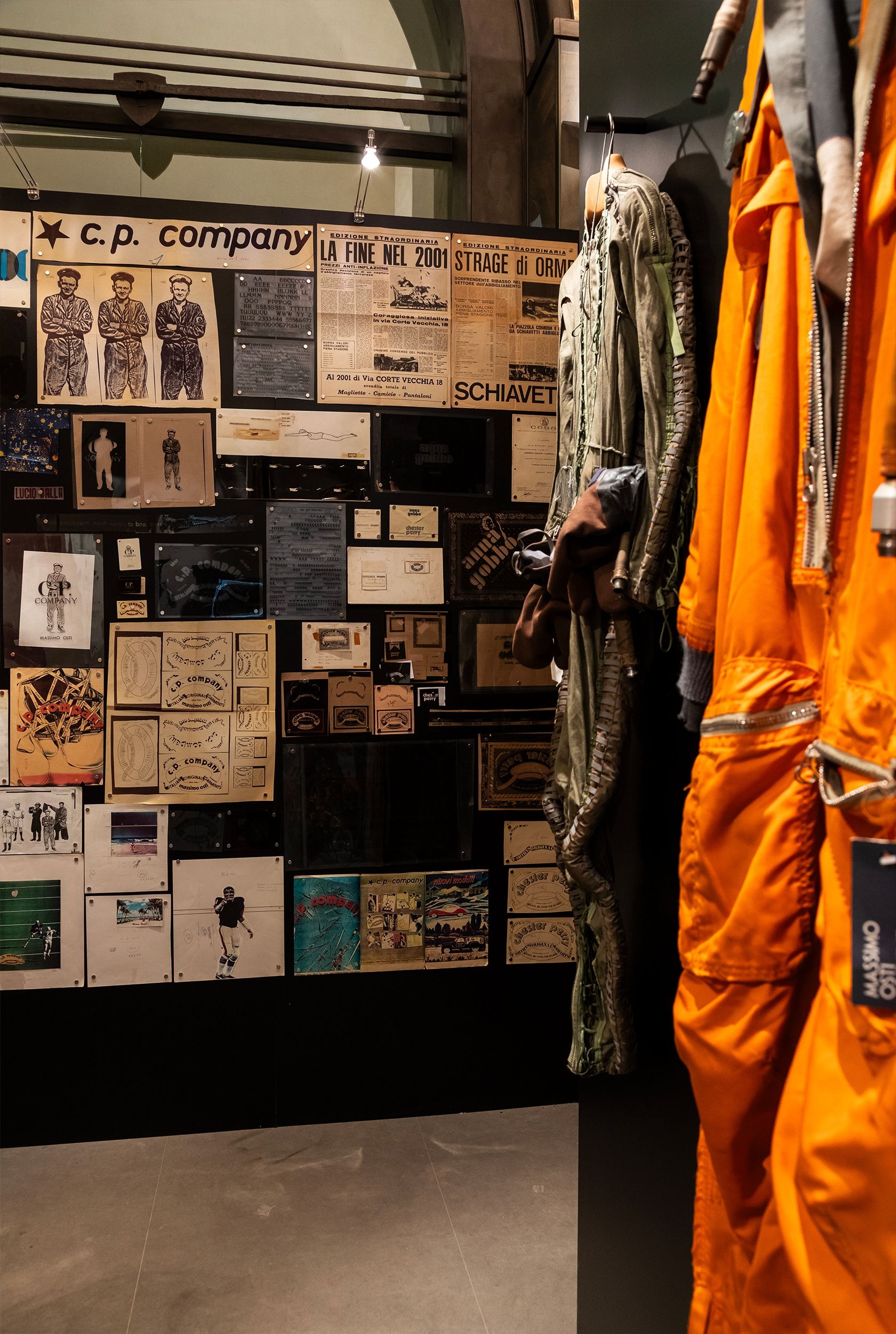
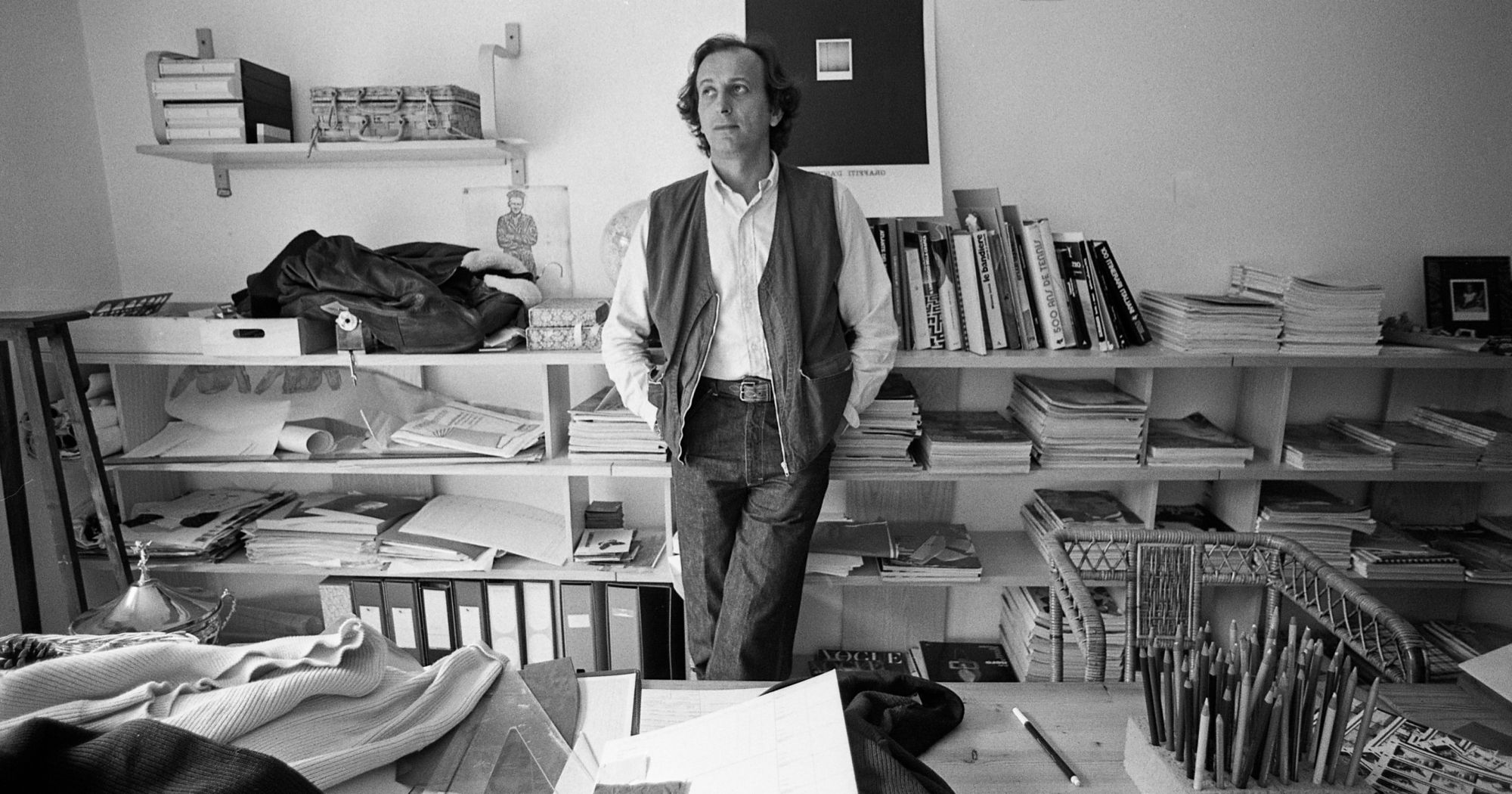
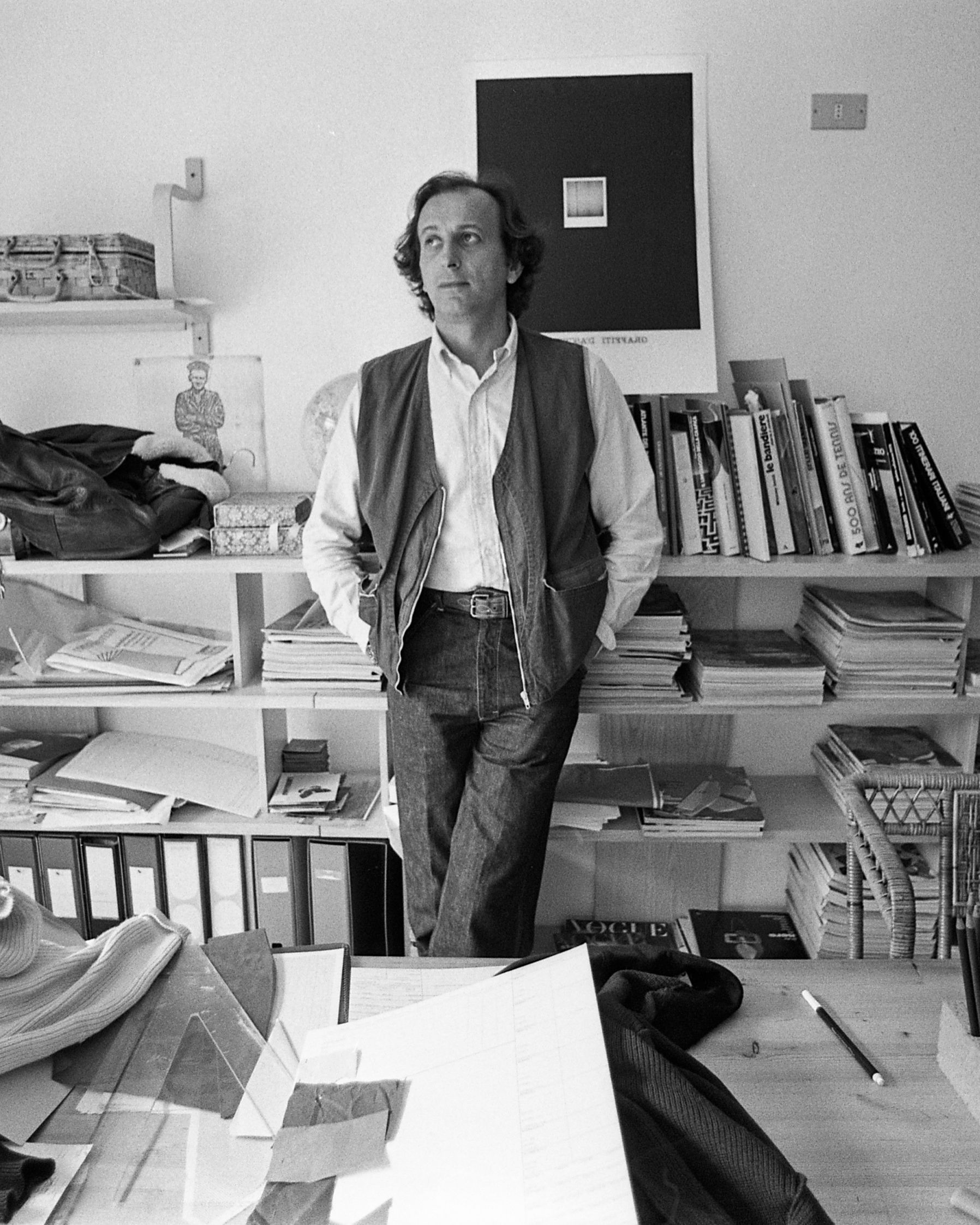
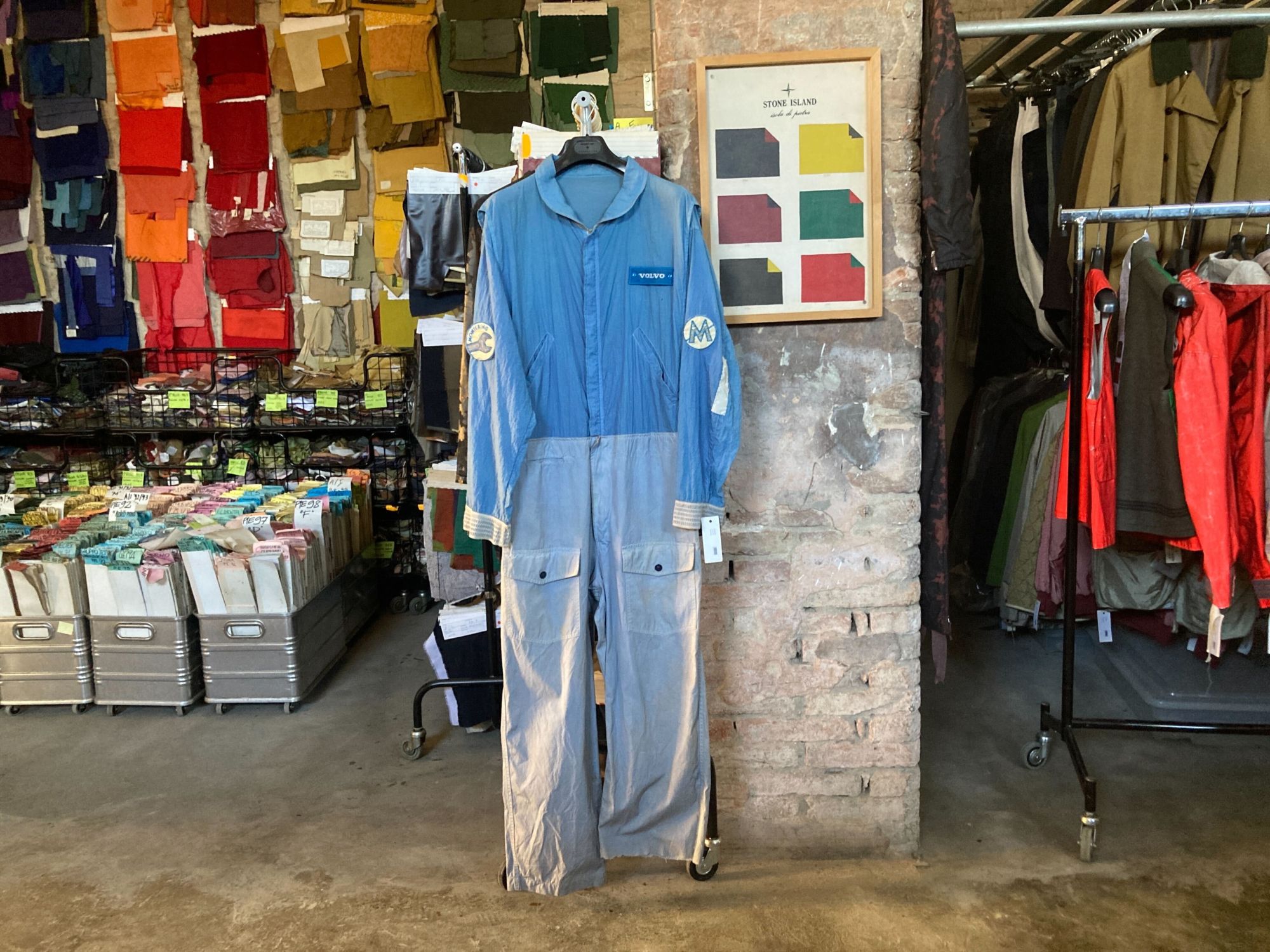
The Massimo Osti Archive in Bologna has only one flaw: there's no air conditioning, the best travel companion on a sweltering mid-July day. The fault lies with an outdated electrical system that doesn't allow for a 380V socket connection. This is the first anecdote shared with us by Lorenzo Osti, Massimo’s son and president of C.P. Company, as he welcomes us into a space that calling an archive feels like an understatement. What stands before us is a treasure trove that gathers a tiny fraction of Massimo Osti’s production: around 2,000 garments ranging from military vintage and his early pioneering pieces for Anna Gobbo, to Chester Perry items, Stone Island coats, C.P. Company jackets, prototypes, sketches, and much more, including textile innovations developed under the Left Hand and Massimo Osti Production brands.
Between a jacket made from a friend’s stolen shower curtain and a sketch of the first version of the Goggle jacket, the archive exploration regularly reveals garments and accessories dedicated to the world of sports. For example, notable pieces include ski boots made for Stone Island and the iconic Stone Island-branded tennis bags with rubber patches outlining the racket heads. Every corner of the archive is decorated with a Stone Island-branded golf bag.
References to motorsport are not lacking. After all, the very legend of C.P. Company is strengthened by car racing and Massimo Osti’s intuition to create a garment that could be worn by drivers in the 1000 Miglia—the Goggle jacket developed for C.P. Company and inspired by a Japanese army helmet. On one of the exposed brick columns hangs a red and green motorcycle suit, bearing none of Osti’s brand names. This is no mistake or oversight—the suit is in the archive as a study object. Osti’s research was always guided by the functionality of a garment, the properties of the materials, and the meaning of every single component. Each evaluation was recorded in one of his signature notebooks, to later be translated into fashion whenever the opportunity arose.
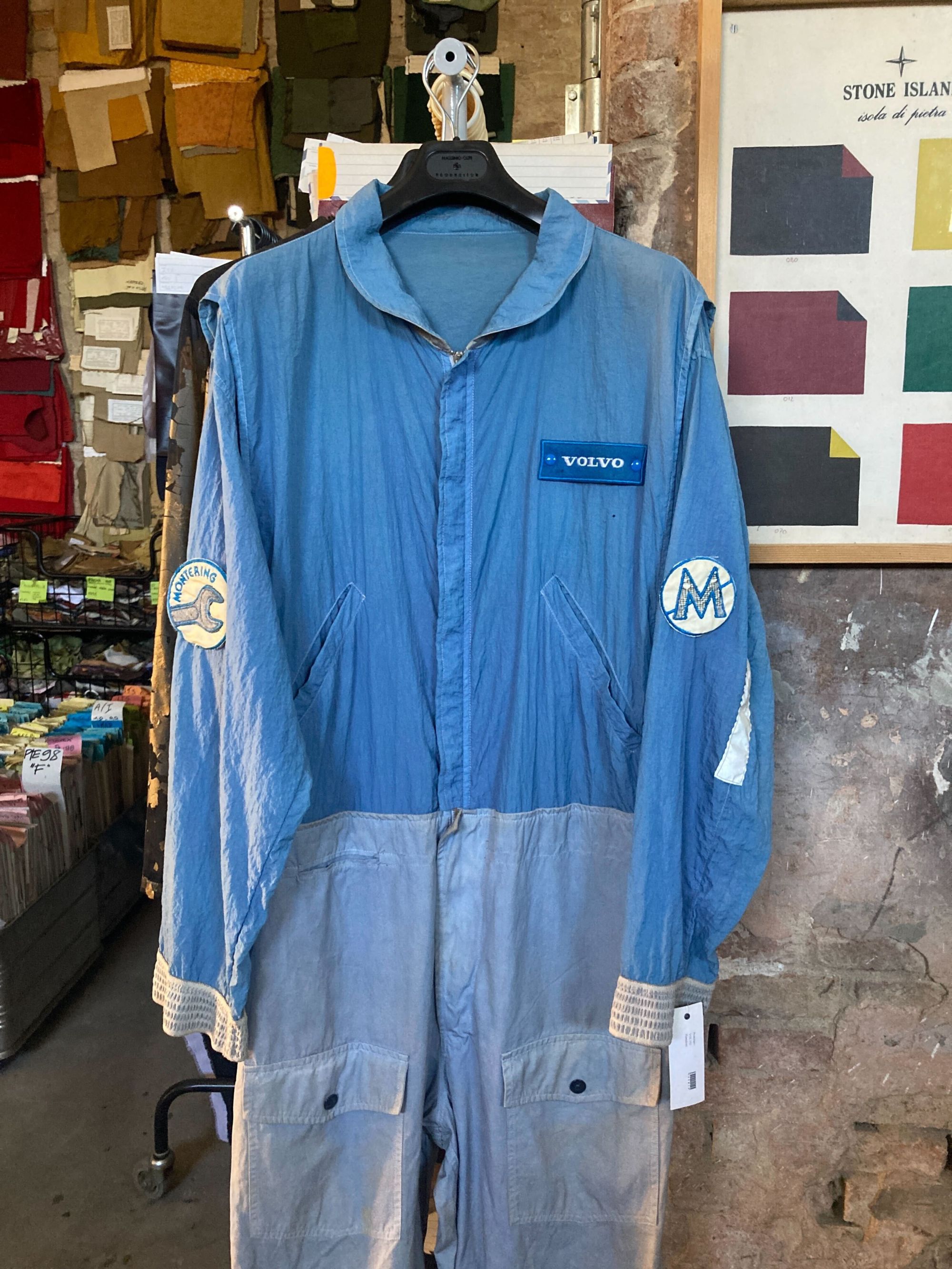
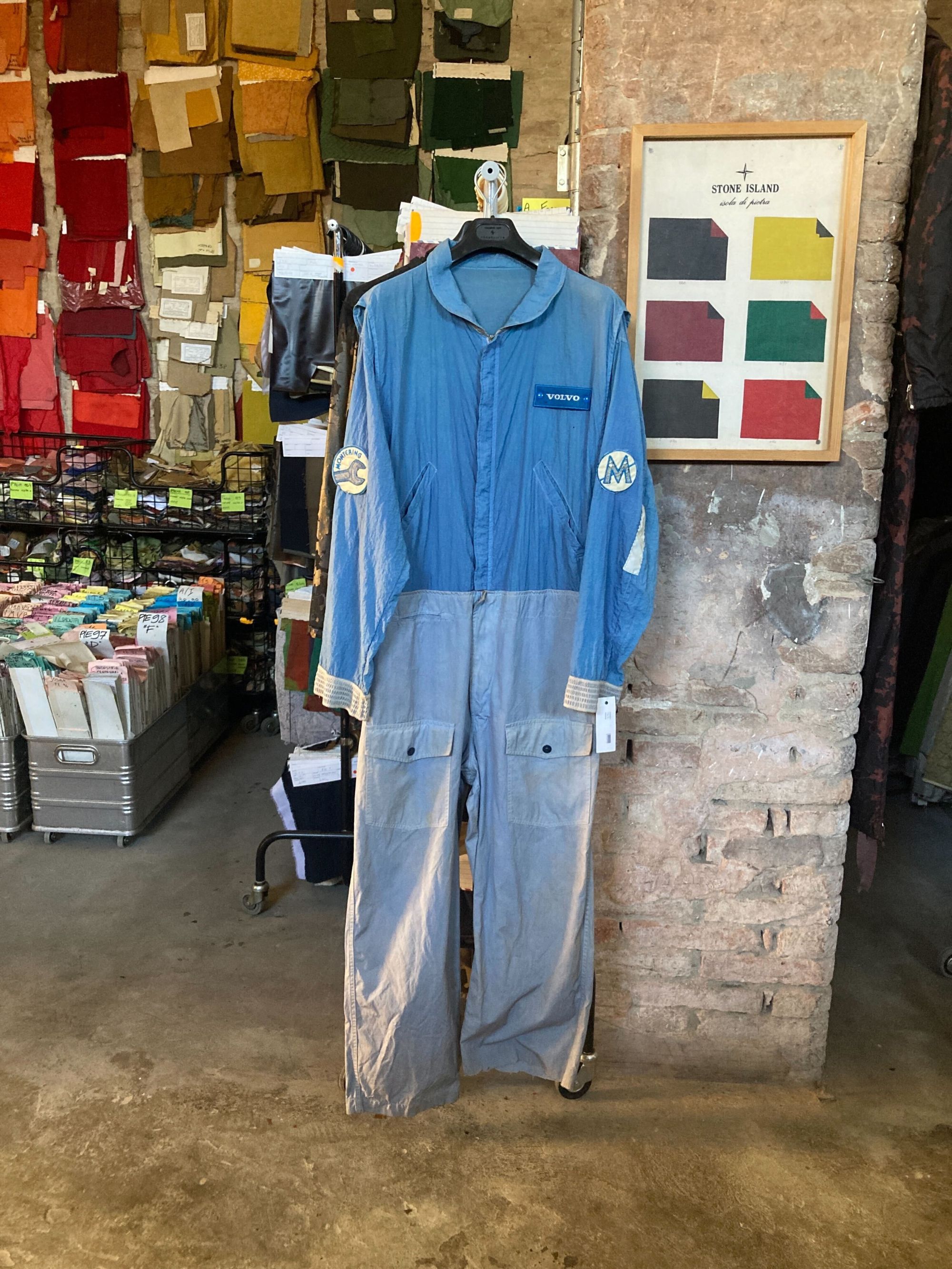
In the case of motorcycle suits, this creative process culminated in the early 2000s with a collaboration with Levi’s, resulting in a reversible Modular Padded Jacket equipped with protective panels on the chest and back, inspired by the sliders found on motorcycle gear. As mentioned, the archive is also full of prototypes, such as a sky-blue mechanic’s jumpsuit hidden among hundreds of garments on racks. In 1984, Osti was tasked with redesigning the work uniforms for Volvo employees and entrusted Andrea Pazienza with the creation of illustrations. Each department would have had its own unique patch. It was a visionary collection dedicated solely to workers, but it was never produced due to cost constraints.
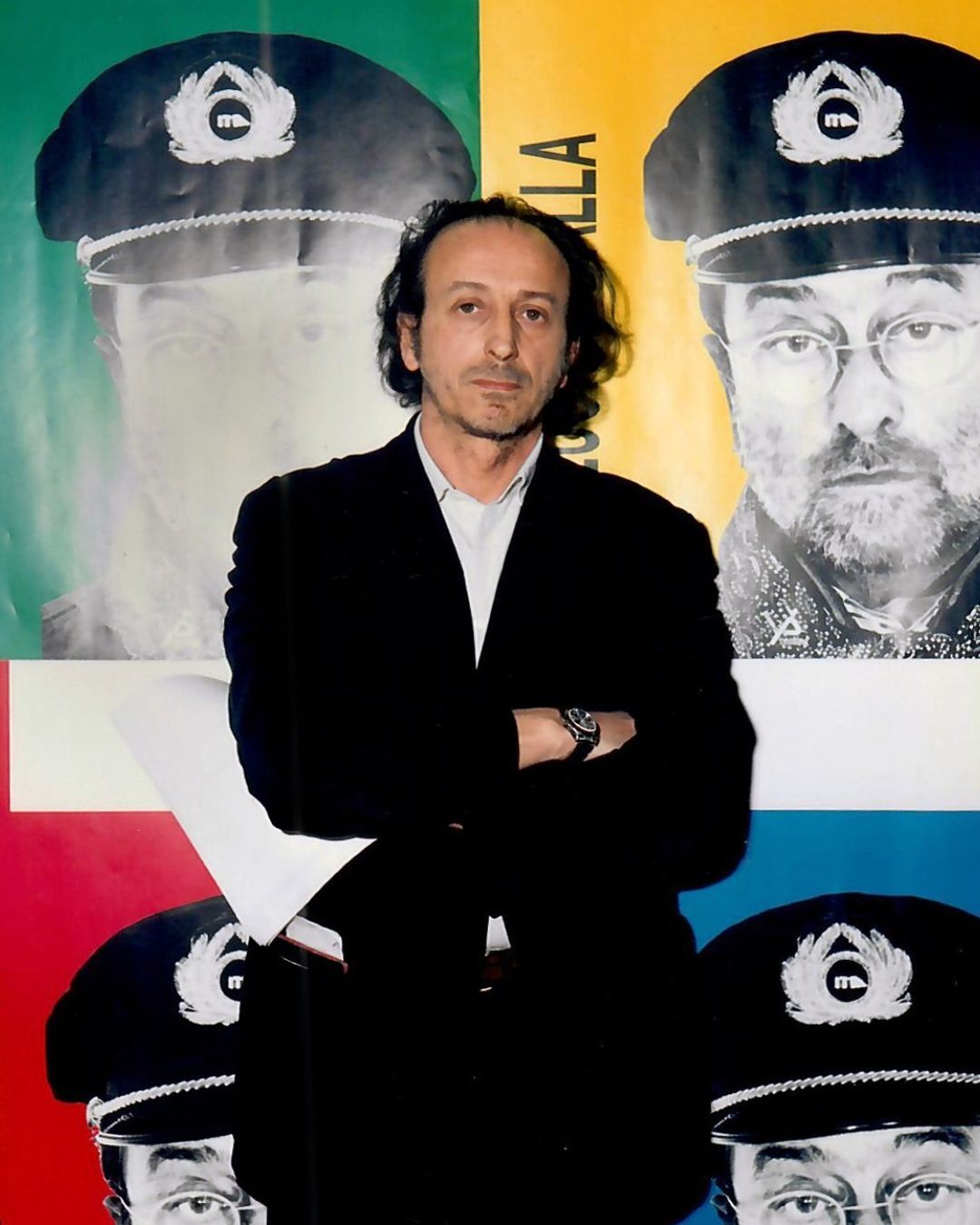
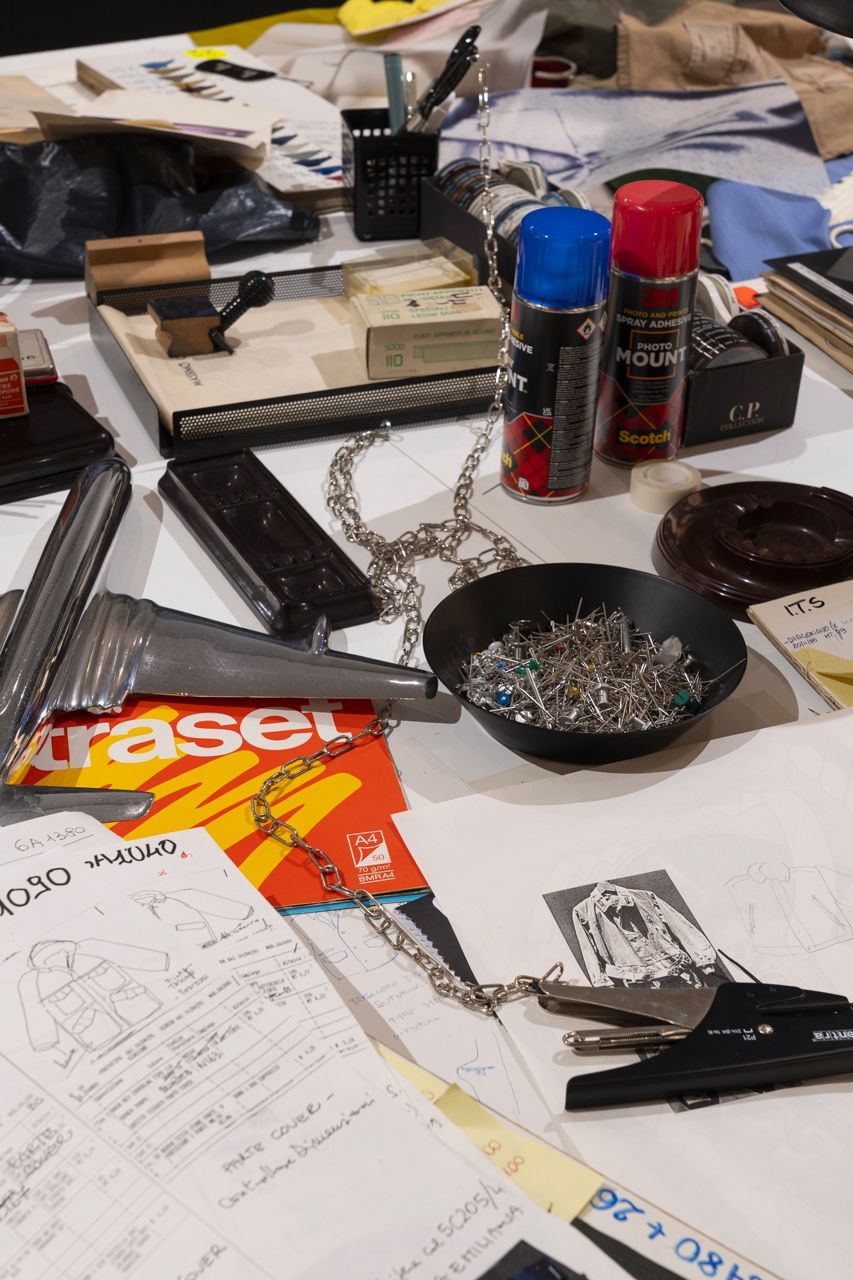
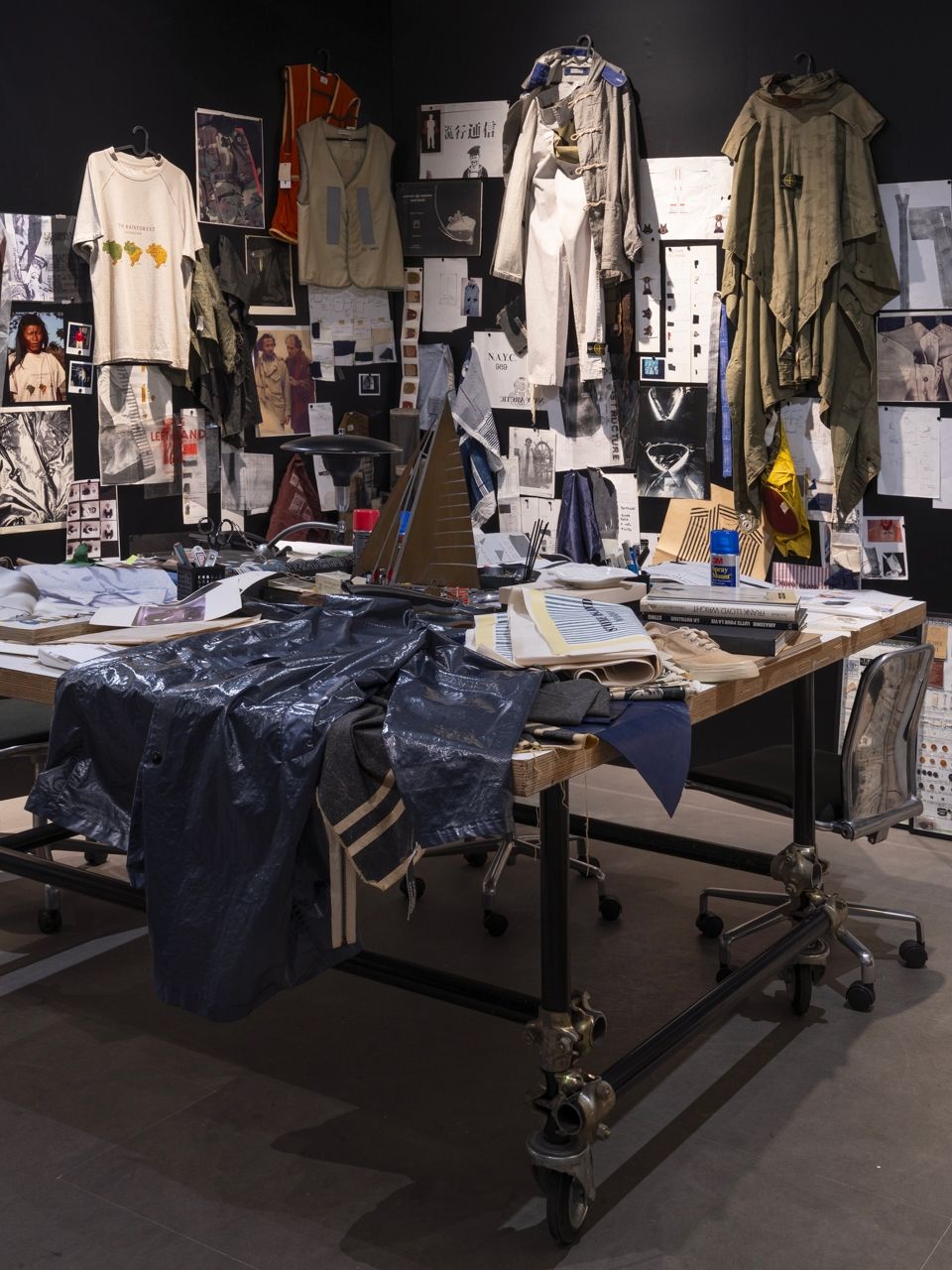
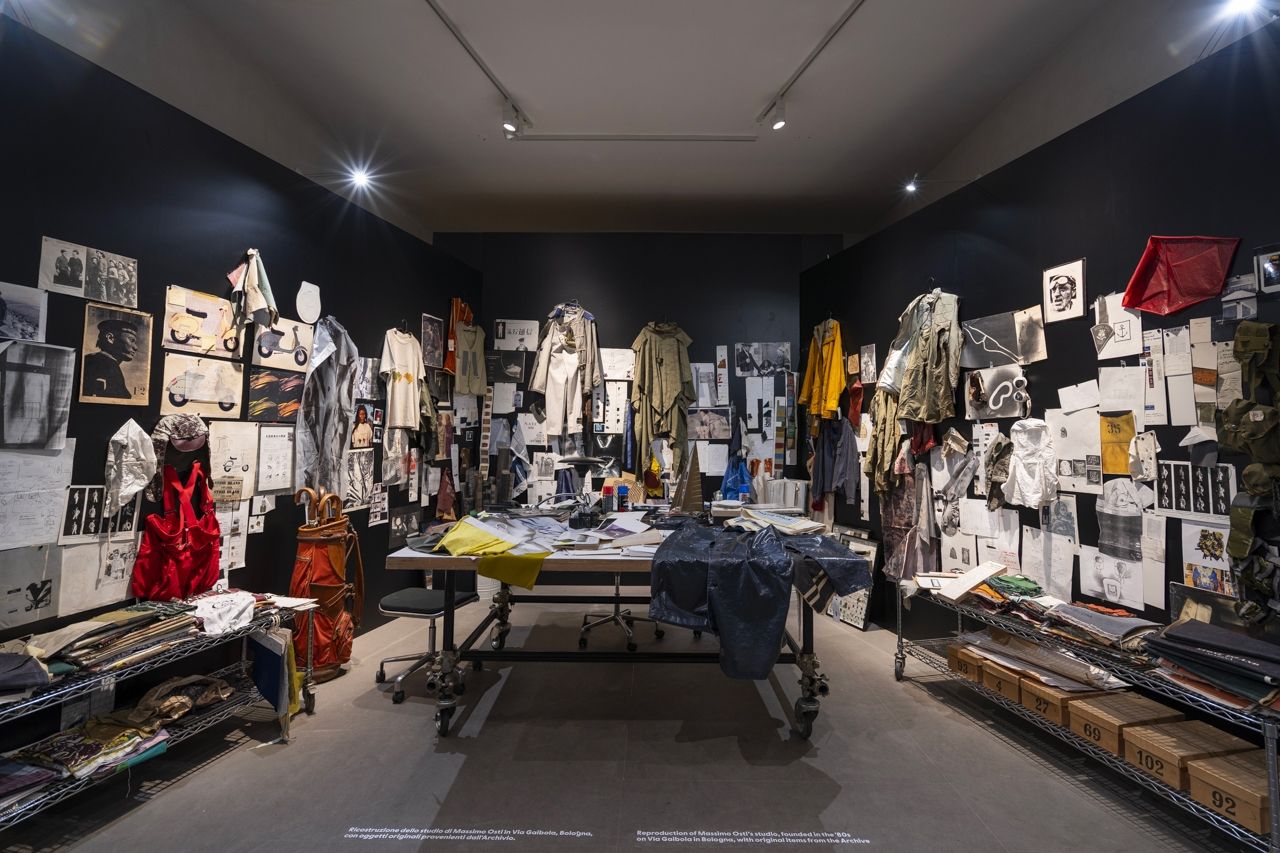
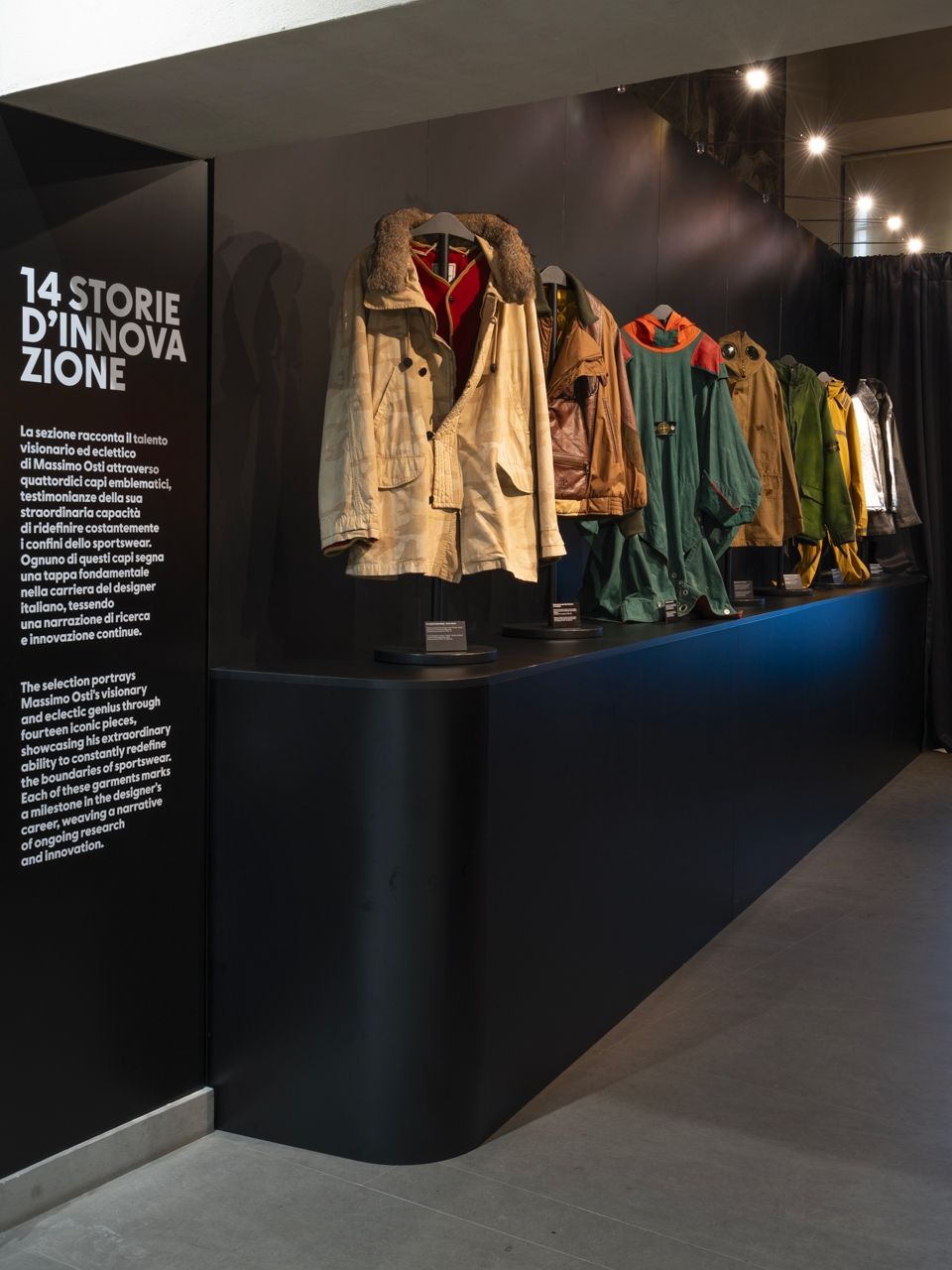
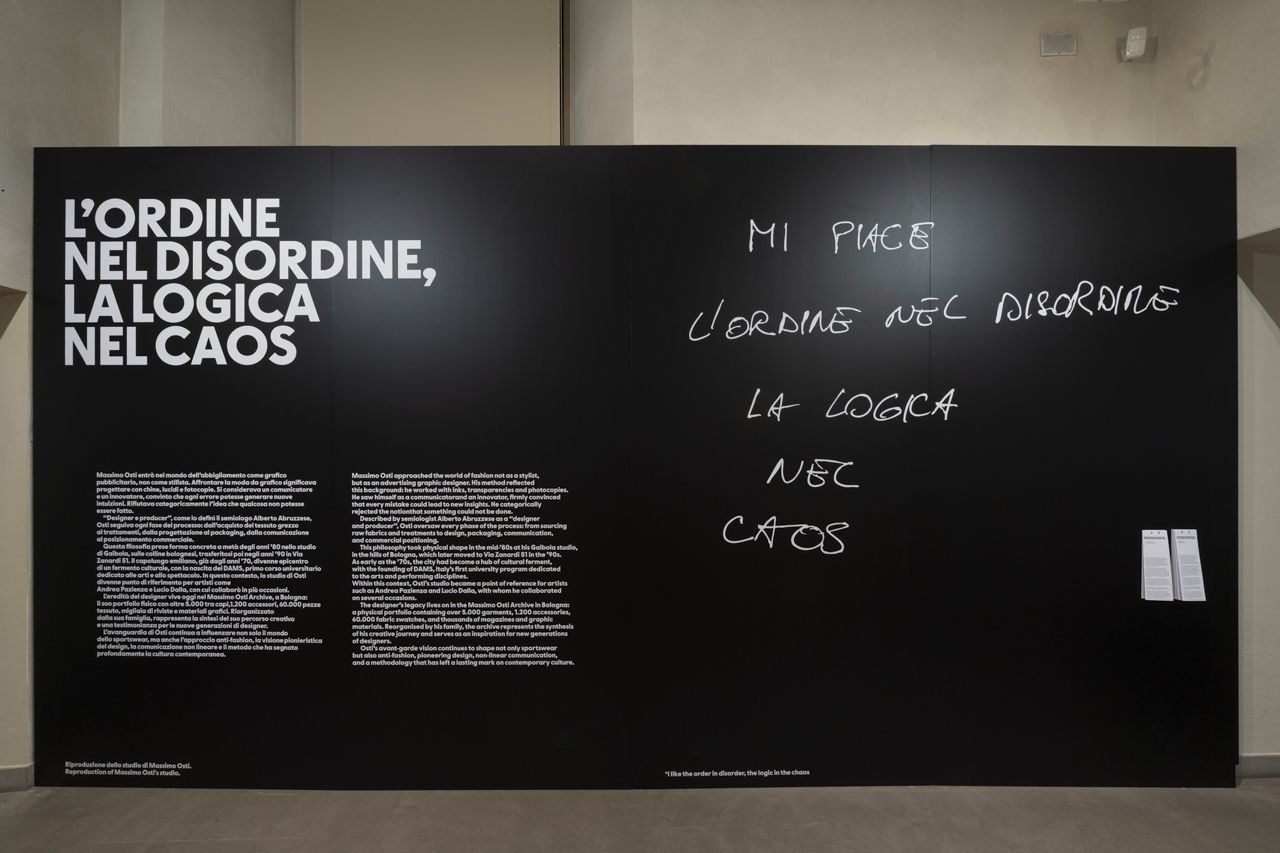
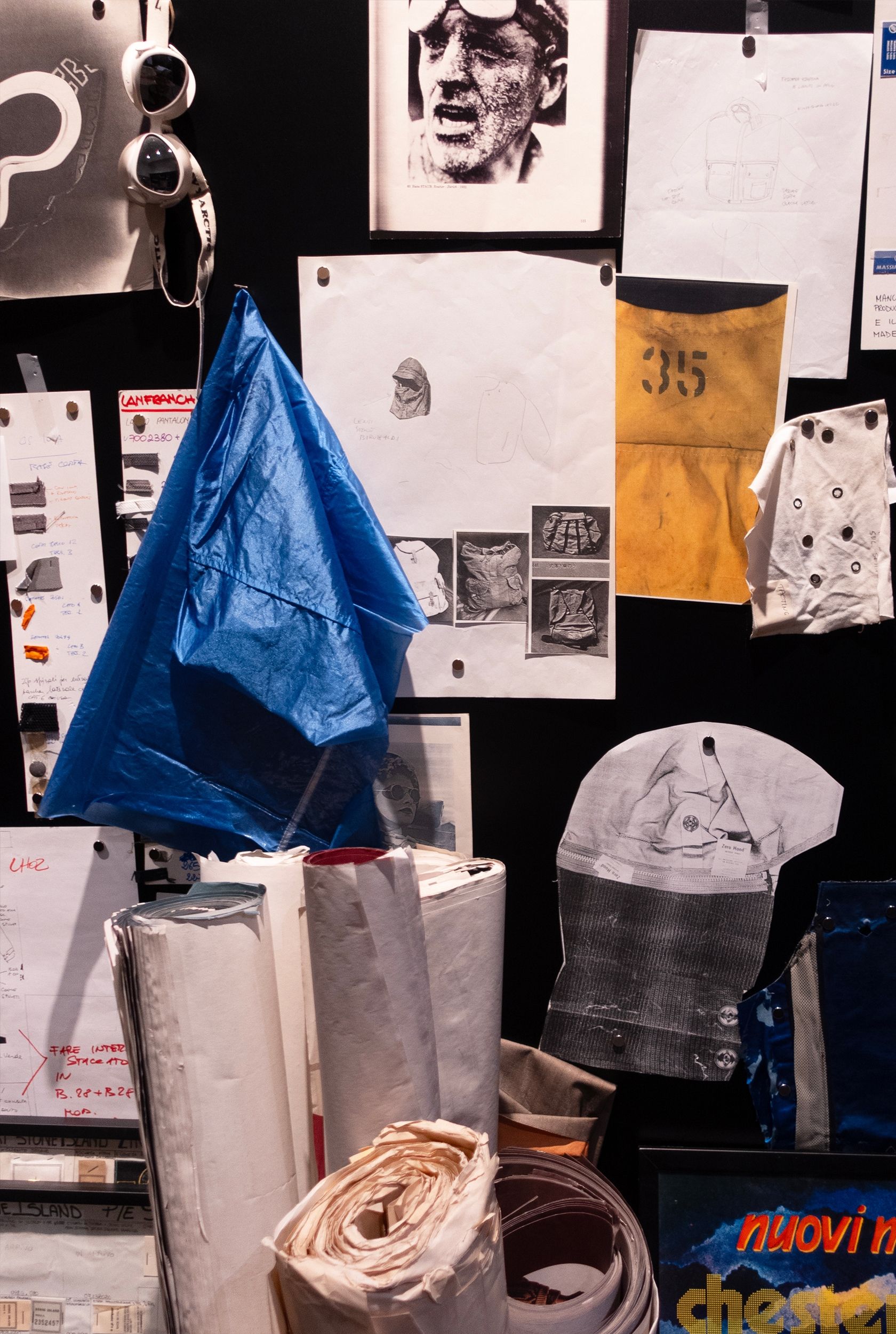
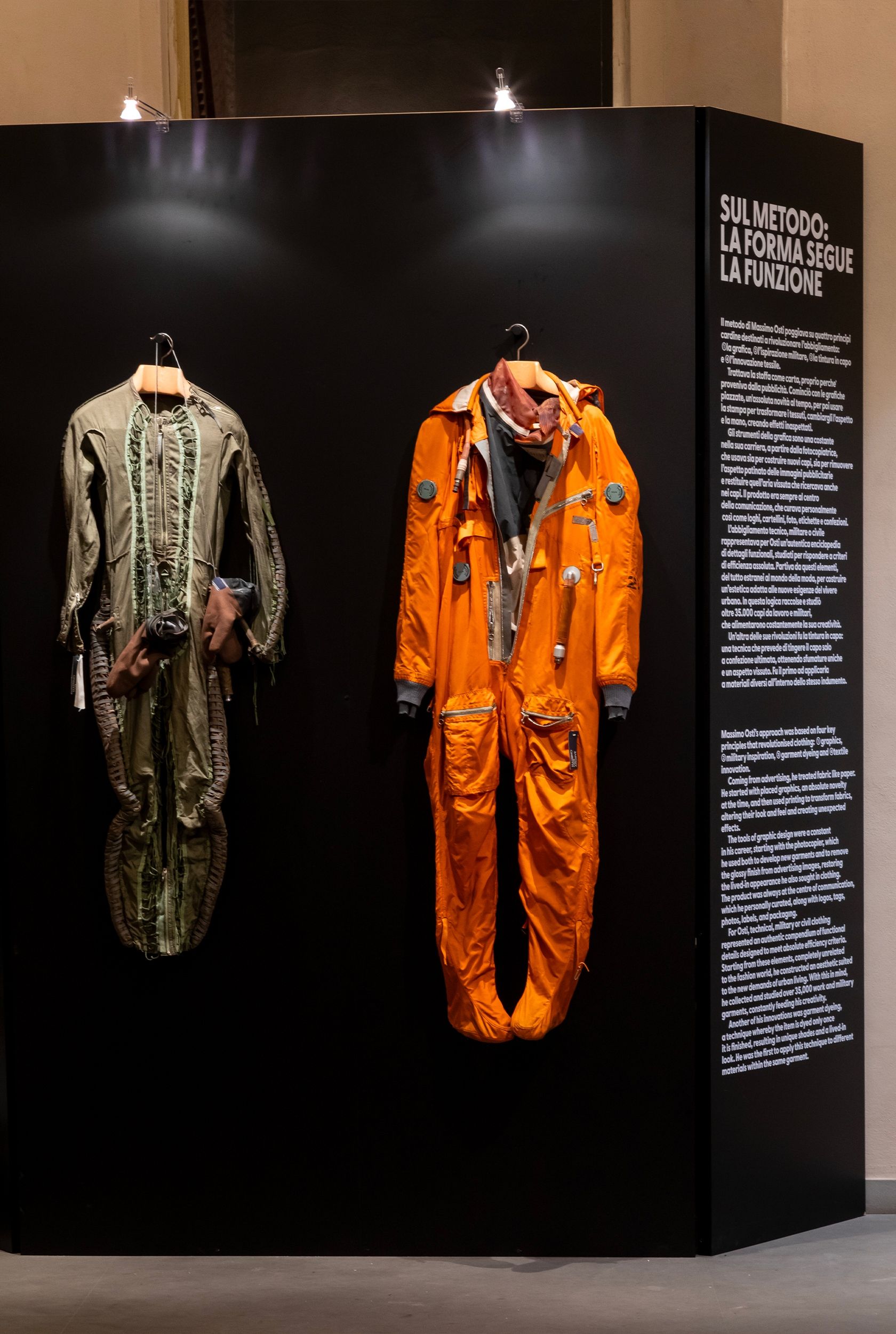
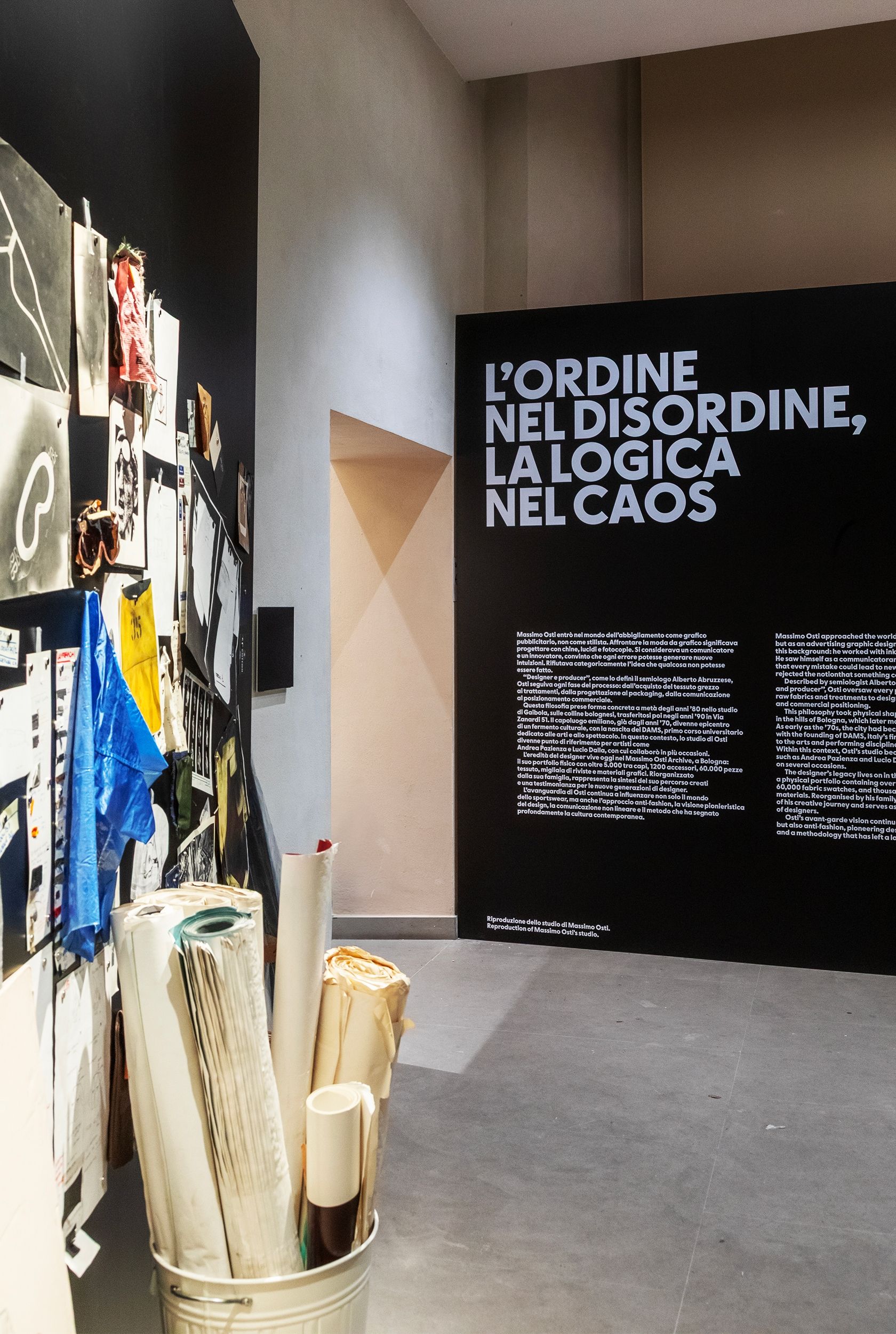
However, that jumpsuit is yet another example of how Osti's genius continues to captivate even 20 years after his passing—an anniversary now marked by a special exhibition titled "Ideas From Massimo Osti" held at Palazzo Pepoli, right in Bologna, the city he was deeply connected to. Through evocative scenography, including a faithful reconstruction of his studio on Via Gaibola with worktable, chained scissors, and stapler to prevent loss, the exhibition traces the creative legacy of a visionary figure who revolutionized fashion with a unique and instantly recognizable aesthetic.
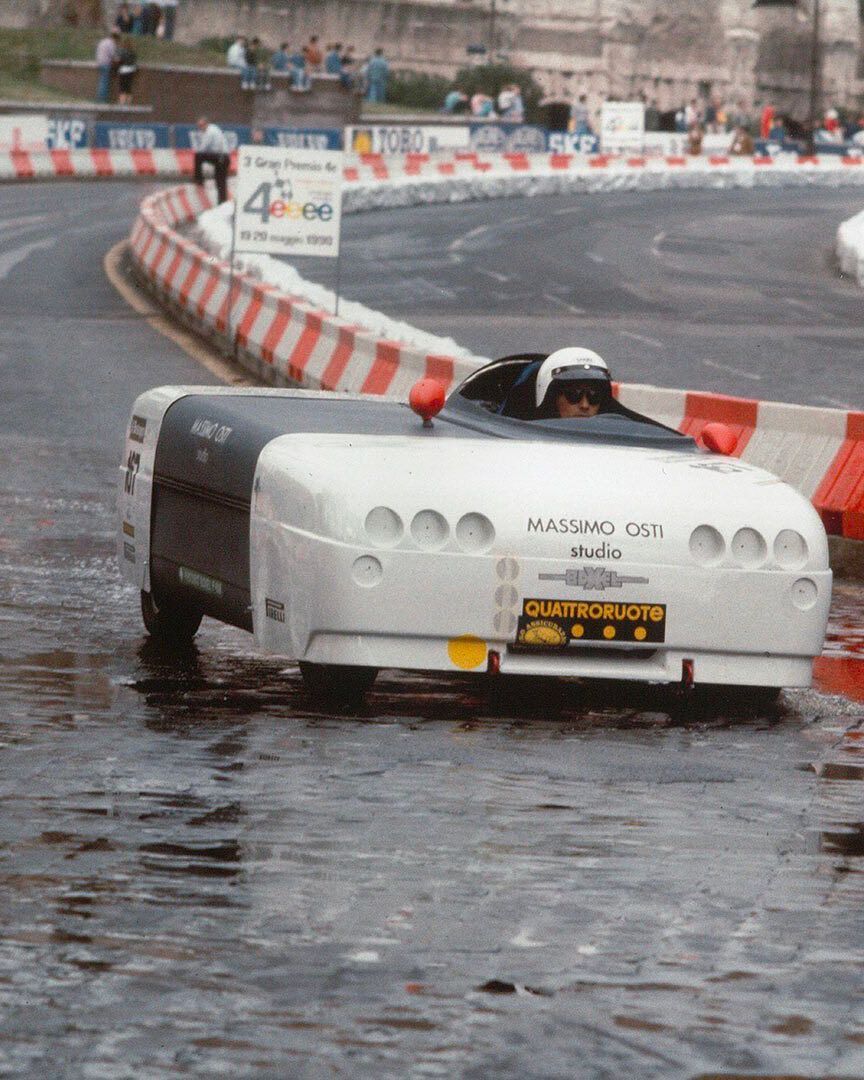
While the archive subtly suggests how motorsport may have influenced Osti’s vision, the exhibition walls flip the perspective, offering clear evidence of how Massimo Osti aimed to, and at times succeeded in, influencing motorsport. For instance, his name is associated with one of the first electric car races held on the streets of Rome in 1990. The Massimo Osti Studio label is clearly visible on the Boxel P488, designed by engineer Paolo Pasquini. Today, fashion brands compete for partnerships with Formula 1 teams, and much of that pioneering spirit can be credited to Osti—a visionary who helped bring fashion beyond its traditional boundaries. Also featured in the exhibition, open to the public until September 28, are further examples of fashion-motorsport fusion, such as Vespa design sketches featuring components developed with Stone Island, like rubber patches to protect the outer fairings from scratches and dents.
The exhibition offers a deep look into Massimo Osti’s multifaceted artistic soul. An engineer-designer who believed that the most innovative ideas could emerge from mistakes. A sportswear pioneer who, through a rigorous and visionary approach, reshaped the aesthetics of sportswear long before it became a trend. And if the curated selection of iconic garments from his career isn't inspiring enough, the words of Massimo Osti himself may do the trick. Written in a notebook on display next to a Chinese-sourced agenda labeled with “MO”—which would later become the Massimo Osti Production logo—is a simple yet powerful handwritten phrase in block letters: "Say what you do and do what you say."
What to read next
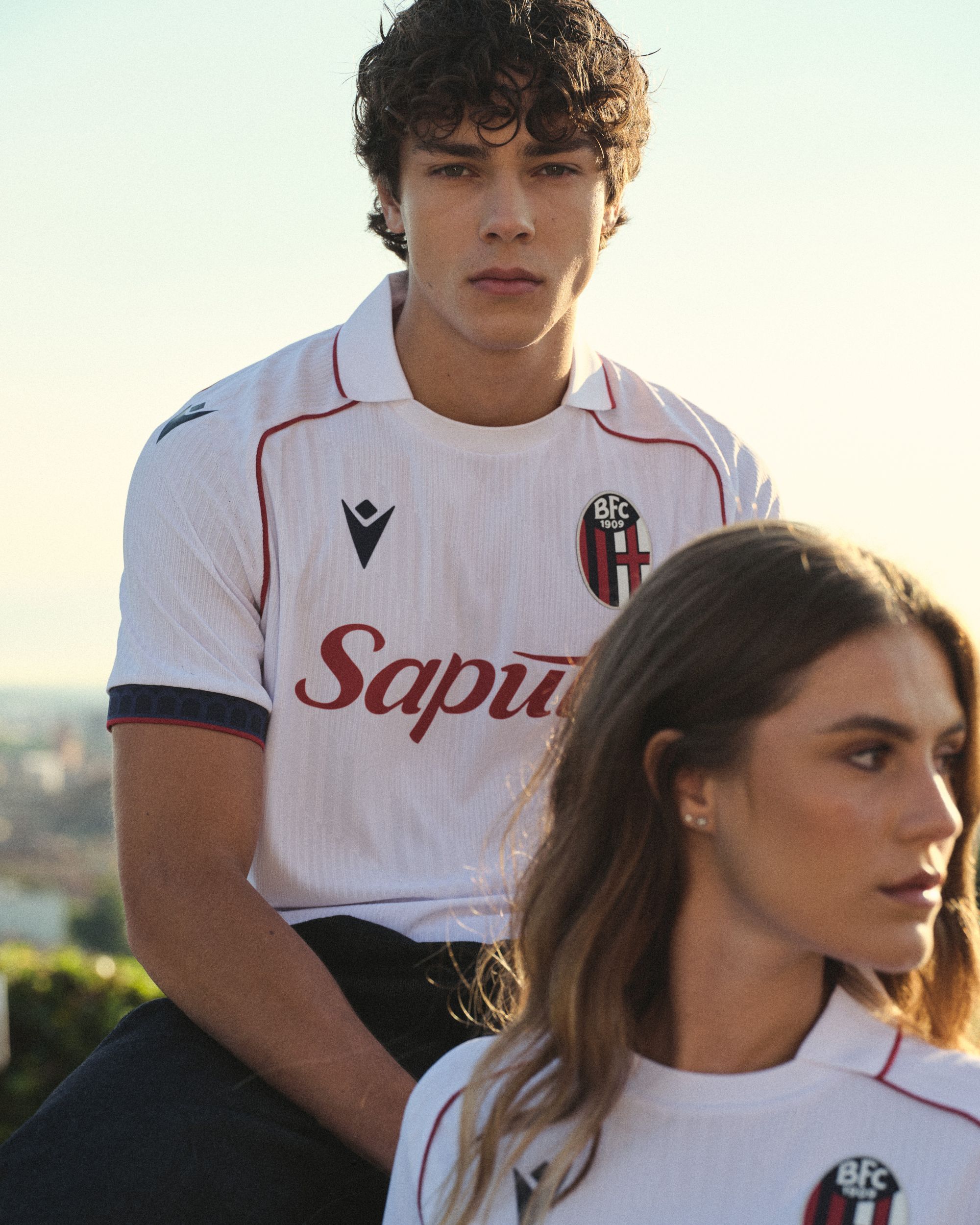
Bologna unveil the new 2026/27 Away kit
Macron gives a contemporary update to the iconic white jersey

Endrick and Saka star in the new Stone Island x New Balance capsule
Innovation, performance and contemporary design