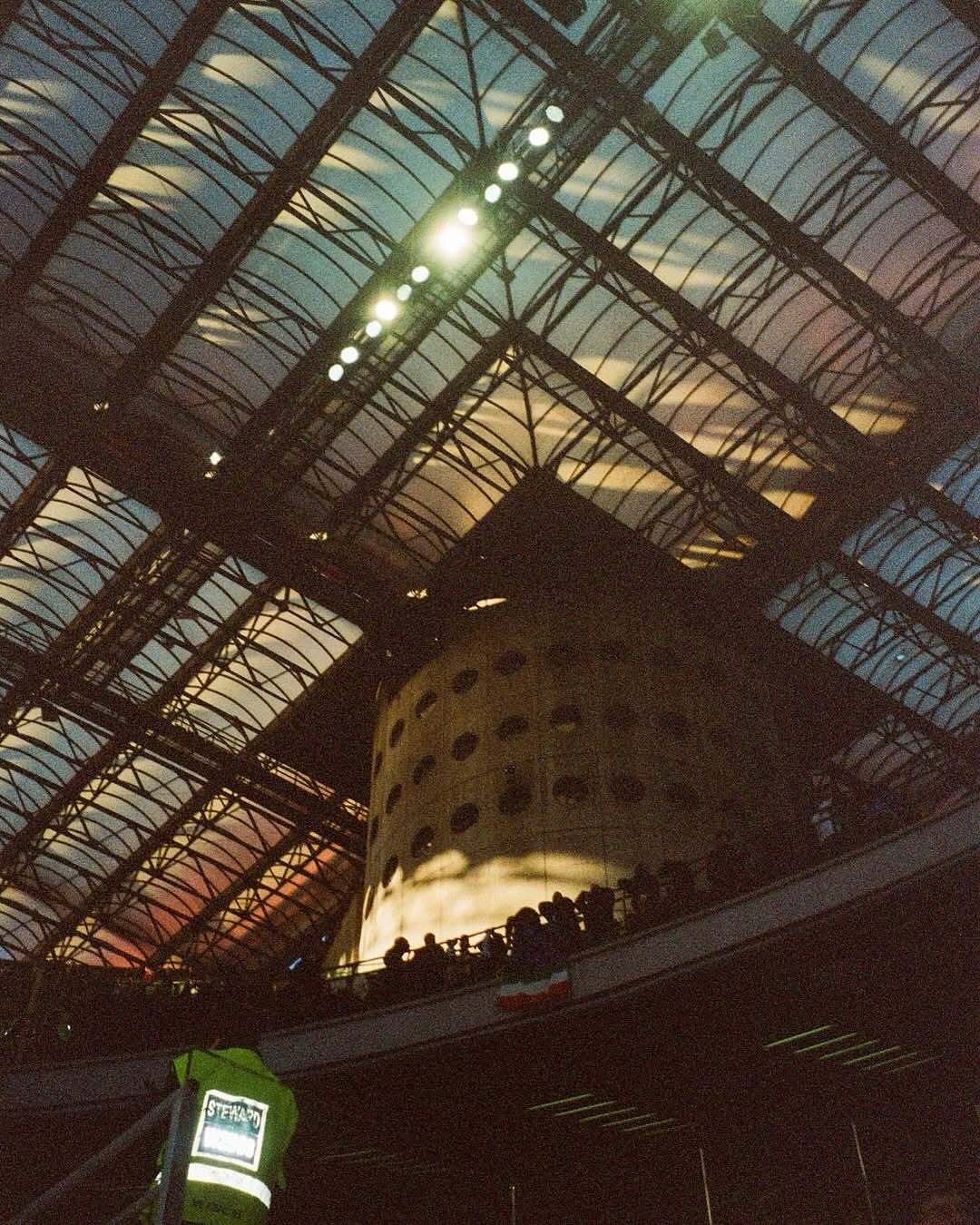
The first of the last derbies to be played at San Siro How did it go and why was there no tifo?
There were many reasons to understand that what was played last night at San Siro between Inter and AC Milan was not just any other Milan derby. AC Milan arrived at this match sporting a run of five consecutive derbies without defeat against Inter, a run that meanwhile reached six matches thanks to the goal by Christian Pulisic and the penalty saved by Mike Maignan which allowed the Rossoneri to win 1-0. There were other sporting stories intertwined: Inter’s first derby as head coach for Cristian Chivu contrasted with the return of AC Milan coach Massimiliano Allegri to a Milan derby for the first time since 2013. The first appearance of Luka Modrić, Inter captain Lautaro Martínez reaching 350 appearances in Nerazzurro — and who, with a hat-trick, could have become the club’s all-time top scorer in a derby.
Why were there no choreographies?
Another reason for interest was related to the ultras, since this was the first derby after the Doppia Curva rulings — the investigation by the Milan Public Prosecutor’s Office which, among other things, led to a first-instance sentence of 10 years in prison for Andrea Beretta, former Inter ultra leader, and Luca Lucci, leader of AC Milan’s organized supporters. The aftermath of this investigation was visible in the stands because neither the Curva Nord associated with Inter nor the Curva Sud associated with AC Milan displayed the colorful choreographies that used to turn the Milan derby into a cult for fans and enthusiasts.
This decision was the result of the increasingly strict control exercised by the Milan Public Prosecutor’s Office over the two groups, so much so that Inter’s ultras didn’t even submit a request to display a choreography while AC Milan’s ultras did not obtain permission to display some banners, including the one with the word "sodalizio", which was cleverly recreated for a few minutes with phone lights. No taunts from either side. No reference to Inter’s defeat in the last Champions League final 5-0 against PSG. San Siro remained bare, except for an official initiative by Inter that allowed the first and second orange tiers to be colored with black and blue cardboards.
Sale of San Siro, the official price
There were other, more marginal reasons too, such as the debut of Puma’s new orange ball or the ref cam, but in the end this derby was special because it was the first of the last ones to be played at San Siro. On the eve of the match Inter president Giuseppe Marotta had underlined the historical importance of this game, emphasizing that for the first time in history the two clubs are co-owners of the Meazza. This step was made possible by the deed with which Inter and AC Milan on November 5 officially finalized the purchase of San Siro for €197 million from the Municipality of Milan. What Marotta did not stress in his comment, however, is that AC Milan and Inter agree on demolishing the stadium and building a new one in view of the 2032 European Championship.
The New San Siro
From now on it will be a long countdown — every event held at San Siro could be the last. The opening ceremony of the Milano Cortina 2026 Winter Olympic Games will be the final gala event. There might still be room for one last Champions League final. For one last match of the national team. For one last concert. And then, barring surprises, Milan’s urban landscape is destined to be transformed with the demolition of San Siro: one of the few stadiums that can still boast the title of monument because anyone, football fan or not, would recognize it from its silhouette. Of course, in the public imagination the facility to be designed by architect Norman Foster together with Milan’s MANICA Architecture will take the name New San Siro, but in reality, however beautiful, functional and technological it may be, it will not live up to the beauty of the Meazza.
What to read next
The story behind Bournemouth’s red-and-black kit and its connection to AC Milan
A tribute that has lasted for over 50 years, now renewed on the European stage
The guide to the football derbies returning in 2026/27
Millwall-West Ham is just the cherry on top