Andrea Iannone's new helmet is a tribute to the courage of starting over Inspired by the Twelve Labours of Hercules
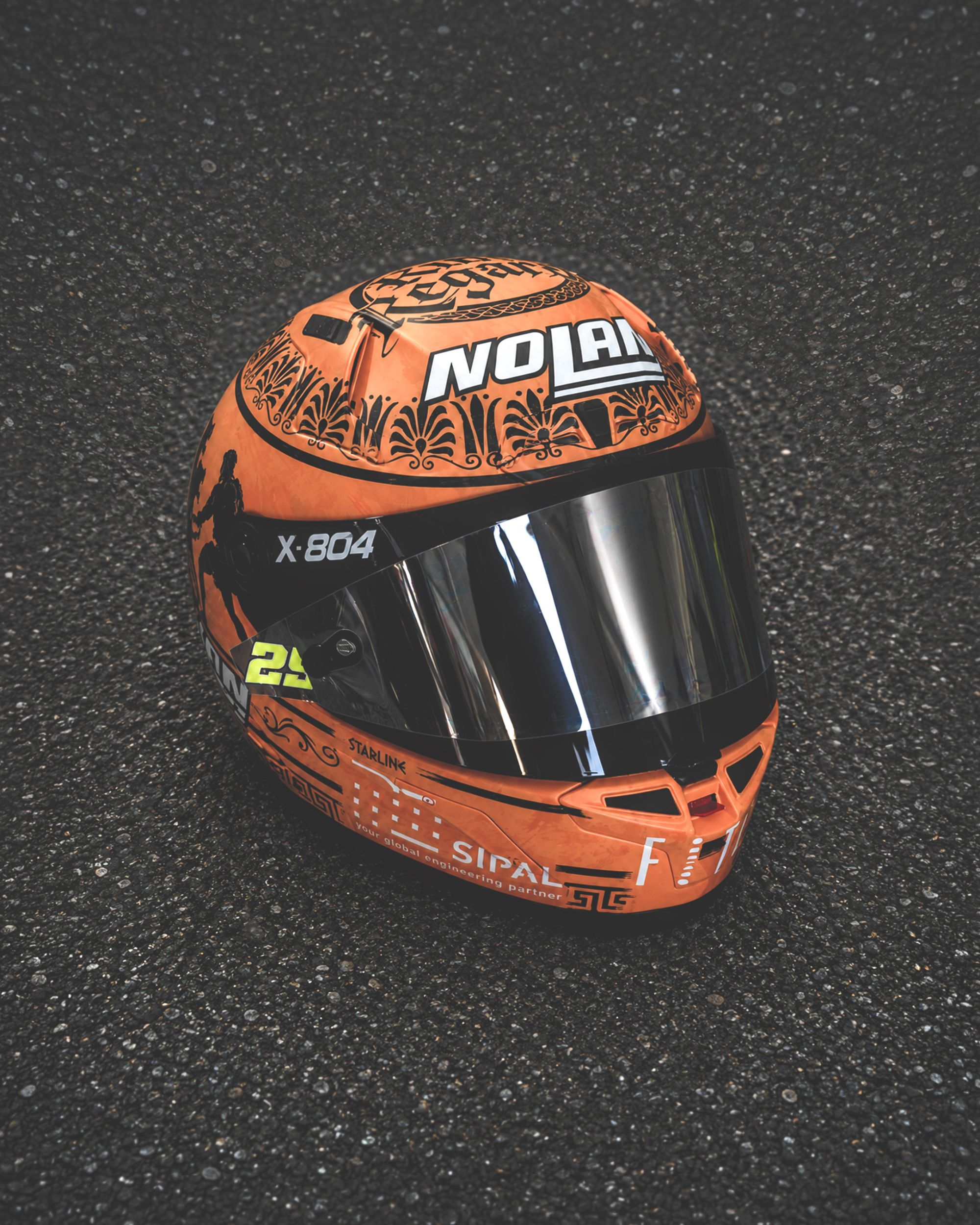
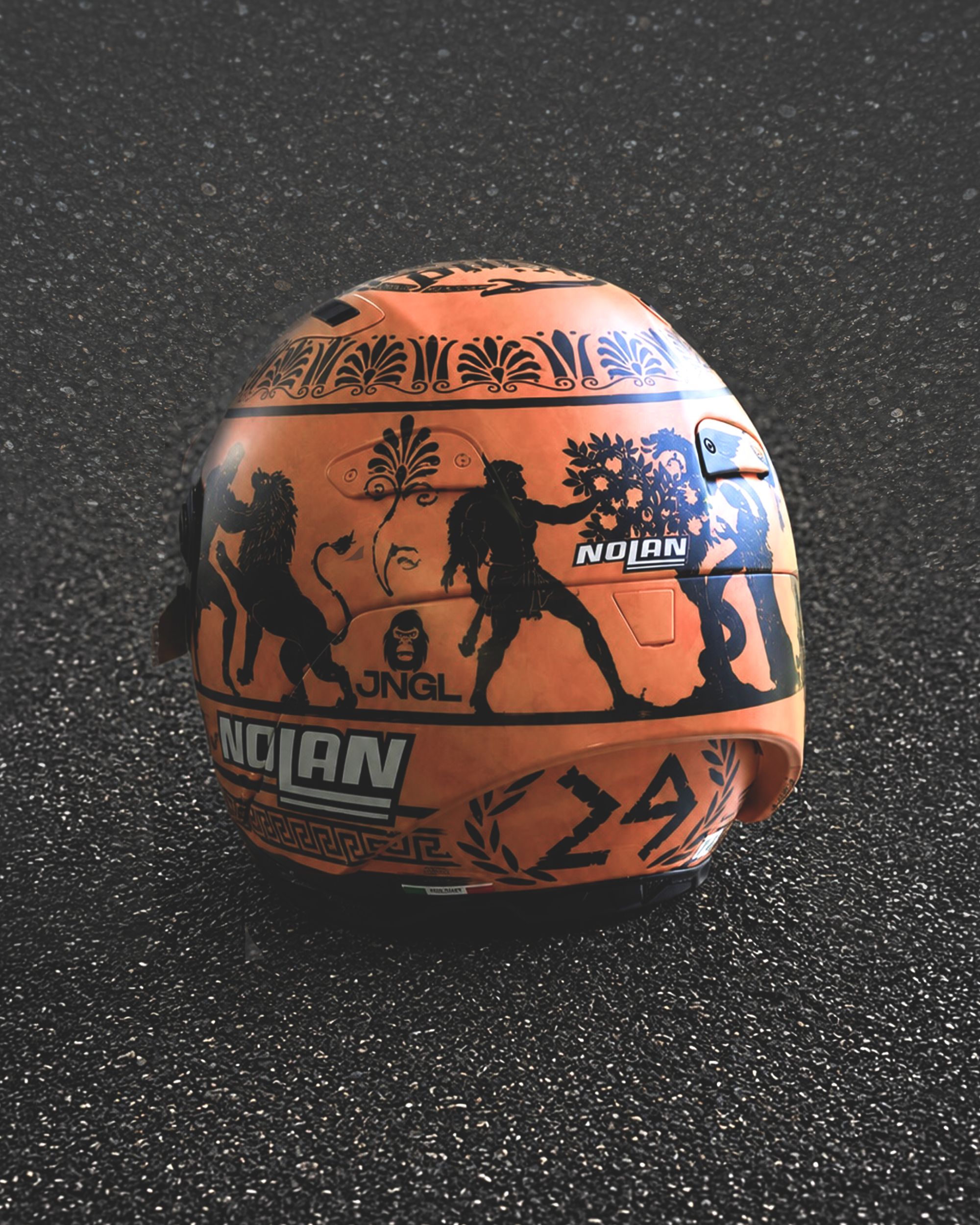
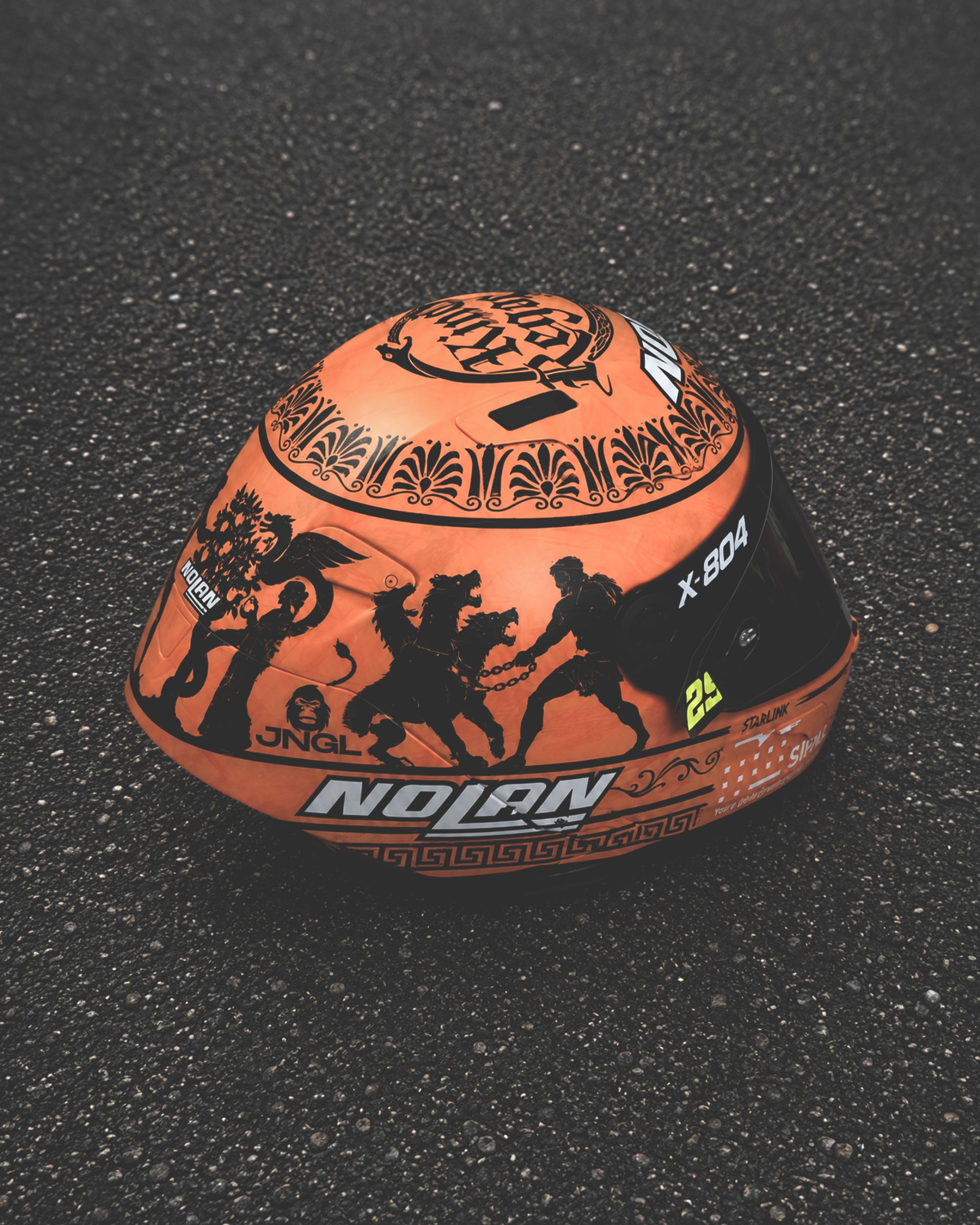
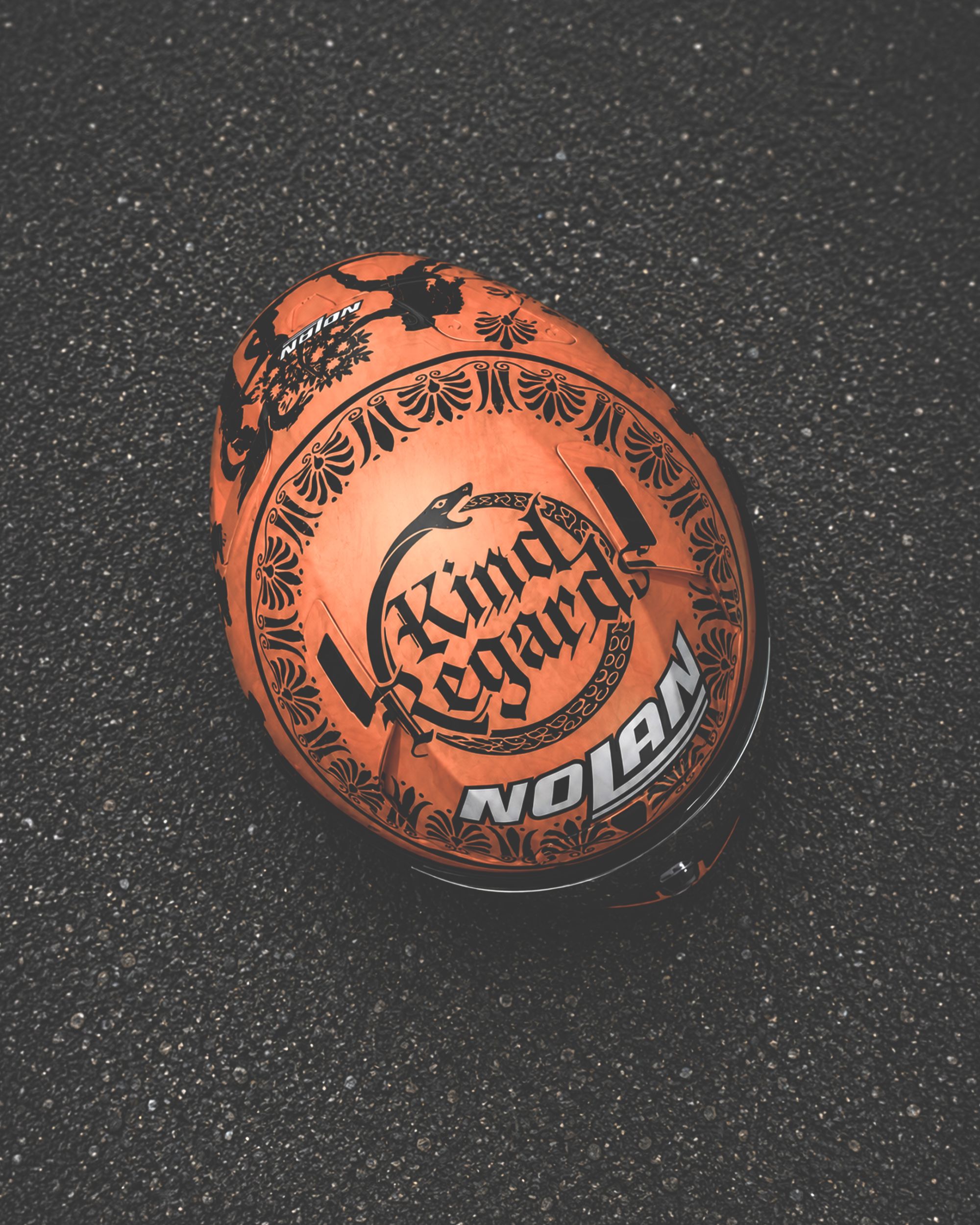
The Twelve Labours of Hercules tell one of the oldest stories of transformation in Western culture. After descending into his own darkness, Hercules faces a series of trials that force him to confront his limits, fears, and contradictions. Only by overcoming them does he gain a new awareness of himself. It is a story that still resonates today with anyone who has experienced failure and found the strength to start over. The Labours thus become a universal metaphor for personal growth: courage does not mean being invincible, but rather the ability to turn every obstacle into a step forward.
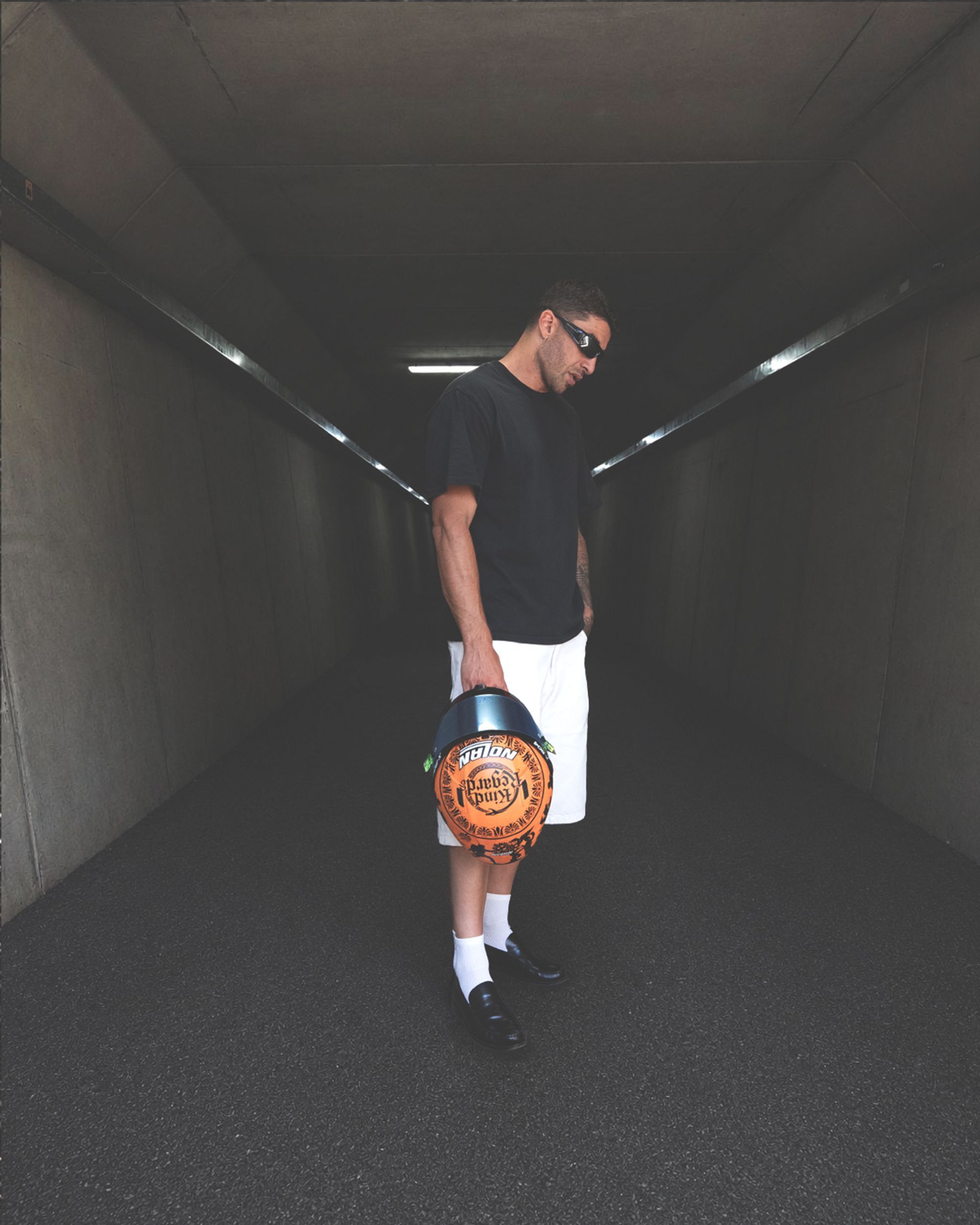
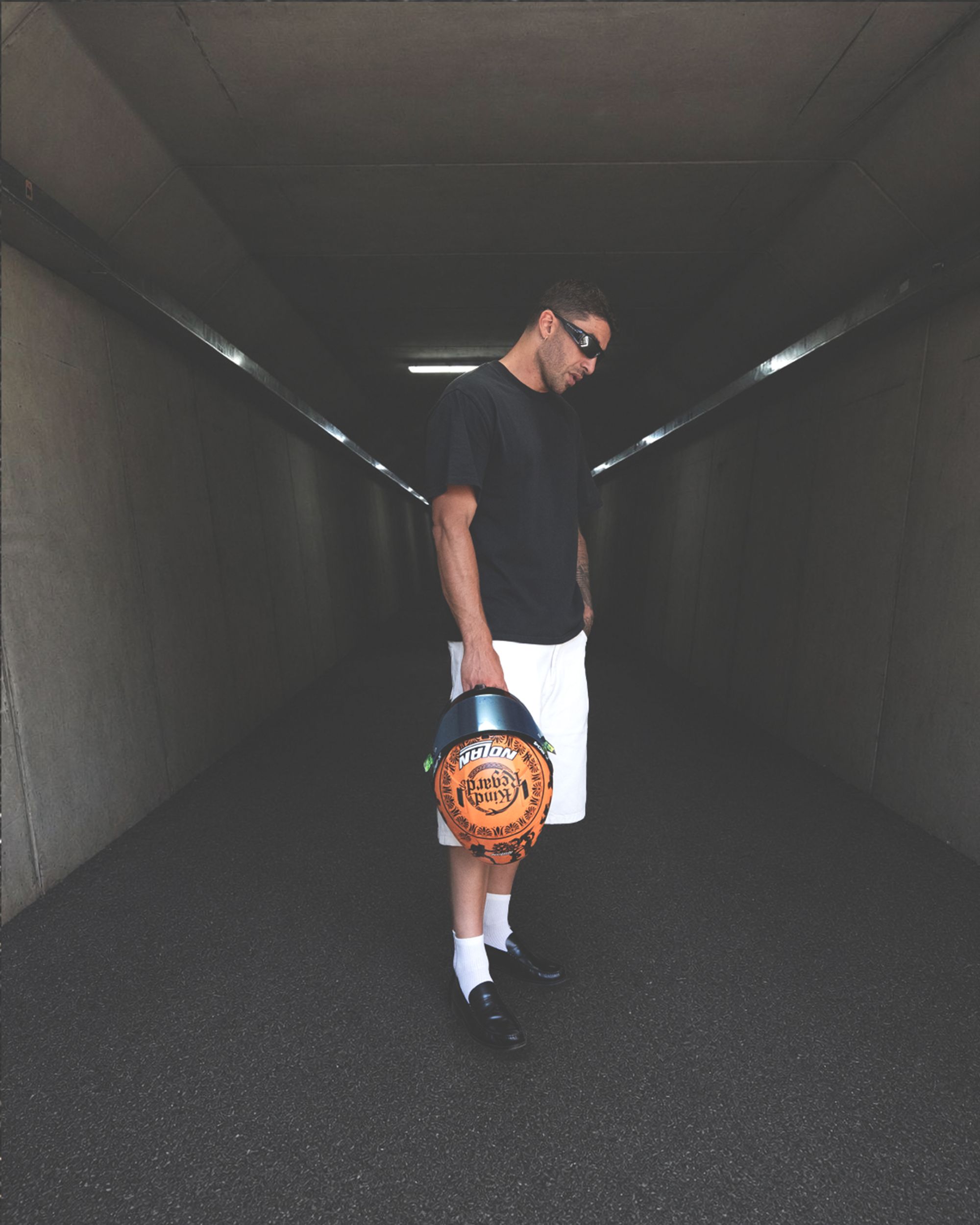
This reflection inspired Andrea Iannone's new helmet, worn during the 2026 edition of the FIM Harley-Davidson Bagger World Cup Grand Prix of Assen. "For this new design," Andrea explains, "we drew inspiration from the representations of mythological heroes and their iconography. My journey has been marked by trials, waiting, sacrifice, and new beginnings. On this new helmet, these experiences become a narrative that tells the story of my personal evolution before my sporting one. I see myself as a man who embraces his own trials, aware that change is born from the way we choose to face adversity. The hand-painted illustrations on the helmet are inspired by the visual language of Ancient Greek pottery, where every scene depicted the feats of men and heroes. We decided to reference some of Hercules' Labours and reinterpret them on a contemporary piece of sporting equipment."
The concept was developed by Walter Giordano, the project's creative director and designer, in collaboration with Andrea. The design revolves around three of Hercules' Twelve Labours, selected as symbolic milestones that encapsulate the rider's personal and professional journey. The first is the Nemean Lion, representing the ability to confront what seems invincible: fear, the weight of judgment, and obstacles that appear impossible to overcome. The second is the Golden Apples of the Hesperides, symbolizing an achievement that can only be attained through patience, discipline, and sacrifice. Every meaningful accomplishment is the result of a journey, never a shortcut. The third is Cerberus, the guardian of the Underworld. Facing him means venturing into one's darkest depths and returning stronger than before. It is the moment when the greatest challenge is no longer against others, but against oneself.
Among the helmet's other symbolic elements is the Ouroboros, the ancient Egyptian symbol later adopted by Ancient Greece and the alchemical tradition: the serpent devouring its own tail, representing the cyclical nature of the sun and of life, continuous regeneration, and eternal return. An image that has transcended cultures and centuries, taking on a precise meaning in this project: every ending already contains the beginning of something new. Through its iconic orange, black, and white color palette, the helmet also pays tribute to the Dutch circuit of Assen, known as "The Cathedral", as it was created exclusively for this special occasion.
What to read next

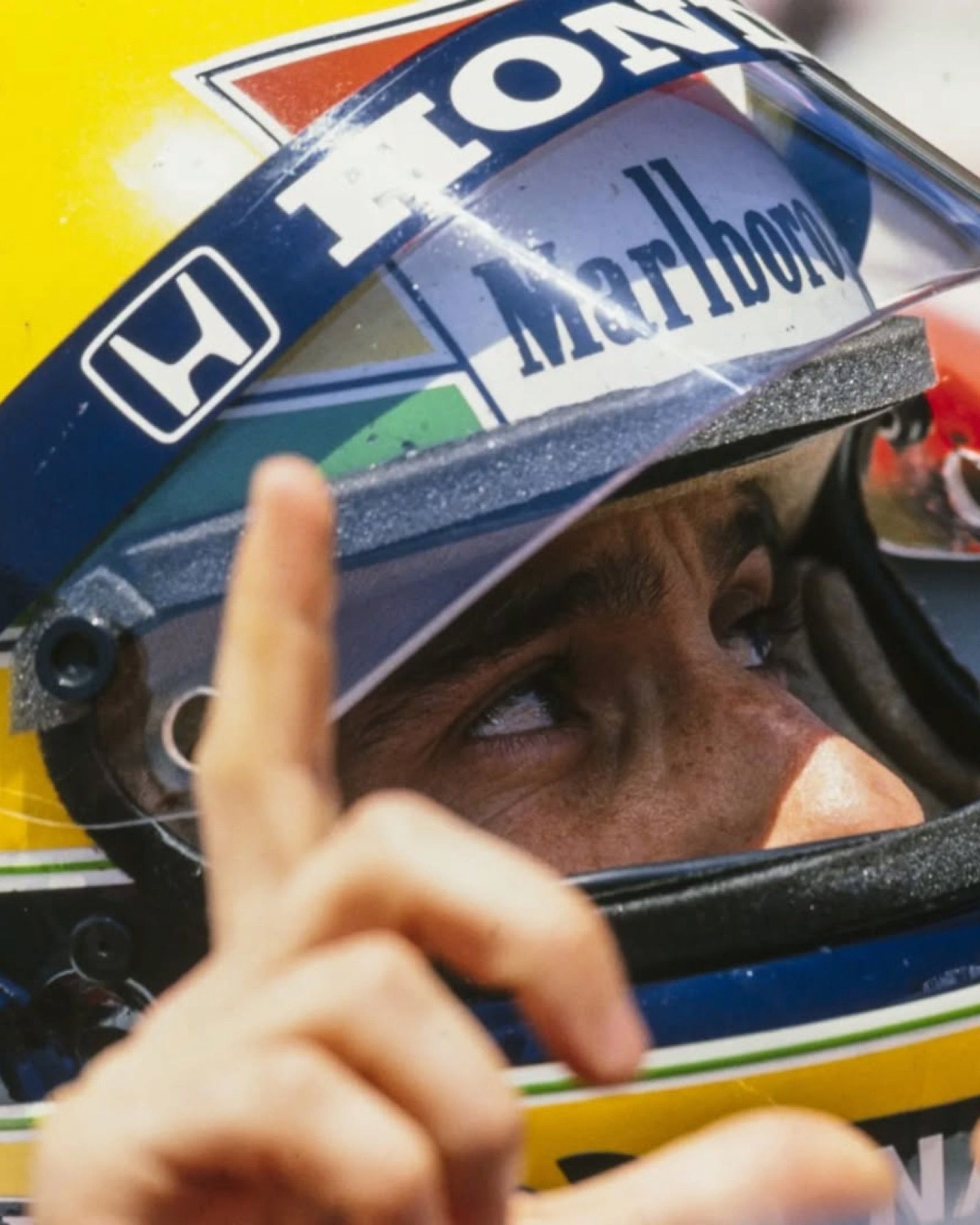
Can you still spot a Formula 1 driver by his helmet?
Back in the days of Ayrton Senna and Alain Prost, it was definitely easier