
What we learned from the 2025 NBA China Games And why it was such an important sports and political event
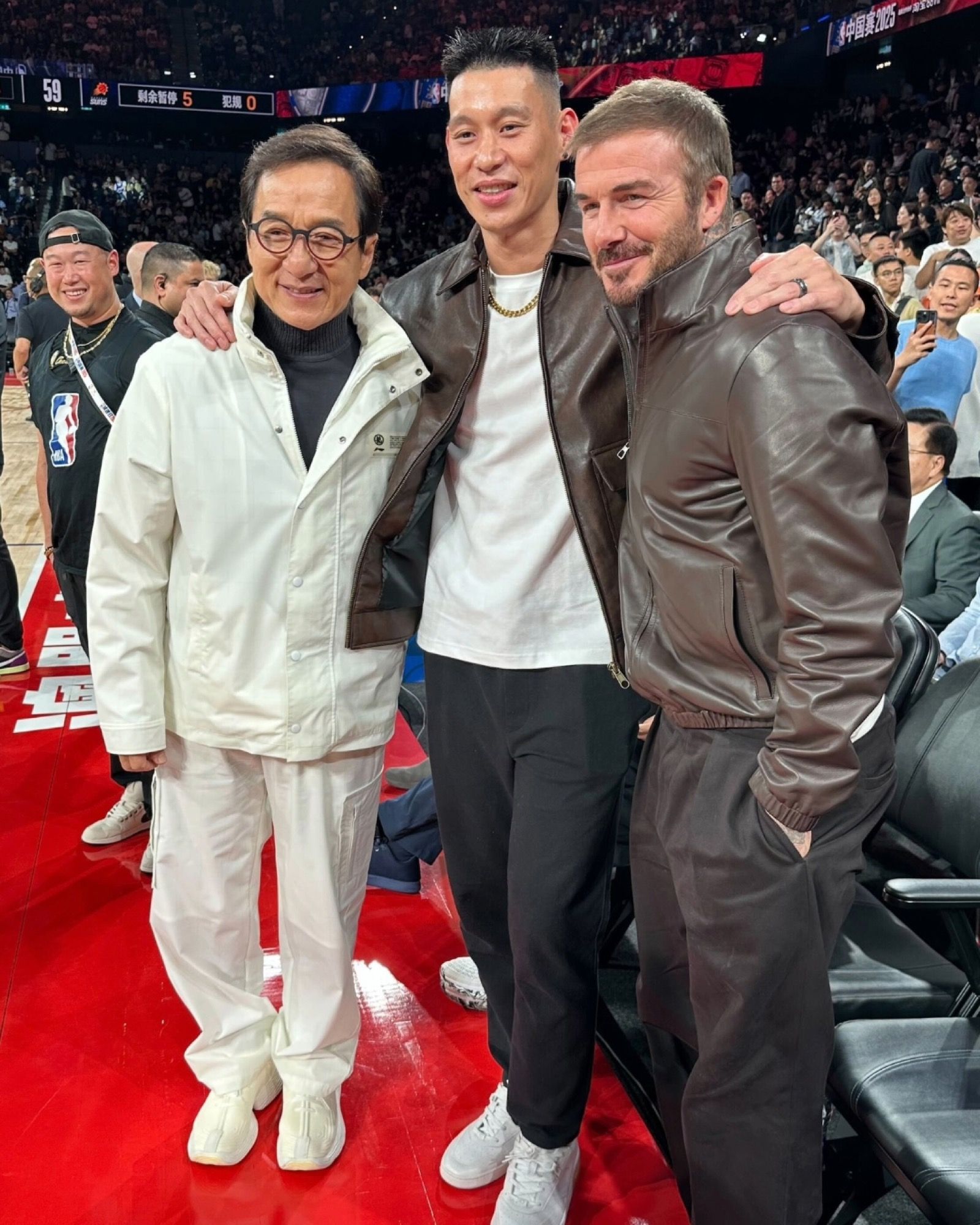
Shaquille O’Neal, Yao Ming, Jackie Chan. At what basketball game could you ever find a trio like that sitting courtside? The only possible answer: the NBA China Games, which returned this weekend to the Venetian Arena in Macao after a six-year, controversial absence. The event followed the league’s usual Global Games format: a five- to six-day trip with city events and activations, two games in forty-eight hours, and a star-studded lineup of celebrities and commercial partners. The guest list also included several other familiar faces for the local audience: Jeremy Lin (former NBA player), Jack Ma (Alibaba founder), Allen Xie (adidas Basketball executive), influencers with massive followings on Weibo and Douyin, as well as NBA legends from the 2000s like Dwyane Wade, Vince Carter, Andre Iguodala, Stephon Marbury, and Shawn Marion — some in official roles, others as ambassadors. And why not, even David Beckham — who’s always a welcome addition to any Asian VIP front row.
First and foremost, there’s the sporting side of the story. The relative importance of the matchups — these are preseason exhibition games — didn’t stop fans from enjoying a great show. Phoenix Suns vs. Brooklyn Nets: on Friday the Suns came back to win in overtime (132–127), while yesterday the Nets took the rematch in another tight, point-for-point finish (111–109). It was good news both for the audience — Chinese fans, who enthusiastically welcomed the league’s return — and for the organizers, led by Adam Silver (NBA commissioner, on a global expansion mission) and Joseph Tsai (Nets owner, Alibaba co-founder, and key mediator in the NBA–China relationship). Yet the on-court results were perhaps the least important part of this business trip, which marked a historic sporting, political, and commercial reconciliation. In a location — Macao, the former Portuguese colony — that may sound exotic or unlikely, but isn’t at all.
Normalization
The NBA’s first journey east dates back to 1979, when there were still many walls to break down — political first, then commercial. Television broadcasts of games (originally free of charge) began in the late 1980s, sparking a growing passion for basketball among younger generations by the late 1990s. But it was in the new millennium — not coincidentally after the arrival of Yao Ming, the former Houston Rockets star and now president of the Chinese Basketball Association — that the NBA became a mass phenomenon in China. The preseason visit soon became routine. From 2004 to 2019, 18 teams and 27 games were staged in the People’s Republic, across Shanghai, Beijing, Taiwan, Guangzhou, Shenzhen, and Macao. Countless NBA stars toured the country — Kobe Bryant, Tracy McGrady, Allen Iverson, and later Steph Curry, LeBron James, and James Harden — always escorted by their sponsors and greeted by massive crowds.
It didn’t take long, once the engine started running at full speed, for China to become the NBA’s top overseas market. Yao Ming’s Rockets debut, his first matchup with Shaq, and the 2007 showdown with Yi Jianlian drew an estimated 150–200 million viewers in China — numbers that even the Super Bowl can’t match in the U.S. Basketball quickly became the country’s most popular and played sport — today, there are an estimated 300 million fans, about 85% of the entire U.S. population — with the NBA at the center of it all. A survey from a few years ago found that over 80% of Chinese males aged 15–24 identified as NBA fans, making it by far the most followed sports league in the country, well ahead of local leagues and European soccer. A $5 billion a year business that, in 2019, suddenly came to a halt.
The crisis — a total freeze of relations — was triggered by a tweet from six years ago by Daryl Morey, then general manager of the Houston Rockets, now with Philadelphia. Just a few lines in support of the pro-democracy protests in Hong Kong — a message the NBA couldn’t disown (more for consistency than values) but one that unleashed massive economic damage. The Chinese Communist Party reacted harshly: commercial deals were pulled, TV broadcasts were suspended, and NBA visibility disappeared from the Chinese market. NBA commissioner Adam Silver estimated annual losses at around $400 million. Those losses lingered during the pandemic years and gradually eased from 2022 onwards, with the resumption of broadcasts, youth programs, and finally — this weekend — the return of the NBA China Games.
Ambassadors
The NBA’s full-fledged return to China had already become evident in recent months, as several players toured Chinese cities and hosted events. The connection — weakened but never broken over the past six years — was reenergized by appearances from LeBron and Curry, as well as Draymond Green, Jalen Williams, Giannis Antetokounmpo (nicknamed Letters Bro for his long name), Nikola Jokic, Aaron Gordon, Paul George, James Harden, and Kyrie Irving. The path was cleared for the league’s expanding “Global Games” circuit, with stops scheduled between October 2025 and January 2026 in Abu Dhabi, Melbourne, Vancouver, Mexico City, Berlin, and London.
Unsurprisingly, the main characters of this China trip were the Brooklyn Nets, the connecting point between Joseph Tsai (and Alibaba, the Chinese economic giant) and the NBA. Over the past few years, the Nets owner has played a key role in easing tensions and reopening the channel that benefits not only him, but many NBA owners. Alibaba Cloud has just become an official league partner — just the tip of the iceberg. According to a 2022 ESPN report, American ownership groups managed about $10 billion in assets in the Chinese market. That’s a mountain of reasons, combined with commercial and TV data, to put political tensions, the Morey incident, and free speech controversies aside — and resume collaboration.
The process accelerated with the return of U.S. sponsors and the renewal of the broadcasting contract with Tencent, which replaced CCTV in 2015 and holds NBA rights until 2027. Meanwhile, the league used its Macao trip to roll out a wide range of openings, partnerships, and activations: from the new NBA Flagship Store at the Londoner Macao to the NBA House at the Venetian Macao Hall, featuring brand spaces for Nike, Mitchell & Ness, New Era, Wilson, and more. In between the two games, the league exported a taste of All-Star Game culture with Fan Day by Alibaba Cloud, where local celebrities — basketball and beyond — joined on-court contests and activities at Venetian Arena. Highlights included the classic dunk contest, an appearance by “China Book” (Devin Booker’s Chinese lookalike), and the announcement of a new partnership with the Chinese Basketball Association to give young Chinese talent more access to NBA youth programs.
Macao and the NBA
Finally, a reflection on the location. What’s the connection between the NBA and Macao, and why start here? First of all, this was a cautious re-entry — a soft landing in a setting many see as less politically sensitive than Beijing or Shanghai. Macao is a Special Administrative Region, like Hong Kong, but with a distinct economic and cultural identity. Crucially, it’s the only place in China where gambling is legal. The local economy revolves heavily around casinos, with revenues in recent years once again surpassing those of the Las Vegas Strip. The demographic scale of China helps explain those numbers, just like with TV ratings.
The games were played at the Venetian Arena, part of a resort and casino complex owned by Sands China — the local branch of Las Vegas Sands, controlled by the Adelson-Dumont family, which also sits atop the Dallas Mavericks organization (as we covered a few months ago). In short, Macao isn’t just on the periphery — it’s the Asian capital of gambling, a sector increasingly intertwined with the NBA ecosystem. It’s also an autonomous hub that speaks the same commercial language as Adam Silver, without too much political friction. The perfect backdrop for a politically delicate and economically massive comeback.