

































The NBA does have a gambling addiction The arrests of Terry Rozier and Chauncey Billups are neither a first nor a last time
Two federal investigations that emerged on October 23rd led to the arrest of an NBA player and a coach: Terry Rozier, guard for the Miami Heat, and Chauncey Billups, head coach of the Portland Trail Blazers with a long playing career and a place in the Hall of Fame. The cases broke at the same time but are part of two distinct judicial strands: the one involving Rozier is a sports-betting scheme using insider information, while Billups is under investigation as part of a system to rig poker tables and defraud other players, reportedly with the shadow of mafia families. Authorities announced nearly 40 arrests in total, with charges including insider betting, wire fraud and money laundering.
The news is a shock to the NBA public, but really more because of the names involved than the mechanics of the crime. This is not, in fact, a problem that appeared overnight. The most recent related case dates to 2024: Jontay Porter, a former player banned for life by the league who pled guilty to involvement in manipulated prop bets. Today's investigations connect to that investigative thread and involve other figures inside and outside the NBA. Among the names that have emerged is also Damon Jones, a former member of the Los Angeles Lakers staff, very close to LeBron James — who is also mentioned in reports but is unrelated to the investigations.
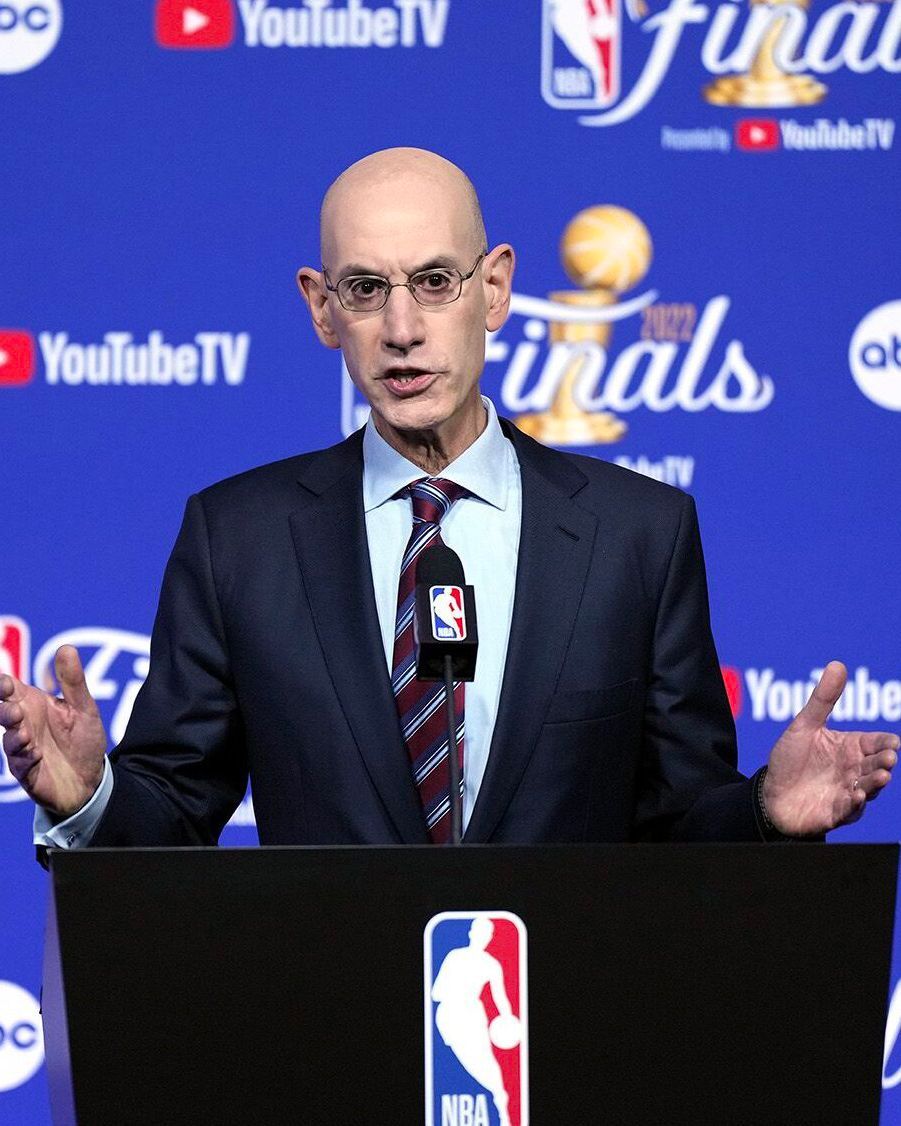
The NBA has frozen the licenses of those involved and pledged full cooperation to "defend the integrity of the game", in an increasingly sprawling context — that of sports gambling — which offers countless odds and platforms for every match, with all the attendant dangers. The NBA itself, however, is not unrelated to the growth of this ecosystem and its normalization with the public. The league led by Adam Silver has increasingly explicit and intrusive ties to Las Vegas, where Summer League and NBA Cup finals have been held for some years, where several members of the Board of Governors have deep roots in their financial empires, and where the birth of a new franchise is expected sooner or later. Meanwhile, the Brooklyn Nets and Phoenix Suns have just returned from China, where the NBA organized a couple of preseason games in Macao, the Asian gambling capital. And furthermore: this season on Prime Video American viewers can activate FanDuel odds directly on-screen, after years in which ESPN broadcasts were filled with betting corners, and agencies like DraftKings presented themselves as official league partners. In short, the betting business is no longer marginal to sports coverage — it is inside the product. In the NBA as in many European sporting contexts.
The Rozier Case
Terry Rozier was arrested yesterday morning in Orlando, Florida. The indictment describes a group that between December 2022 and March 2024 allegedly exploited non-public information (injuries, scratches, minutes, rotations, coaching decisions) to place bets on player props, i.e., player stat over/unders, obviously using straw bettors and fragmented payment channels.
One suspicious episode that triggered the case occurred on March 23, 2023, during a regular-season game between the Charlotte Hornets (Rozier’s former team) and the New Orleans Pelicans. That day several operators noticed abnormal volumes on Rozier’s unders, totaling over $200,000 in bets, including 30 wagers recorded in 46 minutes totaling $13,750 from a single user. Result? Rozier left the court after about ten minutes with a foot problem. The bets all won.
According to the indictment, the group allegedly targeted at least seven games during that period. Among the incidents cited in the charges is also a February 2023 Lakers-Bucks game, with tips about last-minute unavailability coming from inside the purple-and-gold locker room via Damon Jones. The former Cavs and Lakers staffer is said to have taken a few thousand dollars for such information, according to recent reports.
The case is currently limited to this handful of names and games, but it exposes a couple of structural weaknesses that are quite evident. On one hand, the difficulty of tracing the flow of information — who tells what to whom inside and around NBA locker rooms, and with what timing, since a few minutes’ advance on the official injury report can make the difference — and therefore the misuse of such data to illicitly profit against the bookmakers. On the other, extending the discussion from insider betting to the shadow of match-fixing, the routine availability of odds on elements that have relatively little impact on the game's final outcome. For example: how many rebounds a single player will grab, or how many steals or turnovers they will have. A universe that gives users more and more granular things to bet on, and at the same time offers new, dangerous temptations to those inside the game.
The Billups Case
The other strand, as noted, does not concern NBA games but rigged poker tables. As serious and alarming as it is, this is a more traditional crime and separate from the evolution of legal betting. The indictment charges about thirty people, including Chauncey Billups, with participating in a system to falsify high-stakes games in several U.S. cities, with support from members of major organized crime families such as Bonanno, Gambino and Genovese. According to prosecutors, since 2019 the group used hidden technology to read and order cards like tampered shuffling machines, micro-cameras and even contact lenses and glasses designed for marked cards, turning tables into a trap for players outside the system. Those players became unwitting victims of a colossal fraud worth millions of dollars.
The described modus operandi included codified roles: the quarterback received information about hands from outside and signaled it to accomplices at the table; in parallel, former high-profile athletes — so-called face cards — were used as bait to attract players and raise stakes. Billups is named among the faces used to boost the scene’s credibility and grease a mechanism in which technology provided a systematic advantage. If someone didn’t pay, threats and extortion would follow: dynamics not surprising given the involvement of organized crime organizations.
Precedents
The two trials — the insider-betting one and the poker-related one — will now proceed on parallel tracks. But there are some points of contact, both in terms of money flows and connections to the NBA, given Damon Jones’ involvement in both. Regardless of the trial outcomes, however, the reputational damage for an NBA franchise — in this case the Blazers, whose head coach is named in such a serious indictment — is already massive. And looking ahead, the fear that the Rozier case is not isolated, especially away from the NBA spotlight, cannot be ignored. From no sporting federation in the world.
Look at recent history in the NBA and other U.S. professional leagues to feel the alarm. There is the aforementioned 2024 precedent of Jontay Porter, which prosecutors explicitly link to the new investigation. The former Toronto Raptors player disclosed confidential information to betting groups, and at times limited his participation to favor prop bets: a case that highlights weaknesses similar to the scandal that swept Terry Rozier yesterday. But that’s not all. One also recalls the Tim Donaghy case (2007), a former referee who pled guilty to conspiracy, wire fraud and transmitting confidential information: a reminder that integrity is vulnerable not only among players. His story was told by Netflix in the episode "Untold: Operation Flagrant Foul".
Outside the NBA, of course, the list grows. In the NFL, Josh Shaw was suspended in 2019 for betting on his own league’s games, and Calvin Ridley in 2022, though without charges beyond conflicts of interest — another controversial theme that has also emerged with several Italian athletes. In MLB there is the case of Tucupita Marcano (2024), the less recent Pete Rose case (1989) and the century-old Black Sox scandal that forever changed league governance.
In recent years, the map has also expanded to collegiate sport, with several cases coming to light. It is an even more critical context for economic and age reasons, with very young athletes who have less to lose compared to those with multimillion-dollar pro careers. Between investigations in NCAA circuits and waves of suspensions, since 2018 the expansion of legal betting in the United States has multiplied points of friction and increased occurrences.
United States and betting
The turning point came in 2018, when the Supreme Court struck down the federal ban on sports gambling and left regulation to individual states. Everything changed in terms of spread and penetration: in 2024 Americans bet roughly $150 billion through legal channels, generating almost $14 billion in operator revenue; in 2025, through August 31 alone, wagering has already surpassed $100 billion and $10 billion in revenue. Numbers that are more than ten times those of 2017, and that since the pandemic have been growing at a dizzying rate.
At the same time, in 2018 the SWIMA (Sports Wagering Integrity Monitoring Association) was founded — a monitoring network that coordinates regulators and operators — supplemented by agencies that provide alerts on anomalous betting flows to leagues and authorities. But it is by definition a reactive action: intercepting suspicious patterns without real prevention capability. Not by chance, after the Jontay Porter precedent, some jurisdictions restricted or banned prop bets in certain contexts, especially in college sports under direct NCAA pressure. The room to act, however, remains large.
This combination of looser regulations, hyper-dense markets, the digital fragmentation of bets and money flows, and a general normalization of gambling in the United States — to which professional leagues are, as said, primary contributors — explains why cases like Rozier’s and Billups’s risk multiplying. Compared to the past, it is much easier to place bets on granular details of sports, fragment them among a multitude of bettors (online and offline), move them across platforms and jurisdictions. And even when alert systems work, as in the current case, investigative and judicial action inevitably takes time, so we are talking about games from the 2023/24 season. It’s the usual game where justice chases wrongdoing, with a predictable gap to fill.
Global alert
The shadow of match-fixing, however, is not limited to the United States. In Italy, beyond well-known century-old cases, there have been recent waves: the Scommessopoli 2011/12 investigations with many suspects across Serie A and B, the large Dirty Soccer raid in 2015 across Lega Pro and Serie D, and the 2023 combined suspensions of Nicolò Fagioli and Sandro Tonali. Or consider Operacion Oikos in Spain and Operacao Penalidade Maxima in Brazil. All cases with different dynamics and logics, but confirming the difficulty of keeping bets — on legal and illegal platforms, domestic and foreign — outside the sports universe.
Tunnel is the weekly newsletter from nss sports that collects the best of sportainment. Click here to subscribe.
But it must be repeated: it is away from the brightest stages, and therefore going down the levels or into contexts with fewer controls and resources, that the issue becomes even more critical. In Bolivia, for example, the football federation recently suspended the first two local championships over match-fixing suspicions. One could make a very long list of football competitions around the world recently involved in betting scandals. In Europe (Armenia, Albania, Montenegro, Moldova), in Africa (Nigeria, Ghana and Kenya), in Asia (Laos, Cambodia) and in many other contexts.
Aside from team sports, individual sports are another highly exposed domain. Tennis sees sanctions every year, especially at the ITF (junior) level, although joint efforts by federations and control agencies are limiting cases after the early-decade surge. Snooker experienced the largest-ever investigation between 2022 and 2023, with multiple bans including Chinese players. In mixed martial arts, finally, the Krause affair — a coach accused of setting up a bridge to offshore bookmakers — produced multi-year suspensions and a rethink of controls.
In short, people can have different opinions about legal gambling, of course, but it is a fact that for the integrity of sport the normalization of betting and technological evolution in the sector represent a serious problem. The cases that emerged yesterday in the United States reminded us of that once more, placing high-profile athletes and a league as popular — and reputation-conscious — as the NBA on the front pages. But it is a much broader and much more worrying story.