











Racquet sports as a trend and status symbol Exploring the present and future of pickleball, badminton, squash, and padel
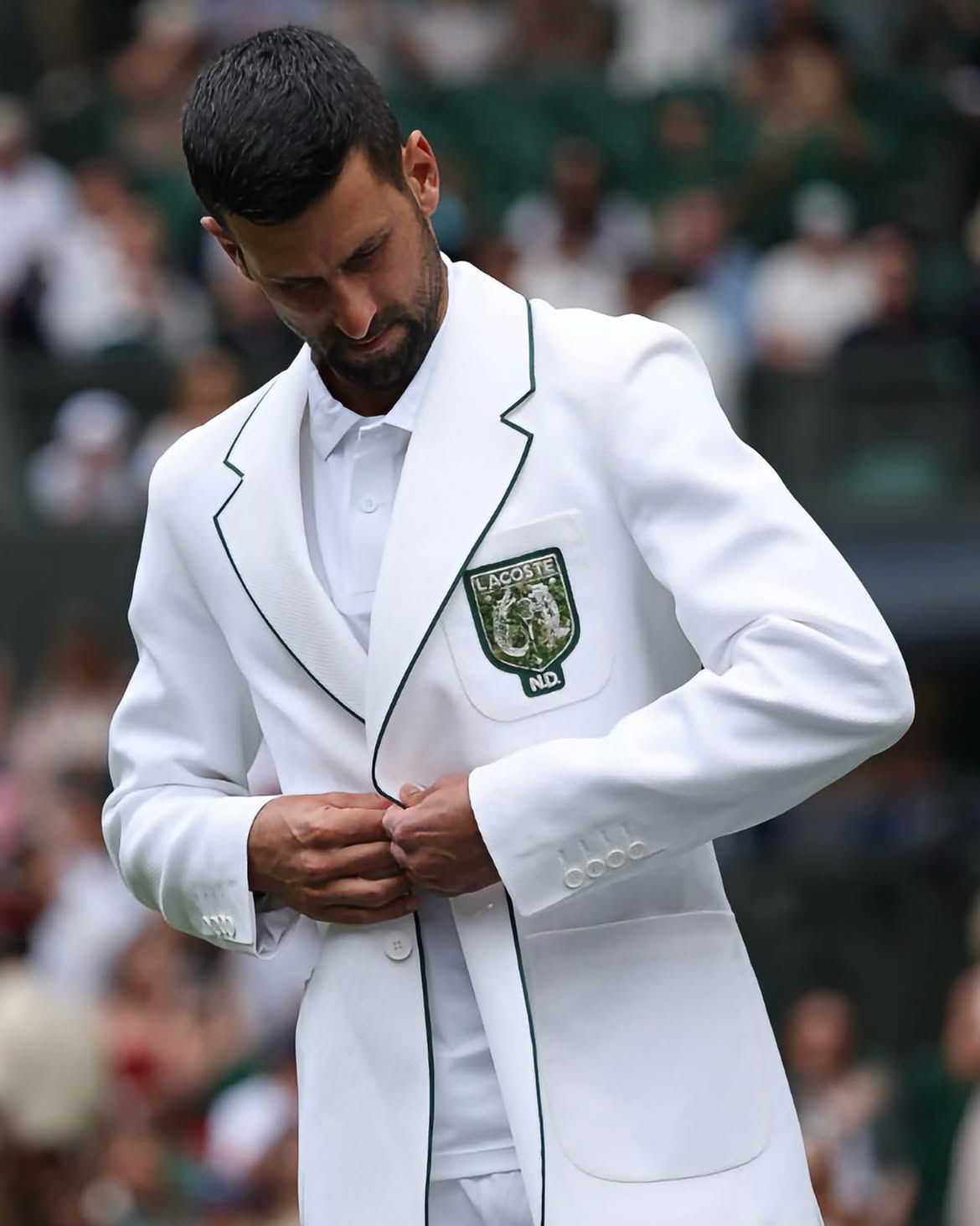
"Tennis is the king of racquets, but at the club level it's in danger," warned Novak Djokovic in 2024. "If we don’t do something, clubs will convert everything to padel or pickleball." It may have sounded exaggerated at the time, but much less so today, after a year and a half in which the growth of padel and pickleball has accelerated even more, with their epicenters respectively in Europe and the United States. On a global scale, professional tennis still moves unmatched numbers, but at the club level, the balance of power is more even. "Because on one tennis court, you can fit three padel courts," Djokovic continued. On the other hand, many of his equally high-profile colleagues have jumped into these new segments: his former rival Rafael Nadal, for instance, but also Zlatan Ibrahimović and American sports icons like LeBron James, Tom Brady, Patrick Mahomes, and Kevin Durant.
@padeltimemx "Tennis is in danger from padel" Novak Djokovic. Djokovic states that tennis needs to change in some way to modernize and compete against emerging sports like padel and pickleball. Djokovic expresa que el tennis tiene que cambiar de alguna manera para modernizarse y competir contra deportes emergentes como el pádel y el pickleball • • • #premierpadel #padel #padelvideos #padelhighlights #padeltime #rialpadel#padelislife #foryoupageofficiall #fy #fyp #fypシ #fypシ゚viral #tiktok #tt #love #like #xybca #pourtoi #parati #share #tb #tbt #viral #viralvideo #tennis #wimbledon #djokovic sonido original - rial.padel - Padel Time
For Nole, it’s first and foremost a matter of sustainability, space, and costs—and therefore accessibility for the public: a central issue, though not the only one. The popularity of padel and pickleball has been growing rapidly across different contexts, and across generations, thanks to the fresh air these two sports have brought into the racquet world—and the sports world more broadly. Both are youthful environments that speak the language of new generations but also attract players of all ages, tapping into a desire for activity and connection that goes beyond the digital. In just a few years, they’ve gone from emerging novelties to mainstream passions, and in a sense, to status symbols—as seen in their spread into high-end resorts, city centers, and luxury tourist destinations. Not unlike what happened not too long ago with squash—which, incidentally, is set to make its Olympic debut in 2028—and similar to badminton, which has been a major phenomenon in Asia for decades.
Padel-mania
We see it every day in Italian cities, on social media, everywhere: padel has become an unstoppable post-pandemic craze and the new language of clubs. First in Italy and Spain, but the phenomenon extends across Europe and is expanding globally. In Italy, tennis and padel (a unique joint federation) form a business of over 7 million players and 20 million enthusiasts, with an economic value of almost €10 billion. Within that landscape, padel plays an ever-larger role, with over 2 million players, a rapidly growing number of registered athletes, and a network of over 10,000 courts. In Spain, the ratio between tennis and padel courts has even reversed, and similar booms are being seen across the continent—from the UK to France, Sweden, Germany, the Netherlands, Portugal, and beyond.
For clubs, the reasons are pragmatic: smaller spaces, as Djokovic noted, but also quick and inexpensive construction (for both new facilities and conversions from tennis), low maintenance, and affordable equipment. For players, the doubles format has fueled its spread, maximizing social interaction and lowering the technical barrier. The rise of Playtomic, the sport’s go-to social platform, did the rest.
As a result, padel has spilled beyond clubs and entered five-star resorts (from Sardinia and Sicily to Dubai, Cancun, and the Maldives), metropolitan rooftops (like Casilino in Rome), fitness centers (Virgin Active), and high-end residential complexes (such as CityLife in Milan—most notably with the opening of the Golden Goose Arena in that very district, a project that CEO Carlo Campara described as "Proof that we shouldn’t just create fashionable formats, but also social ones, because today true scarcity is not products, but happiness."). Meanwhile, Rafael Nadal integrated it into his Academy, alongside the birth of the Hexagon Cup (2024), while Zlatan Ibrahimović built a network of venues in Sweden. The ecosystem has also matured at the professional level, especially after the unification of tours, with Premier Padel—acquired by QSI (Qatar Sports Investments) in 2023, backed by Qatar Airways as title sponsor and Red Bull as main partner—attracting capital and brands from around the world.
Made in USA
@officialppatour Men’s Singles | Pro Pickleball
original sound - Carvana PPA Tour
Across the ocean, the racquet of the moment is undoubtedly that of pickleball. Annual SFIA reports show it’s been the fastest-growing sport in the United States for four consecutive years, with more than twenty million players (about +45% year-over-year growth) and a public court network booming in major cities. Urban parks now host circuits and tournaments, and even temporary arenas—like those recently set up in Central Park—have staged large-scale sessions and corporate events. Its secret is the same as padel’s: low costs, high sociability, and a fresh, youthful vibe. Demand has grown so much that "pickleball" has become one of the most frequent keywords in high-end hospitality and real estate listings.
On the pro side, the MLP and PPA Tours coexist, with American sports VIPs—LeBron James, Tom Brady, Patrick Mahomes, and Kevin Durant, among others—investing in the circuit, accelerating its growth and bringing in new media, spotlight, and sponsors. Pickleball has thus become the new popular, made-in-USA status symbol of the sports world: a game with a young and fast-growing fanbase, but also a networking arena for companies to host clients and teams (following the example of golf). The entire ecosystem—clubs, events, equipment, and coaching—is expanding at a remarkable pace. In short, if padel is Europe’s sign of the times, pickleball is America’s, both built on the same logic: fast formats, social connection, and maximum return per square meter, adapted to their respective cultures.
Squash conquers the Olympic Games
@squashtv "I could watch that rally all day long!" Asal & Soliman putting on a show here in Hong Kong #squash #psaworldtour #mostafaasal original sound - SQUASHTV
Squash, by contrast, experienced its boom earlier than the others—in the 1990s, when it became the language of Anglo-club culture. Today, it’s enjoying a top-down revival: its inclusion in the 2028 Los Angeles Olympic Games has reignited attention, fueling qualification pathways, budgets, and sponsor appeal. The PSA Tour in 2025 introduced record prize money and new formats tailored to TV audiences, while futuristic venues have popped up in major cities—from the glass court at Grand Central Terminal (New York) to those at the Pyramids of Giza (Egypt), London, Doha, and Cairo.
The geography of squash sees Egypt as the dominant force, with the UK close behind and the U.S. scene on the rise. In Asia, major fanbases exist in Pakistan and Malaysia. The global base is wide, though in some markets, the social space taken up by padel and pickleball is being felt. Squash, however, now has its Olympic certification as a guarantee and a more TV-friendly product that will enjoy precious international exposure in 2028. Though the 1990s boom is long gone, squash’s journey is far from over—especially in markets like Egypt, where it continues to attract millions of fans.
The continent of badminton
@dji_japan いい選手はどんな道具でも...うまく使える
In Asia, meanwhile, badminton is pop culture—and has been for a long time. In China, India, Indonesia, Malaysia, Japan, South Korea, and Thailand, arenas and TV schedules are packed, players enjoy huge fame, sponsors compete for visibility on and off the court, and revenues match those of mainstream products (on a demographic scale far beyond Europe’s). According to recent studies (BWF, Nielsen), the sport has more than half a billion fans across the continent. Globally, there are over 700 million fans, with the largest concentrations in China, Indonesia, and Malaysia.
Since 1992, badminton has been an Olympic discipline, while the BWF World Tour and regional tournaments attract steady flows of fans and sponsors throughout Asia. Its status differs from tennis’s aristocratic aura, representing instead grassroots participation and mass fandom. Events like the Thomas Cup and Uber Cup finals reach TV audiences in Asia that surpass any non-football event in Europe. In several Asian capitals, badminton occupies the same social space football holds in Europe: a school sport, a TV ritual, a bar conversation, and front-page news. In some cases, it’s even a true national sporting identity.
Tennis, in short, was and remains the king of this vast universe—returning to Djokovic’s words that began our story. For the prestige of the Slams, the revenues of the ATP and WTA circuits, and the star power of icons like Jannik Sinner and Carlos Alcaraz, or in the past, the Big Three (Federer, Nadal, and Djokovic). It still boasts a tradition far beyond the reach of other racquet sports and an unparalleled aesthetic appeal. Yet at club level, the landscape has changed with the rise of padel and pickleball, while squash and badminton remain strong in their respective strongholds. Racquet sports are thus testing a new and constantly evolving equilibrium—both at the top and on the ground. Perhaps tennis isn’t as endangered as Nole suggested, or at least not close to extinction. But it has certainly had to relinquish, over time—and especially since Covid—that unchallenged dominance it once enjoyed among racquet sports.