
The world of obsessive collecting behind Olympic pins A timeless trend
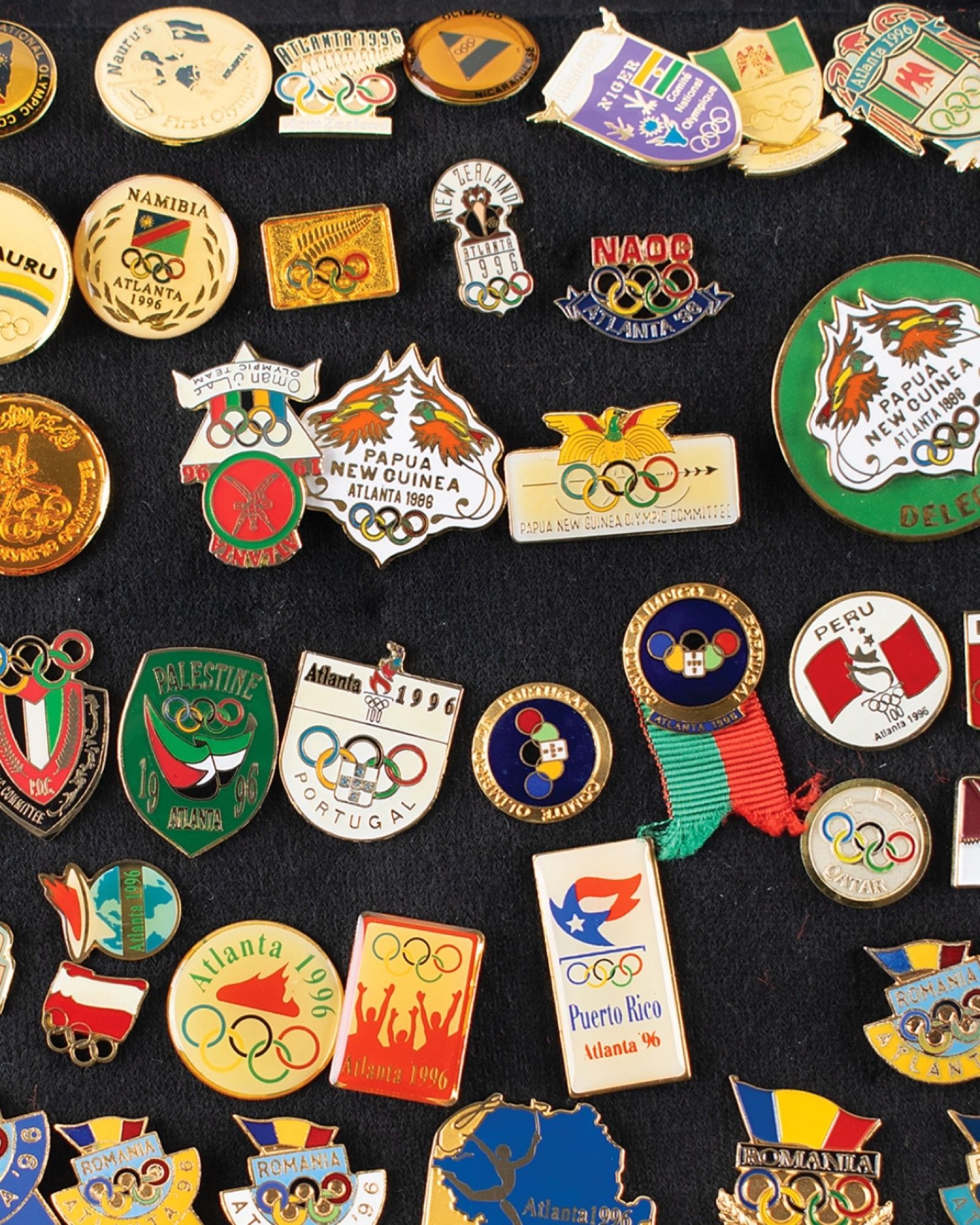
It can be considered the unofficial sport of the Olympic Games, it carries their values and represents a symbol of human sharing. There is even an episode of The Simpsons in which Lisa becomes a collector, to the point of developing an addiction. We are talking about Olympic pin trading, a long-standing tradition that every two years, in conjunction with the Summer and Winter Olympics, brings together a huge number of enthusiasts and collectors from every corner of the world. Affordable prices and the endless variety of pins have helped turn it into an increasingly popular mass phenomenon, one that will also be talked about during Milano Cortina.
The origins of Olympic pins
The origins of Olympic pins date back to 1896, the year of the first Games of the modern era, held in Athens. They originated as colored wooden circles used as identification badges: blue for judges, pink for athletes from different delegations, and red for staff members. In 1904 in St. Louis these badges were produced in metal, while four years later in London eight delegations introduced the first customized pins. These were officially released on the market during the 1912 Stockholm Olympic Games, while around 1924 athletes—living together for the first time in the Olympic Village—began exchanging them as a sign of international friendship. At Berlin 1936, production reached one million pins, which were then sold to help cover organizational costs.
The Los Angeles turning point
However, until 1974 this tradition was limited to athletes and Olympic organizers, and only began to open up to the general public with the Montréal ’76 and Moscow ’78 editions. Another shift came with the Lake Placid Winter Olympics two years later, but it was Los Angeles 1984 that took the passion to a whole new level. From then on, official sponsors such as Budweiser and Coca-Cola cleverly set up dedicated pin trading areas, with many companies jumping into the market by producing their own pins with great success. Today, the enduring popularity of this trend has turned pins into powerful merchandising products firmly embedded in the mainstream market—a kind of competitive token.
Who produces them?
The Olympic pin market has become extremely vast. It is said that between 5,000 and 6,000 new pins are produced for each edition of the Games. Thanks to the incredible variety available, each pin must have its own identity to stand out. As a result, genuine works of art are created, each featuring eye-catching designs and highly diverse styles. Pins are primarily produced by the Games’ organizing committees and the respective National Olympic Committees. Others are made by national media outlets and press organizations from host countries—particularly active are Chinese and Japanese media—alongside US outlets such as NBC, CBS, and The New York Times. Sponsors of all kinds, including Alibaba, do the same, with historic brands like Coca-Cola leading the way. Pins from national and international police forces, such as the FBI, are also common, along with countless unofficial but equally fascinating pins that together form an endless catalogue.
Who collects them?
@ilonamaher @Simone Biles my christmas gift @Olympics @Team USA @paris2024 original sound - Ilona Maher
Everyone collects Olympic pins. Athletes are probably the most privileged, as they have easy access to pins from different delegations. This is one of the favorite activities inside the Olympic Villages, with thousands of athletes trading their pins with one another. It’s a great way to keep human connections alive, reinforce Olympic solidarity, and put everyone on the same level. As shown by some athletes through vlogs, it’s perfectly possible to trade your pin with established champions such as Novak Djokovic, Simone Biles, Naomi Osaka, or Andy Murray.
Then there are the thousands of fans who attend the Olympics under the guise of sporting competition to trade pins. Collectors from all over the world travel to these events, some proudly displaying collections numbering in the thousands. The trading process is simple and speaks the universal language of pins: a brief exchange of glances to understand who you’re dealing with, followed by the decisive proposal and often pleasant conversations. A good pinhead—as collectors are called—brings duplicates specifically for trading. The only two requirements for a pin are the Olympic edition year and the attachment on the back. Athletes often wear them on the lanyards of their badges and accreditations, while other collectors display them on hats, clothes, backpacks, or carefully preserve them in display cases and frames.
The rarest pins
Given such a large audience and wide circulation, as with any collection, some pins are rarer than others. The average price of a newly released pin ranges around €10–15, but on resale platforms like eBay prices can skyrocket. The rarest pins are those produced in limited editions or dating back to the earliest Olympic Games. In Olympic Villages, the most sought-after pins are those from smaller delegations, which bring fewer athletes and therefore fewer pins to trade.
At Paris 2024, one of the most coveted pins was the Snoop Dogg pin, depicting the Californian rapper exhaling smoke that forms the five Olympic rings. Alongside it were the Dutch delegation pin featuring two orange sneakers, and the Jamaican one—already famous for its national flag pin with ragamuffin lettering from Albertville 1992. A Pikachu pin for the Paris Games has reached $2,600, while two different Athens 2004 pins are listed at €2,500 each: one shows the Athena mascot with the city of Samos and the phrase See you in Greece, the other celebrates a torchbearer arriving in Cape Town during the Olympic flame relay.
@ilonamaher Thank you to these lovely Dutch ladies for their pins @paris2024 @Olympics original sound - Ilona Maher
Other highly valuable pins include those featuring the Izzy mascot from Atlanta 1996, the gold medal pin of the US basketball Dream Team from Barcelona 1992, and pins produced by Asian media and Nike for Rio 2016. Among the most sought-after compositions are Coca-Cola bottle-shaped puzzles made up of multiple pins, with a total value exceeding €2,000.
Milano Cortina pins
For the upcoming Milano Cortina edition, several interesting collections have already been released. A series produced by YesMilano consists of 12 different designs across 14 pins, portraying the city of Milan through neighborhoods (Brera, Sarpi–Chinatown, Isola, NoLo, Porta Romana, Porta Venezia, Navigli) and iconic symbols such as the Duomo, Castello Sforzesco, Torre Velasca, San Siro, and panettone. The official Olympic website offers a wide selection of pins dedicated to mascots, official logos, and the 17 disciplines represented through pictograms. Others are more playful, such as those depicting the Looney Tunes in Italian team uniforms or those celebrating Italian culinary traditions, featuring pins of pizza, mozzarella, spaghetti, tiramisù, and the Italian aperitivo.
In Milan, a Pin Trading Centre sponsored by Warner Bros will be open daily in the Porta Garibaldi area. Olympic partner Alibaba will also introduce a smart Pin Trading Center inside the Milan Olympic Village. Through Alibaba Cloud and an AI-powered system, interactive features will engage directly with athletes. Among the most enthusiastic participants will surely be Olympic athlete Sophia Kirkby. The American luger, who calls herself the Pin Trading Queen on social media, creates handmade pins sold in a shop in Cortina. Japanese volunteers taking part in the Games have also created highly detailed pins, promoted in Facebook groups to facilitate trading, with the first collectors already beginning to arrive in the various host locations.