All the differences between Turin 2006 and Milano Cortina 2026 The Evolution of the Winter Olympic Games in Italy
Exactly 20 years after the Turin Winter Olympics, Milano Cortina 2026 is finally on the horizon. Drawing a competitive comparison between the two events would be inappropriate, given that one has yet to begin and the significant time gap separating the two editions. What is far more intriguing is understanding how the organization of an event of this scale has evolved: from the choice of competition venues to the introduction of new disciplines and events, as well as differences in merchandising strategies and brand identity development.
Turin 2006: a turning point for Italy
Turin 2006 was a Winter Games edition that redefined the concept of accessibility, opening the event to a wider audience and deeply involving the metropolitan area—not only in its organization but also in the staging of competitions. Until Lillehammer 1994, events had been confined almost exclusively to mountain venues. In 2006, by contrast, nearly all indoor competitions were held in Turin, while outdoor events took place on the snow-covered Alpine resorts. From that moment on, Turin entered a new phase, transforming from a traditionally industrial city into a host for major international events, with a natural boost to tourism that helped revalorize the city.
Milano Cortina 2026: continuity and organizational maturity
Milano Cortina positions itself as a confirmation rather than a surprise, with obsessive attention to organizational efficiency to ensure everything runs as planned. Milan aims to reinforce its status as an international metropolis, consolidating its efficiency and leadership, while Cortina further certifies its appeal as the queen of the Dolomites. In any case, the efforts involved have been enormous, particularly from an economic standpoint. Without delving into precise figures—still difficult to assess even 20 years later for Turin 2006—both editions saw costs exceed initial forecasts. Between venues, infrastructure, ancillary works and additional expenses, the Olympics represent a massive machine involving institutions at every level: local, provincial, regional and national. Planned budgets increased due to delays, bureaucratic hurdles and rising raw material costs, underscoring the complexity of hosting an event of this magnitude.
Urban and territorial impact of the Games
The 2006 Games featured 15 competition venues, divided into two clusters: the “Olympic District” and the “mountain venues”, all located within the province of Turin. Five were in the city itself, one in Pinerolo, and the rest spread across Cesana, Pragelato, Sestriere, Bardonecchia and Sauze d’Oulx—well-known ski resorts in the Turin area. Seven permanent venues were built, including the standout Olympic Palasport, a multifunctional gem that later hosted the Eurovision Song Contest and now serves as the home of the ATP Finals, and the Oval Lingotto Fiere, which was converted into an exhibition and trade fair space and now hosts the International Book Fair. The Olympic Stadium—now home to Torino FC—and the PalaVela were renovated for the occasion, alongside three upgraded facilities and two temporary structures. While the reconversion of venues built in the city proved largely successful, the same cannot be said for some mountain facilities, many of which now lie abandoned and neglected.
The 2026 edition follows the decentralized model introduced in Turin, with indoor events staged in cities and outdoor competitions in mountain locations, organized across four clusters: Milan, Cortina, Valtellina and Val di Fiemme. Of the 14 venues, seven are in Lombardia, spread between Milan, Assago, Rho, Livigno and Bormio. Veneto hosts three venues in Cortina and one in Verona—used exclusively for the closing ceremony. The remaining three are located in Trentino–Alto Adige, between Predazzo, Tesero and Rasun-Anterselva. The major difference compared to Turin 2006 is the construction of just one new permanent venue: the Milano Santa Giulia Ice Hockey Arena, whose test event on January 9 will finally certify the availability of a 16,000-seat arena completed at the very last minute.
There is also the Cortina Sliding Centre for bobsleigh, skeleton and luge, demolished and rebuilt on the site of the previous track, alongside existing facilities. Eight venues—including the Assago Forum—have simply been upgraded for the event, having long hosted major sporting competitions, such as the historic tracks already used during the 1956 Cortina Olympics. San Siro Stadium, which will host only the opening ceremony, will not undergo any modifications. Meanwhile, the Ice Park at Fiera Milano will temporarily house two structures for speed skating and ice hockey competitions. After the Games, several pavilions at Rho Fiera will be merged to create the largest indoor arena in Europe for live concerts and sporting events.
Olympic Villages and strategic infrastructure
One of the innovations of Turin 2006 was the decision to build three Olympic Villages instead of one, located in Turin, Sestriere and Bardonecchia. The Turin Village, built in the Lingotto area, experienced the most troubled post-Olympic period due to squatting by migrants, earning it the unfortunate nickname of the “Italian Calais.” Today, it has finally found balance, having been converted into social and student housing while also hosting regional and local offices.
In Sestriere and Bardonecchia, the Villages were successfully transformed into mountain residences and resorts. Numerous additional infrastructure projects accompanied the Games, including snowmaking systems, mountain transport links, parking areas near venues, road and motorway upgrades, a new railway station in Pinerolo, and the Olympic Arch at Lingotto, which became a symbol of the event. There were also projects not officially included in the Olympic budget but carried out in parallel across the city: the opening of the first metro line section, the undergrounding of a central railway stretch, the pedestrianization of Piazza San Carlo, the construction of the PalaFuksas (now the Central Market), the GAM and other upgrades to local sports facilities.
Similarly, Milano Cortina will feature three Olympic Villages. The Milan Village will rise in the former Porta Romana rail yard and will be the only permanent one, later converted into student housing. The Villages in Cortina and Predazzo, strategically located for mountain events, will be temporary, supported by agreements with hotels in Bormio and Livigno to accommodate all athletes. Beyond the regeneration of degraded urban areas, Milan’s ancillary works include the rail connection between Malpensa Airport and the national railway network, as well as the Allianz MiCo, which will host the main media center. In Alpine locations, works include seven new snowmaking systems, bypass roads, road upgrades, tunnel works, the elimination of level crossings, parking facilities and improvements to railway stations.
The growth of competitions and mixed events
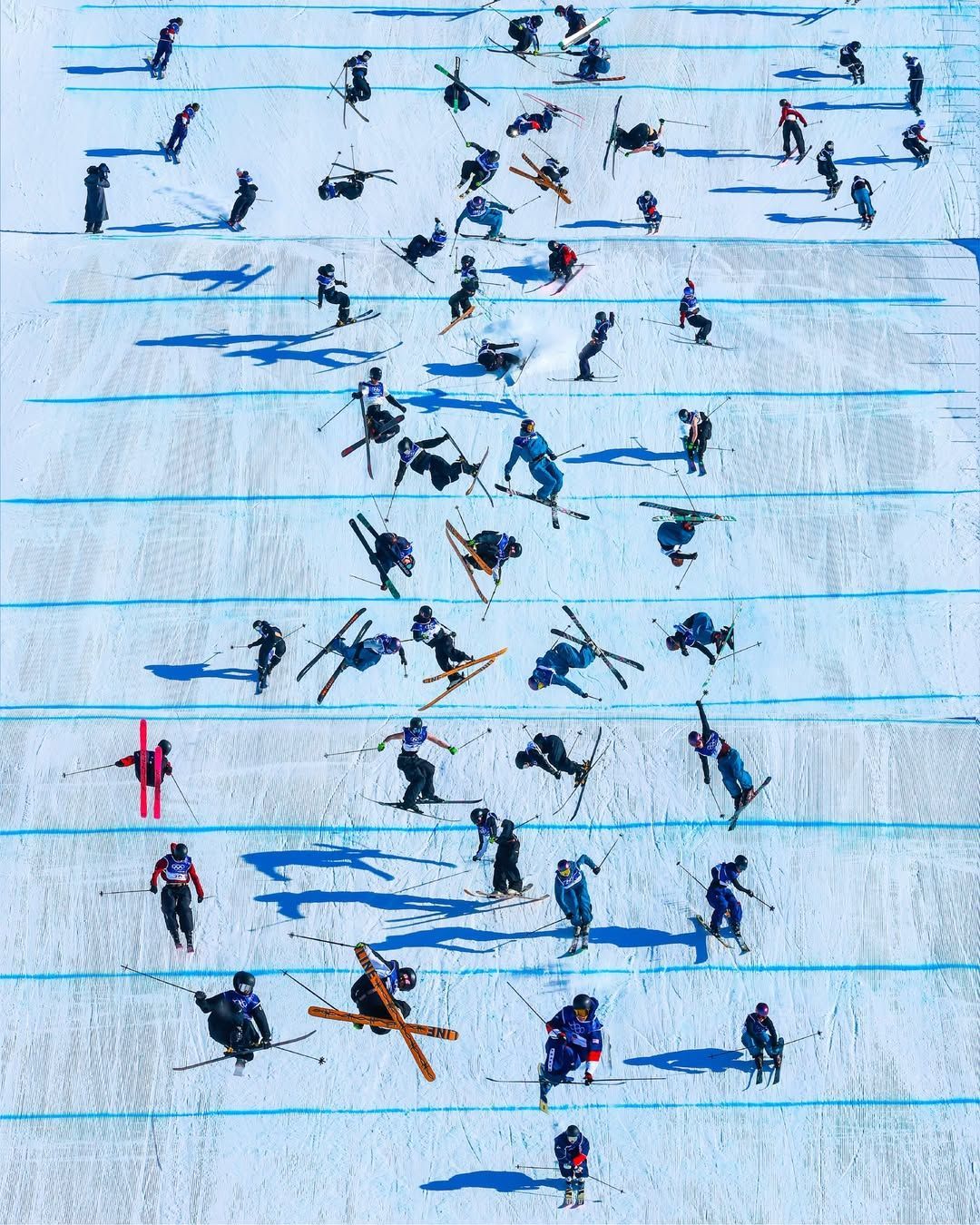
Looking at the competitions themselves, there is a significant increase in the number of events across all disciplines. From 84 events in 2006, the program will expand to 116 in 2026, with 9 additional men’s events, 13 women’s events and 10 mixed events. Mixed competitions will increase from 2 to 12, reflecting a broader trend toward gender integration. Among existing sports, freestyle skiing sees a notable jump from 4 to 15 events, while snowboard competitions increase from 6 to 11. Ski jumping doubles from 3 to 6 events, and luge grows from 3 to 5. A brand-new discipline will debut at the Winter Olympics in February: ski mountaineering, also known as SkiMo, combining uphill climbing and downhill skiing on challenging snowy courses. The number of athletes and participating nations will also rise significantly: from 2,494 athletes representing 79 nations in Turin, Milano Cortina is expected to welcome around 2,900 athletes from 91 to 93 countries.
Olympic symbols, branding and merchandising
Mascots and Olympic torches have already been discussed in previous articles, but the full Olympic symbolism also includes the cauldron and the medals. In Turin, the cauldron—designed by Pininfarina—stands outside the Olympic Stadium near the Curva Maratona. At 57 meters tall, it is the tallest Olympic cauldron in history, composed of five intertwined circular tubes and a central column from which the flames emerge. Medal design was curated by Dario Quatrini, head of the TOROC graphic team. The medals feature a circular hole in the center for the ribbon, evoking the classic Italian piazza, with refined details combining glossy and matte finishes and discipline-specific pictograms on one side.
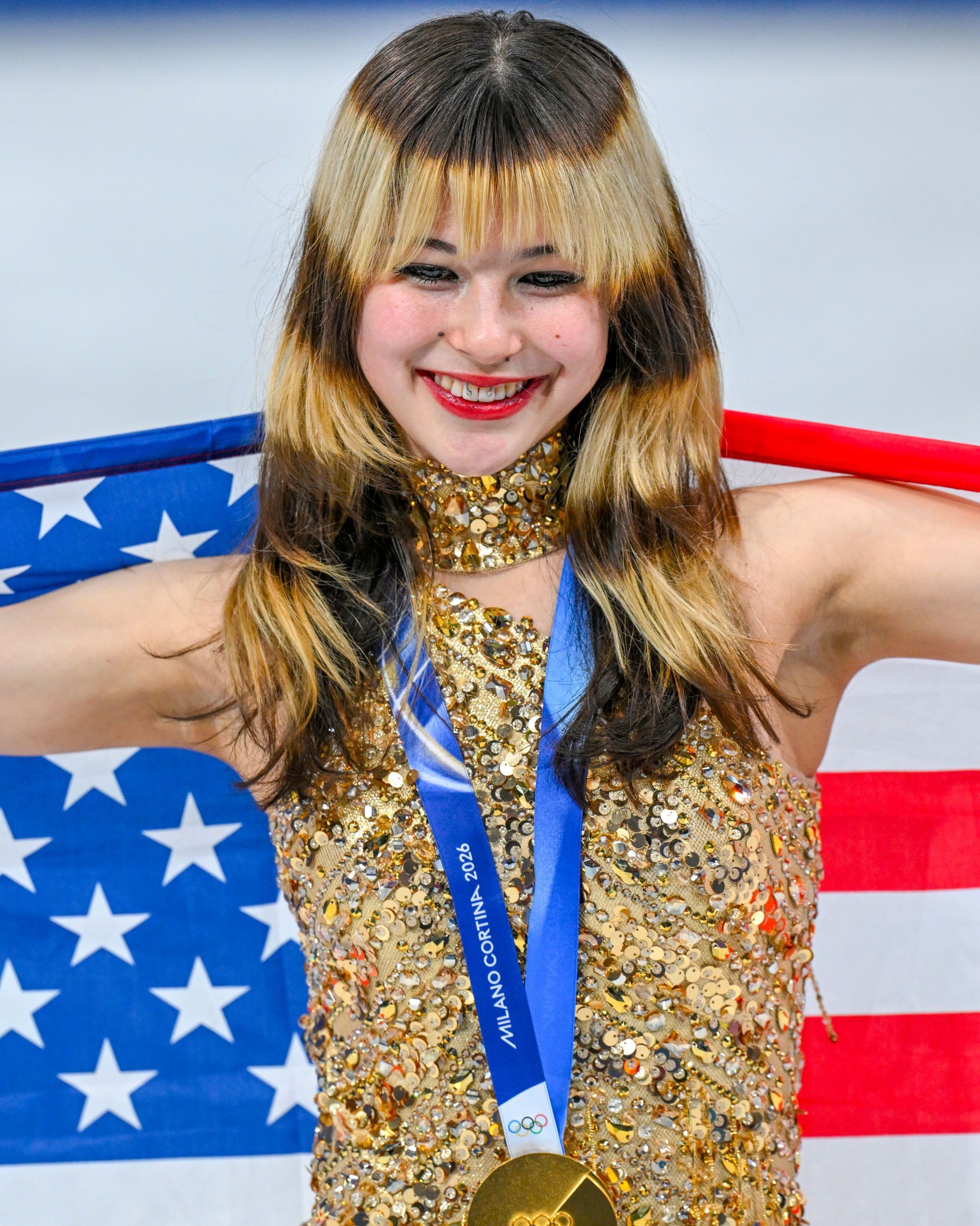
The Milano Cortina medals follow the minimalist design language already adopted for the Olympic torch. The circular shape is split into two interlocking halves, symbolizing the union of Olympic and Paralympic values as well as perpetual motion. Produced in collaboration with the Italian State Mint (IPZS), the only elements featured are the five rings, along with the Milano Cortina 26 logo and inscription on the reverse. There will be two cauldrons, lit on February 6: one in Milan at the Arco della Pace—the first Winter Olympic cauldron placed in a city center—and one in Cortina’s Piazza Dibona.
Marketing strategies and related merchandising have evolved with the times. The most evident shift is toward digital channels, with a strong focus on e-commerce and pop-up stores, now far more widespread than in the past. In 2006, physical retail in cities and resorts dominated, especially for pins, posters and stamps. Today’s range is far broader, featuring casual apparel lines and thermal water bottles emblazoned with mascots Tina and Milo—far more omnipresent than Neve and Gliz were in 2006. The target audience has shifted from primarily local to international, largely thanks to online sales platforms.
Official uniforms and technical sponsors: from Asics to Salomon
When it comes to apparel, official uniforms for the organizing committee are now far more prominent, unveiled through dedicated launch events. In 2006, Asics served as the official supplier, offering functional clothing designed for winter conditions. The most recognizable pieces were navy blue jackets with yellow and red accents, scarlet red fleece with yellow details, and torchbearers’ total-white outfits featuring soft golden tones. This year, Salomon takes on the role of technical partner: each kit includes 17 items, outfitting staff, volunteers and torchbearers from head to toe. Compared to 2006, there is greater uniformity and visual coherence with the Games’ identity, combining navy blue with shades of light blue, green and white. Whether this collection will become equally iconic remains to be seen.
What to read next
Milan vs Torino - Residency w/ Serie A
A gaze suspended between the curva and the Slam Jam Fourth kit
Australia is expected to steal the spotlight at the 2026 Paralympics
Thanks to a refined look designed by R.M.Williams