
What is the America’s Cup Partnership? Naples is the dawn of a new era
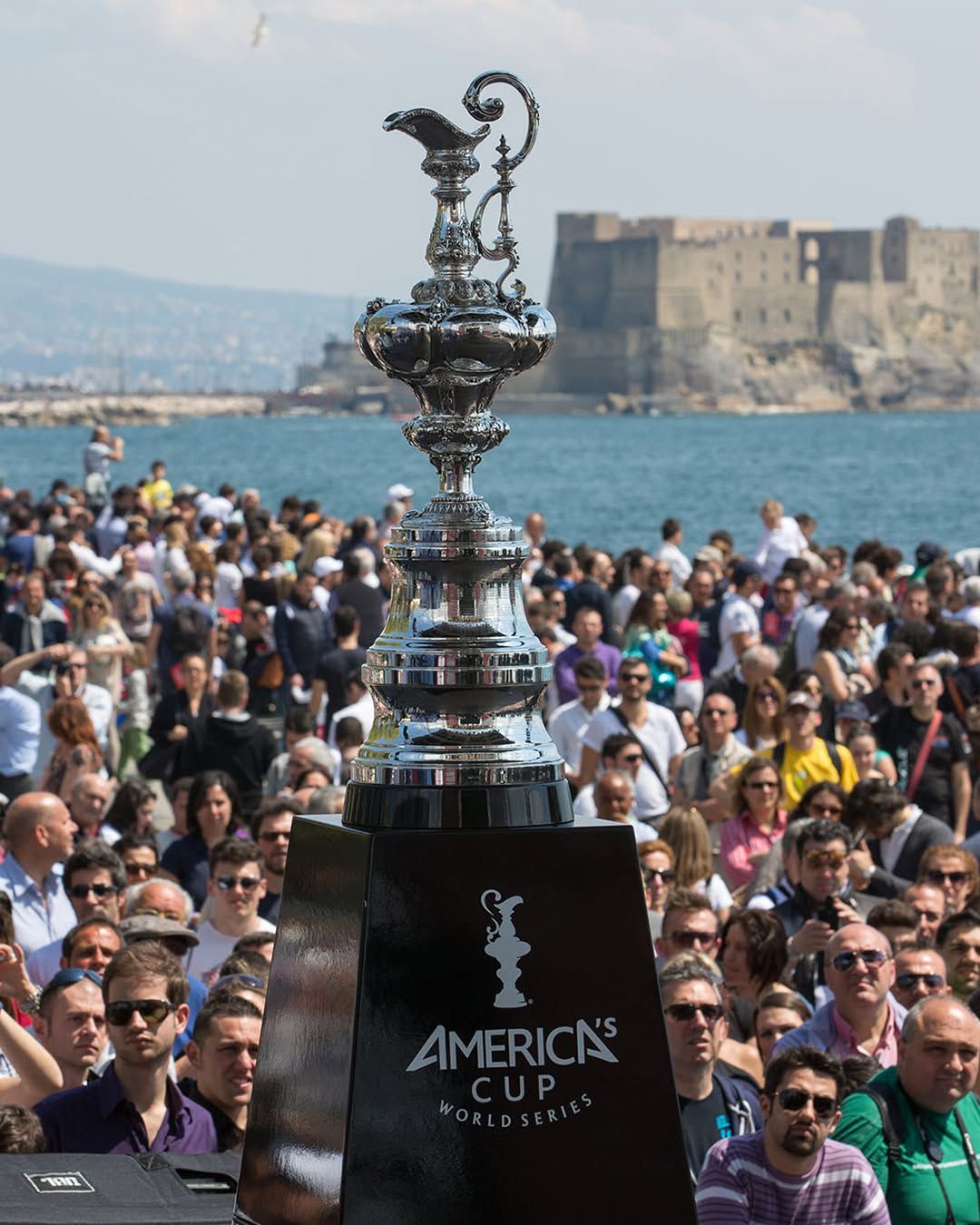
In 2027, the America’s Cup will be held in Italy for the first time, in Naples. The oldest trophy in international sport, established in 1851, will arrive at this milestone following one of the most profound transformations in its 175-year history. The 38th edition will in fact be the first of a new era ushered in by the America’s Cup Partnership, the structure through which the teams have chosen to rethink the governance and development of the competition, bringing it closer to the model adopted by major international sports properties.
The shift, announced in 2025, stems from the need to give the event greater continuity, strengthen its commercial dimension and build a stable organisation capable of supporting its long-term growth. It is a reform set to reshape some of the mechanisms that have always made the America’s Cup, for better or worse, unique within the sporting landscape. The challenge will be to reconcile the preservation of tradition, which represents a significant part of the Cup’s appeal, with the need to equip it with a more modern structure capable of maximising its potential.
What is the America’s Cup Partnership?
For more than a century and a half, the America’s Cup has been administered by the Defender, meaning the holder of the trophy, together with the yacht club it represented. Once it received the challenge from the Challenger of Record, it was up to them to organise the next edition and define its most important aspects. Date, venue, rules, boats and logistics were all decided within an almost monarchical model, in which the winner not only claimed the prestige of the Auld Mug, but also the right to shape the following cycle. This structure made the America’s Cup a world unto itself within the sporting universe, but in recent years it has begun to show its limitations from an organisational and commercial perspective, particularly due to the lack of a regular schedule.
As the event approaches Naples 2027, everything has changed. The system began to turn the page when Emirates Team New Zealand and Athena Racing, respectively Defender and Challenger of Record, signed the agreement on the Protocol for the Louis Vuitton 38th America’s Cup in 2025. A document spanning more than 800 pages that paved the way for the creation of the America’s Cup Partnership (ACP), officially announced on December 22 and made up of five teams: the two already mentioned, plus Luna Rossa, Team Alinghi and K-Challenge.
The most significant change is the introduction of a two-year cycle, meaning an America’s Cup every two years (the next edition will take place in 2029), but it is far from the only major development. In its official announcement, the Partnership welcomed us into “a new era of shared governance”, describing itself as “a centralised consortium established to plan, manage, organise and commercialise all aspects of the competition, enhance its commercial value and strengthen its global reputation.” In other words, the leadership of the America’s Cup will move from a Defender-centric model to a shared authority, marking the first time that “the participating teams are coming together not only as rivals on the water,” explains Sir Ben Ainslie, CEO and Team Principal of Athena Racing, “but also as shared stakeholders in the future of the event: the beginning of a new and exciting era.” The Partnership has also reaffirmed its commitment to the Women’s America’s Cup and the Youth America’s Cup, while introducing the requirement for at least one woman to be onboard each AC75.
The new structure will be overseen by a board of directors, with each team represented, while day-to-day operations will be entrusted to an independent management team tasked with pursuing its strategic objectives. The organisation is reminiscent of the EuroLeague in basketball or, in some respects, the major North American professional leagues, where clubs compete on the field but share responsibility for managing and growing the product off it. The Defender has had to give up part of its traditional decision-making power, while retaining a predictably central role. Grant Dalton, CEO of Emirates Team New Zealand, will serve as chairman of the ACP, while operational leadership has been entrusted to Marzio Perrelli, a Rome-born executive with previous experience at Goldman Sachs, HSBC and Sky Italia.
The America’s Cup’s New Long-Term Vision
The Partnership is not simply a new governance model, but above all an attempt to give the America’s Cup the continuity it has often lacked. Protocols finalised late, campaigns squeezed into tight timeframes and overly long gaps between editions have made it difficult — without the ability to plan long-term investments — to keep sponsors and broadcasters engaged, and perhaps even the public. Hence the need to restructure the foundations of the competition, building a regular, multi-year calendar with venues and organisations that can be planned well in advance.
It starts with addressing the uncertain schedule. The most recent editions were held in 2013, 2017, 2021 and 2024, with the next one coming in 2027. “You can't disappear for too long,” says Marzio Perrelli, who made it clear from the outset what the most immediate benchmark for the new era would be: Formula 1. “The America’s Cup needs to become a permanent fixture in the calendar, as is the case with all major sports. Everyone knows when the next Formula 1 Grand Prix, the next World Cup or the next Olympics will take place: you should have the same certainty about when the next America’s Cup will be held.”
A defined calendar allows teams to plan their work further in advance, while also giving sponsors and broadcasters a predictable horizon, overcoming one of the main limitations of the previous model, in which each cycle almost started from scratch. According to Grant Dalton, this will make it possible to build stronger agreements with cities, as well as broader commercial partnerships. “If you can only plan for one edition, you can't sign multi-year television contracts, nor long-term sponsorship agreements, nor give cities the opportunity to host multiple editions, and therefore good reasons to invest hundreds of millions of euros in infrastructure. It has always been the Achilles' heel of the America’s Cup.”
Beyond expanding revenues, the aim is to make the entire system more sustainable. Long-term planning means distributing investments and organisational costs more effectively, while providing greater continuity to the work of everyone involved. There are also the potential effects that a cycle lasting just twenty-four months could have on the technical development of the boats, reducing the time available to design a new vessel each time and potentially encouraging one-design solutions, with greater standardisation of components. Naples 2027, where the same AC75s used in the previous edition will compete, updated in terms of deck layout, foils and sail plan, represents the first test of this philosophy.
For Perrelli, however, the change also concerns how the America’s Cup wants to be perceived. “Think about the Monaco Grand Prix: people don't go there just for the race, but for everything that surrounds it. I would like the America’s Cup to become that too: a place where you have to be. Not a one-day event, but an experience that lasts three months.” The stakes are already enormous. According to a study on Barcelona 2024, the 37th edition generated more than €1 billion in economic impact, attracted 1.8 million visitors and produced a gross media value of €1.4 billion. For Naples, estimates point to even higher figures, also supported by the investments planned for the area and attendance that is expected to be unprecedented. It is precisely on these sporting, economic and media foundations that the ACP believes it can unlock a new potential, building an even brighter and more profitable future.
What Changes With the America’s Cup Partnership
A transformation of this scale was unlikely to please everyone. For some observers, the America’s Cup Partnership represents the most controversial decision of the modern era of the Cup: commercialising the event further and holding it every two years, critics argue, risks turning it into a conventional world sailing championship, stripping away the exceptional nature of the winner-takes-all model that has attracted investment and dreams of glory for decades. The symbolic value of victory could also decline dramatically, opponents argue, if future venues were predetermined.
Those who have championed the reform, however, highlight different needs. Sir Ben Ainslie describes it as “the biggest change in the history of the America’s Cup” and “a fundamental step for the future of the competition.” Convincing everyone, he admits, was not easy: “The biggest challenge was persuading all the parties involved that this really was the right thing to do. There was a lot of resistance at the beginning, for different reasons, and it took twelve months to get to this point.”
A conviction also shared by Max Sirena, who in recent weeks, speaking to us about Luna Rossa’s build-up to Naples 2027, told us: “The problem with the America’s Cup is that it has always been a sort of start-up. You would start without knowing where or when the next one would be, which made it difficult from a financial and commercial perspective to sell the product.” The goal, Luna Rossa’s CEO continues, “is not to completely overhaul the rules of the America’s Cup and its dynamics, but to give it a new commercial and sporting value, while maintaining a high and consistent level of visibility for the event.” Today, he observes, “the electrocardiogram of attention shows a spike while the America’s Cup is taking place and then a major drop during the time between editions: it is difficult to maintain appeal and interest that way.”
Grant Dalton acknowledges that the path undertaken by the ACP is, first and foremost, a gamble. “These are huge changes, but we knew that if we did nothing, in ten years the America’s Cup might no longer exist: it was a decision we had to make.” A position that neatly sums up the spirit of the reform: not the certainty that a definitive solution has been found, but the conviction that the time had come for change. And for the America’s Cup, a competition that has evolved technologically with every edition while seeking to preserve other defining characteristics, the changes introduced by the ACP could represent the most significant structural transformation in its history.