






















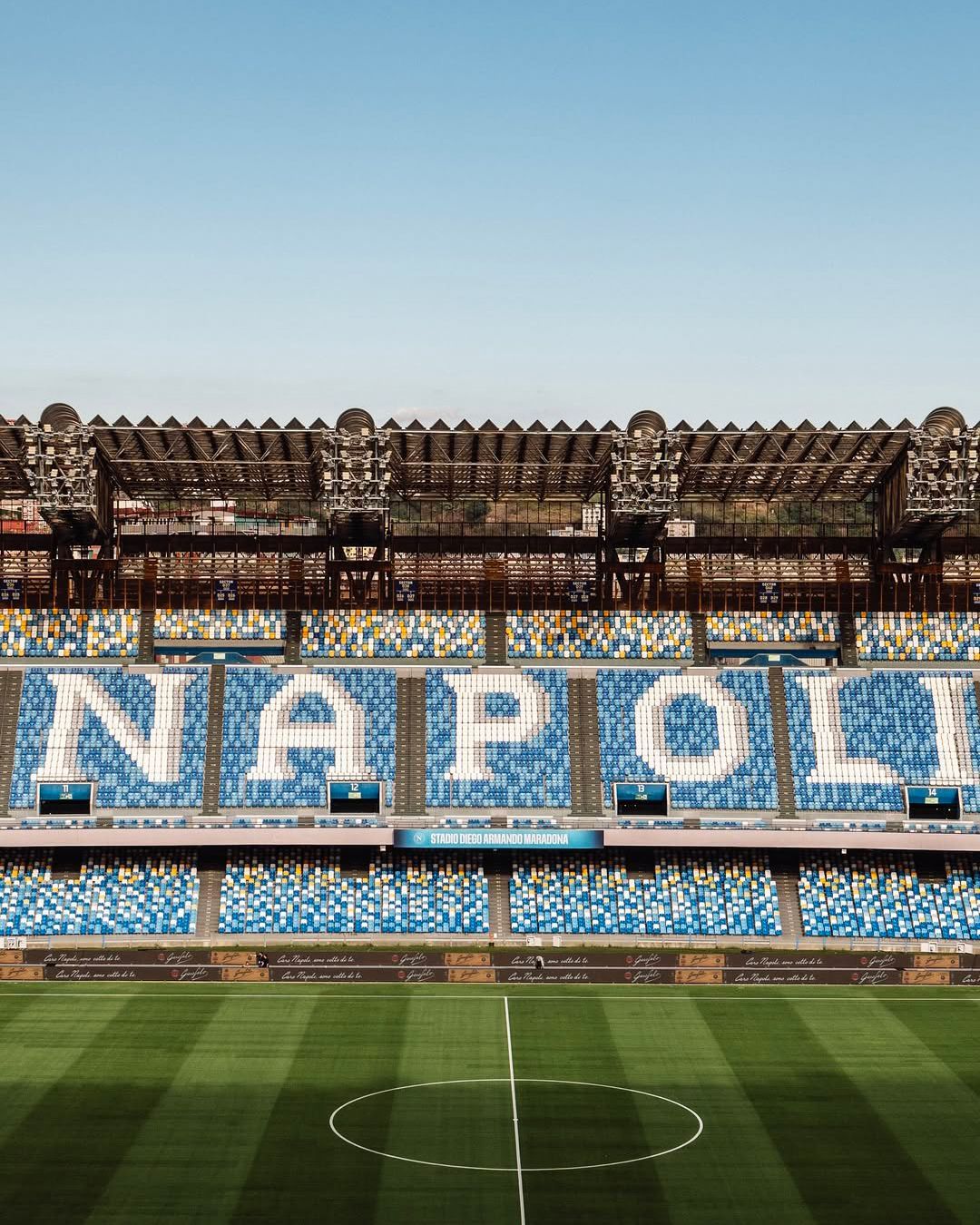
Supporting football: how local councils in Italy are helping out The restyling of Diego Armando Maradona Stadium in Naples is the latest example
When the City Counsil of Milan voted to sell San Siro to Inter and Milan, one of the main analyses argued that the municipal administration had given in to pressure from the two clubs, which threatened to leave the city if they were not allowed to buy and therefore demolish the Meazza. The sale price, €197 million, is considered too low for what is effectively an Italian monument but above all was seen as an indicator of a relationship of subservience in which the City suffers the power of the two clubs.
In general, in the narrative that accompanies news of a club intending to build a new stadium or to renovate the existing one, municipal administrations are portrayed as the enemy. Between bureaucratic hurdles, environmental committees, second opinions, costs and tenders, municipalities seem capable of bogging down any project for their own gain. What is brought to our attention is, in effect, a toxic relationship. Negative examples are certainly not lacking, but at the same time this situation cannot be generalized. Also because Euro 2032, much like Italy '90 was, is an opportunity too good to ignore, and for this reason there are several municipal administrations that have moved to work side-by-side with clubs to modernize their facilities.
Florence
For example in Florence, the municipal administration made a strong decision when it took on the responsibility for the renovation work at the Artemio Franchi. The funds to carry out this work partially came from the PNRR, with the City allocating that €55 of the €157 million received from the Government be used specifically for Fiorentina's home stadium. This is not necessarily the most exemplary case, since the club has publicly expressed its discontent over delays in the works, but it remains an important case. A situation in which a municipal administration decided to protect a real estate asset it owns and restore its value, even at the cost of creating friction with its "tenant".
Naples
A more recent example concerns Naples, where the municipal administration led by mayor Gaetano Manfredi has reaffirmed its commitment to the restyling of the Diego Armando Maradona Stadium. "This project will make it more modern, safe and sustainable, ready to host international events and to give citizens a space worthy of the Naples we want to build", reads the official statement released by the administration following the Executive Committee's approval of the plan that will lead to a new configuration of the first tier as well as skyboxes, field boxes and VIP seats in the Central Tribune plus a series of works to improve the matchday experience. An ambitious project strongly desired by the City to strengthen Naples' bid for Euro 2032 and allow the city to host another major sporting event after the 2027 America's Cup.
Other examples
Tunnel is nss sports' weekly newsletter that gathers the best of sportainment. Click here to subscribe.
Venice and Cagliari are two other cities where the local administration positioned itself as a willing partner to help clubs build new facilities, both financially and bureaucratically. This is to underscore once again that local administrations are not the reason Italy lacks modern stadiums. The primary responsibility always remains with the clubs and a short-sighted business vision in which stadiums were treated as costs rather than investments capable of generating revenue. This also meant leaving ownership of the assets with the City, with the consequence of having little room for manoeuvre when it comes to works.
Now that there is a need to try to make up for lost time, with clubs announcing they want to build new stadiums because the backwardness of Italian facilities ranks only after piracy in the hierarchy of issues for the sport, administrations become the villains that are fed to the fans, forgetting that they are the expression of a democracy that allows a community to choose its representatives and hopes those representatives act for the common good. We should begin to change the point of view: football clubs should understand that local administrations are allies on stadium issues, not enemies.