





Bad Bunny: the Latin choice, obvious and controversial, for Super Bowl 2026 Is going to be a turning point for Latin culture in U.S. primetime
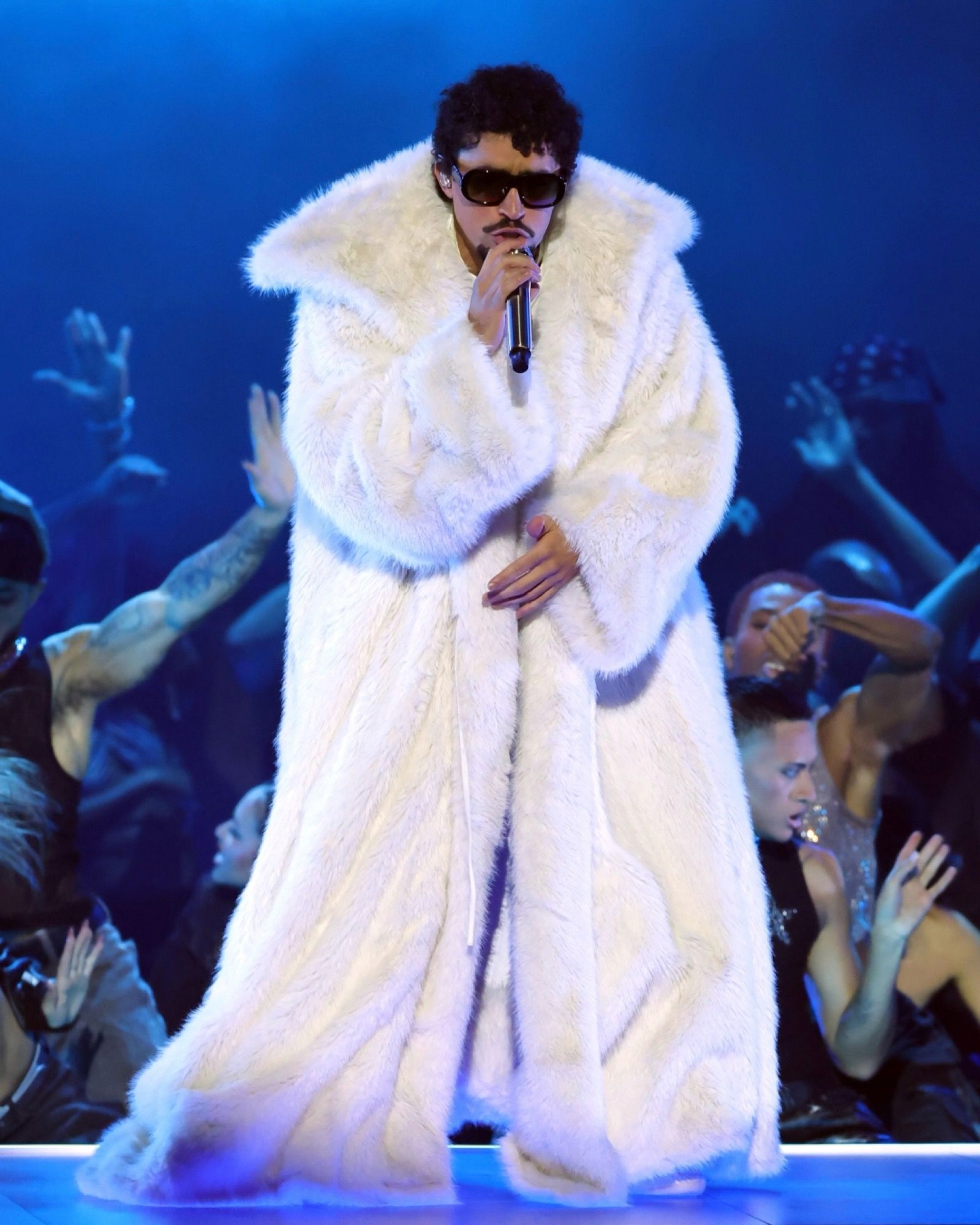
Puerto Rican Benito Antonio Martinez Ocasio, known as Bad Bunny, will perform at the Super Bowl 2026 Halftime Show, next February, at Levi’s Stadium in Santa Clara. The news was officially announced in recent days by the event’s co-organizers and, within just a few hours, it spread loudly around the world. In newspapers, on the web, and across social media, sparking a debate that goes far beyond music and sports. In America’s most-watched televised ritual, a Latino artist will take the stage singing (almost) exclusively in Spanish, with a declared Boricua identity and a long history of political and social stances. His presence, especially in the current national context, is in itself a strong political message, bringing to the surface dramatically urgent themes such as identity, immigration, deportations, the Latin diaspora, and the relationship between Puerto Rico and the United States. But also civil rights, freedom of expression, and LGBTQ+ community demands. In short, everything that President Donald Trump and the MAGA (Make America Great Again) galaxy would rather not see or hear in the middle of the American football championship final, the quintessential U.S. cultural moment.
It will be the first Halftime Show entirely in Spanish, taking place just a few months after Bad Bunny’s long residency in San Juan, which had already clearly highlighted his rift with the White House. The choice by the NFL, Apple Music, and Roc Nation is clearly driven by the numbers and controversies the artist brings with him, following the old rule of “who despises, buys.” In any case, opening such a highly visible and meaningful stage to a Latino artist, and therefore to a (proud) representative of a community subject to systematic discursive and legal discrimination, once again reaffirms the emancipation of the pop sphere from the Trump administration. Quite a blow for a president who usually imposes his omnipresence on every major sports occasion in the country, from the Club World Cup to the NFL itself, passing through UFC, NASCAR, tennis, golf, and much more.
An obvious choice
Beyond the political and social meaning, from a commercial perspective there is nothing shocking in this appointment. It is in fact a pick consistent with some previous choices, and backed by very solid audience guarantees. First, though, let’s take a step back to the context. The Super Bowl is the ultimate showcase of American sports entertainment, with its latest edition reaching nearly 130 million average viewers in the States, not to mention connections from every corner of the world. The halftime show is anything but a break, as 2025 reminded us with Kendrick Lamar on stage and 134 million Americans glued to their screens—a new record. At this scale, the NFL is not just choosing a performer, but also a share of the audience, and Bad Bunny is a global streaming powerhouse, capable of moving huge numbers across multiple continents.
He has, in fact, been the world’s most-streamed artist on Spotify for three years in a row (2020, 2021, 2022), with Un Verano Sin Ti as the most popular album in the platform’s history, topping the Billboard 200 for thirteen weeks (a record for a non-English language album), along with a track record of hits recognizable even beyond the Latin American world. Among them his latest work, Debí Tirar Más Fotos, which set records on Apple Music and placed all seventeen of its tracks—yes, all of them—on the U.S. Hot 100, another unprecedented feat.
It’s not new that the NFL, especially since partnering with Roc Nation, has pursued broad audiences. Sometimes very fresh (Kendrick Lamar last year, The Weeknd in 2021), others less so (Usher 2024, Rihanna 2023, the nostalgia team of Dr. Dre-Snoop Dogg-Eminem in 2022), without shying away from multilingualism and engaging the Hispanic audience (Shakira and Jennifer Lopez in 2020, with guest appearances from Bad Bunny and J Balvin). Last year the Latin music market in the U.S. reached a historic high in revenue, with a total volume of over $1.4 billion. And there’s no doubt that Bad Bunny captures this audience more than anyone else. The 2026 headliner, therefore, is both a unique and in some sense historic choice for the NFL, while also being mainstream and in continuity with what Kendrick Lamar’s explicitly politicized 2024 set offered.
The controversies
@metroentertainment The Debí Tirar Más Fotos World Tour won't be coming to the States @badbunny has explained why his major sold-out world tour won't be coming to the U.S., telling @i_d Magazine: “There were many reasons why I didn’t show up in the US, and none of them were out of hate – I’ve performed there many times. All of [the shows] have been successful. All of them have been magnificent.” “But there was the issue of like, f***ing ICE could be outside my concert. And it’s something that we were talking about and very concerned about.” #badbunny #badbunnypr #latin #spanish #latinmusic #latino #DeBÍTiRARMáSFOToS DtMF - Bad Bunny
Bringing a reggaeton and Latin trap artist to the Super Bowl stage, and an all-Spanish show, means shifting the center of gravity of American primetime. The political implications, however, go beyond language. Bad Bunny is indeed a political storyteller of Puerto Rico and the Latin diaspora, as confirmed by his latest album, which intertwines the island’s memory and present. His recent videos include explicit denunciations of Trump’s governance (during his previous presidency) of the 2017 natural disaster that struck the island, Hurricane Maria; but also reflections on deportation, discrimination, gentrification, privatization, tourism models, cultural appropriation, and U.S. political interference. Then there’s Bad Bunny’s body language and way of dressing, with nail polish, skirts, and drag, which openly challenged macho codes and embraced a queer-friendly aesthetic, with messages against violence and gender disparity and in support of the LGBTQ+ community—an increasingly explicit target of Trumpian rhetoric.
This same picture includes his many criticisms of Trump during the last election campaign and after his return to the White House, his support for Kamala Harris in 2024, his harsh response to the comedian who, during a Republican event, described Puerto Rico as “a floating trash island”. Small and large clashes that have made Bad Bunny a point of reference on one side, a political target on the other, and, in absolute terms, a cultural battleground. To this we can add his No Me Quiero Ir De Aquí residency this summer at the Coliseo in San Juan, Puerto Rico: a marathon of thirty-one dates with special guests (including sports stars like LeBron James, Kylian Mbappé, and Achraf Hakimi), which drew about 500,000 attendees to the Puerto Rican capital and generated an impact of over $700 million, according to Gaither International. But the news lies less in the numbers than in the location—outside the U.S. mainland. Bad Bunny explained in a recent i-D Magazine interview that he and his team decided to avoid a U.S. tour in response to the current climate of tightened immigration policies, and “out of fear of possible f*****g ICE raids”—Immigration and Customs Enforcement, Trump’s armed wing in immigration policy—outside stadiums and arenas, before and after his shows.
All of this will inevitably spill onto the Levi’s Stadium stage in Santa Clara. Of course, in twelve or thirteen minutes there isn’t enough room for a full political manifesto, and the content will still be monitored by Apple Music and Roc Nation. But there’s enough to convey a lot even without saying it explicitly, with an all-Spanish setlist, cameos from Boricua artists, some nods to Puerto Rican traditional aesthetics, and maybe a choreography alluding to diaspora and resilience. Messages between the lines, in other words—in Kendrick Lamar style, but with a Latin twist.
The reactions
The announcement sparked two immediate waves, widely anticipated (and one might say welcomed) by those who orchestrated and packaged the show. On one side, the enthusiasm of the music and entertainment world and beyond, with many voices hailing this turning point for Latin culture in U.S. primetime. From Shakira to Jennifer Lopez, from Bruno Mars to Cardi B, as well as Gavin Newsom (California’s governor) and other Democratic figures. The second reaction, instead, came from the indignant conservative sphere of the country, steeped in discriminatory rhetoric and resistant to any form of cultural or expressive diversity. Far-right influencer Benny Johnson described Bad Bunny as an anti-ICE activist and Trump hater; “a terrible idea by the NFL”, “a shameful choice”, and “a middle finger to MAGA”, added Corey Lewandowski (Trump advisor) and Megyn Kelly (former Fox News journalist).
It’s a familiar script: pop spaces are less controllable than institutional ones, and precisely for this reason they become a battleground and a source of discontent for an administration intent on saturating political and public debate with its own ideas. For detractors, then, it’s a difficult annoyance to digest, while for those demanding space for a plural America it’s a concrete sign of openness—or rather, an opportunity. The choice of a Latino and politicized headliner, in fact, is read by many as an indirect challenge to the president and his divisive rhetoric on immigration and identity. But it’s best to avoid such simplifications. The NFL is not becoming a political party, and in fact its recent past has shown the exact opposite—remember the Kaepernick case? The league’s and its partners’ decision reflects above all business logic, leading them to choose the biggest and most global artist available, with a strong grip on the Latin world, who will undoubtedly deliver staggering numbers. And yes, also choosing a polarizing figure, because controversy fuels debate, expands audiences, and generates millions of dollars.