

































History and architecture of the Puskás Aréna The stadium hosting the 2025/26 UEFA Champions League
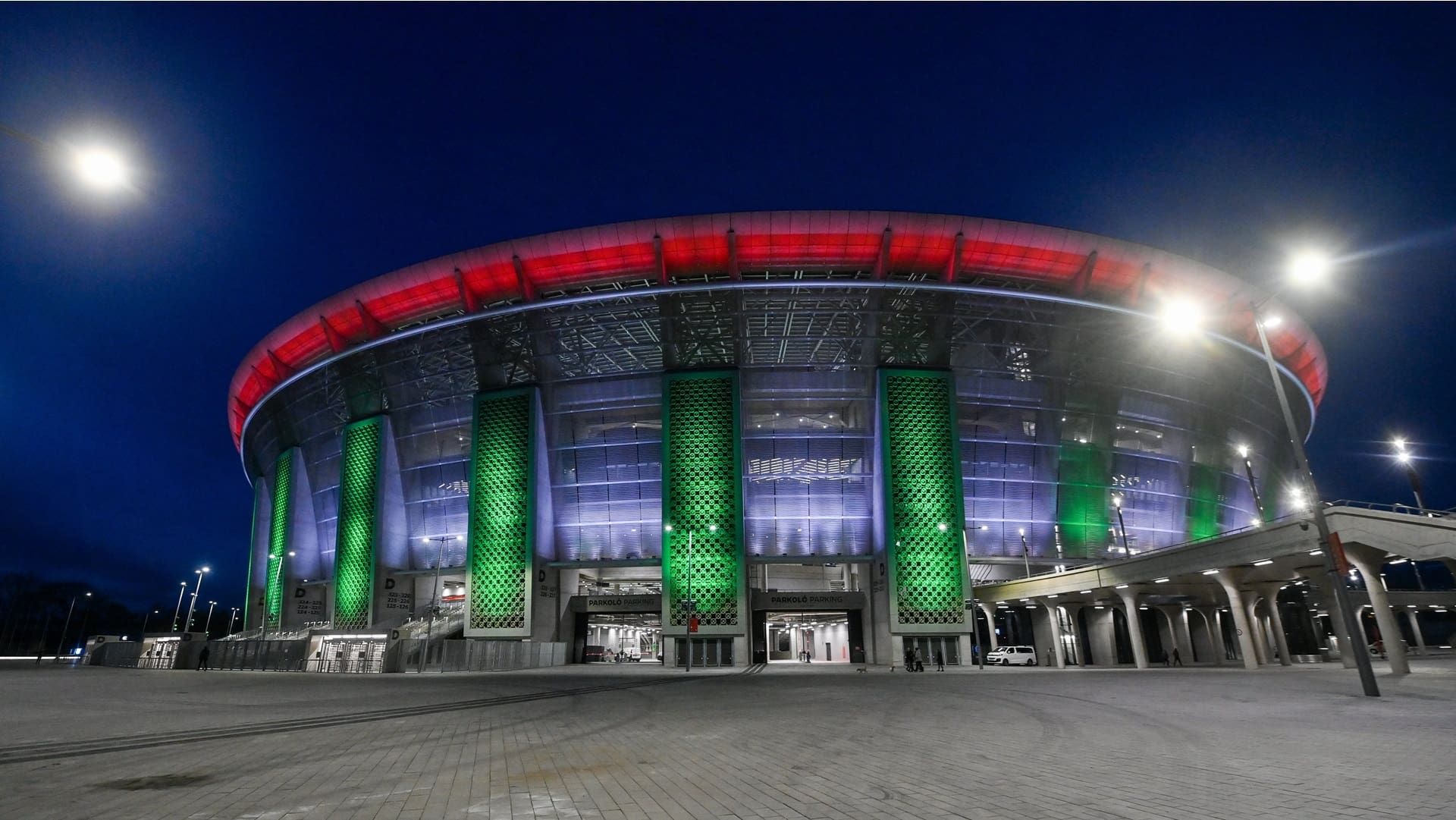
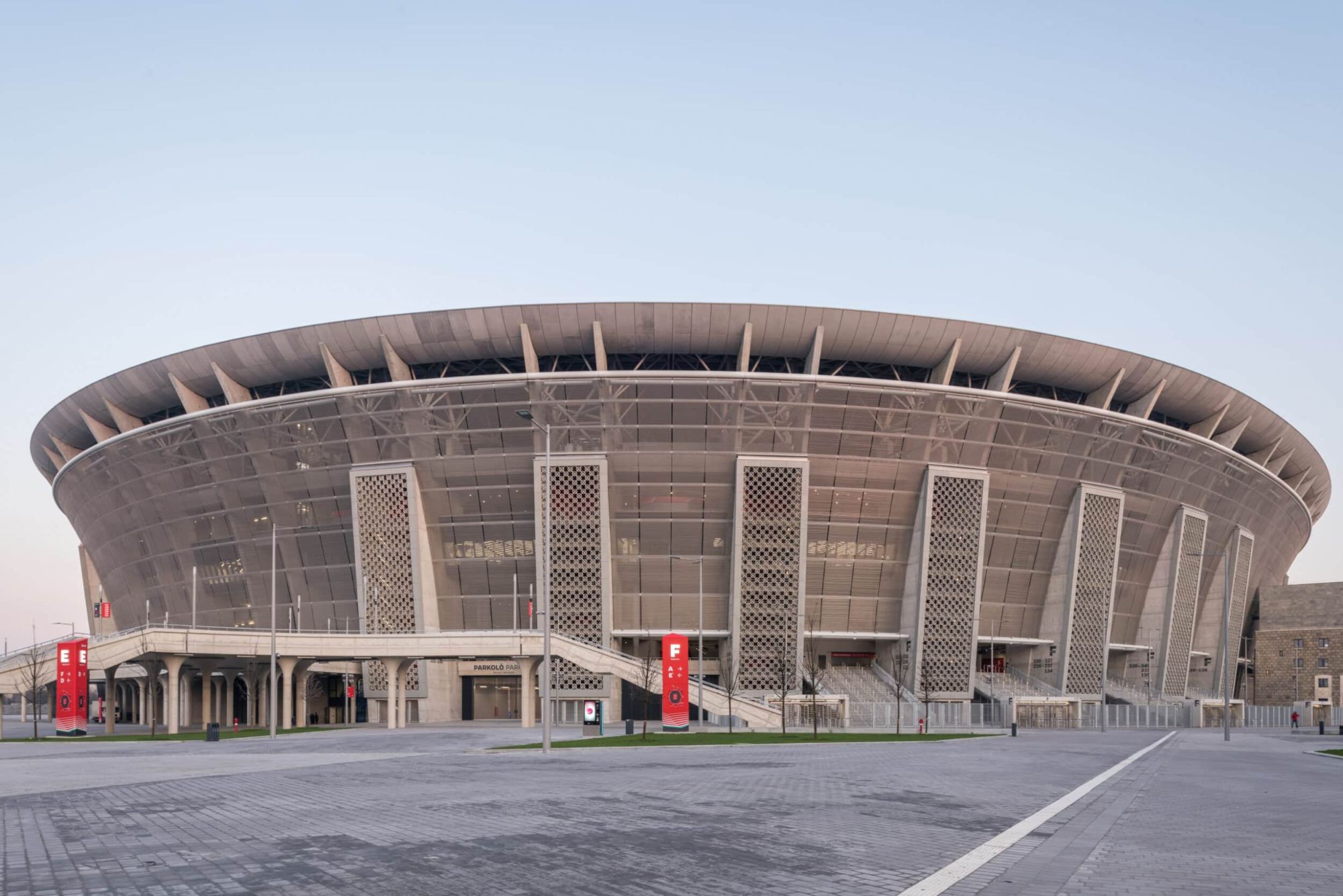
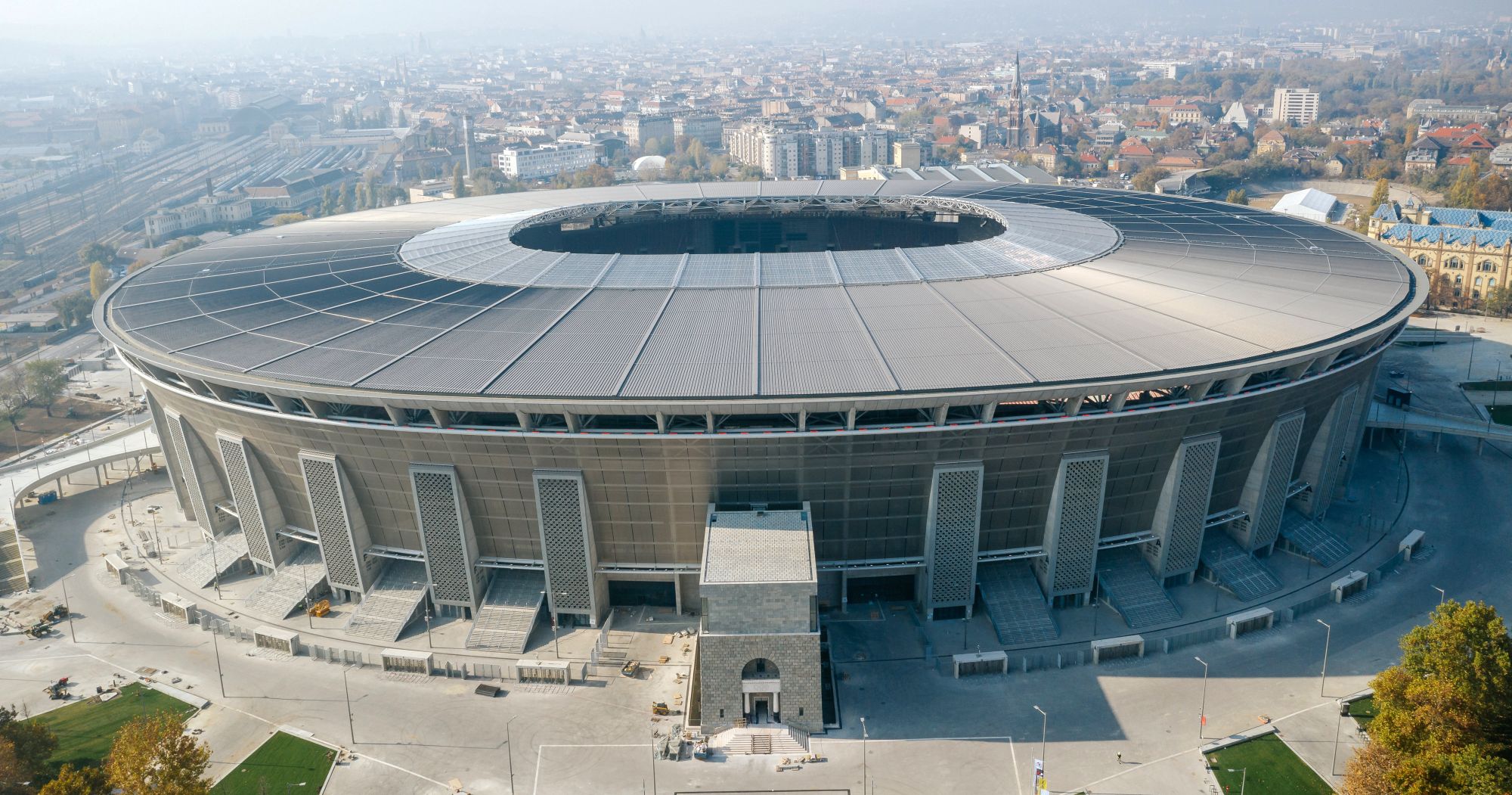
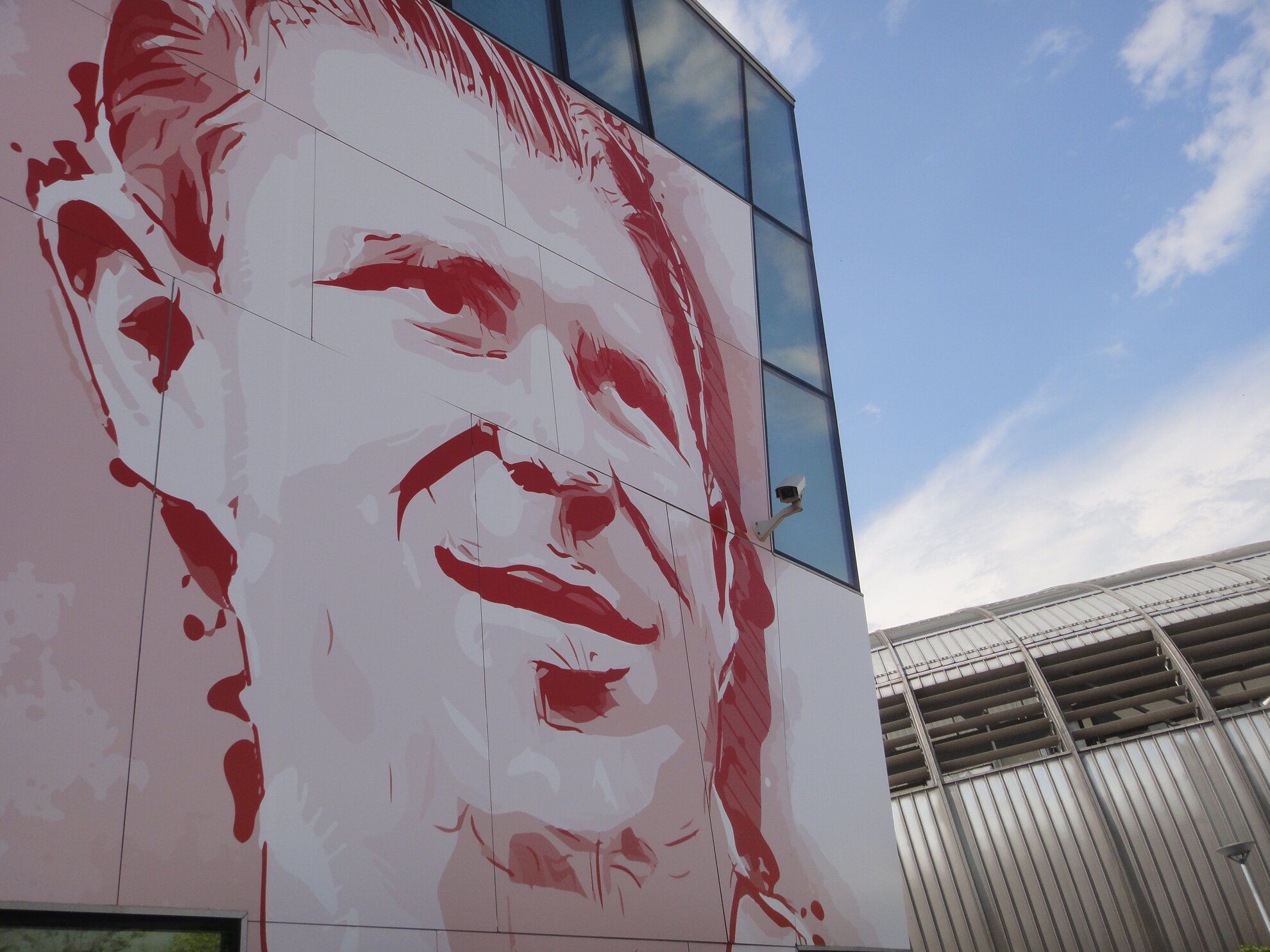
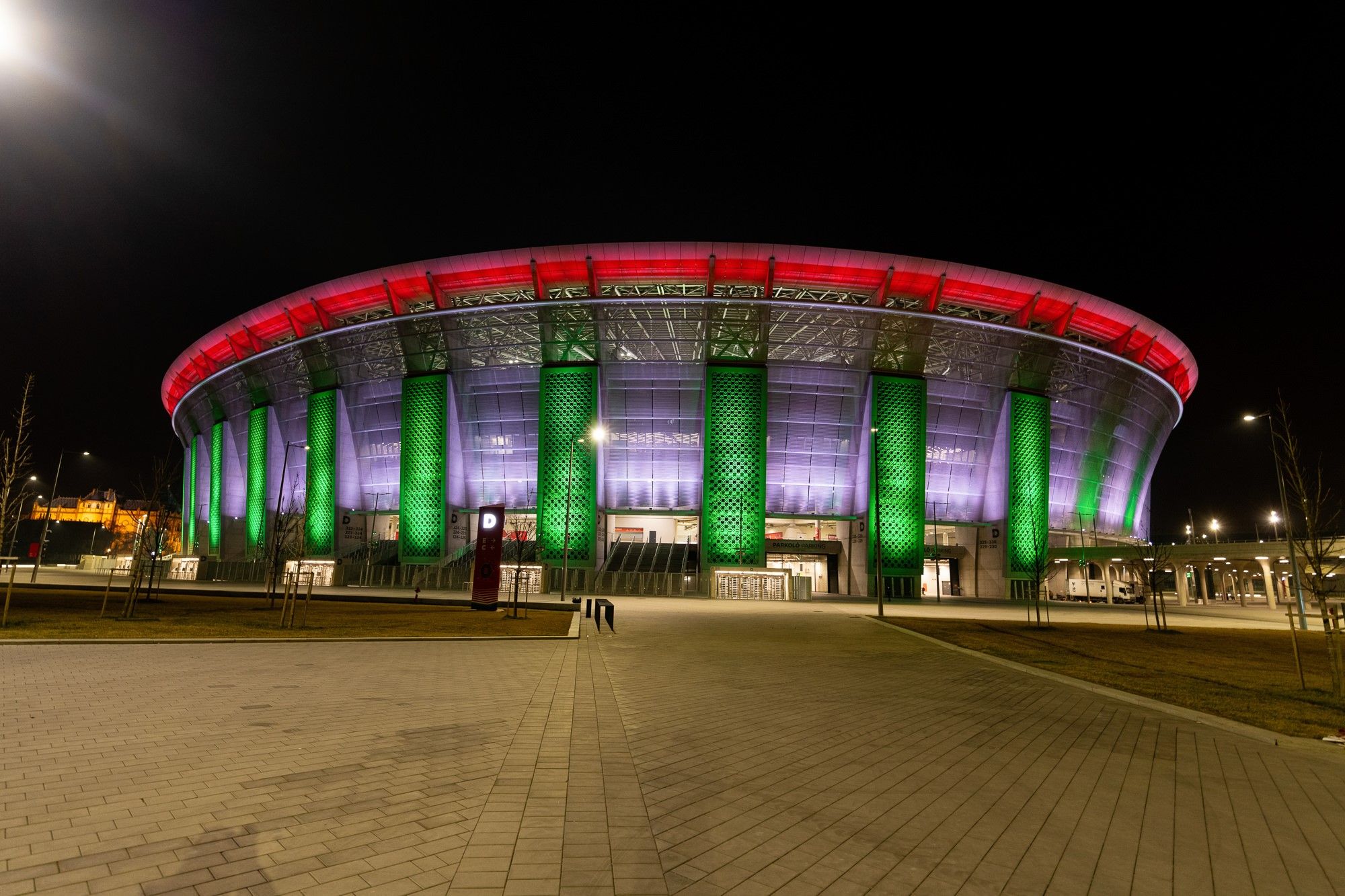
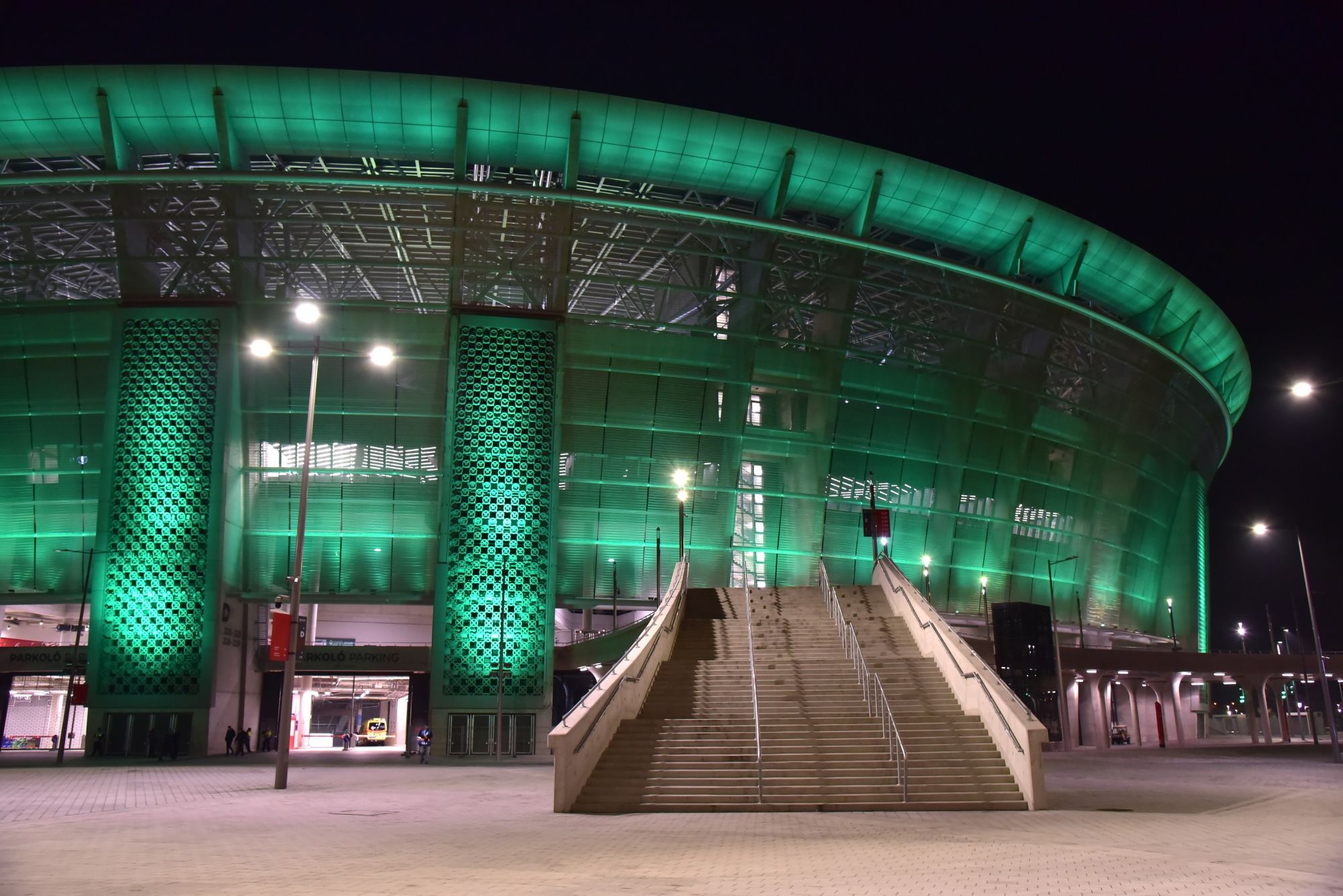
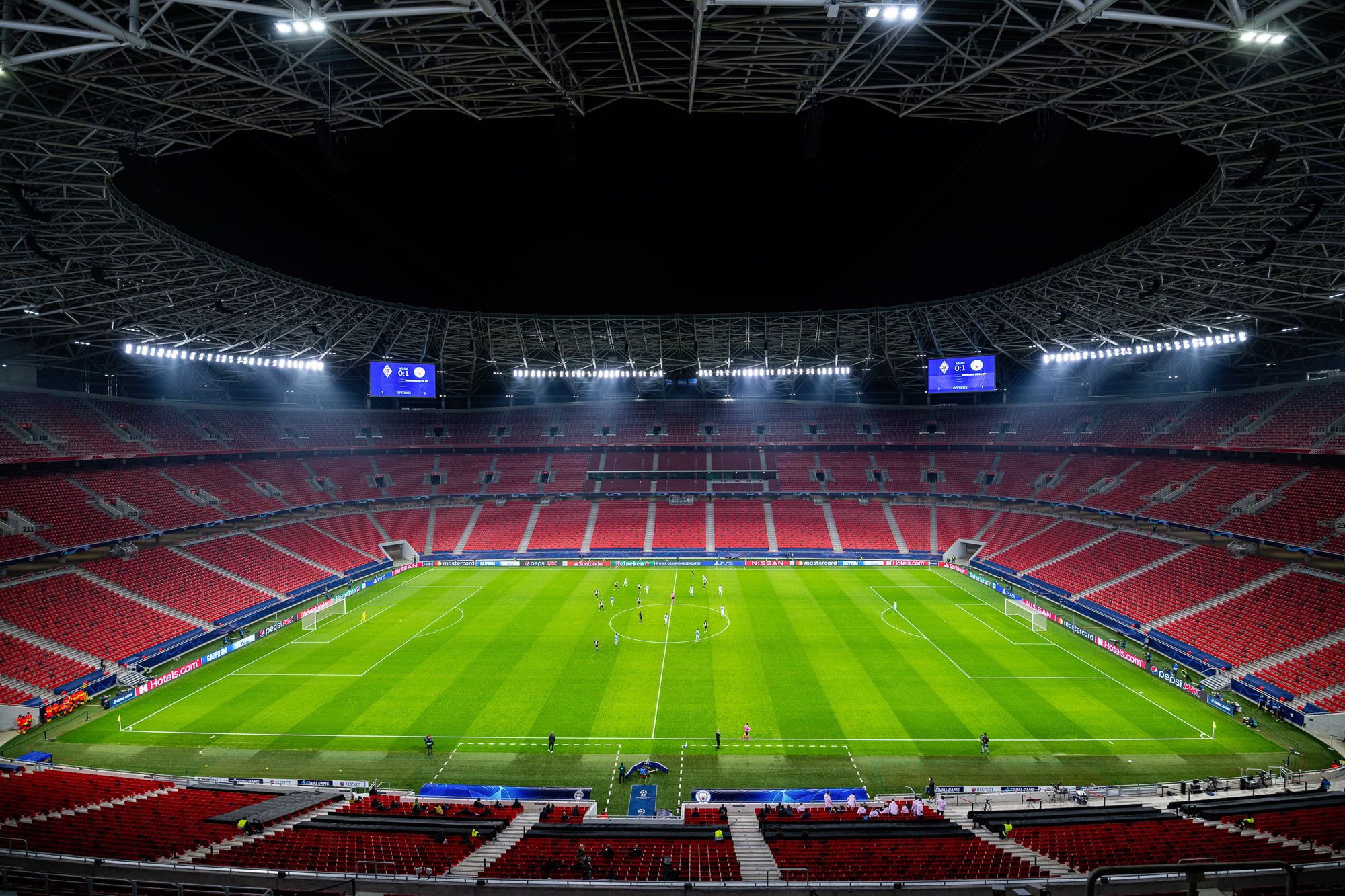
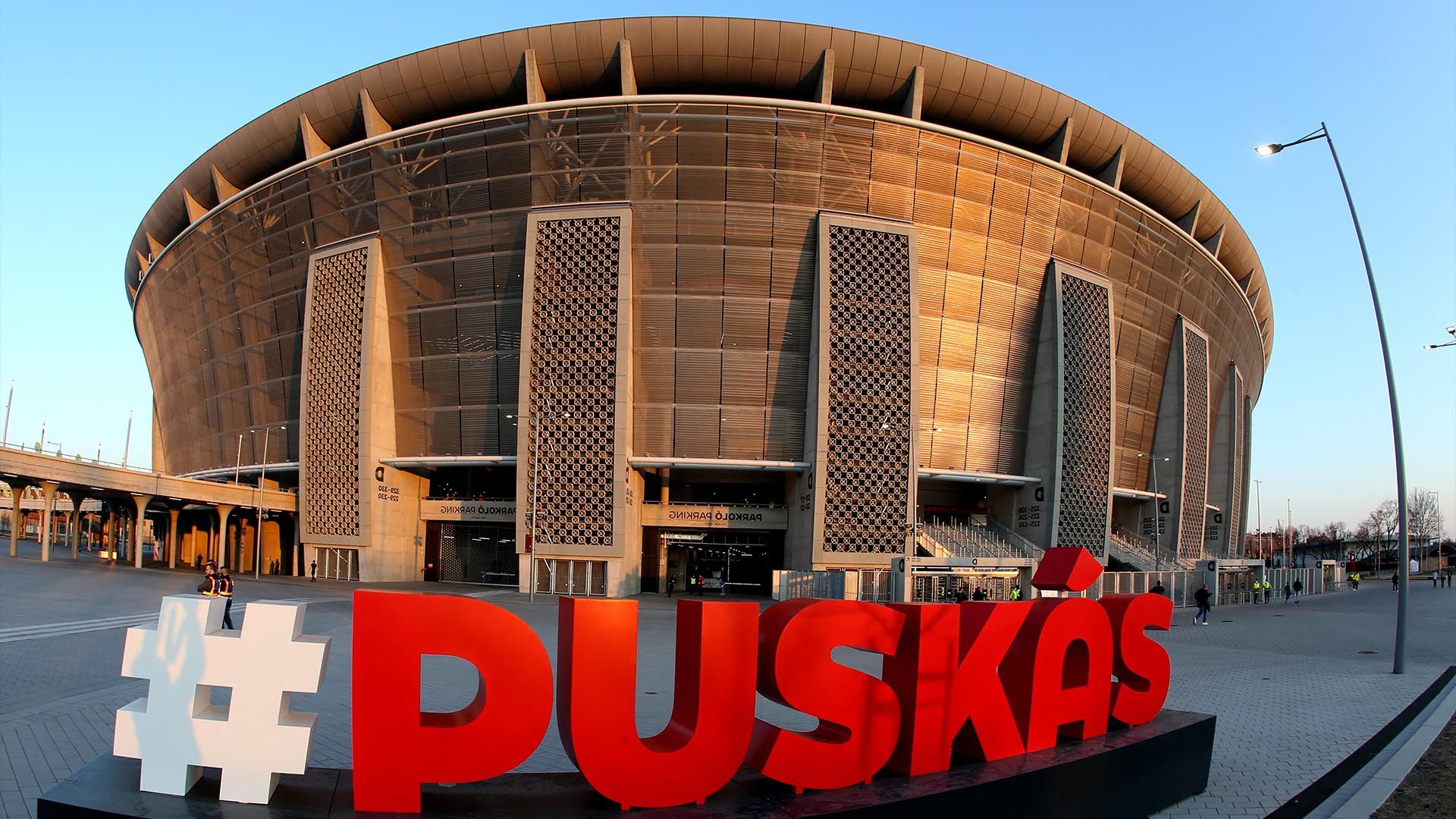
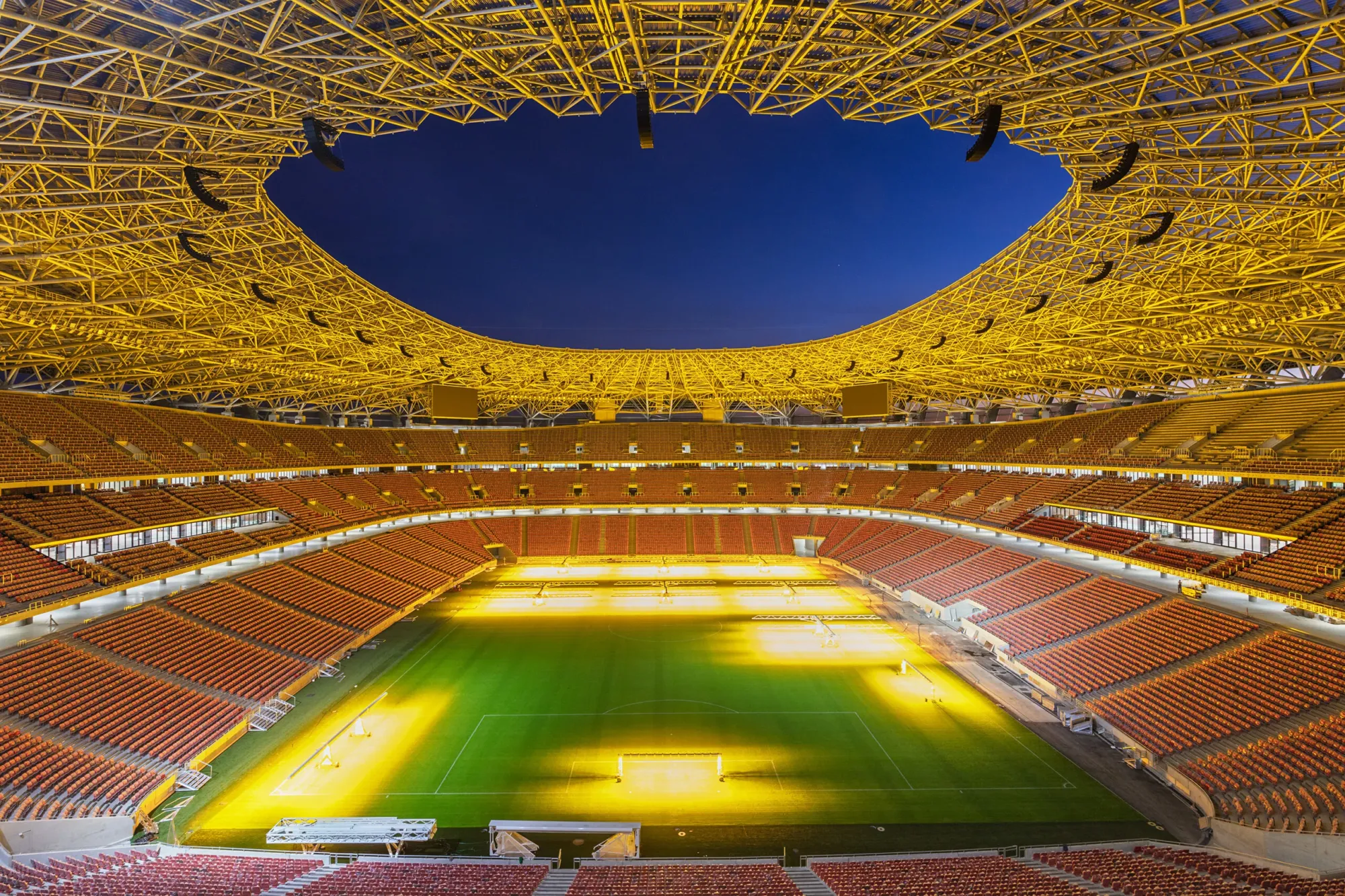
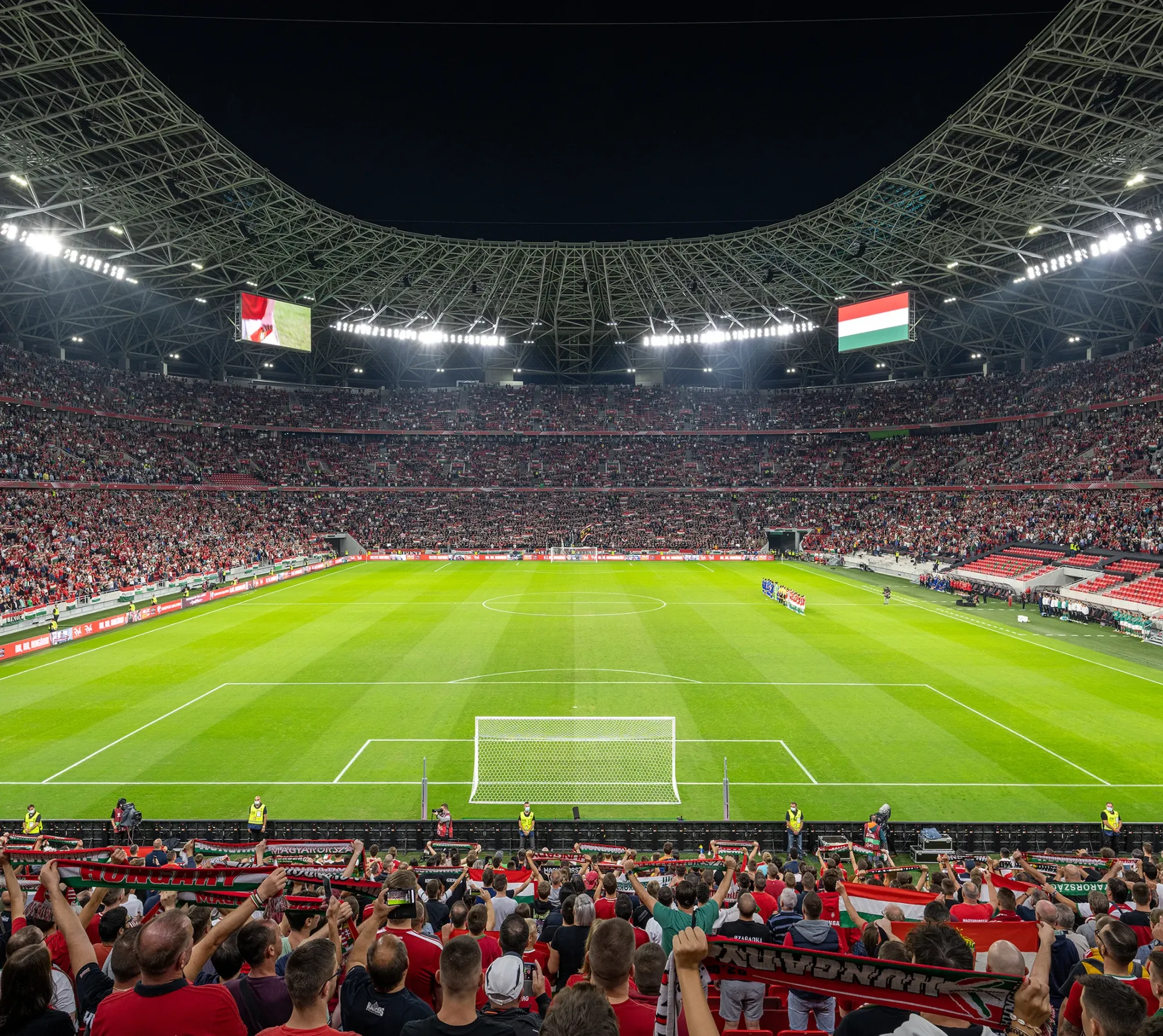
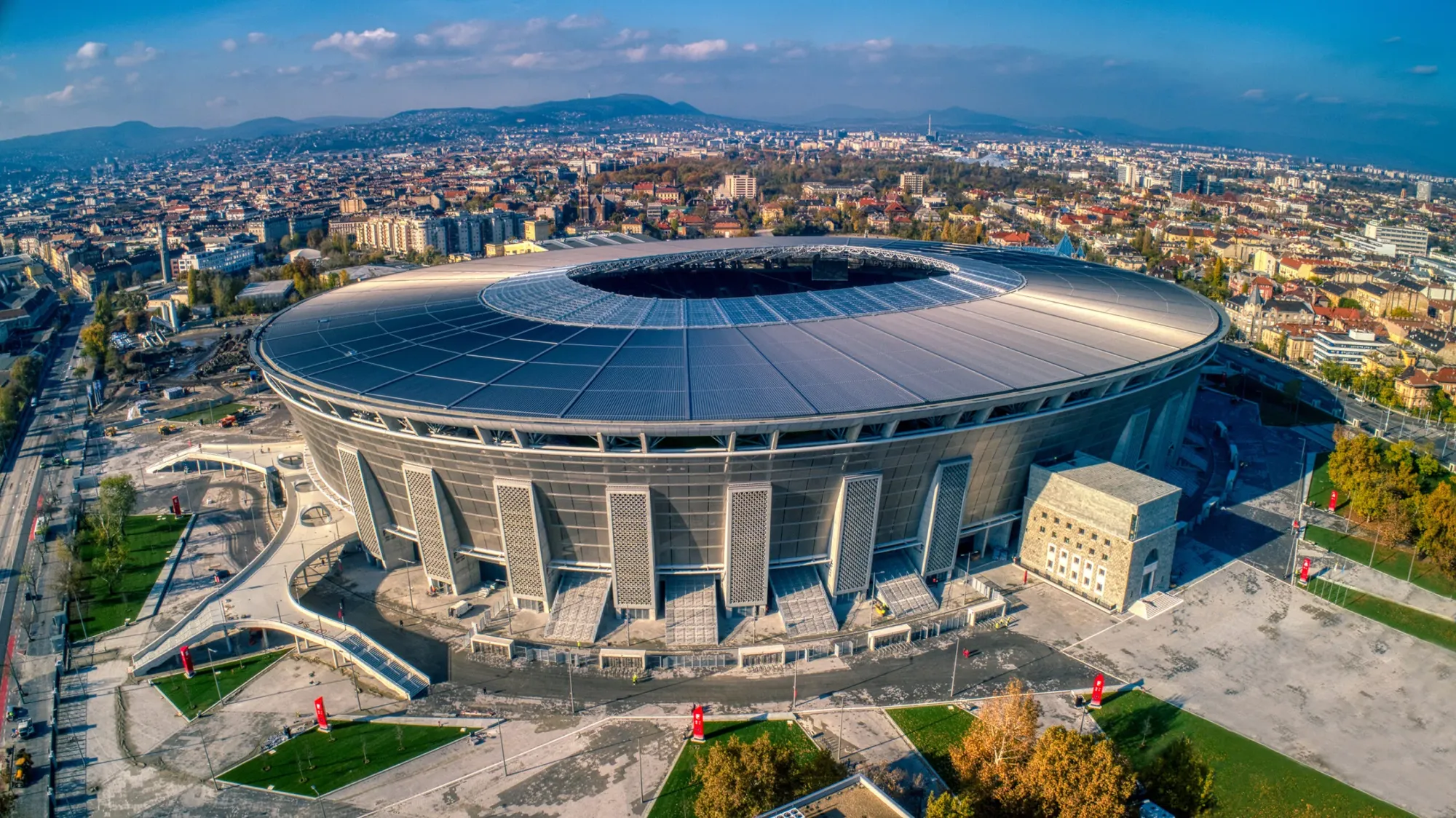
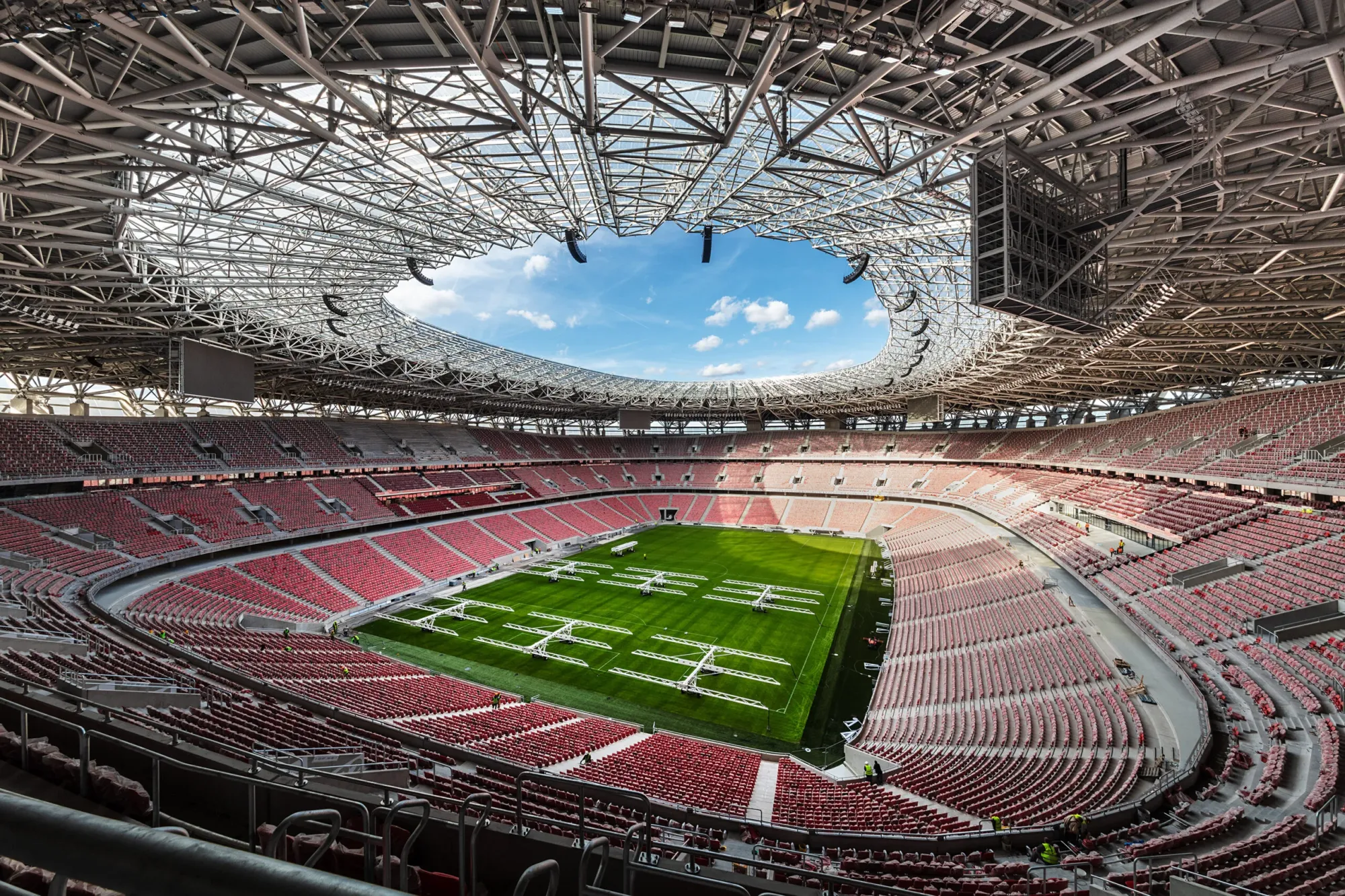
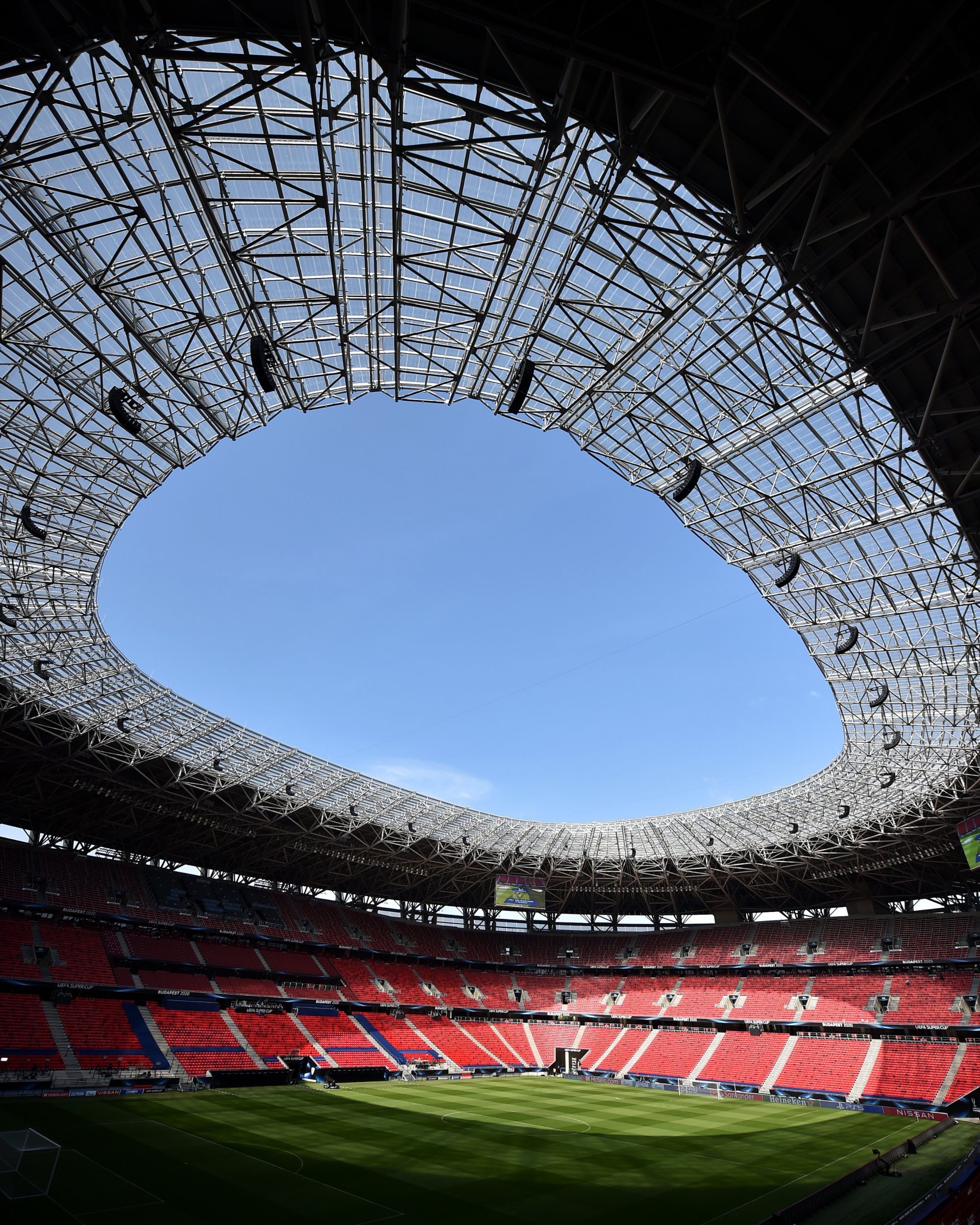
The final act of the 2025/26 UEFA Champions League will take place at the Puskás Aréna in Budapest. Paris Saint-Germain and Arsenal will battle for the European Cup in a final hosted within a special setting that had long awaited such an occasion. We are in Zugló, the fourteenth district of the Hungarian capital located east of the Danube. With more than 67,000 seats, it is the largest stadium in Central Europe and a symbol of continuity between the nation’s past and present. Today an architectural marvel, this venue with its long and troubled history carries on the legacy of the Népstadion, demolished in 2016 to make way for the new arena, within which part of the old soul still survives.
History of the Puskás Aréna
One of the main reasons behind the construction of a new stadium in Budapest was the Hungarian government’s determination to enter the elite circuit of major European football and beyond. Hungary had in fact bid to host the European Championship in 2004, 2008, and 2012 without success, before finally obtaining a venue worthy of the occasion. Over the years, governments and national sporting authorities became personally involved in the countless projects presented, understanding the potential that a state-of-the-art stadium could also have in diplomatic relations with EU countries. Indeed, on November 6, 2024, the arena hosted the Summit of the European Political Community, followed the next day by an informal meeting of heads of state.
Owned by the Hungarian Football Federation, the Puskás Aréna had a long gestation period. The original design was awarded by the renowned website Stadiumdb.com in 2014 and included an elevated athletics track as well as a view over the city skyline. The costs of building this remarkable structure underwent several increases due to inaccurate initial estimates and a period of strong inflation in Hungary. This led to numerous final modifications aimed at cutting as many superfluous elements as possible in order to make the final bill more sustainable, although its total cost remains unknown to this day. Former Prime Minister Viktor Orbán’s desire to build a separate athletics stadium, in view of a potential bid for the Summer Olympic Games, ultimately ensured that the Puskás Aréna would become a venue specifically dedicated to football.
Only in 2017 did construction finally begin, progressing at a relentless pace thanks to the efforts of a thousand workers per day and concluding in less than three years. The inaugural match took place on November 15, 2019, between the Hungarian and Uruguayan national teams, promoted by the president of the Hungarian community based in Montevideo. Initially, the evening was also meant to serve as Zoltán Gera’s farewell match, the Hungarian midfielder having earned 97 caps for his country. However, having officially retired a year and a half earlier, he was forced to withdraw due to poor physical condition, limiting his farewell to a pre-match ceremony.
The first major European night came with the UEFA Super Cup in September 2020, though it carried a bittersweet atmosphere because of spectator restrictions imposed during the COVID-19 pandemic. The following summer, however, the Puskás Aréna hosted four matches of the pan-European European Championship, finally achieving the international recognition long desired. In 2023, it was the turn of the Europa League final, won by Sevilla against Roma on penalties.
The architecture of the arena
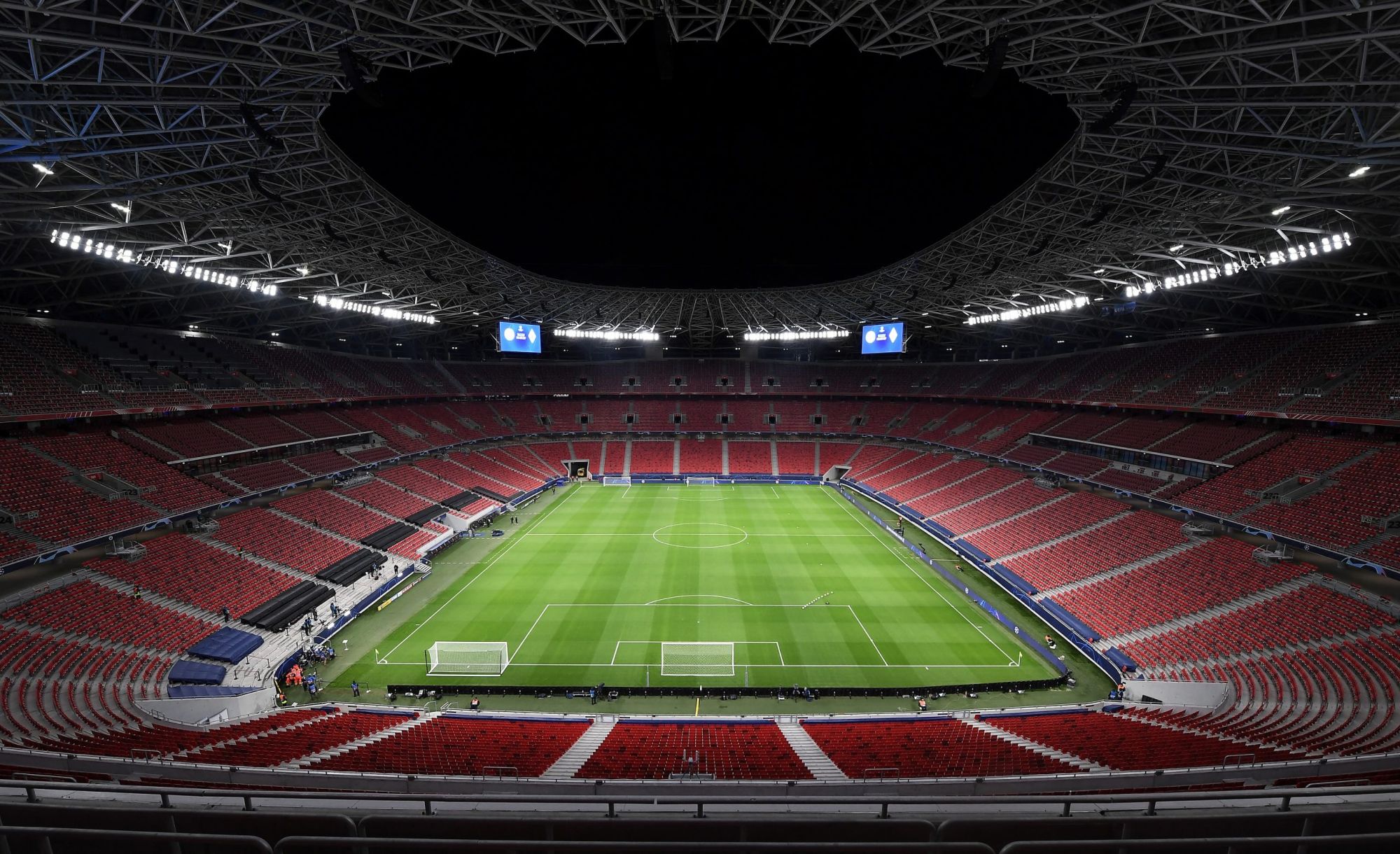
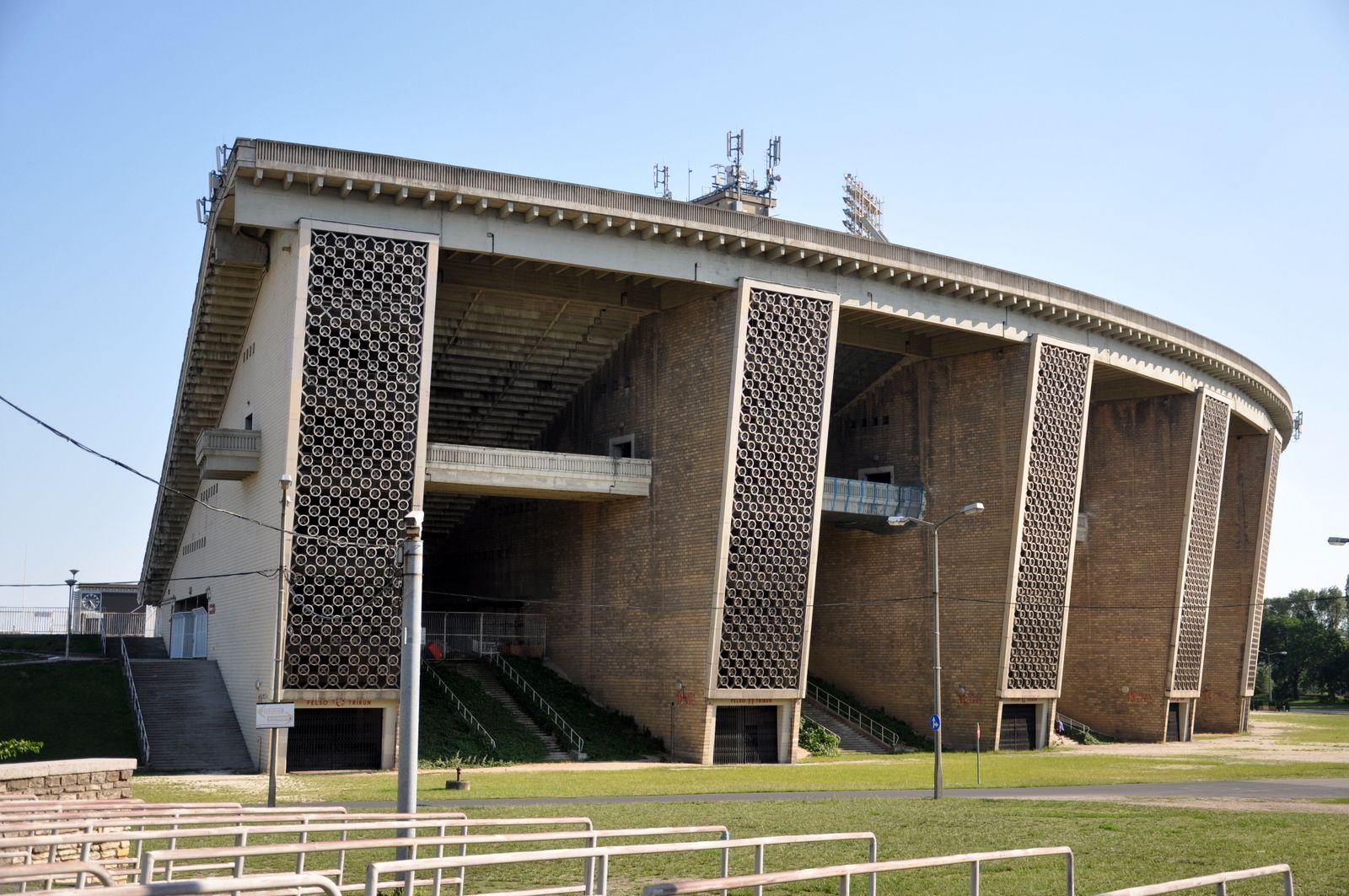
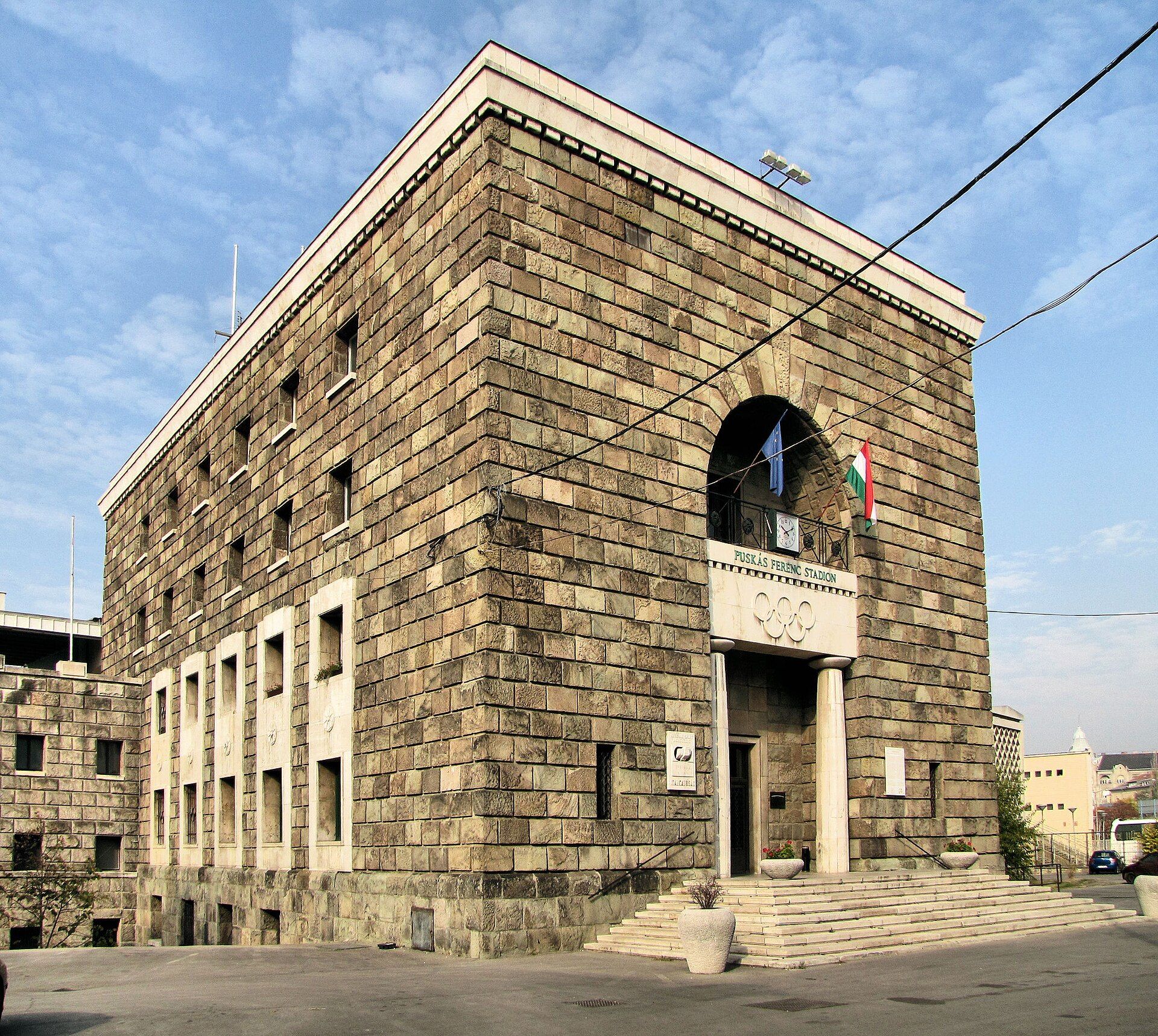
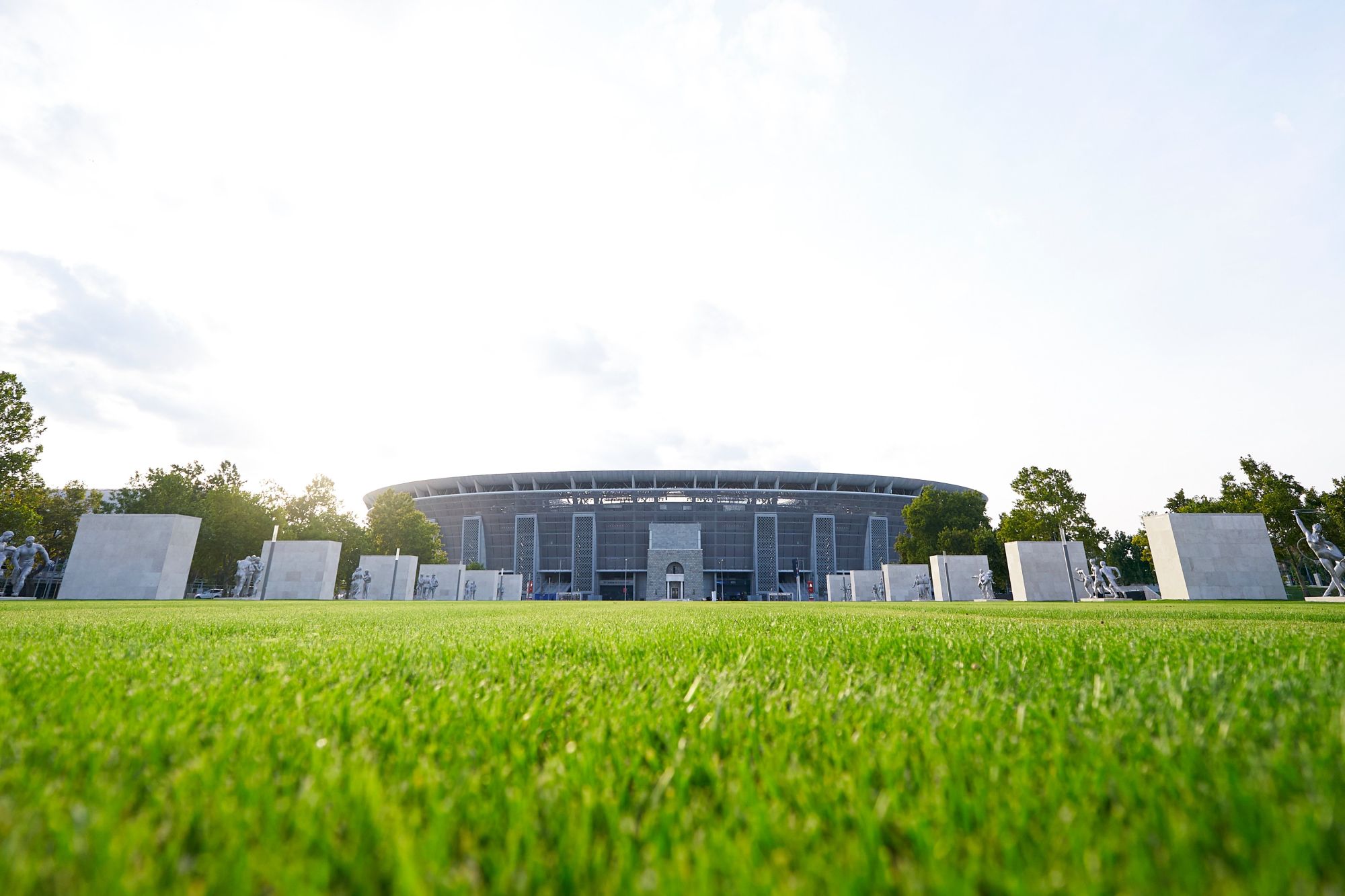
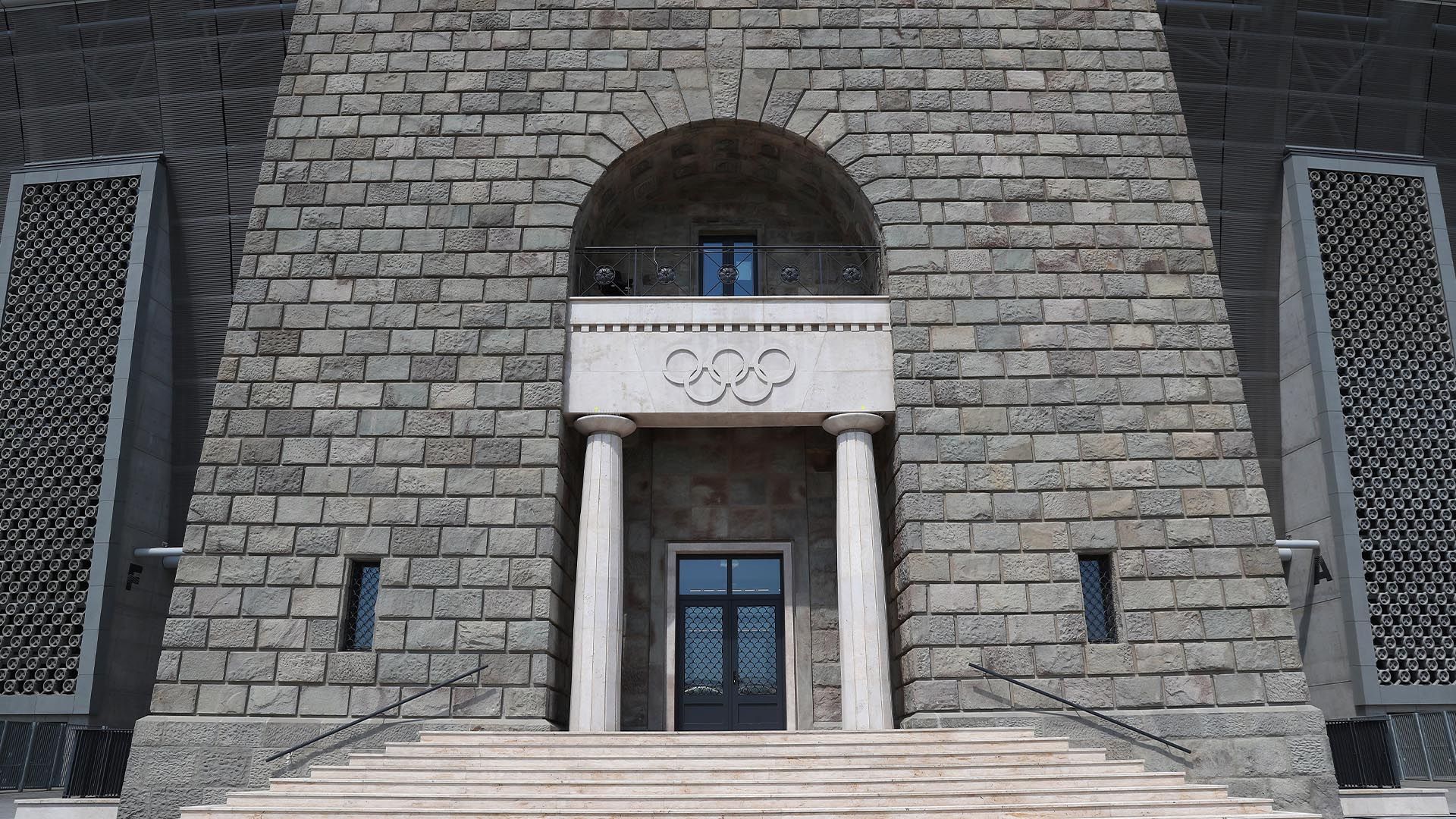
The arena is monumental in scale. Supporting the roof structure are 38 decorated monolithic pylons, each 40 metres high, echoing the design of the old stadium. Another sign of continuity with the past is the fact that the centre spot of the old and new stadium occupies the exact same position. In addition, some materials from the former concrete structure were incorporated into the walls of the new arena. The eastern tower, the historic entrance with its distinctive brick façade, was also preserved.
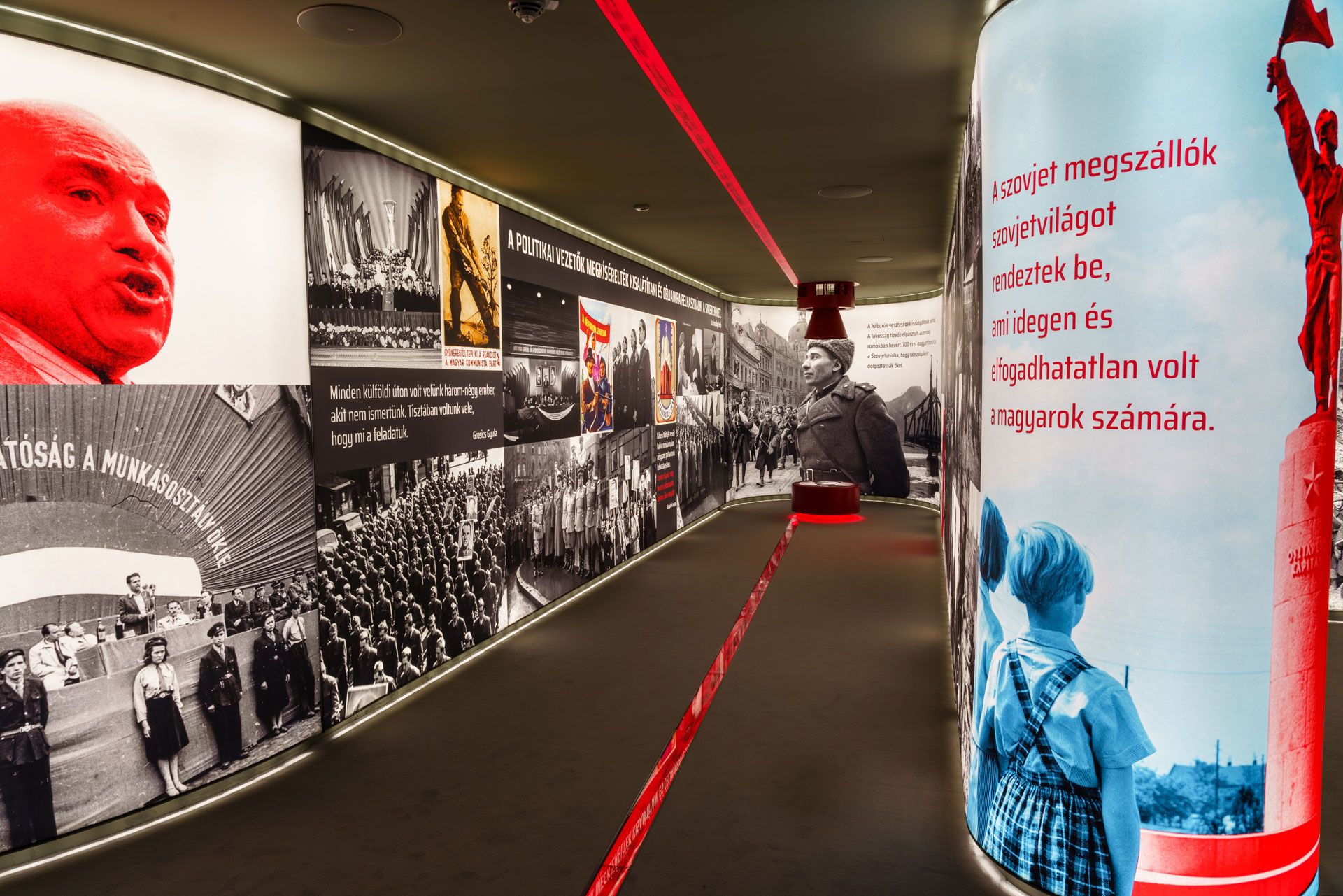
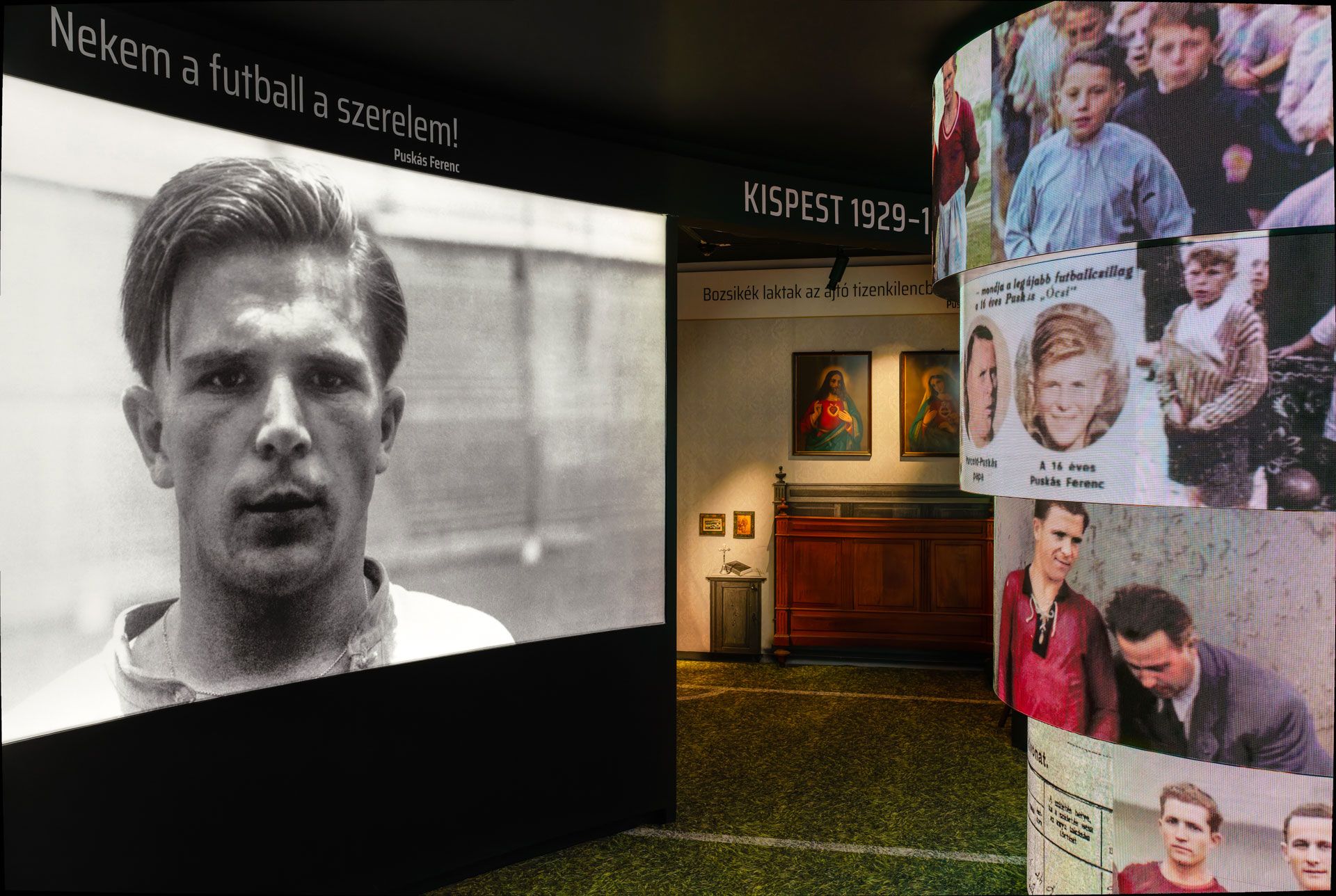
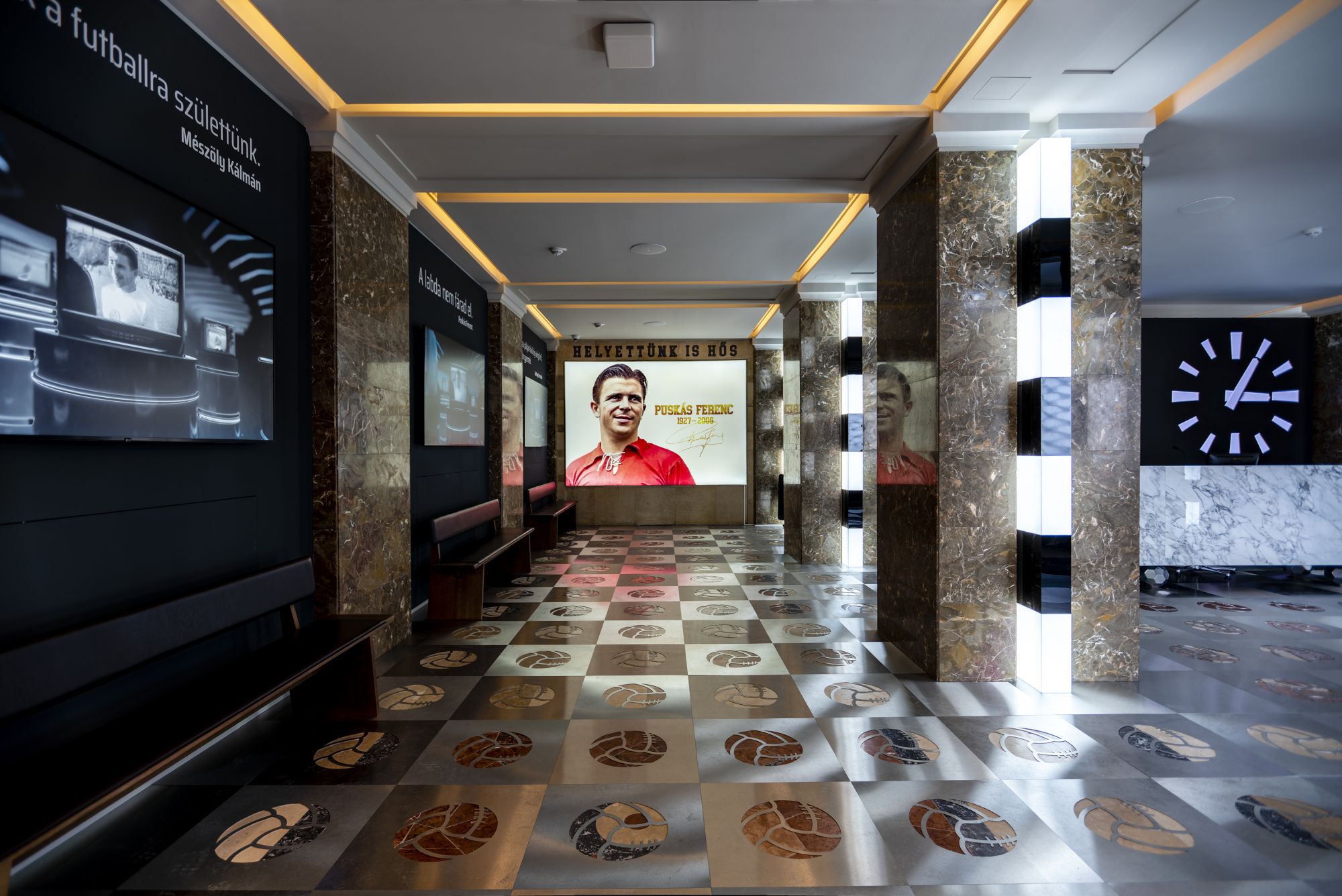
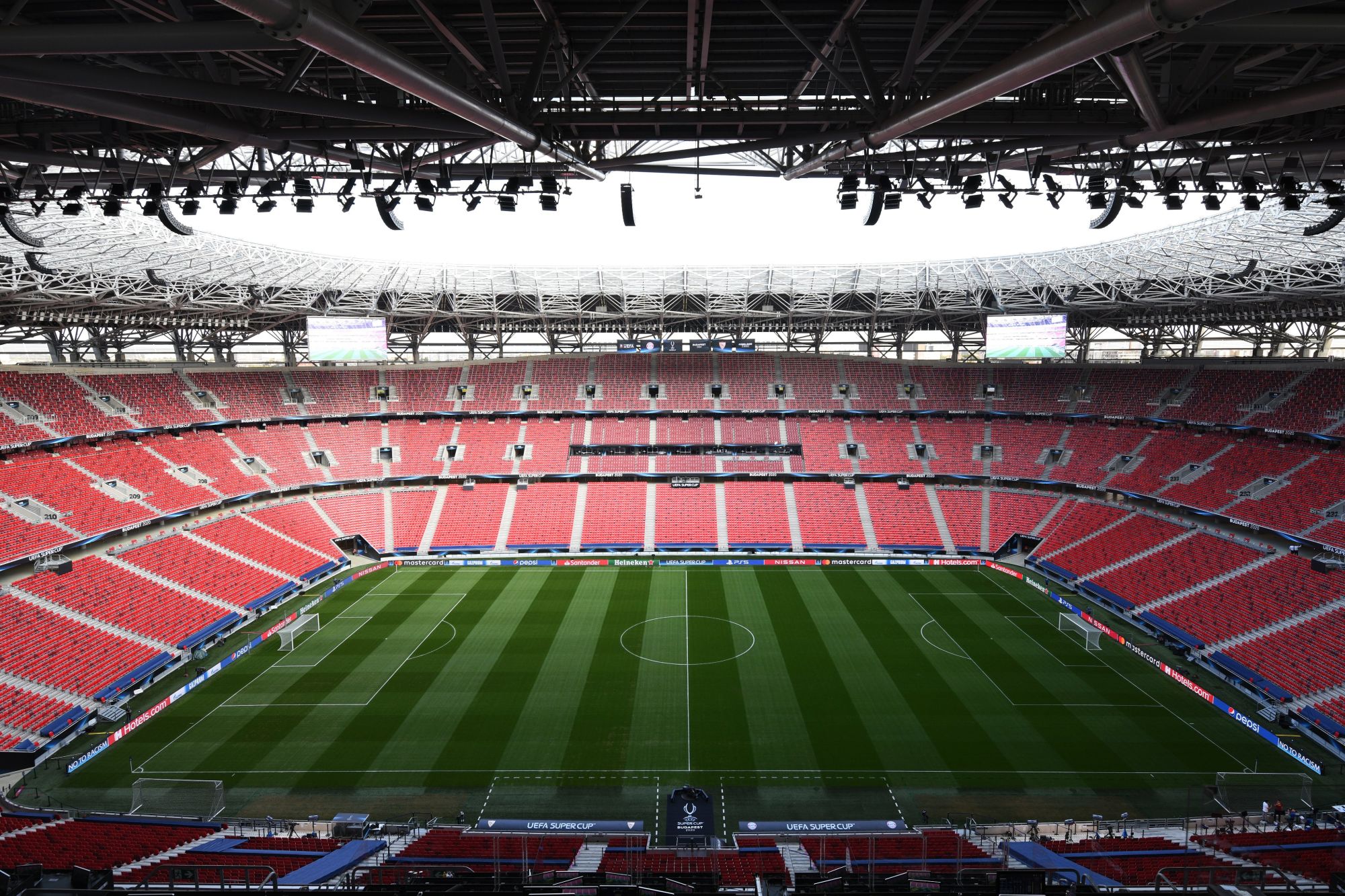
Inside, a triple-tier bowl distributes the 67,155 seats in the best possible way, with red seats designed to guarantee perfect visibility from every angle. A stainless-steel mesh entirely wraps the stadium across 19,500 square metres. This system acts as a filter against rain and wind, improving acoustic insulation while blending seamlessly with the evening LED lighting system. From above, the view is that of a perfectly covered oval, at the centre of which stands out the green rectangle of the pitch. In the various stadium facilities, designed by György Skardelli and built by Magyar Építő Zrt. and ZÁÉV Építőipari Zrt., only cashless payments are accepted through touch cards and NFC technology. Last but certainly not least, in honour of Hungary’s greatest footballer of all time, the Puskás Museum occupies a prominent place within the stadium. Carefully curated in every detail, it is highly recommended to visitors.
Puskás Ferenc Stadion, the People’s Stadium
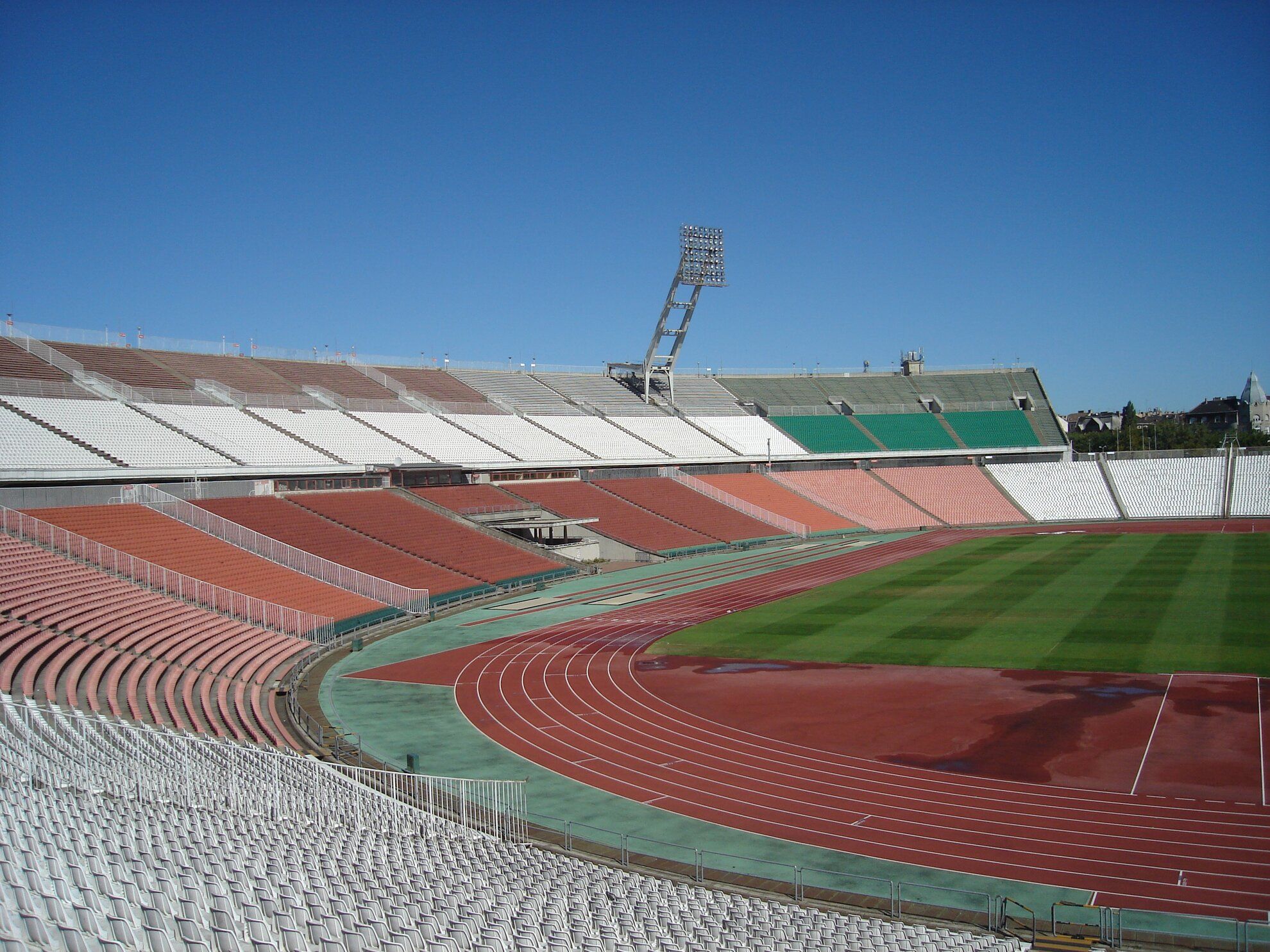
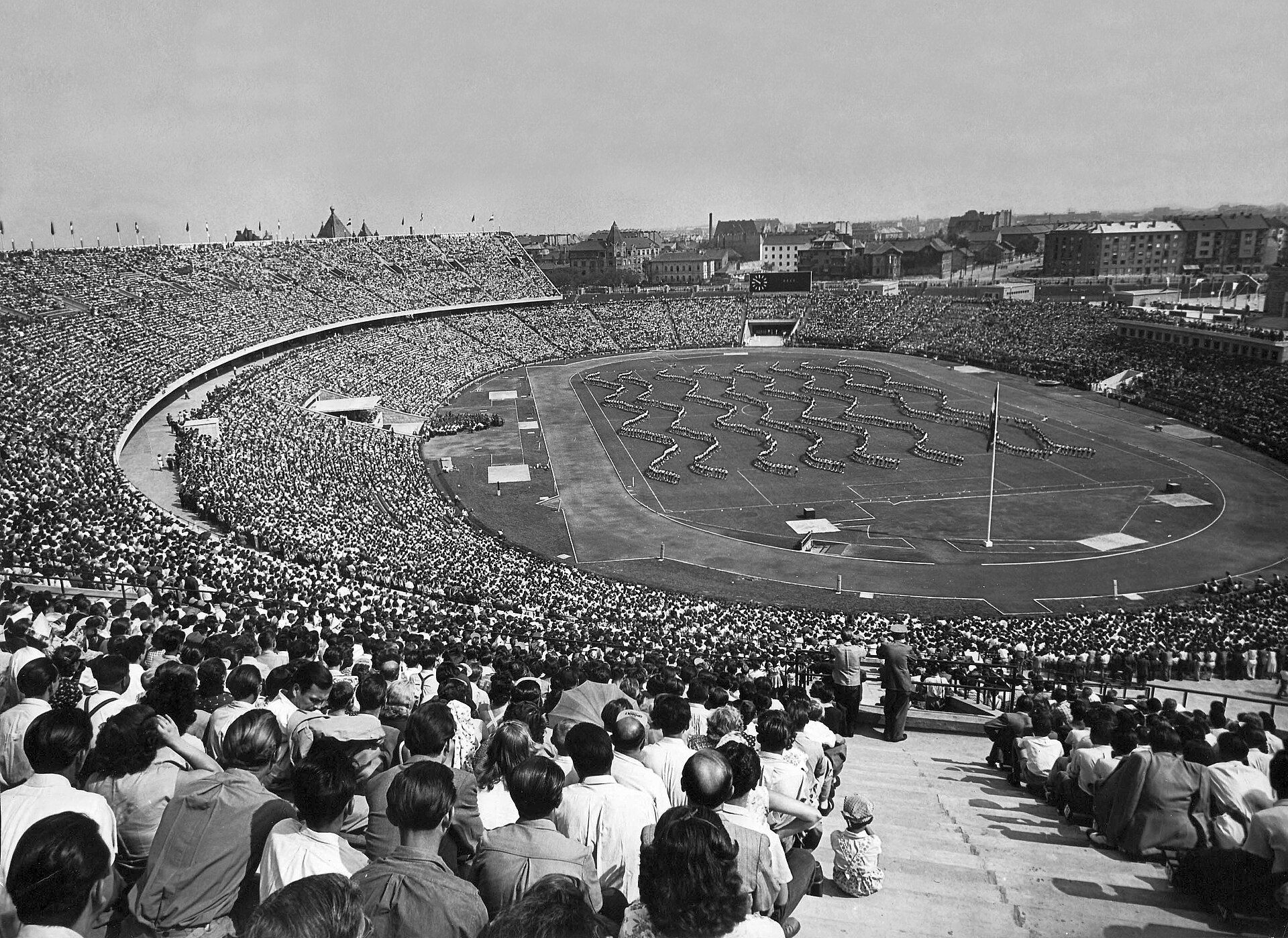
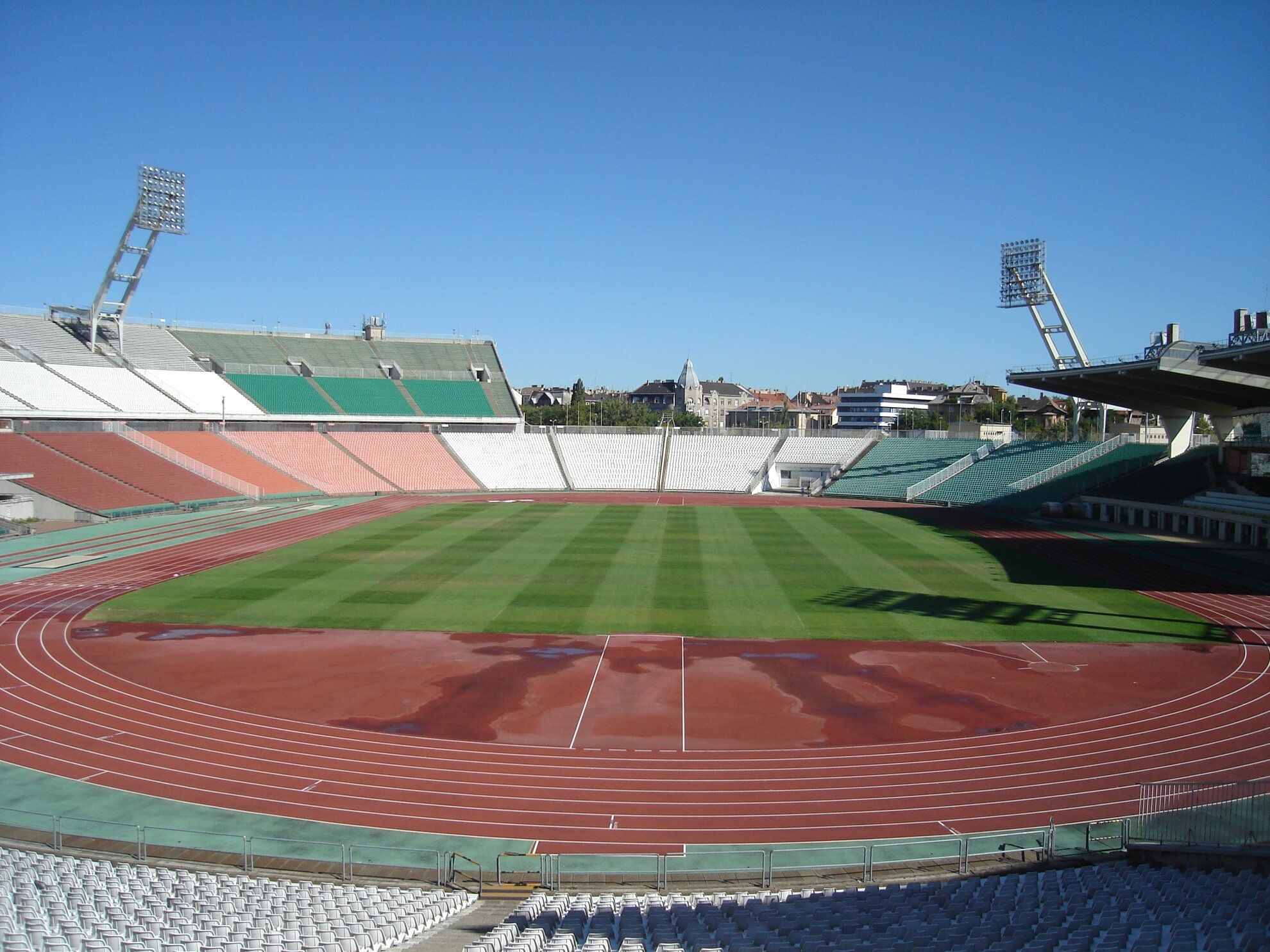
Building such a venue represented a fundamental step in Hungarian football history. Doing so on the very same site where, until 2016, the old national stadium stood was an especially delicate responsibility. This is because the Puskás Ferenc Stadion, renamed in 2002 after previously being known as the Népstadion (“People’s Stadium”), had served as the home of the Hungarian national team since 1953. It was here that the legendary Aranycsapat, Hungary’s Golden Team of the 1950s, played some of its most unforgettable matches during the height of its glory, remaining unbeaten for 32 consecutive games over a span of four years and winning Olympic gold in Helsinki in 1952.
As early as 1896, Budapest had ambitions to build a major sporting venue, but lack of funds, wars, and political indecision delayed the matter until the mid-1940s. The decisive trigger came after the collapse of a stand at the old Ferencváros stadium in 1947 during an Austria–Hungary match, which fortunately caused no fatalities. The Council of Public Works therefore decided to construct a worthy stadium for 70,000 spectators, later expanded to 78,000, on the site of Pest’s old racecourse. Construction began in 1948 and was completed five years later.
At the inauguration on August 20, International Olympic Committee president Avery Brundage was seated in the press tribune far away from the “Great Leader of the People” Mátyás Rákosi, absolute ruler of Hungary until 1956, because the latter refused to share the stand with a citizen of an imperialist country. The celebrations were magnificent, featuring athlete parades, gymnastics demonstrations, and a football match between Budapest Honvéd and Spartak Moscow. Historic matches such as Hungary’s 7-1 victory over England — still today the worst defeat in the history of the Three Lions — multisport events, and concerts by some of the world’s greatest bands, including Queen’s famous Hungarian Rhapsody performance, all took place within this stadium steeped in history. Structural renovations were carried out repeatedly over the decades until, at the dawn of the new millennium, its deterioration became increasingly evident. After years of debate, the decision was finally made to demolish it and make way for a new great arena.