








































The 2026 World Cup Is Facing a Serious Climate Problem And it's not really a surprise
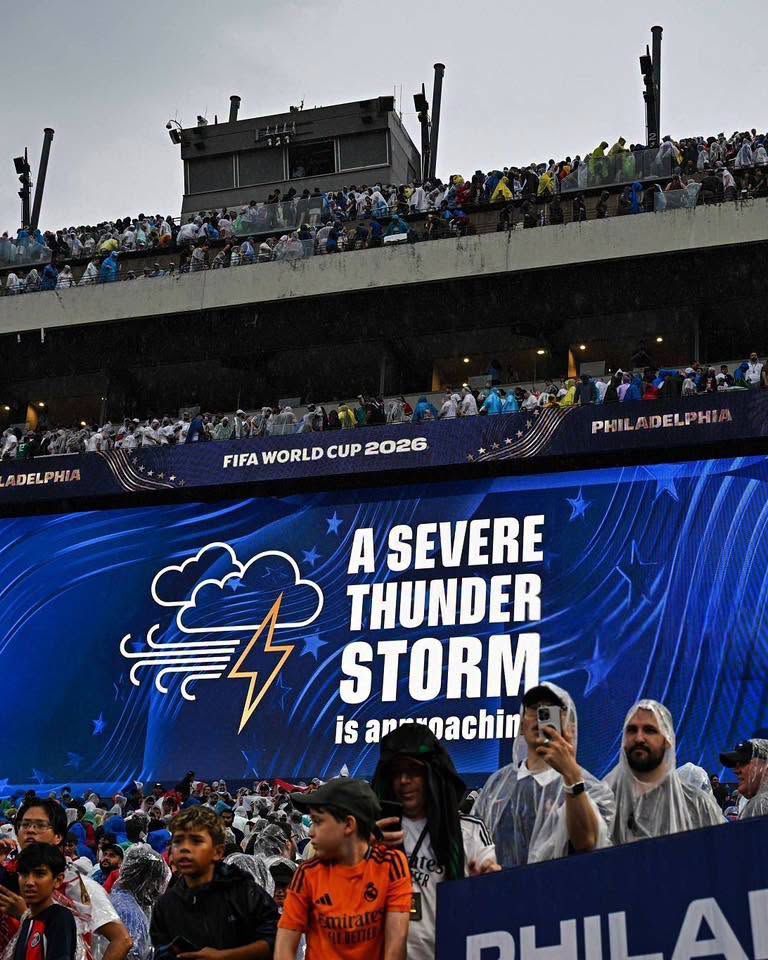
It was around 5:55 PM yesterday in Philadelphia, 11:55 PM in Italy, when the emergency protocol for electrical activity in the stadium area was triggered. A warning message appeared on the screens, instructing spectators to leave their seats and seek shelter, while players and staff retreated to the locker rooms to wait things out. France vs Iraq eventually resumed two hours later, after a suspension caused by thunderstorms, lightning, and the strict local safety protocol. Nothing unusual by American standards—in fact, some people on social media joked: Welcome to American sports.
Why extreme heat is worrying players and fans
For months leading up to the 2026 FIFA World Cup, climatologists, sports medicine experts, and players’ associations had been issuing the same warning: hosting a summer World Cup across the United States, Mexico, and Canada would inevitably expose teams and fans to weather-related risks. High temperatures, extreme humidity, unpredictable conditions. Nearly two weeks into the tournament, those concerns are no longer hypothetical scenarios but a reality that delegations, organizers, and supporters are already dealing with firsthand.
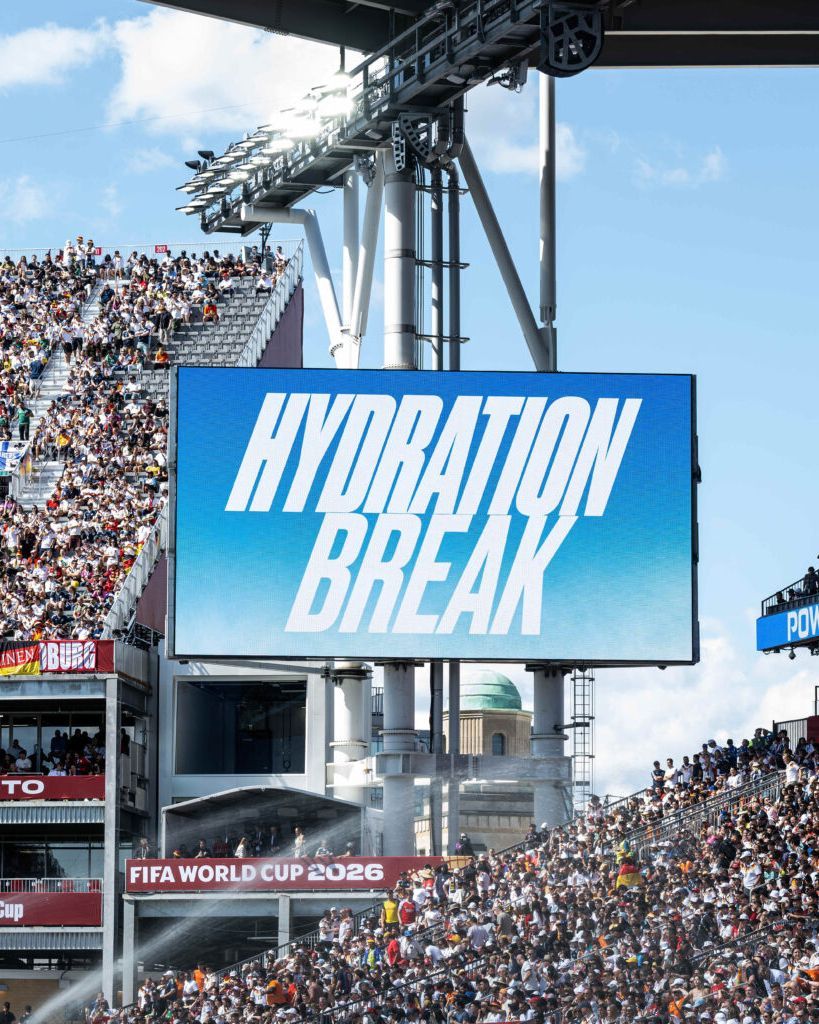
From Miami to Monterrey, through Texas and Pennsylvania, the weather has become one of the tournament’s hottest topics—quite literally. Several matches have already been played under conditions experts monitoring heat stress in sports have described as critical, while hydration breaks have become a routine feature of games, bringing with them a number of side effects. In the stands, meanwhile, overheated spectators search desperately for relief: shade, water, air conditioning, survival stories—and this is only the beginning of the long journey introduced by the tournament’s expanded format. Especially considering that early July is, on paper, expected to bring the most challenging weather conditions.
Understanding WBGT and heat stress in football
The first issue is heat, a concept that in outdoor sports is best understood through the WBGT (Wet Bulb Globe Temperature), an index that combines temperature, humidity, solar radiation, and wind conditions to measure the thermal stress experienced by athletes. It is precisely this metric that has been at the center of most pre-tournament concerns, from those raised by FIFPRO, the international federation representing professional footballers worldwide, to studies published in Scientific Reports and estimates produced by World Weather Attribution.
According to an analysis published by The Guardian last weekend, at least two matches have already been played under conditions classified as severe heat, meaning above the maximum thresholds recommended by FIFPRO itself. These were Saudi Arabia vs Uruguay and Sweden vs Tunisia, played respectively in Miami and Monterrey—venues that had long been identified as among the most problematic, alongside Houston and Dallas. Four additional matches with similar WBGT readings were instead played inside covered, air-conditioned stadiums. During England vs Croatia in Dallas, for example, outdoor WBGT levels reached approximately 35 degrees Celsius, while inside the stadium they remained below 25.
The fact that part of the tournament is being played in climate-controlled venues does not solve the issue. If anything, it highlights its scale. Because if some matches can only be staged by artificially lowering temperatures by ten degrees, it becomes difficult to ignore the elephant in the room: the increasingly pressing questions surrounding the sustainability of the choices through which FIFA continues to envision its tournaments.
The heat problem
While data and studies help quantify the issue, listening to those actually experiencing the World Cup offers a clearer sense of how central the weather has become. The unlucky spectators in Philadelphia yesterday know this all too well, having been forced to evacuate the stands and wait two hours for France vs Iraq to resume. But they are unlikely to be the only ones left with such memories. Reports of climate-related difficulties are multiplying. A Reuters feature from Miami, for instance, described fans desperately searching for shaded areas inside the stadium, consuming endless bottles of water, and spending entire days trying to mitigate the effects of the oppressive heat and humidity. "Too much," "hell," "terrible," a group of Uruguayan supporters said on Sunday evening as they exited the stadium.
The issue, of course, extends beyond spectators. Heat and humidity also affect athletes’ performance, reducing the body’s ability to dissipate heat, increasing fatigue, and making it harder to sustain high-intensity efforts. "It is difficult for the human body to compete when humidity levels are this high," explains Chris Minson, Professor of Physiology at the University of Oregon. "When sweat cannot evaporate efficiently, the body's cooling system becomes far less effective." Jason Kostrna of Florida International University adds that weather conditions such as those experienced in Miami "significantly impair athletes' cognitive sharpness and decision-making abilities."
Not just the heat
If heat is the most visible concern, it is far from the only one. Yesterday’s incident exposed another vulnerability of the tournament: its exposure to thunderstorms, lightning, and extreme weather events, all common features of North American summers. The suspension also drew attention to a protocol largely unfamiliar outside the United States, which is activated whenever lightning activity is detected within an eight-mile radius—approximately 12.8 kilometers—of a stadium. Play is automatically suspended and a thirty-minute timer begins, resetting to zero every time a new lightning strike is detected. Interestingly, FIFA regulations do not establish a maximum number of delays, meaning matches can remain on hold for hours if conditions continue to be deemed unsafe. That is precisely what happened yesterday in Philadelphia.
There had already been warning signs. England’s arrival in Kansas City coincided with a tornado warning that forced players, staff, and journalists to follow emergency procedures. For some, it was hardly a new experience: similar situations had already occurred during the 2025 Club World Cup, which was marked by weather-related delays and suspensions.
How hydration breaks are changing the game
To mitigate the effects of extreme heat, FIFA has introduced several measures, the most visible—and debated—being hydration breaks, now a familiar sight for audiences. A medical necessity that has also sparked a sporting debate. Some coaches argue that these interruptions effectively function as mini-halftime breaks, providing opportunities to reorganize teams and deliver tactical instructions. In other words, a new coaching window that turns football, de facto, from a game of two halves into one divided into four quarters.
"Playing four periods instead of two changes the very idea of football we have culturally built over time," said Uruguay head coach Marcelo Bielsa. Similar views have been expressed by Lionel Scaloni (Argentina), Rudi Garcia (Belgium), and several colleagues, as well as some players. Kylian Mbappé, however, offered a different perspective: "We players are weather vanes—we change our minds all the time. If tomorrow we're trailing after 25 minutes, I'll be happy there's a break. That's how it goes: every time new rules arrive, everyone complains at first." What is certain is that hydration breaks have altered something in the tactical landscape of matches, even if that was never their intended purpose.
The climate challenges beyond 2026
Looking beyond the current tournament, international football has increasingly found itself confronting extreme weather conditions. If Qatar 2022 was moved to winter to avoid the Gulf region’s intense summer heat—a decision without precedent—four years later the problem has resurfaced in a different form. Not a single country facing prohibitive temperatures, but a tournament spread across vast territories with complex and often unpredictable climatic realities.
Air-conditioned stadiums may provide an effective solution for ninety minutes, but they also present a paradox: an event that increasingly needs to isolate itself from the environment in which it takes place. Such adaptation does nothing to address the conditions faced by supporters and workers outside stadiums, nor does it resolve broader questions that extend beyond environmental impact alone. Several recent analyses estimate that the 2026 FIFA World Cup will carry a significantly larger climate footprint than previous editions. For that reason, these discussions will not end with the final on July 19. The next World Cup, after all, will be spread across three continents and six countries, introducing new climatic challenges and even a handful of matches in South America. Then, in 2034, the tournament will head to Saudi Arabia, marking another return to the Gulf region just twelve years after Qatar. The question remains: how much longer can football continue to organize World Cups of this scale without starting from the climate in which the game expects to be played?