





















Brands are investing in Southern Italian football clubs again Lecce and Palermo are the latest examples
In Italy the absolute protagonist of the summer months has been the frustration surrounding Italy's third consecutive absence from the FIFA World Cup, a catastrophic streak that has only highlighted one aspect of the precarious state of Italian football, culminating in the Andrea Pirlo case. If the Azzurri's performances represent merely the facade, widening the lens to the state of Italian clubs reveals an even more dramatic scenario. Looking at Serie A alone, it immediately becomes clear how financially unsustainable the model has become, with the league's aggregate net balance in the red for more than a decade, further worsened by the impact of COVID-19.
The recovery is proving so slow that it can be considered a success that last season the league's overall deficit fell, for the first time, just below €350 million — €348.94 million, to be exact — since the 2019/20 season. In an apparently unstable situation, where enormous liabilities seem sustainable only for giants such as Inter, Juventus, Milan and a handful of others, there are nevertheless some particular exceptions that transcend the fiscal and economic differences between the abundance — of professional clubs and investment — found in Northern Italy and the rest of the country.
The Case of Napoli
For example, in a Serie A where fifteen out of twenty teams have a huge net financial debt — meaning their debts exceed their liquidity — with figures well into the hundreds of millions of euros for the biggest clubs relying on bank credit lines, Napoli has followed a unique model. Alongside the strict control of the wage bill stemming from the approach adopted in recent years by President Aurelio De Laurentiis — not necessarily a positive factor for the team's competitiveness, but certainly beneficial to the club's finances — revenue generated through player trading and the golden 2022/23 Scudetto-winning season has acted as a financial cushion.
Profits have in fact been set aside as available reserves to be used during periods of financial difficulty or negative balance sheets, such as the 2024/25 season, when the club failed to qualify for the Champions League. In the absence of significant bank debt, the profits accumulated over the years have generated liquidity with no equal in Italian football, amounting to €174.4 million as of 2025, according to data reported by Calcio e Finanza. Inter are second with €118.2 million, but with financial debt amounting to €366.5 million, compared to just €37.4 million for Napoli. All these figures help explain why the difference between liquidity and debt at the Neapolitan club represents a unique case in Italy and Europe, with a positive balance of €137 million — Como, in second place, does not even reach €8 million, just to put things into perspective.
This is also why it seems paradoxical that during the last transfer window, Napoli had to operate on a zero-balance basis, meaning that any new signings required a ratio of at least 1:1 between incoming and outgoing transfers. This restriction was imposed by a FIGC rule introduced in 2024, according to which the ratio between a club's expanded labour cost indicator — its internal expenses — and total revenue must never exceed 0.8, a figure that was lowered to 0.7 from the current summer transfer window. Since the Neapolitan club, as a result of the numerous investments made over the previous two years and its failure to qualify for the 2025 Champions League, found itself in the red in the reference year, the restriction was triggered. Following an appeal by Napoli, despite the initial rejection, the FIGC amended the regulation, allowing clubs to use liquidity reserves to cover financial imbalances and softening the rules in order to assess the sustainability of clubs in a broader context that goes beyond operating costs alone.
The Dependence on Player Trading and TV Rights
Napoli's revenues during the club's two-decade-long De Laurentiis era have instead followed the trend of the rest of Serie A, deriving primarily from player trading and broadcasting rights, two elements that alone account for two-thirds of the Italian league's revenues. In this sense, the model adopted by Italian clubs appears unsustainable, as it relies heavily on unpredictable factors such as the team's success following a transfer campaign, its ability to generate an audience both in the stadium and remotely, and the players' performances in order to generate capital gains. Napoli is, in fact, an unicum precisely because the debt of top clubs is usually extremely high due to elevated wages, player amortisation costs, internal and infrastructure-related expenses, and so on.
Among the giants, we mentioned Inter as one of the clubs capable of maintaining high liquidity despite having Italy's highest financial debt in 2025. The worst net difference nevertheless belongs to Juventus, with a negative balance of €302.8 million between debt and liquidity, while in the €100–150 million range we find Roma, Genoa — involved in financial disputes for years, well before the additional difficulties brought on by the pandemic — and finally Milan, although behind Napoli, Inter, Juventus and also Atalanta in terms of liquidity.
For the Rossoneri, however, back-to-back absences from the Champions League will weigh heavily, while the Turin-based Bianconeri giant continues to face the deficit that has been building since 2023 as a result of failing to comply with financial fair play regulations following the capital gains case, which led to sanctions from both the FIGC and UEFA — including, at the time, exclusion from the Champions League. Juventus managed to stem its losses in 2025 partly thanks to its participation in the Club World Cup, which provided a return from broadcasting rights, but missing out on the Champions League next season will do little to ease its already extremely high debt in the years to come. Broadcasting revenues are generally proving to be a temporary driving force for the Big clubs, with Inter, Milan, Juventus, Napoli and Roma each generating well over €60 million in revenue from this source.
Nevertheless, among these clubs, only Inter and Milan ended the 2024/25 season with a positive balance sheet, as part of a group made up of just seven teams. Atalanta topped the ranking, followed by Inter, while the Rossoneri finished above Udinese but below Torino and Bologna, who narrowly missed out on the podium. Completing the podium is a particularly interesting and unexpected name: Lecce.
Lecce, the Biggest of the Small Clubs
The Salento side is about to begin its fifth consecutive season in Serie A, having survived four relegation battles in a row. Although, in terms of football played, the club has consistently occupied the lower reaches of the table, its management has demonstrated continuity and, above all, sustainability over the past five years, achieving results that have far exceeded what the league standings might suggest.
The club's third-place finish in the 2025 financial ranking is one example, but more broadly, its financial indicators have consistently placed Lecce among the ten strongest clubs in Serie A. Its net financial debt — the difference between debt and liquidity — was almost negligible as of 2025: at €3 million, it was the first among the clubs with a negative balance in this respect, while only Parma, Como and Fiorentina had lower levels of overall accumulated debt. Lecce was able to cover its liabilities in 2025 thanks to capital gains generated through transfers, bringing in around €50 million from player trading alone, more than twice as much as the previous year.
This is not an isolated season, either. Although, for example, revenue from TV rights fell compared to the more than €40 million generated in 2024, the Salento side still ranks ahead of six other teams with €32.2 million. But there is more. The distribution of media rights is based on a multi-factor calculation that includes a fixed coefficient, sporting success and social following — itself divided into paying spectators, average audience and minutes given to young players. In terms of live attendance, Lecce is the ninth-strongest club in Italy, ahead of Atalanta, Bologna, Torino, Udinese and Verona, among others.
The adidas Partnership
@nsssports In a surprise announcement, Lecce and adidas have unveiled a new partnership for the upcoming season. The Three Stripes return to dress the Giallorossi after 34 years, and we can't wait to see what adidas has in store for Lecce. @adidas #seriea audio originale - nss sports
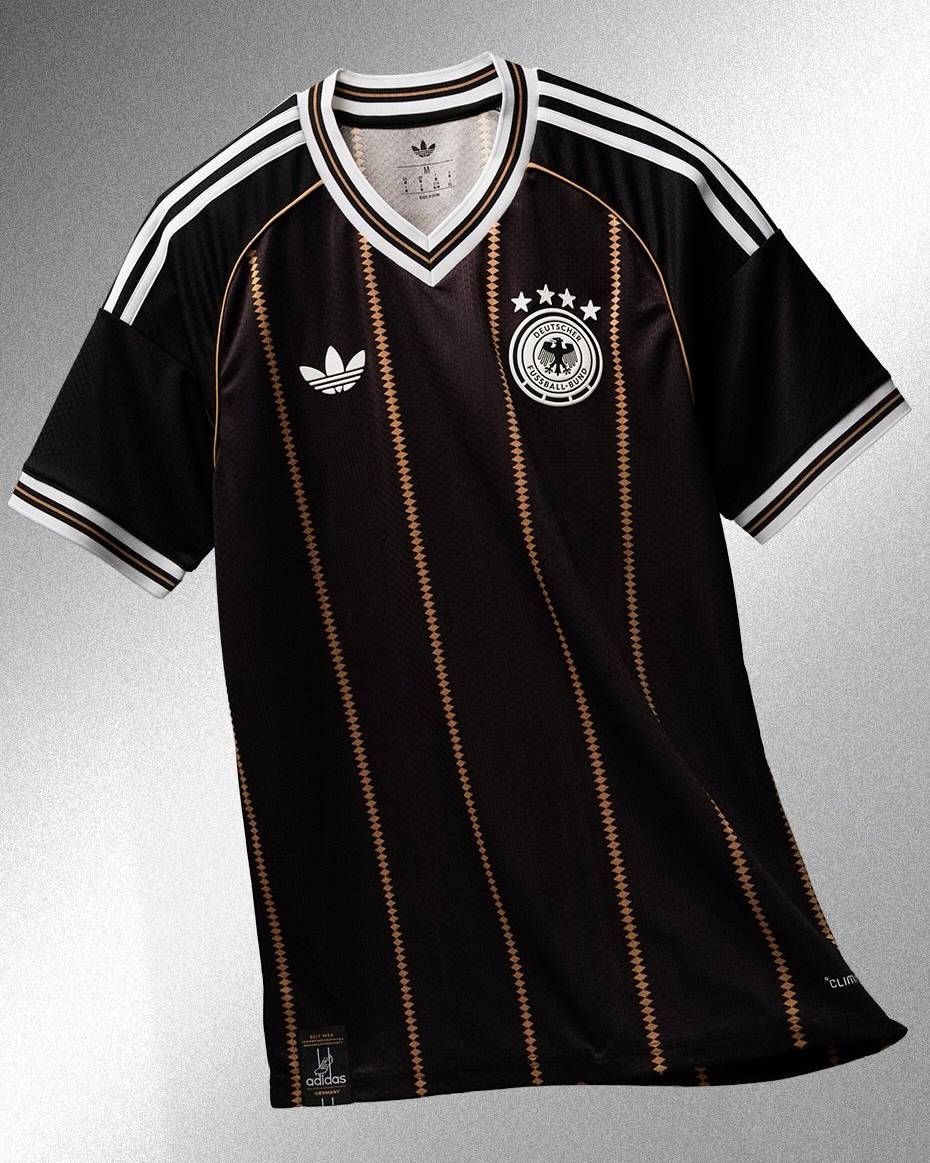
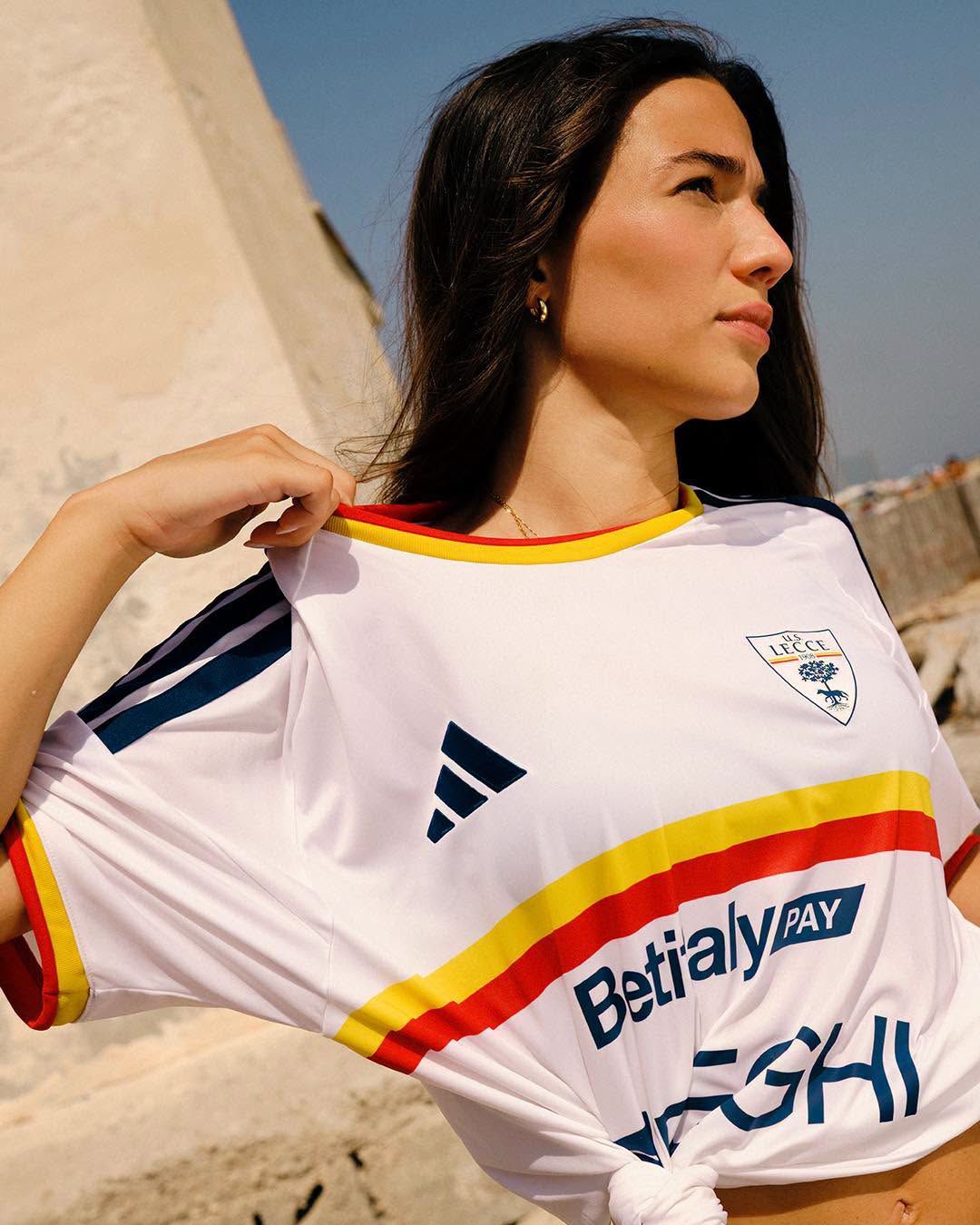
Social roots are a fitting term to describe Lecce's appeal to a high-profile investor such as adidas, which will return to producing the Salento club's jerseys from the 2026/27 season. Yes, return, because the German brand previously served as the Giallorossi's technical sponsor from 1983 to 1992, adding an extra amarcord appeal to this reunion. And expanding a list that already included Roma, Juventus and Como, the largest presence in Serie A.
adidas' interest obviously stems from the figures that demonstrate Lecce's financial sustainability, a factor independent of sporting results, but also from what Lecce represents for the local area. It is the professional club in a city recognised as the heart of Salento, a tourist destination with a vibrant cultural scene and a strong focus on local identity, demonstrated above all through its aesthetic culture.
Yellow and red, for example, are not simply two warm colours associated with the sun, but a defining part of a tradition that predates the Republic we know today: that of Terra d'Otranto, an administrative district of the Kingdom of the Two Sicilies that was dismantled only in 1927 with the creation of the Kingdom of Italy. The colours of its coat of arms are those of the team, which adopted them just two years after the new territorial division.
But the production of the kits themselves has also been deeply rooted in the local area for years. Since 2018, in fact, Lecce has stood out as the first professional club in Italy to independently manage the creation of its official kits, founding its own brand, M908, another historical reference to the original foundation of what was then Sporting Club Lecce in 1908. A tradition like this, combined with financial sustainability and a strong sense of attachment demonstrated through audiovisual engagement but, above all, physical attendance, represents a valuable asset for adidas, which, in an increasingly saturated and expensive market dominated by major international clubs, has chosen to seek out what could prove to be a far more precious gem than appearances might suggest.
Following the Palermo and PUMA Blueprint
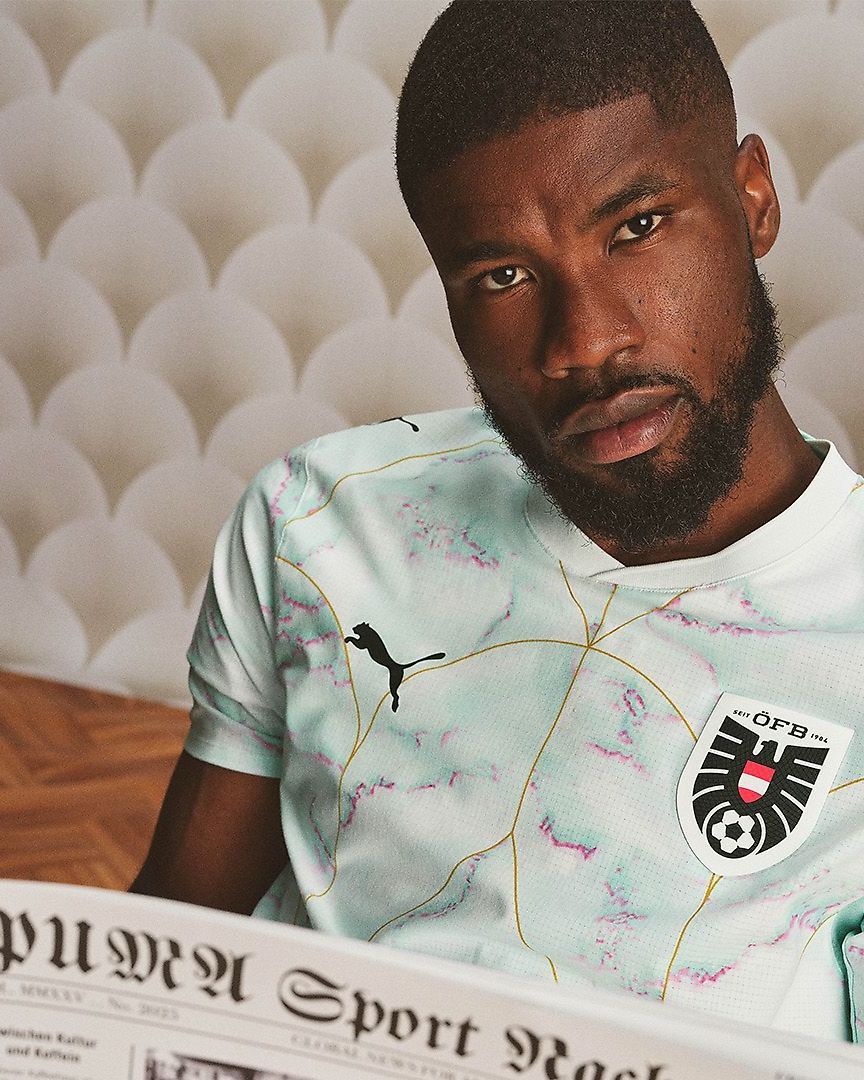
The retro appeal of the return of the three stripes on an already visually striking texture, featuring the historic yellow and red lines, has already made Lecce's jersey one of the ten most expensive in Europe, according to a ranking by Gazzetta dello Sport — based on the maximum price after customisation and the addition of Serie A patches. This is not, however, the first renewed partnership between a major German brand and a historic club from Southern Italy, as PUMA returned as technical sponsor of Palermo in 2023, following their first partnership in 2012/13. But it was not the most high-profile partnership either, considering that in November of the same year, the classic Rosanero jersey was worn by Dua Lipa during a campaign presenting the latest version of PUMA's Palermo sneakers.
The latter, in turn, represents an important link between the worlds of footwear and advertising, allowing PUMA to present a version of the sneaker named after the Sicilian capital — which has been a streetwear staple since its launch in the 1980s — in pink and black, the football club's colours. The campaign starred Alessandra Impellitteri and the Renzo Barbera stadium, recently renovated by Populous with the aim of becoming one of the designated venues for Euro 2032.
Another parallel with Lecce can be drawn here, despite the recently completed renovation of the Via del Mare-Ettore Giardiniero Stadium ahead of the Mediterranean Games. This distant connection between the Salento and Sicilian clubs is completed by looking at their aesthetic identity, which is as unique as it is deeply rooted in tradition, particularly in Palermo's case. Pink and black respectively reference the cinnamon rosoglio and the dark herbal liqueur produced by the Florio family, patrons and among the founders of the club alongside its original English base. The new colour identity replaced the Union Jack colours chosen by the British ownership in the early 20th century, and went on to survive even the impositions of the Fascist era.
Lecce and Palermo as Examples
The key difference lies in the pre-existing relationship between PUMA and City Football Group, the British multinational holding company majority-controlled by Abu Dhabi United Group, which acquired Manchester City, Girona and, in 2022, Palermo. The German brand has partnered with CFG since 2019, renewing the agreement in 2025 for more than £1 billion over ten years, establishing a strategic deal to supply kits to nine clubs owned by the holding company, including Palermo.
The next step will be promotion to Serie A, part of a multi-year growth process that was announced from the very beginning. This is a high ground that Lecce can already claim, giving adidas access to a broader audience, even if only at an audiovisual level. In this sense, the Salento club proves particularly unique in relation to the size of the market it belongs to, being neither a big-market club nor owned by a multinational fund, unlike Palermo — or the Lombard clubs, for example, such as Inter, Milan, Como and Monza. It is therefore a different model from the one that dominates Italian football, and one that is more capable of sustaining itself independently — a model that has demonstrated its ability to attract major sponsors and perhaps even set a trend for smaller clubs.