







When Michael Schumacher Brought Nike into Formula 1 Will the Swoosh be seen on a driver's feet once more?
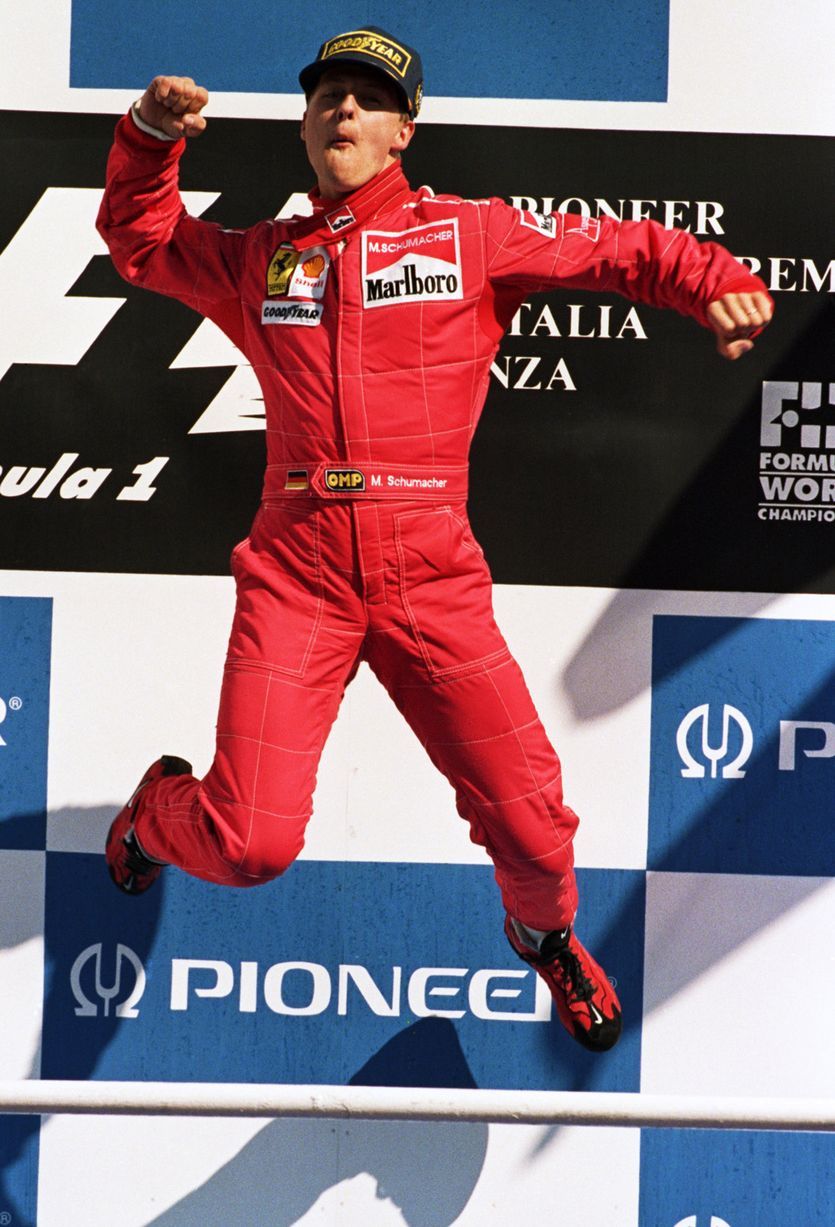
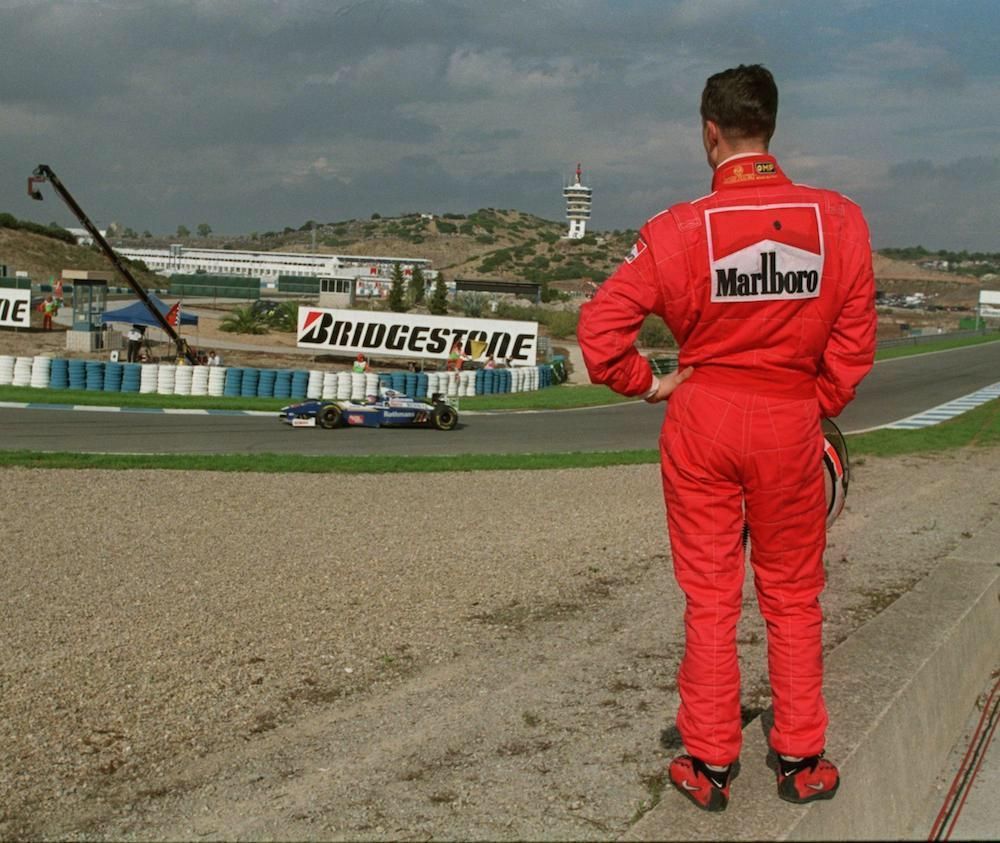
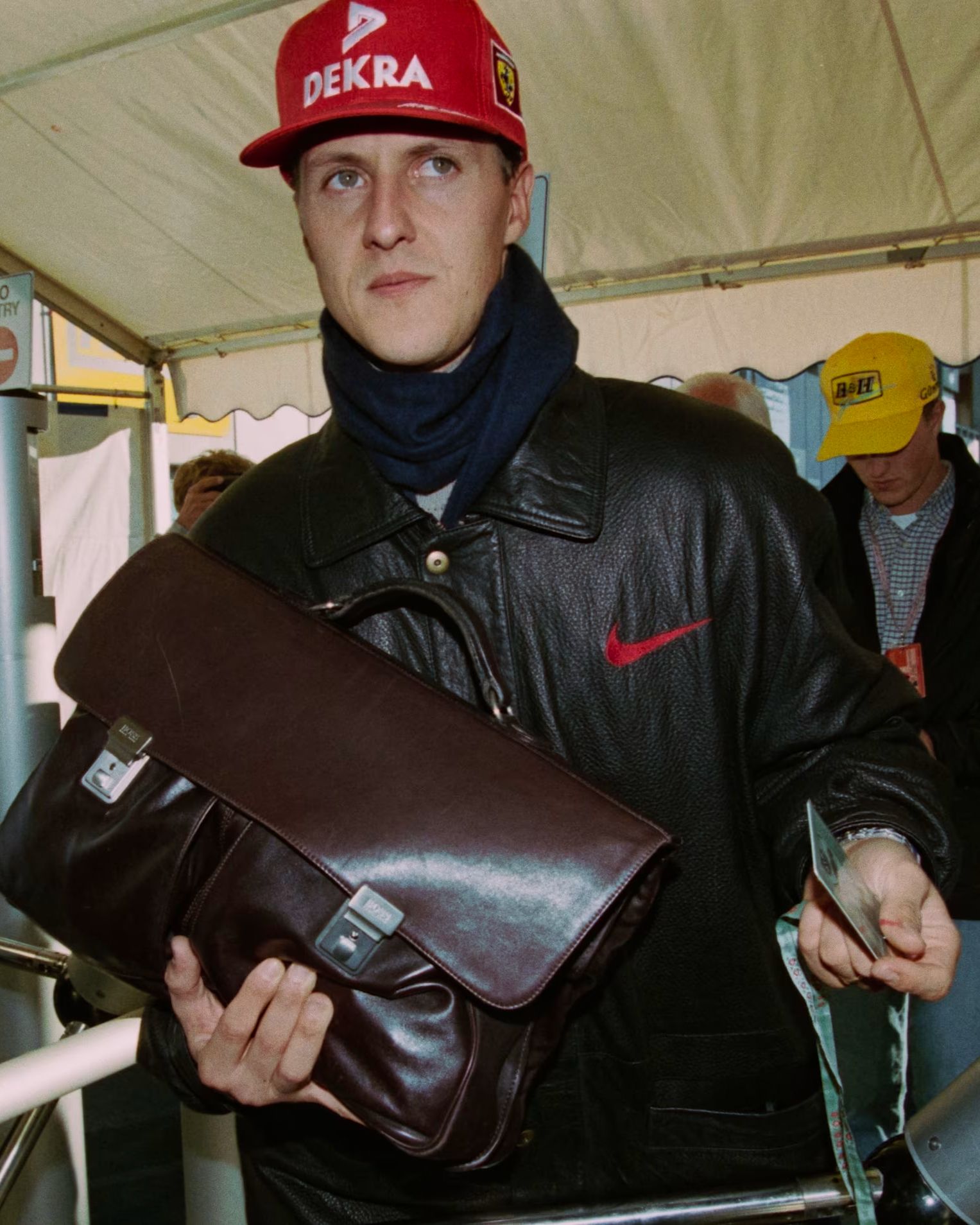
In August 1995, FIAT president L’Avvocato Gianni Agnelli dropped a bombshell on the world of Formula 1: Ferrari had signed Michael Schumacher for the 1996 season. A move that seemed unexpected at the time, yet one destined to redefine motorsport history. The German driver was the reigning World Champion, having claimed the 1994 Drivers’ Championship with Benetton—a title he would go on to defend in 1995, again with the Anglo-Italian team. More than that, Schumacher was widely seen as the figure capable of carrying Formula 1 forward after the death of Ayrton Senna and the retirement of Alain Prost, the two drivers who had dominated the sport throughout the previous decade. Ferrari, by contrast, was struggling to find its way, unable to produce a truly competitive car. The Scuderia’s last Drivers’ Championship dated back to 1979, when Jody Scheckter lifted the trophy. What followed, however, became the most successful partnership Formula 1 has ever known: 58 pole positions, 72 victories across 180 Grands Prix, and—most importantly—five consecutive World Championships between 2000 and 2004. Numbers that would cement Schumacher as the most successful driver in F1 history, at least until the era of Lewis Hamilton and, later, Max Verstappen.
Schumacher’s Nike shoes: performance meets style
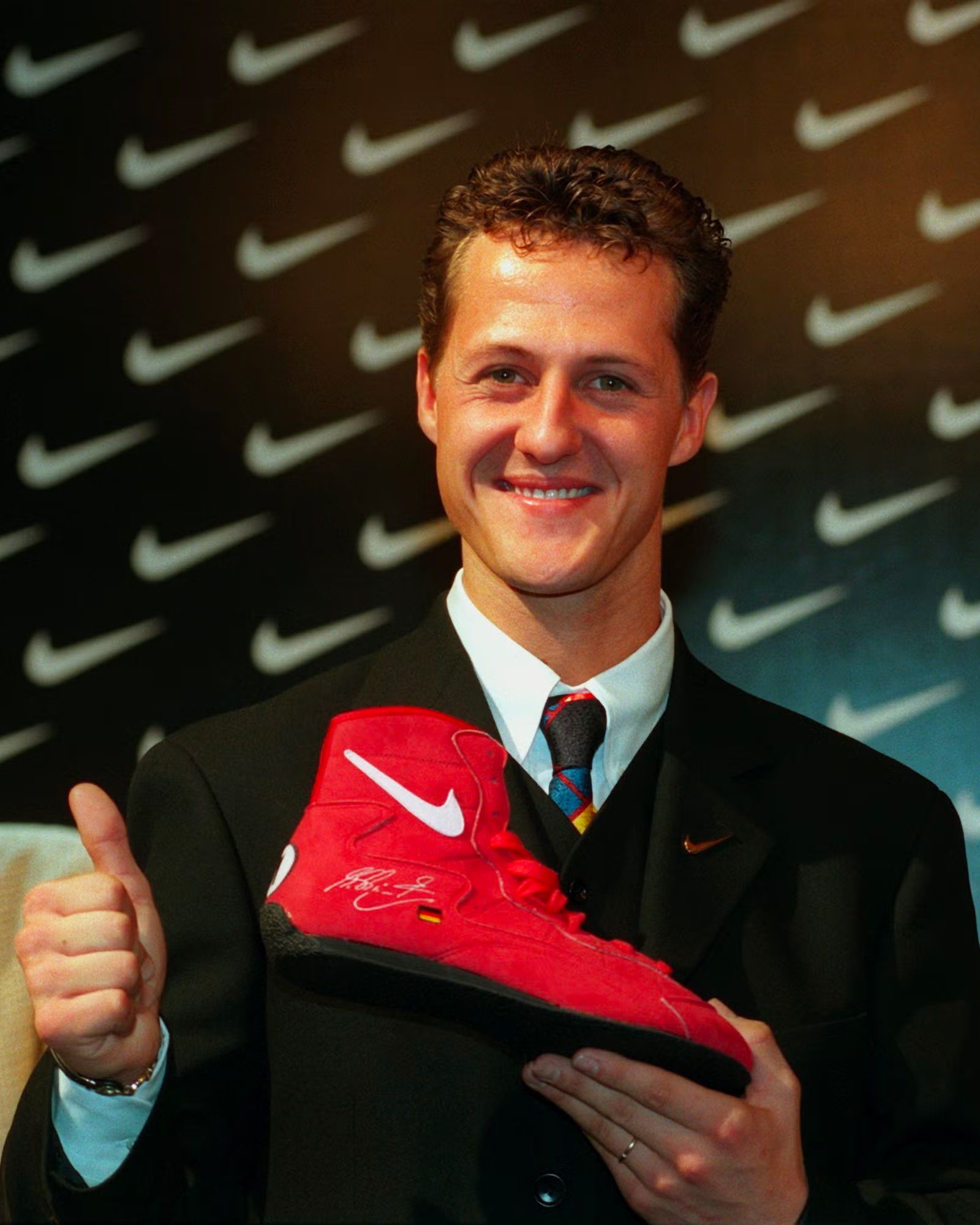
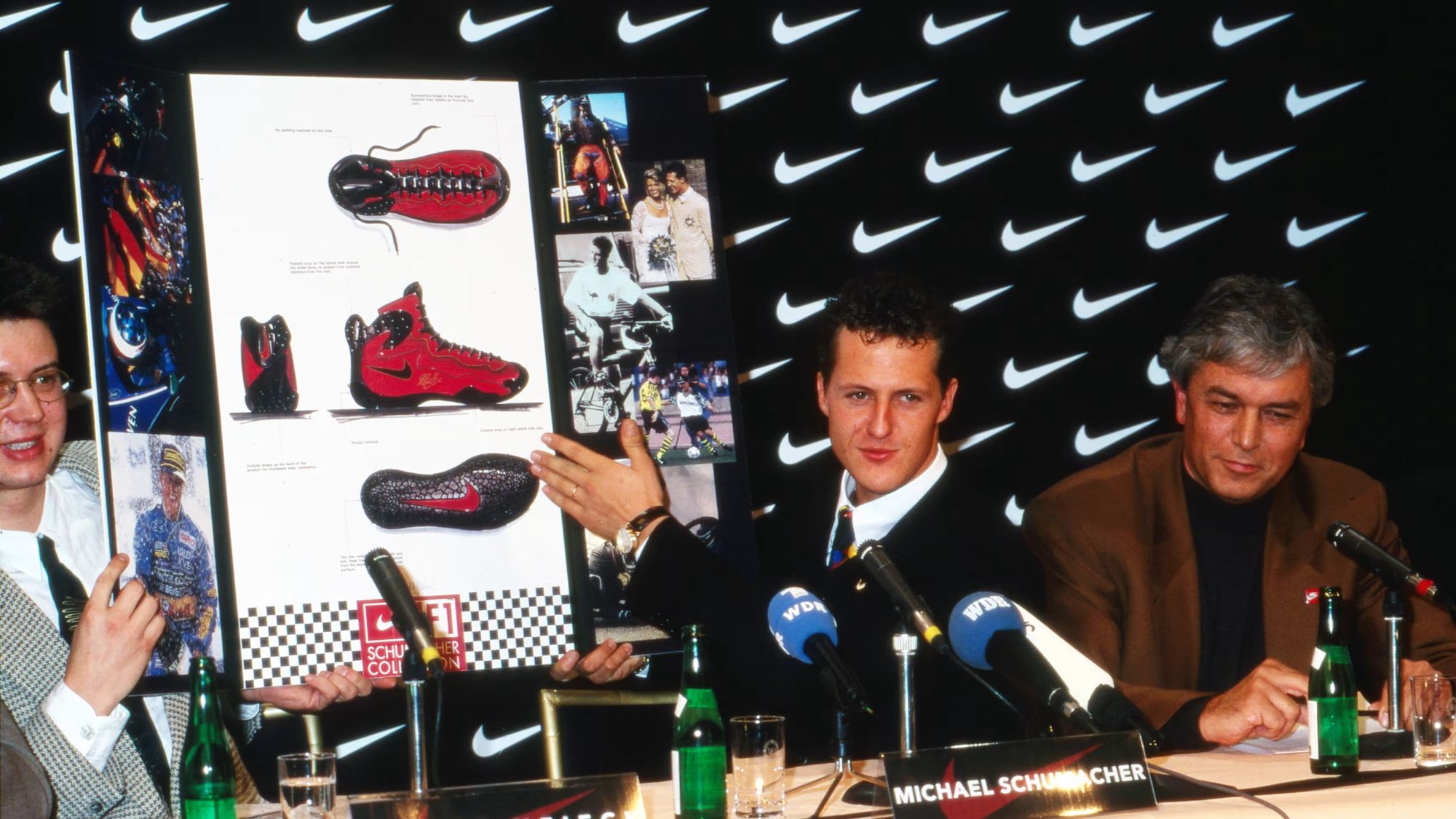
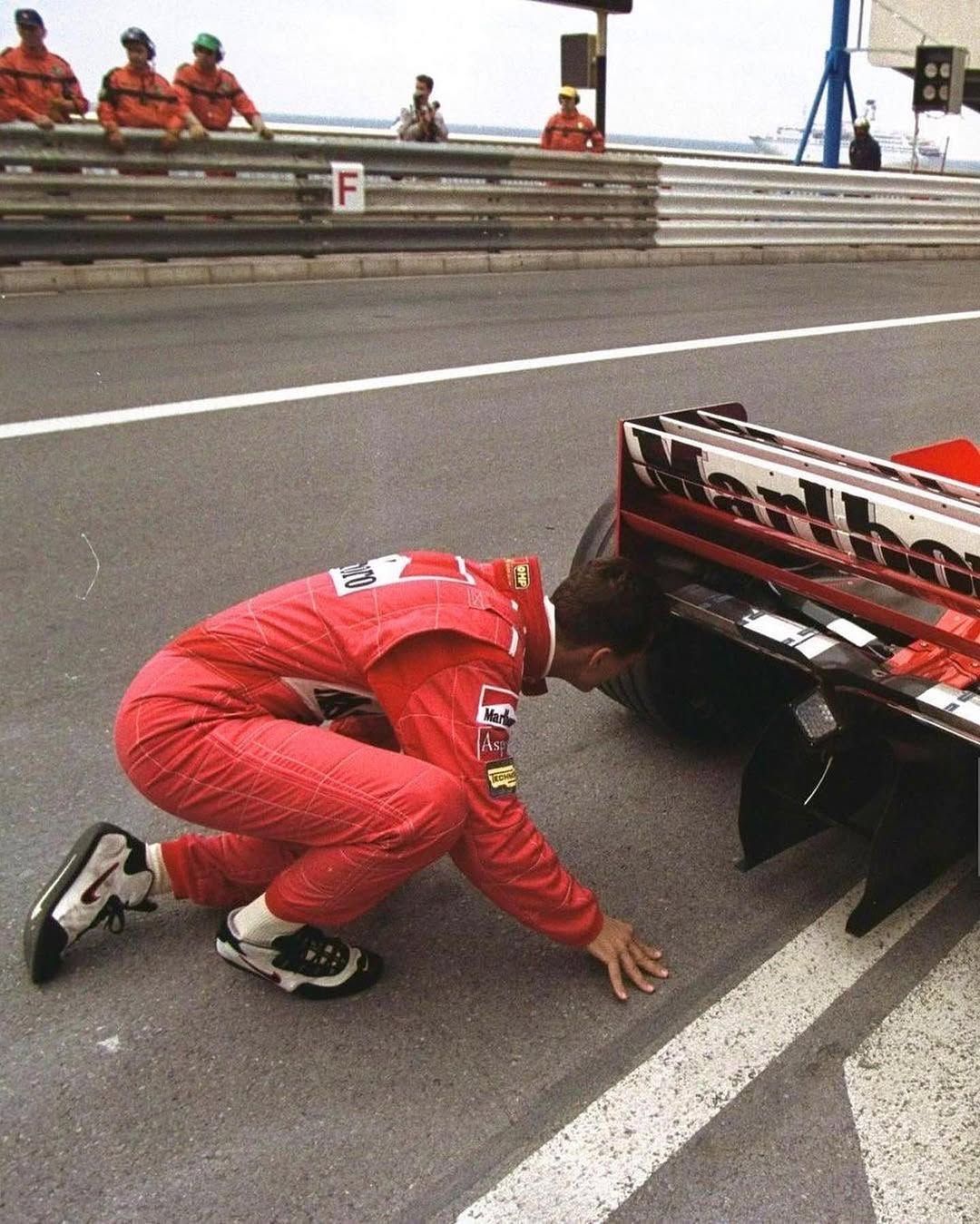
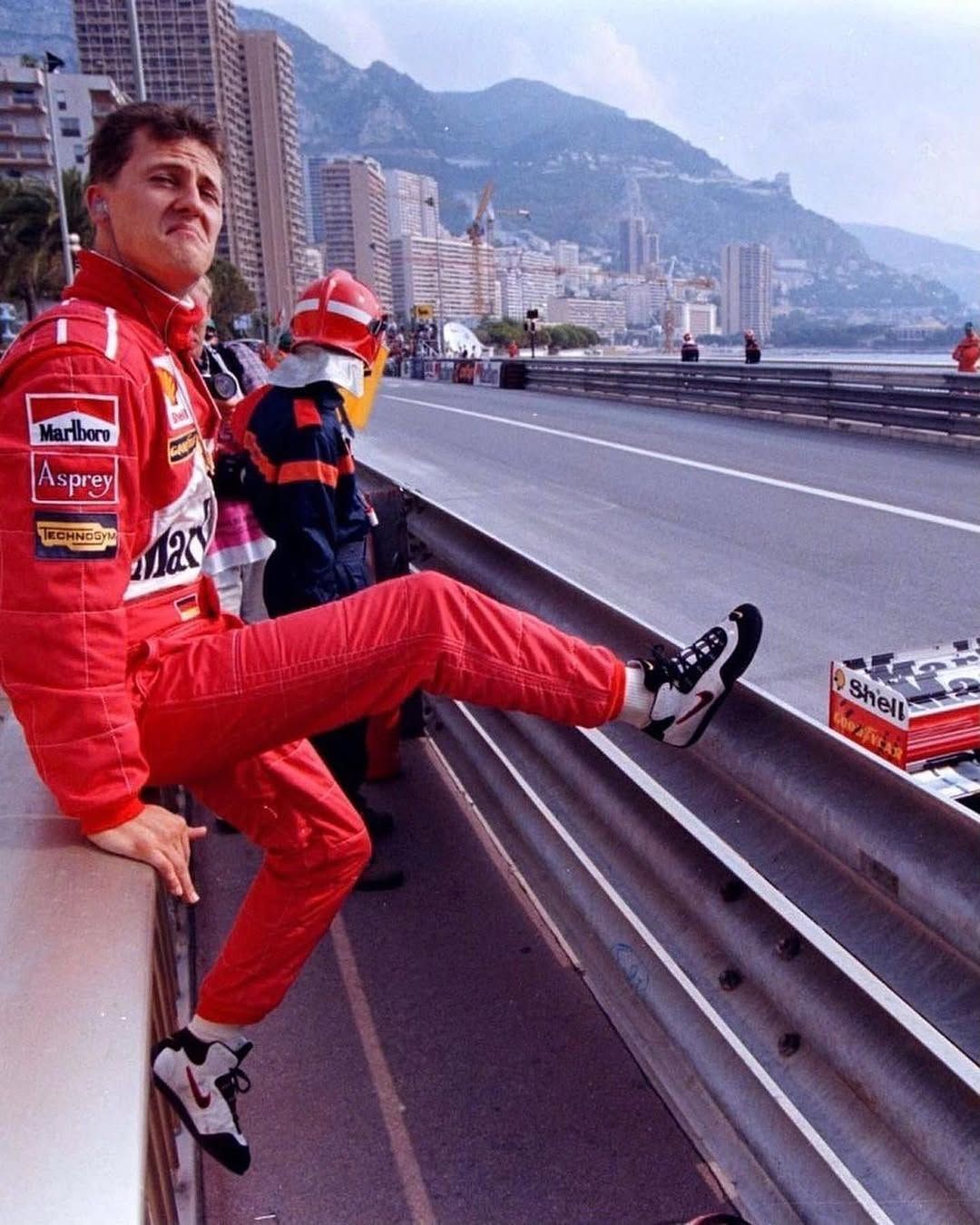
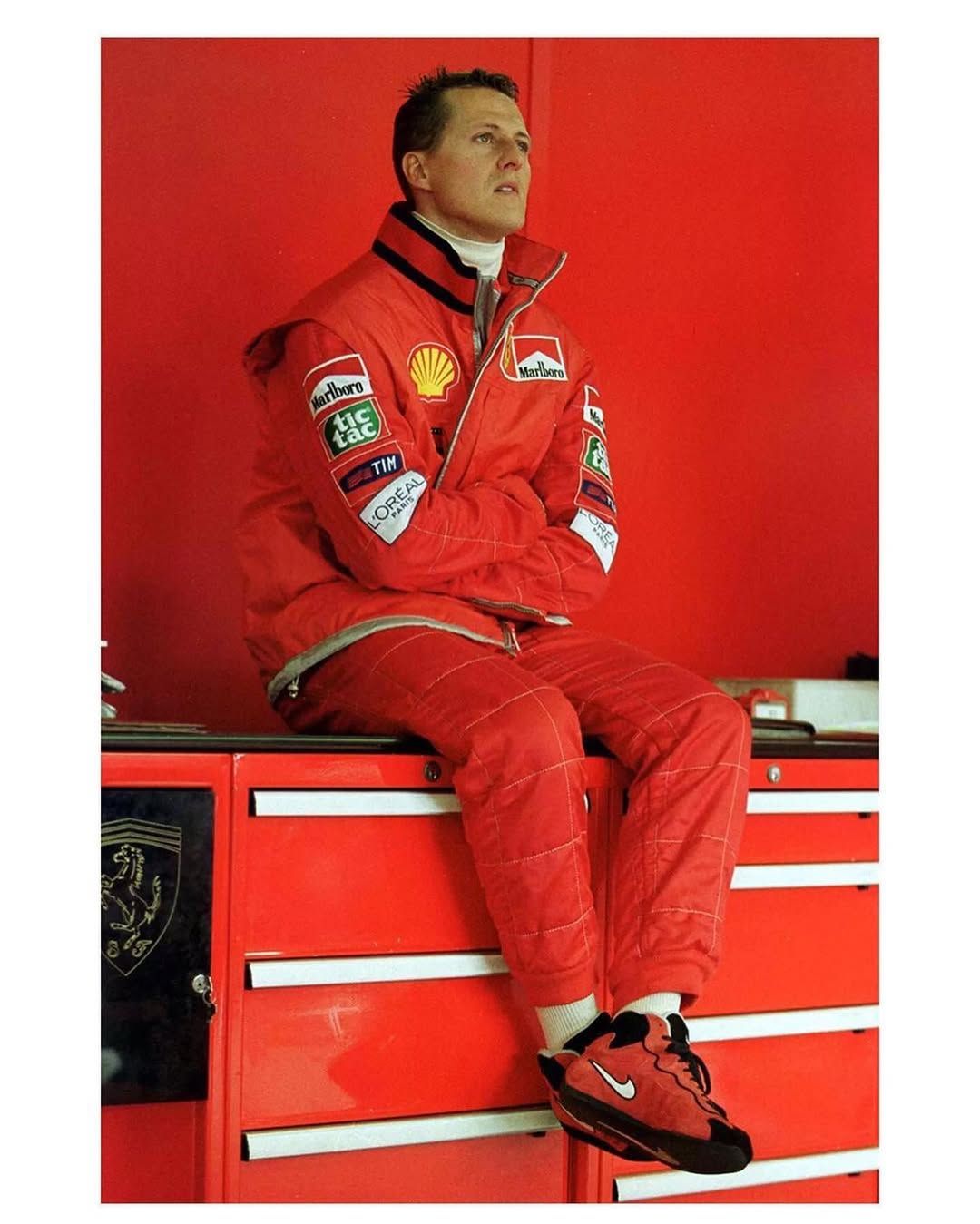
To persuade Schumacher to buy into the Ferrari vision, technical guarantees alone were not enough. The Prancing Horse also convinced key sponsors to step up their financial commitment, while others joined in after sensing the cultural and commercial potential of the partnership. One of them was Nike, which effectively transformed Schumacher into a global brand ambassador for the Swoosh. The partnership was officially unveiled on January 17, 1996, when, during the press conference announcing the deal, Schumacher’s first-ever signature shoe was revealed. Designed exclusively for race weekends, it existed far outside the boundaries of streetwear. The silhouette echoed traditional F1 racing boots: a sneaker elevated into an ankle-boot form, complete with internal padding to meet FIA safety standards. Nike released it in two colorways—red with black detailing and a white Swoosh, and white with black accents and the same iconic logo.
Nike Air Zoom Schu and the move into lifestyle
The lifestyle crossover came later with the launch of the Nike Air Zoom Schu, a model that translated the visual language of racing boots into the casual sphere. Its design drew cues from the on-track footwear while borrowing proportions and details from other Nike icons of the era—most notably Air Jordan. The sneaker was released in the same colorways seen on the circuit, alongside a third, dark blue iteration. The partnership lasted until 2002, when FILA stepped in as Ferrari’s new supplier, effectively forcing Schumacher to sever ties with Nike. The Swoosh, after all, was never a technical sponsor of the Scuderia, but a personal endorsement tied exclusively to the German driver. With the exception of the 1997 season, Schumacher’s teammates during the Nike years—Eddie Irvine and Rubens Barrichello—wore different brands. Irvine initially raced in Diadora, Ferrari’s official footwear partner at the time, before switching to Sabelt after also experimenting with Nike. Barrichello followed a similar path, choosing Sabelt in 2000 before moving on to Asics in 2001.
The future: could Nike return to Formula 1?
To this day, the period between 1996 and 2001 remains the only chapter in which Nike left a visible mark on Formula 1. The Swoosh has not returned to the grid—neither on a driver’s boots, nor on a race suit, let alone on a single-seater. Meanwhile, Formula 1 has evolved into a cultural and commercial platform capable of attracting brands from every corner of the industry. adidas has made major moves with Mercedes and, more recently, Audi, while PUMA’s long-standing partnership with Ferrari continues to define the paddock’s aesthetic. In short, Nike’s absence has given its competitors the space to build strong, recognizable identities within the sport. And yet, as Nike continues to dominate beyond the circuit—from tennis to football and the rise of outdoor-inspired aesthetics—the idea of its return to Formula 1 feels less like speculation and more like an inevitability. The only real question is whether the sport will once again offer a truly generational talent to build that story around—someone like Michael Schumacher.